

You’re biting into a crisp, juicy apple when your dog appears, nose up and eyes locked on your hand. It’s one of the most common foods in the kitchen — but is it safe to share? Can dogs eat apples, or should this everyday fruit stay off your dog’s menu?
The good news is yes, dogs can eat apples — but only the sweet flesh, served plain and in small slices. Apples are one of the healthiest fruits you can offer your dog, packed with vitamins, fiber, and antioxidants. The catch is the core: apple seeds and stems contain compounds that release cyanide, so proper preparation is non-negotiable.
In this complete guide, we’ll walk you through everything you need to know about feeding apples to dogs: the real health benefits, the seed and sugar risks, safe serving sizes by dog size, how to prepare apples correctly, and answers to the questions dog owners ask most.
Table of Contents
- Are Apples Safe for Dogs?
- Nutritional Benefits of Apples for Dogs
- Risks of Feeding Apples to Dogs
- Can Dogs Eat Apple Seeds and Cores?
- How Many Apples Can Dogs Eat?
- How to Prepare Apples for Dogs
- What If My Dog Eats Too Many Apples?
- Can Puppies Eat Apples?
- Healthy Alternatives to Apples
- Frequently Asked Questions
Are Apples Safe for Dogs?
Yes, fresh apple flesh is generally safe for healthy dogs when prepared properly. Veterinary references including the American Kennel Club list apples among the fruits dogs can eat — with the clear rule that the seeds, core, and stem must always be removed first.
Apples are a naturally low-fat, low-protein fruit: a medium apple contains only about 95 calories and is roughly 86% water. But the golden rule is still moderation. Treats of any kind — fruit included — should make up no more than 10% of your dog’s daily calories, with the rest coming from a complete, balanced dog food.
Before offering apple, always serve it:
- Washed thoroughly to remove pesticide residue
- Cored — seeds, core, and stem completely removed
- Cut into small, bite-sized slices suited to your dog’s size
- Plain — no sugar, caramel, cinnamon, or seasoning
Nutritional Benefits of Apples for Dogs

Apples aren’t just safe — they’re genuinely nutritious, and their crunchy texture makes them one of the few treats that also help clean your dog’s teeth.
1. Fiber for Healthy Digestion
Apples are rich in both soluble and insoluble fiber, including pectin, a prebiotic fiber that feeds beneficial gut bacteria. For dogs, this means more regular bowel movements and better gut health — especially helpful for pups prone to loose stools. Fiber also helps dogs feel fuller for longer, which is useful for weight management.
2. Vitamin A and Vitamin C
Apples provide vitamin A, which supports healthy vision, skin, coat, and immune function, plus vitamin C for antioxidant support. While dogs produce their own vitamin C in the liver, the extra antioxidant boost can be especially helpful for senior dogs or dogs recovering from illness.
3. Potassium, Calcium, and Phosphorus
Apples contain potassium for healthy muscle function, plus small amounts of calcium and phosphorus that contribute to bone health.
4. Natural Teeth Cleaning
The crunchy texture also helps scrub away plaque, which can freshen breath and support dental health between brushings.
Also Read: Can Dogs Eat Mango? Safe Feeding Guide (2026)
Risks of Feeding Apples to Dogs
Apples are safe for most dogs — but only when you know the risks and feed them correctly.
1. Natural Sugar Content
An average apple contains nearly 20 grams of natural sugar. In small slices this is harmless for healthy dogs, but dogs with diabetes, obesity, or pancreatitis should avoid apples unless your veterinarian approves. Frequent sugary snacks can also contribute to weight gain and dental decay over time.
2. Digestive Upset From Overfeeding
Too much apple at once — especially for dogs not used to fruit — can cause vomiting, diarrhea, or gas thanks to the fiber and natural acids. Always start with one or two small slices when introducing apples.
3. Pesticide Residue
Apples rank among the fruits most often flagged for pesticide residue on conventional crops. Always wash apples thoroughly under running water before slicing — or choose organic apples for extra peace of mind.
4. Apple Products Are Unsafe
Stick to fresh apple flesh only. Skip apple juice and cider (too concentrated in sugar and acidity), dried apple rings (concentrated sugar, often with added sweeteners), and apple pie or apple-flavored desserts (loaded with sugar, butter, and sometimes xylitol, which is extremely toxic to dogs).
5. Rare Allergic Reactions
Though uncommon, some dogs can be sensitive to apples. After the first small taste, watch for itching, facial swelling, or vomiting. If any of these appear, stop feeding apples and contact your veterinarian.
Can Dogs Eat Apple Seeds and Cores?
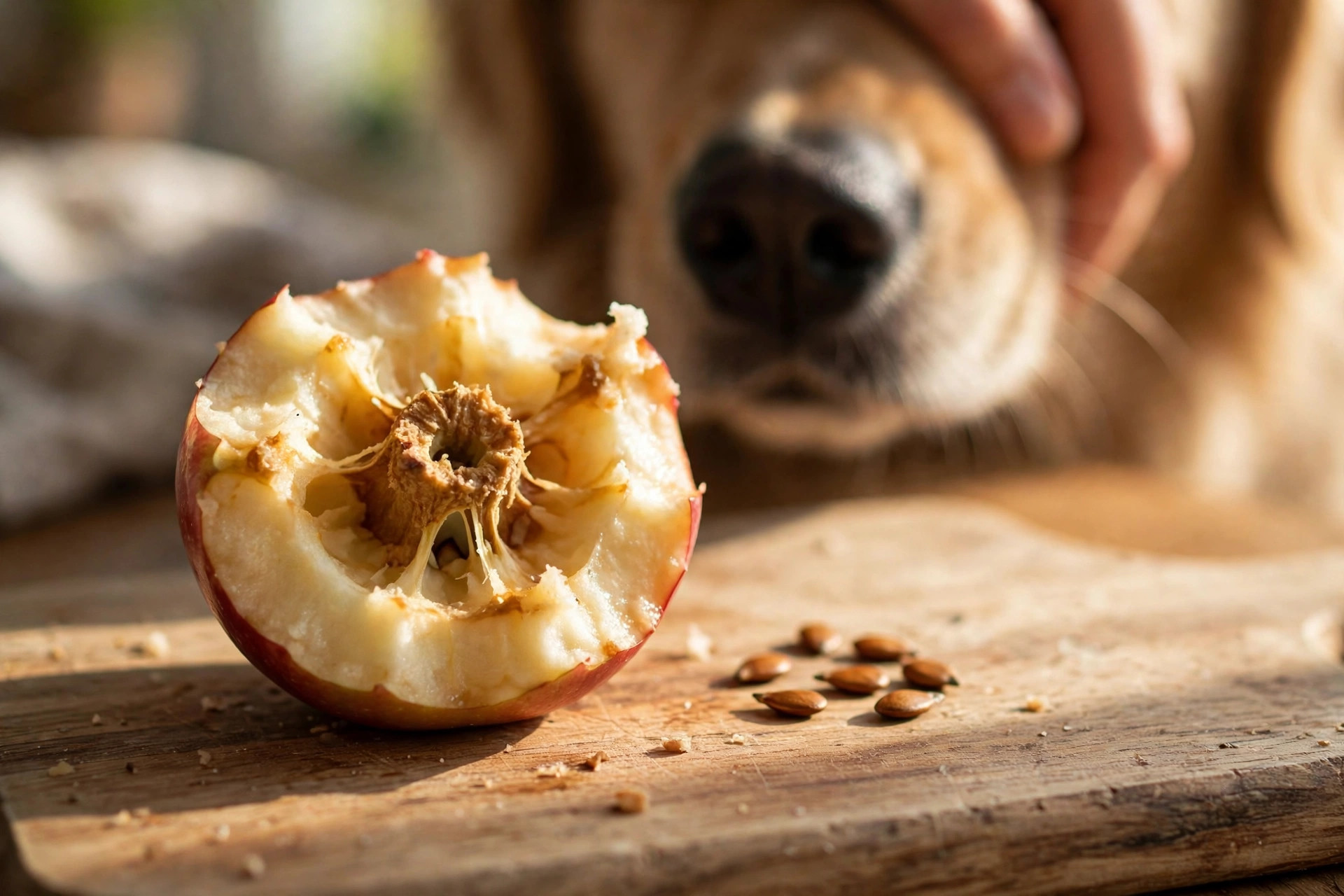
This is the single most important rule about apples for dogs: no, dogs must never eat apple seeds, cores, or stems.
Apple seeds contain amygdalin, a compound that releases cyanide when chewed or digested. A few accidentally swallowed seeds are very unlikely to poison a healthy dog — the toxic dose requires a large number of crushed seeds — but there is no reason to take the risk. Seeds and stems are also choking hazards, and the tough core can cause intestinal blockage if swallowed in large pieces, especially in small breeds.
If your dog eats a whole apple including the core, don’t panic — monitor them for vomiting, diarrhea, lethargy, or difficulty breathing, and call your veterinarian if anything seems off. For routine feeding, though, always core the apple first and discard the seeds where your dog can’t reach them.
How Many Apples Can Dogs Eat?
Apples should be an occasional treat, not a daily staple — a couple of times a week at most. Use this serving guide:
| Dog Size | Weight | Safe Serving |
|---|---|---|
| Small dogs | Under 20 lbs | 1–2 thin slices |
| Medium dogs | 20–50 lbs | 3–4 slices |
| Large dogs | Over 50 lbs | Half an apple, sliced |
Remember the 10% rule: all treats combined, apples included, should stay under 10% of your dog’s daily calories. When in doubt, offer less — a couple of slices is plenty for most dogs.
How to Prepare Apples for Dogs
Safe preparation takes just a couple of minutes:
- Choose a fresh, firm apple — any common variety (Fuji, Gala, Honeycrisp, Granny Smith) works.
- Wash it thoroughly under running water to remove pesticide residue.
- Cut away the core, and remove every seed and the stem.
- Slice the flesh into bite-sized pieces appropriate for your dog’s size (thin slices for small dogs).
- Serve plain — never add sugar, caramel, cinnamon, or peanut butter with xylitol.
For a refreshing summer treat, freeze the slices for an hour before serving — most dogs love the crunch of frozen apple.
What If My Dog Eats Too Many Apples?
If your dog raids the fruit bowl and eats several apples, don’t panic — but watch them closely. Too many apples most often cause temporary digestive upset: loose stool, vomiting, or gas.
Contact your veterinarian right away if you notice severe or ongoing vomiting or diarrhea, abdominal swelling or pain, lethargy, loss of appetite lasting more than 24 hours, difficulty breathing, or if your dog swallowed many chewed seeds or a large core (blockage risk).
Can Puppies Eat Apples?
Yes, puppies can eat a small amount of apple once they are fully weaned and eating solid food. Because puppies have sensitive stomachs, start with a single thin slice and watch for any digestive upset over the next 24 hours before offering more. As with adults, keep it an occasional treat only — and be extra careful to remove every seed, since puppies chew less carefully.
Healthy Alternatives to Apples
If your dog doesn’t care for apples — or you’d like to rotate their treats — these fruits are also safe in moderation:
- Blueberries (antioxidant-packed and low in sugar)
- Bananas — in small amounts due to sugar content
- Watermelon — seedless, rind removed
- Pineapple — fresh flesh only, in small amounts
- Strawberries
Always introduce any new food gradually and in small portions.
Also Read: Can Dogs Eat Watermelon? Benefits, Risks & Safe Feeding Guide (2026)
Also Read: Can Dogs Eat Pineapple? Benefits, Risks & Safe Feeding Guide (2026)
Frequently Asked Questions
Can dogs eat apples every day?
No. The natural sugar content makes apples an occasional treat only — a couple of times a week at most, in the small portions listed above.
Can dogs eat apple skin?
Yes. The skin holds much of the fiber and antioxidants, so there’s no need to peel the apple. Just wash it thoroughly first to remove pesticide residue.
Can dogs eat apple seeds?
No. Apple seeds contain amygdalin, which releases cyanide when chewed. Always remove all seeds before serving.
Can dogs eat apple cores?
No. The core is a choking hazard and can cause intestinal blockage; it also contains the seeds. Always core the apple and discard it safely.
Is applesauce safe for dogs?
Plain, unsweetened applesauce with no added sugar or xylitol can be given in tiny amounts, but fresh slices are far better — commercial applesauce is often loaded with sugar and additives.
Can diabetic dogs eat apples?
It’s best to avoid it. The natural sugars can spike blood glucose. Always check with your veterinarian before giving fruit to a diabetic dog.
Final Thoughts
So, can dogs eat apples? Absolutely — when they’re fresh, washed, cored, and sliced into bite-sized pieces. A few crisp slices make a crunchy, vitamin-rich, teeth-cleaning treat most dogs love. Just remember the golden rules: flesh only, never the seeds, core, or stem, no juice or dried versions, and keep portions small.
As with any new food, introduce apples slowly and watch how your dog responds. And when in doubt, your veterinarian is always the best source of advice for your individual pup’s diet.