
If your cat has ever stared at the strawberries on your breakfast plate with wide, curious eyes, you have probably asked yourself: can cats eat strawberries, or should this sweet summer fruit stay strictly human-only?
The reassuring news is yes, cats can eat strawberries — they are not toxic to felines, and the ASPCA lists the strawberry plant as non-toxic. But there is an important catch. Cats are obligate carnivores built to digest meat, not fruit, so strawberries should only ever be a rare, tiny, carefully prepared treat.
In this complete guide, we will cover the nutritional benefits, the real risks, safe serving sizes by cat size, step-by-step preparation, and answers to the questions cat owners ask most often.
Table of Contents
- Can Cats Eat Strawberries? Vet-Backed Safety Guide
- Nutritional Benefits of Strawberries for Cats
- Risks of Feeding Strawberries to Cats
- How Many Strawberries Can Cats Eat?
- How to Prepare Strawberries for Cats
- What If My Cat Eats Too Many Strawberries?
- Can Kittens Eat Strawberries?
- Healthier Treat Alternatives to Strawberries
- FAQs: Can Cats Eat Strawberries Safely?
Can Cats Eat Strawberries? Vet-Backed Safety Guide
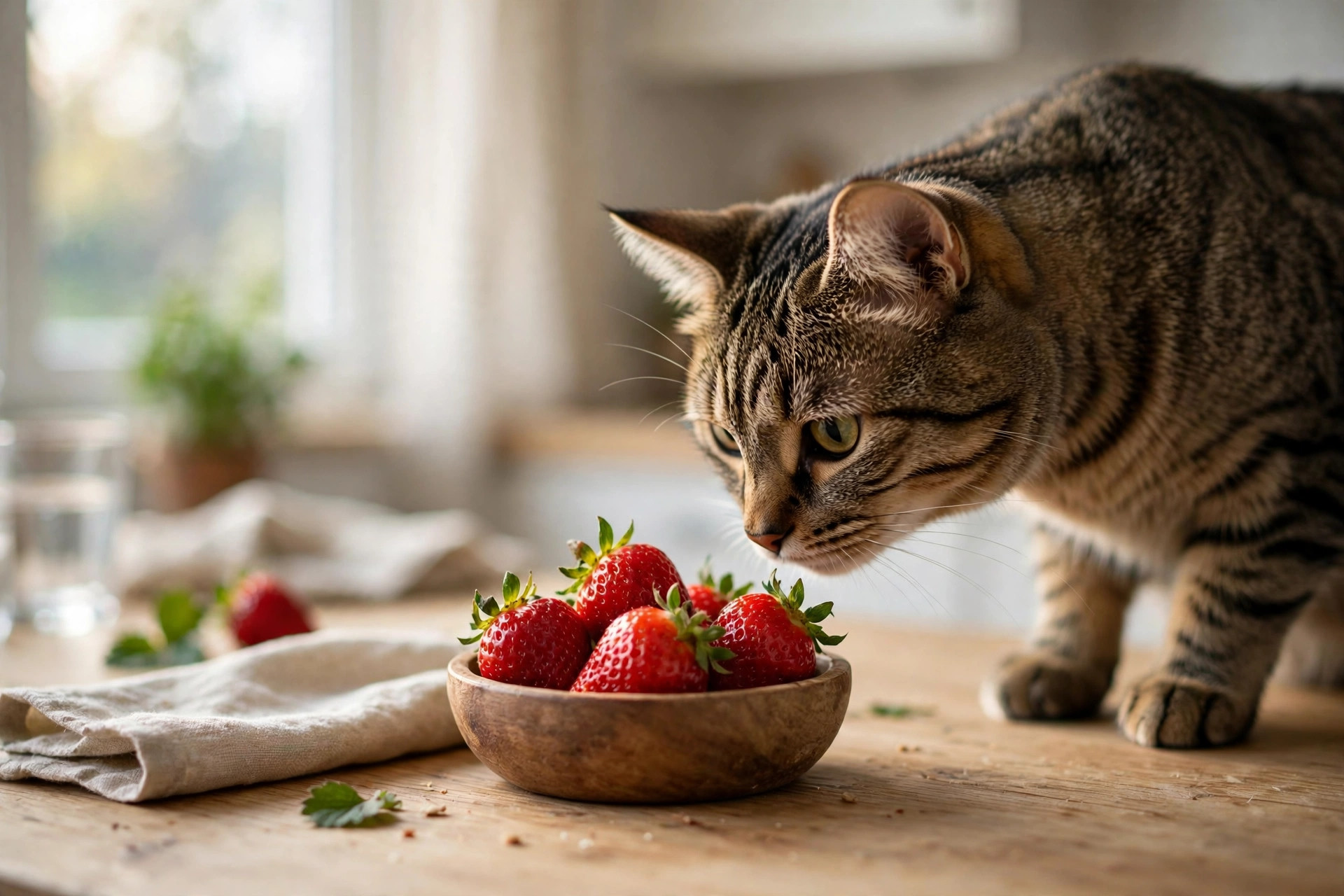
Yes, strawberries are safe for cats when served correctly. Veterinary sources including PetMD confirm that fresh strawberries are non-toxic to cats — a reassuring contrast to genuinely dangerous fruits like grapes and raisins, which can cause serious harm to pets.
However, “not toxic” is not the same as “nutritious for cats.” Unlike humans and even dogs, cats are obligate carnivores, meaning their digestive tracts evolved for meat and animal protein — a strawberry’s carbohydrates simply do not deliver the nutrition a cat’s body is designed to use.
Ground rules before you share a strawberry:
- Offer only fresh, ripe, plain strawberries — never sweetened or flavored versions
- Wash the berry thoroughly and remove the stems and leaves (choking hazard)
- Cut it into tiny, cat-friendly pieces
- Keep it a rare treat — never part of your cat’s daily diet
- All treats combined should stay under 10% of your cat’s daily calories
One fun fact: cats cannot taste sweetness at all. If your cat shows interest in a strawberry, it is the bright color, soft texture, and novelty they are drawn to, not the flavor.
Nutritional Benefits of Strawberries for Cats
Strawberries earned their superfood status in human nutrition, and a handful of their qualities carry over — modestly — to cats when fed in tiny amounts.
1. Vitamins, Folate, and Potassium
Strawberries contain vitamin C, folate, and potassium, which support immune health and basic cellular functions. Note: cats produce their own vitamin C internally, so this adds very little real value for them.
2. Antioxidants That Fight Inflammation
Strawberries are rich in antioxidants, including anthocyanins and quercetin, which help neutralize free radicals — unstable molecules that contribute to inflammation and cellular damage.
3. Fiber for Gentle Digestive Support
The natural fiber in strawberries may aid digestion and help keep your cat’s bowel movements regular. In the tiny portions cats eat, this is a gentle bonus rather than a digestive fix.
4. Hydration Boost
Strawberries are about 91% water. For cats that barely drink from their bowls — a very common feline habit — a juicy strawberry piece offers a small but welcome hydration boost.
Also Read: Can Cats Eat Blueberries? Vet Guide & Tips (2026)
Risks of Feeding Strawberries to Cats
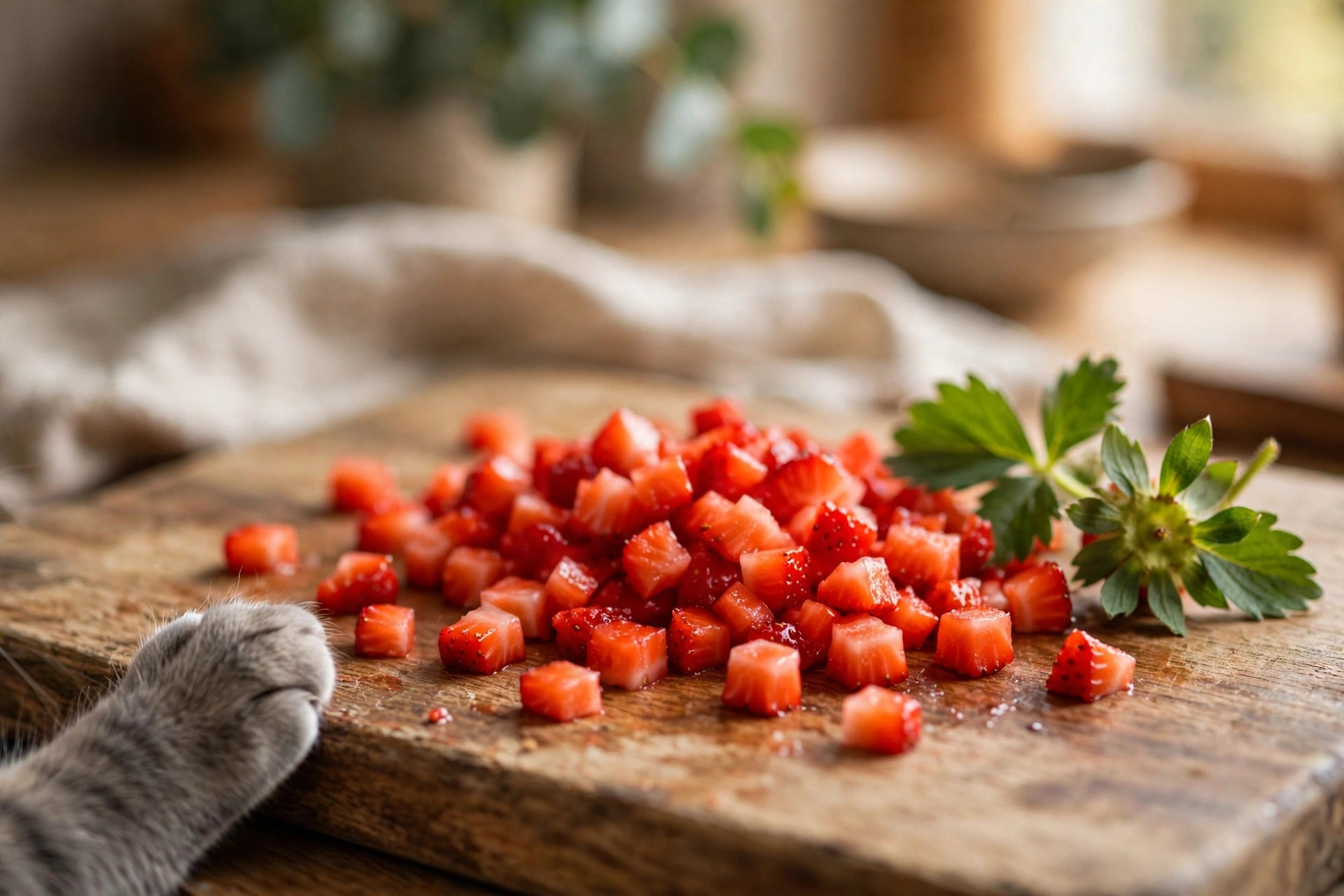
Strawberries are safe in tiny amounts, but feeding them the wrong way — or too many — can cause genuine problems. Know these risks first.
1. High Natural Sugar Content
Strawberries carry a fair share of natural sugar, far more than a cat’s normal meat-based diet. Overweight cats and cats with diabetes should not eat strawberries, since the sugar can spike blood glucose, and regular overfeeding of sugary fruit can contribute to weight gain.
2. Digestive Upset From Overfeeding
A cat’s digestive system is not built for fruit. Eating too many strawberries at once can cause vomiting, diarrhea, or stomach discomfort — mostly because of the sugar and fiber load. Start with a single tiny piece and watch how your cat reacts over the next 24 hours.
3. Stems and Leaves Are a Choking Hazard
The green stem and leaves on a strawberry are tough and difficult to chew, and they can lodge in a cat’s throat. Always hull the berry — pull off the stem and leaves completely — before cutting the flesh into bite-sized pieces.
4. Sweetened and Flavored Products Are Unsafe
Never give your cat strawberry jam, jelly, syrup, strawberry yogurt, ice cream, baked goods, or any strawberry-flavored candy. These contain added sugars, artificial flavors, preservatives, and dairy — most adult cats are lactose-intolerant. Products sweetened with xylitol are extremely dangerous to pets, and strawberry treats coated in chocolate are toxic. If your cat eats any of these, contact your veterinarian promptly.
5. Rare Allergic Reactions
Strawberry allergies in cats are uncommon, but they do happen. After the first tiny taste, watch for itching, swelling, or vomiting. If any of these appear, stop feeding strawberries and contact your veterinarian.
How Many Strawberries Can Cats Eat?
Strawberries are a rare treat — not a daily snack. Veterinary guidance suggests about half of a small berry, washed and sliced with the greens removed, once or twice a week:
| Cat Size | Weight | Safe Serving |
|---|---|---|
| Small cats | Under 9 lbs (4 kg) | 1–2 tiny pieces |
| Medium cats | 9–13 lbs (4–6 kg) | Half a small berry, diced |
| Large cats | Over 13 lbs (6 kg) | Up to 1 small berry, diced |
When in doubt, offer less. A single tiny piece is a perfectly good first taste, and remember that all treats combined should never exceed 10% of your cat’s daily calories.
How to Prepare Strawberries for Cats

Safe preparation takes about a minute:
- Choose fresh, ripe strawberries — never moldy, soft, or spoiled fruit.
- Rinse the berry well under running water to remove pesticides and dirt.
- Pull off the green stem and leaves completely (hull the berry).
- Cut the flesh into small, bite-sized pieces to prevent choking.
- Serve at room temperature — plain, with nothing added. Offer by hand or in a clean dish, and watch your cat while they eat.
Skip dried strawberries (concentrated sugar), jam, syrup, chocolate-dipped berries, and anything baked or flavored. Plain and fresh is the only safe way.
What If My Cat Eats Too Many Strawberries?
If your cat raids the fruit bowl and eats several plain strawberries, do not panic — strawberries are not toxic, so a few berries are unlikely to cause serious harm in an otherwise healthy cat. Monitor them for vomiting, diarrhea, or lethargy over the next few hours; these symptoms are usually temporary.
Contact your veterinarian right away if vomiting or diarrhea is severe or lasts more than a day, or if your cat ate strawberries mixed with chocolate or xylitol. Cats with diabetes, inflammatory bowel disease, or pancreatitis should not be offered strawberries without veterinary guidance.
Can Kittens Eat Strawberries?
It is best to wait. Kittens have more sensitive digestive systems and need a specialized kitten diet to grow properly. If your veterinarian gives the go-ahead, offer only a tiny mashed piece and watch closely.
Healthier Treat Alternatives to Strawberries
If your cat ignores strawberries — or you want more nutritionally meaningful treats — these options suit an obligate carnivore better:
- Small pieces of plain, cooked chicken or turkey
- Freeze-dried meat treats made for cats
- A teaspoon of plain canned pumpkin (not pie filling)
Always introduce any new food gradually and in small portions.
Also Read: Can Dogs Eat Pineapple? Benefits, Risks & Safe Feeding Guide (2026)
FAQs: Can Cats Eat Strawberries Safely?
Are strawberries toxic to cats?
No. Strawberries are not toxic to cats — the fruit and plant appear on the ASPCA’s non-toxic list. That said, “not toxic” does not mean “feed freely”: keep portions tiny and infrequent.
Can cats eat strawberry tops (stems and leaves)?
No. The green stem and leaves are a choking hazard and hard to digest. Always remove them before serving — hull the berry and cut the flesh into small pieces.
Can cats eat strawberry yogurt or strawberry ice cream?
No. These contain added sugar, dairy (most adult cats are lactose-intolerant), and sometimes xylitol or artificial flavors that are harmful. Offer only plain, fresh strawberries.
Can cats eat strawberries every day?
No. Strawberries’ natural sugar and fiber make them a rare treat only — once or twice a week at most, in the tiny portions listed above. Daily fruit is too much sugar for a cat’s digestive system.
Why does my cat like strawberries if cats can’t taste sweet?
Cats lack sweet taste receptors, so interest usually comes from the bright color, soft texture, and novelty — not the flavor. Some cats will bat a piece around and never eat it, which is completely normal.
Can diabetic cats eat strawberries?
No. The natural sugar in strawberries can spike blood glucose in diabetic cats. Avoid strawberries entirely if your cat has diabetes, and ask your veterinarian about safe treat options.
Final Thoughts
So, can cats eat strawberries? Yes — when they are fresh, plain, hulled, washed, and cut into tiny pieces. Half a berry once or twice a week makes a fun, hydrating occasional treat, but strawberries will never replace the meat-based nutrition your cat actually needs. Keep portions tiny, skip them for diabetic cats, and watch how your cat reacts to the first taste.