
Does your dog turn bath time into a wrestling match, tremble during thunderstorms, or inhale dinner in ten seconds flat? If any of that sounds familiar, you have probably asked: do lick mats work for dogs, or are they just another viral pet gadget? A lick mat is a flat, textured silicone or rubber mat that holds soft food in grooves, forcing your dog to lick slowly instead of gulping.
Here is the short version: yes, lick mats genuinely work — veterinarians and behaviorists now recommend them as calming enrichment. The repetitive licking motion releases feel-good endorphins, slows eating, and gives anxious or bored dogs a soothing job to do. In this 2026 vet-style guide, we cover what lick mats are, how they calm dogs, what to spread on them, how to choose one, and the safety rules every owner should know.
Table of Contents
- What Is a Lick Mat for Dogs?
- Do Lick Mats Work for Dogs?
- 5 Vet-Backed Benefits of Lick Mats
- How to Use a Lick Mat (Step by Step)
- Safe Spreads: What to Put on a Lick Mat
- Should You Freeze a Lick Mat?
- How to Choose the Right Lick Mat
- 6 Lick Mat Mistakes to Avoid
- Lick Mat vs Snuffle Mat vs Stuffed Kong
- Frequently Asked Questions
What Is a Lick Mat for Dogs?
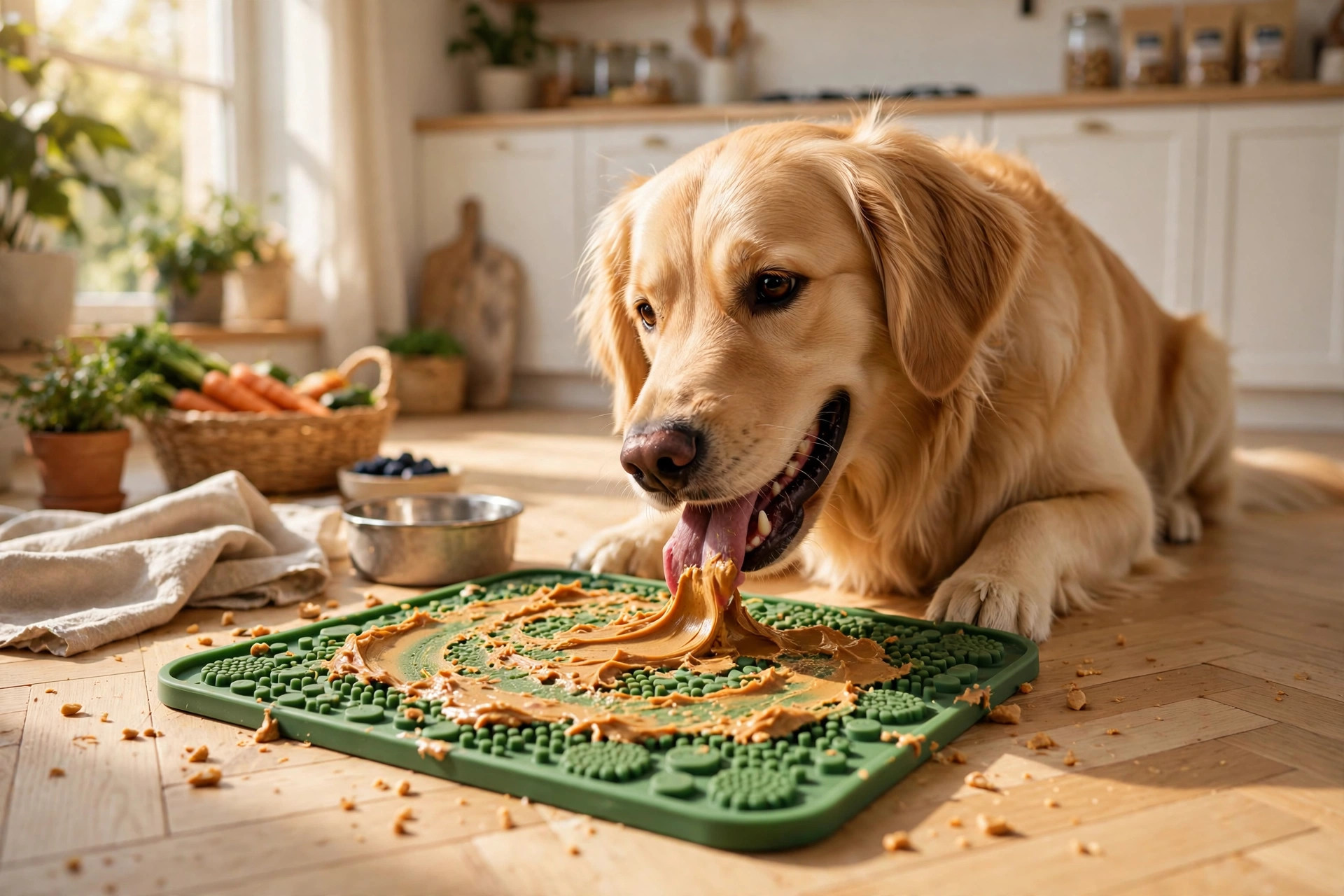
A lick mat is a flat, textured mat — usually made of food-grade silicone or rubber — covered in shallow grooves, bumps, and ridges. You spread a soft food such as xylitol-free peanut butter, plain yogurt, or wet dog food across the surface, and your dog must work their tongue into every groove to get it out. Many mats have suction cups on the back so they stick to floors, walls, or bathtub tiles.
The idea originally came from veterinarians looking for ways to improve dogs’ oral hygiene — more saliva and tongue scraping means a cleaner mouth — but the calming side effect quickly became the headline. Today, lick mats are recommended by vets, trainers, and behaviorists as low-arousal enrichment: brain work that settles dogs down rather than winding them up.
Do Lick Mats Work for Dogs?
Yes — for most dogs, lick mats genuinely work as a calming and enrichment tool. Here is why the science supports them:
Rhythmic licking triggers the parasympathetic nervous system — the body’s “rest and digest” mode. Repetitive licking releases endorphins and dopamine, the same feel-good neurochemicals behind why dogs lick themselves to self-soothe. That is why veterinary behaviorists now include lick mats in low-stress handling protocols for anxious or reactive dogs.
PetMD lists lick mats among food toys that can ease dog anxiety: given before a predictable stressor — fireworks, a storm, a nail trim — they divert the dog’s attention from the trigger and can prevent anxiety from escalating. The key qualifier vets add: they work best for food-motivated dogs. A dog so panicked it refuses food will not be helped by a mat in that moment.
One honest caveat: a lick mat is a support tool, not a cure. It provides a short-term distraction and a calming ritual, but it does not treat the underlying cause of separation anxiety, noise phobia, or chronic stress. For ongoing anxiety, use the mat alongside desensitization training and your veterinarian’s guidance.
5 Vet-Backed Benefits of Lick Mats
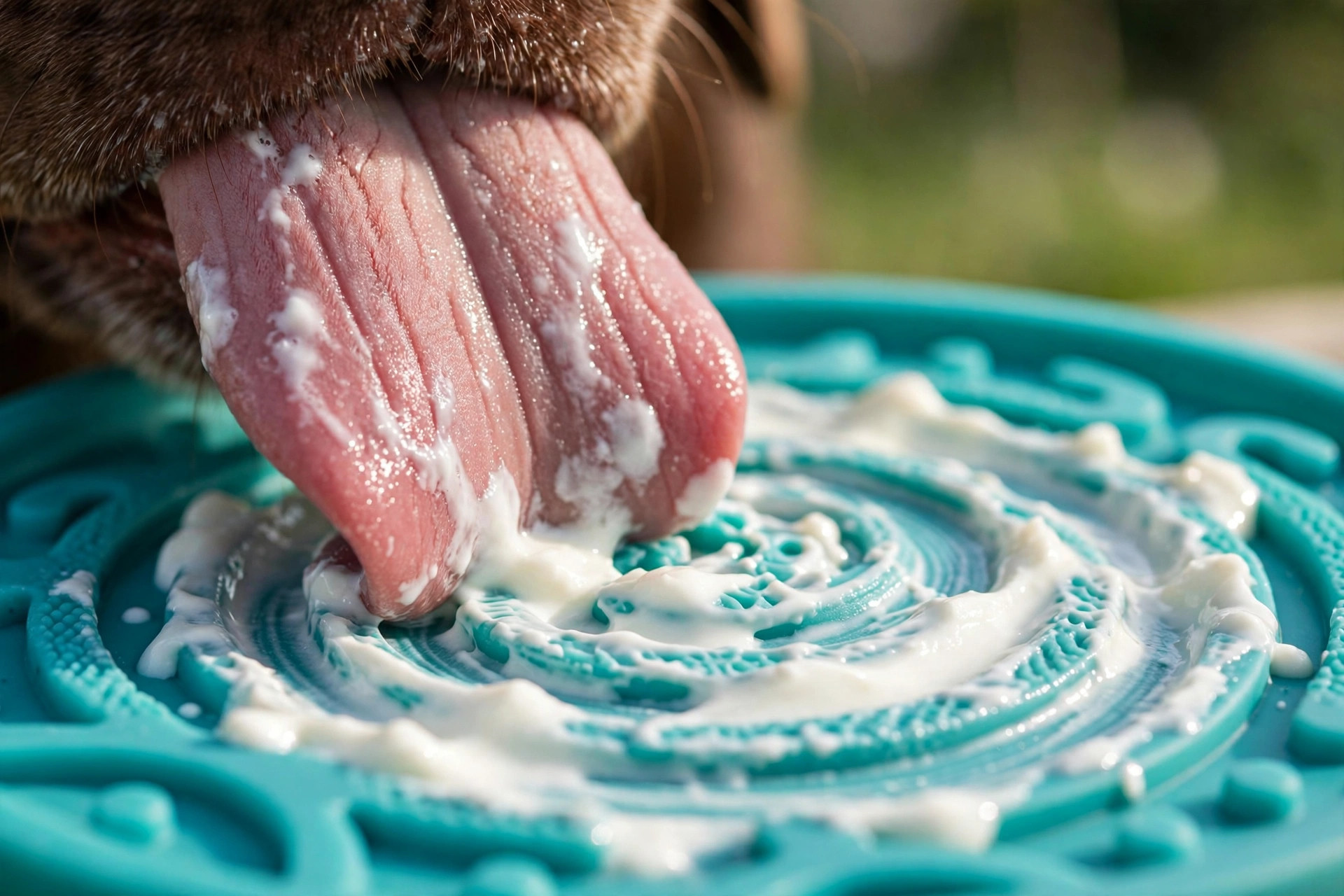
1. Calms Anxiety and Stress
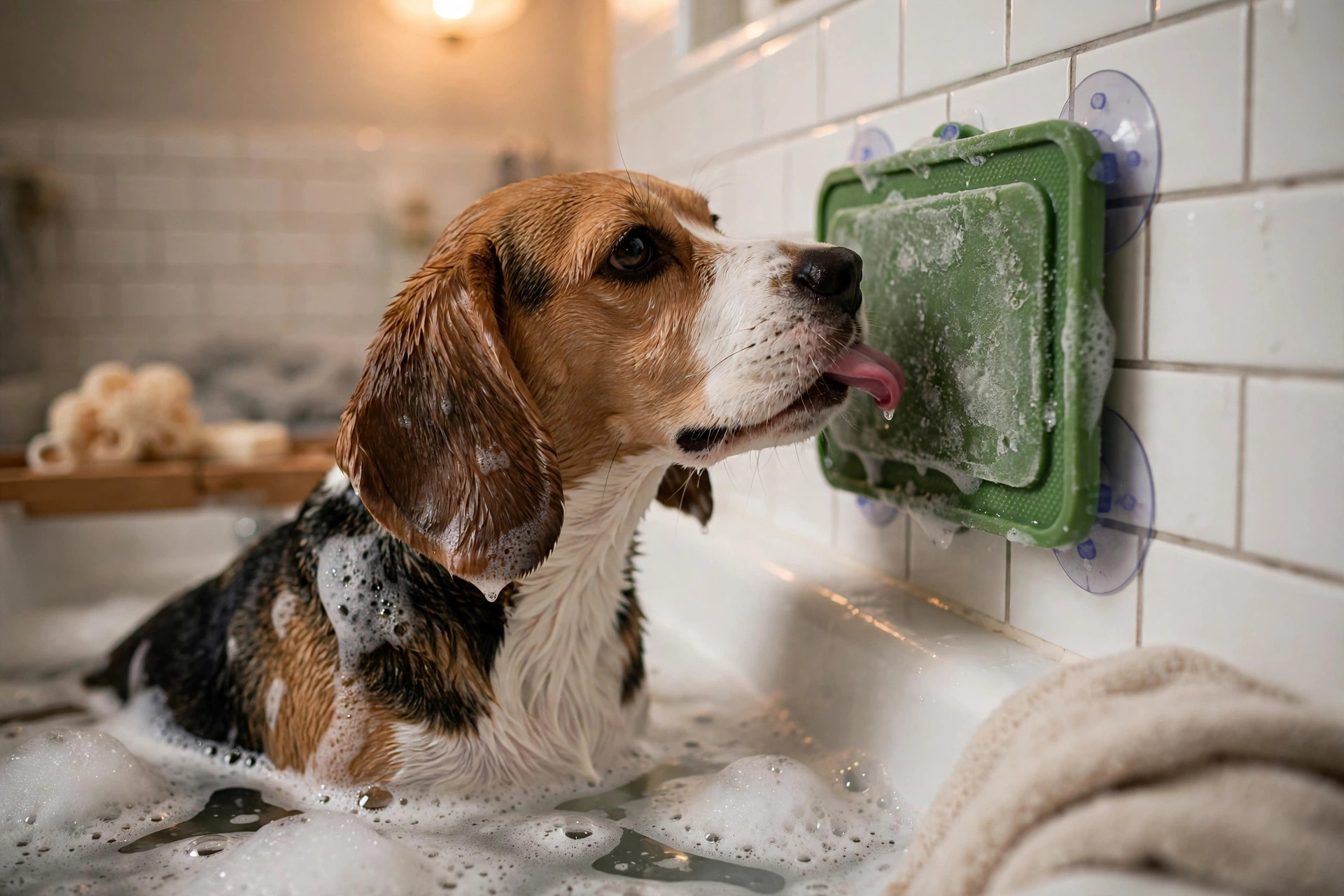
This is the headline benefit. The endorphin release from sustained licking physically calms the dog, which is why lick mats shine during bath time (stick the mat to the shower wall), vet visits, crate rest, thunderstorms, and fireworks. Owners commonly report visibly settling within minutes.
Also Read: Separation Anxiety in Dogs: Signs, Causes & How to Help (2026) — lick mats work best as part of a broader calming plan for anxious dogs.
2. Calm Mental Enrichment
Unlike fetch or tug, which raise arousal, lick mats provide low-energy cognitive enrichment. Working food out of the grooves keeps your dog’s brain engaged without getting them wound up — ideal for post-walk wind-downs, rainy days, apartment living, crate recovery after surgery, and senior dogs that can no longer handle long walks.
3. Slows Down Fast Eaters
Dogs that gulp food risk choking, regurgitation, excess gas, and bloat — especially large, deep-chested breeds. A lick mat turns a 30-second inhale into a 10–20 minute task, particularly when the spread is frozen. It is a gentler alternative to slow-feeder bowls for dogs that prefer soft food.
4. Supports Oral Health and Digestion
The textured surface scrapes food residue off the tongue and stimulates saliva production as the dog licks. More saliva supports healthier teeth and gums between brushings, and slower eating with extra saliva aids digestion and reduces post-meal bloating.
5. Sneaks in Hydration
Spreading water-based foods — plain yogurt, diluted wet food, or frozen broth — helps dogs that do not drink enough get extra fluids in, which is especially useful in summer and for dogs on mostly dry diets.
How to Use a Lick Mat (Step by Step)
- Choose a food-safe mat. Look for food-grade, BPA-free silicone with no loose parts.
- Spread a thin layer of a dog-safe soft food (see the safe list below). For first-timers, make it easy — a light smear of yogurt on top of the grooves.
- Place or stick it. Set it on the floor, or press the suction cups onto a tile, glass door, or bathtub wall for grooming sessions.
- Supervise every session. Stay in the room. If your dog starts chewing the mat instead of licking, redirect them or remove it.
- Freeze for longer sessions. Pop the loaded mat in the freezer for 30–60 minutes before use to stretch a 2-minute lick into 15–20 minutes.
- Wash after each use. Most silicone mats are dishwasher-safe (top rack) — follow the manufacturer’s instructions.
Safe Spreads: What to Put on a Lick Mat
Stick to dog-safe foods only. The 10% treat rule still applies: lick-mat fillings count toward your dog’s daily treat allowance.
| Safe Spreads | Notes |
|---|---|
| Peanut butter (xylitol-free) | The classic — check the label for xylitol/birch sugar, which is deadly to dogs |
| Plain unsweetened yogurt | Plain or Greek, no sweeteners; freezes beautifully |
| Wet/canned dog food | A full or partial meal on the mat doubles as enrichment |
| Pumpkin or sweet-potato purée (plain) | No spices, no pie filling — gentle on digestion |
| Mashed banana or berry purée | Thin layer only due to natural sugar |
| Bone broth or diluted wet food | Freeze for a long-lasting, hydrating session |
Never use: anything with xylitol (birch sugar), chocolate, grapes or raisins, onion or garlic, macadamia nuts, or heavily salted or spiced foods. If your dog has diabetes, kidney disease, or food allergies, check fillings with your vet first.
Should You Freeze a Lick Mat?
Yes — freezing is the single best trick for getting more out of a lick mat. A thin smear of yogurt may take a determined dog two minutes; the same spread frozen solid can hold their focus for 15–20 minutes. Freezing also lets you prep mats in advance and pull one out right before a predictable stressor like a bath or a storm.
Start unfrozen for puppies and beginners so the game feels rewarding, then work up to frozen mats as your dog learns the routine. Thicker, stickier spreads (peanut butter, wet food) freeze better than thin ones.
How to Choose the Right Lick Mat
Three details matter most:
Material
Choose food-grade, BPA-free silicone or rubber — soft enough for sensitive tongues, flexible enough to release food, and easy to wash. Hard plastic mats can irritate gums and are tougher to clean.
Texture and Depth
Deeper, more intricate grooves make the mat more challenging (longer sessions); shallow patterns are easier for beginners, puppies, and flat-faced breeds like pugs and bulldogs with shorter tongues.
Suction and Size
Suction cups let you stick the mat to floors, tile, and shower walls — a game-changer for bath-time use. Size the mat to your dog: a full-meal mat for large breeds should be big enough that food isn’t licked off in seconds. Buy from reputable brands rather than the cheapest listing, since low-quality silicone can tear.
Also Read: What Is a Pupsicle? The Freezable Dog Toy Guide (2026) — the viral frozen enrichment toy for dogs that need an even longer challenge.
6 Lick Mat Mistakes to Avoid
1. Leaving Your Dog Unsupervised
The number-one safety rule. A bored dog left alone with a silicone mat may start chewing it, and torn-off pieces are a choking and intestinal-blockage hazard. Lick-mat time is always together time.
2. Using It With a Power Chewer
Dogs that destroy rubber toys will shred a lick mat. If yours tries to bite rather than lick, remove it immediately and redirect to a tougher enrichment toy instead.
3. Choosing Xylitol-Containing Peanut Butter
Some peanut butters now use xylitol (also labeled “birch sugar”) — it is acutely toxic to dogs even in small amounts. Read every label, every time.
4. Overfilling the Calories
Thick layers of peanut butter add up fast. Spread thinly, measure the amount, and count it toward the 10% daily treat allowance. Use part of your dog’s measured meal on the mat rather than adding extra food on top.
5. Skipping the Washing
Saliva and food residue in warm grooves breed bacteria quickly. Rinse or dishwasher-wash after every use and air-dry fully — retire any mat that stays smelly after washing or shows tears.
6. Expecting It to Fix Serious Anxiety
A lick mat soothes the moment but does not treat separation anxiety, noise phobias, or chronic stress at their root. If your dog’s anxiety is severe or worsening, see your veterinarian about behavior modification and possible medication.
Lick Mat vs Snuffle Mat vs Stuffed Kong
How do lick mats compare with the other popular enrichment tools?
| Toy | Best For | Typical Session |
|---|---|---|
| Lick mat | Calming during baths, grooming, storms; low-energy enrichment | 2–20 min (frozen lasts longest) |
| Snuffle mat | Nose work, fast eaters, foraging instinct | 10–15 min |
| Stuffed Kong | Longer licking-based challenge, crate training | 20–40 min frozen |
Many owners rotate all three: the lick mat wins on convenience (no stuffing, seconds to prepare), the snuffle mat wins for nose work, and the frozen Kong wins for maximum duration.
Also Read: What Is a Snuffle Mat? Dog Enrichment Guide (2026) — the fleece foraging mat that turns mealtime into a sniffing game.
Frequently Asked Questions
Do lick mats really calm dogs down?
Yes. Repetitive licking releases calming endorphins and activates the parasympathetic (“rest and digest”) nervous system. Vets recommend lick mats for bath time, grooming, thunderstorms, and vet visits. They work best for food-motivated dogs and for mild-to-moderate stress.
Can puppies use lick mats?
Yes — dogs of any age can use lick mats. For puppies, start with a shallow-textured mat and a thin, easy spread, and supervise closely since puppies may try to chew the mat, which can be a choking hazard.
How long can a dog use a lick mat?
It depends on the dog and the filling. A thin spread of peanut butter may last 2–3 minutes; a frozen yogurt or wet-food mat can keep a dog busy for 15–20 minutes. Keep most sessions under 30 minutes and count the fillings toward daily treat calories.
Are lick mats good for fast eaters?
Yes. By forcing your dog to lick food out of grooves instead of gulping, lick mats slow eating, increase saliva production, and reduce risks like choking, regurgitation, and excess air swallowing that contributes to bloat.
Can lick mats help with separation anxiety?
They can help as part of a broader plan — the calming ritual gives an anxious dog something soothing to focus on. But a lick mat alone does not treat separation anxiety; pair it with desensitization training and your vet’s guidance.
What is the safest food to put on a lick mat?
Xylitol-free peanut butter, plain unsweetened yogurt, and plain canned pumpkin are the safest, most popular options. Always avoid xylitol/birch sugar, chocolate, grapes, onion, garlic, and macadamia nuts.
Can lick mats damage my dog’s tongue?
No — quality food-grade silicone mats are soft and safe for licking. The grooves may scrape food debris off the tongue, which is actually a mild oral-health benefit. Stop using the mat if you notice any soreness or bleeding and check with your vet.
Final Thoughts
So, do lick mats work for dogs? Yes — for most dogs, they are a genuinely effective calming and enrichment tool: the rhythmic licking soothes nerves, slows gulpers, and gives bored pups a healthy job. Keep the formula simple: a food-safe silicone mat, thin layers of dog-safe spreads, freeze it for longer sessions, and always supervise. And remember — the mat is a support tool. If your dog’s anxiety, fear, or destructive behavior persists or worsens, your veterinarian is the best next call.
By Dr. Ayaz Ali, Veterinarian
Dr. Ayaz Ali is a practicing veterinarian with years of experience in small-animal care. He writes evidence-based pet health guides for Pets Addicters.