
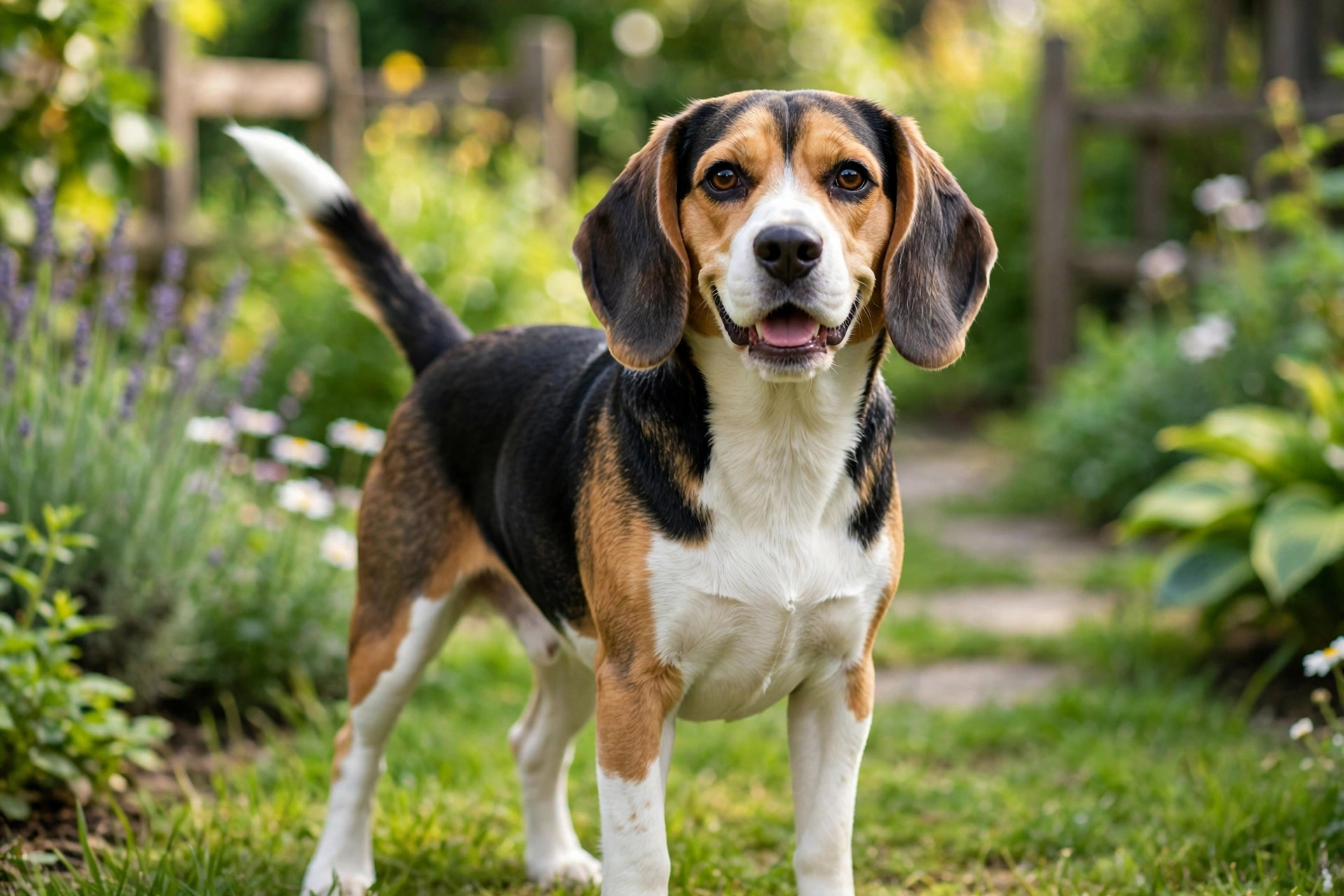
If you have ever watched a Beagle follow a scent across a park with total single-minded focus, ears flopping and tail wagging, you already understand the breed’s charm. Friendly, funny, and famously ruled by its nose, the Beagle is one of the most popular family dogs in the world. This complete beagle breed guide gives you the honest picture: temperament, size, exercise and training needs, grooming, feeding, health risks, and the real cost of ownership, so you can decide if this merry little hound truly fits your life.
Beagles were bred in England to hunt hares in packs, following scent on foot while hunters walked behind. That working history still shapes everything about them today: the stamina, the sociable pack nature, the food obsession, and the voice that carries across a field. They are wonderful companions in the right home, and a handful in the wrong one.
Table of Contents
- Beagle Breed at a Glance
- Beagle Temperament and Personality
- Size, Appearance and Coat
- Exercise and Training Needs
- Grooming and Shedding
- Feeding Your Beagle
- Beagle Health Issues to Know
- Is a Beagle Right for You?
- Beagle Puppy and Breeder Tips
- Frequently Asked Questions
Beagle Breed at a Glance
| Trait | Details |
|---|---|
| Origin | England, refined in the 1800s for hare hunting |
| AKC group | Hound |
| Size | 13-15 in tall; under 20 lbs (13-inch variety) or 20-30 lbs (15-inch variety) |
| Lifespan | 10-15 years |
| Coat | Short, dense double coat; tricolor, red and white, or lemon and white; moderate shedding |
| Energy level | High: needs at least 1 hour of exercise daily |
| Temperament | Merry, friendly, curious, food-motivated |
| Good with kids/pets | Excellent with children and usually great with other dogs |
| Watchdog ability | Will announce visitors loudly, but too friendly to guard |
| Best for | Active families who are home often and can live with some noise |
The American Kennel Club recognized the Beagle in 1885, and the breed has ranked among its most popular dogs for decades, currently sitting at number 7. The breed standard describes the ideal Beagle as “a miniature Foxhound, solid and big for his inches,” and the Royal Kennel Club calls it a “merry hound”: bold, active, full of stamina, and even-tempered. For authoritative breed-standard details, see the PetMD Beagle breed page.
Beagle Temperament and Personality
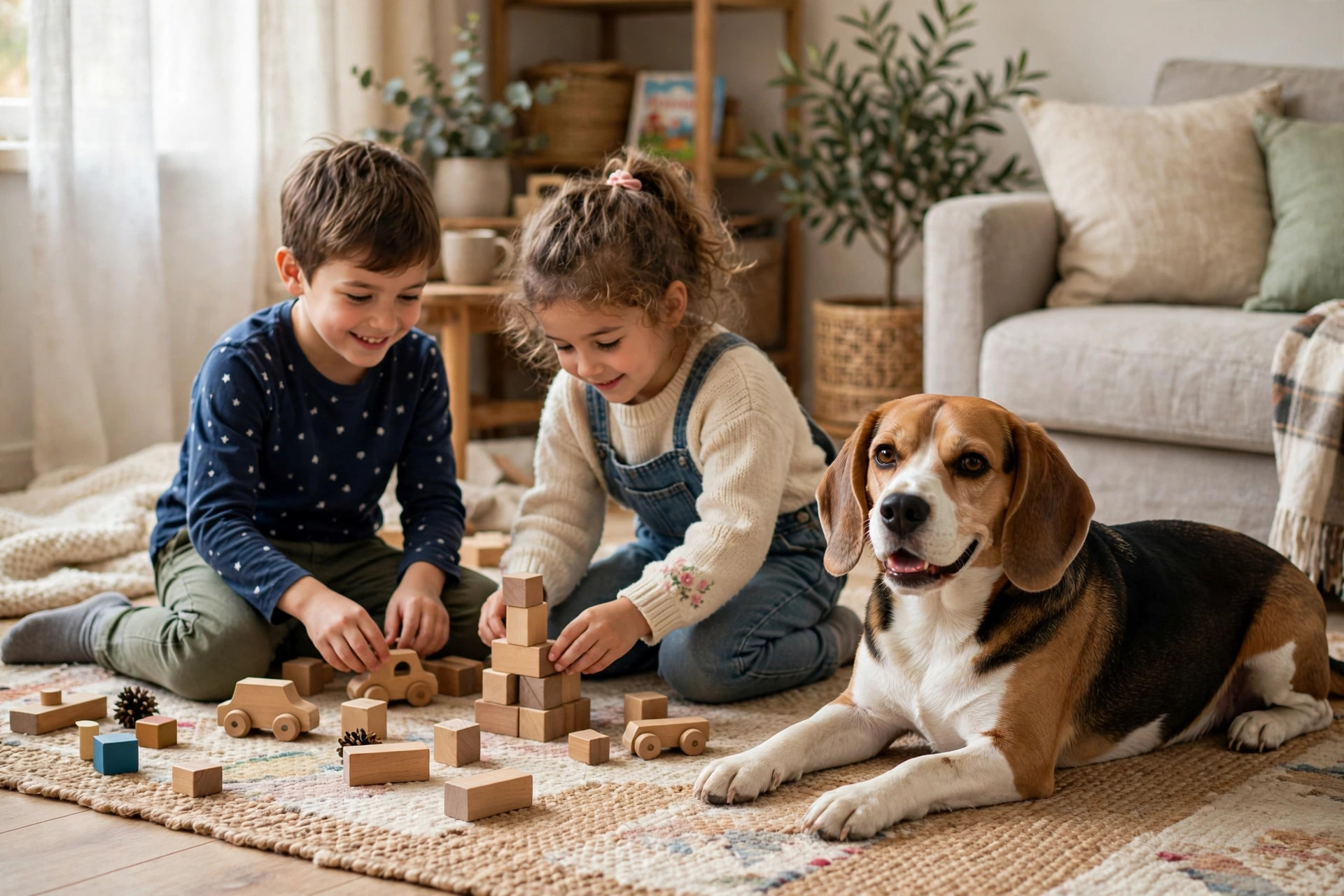
The Beagle temperament comes down to three drives: people, food, and scent. Get those three right and you get one of the friendliest dogs you can bring home. Get them wrong and you get a bored, baying escape artist raiding the kitchen bin.
1. Merry and Deeply Sociable
Beagles were bred to work in packs, so they are naturally sociable with other dogs and people alike. They are gentle and usually tolerant with children, and they genuinely prefer being part of family life to watching it from another room. The AKC describes the breed as merry, friendly, and curious, and that single word, merry, captures the Beagle personality better than any other.
2. Ruled by the Nose
A Beagle experiences the world through its nose first. Once it catches an interesting scent, it can lock on and stop hearing you entirely. That is why the essential rule of Beagle ownership is simple: never let a Beagle off leash in an unfenced area. A Beagle that catches a rabbit trail will follow it to the end of the earth, roads included. Secure fencing and a reliable leash are not optional extras with this breed.
3. Loud, Proud, and Musical
Beagles are not quiet dogs. They bark, they bay (a long, drawn-out howl), and some produce the famous Beagle “yodel.” They will announce visitors, squirrels, and the post carrier with equal enthusiasm. If you live in an apartment with thin walls or noise-sensitive neighbors, this is the trait to think hardest about before committing.
4. Food-Obsessed and Clever
Beagles love food more than almost any other breed, which makes training with treats easy, and kitchen security a daily job. They will counter-surf, open cupboards, and steal food given half a chance. They are also independent thinkers: bred to make their own decisions on a trail, they can be stubborn when a command conflicts with something more interesting. Patience and consistency beat force every time with this breed.
Also Read: Golden Retriever Breed Guide: Temperament, Care and Health (2026) — another famously friendly family breed, with a very different energy profile.
Size, Appearance and Coat
Beagles are small but sturdy dogs, built for endurance rather than speed. The AKC recognizes two size varieties, divided at the 13-inch mark: the 13-inch variety stands 13 inches and under at the shoulder and usually weighs under 20 lbs, while the 15-inch variety stands over 13 and up to 15 inches and weighs about 20-30 lbs. Both are the same breed and share the same working instincts.
The classic Beagle look is the tricolor coat: a black saddle across the back, white legs, chest, and belly, tan on the head and around the saddle, and a white tip on the tail that hunters could spot in tall grass. Red and white and lemon and white are also common. The coat is short, dense, and weather-resistant, with long, soft ears set low on the head and soulful brown eyes.
Do not let the small size fool you: a Beagle is a solid, muscular little athlete. The breed standard’s phrase “solid and big for his inches” is literal. Pick one up and you will feel how dense and strong they are for a 25-pound dog.
Exercise and Training Needs
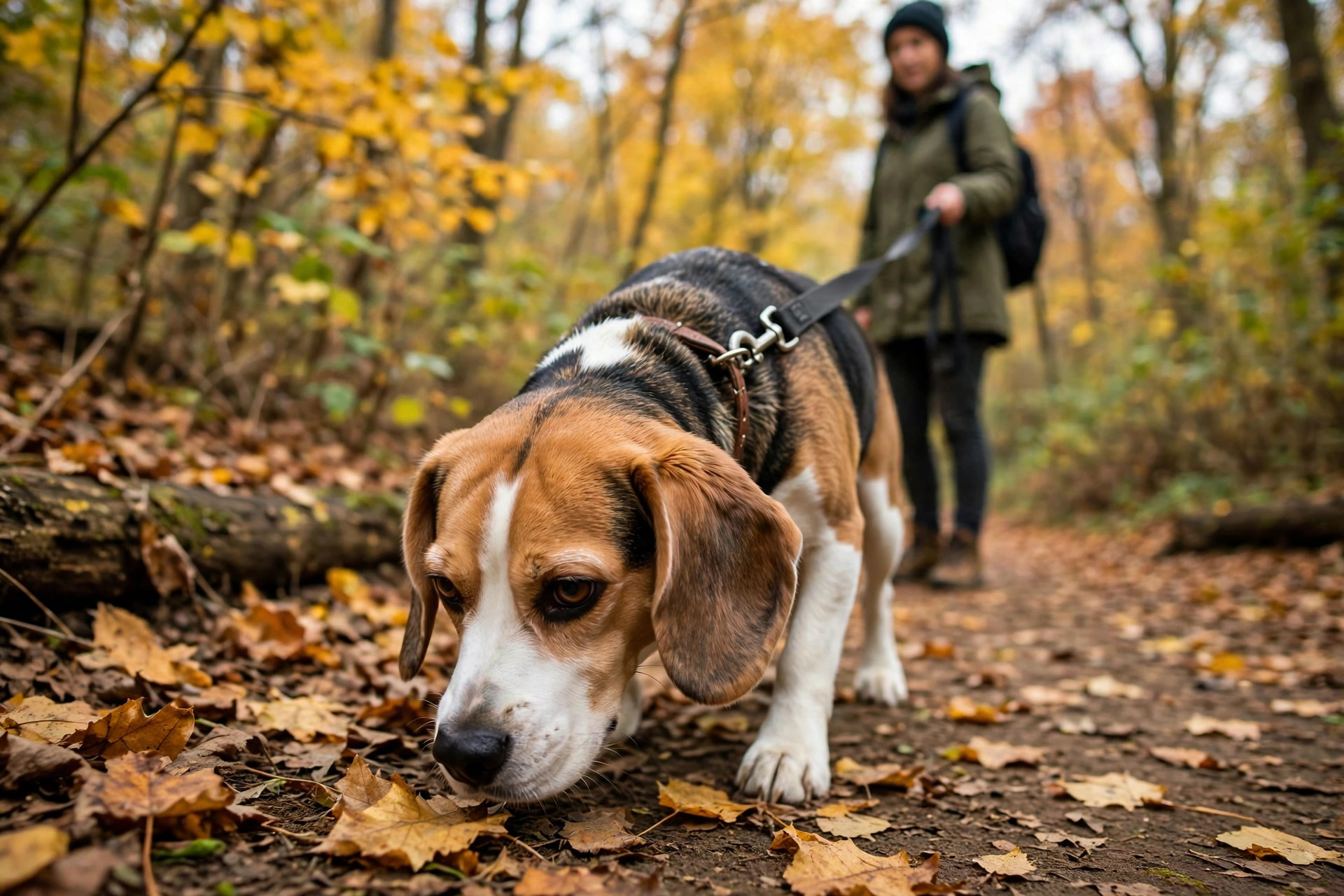
Despite their small size, Beagles are energetic dogs that need at least an hour of activity every day, and the best of that activity involves the nose. Brisk leashed walks are the foundation, but let your Beagle sniff: a slow, sniff-heavy walk tires a Beagle out far more than the same distance at a brisk march. Scent games, hide-the-treat puzzles, and tracking exercises are ideal mental workouts for this breed.
Training a Beagle takes patience. They are intelligent and food-motivated, so positive reinforcement works well, but their nose distracts them easily and they can be stubborn when a scent wins. Keep sessions short, fun, and reward-heavy, and start recall training early, always on a long line in safe areas. A Beagle that will come back when called is a Beagle you trained deliberately, not one that came that way.
An under-exercised Beagle gets destructive: digging, chewing, baying, and escaping are the classic symptoms of a Beagle that has not burned off its energy. A tired Beagle, by contrast, is a calm, funny, affectionate companion curled up at your feet.
Also Read: Why Does My Dog Lick His Paws? Vet Explains (2026) — Beagles are prone to allergies and itchy paws, so know the warning signs.
Grooming and Shedding
Beagles are relatively low-maintenance dogs in terms of grooming, but they have specific needs you should not skip. The short, dense coat sheds moderately all year, with heavier shedding in spring and fall. A weekly brush with a rubber grooming mitt or bristle brush keeps shedding under control and doubles as a health check.
The ears need the most attention. Those long, floppy ears trap moisture and limit airflow, which is why ear infections are one of the breed’s most common problems. Check the ears weekly, wipe them gently with a vet-approved ear cleaner, and watch for redness, odor, or head shaking. Bathe every 4-6 weeks with a dog-specific shampoo, trim nails every 3-4 weeks, and brush teeth regularly, since dental disease is common in the breed.
Feeding Your Beagle
Feed a high-quality, balanced dog food appropriate for your dog’s age, with measured portions, never free-fed. Beagles are famously food-motivated, and an unmeasured bowl is the fastest route to an overweight dog. A typical adult eats roughly 1-1.5 cups of dry food per day, divided into two meals, but follow your vet’s guidance over any generic chart.
Treats should stay within the 10% treat rule: all extras combined under 10% of daily calories. Use food puzzles and slow feeders to make meals last longer, since Beagles tend to inhale their food. Keep counters clear, bins latched, and chocolate and xylitol products out of reach, because a determined Beagle will find them.
Beagle Health Issues to Know
Beagles are a generally healthy, long-lived breed, with a median lifespan of 12.5 years in a large 2024 UK study and an AKC life expectancy of 10-15 years. Still, every breed has its own list of conditions worth knowing about before you commit.
1. Ear Infections
The breed’s most common everyday problem. In a UK study of 2016 veterinary records, 14.7% of Beagles were diagnosed with an outer ear infection within a year, compared with 7.3% of dogs overall. Long ears, moisture, and allergies combine to make the ear canal a warm, damp trap. Weekly ear checks and prompt vet visits for head shaking or odor are the best defense.
2. Obesity
The number one health concern for the breed. In the same UK research, Beagles carried the second-highest risk of being overweight of any breed. Extra weight strains the joints and spine, worsens breathing, and shortens life. Measure every meal, limit treats, and keep your Beagle lean: you should be able to feel, but not see, the ribs.
3. Hypothyroidism
An underactive thyroid gland is common in Beagles and is thought to be at least partly inherited. It causes weight gain, lethargy, and coat changes. It is diagnosed with a blood test and managed with daily medication.
4. Epilepsy
Beagles have a higher-than-average incidence of idiopathic epilepsy, seizures with no identified cause. It usually appears in young to middle-aged dogs and is typically manageable with medication. The National Beagle Club also lists allergies, hip dysplasia, and back problems among the breed’s most common concerns.
5. Back Problems (IVDD)
Beagles are a chondrodystrophic breed, meaning their discs degenerate earlier than in many other breeds. Research from UC Davis found that Beagles carry a gene variant linked to early disc disease at high frequency. Keeping your Beagle lean, avoiding jumping from heights, and using ramps for the car and sofa all reduce the risk.
6. Eye Problems and Inherited Conditions
Cherry eye, a prolapse of the third-eyelid gland, most often appears in dogs under two years old, and Beagles are among the breeds predisposed to it. Responsible breeders also screen for inherited conditions such as Lafora disease, a progressive form of epilepsy, Musladin-Lueke syndrome, which causes tight skin and stiff joints, and neonatal cerebellar cortical degeneration. DNA tests exist for these conditions, so always ask a breeder for the results.
Schedule vet checkups at least annually, twice a year for seniors. Early screening is the difference between a manageable condition and a crisis.
Is a Beagle Right for You?
A Beagle is a great fit if: you are active and can provide at least an hour of exercise daily, much of it sniffy; you want a friendly, funny, deeply sociable family dog; you are home often enough to avoid leaving the dog alone all day; and you can accept shedding, noise, and a nose that runs the show.
Reconsider if: you want a quiet dog, an off-leash hiking companion, or a low-maintenance pet; you live in a small apartment with noise-sensitive neighbors; you are away 10+ hours a day; or you cannot commit to secure fencing and leashed walks for the dog’s whole life.
Also Read: Pit Bull Breed Guide: Temperament, Myths and Care (2026) — another high-energy, people-loving breed with very different training demands.
Beagle Puppy and Breeder Tips
If you decide on a Beagle, choose your source carefully. A responsible breeder will:
- Provide written health clearances and DNA test results (including Musladin-Lueke syndrome) for both parents, not just a verbal assurance
- Raise puppies in a home environment with early socialization, and offer a written health guarantee, typically 1-2 years for genetic conditions
- Ask you questions about your home and lifestyle, since good breeders screen buyers too, and never sell unvaccinated, unregistered puppies “cheap, no papers”
Expect to pay roughly $500 to over $1,000 for a pet-quality puppy, plus $1,000-$2,000 in first-year supplies and vet costs, and $1,000-$1,700 per year after that. Also consider Beagle-specific rescues: adult Beagles regularly need homes, and an adult’s temperament, size, and health are already known.
Frequently Asked Questions
Are Beagles good family dogs?
Yes, they are among the best. Beagles are patient, gentle, and tolerant with children, highly sociable, and usually great with other dogs. The trade-offs are their noise, their nose-driven wandering, and their food obsession.
How long do Beagles live?
10-15 years on average, with a median of 12.5 years in a large 2024 UK study. Keeping your Beagle lean, well-exercised, and on a vet-monitored health plan gives it the best shot at the long end of that range.
Do Beagles shed a lot?
Moderately. Expect steady shedding year-round with heavier seasonal blow-outs in spring and fall. Brush weekly and never shave the coat.
Are Beagles hypoallergenic?
No. No dog breed is truly hypoallergenic, and Beagles shed and produce dander, so they are a poor choice for allergy sufferers.
How much exercise does a Beagle need?
At least an hour of daily exercise for a healthy adult: walks, sniffing games, scent work, or hiking on leash, plus training and mental enrichment.
Can Beagles be left alone all day?
No. Beagles are pack dogs that hate long stretches alone. Left alone for 10+ hours they often develop separation anxiety, baying, and destructive chewing. They suit households where someone is home most of the day.
Are Beagles hard to train?
They are intelligent but independent, so training takes patience. They respond well to positive reinforcement and food rewards, but their nose distracts them easily. Start early, keep sessions short, and never let them off leash in unfenced areas.
Final Thoughts
So, is a Beagle right for you? If you want a merry, friendly, endlessly curious companion and you are ready to match its energy, daily sniffy walks, regular ear checks, measured feeding, and proactive vet care, few breeds reward you like a Beagle.
Just go in with open eyes: accept the shedding and the baying, commit to the exercise, secure your fencing, insist on health-tested parents, and stay vigilant about ears, weight, and joint health for your dog’s whole life. Do that, and you will understand why Beagle owners keep saying the same thing: once you live with one, no other dog quite compares.
By Dr. Ayaz Ali