

One unexpected vet bill can turn a normal week into a financial crisis. A dog that swallows a sock, a cat with a urinary blockage, a cruciate ligament tear on a weekend walk — any of these can cost thousands of dollars in a single visit. That is when most owners ask: is pet insurance worth it, or is it just another monthly bill? This guide covers the real 2026 costs, what policies cover, the exclusions, and how to decide.
Table of Contents
- What Is Pet Insurance and How Does It Work?
- How Much Does Pet Insurance Cost in 2026?
- What Does Pet Insurance Cover?
- What Pet Insurance Does Not Cover
- Is Pet Insurance Worth It for Dogs?
- Is Pet Insurance Worth It for Cats?
- When Pet Insurance Is NOT Worth It
- How to Choose the Right Plan
- Pet Insurance vs. Saving on Your Own
- Frequently Asked Questions
What Is Pet Insurance and How Does It Work?
Pet insurance is a monthly policy that reimburses you for a share of unexpected vet bills. It works differently from human health insurance: there is no copay at the clinic desk. You pay the vet bill in full, submit the itemized invoice, and get reimbursed — usually 70% to 90% of the covered amount, after you meet your annual deductible.
Three numbers decide almost every policy: the deductible (commonly $250, $500, or $1,000 a year), the reimbursement rate (usually 70%, 80%, or 90%), and the annual limit (from $5,000 to unlimited). A higher deductible means a lower premium.
Almost every policy has a waiting period before cover begins: typically a few days for accidents and around 14 days for illnesses, with up to six months for orthopedic conditions such as cruciate ligament injuries. Anything diagnosed during the waiting period is treated as pre-existing and excluded. Enrollment is growing fast — about 7.6 million pets were insured across North America at the end of 2025, according to the North American Pet Health Insurance Association (NAPHIA).
How Much Does Pet Insurance Cost in 2026?
According to NAPHIA’s 2026 State of the Industry Report, the average accident-and-illness premium in the United States is about $836 a year for dogs (roughly $70 a month) and $435 a year for cats (roughly $36 a month). Accident-only plans are far cheaper — around $190 a year for dogs and $112 for cats — but they cover injuries only, not illness.
| Plan type | Dogs (per year) | Cats (per year) |
|---|---|---|
| Accident-only | ~$190 | ~$112 |
| Accident and illness | ~$836 | ~$435 |
| Accident, illness and wellness | ~$1,414 | ~$859 |
Your quote will differ from these averages. Premiums climb steeply as a pet ages, large breeds and brachycephalic breeds (such as French Bulldogs and Pugs) usually cost more, and prices are higher in cities where vet care costs more. Enrolling a pet while it is young and healthy is almost always cheaper than waiting — by then, any problem that has appeared may already be excluded as pre-existing.
What Does Pet Insurance Cover?
Most accident-and-illness plans cover the big, unexpected costs owners fear most: accidents (broken bones, lacerations, bite wounds, torn ligaments, toxic ingestion, swallowed objects), illnesses (infections, cancer, diabetes, kidney disease, heart problems, arthritis, allergies, digestive disease), emergency care and hospitalization, diagnostics such as X-rays, ultrasounds, MRIs and bloodwork, surgery and prescription medication, and hereditary conditions such as hip dysplasia, which most major insurers cover.
The most common claims show how ordinary the big bills can be. Nationwide’s claims data lists skin allergies and diarrhea or intestinal upset as the top claims for dogs, and intestinal upset and urinary tract infections as the top claims for cats. These everyday problems can still cost hundreds or thousands of dollars to treat.
Also Read: Pet Emergency First Aid: Vet Guide (2026)
What Pet Insurance Does Not Cover

Understanding the exclusions matters more than understanding the cover, because this is where owners get disappointed. Standard policies typically do not cover pre-existing conditions (any illness or symptom your pet had before the policy took effect — usually excluded permanently for that condition), routine and preventive care (annual checkups, vaccines, dental cleanings, flea and tick prevention, and spay or neuter surgery, unless you pay extra for a wellness rider), cosmetic and elective procedures, or breeding and pregnancy costs.
Some insurers distinguish between curable and incurable pre-existing conditions: a one-off ear infection that fully resolved a year ago may eventually become eligible again, while a chronic condition such as diabetes never will. Never hide a known condition — insurers request vet records when you claim, and undisclosed history can void a claim.
Is Pet Insurance Worth It for Dogs?
For most dogs, yes — because dogs get into trouble more often and their emergencies cost more. Foreign-body surgery, cruciate ligament repair, and bloat surgery are among the most expensive common procedures: bloat surgery alone typically costs $2,000 to $7,500 or more, and cancer treatment can run $5,000 to $10,000 and beyond.
Do the rough math. At about $70 a month, a dog’s accident-and-illness policy costs roughly $840 a year. One $5,000 emergency, reimbursed at 80% after a $500 deductible, returns about $3,600 — more than four years of premiums in a single claim. That is the nature of insurance: you are buying the ability to say yes to treatment without checking your bank balance first.
Insurance makes the most sense for dogs if your dog is a breed prone to expensive health problems, your dog is young and still insurable at a low premium, or a surprise $3,000 bill would force you into debt.
Is Pet Insurance Worth It for Cats?
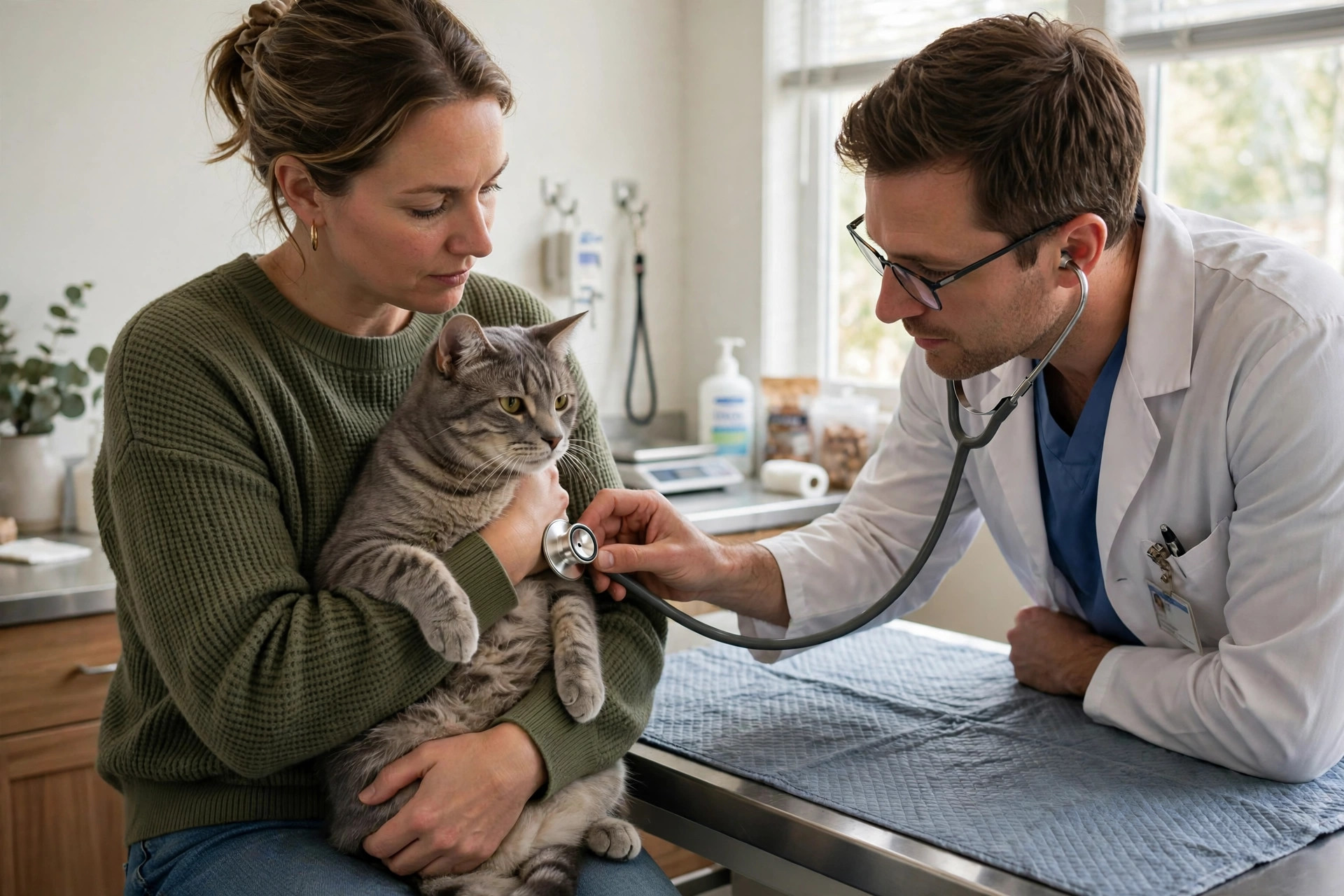
Cats are cheaper to insure — about $36 a month on average — and their emergencies are just as real. Urinary blockages in male cats are a classic example: a blocked cat is a genuine emergency that can cost $1,500 to $3,000 or more to treat, and it can recur. Chronic kidney disease, hyperthyroidism, diabetes, and dental disease are the expensive long-term conditions that define older cats, and once a cat is diagnosed, no new policy will cover that condition.
The case for insuring a cat is strongest for indoor-outdoor cats, purebred cats with known hereditary risks, and owners who want cover for the senior years, when claims spike. It is weakest for a young, healthy indoor cat whose owner has a dedicated emergency fund. For both species, the timing rule is the same: insure early. Premiums are lowest and exclusions fewest when a pet is young and healthy.
Also Read: Senior Cat Checkups: 7 Vet Screenings for Cats Over 7 (2026)
When Pet Insurance Is NOT Worth It
Pet insurance is not right for everyone. It is probably not worth it if you have a large, dedicated emergency fund — if you can comfortably pay a $5,000 vet bill tomorrow without debt, self-insuring is usually cheaper over a pet’s lifetime, because insurers pay out only about 50–60 cents of every premium dollar in claims. It is also a poor buy if your pet already has a chronic condition (the condition that matters most will be excluded), if your pet is very old and uninsured (senior-dog premiums can exceed $150–$200 a month), or if you would decline an expensive surgery regardless of cover. Finally, if you cannot afford the monthly premium reliably, a lapsed policy leaves you with neither cover nor savings — a small automatic transfer into a pet emergency fund is better than a policy you will cancel.
How to Choose the Right Plan
If you decide pet insurance is worth it, choose carefully — policies differ far more than their prices suggest:
- Accident and illness vs. accident-only: accident-only plans are cheap but useless for the illnesses that cause most big bills. For most owners, accident-and-illness cover is the right baseline.
- Reimbursement and deductible: an 80% reimbursement rate with a $500 deductible is a common middle ground. Run the numbers for a $3,000 bill at each level before you choose.
- Annual limit: a $5,000 limit sounds generous until a cancer case costs $9,000. Unlimited annual cover costs more, but it removes the worst-case gap.
- Waiting periods and exclusions: check the illness waiting period, the orthopedic waiting period, and how the insurer treats pre-existing conditions.
- Wellness rider — usually skip it: wellness add-ons mostly prepay routine care you could budget for yourself. Spend the money on accident-and-illness cover instead.
Get quotes from at least three insurers for the same pet, deductible, and reimbursement level, and read the sample policy — not just the marketing page — before you pay. Prices change every year, so treat any figure in this guide as a 2026 benchmark, not a quote.
Also Read: Fall Pet Wellness Checkup: What to Get Done Before Winter (2026)
Pet Insurance vs. Saving on Your Own
The honest alternative to insurance is a dedicated pet emergency fund: an automatic monthly transfer into a separate savings account that you never touch except for vet bills. Put aside the same $70 a month you would pay in premiums for a dog, and you would have $840 after a year and $4,200 after five years — yours to keep if your pet stays healthy.
The catch is timing. Emergencies do not wait for your fund to grow. A $4,000 foreign-body surgery in month three of saving leaves you $3,790 short, while the same month’s insurance policy would reimburse most of it. Insurance protects against bad luck early; savings win if your pet stays healthy for years. Many owners split the difference: a high-deductible, lower-premium policy for catastrophes, plus a modest emergency fund for the deductible and routine care.
For a second opinion on the numbers, see NerdWallet’s 2026 guide to whether pet insurance is worth it.
Frequently Asked Questions
Is pet insurance worth it for an indoor cat?
Often, yes. Indoor cats still develop urinary blockages, kidney disease, and cancer, and they swallow string and hair ties. At roughly $36 a month, cat cover is the cheapest in pet insurance.
Does pet insurance cover pre-existing conditions?
No. No standard policy covers a condition your pet had or showed symptoms of before enrollment. Some insurers will reconsider a fully cured, one-off condition after a symptom-free period.
How much is pet insurance per month in 2026?
Accident-and-illness cover averages about $70 a month for dogs and $36 a month for cats in the United States, per NAPHIA’s 2026 report. Accident-only plans average about $16 a month for dogs and $9 for cats.
Is pet insurance worth it for an older dog?
It depends on the premium. Senior-dog premiums can run $100–$220 a month or more, and any condition already diagnosed will be excluded. Compare the annual premium against your emergency fund first.
Does pet insurance cover routine vet visits and vaccines?
Not on a standard plan. Routine checkups, vaccines, dental cleanings, and flea and tick prevention need a wellness add-on, which usually costs more than paying for routine care directly.
What is the best age to get pet insurance?
As young as possible — ideally as a puppy or kitten, while your pet is still healthy. Premiums are lowest then, and no conditions exist yet to be excluded as pre-existing.
Final Thoughts
So, is pet insurance worth it? For most dog and cat owners, yes — not because it saves money on average, but because it removes the worst decision a pet owner can face: choosing between a treatment your pet needs and a bill you cannot pay. At roughly $70 a month for dogs and $36 for cats, accident-and-illness cover buys peace of mind against the $3,000–$7,000 emergencies that happen to ordinary, healthy pets every day.
It is not worth it if you already hold a solid emergency fund, if your pet’s main condition is already excluded, or if the premium itself would strain your budget. Whatever you decide, decide it while your pet is healthy — that is when cover is cheapest and exclusions are fewest. And if you skip insurance, start the emergency fund today, not after the first scare.
By Dr. Ayaz Ali