
By Dr. Ayaz Ali
If you have noticed your cat visiting the water bowl far more often than usual, you are right to ask: why is my cat drinking more water? A sudden change in thirst is one of the most useful early warning signs in cats, because cats are usually very steady drinkers. A small, short-lived increase can be harmless, but a clear, lasting increase often means the body is losing more water than normal — and that deserves attention.
The short answer is that increased thirst in cats, called polydipsia, has both everyday causes and medical ones. A switch to dry food, warm weather, or extra play can all nudge intake up for a few days. But when drinking stays high, especially alongside more urine, weight loss, or a change in appetite, the most common medical causes are chronic kidney disease, diabetes mellitus, and hyperthyroidism. In this guide, we walk through how much water is normal, how to measure it at home, what each cause looks like, and the red flags that mean you should call your vet promptly.
Table of Contents
- How Much Water Should a Cat Drink?
- How to Measure Your Cat’s Water Intake at Home
- Everyday Reasons a Cat Drinks More Water
- Chronic Kidney Disease: The Most Common Cause in Senior Cats
- Diabetes Mellitus in Cats
- Hyperthyroidism: The Overactive Thyroid
- Other Medical Causes of Increased Thirst
- Red Flags: When to Call the Vet Right Away
- What Happens at the Vet Visit?
- How to Help at Home While You Wait
- Frequently Asked Questions
How Much Water Should a Cat Drink?
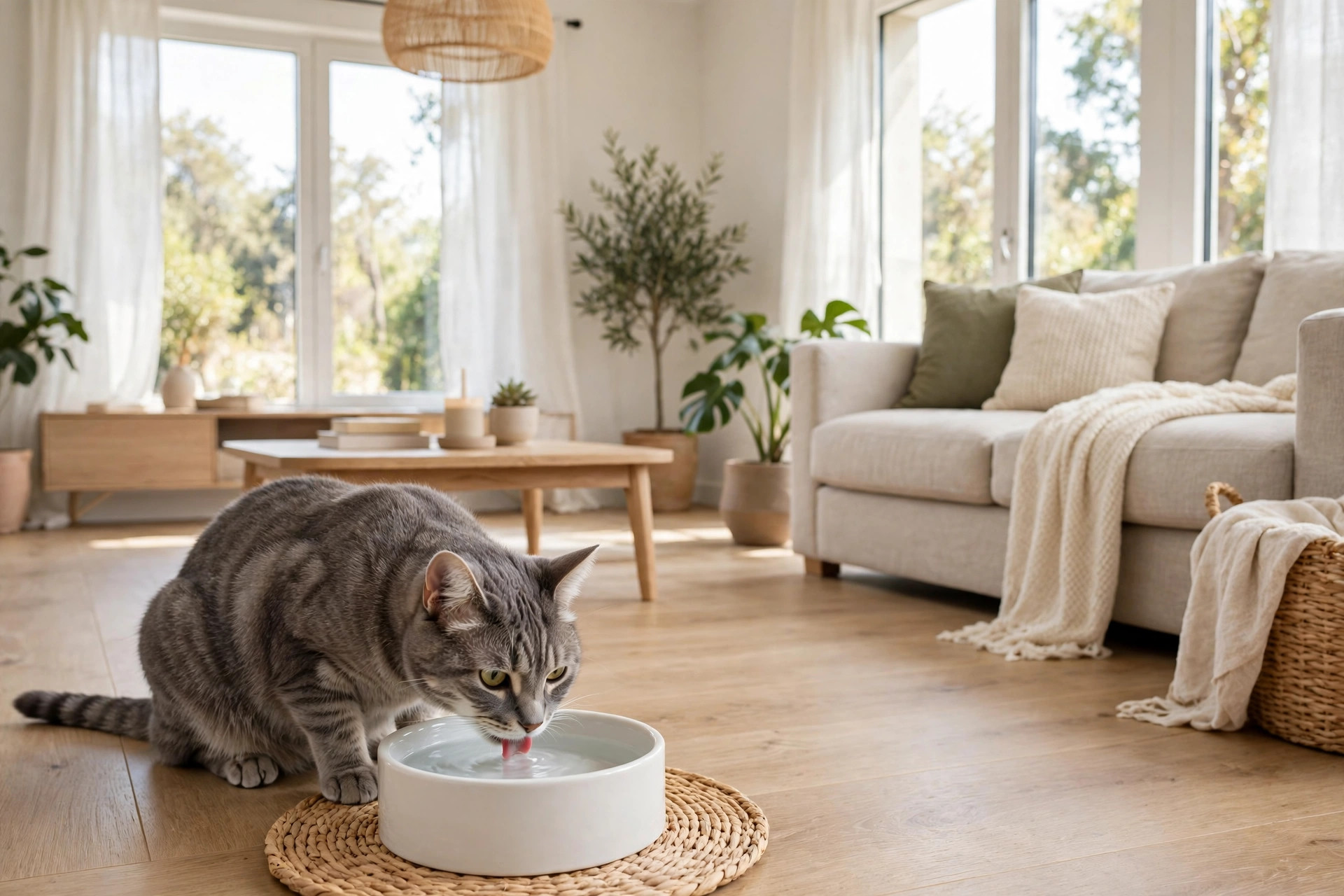
There is no single perfect number, because a cat’s total water intake comes from both drinking and food. Wet food is more than 80% water, while dry food is only about 6 to 10% water, so a cat eating wet food may barely visit the bowl at all, while a cat on dry food will drink visibly more. That difference alone explains many “sudden” increases after a diet change.
As a practical guide, many veterinary references describe total intake of roughly 50 ml per kilogram of body weight per day from all sources — about 200 to 250 ml a day for a typical 4 to 5 kg cat. Drinking above about 100 ml per kilogram per day is widely regarded as excessive, or polydipsia. The most important comparison, though, is with your own cat’s normal pattern: a cat that used to finish half a bowl a day and now empties two full bowls is telling you something, even if the absolute amount sounds modest.
Thirst and urination usually rise together. When the kidneys cannot concentrate urine properly, or when excess sugar spills into the urine, the body loses extra water and the cat drinks to replace it. That paired pattern — more drinking and more urine — is called polyuria and polydipsia, and it is the pattern vets take most seriously.
How to Measure Your Cat’s Water Intake at Home
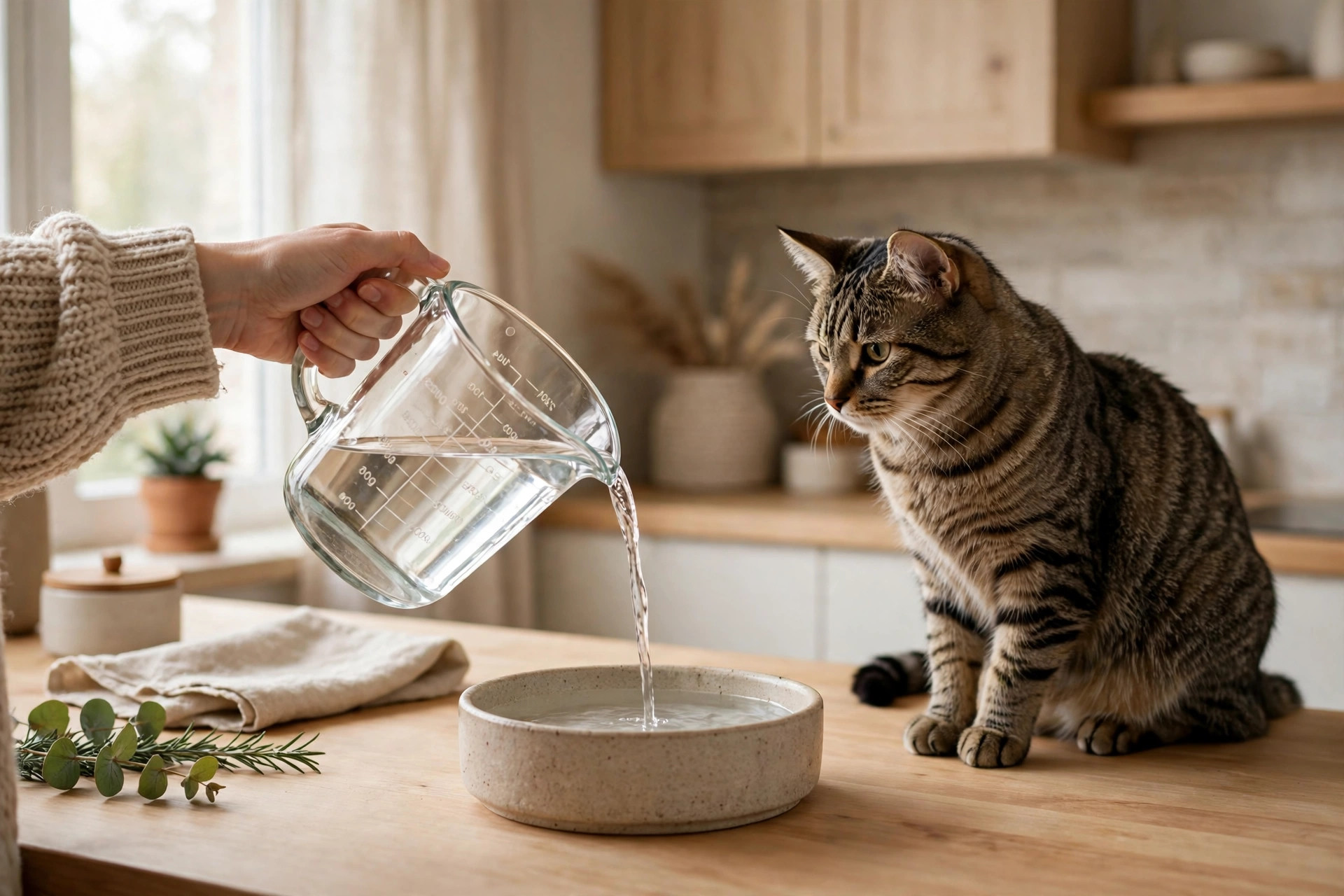
Guessing rarely helps your vet, but a simple 24 to 48 hour measurement does. If your cat is otherwise bright and stable, try this before your appointment:
- Fill every water source with a measured amount and note the starting total.
- Keep a note of any top-ups during the day.
- After 24 hours, measure what is left and subtract it from what you put out.
- Divide the amount drunk by your cat’s weight in kilograms to get ml per kg per day.
- Repeat for a second day if you can, and note litter-box changes at the same time.
Accurate measuring is harder in multi-cat homes, where cats share bowls, and impossible if your cat also drinks from taps, toilets, or puddles. In that case, close toilet lids, turn off dripping taps for the test period, and use a single controlled water source if you can do so safely. Bring your numbers, your cat’s diet details, and any medication list to the appointment — that combination narrows the diagnosis far faster than “she seems thirstier” alone.
Also Read: Cat UTI Symptoms: Urinary Problems Every Owner Must Know (2026)
Everyday Reasons a Cat Drinks More Water
Not every increase means disease. Run through these first, and note whether the increase fades within a day or two once the trigger passes:
1. A switch to dry food
Moving from wet food to kibble is the most common benign cause. Dry food supplies almost no moisture, so the cat must drink to make up the difference. The reverse is also true: a cat moved onto wet food may almost stop visiting the bowl, which is normal, not a worry.
2. Warm weather, heating, and activity
Hot days, central heating in winter, and a burst of extra play can all raise water needs temporarily. The increase should be modest and should settle as conditions return to normal.
3. Salty treats or a new food
Salty snacks, a new treat, or table scraps can drive a short spell of extra drinking. Keep treats small and cat-appropriate, and check whether the timing lines up with a new food.
4. A new water source or a cleaner bowl
Some cats simply prefer running water or a freshly washed bowl, and drink more once they like what is offered. A cat that suddenly drinks from a fountain is not necessarily ill — but a cat that also urinates much more still needs checking.
The key distinction is duration and company: a benign increase is brief, modest, and unaccompanied by other changes. A medical increase persists, grows, or arrives with other symptoms.
Chronic Kidney Disease: The Most Common Cause in Senior Cats
Chronic kidney disease, often shortened to CKD, is the most common cause of increased thirst in older cats. Healthy kidneys concentrate urine, holding water in the body. As kidney function declines, urine becomes more dilute, larger volumes are lost, and the cat drinks more to keep up. Early CKD can be almost invisible apart from this thirst-and-urination change, which is why the symptom matters so much.
Other clues that often appear alongside CKD include gradual weight loss, a reduced appetite, vomiting from time to time, bad breath, a duller coat, and sleeping more. Cats over 7 are at higher risk, and the condition is progressive, so early detection genuinely changes the outcome: kidney-support diets, hydration support, and monitoring can slow its progress and keep a cat comfortable for a long time.
Also Read: Senior Cat Checkups: 7 Vet Screenings for Cats Over 7 (2026)
Diabetes Mellitus in Cats
In diabetes mellitus, the pancreas does not produce enough insulin, or the body does not respond to it properly, so blood sugar rises. Excess glucose spills into the urine and drags water with it, producing large urine volumes and strong thirst. This is the classic pairing owners notice first: the bowl empties faster and the litter box needs cleaning far more often.
Diabetes is most common in middle-aged, overweight cats, especially those eating mainly dry food. Alongside thirst, watch for weight loss despite a good or even increased appetite, lethargy, and, in advanced cases, weakness in the back legs or sweet-smelling breath. Diabetes is serious, but it is manageable: many cats do well on insulin therapy and a controlled diet, and some even go into remission with early, consistent treatment. Delay is the real danger, because untreated diabetes can progress to ketoacidosis, a life-threatening emergency.
Hyperthyroidism: The Overactive Thyroid
Hyperthyroidism, an overactive thyroid gland, is common in cats over 10 and speeds up the whole metabolism. The cat burns energy faster, eats more, loses weight, and drinks and urinates more. Restlessness, hyperactivity, a racing heart, vomiting or diarrhoea, and an unkempt coat can all appear too.
The tell-tale combination is weight loss despite a ravenous appetite plus increased thirst. That pairing points strongly toward the thyroid rather than the kidneys or diabetes, although only blood tests can confirm it. Treatment options include daily medication, a prescription low-iodine diet, and radioiodine therapy, and most cats respond well once diagnosed.
Other Medical Causes of Increased Thirst
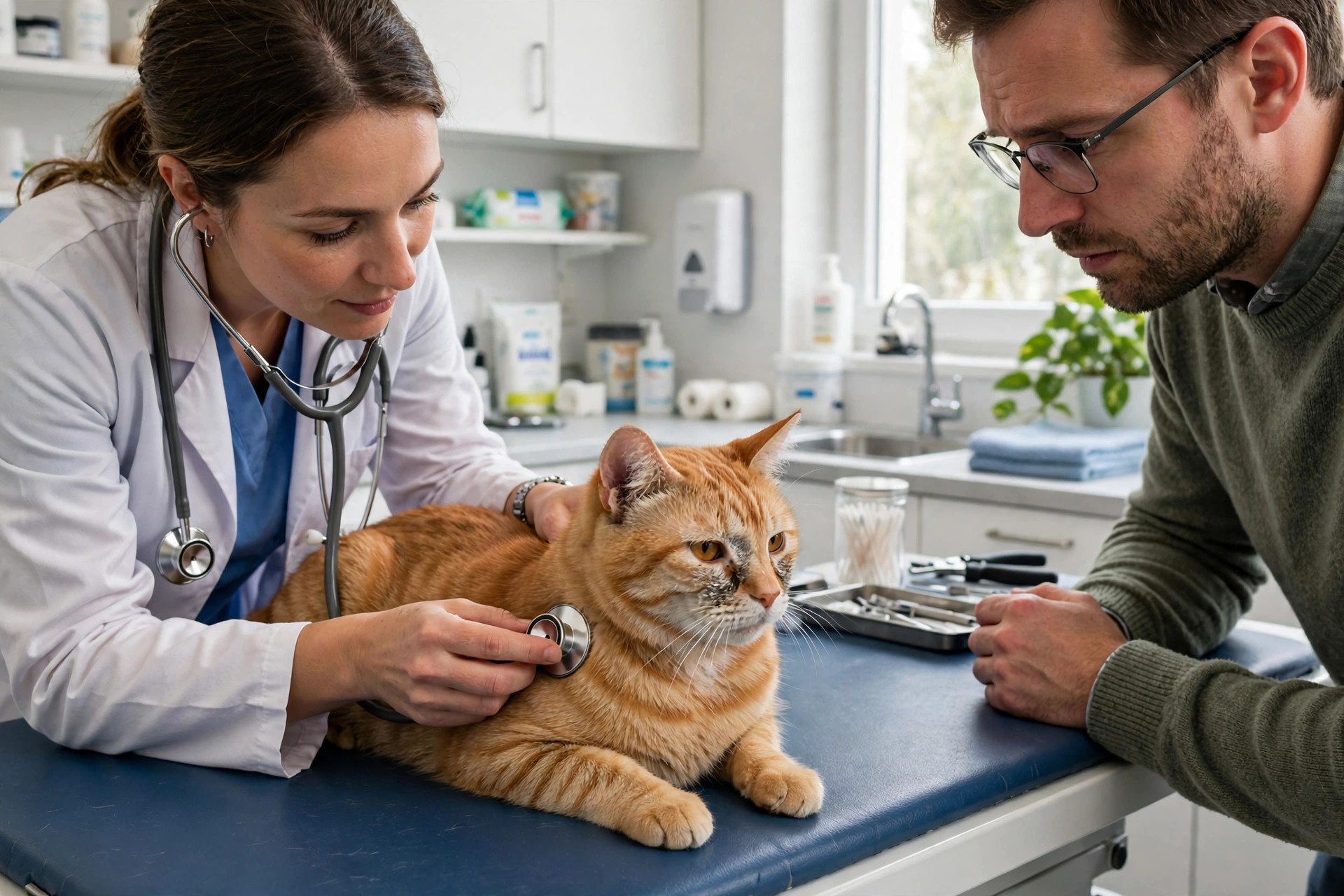
Beyond the big three, several other conditions can raise thirst, and your vet will consider them based on age, sex, medications, and other signs:
- Urinary tract infections and bladder inflammation: these usually cause frequent, small urinations and straining rather than large volumes, but they can still increase drinking. Male cats that strain without producing urine need emergency care, as a blockage can be fatal within 24 to 48 hours.
- Liver disease: less common, but associated with increased thirst, appetite loss, weight loss, and sometimes yellowing of the gums or eyes.
- Medications: corticosteroids such as prednisolone, diuretics such as furosemide, and some anti-seizure medicines commonly increase thirst and urination. Never stop a prescribed medicine without veterinary advice.
- Pyometra: a uterine infection in unspayed female cats, which can cause thirst, lethargy, appetite loss, and vaginal discharge, and needs urgent treatment.
- High blood calcium and other hormonal disorders: including Cushing’s disease and diabetes insipidus, a rare disorder of water balance that produces very dilute urine and marked drinking.
- Psychogenic polydipsia: compulsive drinking with no medical cause, usually in a stressed or bored cat. This is a diagnosis of exclusion, made only after medical causes have been ruled out.
Veterinary references including PetMD note the same core pattern: kidney problems, diabetes, hyperthyroidism, and liver disease are the conditions vets check first when a cat starts drinking a lot of water.
Red Flags: When to Call the Vet Right Away
Book a prompt vet visit if increased drinking lasts more than a day or two, keeps rising, or comes with any of these:
| Red flag | Why it matters |
|---|---|
| Drinking and urinating much more together | Classic polyuria and polydipsia pattern of kidney disease, diabetes, or thyroid disease |
| Weight loss despite eating well | Points toward diabetes or hyperthyroidism |
| Weight loss with poor appetite | Points toward kidney or liver disease |
| Vomiting, lethargy, or hiding | Illness is advancing and needs same-day assessment |
| Straining without urine, especially in males | Possible urinary blockage — emergency, not wait-and-see |
| Blood in urine, sweet-smelling breath, yellow gums | Urinary, diabetic, or liver complications that need urgent care |
| Sudden, extreme thirst after vomiting or diarrhoea | Dehydration may need fluids and a cause found quickly |
A male cat that strains repeatedly without producing urine is an emergency at any hour. Do not wait until morning.
What Happens at the Vet Visit?
Your vet will start with a history — when the drinking changed, diet, medications, litter-box habits, weight changes, and any other symptoms — followed by a full physical exam. For a cat with increased thirst, the usual first tests are blood work, including a complete blood count and chemistry panel, a urinalysis to check urine concentration and glucose, and, in cats over 5 to 7 years old, a thyroid (total T4) test. Blood pressure measurement is often added for senior cats.
Those few tests resolve most cases: dilute urine with raised kidney values points toward CKD, high blood glucose and glucose in the urine points toward diabetes, and a raised T4 points toward hyperthyroidism. If the first round is unclear, your vet may add imaging, blood calcium and electrolyte checks, or a water-deprivation test under supervision. Never try a water-restriction test at home — it can be dangerous for a cat whose drinking is compensating for illness.
How to Help at Home While You Wait
While you arrange the visit, keep water freely available at all times, in clean bowls placed away from food and litter boxes. Many cats drink more from a fountain, and adding a wet-food meal helps hydration without forcing anything. Keep the litter box spotless so you can track urine volume accurately, and note appetite, weight, energy, and vomiting in a short daily log to share with your vet.
Do not start supplements, change to a prescription kidney or urinary diet, or adjust medications on your own. Prescription diets help specific diagnoses and can be wrong for others, so they belong after testing, not before. And do not delay the visit because your cat “seems fine” — cats hide illness well, and increased thirst is often the earliest visible sign of a condition that is far easier to manage when caught early.
Also Read: Why Is My Cat Not Eating? Warning Signs & When to Worry (2026)
Frequently Asked Questions
Why is my cat drinking more water but eating normally?
This still needs checking. Kidney disease, diabetes, and hyperthyroidism can all raise thirst before appetite changes, and hyperthyroidism often increases appetite. Normal eating does not rule out illness.
Is it normal for senior cats to drink more water?
Senior cats do tend to drink a little more, but a clear, lasting increase is not just “old age.” Kidney disease and hyperthyroidism are common in cats over 10, and both are treatable, so a senior cat with new thirst should still see a vet.
Can dry food alone explain my cat drinking more water?
Yes, a switch to dry food is the most common benign explanation, because kibble contains almost no moisture. If the increase started right after a diet change, stays modest, and comes with no other symptoms, diet is likely the cause — but if it keeps rising, get it checked anyway.
Should I limit my cat’s water to see if the thirst stops?
No. Never restrict water. If the drinking is compensating for kidney disease, diabetes, or another illness, limiting water can dehydrate your cat quickly and make the condition worse. Measure intake instead, and let your vet decide.
Why is my cat drinking more water and peeing more?
That paired pattern, polyuria and polydipsia, is the classic sign of kidney disease, diabetes, or hyperthyroidism. It means the body is losing extra water in urine and drinking to replace it, and it warrants a vet visit with blood and urine tests.
Can stress make a cat drink more water?
Stress can change drinking habits, and compulsive drinking does occur, but it is uncommon and only diagnosed after medical causes are ruled out. If stress is the only explanation offered, ask your vet to confirm it with tests first.
Final Thoughts
So, why is my cat drinking more water? Sometimes the answer is simple — a new dry food, a hot spell, or a bowl your cat finally likes. But when the increase lasts, grows, or comes with more urination, weight change, or appetite change, it is usually the first visible sign of kidney disease, diabetes, or hyperthyroidism, all of which are far more manageable when caught early.
Measure the intake, note the other symptoms, keep water freely available, and call your vet. In cats, a change in thirst is not a quirk to watch for weeks — it is information, and acting on it early is one of the kindest things you can do for your cat.