
Not so long ago, seeing a dog riding in a stroller might have earned you a puzzled look at the park. These days, the best dog strollers are one of the fastest-growing pet gear categories — searches for “dog stroller” have surged dramatically, roughly tripling in volume over the past two years. And there is a good reason for that: for senior dogs, tiny breeds, injured pups, and even unvaccinated puppies, a stroller can be the difference between staying home and still joining the family adventure.
But strollers are not one-size-fits-all, and buying the wrong one can mean an uncomfortable dog, a wobbly ride, or a model that falls apart on the first gravel path. In this complete 2026 guide, we will walk you through which dogs actually benefit from a stroller, the top picks this year, how to choose the right size and type, safety rules, and how to train your dog to love the ride.
Table of Contents
- Does My Dog Actually Need a Stroller?
- Best Dog Strollers for Senior and Injured Dogs
- Which Dogs Benefit Most From a Stroller?
- Best Dog Strollers: 2026 Top Picks
- How to Choose the Right Size and Type
- Stroller Safety: 7 Rules to Follow
- How to Get Your Dog Used to a Stroller
- Common Dog Stroller Mistakes
- Frequently Asked Questions
Does My Dog Actually Need a Stroller?
The honest answer: most healthy adult dogs do not. As the American Kennel Club’s experts note, a stroller should never replace the walks a healthy dog is perfectly capable of doing — a dog pushed around all day misses the exercise and sniff-driven mental stimulation that keeps it fit and happy (see the AKC’s guide to dog strollers). Strollers earn their place when walking is genuinely difficult, unsafe, or impossible for your dog — but your dog still wants to be out in the world with you.
Think of a stroller as a mobility aid, not a lifestyle upgrade. The dogs that genuinely benefit include:
- Senior dogs with arthritis, hip dysplasia, or heart conditions who tire halfway through a normal walk
- Dogs recovering from surgery or injury under vet-ordered restricted exercise
- Tiny breeds (Chihuahuas, Yorkies, Toy Poodles) that tire quickly or get stepped on in crowds
- Puppies not yet fully vaccinated, who can socialize with the sights and sounds of the world from a stroller without touching the ground
- Flat-faced breeds that overheat easily in warm weather
- Anxious or reactive dogs that feel safer with some distance from triggers at festivals and markets
Best Dog Strollers for Senior and Injured Dogs
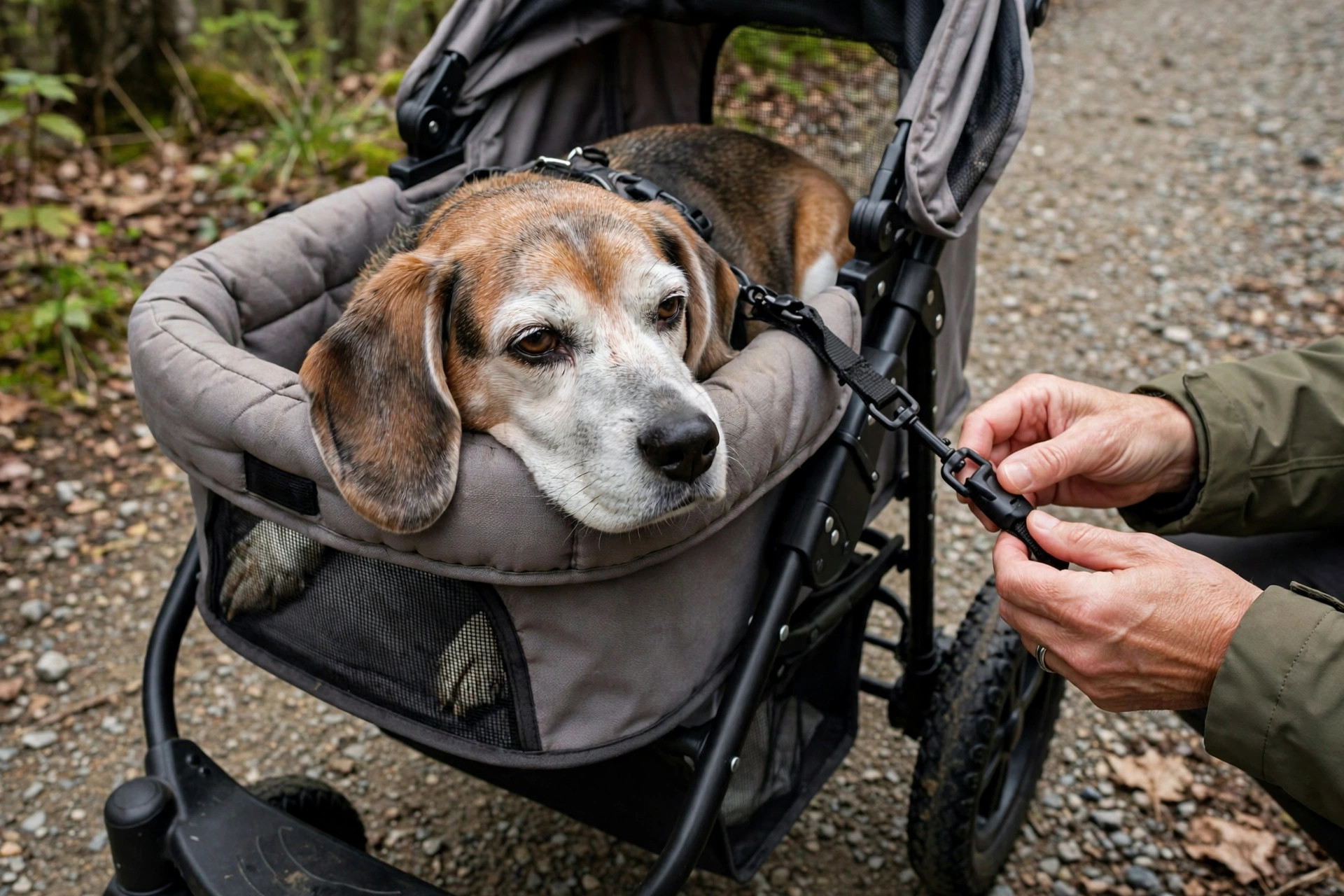
For aging dogs, the pattern owners describe again and again is familiar: the dog starts the walk happily but runs out of steam halfway home, forcing you to carry them the rest of the way. A stroller solves this gracefully — your dog walks as far as it comfortably can, then rides in comfort for the remainder. The AKC’s chief veterinarian has noted strollers are particularly useful for small or elderly dogs with mobility issues or arthritis, giving them fresh air and mental stimulation without straining their bodies.
For seniors and post-surgery dogs, prioritize these features:
- Low or no-lift entry: senior dogs should not have to jump in — a low-sided compartment or a model with a detachable carrier is ideal
- Thick padded interior: aging joints need cushioning, especially on bumpy paths
- All-terrain wheels with suspension: foam-filled or air-filled tires with shock absorption smooth out jolts that hurt arthritic hips
- 3-in-1 convertible designs: models that detach into a carrier double as a car seat, so you are not transferring a sore dog between containers
- Dual safety tethers: non-negotiable — a drowsy or startled senior must stay inside
Also Read: Is My Dog Overweight? Body Condition Score & Weight Loss Plan (2026) — extra weight multiplies joint stress in senior dogs, and a stroller can keep walks fun while the pounds come off.
Which Dogs Benefit Most From a Stroller?
Beyond seniors, several dog lifestyles make a stroller genuinely practical rather than indulgent:
Small and toy breeds
Dogs under about 15 pounds tire faster than their energy suggests, and in busy places they are nearly invisible at ground level. A stroller keeps them safe from careless feet, tangled leashes, and bigger dogs at crowded events — and lets you bring them along on long outings instead of leaving them home.
Puppies in the socialization window
Before vaccinations are complete, puppies should avoid ground contact in public places. A stroller is a clever workaround: your puppy gets the sounds, sights, and smells of the world from a safe perch. This pairs perfectly with an early socialization plan.
Also Read: Puppy Socialization Checklist: The First 16 Weeks (2026) — a stroller can be one of your safest socialization tools before vaccines are done.
Anxious dogs in crowded places
Festivals, farmers markets, and holiday street events are overwhelming for many dogs. An enclosed stroller gives an anxious dog a defined “safe zone” with a view — close to you, above the chaos, and able to retreat behind the canopy when it gets too much.
Dogs that overheat
Brachycephalic breeds like Bulldogs and Pugs struggle in heat. On warm days, a stroller with a sun canopy and good ventilation lets them join summer outings while you limit the actual walking — plus it keeps paws off scorching pavement.
Best Dog Strollers: 2026 Top Picks
After comparing 2026 roundups from independent reviewers, these models come up consistently for build quality, safety features, and owner satisfaction. Prices change constantly, so always check the current price before buying.
| Model | Best For | Key Features |
|---|---|---|
| Gen7Pets Promenade | Best overall | Collapsible frame, long foam handlebars, shock absorbers, storage compartments and cup holders |
| HPZ Pet Rover Prime 3-in-1 | Senior & injured dogs | Detaches into carrier and car seat, puncture-proof tires, anti-vibration suspension, front and rear brakes |
| Trixie Foldable Pet Stroller | Best value | Lightweight (around 10 lbs), one-hand quick-release fold, 360-degree front swivel wheel, dual tethers |
| Pet Gear No-Zip AT3 | All-terrain | Zipperless entry, large jogging tire up front, rated up to 60 lbs, built for rough sidewalks and trails |
| Zoosky Large Pet Stroller | Large dogs | Rated up to 110 lbs, large rubber wheels, reinforced frame for big breeds that need a lift |
A quick note on price tiers from recent roundups: basic small-dog strollers start in the budget range, mid-range models for medium dogs sit comfortably higher, and heavy-duty strollers for large or disabled dogs are the premium tier. Compare the device plus one year of real-world use, not just the sticker price — a cheap stroller you replace twice is the expensive option.
How to Choose the Right Size and Type
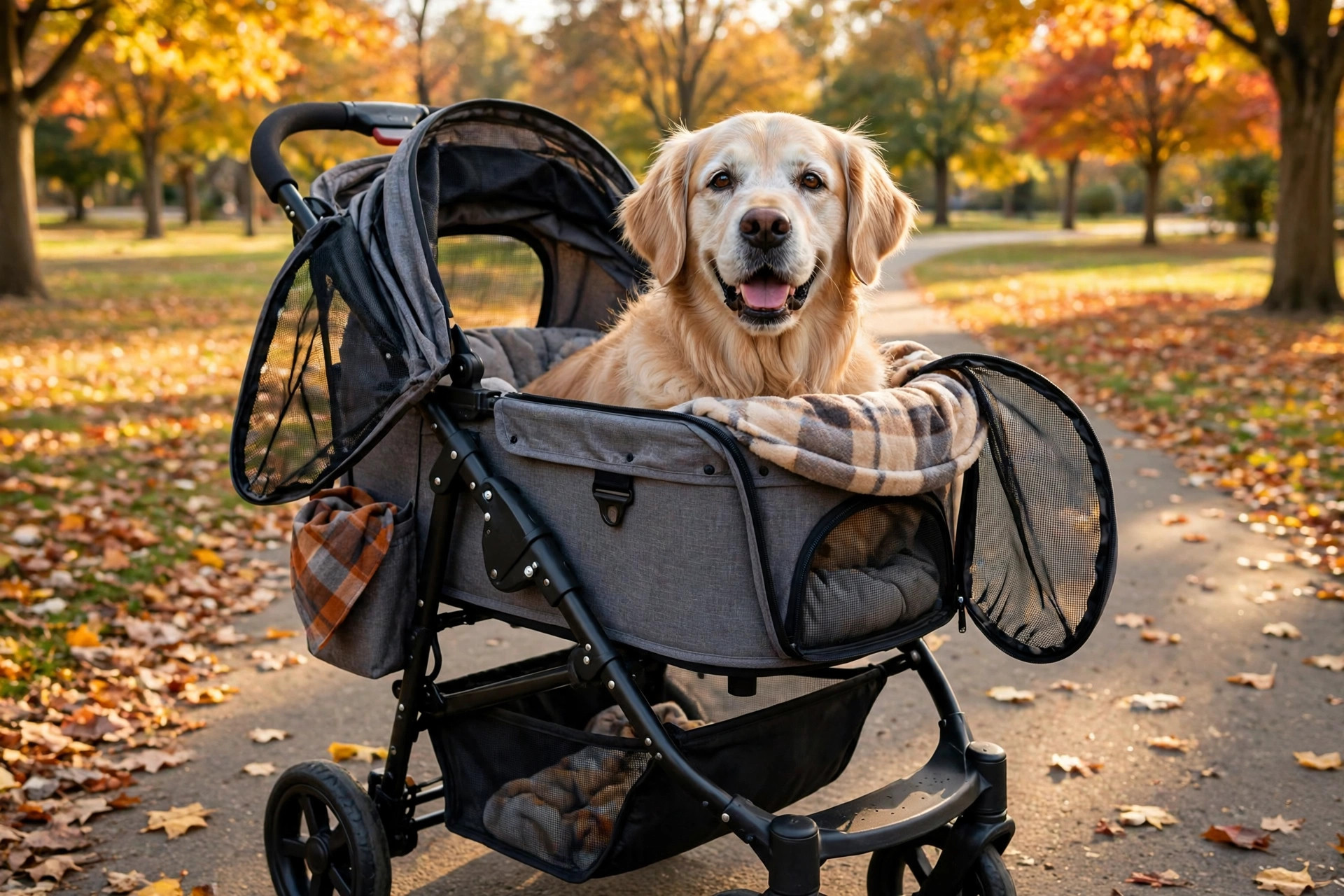
Choosing the right stroller is mostly about fit and terrain. Get these right and the rest is easy.
1. Measure your dog, then check capacity
Measure your dog while sitting (height and length) and add a few inches — your dog should be able to sit, stand, and turn around comfortably inside. Never buy a stroller rated below your dog’s weight; a small safety margin is better than pushing the limit. As a rough guide, most standard strollers suit dogs up to about 30 pounds, all-terrain models handle 40–60 pounds, and only dedicated large-dog models work above that.
2. Match the wheels to your routes
Small plastic wheels are fine for malls and smooth sidewalks but rattle apart on gravel. If your walks include rough sidewalks, park trails, or grass, choose air-filled or foam-filled rubber tires with real suspension — your dog’s joints will feel the difference.
3. Entry style matters
Zipperless/no-zip entries are quieter and less likely to startle nervous dogs. Top-loading models suit small dogs you can lift in; rear or side entries suit larger or heavier dogs you cannot carry.
4. Comfort and ventilation
Look for a padded, washable liner, large mesh windows on at least three sides (visibility plus airflow), and a weather canopy for sun and drizzle. A storage basket underneath is genuinely useful for water, treats, and waste bags.
5. Portability
If you travel by car, confirm the stroller folds easily and fits your trunk — one-hand quick-fold models are worth paying for. Removable-carrier 3-in-1 designs double as airline or vet-visit carriers.
Also Read: Do Pet GPS Trackers Work? Buying Guide (2026) — for escape-prone dogs, a GPS tracker on the collar inside the stroller is cheap insurance on busy outings.
Stroller Safety: 7 Rules to Follow
A stroller is only as safe as the habits around it. Follow these rules every time:
- Always clip the safety tether to your dog’s harness (never the collar) before rolling. Most quality strollers include two tethers.
- Lock the brakes whenever you stop on a slope or let go of the handle.
- Never exceed the weight rating. An overloaded stroller tips, folds wrong, and wears out its wheels fast.
- Never leave your dog unattended in a stroller — especially in warm weather. Enclosed compartments heat up quickly in the sun.
- Keep the canopy mesh closed in crowds and near traffic so a startled dog cannot jump out.
- Don’t use a baby stroller. Baby strollers lack pet tethers, proper ventilation mesh, and weight distribution designed for animals — purpose-built pet strollers are safer.
- Check wheels and zippers before each walk. A loose wheel at speed or a jammed zipper with your dog inside turns a fun outing into a problem.
Also Read: Winter Paw Care for Dogs: Salt, Ice & Cracked Pads (2026) — a stroller also keeps paws off hot pavement in summer and road salt in winter.
How to Get Your Dog Used to a Stroller
Most dogs accept a stroller within a few days if you introduce it patiently. Rushing it is the number-one reason dogs reject strollers.
- Day 1–2: Set the stroller up in your living room with the canopy open. Let your dog sniff and investigate it. Drop treats inside so the stroller smells like good things.
- Day 3: Clip the tether on and let your dog sit inside while you feed treats for a minute or two. Do not move it yet.
- Day 4–5: Push it gently around the house or yard for very short sessions, treating and praising calmly the whole time.
- Day 6+: Take a real 10-minute walk. End before your dog gets restless — you want every session to finish on a positive note.
Never force a panicking dog inside, and skip the stroller entirely if your dog is reactive to wheels or motion after several calm attempts — some dogs simply are not stroller dogs, and that is fine.
Common Dog Stroller Mistakes
- Replacing walks entirely. A healthy dog pushed everywhere loses fitness and enrichment. Strollers supplement exercise — they do not replace it.
- Buying too small. A cramped stroller stresses your dog and can cause joint stiffness on longer rides. When in doubt, size up.
- Ignoring the terrain. Small wheels on rough ground shake the ride apart and rattle a nervous dog. Match wheels to your actual routes.
- Skipping the brakes. Strollers roll. Always lock up on slopes, at crossings, and whenever your hands leave the handlebar.
- Leaving the dog in a parked stroller. Enclosed fabric compartments trap heat fast — treat a stroller like a parked car in summer.
- No harness tether. Clipping the tether to a collar instead of a harness risks neck injury if the dog lunges; no tether at all risks a bolting dog.
Frequently Asked Questions
Are dog strollers worth it?
Yes, for the right dog. For seniors, tiny breeds, post-surgery dogs, and anxious dogs in crowds, a stroller genuinely improves quality of life. For a healthy adult dog that can walk normally, they are unnecessary — keep walking.
Can a large dog use a stroller?
Yes, but only purpose-built large-dog strollers (rated 60–110 lbs) with reinforced frames and big rubber wheels. Standard strollers are not rated for large breeds — never overload one.
Are dog strollers good for senior dogs?
They are one of the best mobility aids for aging dogs. A stroller lets a senior walk part of the way and ride the rest, keeping it in the family routine without overtaxing arthritic joints. Pair stroller outings with vet guidance on arthritis care.
Can I use a baby stroller for my dog?
No. Baby strollers lack proper ventilation mesh, secure pet safety tethers, and weight distribution designed for animals. Purpose-built pet strollers are safer and more comfortable.
How do I get my dog used to a stroller?
Introduce it gradually: let your dog explore the open stroller at home for a few days with treats, then sit inside briefly while clipped in, then take very short indoor pushes, and finally a real 10-minute walk. Most dogs accept it within a week.
Do dog strollers replace walks?
No — and they should not. Strollers extend outings for dogs that cannot walk the full distance, but a healthy dog still needs real walks for exercise and mental stimulation.
Final Thoughts
So, are dog strollers worth buying in 2026? For senior dogs, tiny breeds, recovering pups, and nervous travelers — absolutely. The best dog strollers this year combine sturdy frames, real suspension, dual safety tethers, and generous ventilation, and the market has options for every size from Chihuahuas to Labradors.
The formula is simple: match the stroller to your dog’s size, your terrain, and your dog’s actual needs. Introduce it with patience and treats, follow the safety rules, and keep walking as the main event. Do that, and a stroller becomes what it should be — more adventures together, not fewer.
By Dr. Ayaz Ali