
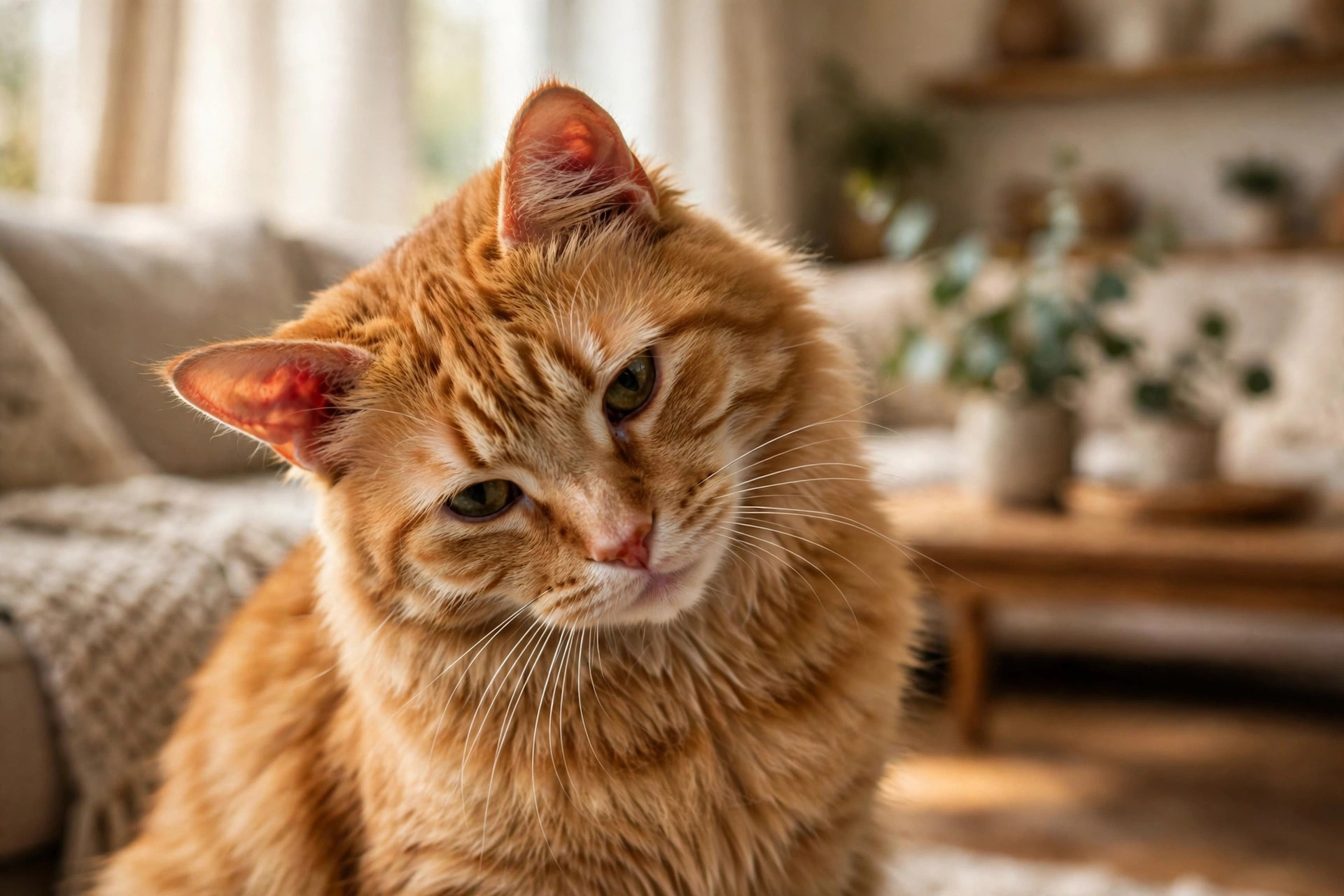
If your cat keeps shaking its head, scratching at its ears like something is driving it crazy, and there’s a faint musty smell when you lean in close, you may be looking at a cat ear yeast infection. It is one of those problems that is easy to mistake for ear mites or wax buildup — but the treatment is completely different, so getting the diagnosis right matters.
The good news: yeast infections of the ear are very treatable, and most cats recover fully within one to two weeks once the right medication is started. In this complete 2026 vet guide, we will walk you through the signs of a cat ear yeast infection, what actually causes it, how your veterinarian will diagnose it, the treatment that clears it, and the habits that keep it from coming back.
Table of Contents
- What Is a Cat Ear Yeast Infection?
- Signs of Cat Ear Yeast Infection
- Causes of Cat Ear Yeast Infections
- How Vets Diagnose It
- How a Cat Ear Yeast Infection Is Treated
- Home Care and Prevention
- When to See the Vet Right Away
- Frequently Asked Questions
- Final Thoughts
What Is a Cat Ear Yeast Infection?
A cat ear yeast infection happens when the yeast Malassezia — a microorganism that normally lives in tiny numbers on your cat’s skin and inside the ear canal — multiplies out of control and triggers inflammation (otitis externa). A little yeast is completely normal; it becomes a problem only when something changes the environment inside the ear and the yeast takes over.
Yeast infections are much less common in cats than in dogs, but they do happen, and they are often a secondary problem: something else (ear mites, allergies, trapped moisture) inflames the ear first, and the yeast exploits the situation. That is why treating only the yeast without finding the trigger usually ends with the infection coming back weeks later.
Signs of Cat Ear Yeast Infection
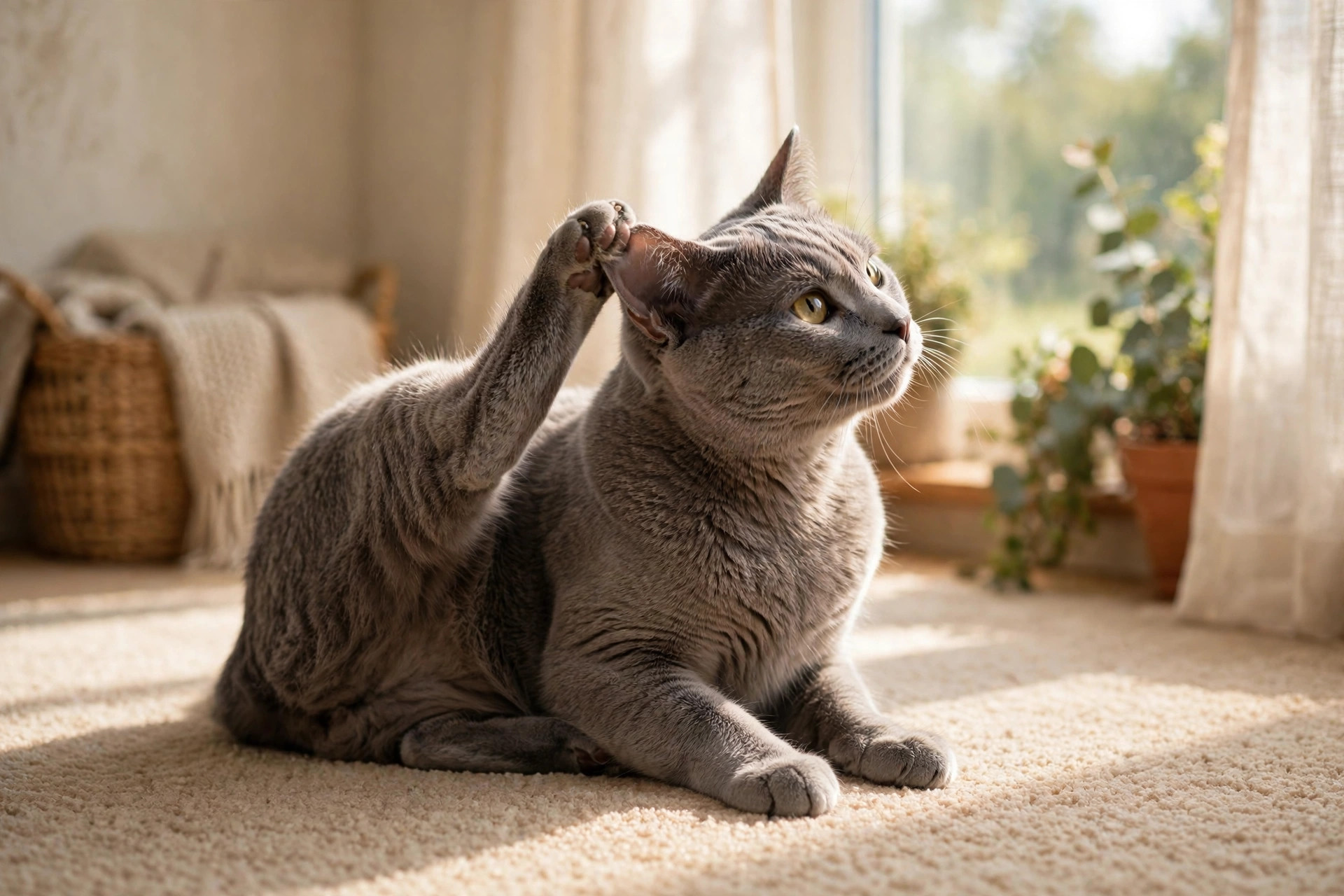
The classic signs of a cat ear yeast infection are hard to miss once you know them. Check your cat’s ears if you notice any of these:
1. Head Shaking and Ear Rubbing
Repeated, vigorous head shaking — as if trying to dislodge something — is one of the earliest signs. Your cat may also rub an ear along furniture, carpets, or the floor.
2. Relentless Scratching at the Ears
Persistent scratching or pawing at one or both ears, sometimes hard enough to cause hair loss, scabs, or raw patches on the ear flap. Cats that hold their ears flat back against the head are telling you the ears hurt.
3. Musty or Yeasty Odor
A sweet, musty, sour smell coming from the ear is a hallmark of yeast overgrowth. Ear mites tend to produce little odor, which is one of the differences that helps your vet tell the two apart.
4. Brown, Waxy, or Greasy Discharge
Yellowish-brown to dark, greasy debris or a thick waxy coating inside the ear is typical of Malassezia. Dark, dry, coffee-ground-like debris, by contrast, more often points to ear mites.
5. Redness, Swelling, and Pain
Lift the ear flap: a healthy ear is pale pink with minimal wax. An infected ear looks inflamed — red, swollen, sometimes warm to the touch — and your cat may flinch or pull away if you touch near the ear.
6. Balance Changes or Lethargy
Advanced cases can cause unsteady walking, lethargy, or a head tilt toward the affected side. These signs mean the infection may be moving deeper — see your vet promptly.
To help you decide how urgently to act, use this guide:
| What You Notice | What It Suggests | How Fast to Act |
|---|---|---|
| Occasional scratching, normal-looking ear | Probably normal grooming | Monitor; book a routine check if it persists |
| Head shaking + redness + musty odor | Likely yeast infection (otitis externa) | Call your vet this week |
| Pain, swelling, heavy discharge | Active infection needing medication | Call your vet promptly |
| Head tilt, circling, loss of balance, fever | Possible middle/inner ear involvement | See your vet the same day |
Also Read: Signs of Ear Infection in Dogs: Vet Guide (2026) — our companion guide covers the same warning signs in dogs, since yeast ear infections are even more common there.
Causes of Cat Ear Yeast Infections
Yeast does not appear from nowhere — it overgrows because something has changed the ear’s normal balance. The most common underlying causes:
- Ear mites (the #1 trigger in cats): Mite infestations inflame the canal and frequently bring a secondary yeast or bacterial infection with them. Studies of feline ear disease show Malassezia counts rise sharply in mite-infested ears.
- Allergies: Environmental or food allergies cause ear inflammation in cats just as in dogs, creating the warm, inflamed conditions yeast loves. Some cats show allergies only through their ears.
- Warm, humid environments: Cats living in hot, damp climates are at greater risk, since moisture and warmth encourage yeast growth.
- Overcleaning: Prolonged, routine use of liquid ear cleaners by well-meaning owners can keep the canal constantly lubricated and counterproductive — the excess moisture actually invites yeast.
- Weakened immune defenses: Cats with FIV, FeLV, feline diabetes, or on immune-suppressing drugs are more prone to fungal overgrowth.
- Moisture after baths: Water trapped in the canal after swimming or bathing creates an ideal breeding ground if not dried properly.
Also Read: Why Does My Cat Keep Sneezing? Vet Guide (2026) — allergies that inflame ears often show up as sneezing too; learning both sets of signs helps you connect the dots.
How Vets Diagnose It
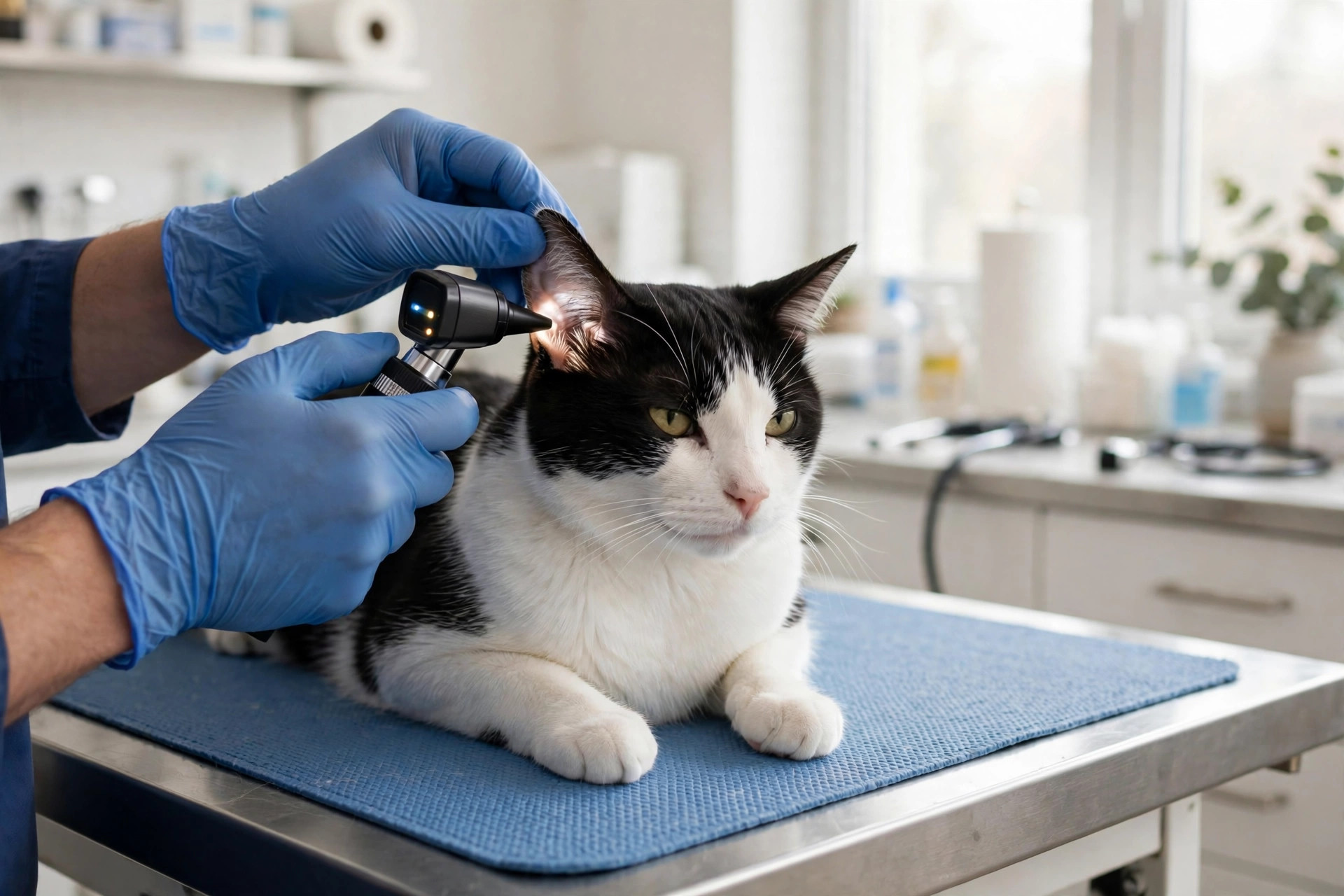
Never assume you know what is wrong — yeast, mites, and bacteria look alike to owners but need different medications, and the wrong drops can make things worse. At the clinic, your vet will typically:
- Examine the ear with an otoscope, a lighted instrument that gives a magnified view of the canal to check for swelling, blockage, foreign objects, and whether the eardrum is intact.
- Clean the ear, then take a swab of the discharge and examine it under the microscope (cytology). Malassezia yeast has a distinctive shape, and the vet counts the organisms — a healthy cat ear shows almost none, while a yeast infection shows very large numbers.
- Check for ear mites at the same time, since a mite infestation with a secondary yeast infection is one of the most common combined findings in cats.
- Prescribe treatment matched to the findings — antifungal, antiparasitic, or both — rather than guessing.
Veterinary sources including the Cornell University College of Veterinary Medicine note that if the underlying cause is not identified and dealt with, ear infections may clear temporarily and then come right back after treatment stops — which is why diagnosis matters more than speed.
How a Cat Ear Yeast Infection Is Treated
Treatment starts with the diagnosis above, and the plan is always tailored to what the vet actually found:
- Antifungal ear drops or ointment — medications such as miconazole or clotrimazole, sometimes combined with a mild steroid to calm inflammation, are the standard first line. Your vet will show you how to apply them correctly.
- Professional ear cleaning — your vet may flush the canal to remove the debris and goo so the medication can actually reach the infection.
- Antiparasitic treatment — if ear mites are part of the picture, an antiparasitic product is prescribed alongside the antifungal.
- Oral antifungal medication — reserved for severe, deep, or recurring cases. These drugs can have significant side effects, so blood work is usually monitored before and during therapy.
- Addressing the underlying cause — allergy management, diet trials, or immune support for cats with chronic flare-ups. Without this step, relapse is the rule, not the exception.
Most uncomplicated yeast ear infections improve noticeably within the first week and clear within 1 to 2 weeks of proper treatment. Always finish the full course of medication, even if your cat seems better after a few days — stopping early is the fastest route to a stubborn relapse.
Home Care and Prevention
You cannot treat an active yeast infection without your vet, but you play a big role in recovery and in keeping the next one away:
- Use only a vet-approved ear cleaning solution — never water, vinegar mixes, peroxide, or alcohol unless your vet specifically tells you to, and do not over-clean; routine flooding of the canal with liquid invites yeast.
- Apply the prescribed drops exactly as directed — right dose, right ear, right number of days.
- Let your cat shake its head after treatment, then wipe only the visible outer ear with a soft cotton ball or clean cloth.
- Never push cotton swabs or any instrument into the ear canal — you can pack debris deeper or injure the eardrum.
- Keep the ears dry, especially after baths or rainy-day adventures; gently dry the outer ear with a soft towel.
- Manage the underlying trigger — keep up flea/mite prevention year-round, work with your vet on allergy control, and feed a balanced, high-quality diet.
- Check ears weekly — lift the flap, look for redness or discharge, and sniff for that telltale musty odor. Early catches are quick and cheap to fix.
Also Read: Ringworm in Cats: Signs, Treatment & Guide (2026) — another fungal infection cats face, this time on the skin; knowing both helps you spot fungal problems early.
When to See the Vet Right Away
Mild head-shaking warrants a call to your vet, but treat these as urgent:
- Sudden severe pain, constant crying, or a cat that will not let you near its head
- A head tilt, drooping face, circling, or loss of balance (possible middle or inner ear involvement)
- Bloody discharge or a swollen, blood-filled ear flap (aural hematoma — often needs surgical drainage)
- Lethargy, fever, or loss of appetite alongside ear symptoms
- Symptoms that keep recurring despite treatment — the underlying cause has not been found yet
Kittens, senior cats, and immunocompromised cats should be seen sooner rather than later, since they can deteriorate faster.
Frequently Asked Questions
What does a cat ear yeast infection look like?
The inner ear looks red and inflamed with a brownish, greasy, waxy discharge or coating, and you will notice a sweet, musty odor. The cat shakes its head frequently and scratches at the ear. It can look very similar to ear mites, which is why your vet needs to check the debris under a microscope — mite debris is typically drier and darker, like coffee grounds.
Can a cat ear yeast infection go away on its own?
No. A yeast infection will not resolve on its own, and leaving it untreated risks the infection spreading from the outer ear to the middle and inner ear, where it can damage hearing and balance. Veterinary treatment is always needed.
Is a cat ear yeast infection contagious to other pets or people?
The yeast itself is not considered contagious the way ringworm is — it is normal flora overgrowing, not an invader from outside. However, if ear mites are the underlying trigger, the mites absolutely spread to other cats and dogs in the household, so all pets should be checked.
How long does a cat ear yeast infection take to heal?
Most uncomplicated cases improve within the first week and clear fully within 1 to 2 weeks of proper antifungal treatment. Chronic or recurring cases take longer and need follow-up visits plus treatment of the underlying cause.
Can I treat my cat’s ear yeast infection at home?
No — do not try home remedies. Yeast, mites, and bacterial infections need different medications, and the wrong product can worsen things or damage the eardrum if it is already affected. See your vet for a proper diagnosis and cat-safe treatment.
How can I tell ear mites apart from a yeast infection?
At home you really cannot tell for sure. Broadly: mites often cause intense itching with dry, dark, crumbly debris and little odor; yeast causes redness with greasy brown discharge and a distinct musty smell. Both require a vet visit — and they often occur together.
Final Thoughts
So, what should you do about a cat ear yeast infection? Watch for the signature combo: head shaking, relentless scratching, redness, brownish waxy debris, and that musty odor. Get a veterinary diagnosis — a quick exam and a look at the discharge under the microscope — and follow the full course of antifungal treatment. Most importantly, ask your vet what triggered it in the first place: mites, allergies, or moisture. Treating the yeast without the trigger is why these infections become repeat visitors.
Weekly ear checks take less than a minute — lift the flap, look, and sniff — and they are the cheapest insurance your cat’s ears will ever get.
By Dr. Ayaz Ali