
You sit down for dinner, and there they are: the big hopeful eyes, the nose nudging your elbow, the paw creeping onto your knee. If you’re trying to stop dog begging at the table, you’re not alone — begging is one of the most common (and most reinforced) dog behavior problems there is.
The hard truth? Begging usually isn’t your dog being rude. It’s your dog doing what has worked before. Every scrap slipped under the table, every laugh at a “cute” head tilt, teaches your dog that hanging around the dining table pays. The good news is that the same learning mechanism can undo the habit — with a clear plan, consistent rules, and a special strategy for the holiday season when guests are involved.
In this 2026 guide, we’ll cover why dogs beg, the 5 trainer-approved steps to stop dog begging at the table, how to teach the “place” cue, and a holiday guest plan that keeps Thanksgiving dinner calm for everyone — two-legged and four-legged.
Table of Contents
- Why Dogs Beg at the Table
- How to Stop Dog Begging at the Table: 5 Steps
- Teach the “Place” Cue: Your Table-Manners Game Changer
- The 2-Week Anti-Begging Training Plan
- Holiday Guest Plan: Thanksgiving & Parties
- 5 Mistakes That Keep Your Dog Begging
- When to Call a Trainer or Your Vet
- Frequently Asked Questions
Why Dogs Beg at the Table
Begging looks different in every dog — staring, whining, pawing your lap, resting a chin on the table, circling the chairs — but the cause is always the same: it worked before. Dogs are expert pattern-learners, and even one successful begging session in ten is enough to keep the habit alive. That’s the same slot-machine psychology behind intermittent reinforcement: unpredictable payoffs are the most addictive kind.
Biology plays a role too. Dogs evolved scavenging around human food, and the smells coming off your plate are irresistible to a nose roughly 10,000 times more sensitive than ours. Add a dog that skipped dinner or has learned that “the hand that feeds” is whoever’s sitting at the table, and you have a motivated beggar.
As the American Kennel Club points out, begging also gets worse when a behavior that used to pay suddenly stops — your dog will try harder before giving up. That temporary escalation is called an “extinction burst,” and it’s a sign your new plan is actually working. Push through it.
How to Stop Dog Begging at the Table: 5 Steps
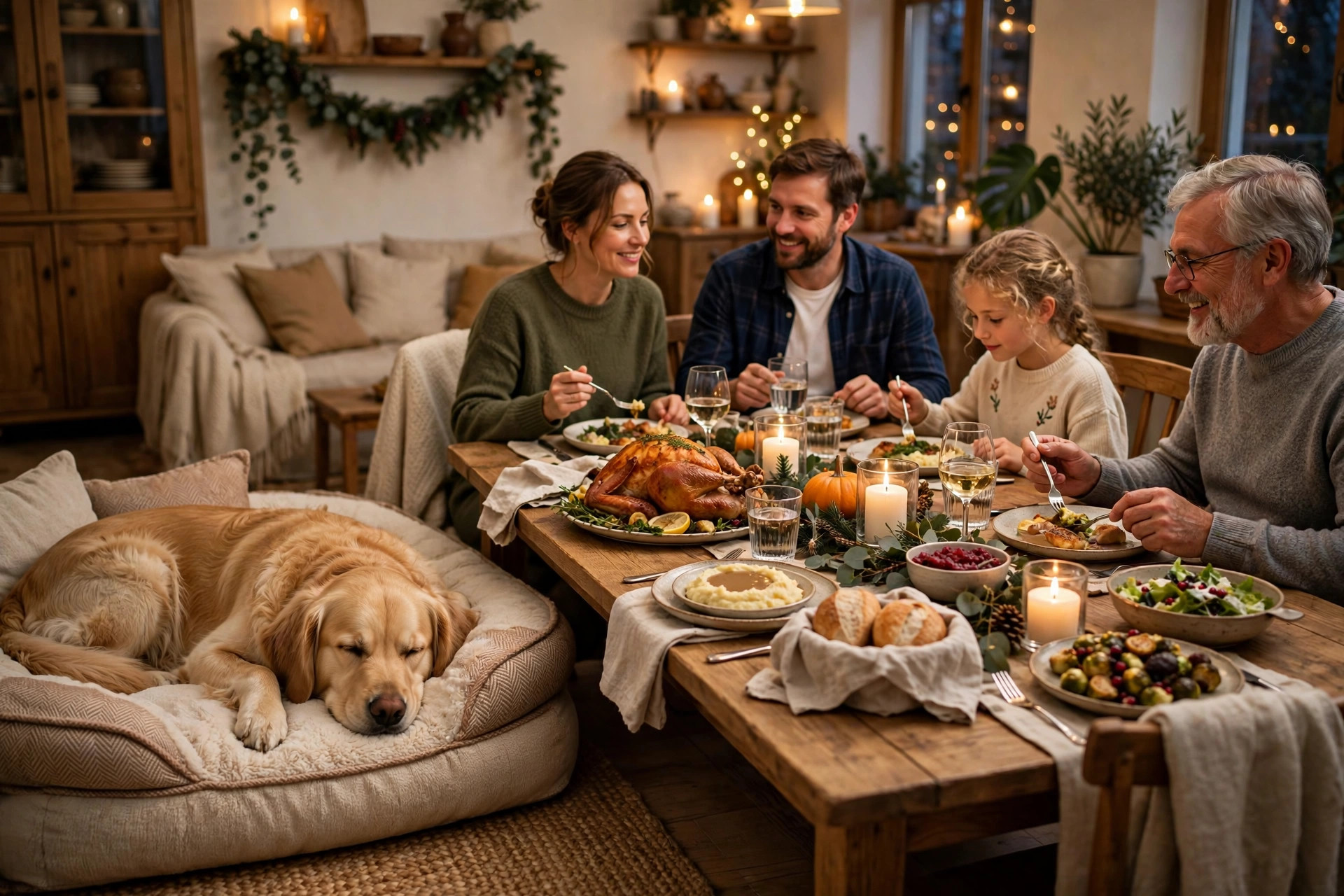
The core principle is simple: make the table give nothing, and make the bed give something. Follow all five steps together — skipping one is usually why plans fail.
Step 1: Feed Your Dog Before You Eat
Feed your dog their regular dinner 30–60 minutes before you sit down. A full dog is far less motivated to beg than a hungry one. Use part of their meal as the stuffed food toy or chew in Step 3 — this keeps daily calories in check and turns their own food into the table-time distraction.
Step 2: Enforce a Zero-Feeding Rule — for Everyone
Agree the rule before the next meal: nobody feeds the dog from the table, plates, forks, or hands. Not at breakfast, not at parties, not on holidays. This is the single hardest step, because one guest slipping a turkey leg under the table can undo a week of training. Consistency from every human in the house is non-negotiable.
Step 3: Give an Acceptable Alternative During Meals
Don’t just take something away — replace it. Before you sit down, give your dog a long-lasting chew, a stuffed food toy, or a puzzle feeder with part of their dinner. A frozen stuffed Kong (peanut butter and banana frozen inside) can occupy a dog for 20–40 minutes — exactly the length of a meal.
Step 4: Ignore Every Begging Attempt Completely
When your dog begs, be boring. No eye contact, no talking to them, no pushing them away, no laughing, no scolding — for many dogs, even negative attention is a reward. If your dog approaches the table, calmly guide them back to their mat and reward the moment they settle. Never reward the dog for leaving the table; reward them for staying in their spot.
Step 5: Use Management While the Habit Changes
Training works best when your dog can’t keep practicing the old behavior. While the new routine is weak, use a baby gate, a leash clipped near the mat, or a crate your dog already loves. Management isn’t punishment — it’s prevention that protects your training investment.
Also Read: Stop Your Dog Pulling on the Leash: 7 Trainer Tips (2026)
Teach the “Place” Cue: Your Table-Manners Game Changer
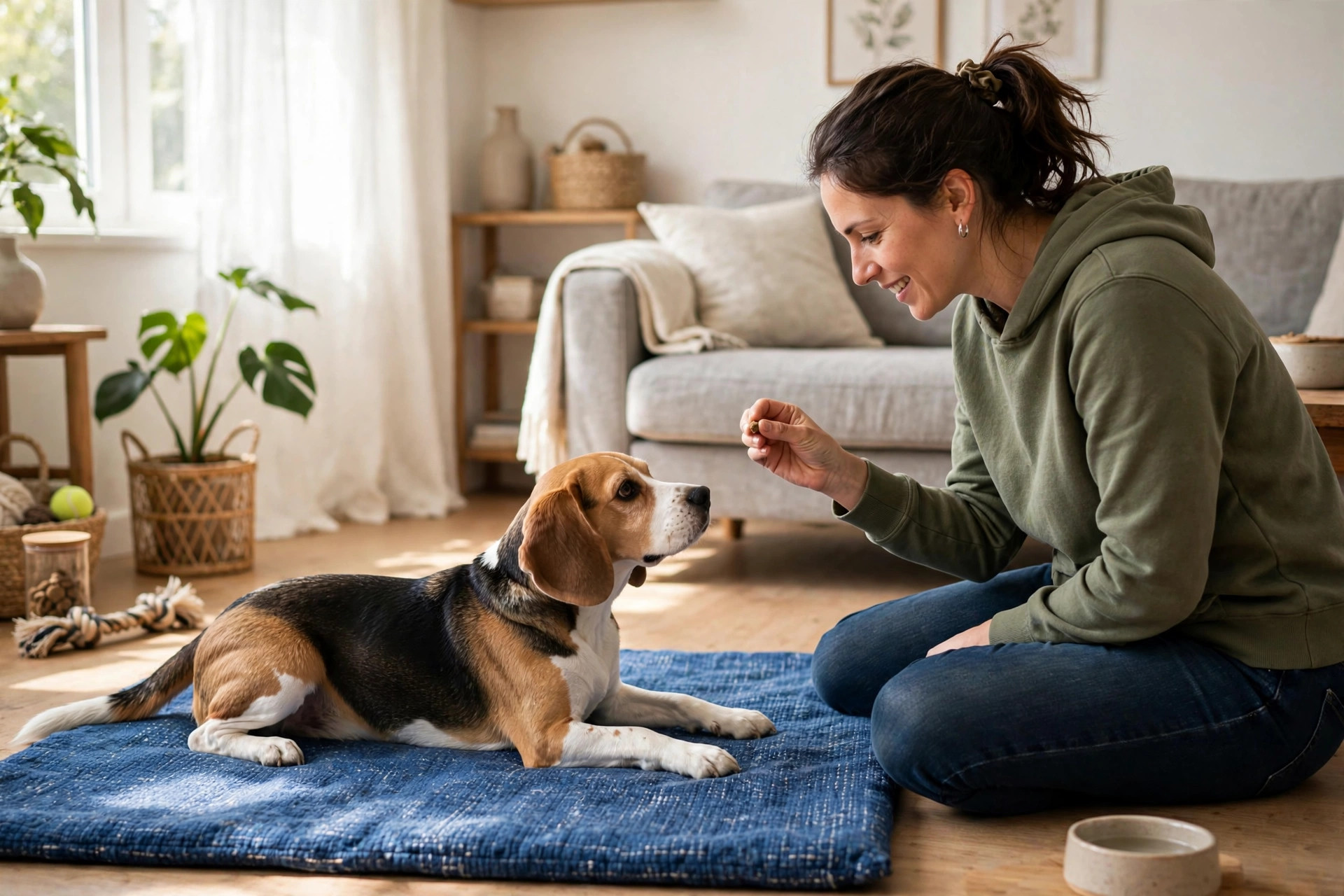
The “place” cue — sending your dog to a specific mat or bed and having them stay there until released — is the single most useful tool against begging. Here’s how to teach it:
- Start without food on the table. Place a mat or bed a few steps from the dining area. Lure your dog onto it with a treat, say “place,” and reward the instant all four paws are on the mat.
- Add duration gradually. Reward calm settling every minute or two at first, then stretch the gaps. Release with a cue like “free!” so your dog learns the stay ends on your word, not their impulse.
- Practice with snacks, then real meals. Once your dog can settle for 10 minutes in a quiet room, practice while you eat a snack, then a full meal. Build up gradually — don’t expect a full Thanksgiving dinner on day one.
- Reward the mat generously at first. In week one, one adult can quietly drop a piece of the dog’s own food on the mat every couple of minutes while the dog stays. Over the weeks, stretch the gaps until the chew toy alone does the job.
A dog that already goes to its mat while you cook usually transfers the skill to mealtimes easily. Dogs often settle better near the family (mat within sight of the table) than shut away in another room — closeness without access is the sweet spot.
The 2-Week Anti-Begging Training Plan
Expect the first few days to feel worse before they feel better — the extinction burst typically peaks around days 3–5. Use this schedule to pace yourself:
| Days | Focus | Goal |
|---|---|---|
| 1–3 | Rule agreement + feeding before meals + stuffed toy at every meal | Zero successful begging; start “place” basics |
| 4–7 | “Place” practice during snacks; management with gate/leash at dinner | Dog settles on mat for 10+ minutes |
| 8–10 | “Place” during full meals; reduce management; guests briefed on the rule | Dog stays on mat through a whole meal |
| 11–14 | Stretch reward gaps; practice with real distractions (doorbell, snacks) | Calm table manners with minimal reminders |
Most dogs show real improvement within 2–3 weeks of consistent daily practice. Setbacks are normal — a single lapse restarts the learning for the dog, so protect the routine during the fragile early days.
Also Read: Puppy Socialization Checklist: The First 16 Weeks (2026)
Holiday Guest Plan: Thanksgiving & Parties
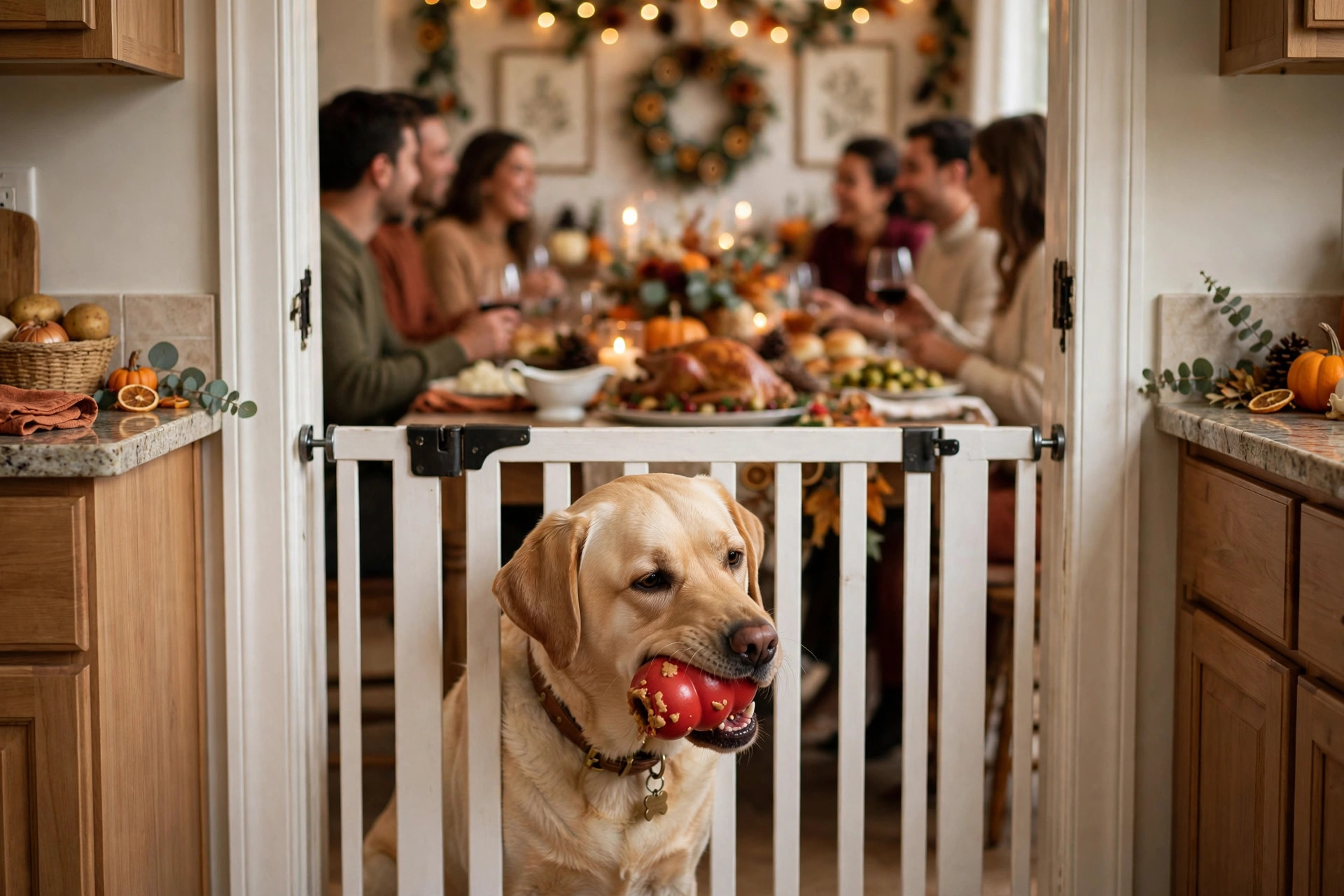
Holidays are begging’s Super Bowl. Guests are prime targets — they don’t know the rules, they feel sorry for the dog, and they’ll sneak food when you’re not looking. The AKC specifically warns that guests will beg-target your dog on the actual holiday, so plan for it:
- Brief guests on arrival. One sentence does it: “Please don’t feed the dog anything — some holiday foods are dangerous for him.” Most guests comply happily once they know there’s a reason.
- Use management on the day itself. Even a well-trained dog can struggle with 12 people eating turkey. A baby gate, a crate with a special chew, or a settle-mat in the kitchen with a frozen food toy is completely fair holiday management.
- Clear the battlefield. Push chairs in, clear plates fast, keep counters clean, and secure the trash. Don’t forget the cookie plates, nut bowls, and snack trays left out for guests — a distracted dog will help himself. Many Thanksgiving hazards (onions, garlic, xylitol in sugar-free treats, turkey bones, chocolate) are genuinely dangerous, not just naughty.
- Assign a dog buddy. If you have a trusted family member, make them the dog’s person for the day — quick potty breaks outside, a short training refresher, and the stuffed toy delivered before everyone sits down.
- Reward calm after the meal. When the table is cleared, praise and treat your dog for the calm behavior. The message lands: good things come from settling, not from begging.
Until your dog’s table manners are rock-solid, the crate-or-gate route on holidays isn’t a failure — it’s the responsible choice that keeps your dog safe from toxic foods while you protect your training.
5 Mistakes That Keep Your Dog Begging
1. “Just this once” exceptions
Feeding scraps on birthdays, holidays, or “because those eyes” teaches your dog that persistence eventually pays. Intermittent rewards create the strongest habits — the exact opposite of what you want.
2. Scolding the begging
Yelling “no!” or pushing the dog away is still attention. Calmly redirecting to the mat and rewarding the settle works far better than any punishment.
3. Only one person following the rules
If one family member sneaks treats, the dog learns who the soft target is. Get the whole household — and the guests — on board with the same rule.
4. Expecting too much too soon
Going from “begs at every meal” to “ignores a Thanksgiving feast” in a week is a recipe for frustration. Follow the 2-week plan above and celebrate the small wins.
5. Skipping the exercise
An under-exercised dog is an anxious, restless dog — and restless dogs beg harder. A good walk or play session before dinner makes settling on the mat dramatically easier.
Also Read: Separation Anxiety in Dogs: Signs, Causes & How to Help (2026)
When to Call a Trainer or Your Vet
Most begging responds to the plan above. But get professional help if:
- Your dog becomes aggressive when denied food — growling, snapping, or guarding the table. Resource guarding needs a certified behaviorist, not DIY training.
- Begging escalates to stealing food, counter-surfing, or trash-raiding despite consistent management — a trainer can identify what’s reinforcing the cycle.
- The behavior started suddenly in a dog that previously had fine manners. Sudden appetite changes or food obsession can signal medical issues (thyroid problems, Cushing’s disease, or medication side effects) — see your vet first.
- Your dog is so anxious they can’t settle on the mat at all despite weeks of gradual training — anxiety-based behavior may need a veterinary behaviorist’s assessment.
Look for a certified professional dog trainer (CPDT-KA) who uses positive-reinforcement methods.
Frequently Asked Questions
Why does my dog beg for food even after being fed?
Because begging isn’t really about hunger — it’s a learned strategy. If begging has worked in the past (even once in a while), your dog will keep trying regardless of a full stomach. Fix it by making the table reliably give nothing and the mat reliably give rewards.
Should I scold my dog for begging?
No. Scolding, pushing away, or making eye contact all count as attention, which can reinforce the behavior. Calmly guide your dog back to their place and reward them for settling there.
How long does it take to stop a dog from begging?
Most dogs improve noticeably within 2–3 weeks of consistent practice. Expect a temporary escalation (extinction burst) around days 3–5 — it means the plan is working. Long-standing habits take longer to undo than new ones.
Can I ever give my dog table scraps again?
If you want to share safe dog-friendly foods, put them in your dog’s bowl after the meal — never hand them food at the table. Any feeding from the table re-teaches the begging habit.
What should guests do about my dog begging?
Ask guests to completely ignore the dog during meals — no eye contact, no food, no petting as a “consolation prize.” Brief them on arrival with a simple no-feeding rule and keep risky holiday foods out of reach.
Is it okay to crate my dog during holiday dinners?
Yes — if your dog is already comfortable in the crate. Give them a special long-lasting chew they only get during family meals. Never start crate training during a stressful holiday meal; use a baby gate or separate room instead for dogs that don’t love their crate.
Final Thoughts
So, how do you stop dog begging at the table? Remember the core formula: feed your dog first, teach the “place” cue, give them something better to do during meals, ignore every begging attempt completely, and make sure every human — including holiday guests — follows the same no-feeding rule.
Begging feels like a personality trait, but it’s really just a habit your dog learned because it worked. Change what works, and the habit changes too. With 2–3 weeks of consistent practice and a solid holiday guest plan, you can enjoy a calm Thanksgiving dinner with your dog settled happily nearby — no hopeful eyes required.
By Dr. Ayaz Ali