
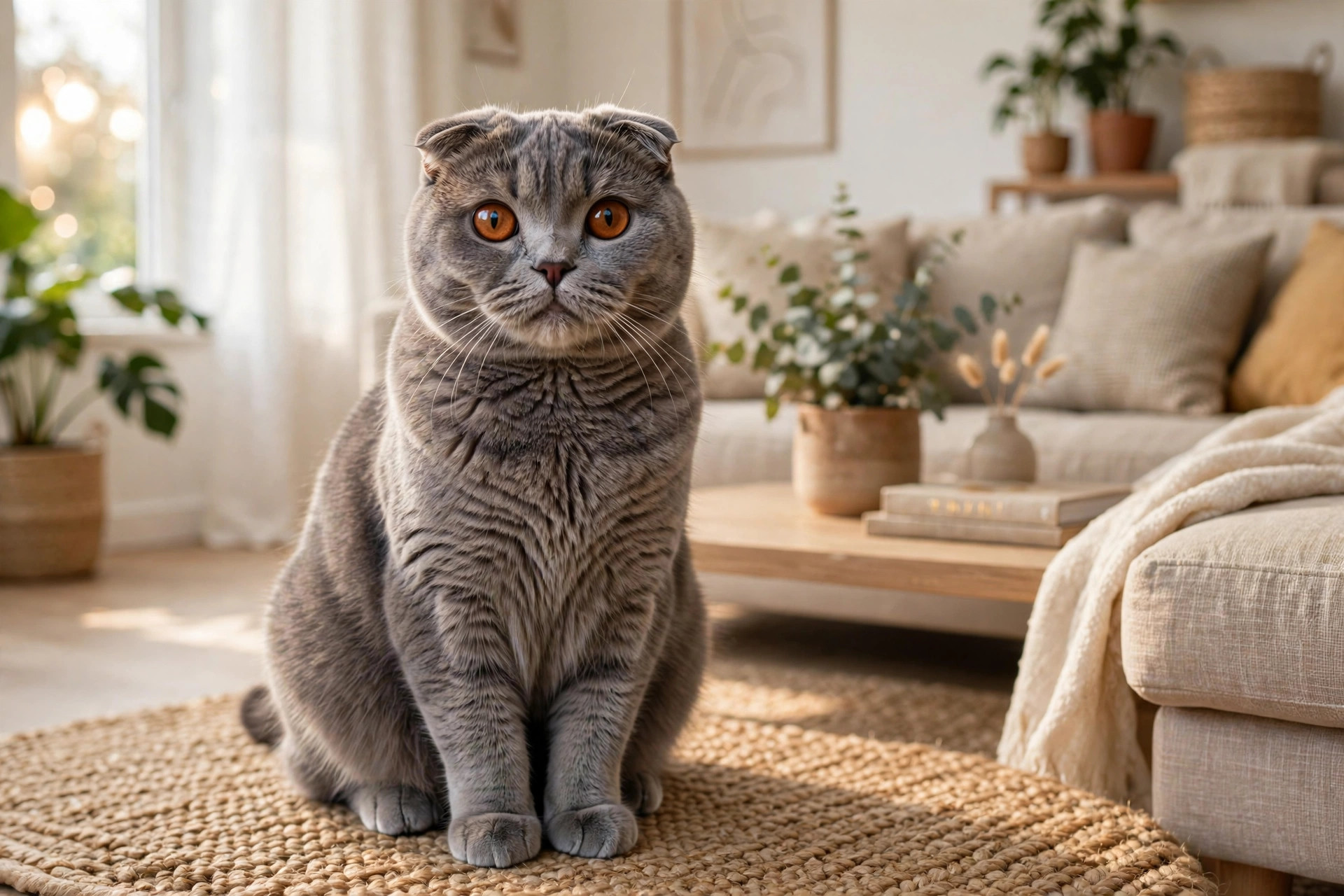
Few cats are as instantly recognizable — or as internet-famous — as the Scottish Fold. With their tiny folded ears, round faces, and habit of sitting upright like little humans, they look like living plush toys. But behind those adorable ears sits a story every potential owner should understand. This scottish fold breed guide covers temperament, daily care, grooming, the health risks linked to the folded ears, and how to tell if this calm, affectionate cat fits your lifestyle.
By Dr. Ayaz Ali
Table of Contents
- What Is a Scottish Fold?
- Scottish Fold Breed at a Glance
- Scottish Fold Temperament & Personality
- Size, Appearance & Coat
- Scottish Fold Care: Daily Needs
- Scottish Fold Health Issues to Know
- Is a Scottish Fold Right for You?
- Scottish Fold Kitten & Breeder Tips
- Frequently Asked Questions
- Final Thoughts
What Is a Scottish Fold?
The Scottish Fold’s story starts in 1961 on a farm in Tayside, Scotland, where a white barn cat named Susie was born with ears that folded forward and downward. A neighboring farmer, William Ross, developed the breed from her line with help from a geneticist — every Scottish Fold alive today traces its ancestry back to Susie.
That cute ear fold is caused by a dominant gene that affects cartilage throughout the entire body, not just the ears — and it is inseparable from a cartilage disorder called osteochondrodysplasia, which can cause joint pain and stiffness. Reputable breeders never mate two folded-ear cats together (a pairing that produces severe disease); instead they cross folds with “Scottish Straights” — same breed, normal upright ears — to reduce severity.
Scottish Fold Breed at a Glance
| Trait | Details |
|---|---|
| Origin | Scotland, 1960s — all trace to a barn cat named Susie |
| Size | Medium — 9–13 lbs (4–6 kg), females usually smaller |
| Body type | Round, cobby, well-padded with short legs and neck |
| Ears | Folded forward and down; not all kittens’ ears fold |
| Coat | Short or long; dense and plush; every color and pattern |
| Eye color | Gold, copper, green or blue depending on coat |
| Lifespan | 12–15 years with proper care |
| Energy level | Low to moderate — calm, not hyperactive |
| Vocal | Quiet — soft, sweet voices |
| Best for | Apartments, families, calm households, people home often |
Scottish Fold Temperament & Personality
Temperament is the Scottish Fold’s greatest strength — easygoing, affectionate, and adaptable:
1. Calm, Gentle, and Easygoing
Scottish Folds are among the calmest cat breeds — rarely hyper or destructive, sweet-tempered, and quick to adjust to new homes, people, and routines.
2. Affectionate Without Being Needy
Folds form strong bonds and love being near their people, though most are not lap-clingers — quiet companionship on their own gentle terms is the breed norm.
3. Quiet and Soft-Spoken
Unlike famously talkative breeds, Scottish Folds have small, sweet voices and use them sparingly — an excellent apartment-cat quality.
4. Playful in Short, Sweet Bursts — Including the Famous Sitting Pose
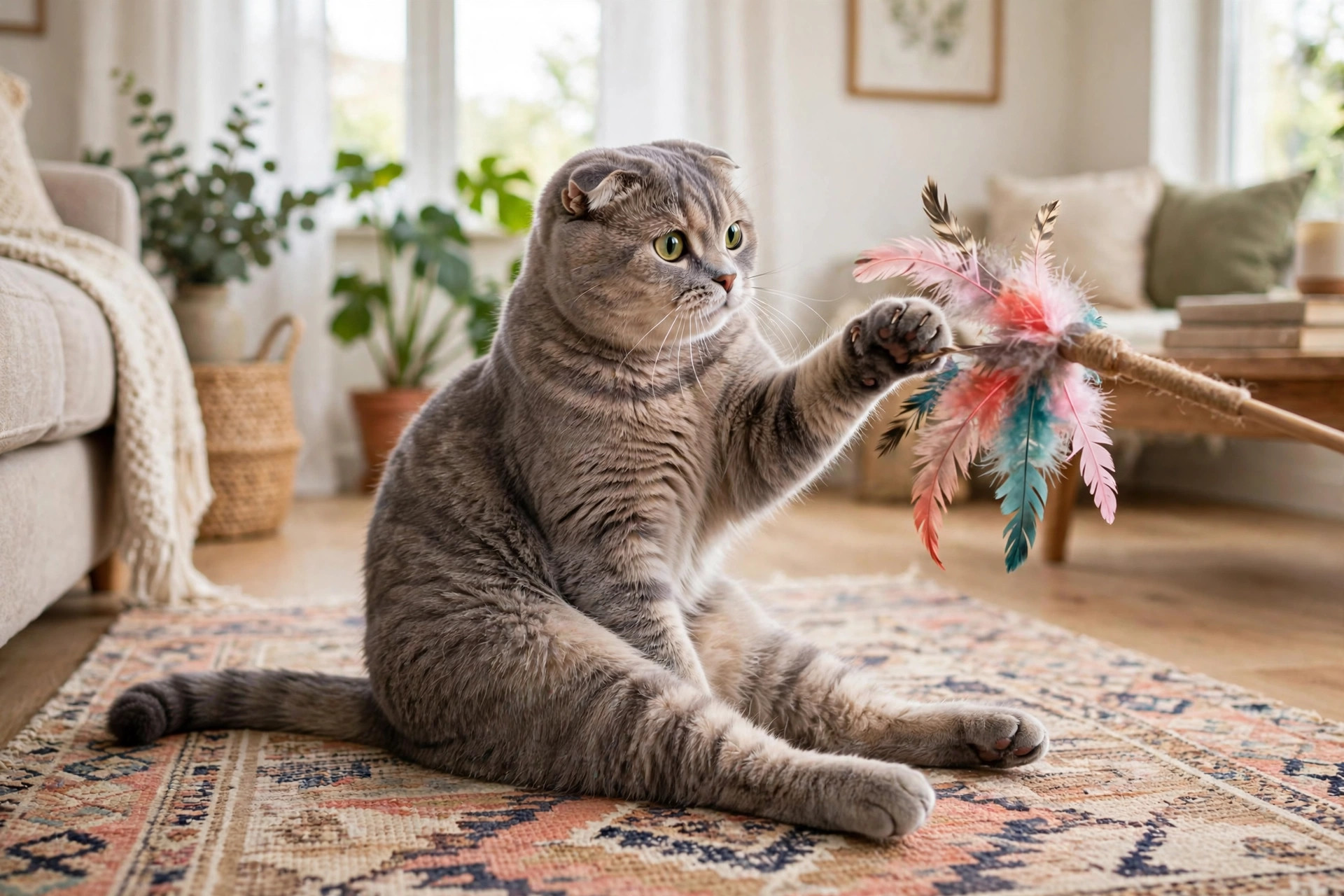
Do not mistake “calm” for “bored.” Folds enjoy interactive play — feather wands, toy mice, puzzle feeders — in shorter sessions. They are intelligent cats that like games and gentle problem-solving, then a long nap. And yes, the internet-famous “Buddha pose” is real: Scottish Folds genuinely sit upright on their haunches with back legs stretched out in front, and sprawl flat on their backs like otters.
5. Good With Kids and Other Pets
Their tolerant, patient nature makes Folds good family cats. They generally accept children, other cats, and cat-friendly dogs with grace — always supervise young children with any pet, of course.
Also Read: Ragdoll Cat Breed Guide: Care & Temperament (2026)
Size, Appearance & Coat
The breed standard can be summed up in one word: round. Round head, round eyes, round cheeks, a cobby well-padded body, short legs with neat, rounded paws. Females weigh 6–9 pounds, males 9–13 pounds.
The ears are the defining feature — folded forward and downward so they cap the rounded head tightly, giving that sweet owl-like expression. All kittens are born with straight ears; the fold only becomes visible at about 3–4 weeks of age. Kittens whose ears stay upright are called Scottish Straights — the same breed without the fold gene.
The coat comes in short and long varieties, and the breed accepts virtually every color and pattern — black, white, blue, cream, silver tabby, tortoiseshell, bicolor, colorpoint, and more. Eye color harmonizes with the coat: copper and gold are most common.
Scottish Fold Care: Daily Needs
A Scottish Fold is a moderate-maintenance cat — mostly because of the ears and the joints:
Grooming: Weekly (Short-Haired) to 2–3 Times a Week (Long-Haired)
Brush the short coat once a week; long-haired Folds need brushing two to three times weekly to prevent mats, focusing on the armpits, belly, and ruff around the neck. Trim nails every 2–3 weeks and keep up dental care, since dental disease is common in all cats.
Ear Cleaning: Check Weekly
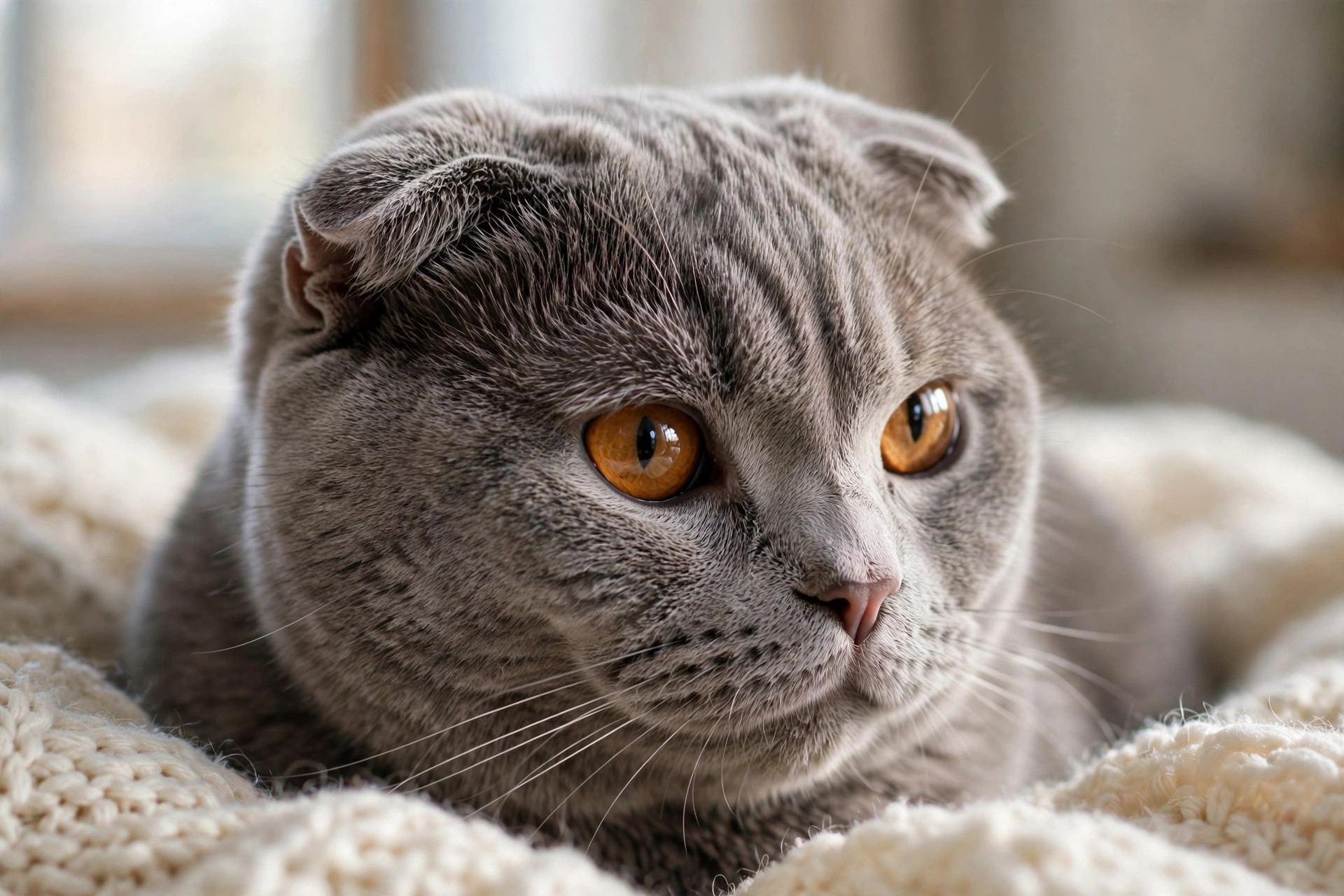
The folded ear canal traps wax, moisture, and debris more than upright ears do, so weekly ear checks are non-negotiable. Gently wipe the visible outer ear with a vet-approved ear cleaner on a cotton pad — never push anything deep into the folded canal. Watch for head shaking, scratching, redness, or odor, and see your vet promptly if any appear.
Diet and Feeding: Measure Every Meal
Scottish Folds are round-bodied, calm cats with a talent for gaining weight — and extra weight is especially punishing for a breed prone to joint problems. Feed a high-quality, protein-rich cat food in measured portions (never free-feed), keep treats under 10% of daily calories, and weigh your cat regularly.
Exercise and Enrichment: Gentle and Regular
Plan on two to three 10-minute play sessions daily — feather wands, rolling toys, puzzle feeders. Keep play low-impact and never force jumping; watch your cat’s comfort level, especially as they age. A cat tree with ramps or steps suits this breed better than tall leaps.
Litter Box and Routine
Follow the n+1 rule (one box per cat plus one extra), scoop daily, and choose a box with low sides so an arthritic cat can enter comfortably. Folds love predictable routines — regular feeding and play times keep them calm and confident.
Also Read: First-Time Cat Owner Checklist: 12 Things to Buy & Do (2026)
Scottish Fold Health Issues to Know
The fold gene affects cartilage everywhere in the body, so folded-ear Folds carry real health considerations. A responsible breeder screens, informs, and never hides this:
1. Osteochondrodysplasia — The Fold Gene Itself
Osteochondrodysplasia is a cartilage and bone disorder caused by the same gene that folds the ears. Every folded-ear Scottish Fold carries it to some degree. It can cause stiff, thickened tails, swollen or misshapen joints, lameness, reluctance to jump, and progressive arthritis that worsens with age. Severe cases — most common when two folded-ear cats are bred together — can appear in young kittens.
There is no cure; management focuses on comfort. Watch for subtle signs: a stiff tail your cat resents being touched, difficulty climbing stairs, or sleeping in odd positions to spare sore joints. Veterinary pain medication, joint supplements such as glucosamine, weight control, ramps, low-sided litter boxes, and raised food bowls all help. Learn more from International Cat Care’s guide to Scottish Fold osteochondrodysplasia.
2. Hypertrophic Cardiomyopathy (HCM)
Like many breeds, Scottish Folds can be prone to HCM — abnormal thickening of the heart muscle. Reputable breeders screen breeding cats with echocardiograms. Ask for written results before committing to a kitten.
3. Polycystic Kidney Disease (PKD)
PKD can occur in Scottish Folds because Persians were historically used in the breed’s development. A DNA test exists; responsible breeders screen and breed only PKD-negative cats.
4. Ear Infections and Obesity
The folded ear canal traps wax and moisture, raising infection risk — weekly checks and gentle cleaning are the prevention plan. Obesity is the most manageable health risk in the breed and worsens every other condition here; measured meals and regular weigh-ins are the fix.
Schedule annual veterinary checkups (twice yearly after age 7), keep vaccinations and parasite prevention current, and tell your vet about any stiffness, limping, or reluctance to move — early pain management makes a real difference in a Fold’s comfort.
Also Read: British Shorthair: Breed Guide, Care & Health (2026)
Is a Scottish Fold Right for You?
A Scottish Fold is a great fit if: you want a calm, sweet-natured companion; you live in an apartment; you are home often enough to give them company; and you are comfortable with regular ear checks, joint monitoring, and an honest breeder.
Reconsider if: you are away from home for very long hours; you want a high-energy, acrobatic athlete; or managing a progressive joint condition over your cat’s lifetime feels like too much — a completely valid reason to choose a different breed.
Scottish Fold Kitten & Breeder Tips
A responsible Scottish Fold breeder will:
- Breed only Fold × Straight pairings — never two folded-ear cats together. Ask directly and expect a clear answer.
- Provide written HCM and PKD screening results for both parents.
- Discuss osteochondrodysplasia openly — signs to watch for and how to manage it.
- Offer a written health guarantee and screen buyers with questions.
Expect to pay roughly $800–$1,500 for a pet-quality kitten from a reputable breeder, with rare colors and longhaired varieties costing more. Also consider Scottish Fold rescues — adopting an adult means the ears, temperament, and joint health are already known.
Frequently Asked Questions
Are Scottish Fold ears always folded?
No. All Scottish Fold kittens are born with straight ears; the fold only appears at about 3–4 weeks. Some kittens’ ears never fold — those cats are called Scottish Straights.
Do Scottish Folds shed a lot?
Moderately. The dense coat sheds year-round with heavier seasonal shedding in spring and autumn. Weekly brushing keeps loose hair manageable; long-haired Folds need more frequent grooming.
Are Scottish Folds hypoallergenic?
No. No cat breed is truly hypoallergenic. Scottish Folds produce the Fel d 1 allergen protein like all cats, so spend time with the breed before committing if anyone in the home has allergies.
Final Thoughts
So, is the Scottish Fold the right cat for you? If you want a calm, sweet-tempered companion with a famous face, few breeds deliver like the Scottish Fold. Just go in with open eyes: commit to weekly ear checks, measured meals, gentle daily play, and a breeder who is honest about the cartilage condition behind those folded ears. Do that, and you will understand why Fold owners so often say the same thing — once one sits beside you like a tiny person, it is impossible not to smile.