
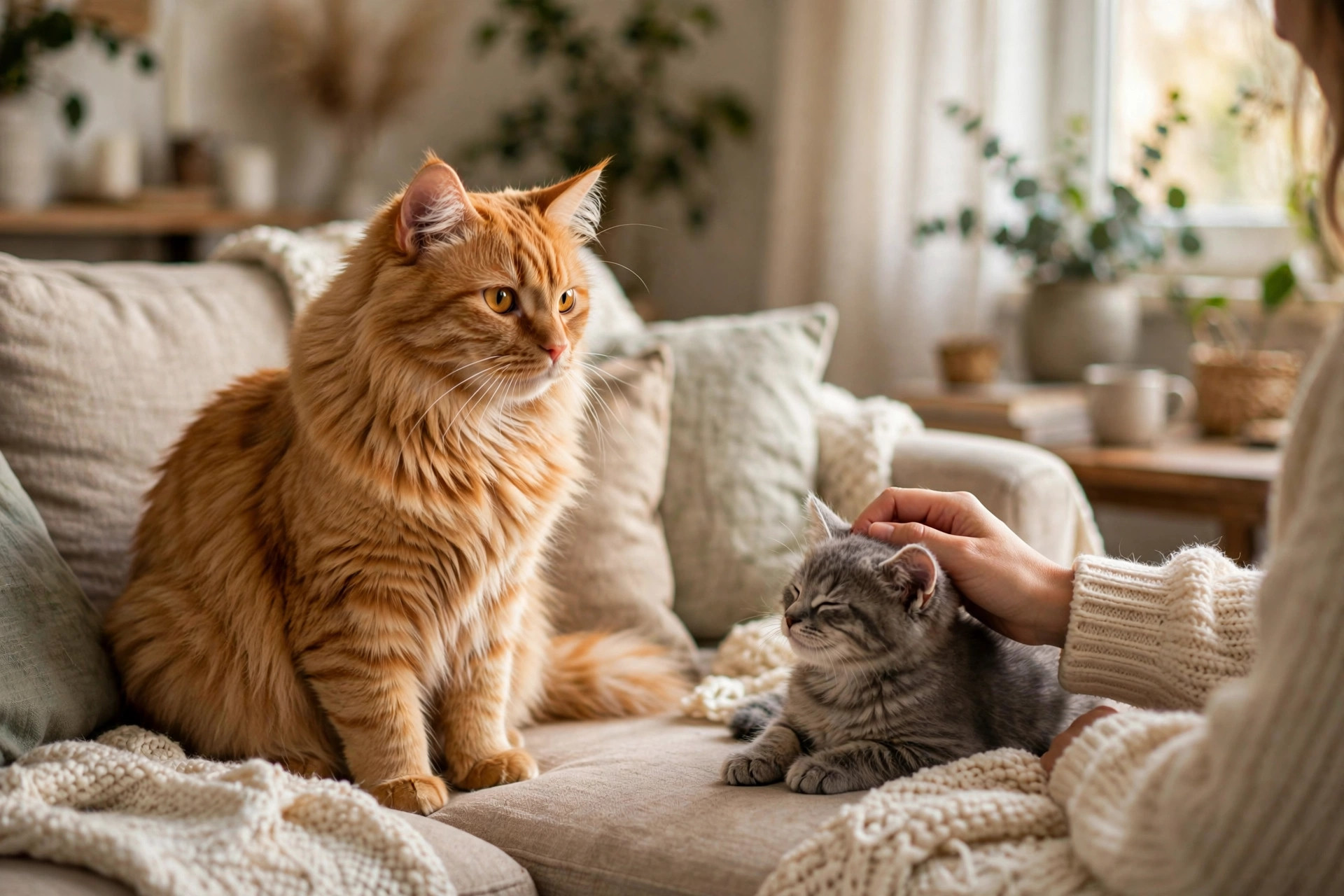
Your new kitten curls up in your lap — and from across the room, your older cat watches with wide eyes and a twitching tail. Later she swats at the kitten, then parks herself on your keyboard the moment you sit down to work. If you keep wondering is my cat jealous, you are not imagining things: countless cat owners see behavior that looks exactly like jealousy, and there are proven ways to help.
The honest answer is that cats do not feel jealousy the way humans do — but they absolutely feel the insecurity underneath it. Veterinarians explain that what we call “cat jealousy” is really a cat guarding what it depends on: your attention, its territory, its food, and its routine. Understanding that difference changes how you fix it.
In this complete 2026 guide, we cover whether cats really get jealous, the 8 most common signs, the triggers behind the behavior, vet-approved ways to help your cat feel secure again, the mistakes to avoid, and when it is time to call your veterinarian.
Table of Contents
- Do Cats Get Jealous? What Vets Say
- 8 Signs Your Cat Is Jealous
- What Triggers Jealousy in Cats
- How to Help a Jealous Cat Feel Secure Again
- What NOT to Do With a Jealous Cat
- When Jealous Behavior Means a Vet Visit
- Frequently Asked Questions
Do Cats Get Jealous? What Vets Say
Cats do not experience jealousy the way people do. Human jealousy involves resentment and comparison; a cat’s brain works differently. What a cat feels is closer to insecurity — a sense that something it needs, like safety, food, your attention, or its favorite sleeping spot, might be taken away.
Veterinary behaviorists, including PetMD, note that behaviors like aggression, hiding, or house-soiling often reflect insecurity rather than emotion as we understand it. The distinction matters: you solve insecurity with reassurance and routine, not discipline.
Think of it this way — your cat is not thinking “you love the new kitten more than me.” Your cat is thinking “my territory changed, my routine broke, and I don’t know where I stand.” That survival-level worry drives the drama, and it is exactly what you can fix.
8 Signs Your Cat Is Jealous
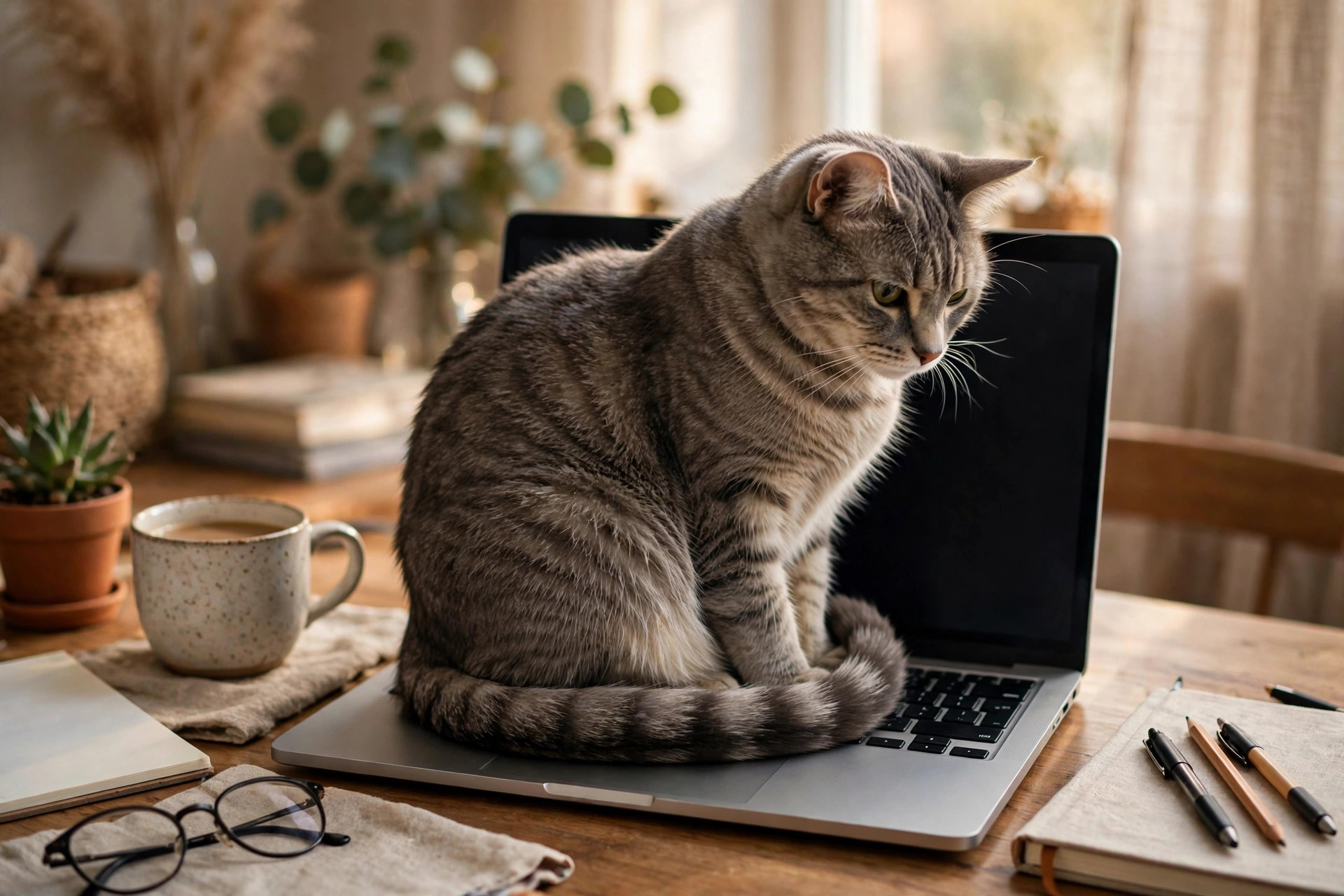
Every cat shows insecurity differently, but these are the behaviors owners report most often. One or two in isolation may mean nothing; a cluster that started after a household change is a strong signal.
1. Getting Between You and the “Rival”
You pick up the new kitten and your resident cat wedges her body between you and it. You open your laptop and she sits on the keyboard. She is physically reclaiming access to you.
2. Clinginess and Attention-Seeking
A previously independent cat may suddenly follow you room to room or demand lap time she never cared about before. This neediness is a bid for reassurance: “I’m still yours, right?”
3. Aggression Toward the Newcomer
Hissing, growling, swatting, or blocking another pet’s path is resource guarding — your cat sees the newcomer as competition for food, space, and your attention.
4. Spraying or Urinating Outside the Litter Box
A house-trained cat that starts spraying walls or peeing on beds is re-labeling the house as hers. Urine marking is one of the most common complaints after a new pet arrives.
5. Destructive Behavior
Scratching furniture she previously ignored, knocking objects off shelves, or chewing things she never chewed — stressed cats redirect anxiety into physical action.
6. Appetite Changes
Some jealous cats eat less when stressed; others guard the food bowl and eat faster, as if the food might disappear. Both are stress responses worth watching.
7. Hiding or Withdrawal
Not every jealous cat acts out — some shut down. A social cat that now spends the day under the bed may have decided the new arrangement is not worth competing in.
8. Guarding Doorways and Resources
Sitting in doorways, camping by the food bowl, or refusing to let the other cat use a favorite perch are all control behaviors over resources she feels are threatened.
Also Read: Why Does My Cat Bite Me? Love Bites Explained (2026) — stressed, insecure cats bite more; learning the warning signs helps you respond before it escalates.
What Triggers Jealousy in Cats
Jealous-like behavior never comes from nowhere. Identifying the trigger is half the fix:
- A new pet in the home — the number-one trigger. A new cat or dog redraws the territory map overnight, and everything is suddenly shared.
- A new person — a new partner, baby, roommate, or frequent houseguest changes the household’s smell, noise, and routine.
- Less attention than before — a new job, a new hobby, or a new baby that cuts your one-on-one time can trigger attention-seeking insecurity.
- Routine or environment changes — moving house, renovations, or even moving the food bowls can unsettle a creature of habit.
- Poor early socialization — orphaned or under-socialized cats often bond intensely with one person and react strongly to anything threatening that bond.
- Not enough personal space — in multi-cat homes, too few litter boxes, food bowls, or sleeping spots breed conflict. The rule of thumb is one of each per cat, plus one extra.
How to Help a Jealous Cat Feel Secure Again
You cannot argue a cat out of feeling insecure — but you can rebuild the security. Follow this vet-approved routine:
1. Keep the Routine Rock-Solid
Feed, play, and cuddle at the same times every day. Predictability is the fastest anti-anxiety tool you own — a fixed routine tells your cat her world still works.
2. Give Her Dedicated One-on-One Time
Set aside 10–15 minutes daily of interactive play with the jealous cat alone — no rival pet in the room — plus a few minutes of calm lap time. She needs proof she still has you, separately.
3. Protect Her Personal Space
Give the insecure cat a room, corner, or high perch the newcomer cannot invade. Separate food bowls, water stations, and litter boxes in different areas. A cat with a guaranteed safe zone stops guarding the whole house.
Also Read: Do Calming Cat Beds Work? Vet-Approved Guide (2026) — a dedicated cozy resting spot gives an insecure cat her own territory no rival can claim.
4. Introduce Changes Gradually
If the trigger is a new pet, slow the introduction: separate rooms first, scent-swapping (trade bedding between the cats), feeding on opposite sides of a closed door, then short supervised visits. Rushing introductions is the most common cause of long-term inter-cat jealousy.
5. Reward Calm Behavior
When the jealous cat is near the “rival” without hissing or guarding, reward it immediately with a treat or praise. You are teaching her the newcomer’s presence predicts good things.
6. Play With Both Cats Together
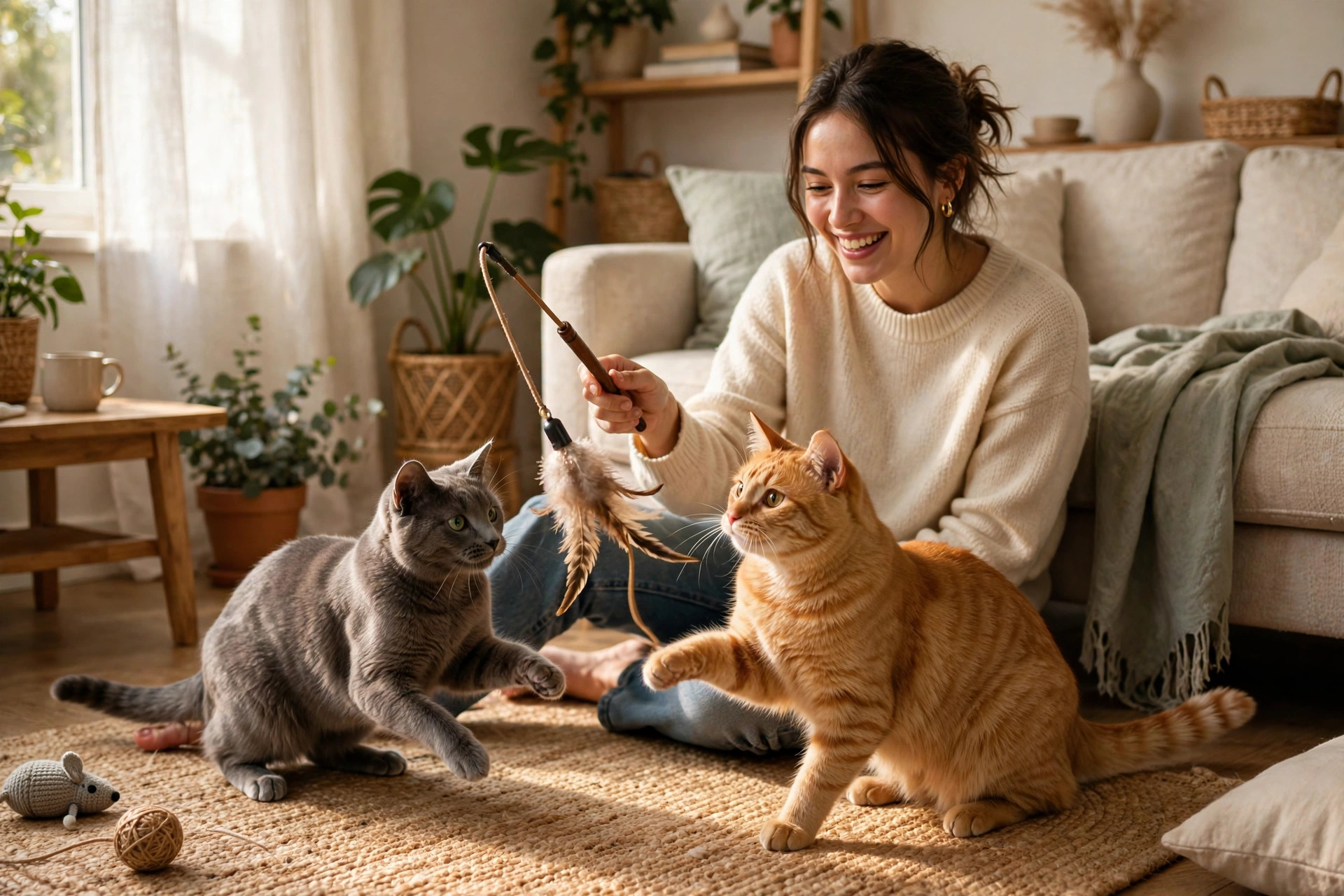
Once tensions are manageable, joint play sessions build positive associations — two cats chasing the same feather wand start filing each other under “fun” instead of “threat.” Keep sessions short and end on a high note.
What NOT to Do With a Jealous Cat
The wrong response turns insecurity into fear, and fear makes everything worse:
- Do not punish the behavior. Yelling or spraying water teaches her the new situation brings punishment — confirming her fear instead of relieving it.
- Do not force interactions. Holding the two cats together or blocking her escape routes creates panic, not friendship.
- Do not give the newcomer all the attention. Showering the kitten with affection while ignoring the resident cat feeds the insecurity directly.
- Do not remove her safe spaces. Taking away hiding spots “so she’ll socialize” backfires — a cat without a retreat fights harder.
- Do not ignore withdrawal. A hiding cat is a stressed cat, not one that “got over it.” Offer quiet company and let her set the pace.
When Jealous Behavior Means a Vet Visit
Most jealousy responses are behavioral — but a sudden personality change can also be medical. Book a veterinary check if the behavior appeared suddenly with no household change, comes with appetite loss or lethargy, involves urinating outside the box (possible urinary blockage or infection), escalates into real aggression, includes overgrooming to the point of sores, or does not improve after 2–3 weeks of consistent reassurance work.
Also Read: Why Is My Cat Not Eating? Warning Signs & When to Worry (2026) — stress-related appetite loss can become dangerous fast in cats; know the 24-hour rule.
Pain, urinary problems, thyroid disease, and cognitive decline in senior cats can all mimic “jealousy.” A vet visit rules out the medical side so you can treat the behavior with confidence.
Frequently Asked Questions
Can cats actually feel jealousy?
Not in the human sense. Cats do not compare themselves to others or feel envy — but they do feel insecurity and stress when their territory, routine, or access to you changes. The behaviors look like jealousy, and the fixes for insecurity work.
How do I know if my cat is jealous of my new kitten?
Watch for a cluster of new behaviors since the kitten arrived: blocking your path to the kitten, hissing or swatting at it, spraying, or withdrawing to hide. One sign alone may be coincidence; several together point to insecurity about the newcomer.
Will my cat get over jealousy on its own?
Sometimes, with slow introductions and reassurance, cats settle within a few weeks. But jealousy left unmanaged can harden into chronic conflict — active work (routine, separate resources, rewarded calm behavior) resolves it far faster than waiting.
Should I get a second cat to keep my jealous cat company?
Almost never as a fix. Adding another cat to one already insecure about resources usually doubles the problem. Resolve the jealousy first and make sure resources are plentiful before considering a companion.
Do male or female cats get jealous more?
It is driven by personality and insecurity, not sex. Unneutered males tend to be more territorial overall, but in neutered house cats, individual temperament matters far more than gender.
Can pheromone diffusers help a jealous cat?
They help with background stress: synthetic feline facial pheromones signal “this place is safe” and reduce anxiety markers in many cats. They work best as a support tool alongside routine, personal space, and gradual introductions.
Final Thoughts
So, is my cat jealous? She is not plotting revenge — she is telling you, in the only language she has, that something she depends on feels threatened. The hissing, the keyboard-sitting, the middle-of-the-night yowling are all requests for the same thing: reassurance that her world is still safe.
Answer that with a steady routine, protected personal space, real one-on-one time, and patience during introductions — and most cats come back to themselves within weeks. Never punish the behavior, and let a veterinarian rule out medical causes if it is sudden or severe. Do that, and the cat glaring at the kitten today will likely be napping next to it a month from now.