
You’re standing in the kitchen, minding your own business, when suddenly a 70-pound weight presses into your leg. You look down: your dog is leaning against you like you’re their personal piece of furniture. It’s sweet — but you can’t help wondering: why does my dog lean on me, and is it normal?
The short answer: leaning is one of the most common ways dogs communicate. For most dogs, it’s a sign of affection, trust, and bonding. But depending on the context — a thunderstorm, a stranger at the door, a sudden new habit — that same lean can be your dog asking for comfort, attention, or reassurance.
In this complete 2026 guide, we’ll decode the 5 things your dog is trying to tell you when they lean on you, bust the dominance myth, show you how to read their body language, and explain when leaning is a sign you should call your vet.
Table of Contents
- Is It Normal for Dogs to Lean on You?
- 1. Affection, Trust & Bonding
- 2. Seeking Your Attention
- 3. Fear, Anxiety & Asking for Reassurance
- 4. Comforting & “Guarding” You
- 5. Pure Comfort — You’re the Comfiest Seat
- Is Leaning a Dominance Behavior? (Myth Busted)
- Lean Decoder: What the Context Tells You
- When Leaning Means a Vet Visit
- How to Respond When Your Dog Leans on You
- Frequently Asked Questions
Is It Normal for Dogs to Lean on You?
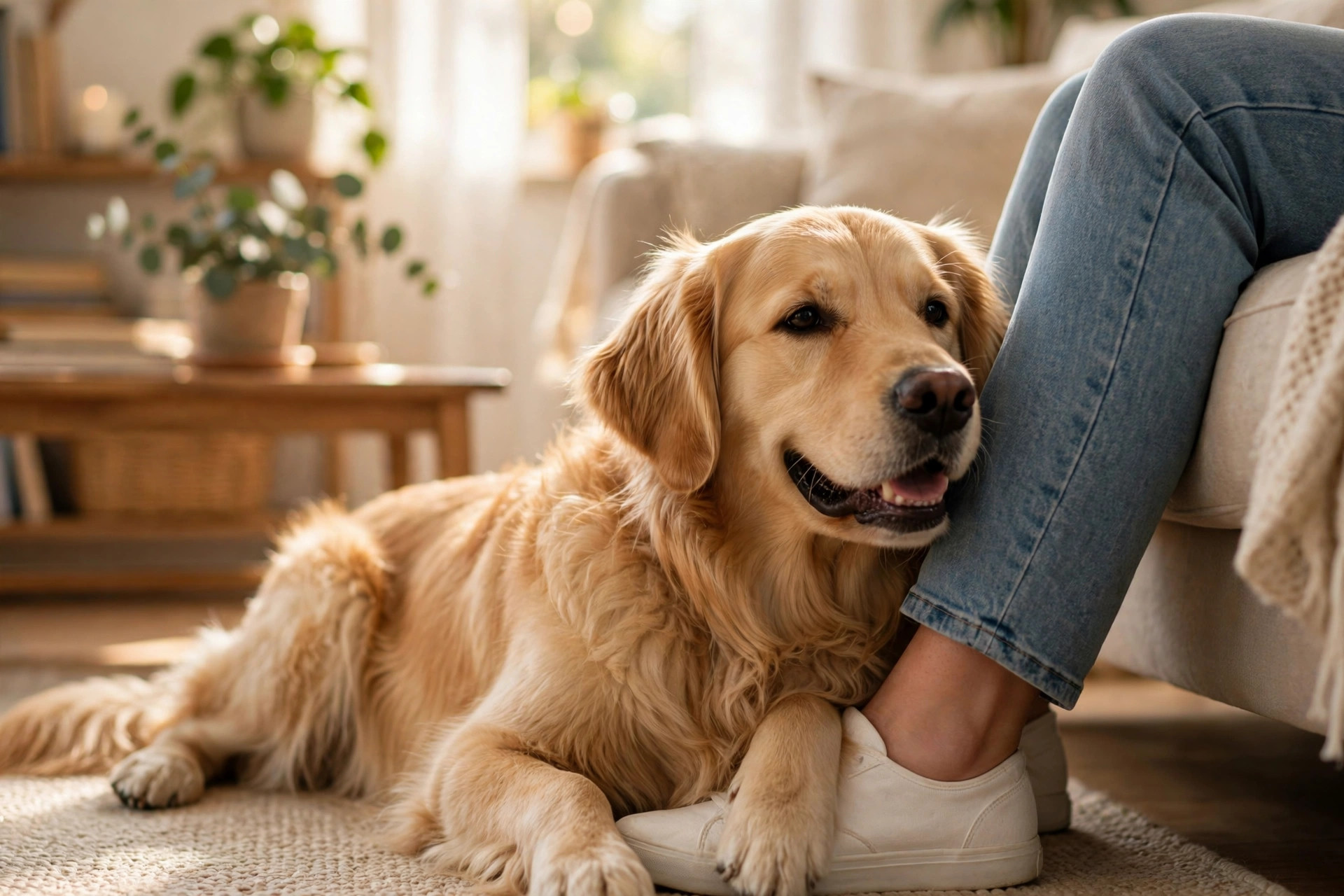
Yes — leaning is completely normal dog behavior, and in most cases it’s a compliment. Dogs are social animals, and physical contact is one of their primary love languages. As the American Kennel Club explains, dogs perch on their people’s feet and lean on their legs when they’re displaying affection, feeling anxious, seeking security, or guarding their owners — “one way a dog shows affection” and “the canine version of a hug or cuddle.”
That said, the same body movement means different things in different situations. A relaxed lean with a wagging tail on movie night is very different from a stiff press against your legs at the vet’s office. Learning to read the context — and the rest of your dog’s body language — is the key to understanding what your dog is actually saying.
1. Affection, Trust & Bonding
The most common reason dogs lean on their owners is also the simplest: they love you and feel safe with you.
Dogs maintain social bonds through physical contact — puppies sleep in piles with their littermates, and adult dogs rest side-by-side with companions they trust. When your dog presses their body weight into you, they’re reaffirming that bond. It’s the canine equivalent of holding hands.
Leaning for affection is most common:
- After you return home — the classic post-work greeting lean
- During quiet moments on the couch or in bed
- When you’re petting them — they’ll press closer to keep the contact going
- With a relaxed body, soft eyes, and often a slow, happy tail wag
Certain breeds take this to the extreme. Labrador Retrievers, Vizslas, Dobermans, German Shepherds, and Boxers are often called “Velcro dogs” — breeds bred to work side-by-side with humans who physically glue themselves to their owners. If you own one of these breeds, a near-constant lean is simply who they are.
Also Read: Separation Anxiety in Dogs: Signs, Causes & How to Help (2026) — some Velcro dogs take closeness too far; learn where affection ends and anxiety begins.
2. Seeking Your Attention
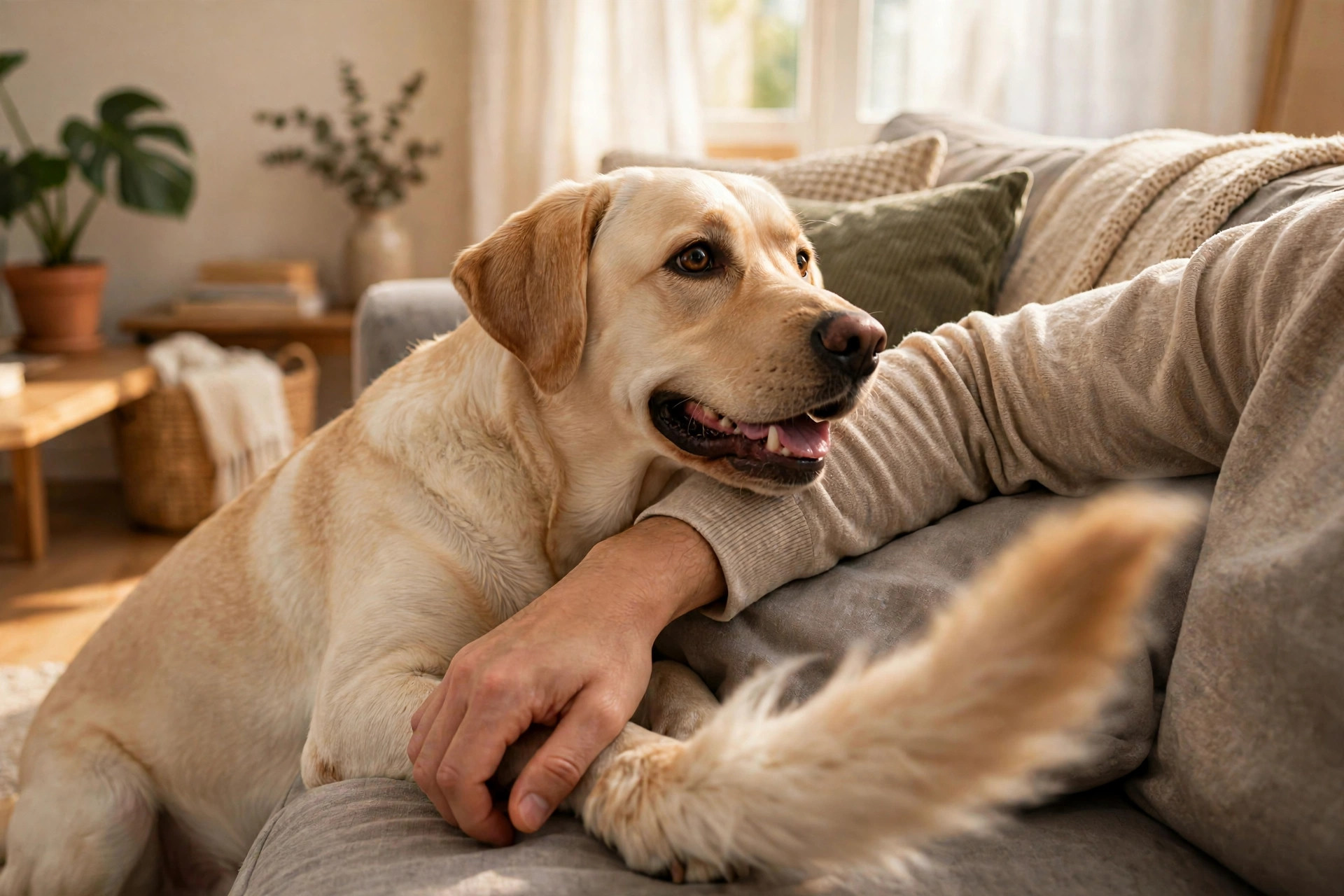
Dogs are smart, and they quickly learn which behaviors get a response. If leaning on you once earned petting, talking, a belly rub, or playtime, your dog learned a simple equation: lean = attention.
Attention-seeking leaning is usually easy to spot:
- It comes with playful energy — pawing, nudging, tail wagging, bringing toys
- It happens when you’re distracted (on your phone, typing, watching TV)
- Your dog may do it like a “body slam” to jolt you into play mode
- It stops as soon as they get what they wanted
This is harmless as long as you enjoy it. But be aware: constantly rewarded leaning can escalate into demanding behavior. If your dog is shoving into you 40 times a day and escalating when ignored, teach a polite alternative — ask for a sit or a settled “place” before giving attention, so calm behavior earns the reward instead.
3. Fear, Anxiety & Asking for Reassurance
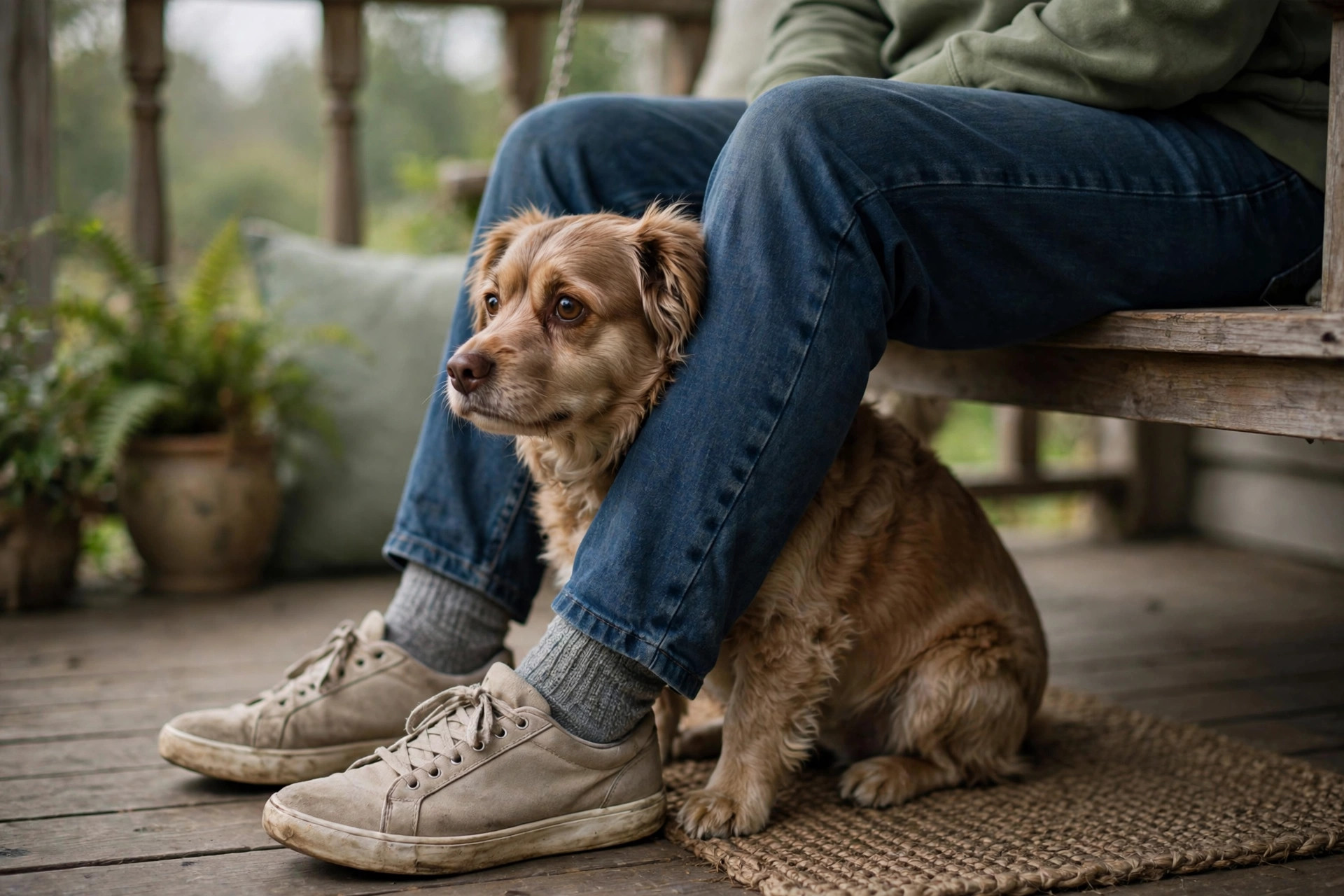
When a dog is frightened — by thunder, fireworks, unfamiliar people, or a vet waiting room — they often lean or hide behind the person they trust most: you. Pressing against you is their way of saying, “I don’t feel safe, and you’re my safe place.”
Watch for these companion fear signals along with the lean:
- Trembling or panting when it’s not hot
- Ears pinned back, tail tucked low or between the legs
- Lowered body posture, avoiding eye contact
- Trying to climb into your lap or squeeze behind your legs
- Pacing, whining, or attempting to hide
A sudden increase in leaning at home — especially after a move, a new baby, a new pet, or a change in routine — often signals stress rather than love. Dogs that feel unsettled lean for reassurance that everything is okay.
What to do: Stay calm and matter-of-fact. Speak in a low, steady voice, offer gentle contact, and let them stay close. Avoid frantic comforting (it can confirm there’s something to fear), but don’t ignore them either — your calm presence is genuinely soothing. If anxiety is frequent, identify the trigger and work on gradual desensitization, and talk to your vet about management options.
Also Read: Adopt a Shelter Dog Month 2026: What to Know Before Adopting — rescue dogs often lean from fear of abandonment; the 3-3-3 rule helps new adoptees decompress.
4. Comforting & “Guarding” You
Sometimes the lean isn’t about your dog’s needs — it’s about yours. Dogs are remarkably attuned to human emotions, and many owners report their dog leaning in harder when they’re sad, upset, or unwell.
This protective instinct can also look like guarding: your dog positioning themselves between you and a stranger, a new dog, or the front door. A relaxed guard lean says, “I’ve got you.” The key word is relaxed — if the body goes stiff, the stare hardens, or growling starts, you’re no longer looking at comfort behavior, and you should calmly remove your dog from the situation.
5. Pure Comfort — You’re the Comfiest Seat
Never underestimate the simplest explanation: you’re warm, soft, and smell like home. Dogs choose the comfiest available surface, and on a cold morning, a human leg beats a hard floor every time.
Dogs that lean while settling down to sleep are often just getting cozy. Arthritic or senior dogs may prefer leaning and resting against you rather than lying flat, because it puts less pressure on sore joints. This is normal — just keep an eye on whether stiffness or pain is increasing over time.
Is Leaning a Dominance Behavior? (Myth Busted)
Many owners worry that a dog leaning with their backside against them is trying to be “dominant.” That idea comes from outdated training theories built on rigid wolf-pack hierarchies. Modern veterinary behaviorists have largely moved past this interpretation — leaning is about comfort, security, attention, trust, and social bonding, not control.
A true problem behavior doesn’t look like a casual lean. It comes with clear warning signs: stiff posture, hard staring, guarding resources, growling, snapping, or blocking your movement. If your dog simply presses their body against you with a loose, happy body — it’s affection, not a power move.
Lean Decoder: What the Context Tells You
Use this quick reference to decode your dog’s lean:
| Context | Body Language | Likely Meaning |
|---|---|---|
| Relaxing on the couch | Soft body, slow wag, sighs | Affection & bonding |
| You’re busy or distracted | Playful, nudging, brings toys | Wants attention or play |
| Thunder, fireworks, strangers | Trembling, ears back, tail tucked | Fear — seeking reassurance |
| You’re upset or unwell | Calm, persistent closeness | Comforting or guarding you |
| Settling to sleep | Drowsy, curling in | Warmth & comfort |
| Suddenly, more than usual | Restless, clingy, off routine | Possible pain or illness — vet check |
When Leaning Means a Vet Visit
Most leaning is harmless. But a sudden increase in leaning that is out of character for your dog deserves attention. Dogs that are in pain or feeling unwell often become clingier and press against their owners for comfort.
See your veterinarian if new or intensified leaning comes with:
- Lethargy, loss of appetite, or changes in drinking
- Limping, stiffness, crying out when touched, or reluctance to move
- Vomiting, diarrhea, or other sudden physical symptoms
- Increased anxiety, pacing, or restlessness without an obvious trigger
- Any rapid behavior change in a senior dog
Trust your gut: you know your dog’s baseline better than anyone. When “my shadow” suddenly becomes “my shadow times ten,” a checkup is the right call.
How to Respond When Your Dog Leans on You
For affectionate leaning, enjoy it — respond with calm petting, which is exactly what your dog is hoping for. You’re strengthening the bond.
For attention leaning, reward the version you like: pet the dog who sits politely beside you, and briefly disengage from the dog who body-slams you mid-sentence. What gets rewarded gets repeated.
For fear-based leaning, be their safe harbor: stay calm, keep the environment predictable, and work on the underlying trigger rather than scolding the lean itself. Never punish a dog for seeking comfort — that erodes the trust the lean is built on.
Frequently Asked Questions
Why does my dog lean on me with his backside?
A rear lean is usually the same as any other lean — comfort, trust, and affection. Some dogs simply pivot and sit with their back against you because it’s a stable, cozy position. It’s not a dominance statement; modern behavior science views it as a relaxed social gesture.
Why does my dog lean on me when I’m petting them?
They’re asking for more. If your dog presses closer while you pet them, with a loose body and relaxed expression, they’re simply enjoying the contact and signaling you to keep going.
Why does my dog suddenly lean on me more than usual?
A sudden increase in clinginess can point to stress (a move, new schedule, new pet), anxiety, aging, or pain/illness. If it’s out of character and paired with other changes — appetite, energy, mobility — book a vet check.
Why does my dog lean on strangers?
Friendly dogs generalize: people who give attention become lean targets. If the lean comes with stiffness, blocking, or growling around strangers, it’s guarding or fear — consult a trainer or behaviorist.
Should I stop my dog from leaning on me?
Only if it’s causing problems — a 90-pound lean can topple kids or elderly family members. Teach an incompatible behavior (like lying on a mat nearby) rather than punishing the lean itself.
Do all dogs lean on their owners?
No — it’s individual and often breed-influenced. Velcro breeds (Labradors, Vizslas, Dobermans, German Shepherds) are famous for it, while more independent breeds may show affection in other ways. Neither is “wrong.”
Final Thoughts
So, why does your dog lean on you? Most of the time, it’s the highest compliment a dog can pay: you’re their person, their safe place, and their favorite source of comfort. It’s affection, trust, and bonding — the canine version of a full-body hug.
Learn to read the context around the lean, though. That same press of body weight can mean “play with me,” “I’m scared, help me,” or “you’re warm and I like it.” And when the pattern suddenly changes, listen — because the dog leaning harder than usual might be the one asking for help the loudest.
Enjoy the lean. You’ve earned it.