
It usually starts at the breakfast table: you’re whisking eggs into a pan, and your cat is sitting beside you with that look — the one that says “a bite for me, please.” It’s only natural to wonder: can cats eat eggs, or should breakfast stay strictly human-only?
The good news is yes, cats can eat eggs — but only when they’re fully cooked and served completely plain. While eggs are packed with animal protein that fits a cat’s carnivorous diet beautifully, raw eggs carry real bacterial and nutritional risks, and the fatty yolk can pack on unwanted calories in such a small animal.
In this complete guide, we’ll walk you through everything you need to know about feeding eggs to cats: the real nutritional benefits, the risks of raw and yolk-heavy servings, exactly how much to offer, step-by-step preparation, and answers to the questions cat owners ask most often.
Table of Contents
- Are Eggs Safe for Cats?
- Nutritional Benefits of Eggs for Cats
- Risks of Feeding Eggs to Cats
- How Many Eggs Can Cats Eat?
- How to Prepare Eggs for Cats
- What If My Cat Eats Too Many Eggs — or Raw Eggs?
- Can Kittens Eat Eggs?
- Healthy Alternatives to Eggs
- Frequently Asked Questions
Are Eggs Safe for Cats?

Yes, fully cooked eggs are generally safe for healthy cats when served plain and in small portions. Veterinary sources including PetMD confirm that eggs fit naturally into a cat’s diet — cats are obligate carnivores, meaning their bodies evolved to run on animal protein, and eggs are one of the most complete protein foods in nature.
But “safe” comes with two important distinctions:
- Cooked is non-negotiable. Raw eggs can carry Salmonella and E. coli, and raw egg whites contain avidin, a protein that blocks the absorption of biotin (a B vitamin) — a problem cats, as small animals, feel faster than larger pets.
- The white and the yolk are different foods. Egg whites are almost pure protein with virtually no fat. Yolks are mostly fat with some protein, so they add far more calories and can upset sensitive stomachs.
Remember the golden treat rule: all treats combined should stay under 10% of your cat’s daily calories, with the rest coming from a complete, balanced cat food.
Nutritional Benefits of Eggs for Cats
Eggs may be small, but they deliver a surprisingly dense nutrition package that suits a carnivore’s body well.
1. Complete, High-Quality Protein
A single medium egg contains roughly 6 grams of protein — and unlike plant proteins, egg protein delivers all nine essential amino acids in highly digestible form. These amino acids support muscle maintenance, tissue repair, and immune function. Egg white is the leanest way to add protein to your cat’s diet, since it contains almost no fat.
2. Essential Vitamins and Minerals
Eggs (especially the yolk) supply vitamins A, B6, B12, D, and E, along with iron, zinc, and selenium. These nutrients support immune health, skin and coat condition, and healthy blood cells. It’s a solid bonus in treat-sized amounts — though your cat’s main diet should be doing the heavy lifting here.
3. Healthy Fats and Omega-3s
The yolk carries omega-3 fatty acids and choline, which support brain health and cell function. A tiny bit of yolk now and then is fine for most cats — the key word is tiny, because the fat is also the biggest downside of the yolk.
4. Calcium From Cooked Eggshells
Thoroughly boiled and finely ground eggshells are a natural source of calcium and other minerals. However, most cats won’t be thrilled by the gritty texture, and mineral supplementation should only happen under your veterinarian’s guidance — especially for kittens under six months, which handle excess calcium poorly.
Also Read: Can Cats Eat Blueberries? Vet Guide & Tips (2026)
Risks of Feeding Eggs to Cats

Eggs are safe when cooked and plain, but feeding them the wrong way — or too often — can cause genuine problems.
1. Raw Eggs: Bacteria and Biotin Deficiency
Never feed raw eggs. They can harbor Salmonella or E. coli, which cause vomiting, diarrhea, and lethargy in cats (and can infect you too). Raw egg whites also contain avidin, a protein that binds biotin and can lead to biotin deficiency over time — poor skin, brittle coat, and impaired metabolism. Cooking to an internal temperature of 160°F (71°C) neutralizes both risks.
2. Yolks Are Fat and Calorie Bombs
One egg packs about 90 calories — a meaningful chunk of a cat’s 200–250 daily calories. The yolk holds almost all of that fat and cholesterol. Regular yolk servings can lead to weight gain, and rich, fatty meals can trigger gastrointestinal upset or pancreatitis in sensitive cats. Cats that are overweight or have kidney issues should skip eggs or stick to whites only, with your vet’s approval.
3. Dangerous Add-Ons and Seasonings
The way you eat eggs is not the way your cat should. Never share eggs cooked with onions or garlic (toxic to cats), salt, pepper, butter, cheese, or cooking oils — these can cause GI upset or worse. Cats also can’t handle dairy well; most adult cats are lactose-intolerant. Plain means plain.
4. Rare Allergic Reactions
Egg protein allergies in cats are uncommon but real. After the first tiny taste, watch for itching, swelling, excessive scratching, or vomiting. If any appear, stop feeding eggs and contact your veterinarian.
How Many Eggs Can Cats Eat?
Eggs are an occasional protein boost — not a meal replacement and not a daily habit. Veterinary guidance generally suggests 1–2 teaspoons of cooked egg, once or twice a week, and never more than one egg per day (most cats need far less). A tablespoon of cooked egg white is plenty to supplement protein intake.
| Cat Size | Weight | Safe Serving (per sitting) |
|---|---|---|
| Small cats | Under 9 lbs (4 kg) | 1 teaspoon of cooked egg white |
| Medium cats | 9–13 lbs (4–6 kg) | 1–2 teaspoons of cooked egg |
| Large cats | Over 13 lbs (6 kg) | Up to 1 tablespoon of cooked egg |
When in doubt, start smaller — a single pea-sized piece is a perfectly good first taste. And keep the 10% treat rule: all extras combined must stay under 10% of daily calories.
How to Prepare Eggs for Cats
Safe preparation is simple — the golden rule is cooked thoroughly and absolutely plain:
- Use fresh, clean eggs from a reputable source.
- Hard-boil or scramble them dry — no oil, butter, salt, pepper, or seasoning of any kind. Poaching works too.
- Cook them completely through (internal temperature 160°F / 71°C) — no runny yolks or undercooked whites.
- Remove the shell, and chop the egg into small, pea-sized pieces to prevent choking.
- Serve at room temperature, in a clean dish — never straight from your seasoned plate.
- Watch your cat eat, and introduce eggs slowly: one small taste first, then wait 24 hours before offering more.
Pro tip: boiled egg whites alone are the leanest, safest way to serve eggs — all the protein, almost none of the fat.
What If My Cat Eats Too Many Eggs — or Raw Eggs?
If your cat steals a large serving of plain cooked egg, don’t panic — but do monitor them. The most likely result is temporary digestive upset: vomiting, diarrhea, or gas from the fat and protein load.
Contact your veterinarian right away if you notice severe or ongoing vomiting or diarrhea, lethargy, abdominal pain, or if your cat ate raw eggs (bacterial infection risk), eggs cooked with onion or garlic, or eggshells that were uncooked or in large chunks (choking or GI irritation risk). Keep your vet’s number handy — with raw eggs, prompt advice matters.
Can Kittens Eat Eggs?
Kittens can have eggs in very small amounts once they’re weaned and eating solid food — a tiny bit of scrambled or boiled egg, plain and well-cooked. Kittens need a specialized, complete kitten diet to grow properly, so eggs should be nothing more than a rare treat. Do not give eggshells to kittens under six months, as their growing bodies handle excess calcium poorly. When in doubt, ask your vet before sharing.
Healthy Alternatives to Eggs
If your cat turns its nose up at eggs — or you want to rotate protein treats — these options suit an obligate carnivore well:
- Small pieces of plain, cooked chicken or turkey (no seasoning)
- Freeze-dried meat or fish treats made for cats
- A teaspoon of plain canned tuna in water, as an occasional treat
- Small pieces of plain, cooked salmon
- Commercial cat treats formulated for complete nutrition
Always introduce any new food gradually and in small portions.
Also Read: Can Cats Eat Strawberries? Vet Safety Guide (2026)
Frequently Asked Questions
Can cats eat raw eggs?
No. Raw eggs can carry Salmonella or E. coli, and raw egg whites contain avidin, which blocks biotin absorption and can cause a vitamin deficiency over time. Always cook eggs fully before offering them to your cat.
Can cats eat egg yolks?
Yes, in very small amounts. The yolk is nutrient-rich but high in fat and calories, so it should be limited — a small piece occasionally. For the leanest treat, stick to cooked egg whites, which are nearly pure protein with almost no fat.
Can cats eat scrambled eggs?
Yes, as long as they’re scrambled dry — no butter, oil, salt, seasoning, cheese, or milk. Plain scrambled or boiled eggs, chopped into small pieces, are the safest ways to serve them.
Are eggshells safe for cats?
Boiled, finely ground eggshells provide calcium, but they’re gritty and most cats won’t like them. Only supplement calcium under your veterinarian’s direction, and never give eggshells to kittens under six months old.
Can cats eat eggs every day?
No. Eggs should be an occasional treat — once or twice a week in the small portions listed above. Daily eggs add too many calories and fat, and can’t replace a complete, balanced cat food.
Can diabetic or overweight cats eat eggs?
With caution and your vet’s approval. The protein is fine, but the fat and calories in whole eggs can worsen obesity, and fatty meals can upset sensitive metabolisms. Egg whites are a safer option, but check with your veterinarian first.
Final Thoughts
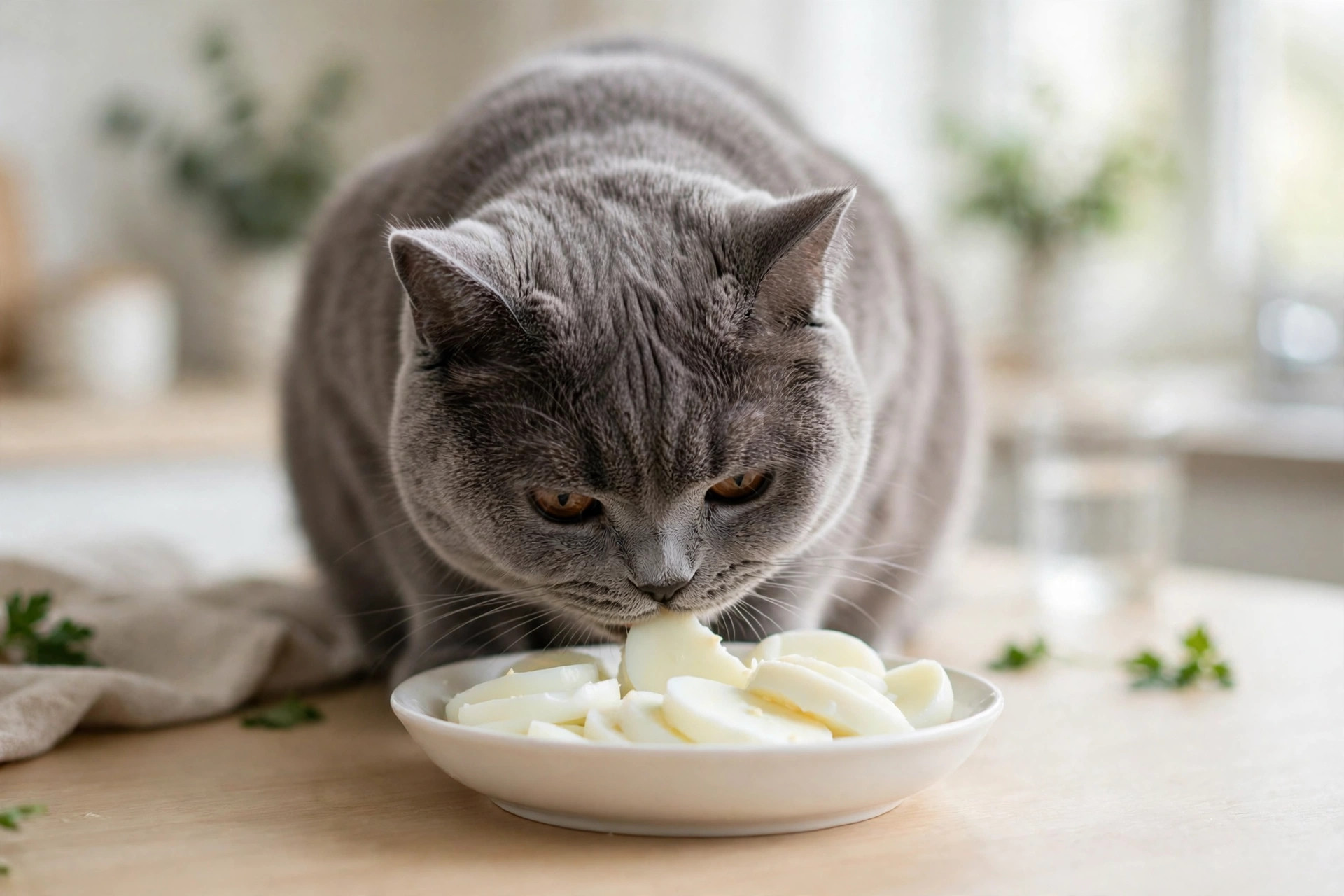
So, can cats eat eggs? Absolutely — when they’re fully cooked, completely plain, and served in small amounts. A teaspoon of boiled or scrambled egg white once or twice a week is a protein-rich treat most cats enjoy. Just remember the golden rules: cooked only, no seasoning or butter, go easy on the yolk, and skip raw eggs entirely.
As with any new food, introduce eggs slowly and watch how your cat responds. And when in doubt, your veterinarian is always the best source of advice for your individual cat’s diet.