
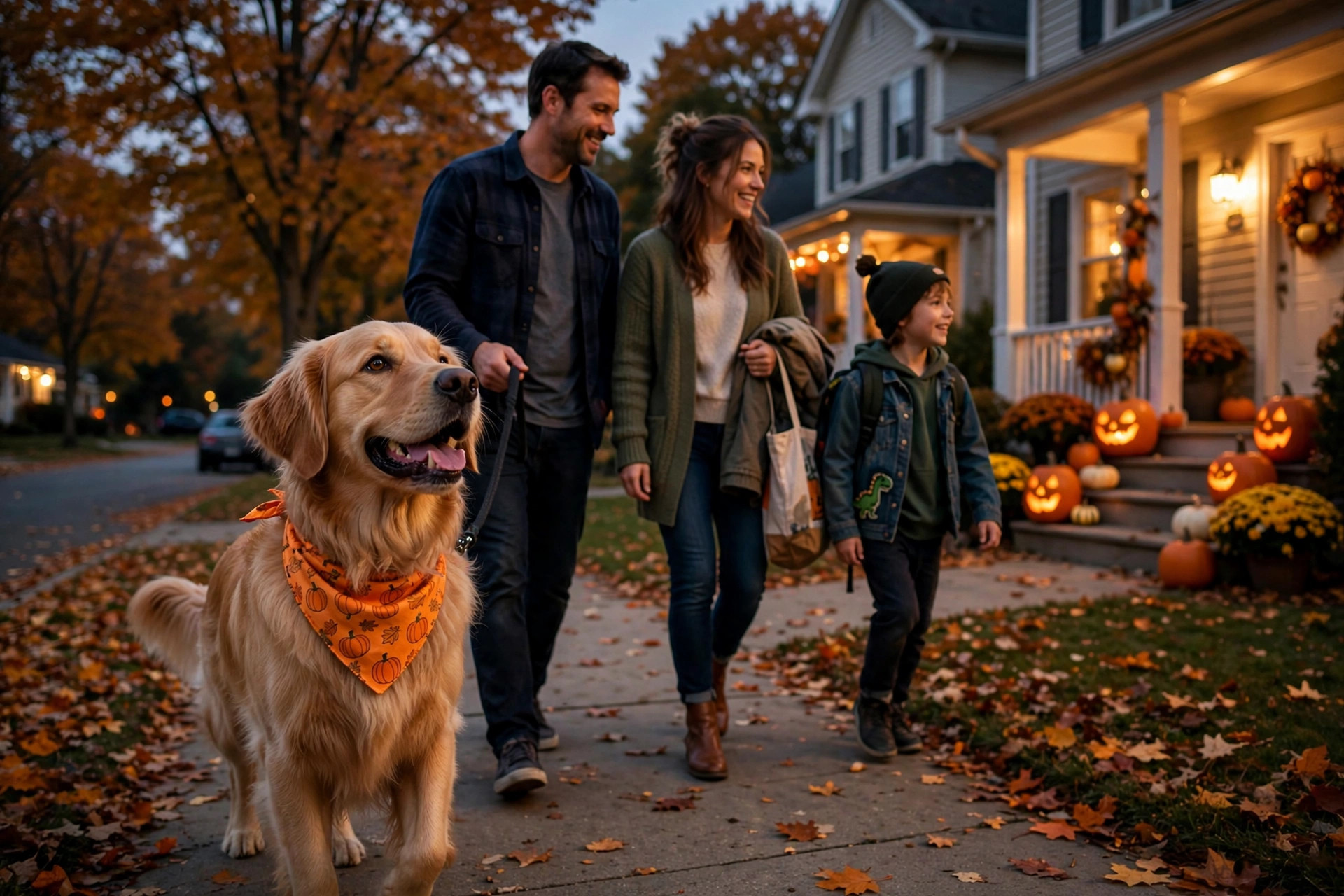
Halloween night turns your quiet neighborhood into a parade of glowing pumpkins, costumed strangers, and candy on every porch — and if you are wondering about taking your dog trick-or-treating with the family, you are not alone. For a confident, well-socialized dog, joining the walk can be a wonderful outing. For a nervous or reactive dog, the same night can be overwhelming. The difference is preparation.
In this guide, we walk you through the full Halloween night plan for taking your dog trick-or-treating: the temperament test to run before you leave, costume comfort rules, leash and visibility essentials, a smart route plan, the candy dangers hiding on sidewalks, and the stress signals that mean it is time to head home early.
Table of Contents
- Should You Take Your Dog Trick-or-Treating?
- The Costume Comfort Check
- Leash, ID, and Visibility Rules
- Plan Your Route Like a Pro
- Candy Dangers on the Sidewalk
- Stress Signs: When to Head Home Early
- What If Your Dog Eats Candy?
- When Staying Home Is the Kinder Choice
- Frequently Asked Questions
Should You Take Your Dog Trick-or-Treating?
Not every dog is a Halloween-night dog, and that is fine. Before you decide, run this honest temperament test in the week before October 31:
- Crowds: Is your dog relaxed around groups of excited children, or do they bark, lunge, or try to hide?
- Costumes: Have they met people in masks, hats, and flowing capes without panicking? Costumes change how people look, sound, and move — even familiar neighbors can seem like strangers.
- Noise and lights: Do sudden doorbells, squealing kids, inflatable decorations, and flashing lights unsettle them?
- Walking skills: Can they walk on a loose leash past distractions, or do they pull hard toward every new smell and person?
If your dog passes all four, they are a good candidate for a short outing. If they fail even one, consider the stay-home plan at the end of this guide — a frozen treat toy in a quiet room beats a stressful night out every time. Professional trainers make the same point: a shy or easily spooked dog will be happier at home than in a crowd, no matter how cute their costume is.
Also Read: Halloween Pet Safety Tips for Dogs and Cats (2026)
The Costume Comfort Check
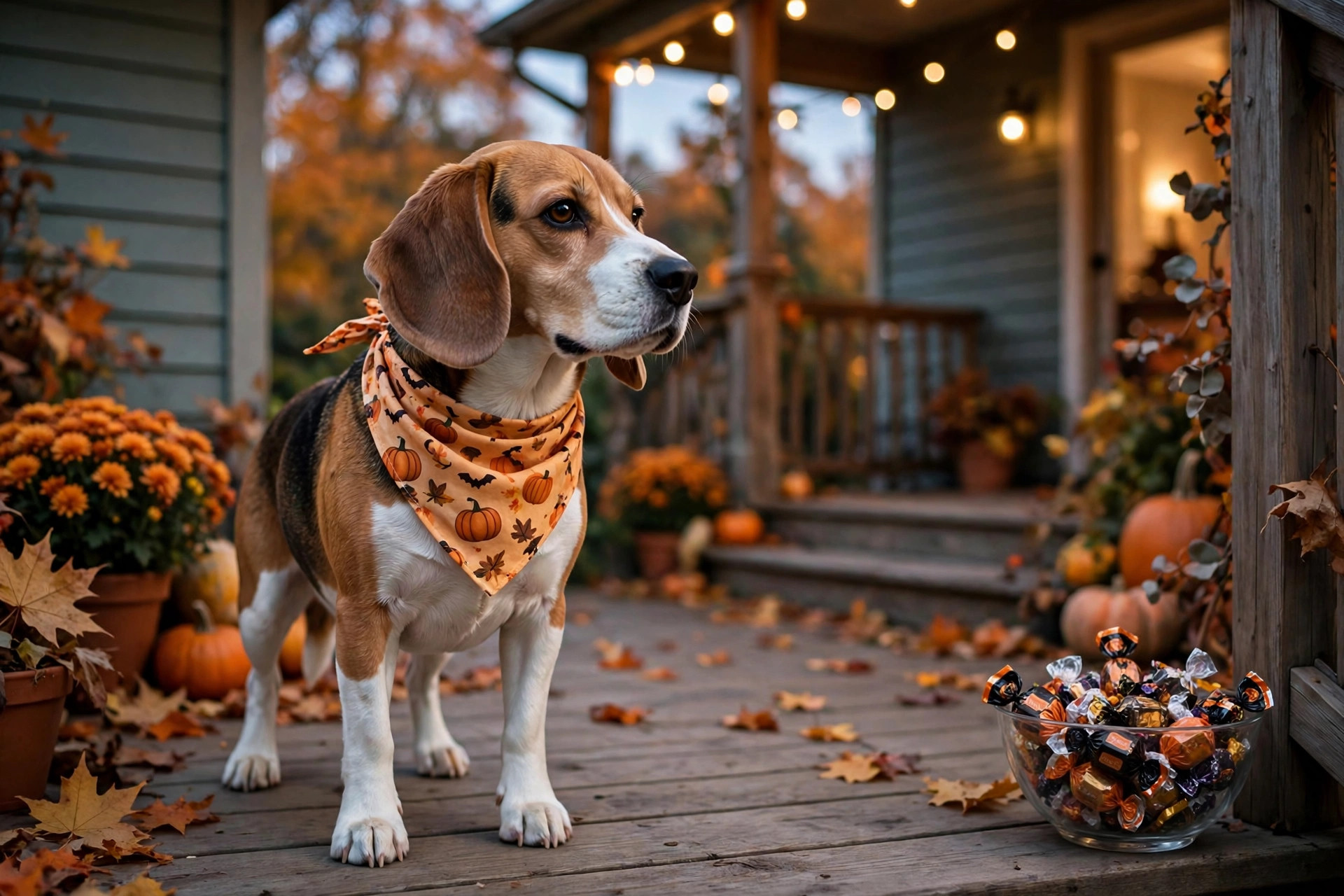
A costume should be an accessory, not an ordeal. Veterinary guidance is consistent on this: a costume must never restrict movement, sight, hearing, breathing, barking, eating, or drinking, and your dog should always be supervised while wearing one.
Run the trial before Halloween night:
- Put the costume on at home, days in advance, for 10–15 minutes at a time.
- Watch for freezing, pawing at the costume, hiding, panting, or refusing treats — all signs of stress.
- Remove anything dangling, chewable, or small enough to swallow.
- If your dog hates it, swap to a festive bandana or Halloween-themed collar. Dogs look just as adorable, and they stay comfortable.
Never leave a costumed dog unsupervised, and take the costume off as soon as the photos are done. Comfort beats cuteness every time.
Also Read: Best Dog Halloween Costumes 2026: Top Picks & Safety Guide
Leash, ID, and Visibility Rules
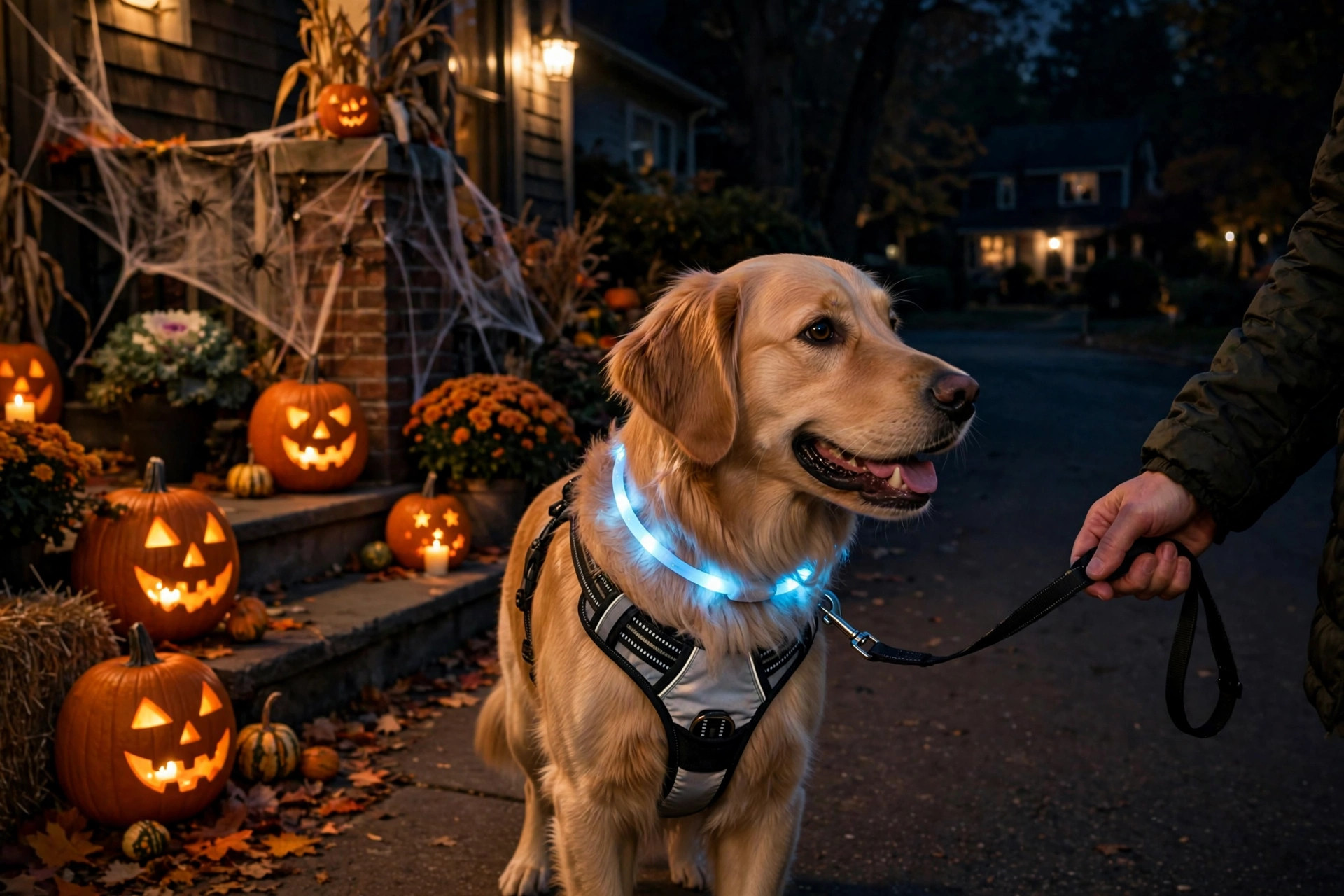
Halloween night is dark, crowded, and full of sudden movement — so your leash and visibility setup matters more than usual:
- Short, non-retractable leash: A 4–6 foot flat leash keeps your dog close when costumed kids dart past. Retractable leashes give you no control in a crowd and can tangle around little legs.
- Secure harness or collar: A well-fitted harness is the safer choice for pullers, since pressure spreads across the chest instead of the neck.
- Reflective or light-up gear: A reflective harness, LED collar, or clip-on light makes your dog visible to drivers and cyclists on dark streets. The American Kennel Club advises reflective collars and proper ID for any after-dark Halloween walk.
- Up-to-date ID: A collar tag with your current phone number plus a registered microchip is your safety net — Halloween produces more lost pets than almost any other night, because doors swing open constantly and a frightened dog can bolt in a second.
- One adult on dog duty: If you are also managing kids, candy bags, and a phone camera, assign one adult whose only job is the dog.
Also Read: Stop Your Dog Pulling on the Leash: 7 Trainer Tips (2026)
Plan Your Route Like a Pro
A little route planning turns a chaotic night into a calm one. Use this simple plan:
| Step | What to Do |
|---|---|
| Start early | Head out at dusk, before the biggest crowds arrive, so your dog eases into the atmosphere. |
| Keep it short | Plan one loop of a few familiar blocks, not the whole neighborhood. Twenty to thirty minutes is plenty for most dogs. |
| Pick quiet streets | Avoid the busiest trick-or-treat streets and houses with loud animatronics, strobe lights, or fog machines. |
| Skip most porches | Let your dog watch from the sidewalk while kids collect candy — porch steps, crowds, and candy bowls are the danger zone. |
| Bring water and treats | Pack a collapsible bowl, water, waste bags, and your dog’s own treats so strangers never need to offer theirs. |
| Know your exit | Decide your bail-out point in advance — the moment stress signs appear, the night is over, no debate. |
Walk your dog earlier in the day too, so they are not carrying a full day of pent-up energy into the evening excitement.
Candy Dangers on the Sidewalk
Dropped candy is everywhere on Halloween night, and dogs are expert scavengers. The biggest risks:
- Chocolate: Contains theobromine and caffeine, which dogs metabolize very slowly. Dark and baker’s chocolate are the most dangerous; symptoms include vomiting, diarrhea, restlessness, tremors, and seizures.
- Xylitol: This sugar-free sweetener, also listed as birch sugar, is extremely poisonous to dogs — even a small amount can cause a sudden, life-threatening drop in blood sugar within an hour.
- Raisins and grapes: Found in trail-mix candies, these can cause acute kidney failure in dogs.
- Wrappers and foil: Dogs swallow candy wrapper and all, and foil or plastic can cause choking or intestinal blockage.
Keep your dog on a short leash near driveways and porches where candy collects, and teach a solid “leave it” before the big night. Tell every child and neighbor firmly: please do not feed my dog.
Stress Signs: When to Head Home Early
Dogs rarely melt down without warning — they whisper first. Watch for:
- Tucked tail, ears flattened back, or cowering low to the ground
- Excessive panting, drooling, yawning, or lip licking when it is not hot
- Freezing in place, refusing to walk, or constantly pulling toward home
- Whining, barking, or lunging at costumed strangers
- Trying to hide behind you or between your legs
Any one of these is your cue to leave calmly and promptly. Do not push through “just one more block” — a stressed dog can escalate to snapping, and a frightened dog can slip a collar. The night is only a success if your dog enjoyed it.
What If Your Dog Eats Candy?
Act fast — with chocolate and xylitol, time matters:
- Secure the evidence. Keep the wrapper or packaging so your vet can identify the ingredient and amount.
- Call for help immediately. Contact your veterinarian, your nearest emergency clinic, or the ASPCA Animal Poison Control Center at (888) 426-4435. Do not wait for symptoms to appear.
- Note the details: what was eaten, how much, your dog’s weight, and when it happened.
- Do not induce vomiting unless a professional tells you to — with some substances, vomiting can cause more harm.
When Staying Home Is the Kinder Choice
If your dog is shy, reactive, elderly, recovering from illness, or simply not a crowd dog, the best Halloween plan is a quiet one:
- Set up a back room far from the front door with bedding, water, and a favorite chew or puzzle toy.
- Run soft white noise — a fan or calming music — to mask doorbell shocks.
- Give them a frozen stuffed Kong or a long-lasting chew while the family is out.
- Hand out candy from outside the house yourself, or skip door duty entirely, so the doorbell never rings.
Staying home is not missing out. It is choosing your dog’s comfort over a photo opportunity — and that is exactly what good pet parenting looks like.
Frequently Asked Questions
Can I take my dog trick-or-treating?
Yes, if your dog is calm, well-socialized, comfortable around crowds and costumes, and walks well on a leash. Keep the outing short, use a short leash and reflective gear, and head home at the first sign of stress.
Should my dog wear a Halloween costume while trick-or-treating?
Only if they are genuinely comfortable in it. Trial the costume at home first; it must not restrict movement, sight, hearing, or breathing. A festive bandana is a safer choice for most dogs.
What should my dog wear to be visible at night?
A reflective harness or collar plus a clip-on LED light. Add an ID tag with your current phone number and confirm your dog’s microchip registration is up to date.
What candy is most dangerous for dogs on Halloween?
Chocolate, sugar-free candy containing xylitol, and raisins or grapes are the most dangerous. Wrappers and foil are also a choking and blockage risk. If your dog eats any of these, call your vet or a poison hotline immediately.
How long should trick-or-treating with a dog last?
Twenty to thirty minutes on a short, familiar route is plenty for most dogs. Start at dusk before the biggest crowds, and leave early if your dog shows any stress signs.
Is it better to leave my dog home on Halloween?
For shy, reactive, anxious, or elderly dogs, yes. A quiet room with bedding, water, white noise, and a chew toy is far kinder than a crowded, noisy night out.
Final Thoughts
So, is taking your dog trick-or-treating a good idea? For the right dog, with the right preparation, absolutely — a short dusk loop, a comfortable bandana, a short leash, glowing visibility gear, and a firm no-candy rule can make Halloween a happy family memory. For the wrong dog, the kindest treat is a quiet night at home.
Know your dog, plan your route, watch their body language, and let their comfort set the pace. Happy — and safe — Halloween from Pets Addicters!
By Dr. Ayaz Ali