
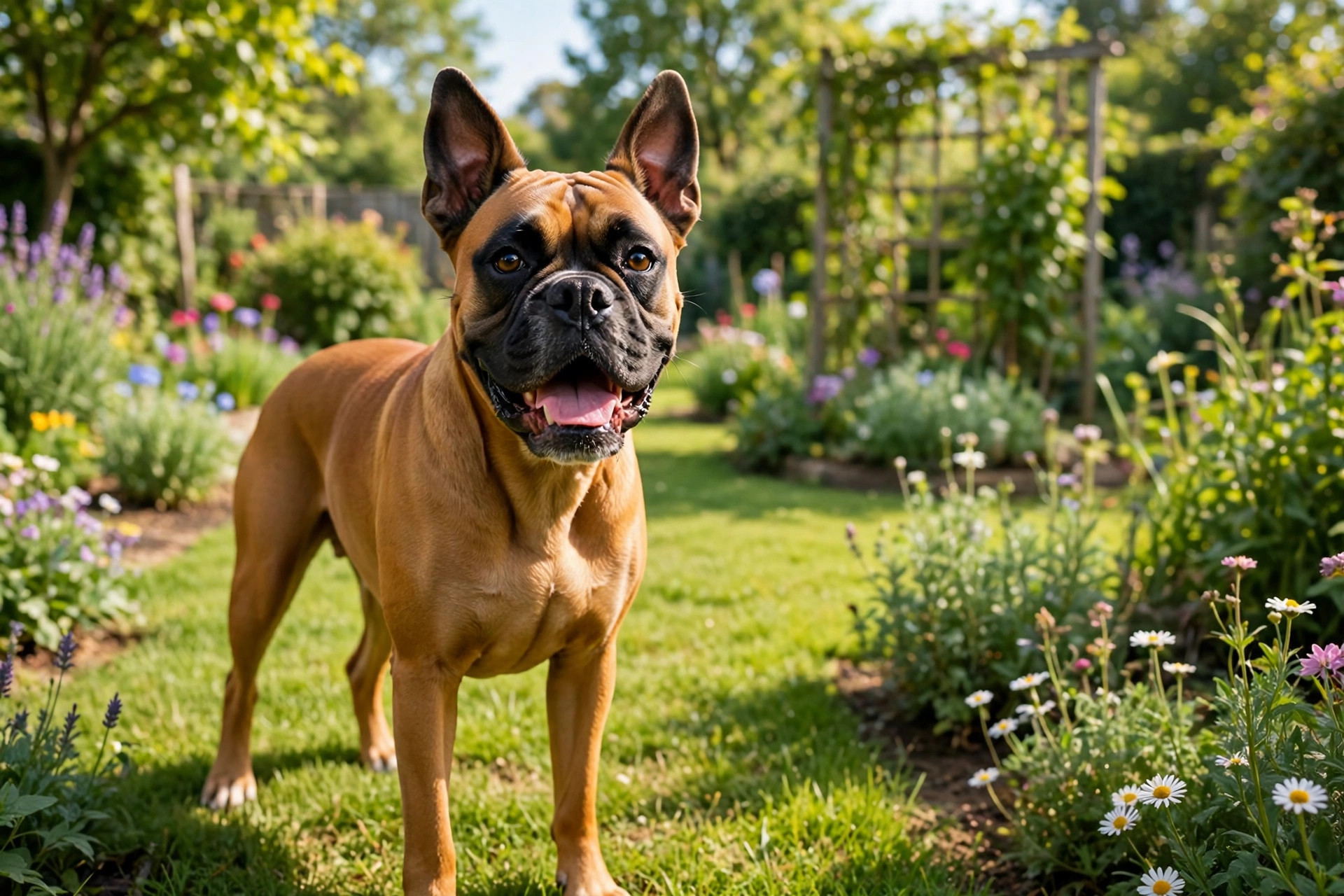
Few dogs greet the world with as much joy as the Boxer. One minute it is folded into a wiggling crescent of happiness — the famous “kidney bean” — and the next it is boxing the air with its front paws, ready for a game. If you are considering this bouncy, big-hearted breed, this complete boxer breed guide gives you the honest picture: temperament, exercise and training needs, grooming, feeding, health risks, and real costs, so you can decide with open eyes.
The short version: Boxers are playful, loyal, and famously patient with children, but they are high-energy working dogs that need 60–90 minutes of real activity every day, early training, and owners who understand their heart and cancer risks. Read on for everything you need to know before you bring one home.
Table of Contents
- Boxer Breed Guide at a Glance
- Boxer Temperament & Personality
- Size, Appearance & Coat
- Exercise & Training Needs
- Grooming & Feeding
- Boxer Breed Guide: Health Issues to Know
- Is a Boxer Right for You?
- Boxer Puppy & Breeder Tips
- Frequently Asked Questions
Boxer Breed Guide at a Glance
| Trait | Details |
|---|---|
| Origin | Germany, 1890s — developed from the Bullenbeisser hunting mastiff |
| AKC group | Working; recognized by the AKC in 1904 |
| Size | Males 23–25 in, 65–80 lbs; females 21.5–23.5 in, 50–65 lbs |
| Lifespan | 10–12 years |
| Coat | Short, smooth; fawn or brindle, often with white markings; moderate shedding |
| Energy level | Very high — needs 60–90 minutes of vigorous activity daily |
| Temperament | Playful, loyal, bright, patient with children, protective |
| Good with kids/pets | Excellent with children when raised together; needs early socialization with other dogs |
| Watchdog ability | Alert and protective of family; watchful with strangers |
| Best for | Active, experienced owners with time for exercise and training |
Boxers were developed in Germany in the late 1800s from the Bullenbeisser, a powerful hunting mastiff, crossed with English Bulldogs. The breed was standardized in Munich in the 1890s and later served as police dogs, messenger dogs, and Red Cross ambulance dogs in both World Wars. That working history explains the modern Boxer: a strong, athletic dog with a comedian’s soul. For authoritative breed-standard details, see the PetMD Boxer breed page.
Boxer Temperament & Personality
The Boxer temperament is best summed up in three words: playful, loyal, and patient. The American Kennel Club’s breed standard calls the Boxer “playful with family, patient with children” — and owners will tell you the standard undersells it. Here is what that actually feels like day to day:
1. The Clown of the Working Group
Boxers are famously silly. They wiggle their whole bodies when happy, fold themselves into a crescent shape owners call the “kidney bean,” spar playfully with their front paws (the habit often credited with naming the breed), and make a distinctive “woo-woo” sound when excited. A Boxer named Brandy even holds the Guinness World Record for the longest dog tongue ever measured — 43 centimetres.
2. Patient and Devoted With Children
This is one of the breed’s strongest traits. Boxers are famously tolerant and gentle with the children in their own family, which is why they rank among the most popular family dogs. That said, their exuberance is the real risk, not malice: a 70-pound dog launching into full play can knock a small child over, so all interactions with toddlers should be supervised.
3. Loyal, Protective, and Watchful
Boxers bond hard to their people and are naturally protective of home and family. They are watchful with strangers at the door without being hostile by nature. Early socialization is what keeps that protectiveness calm and discerning instead of suspicious: expose your puppy to dozens of friendly people, dogs, sights, and sounds during the first 16 weeks.
4. Slow to Grow Up — and Prone to Boredom
Boxers mature slowly: expect three years or more of puppy-level enthusiasm, jumping, and zoomies before the calmer adult shows up. A Boxer left alone for long hours gets bored fast, and a bored Boxer invents its own entertainment — chewing, digging, and escape attempts. They are not a breed for owners who are gone 10 hours a day.
Size, Appearance & Coat
Boxers are square, muscular dogs with a deep chest, a short blunt muzzle, and an undershot jaw that gives the face its famous frown. Males stand 23–25 inches at the shoulder and weigh 65–80 pounds; females are 21.5–23.5 inches and 50–65 pounds. The short, smooth coat comes in fawn or brindle, often with white markings on the chest, muzzle, and paws.
Their coat is one of the breed’s easiest features: a weekly brush with a rubber curry brush, an occasional bath, and regular nail trims are all it takes. Shedding is moderate and year-round, picking up seasonally — so no, Boxers are not hypoallergenic. Expect some drool after drinking and eating, and wipe facial wrinkles if your dog has them. Traditionally Boxers had cropped ears and docked tails, but most pet Boxers today keep their natural floppy ears and full tails.
Exercise & Training Needs
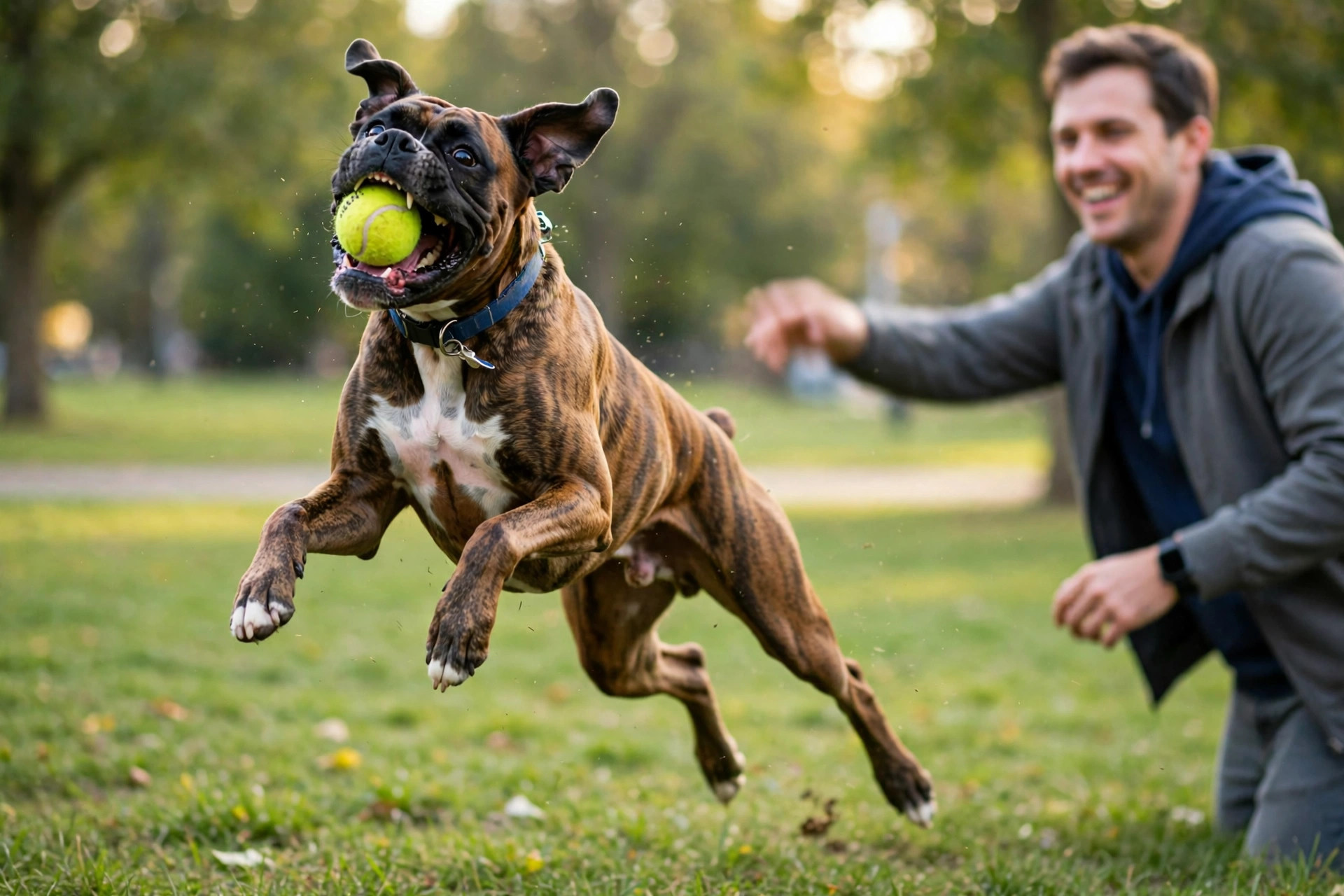
This is the section to read twice, because under-exercise is the number one reason Boxers develop behavior problems. A healthy adult Boxer needs at least 60–90 minutes of vigorous activity every day — not a slow stroll, but real activity: running, fetch, tug-of-war, flirt-pole play, swimming, or dog sports like agility and rally. Mental work counts too: 10–15 minutes of training practice, puzzle feeders, or scent games tires this breed’s brain as effectively as a long walk.
The Heat Rule Is Non-Negotiable
Boxers are brachycephalic — their short muzzle makes it harder to cool down, so heat stroke is a real risk. Skip intense exercise in the heat of the day, avoid midday outings when it is above about 75°F (24°C) and humid, always carry water, and watch for heavy panting. Never leave a Boxer in a car. They chill quickly in winter too, thanks to the short single coat — a jumper helps on cold days. See our guide: How Cold Is Too Cold for Dogs? Guide (2026).
Training: Bright, Bouncy, and Short on Attention Span
Boxers are very intelligent and trainable, but they have a short attention span and a sense of humor, so keep training upbeat, brief, and full of rewards. Food and play work well; harsh corrections backfire and damage trust. Start the week your puppy arrives:
- Early socialization (8–16 weeks): dozens of people, friendly dogs, sights, sounds, and surfaces — calmly and positively. This is the single most important thing you will ever do for a Boxer.
- Sit for greetings: jumping up and mouthing are the classic Boxer sticking points. Teach a sit for greetings from day one, and reward four paws on the floor every single time.
- Basic obedience: sit, down, stay, recall, and loose-leash walking. A muscular Boxer that pulls is a hazard on walks, so train polite walking early.
- Impulse control games: “wait” at doors, “leave it” with food, and short settle exercises channel the exuberance into manners.
Continue training through adolescence (roughly 6–18 months), when Boxers test every boundary. Consistency beats intensity: short daily sessions always win.
Grooming & Feeding
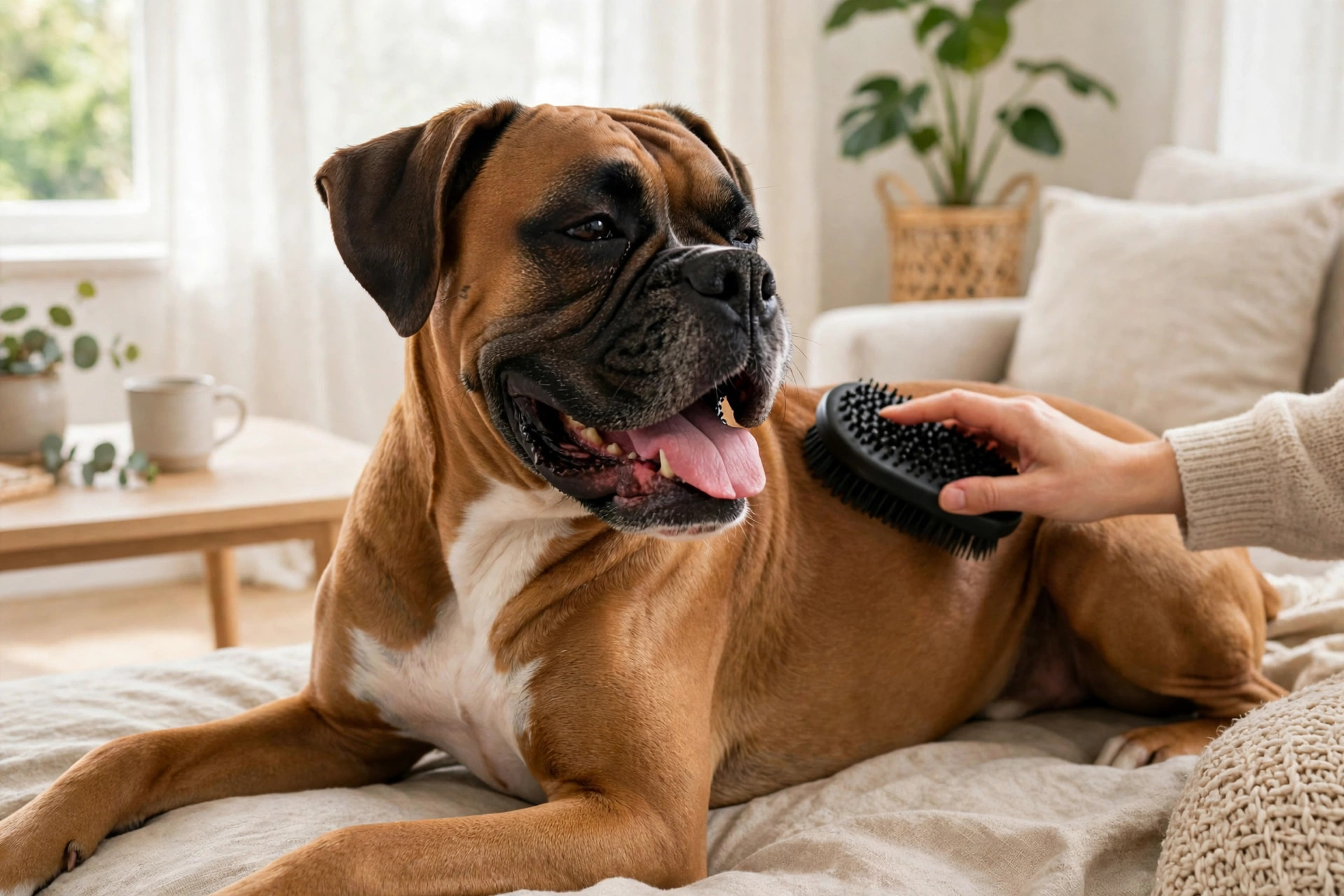
Boxer grooming is straightforward but worth doing properly. Here is the realistic routine:
- Brush once a week with a rubber curry brush to pull loose hair and spread skin oils; brush more often during seasonal shedding.
- Bathe as needed (every 6–8 weeks or when dirty) with a dog-specific shampoo; overbathing strips the coat’s natural oils.
- Trim nails every 3–4 weeks, check ears weekly, and brush teeth several times a week — dental disease is painful and common in every breed.
- Check the skin while you brush. Boxers are prone to lumps and bumps, so run your hands over the body regularly and have anything new examined promptly — early action makes a real difference.
Feeding-wise, Boxers do best on a high-quality, AAFCO-approved commercial food with measured portions — free-feeding is a mistake with this breed. They need quality protein for their muscles, including the heart, and omega-3 fatty acids (DHA/EPA) support healthy skin, coat, kidneys, and heart. Adult Boxers thrive on two meals per day, about 12 hours apart — and the two-meal routine matters more than usual here, because it also lowers bloat risk. Keep treats and food scraps within the 10% treat rule: extras under 10% of daily calories. Avoid vigorous exercise right before and after meals for the same reason.
Also Read: German Shepherd: Breed Guide, Training & Care (2026) — another powerful, intelligent working breed with similar exercise and training demands.
Boxer Breed Guide: Health Issues to Know
Boxers are generally healthy, athletic dogs, but the breed carries several well-documented health risks. Knowing them helps you choose a breeder wisely and catch problems early.
1. Cancer
Cancer is one of the most common health conditions seen in Boxers — and the leading cause of death in the breed, accounting for roughly 38.5% of Boxer deaths. The types most often seen include mast cell tumors (on the skin or internal organs), lymphoma, brain tumors, osteosarcoma (bone cancer), and mammary cancer. Get into the habit of checking your dog’s skin for new lumps and have anything suspicious examined promptly.
2. Boxer Cardiomyopathy (ARVC)
Arrhythmogenic right ventricular cardiomyopathy — often called “Boxer arrhythmia” — is a genetic heart disease that affects this breed more than any other. It causes irregular heartbeats and can lead to weakness, fainting, or sudden collapse. Ask any breeder about cardiac screening, including Holter monitoring (a 24-hour heart monitor) and DNA testing, and schedule regular cardiac screenings after age 3.
3. Dilated Cardiomyopathy (DCM) and Aortic Stenosis
Dilated cardiomyopathy is degeneration of the heart muscle that causes it to become thin and pump weakly; symptoms can include weakness, collapse, cough, trouble breathing, and bluish gums. Aortic stenosis, a narrowing of the heart’s main outflow valve, is often genetic and can appear in puppies or seniors. Both conditions need veterinary monitoring — a blood test and heart ultrasound (echocardiogram) can reveal them.
4. Bloat (Gastric Dilatation-Volvulus)
As a deep-chested breed, Boxers are at risk of bloat — a sudden, life-threatening stomach twist that requires immediate emergency surgery. A swollen, hard abdomen with unproductive retching is a rush-to-the-emergency-vet sign: bloat can kill within hours. Ask your vet about preventive gastropexy (stomach tacking) for high-risk dogs.
5. Hip Dysplasia and Hypothyroidism
Boxers can develop hip dysplasia, a developmental joint disorder causing pain, lameness, and arthritis — responsible breeders screen both parents’ hips. An underactive thyroid (hypothyroidism) can cause weight gain, lethargy, and coat thinning; it is easily diagnosed with a blood test and managed with daily medication. Corneal ulcers and degenerative myelopathy are also seen in the breed.
Schedule vet checkups at least annually — twice a year for seniors. Early screening is the difference between a manageable condition and a crisis.
Is a Boxer Right for You?
A Boxer is a great fit if: you are an active owner who can commit to 60–90 minutes of daily exercise plus training; you want a deeply loyal, playful, highly trainable companion that is wonderful with children; you are home often enough to avoid long alone stretches; and you accept moderate shedding, some drool, and the breed’s health realities.
Reconsider if: you are a first-time dog owner with no training experience; your household is sedentary or away 10+ hours a day; you live in a very hot climate with no way to keep exercise cool and shaded; you want a low-energy, independent, or low-shedding dog; or you are not prepared for potential vet costs from heart screening and cancer care.
Also Read: Pit Bull Breed Guide: Temperament, Myths & Care (2026) — another athletic, people-loving breed that needs the same daily exercise and structure.
Boxer Puppy & Breeder Tips
If you decide on a Boxer, choose your source carefully. A responsible breeder will:
- Provide written health clearances for both parents — heart screening (echocardiogram and Holter monitor), hip scores, thyroid panels, and DNA tests for degenerative myelopathy and ARVC risk. Never accept “the parents are healthy” without paperwork.
- Raise puppies in a home environment with early socialization, and offer a written health guarantee (typically 1–2 years for genetic conditions).
- Ask you questions about your home, schedule, and experience — good breeders screen buyers too, and never sell unvaccinated puppies “cheap, no papers.”
Expect to pay roughly $1,800–$3,500 for a well-bred pet-quality puppy from a health-tested litter in 2026, plus $1,000–$2,000 in first-year supplies and vet costs. Also consider Boxer rescues — adult Boxers regularly need homes, and an adult’s temperament, size, and health are already known.
Frequently Asked Questions
Are Boxers good family dogs?
Yes — in the right household. Boxers are loyal, playful, and famously patient with children they were raised with. But they need experienced owners, early socialization, and serious daily exercise. They are a poor fit for sedentary or first-time households.
How much exercise does a Boxer need?
At least 60–90 minutes of vigorous daily exercise for a healthy adult — running, fetch, tug-of-war, swimming, or dog sports — plus training and mental enrichment like puzzle games and scent work. Never exercise a Boxer hard in the heat of the day.
Do Boxers shed a lot?
Moderately, year-round, with heavier seasonal shedding. A weekly brush with a rubber curry brush keeps it under control. Boxers are not hypoallergenic.
Are Boxers aggressive?
Not by nature — they are loyal and playful, not hostile. But they are powerful, protective dogs, and without early socialization and consistent training, protectiveness can turn into reactivity. Some adult males can be pushy with other dogs. Socialization is the difference-maker.
Are Boxers good for first-time dog owners?
Honestly, they can be a stretch for beginners. Boxers demand consistent training, heavy socialization, and high daily exercise, and they stay puppy-like for three years or more. A committed beginner with trainer support can succeed, but most trainers recommend a more forgiving breed for a first dog.
How long do Boxers live?
About 10–12 years on average. Keeping your Boxer lean, well-exercised, and on a vet-monitored health plan — with early cardiac screening and prompt attention to any new lumps — gives it the best shot at the long end of that range.
Do Boxers drool a lot?
Some drool, especially after drinking or eating, thanks to their loose jowls — but far less than heavy-drooling breeds like Mastiffs or Saint Bernards. Keep a towel handy after meals and water breaks.
Final Thoughts
So, is the Boxer the right dog for you? If you are an experienced, active owner ready to match the breed’s energy — daily exercise, serious training and socialization, simple grooming, measured feeding, and proactive vet care — few breeds reward you like a Boxer. The partnership of a well-raised Boxer with its family is genuinely unmatched: a clown, a guardian, and a best friend in one muscular, wiggly package.
But go in with open eyes: this is a powerful working dog with real health risks, not an easy pet. Accept the shedding and the drool, commit to the exercise, insist on health-tested parents, and never let a Boxer overheat. Do that, and you will understand why Boxer owners keep saying the same thing: once you live with one, no other dog quite compares.
By Dr. Ayaz Ali