
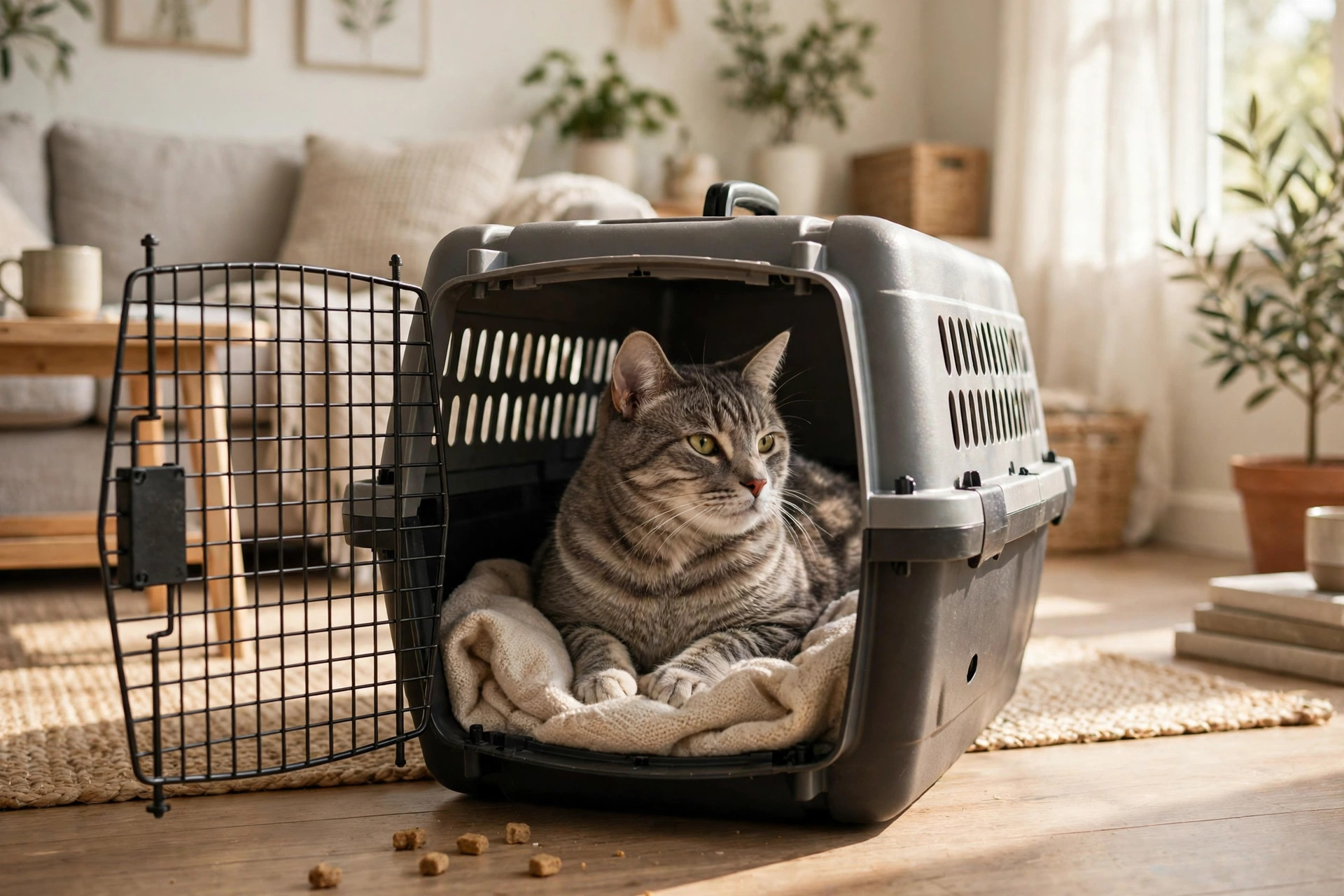
If vet-visit day in your house starts with a cat vanishing under the bed, you are not alone. For most cats, the carrier only appears minutes before a stressful trip — so it is no wonder they run from it. The good news is that cat carrier training can change that completely: with a few weeks of patient, treat-filled practice, most cats will walk into their carrier on their own.
In this complete 2026 guide, we will walk you through everything you need to know: why cats hate carriers, how to choose the right one, an 8-step training plan that works at your cat’s pace, and what to do on vet day when you are short on time.
Table of Contents
- Why Do Cats Hate Carriers?
- Choosing the Right Carrier for Your Cat
- The 8-Step Cat Carrier Training Plan
- Vet-Day Plan: Getting Your Cat In When You Are Short on Time
- Common Carrier Training Mistakes to Avoid
- When to Ask Your Vet for Help
- Frequently Asked Questions
Why Do Cats Hate Carriers?
Cats do not hate the carrier itself — they hate what it predicts. If the carrier lives in a cupboard and only appears before a vet visit, a car ride, or a move, your cat quickly learns that the sight of it means something unpleasant is about to happen. Add being grabbed, pushed through a small door, and shut in a box, and the carrier becomes the scariest object in the house.
There are a few other reasons cats resist:
- Loss of control. Cats cope with stress by hiding or running. A closed carrier takes both options away.
- Unfamiliar smells. A carrier stored in a garage or loft smells of dust and chemicals, not home.
- Bad first experiences. One forced, panicked loading can create a lasting fear that takes weeks to undo.
- Motion and noise. The car ride that follows is often the real problem — nausea, engine noise, and strange smells all pile on.
Carrier training works because it breaks this chain of bad associations. When the carrier sits in the living room every day, smells like home, and regularly produces treats, it stops being a warning sign and becomes just another piece of furniture — one your cat may even choose to nap in.
Choosing the Right Carrier for Your Cat
Good training starts with the right equipment. Veterinary sources including PetMD recommend a carrier that is sturdy, well-ventilated, and easy to load. Before you start training, check yours against this list:
- Hard-sided and securely latched. Soft carriers collapse, tip, and are easier to escape from. A rigid plastic carrier is safer for vet visits and emergencies.
- Top-loading or removable top. Being able to lift the top off — or lower your cat in from above — is far gentler than pushing a frightened cat through a front door. It also lets your vet examine your cat while it stays in the bottom half.
- Big enough to turn around. Your cat should be able to stand, turn, and lie down comfortably, but not so big that it slides around in the car.
- Easy to clean. Accidents happen, especially with stressed cats. Smooth plastic wipes clean; fabric absorbs odors.
- Good ventilation. Plenty of air holes or a mesh panel on at least two sides.
If your current carrier is flimsy, too small, or only opens from the front, consider replacing it before you start training — retraining around the wrong carrier wastes weeks. And if you are bringing home a new cat, a carrier is one of the first essentials to buy, as our first-time cat owner checklist explains.
The 8-Step Cat Carrier Training Plan
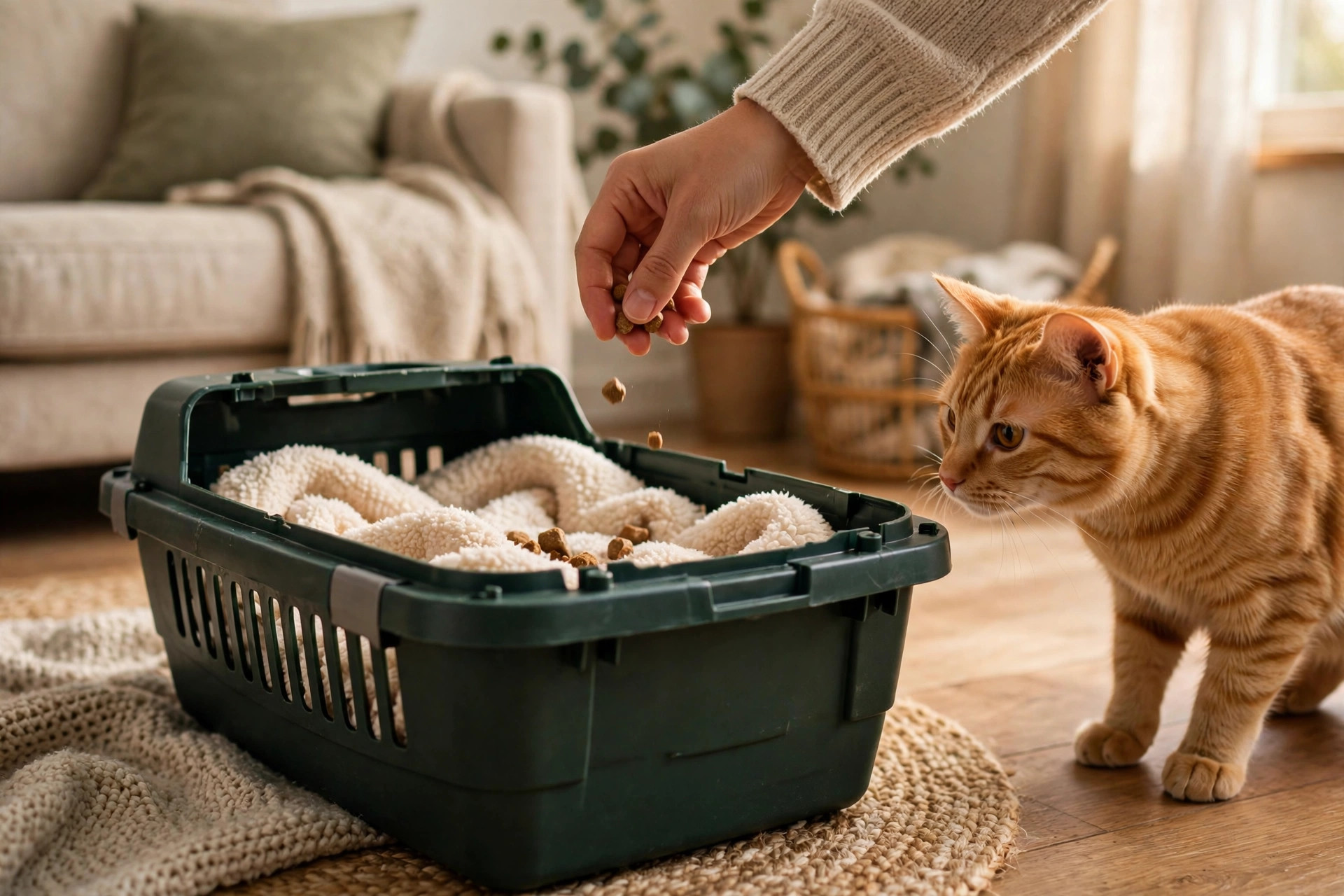
The golden rule of carrier training: go at your cat’s pace, not yours. A confident cat may move through these steps in a few days; a nervous cat may need several weeks. Keep sessions short — a few minutes, once or twice a day — and reward every small step in the right direction.
Step 1: Leave the Carrier Out
Place the carrier in your cat’s favorite room with the door open or removed, and leave it there permanently. Put a soft blanket or a familiar-smelling towel inside. Do not lure your cat toward it yet — just let it become part of the scenery. This step alone removes the carrier’s power as a warning sign.
Step 2: Build Positive Associations
Once your cat stops reacting to the carrier’s presence, start making good things happen near it. Place treats, a favorite toy, or a little catnip beside the entrance. If your cat is food-motivated, feed small meals a few feet away and move the bowl closer over several days. A synthetic feline pheromone spray inside the carrier, left for 10–15 minutes before your cat explores, can help anxious cats relax.
Step 3: Reward Going Inside
Toss a treat just inside the door, then gradually deeper into the carrier. If your carrier’s top comes off, start with the top removed so the space feels open and safe, then add the top once your cat is happily walking in and out. Never close the door at this stage — your cat must learn that entering is always voluntary and that the exit is always open.
Step 4: Feed Meals Inside the Carrier
When your cat is confidently stepping inside, start serving a small meal or a lickable treat inside the carrier with the door open. Eating inside the carrier is a big milestone: a cat that eats in a place feels safe there.
Step 5: Practice Closing the Door
Once your cat is eating calmly inside, close the door for just a few seconds while offering a treat, then open it again before your cat gets worried. The lesson is simple: the door closes, and then it opens again — you are never trapped. Gradually increase the closed-door time, second by second, over several sessions. If your cat panics, go back a step and rebuild.
Step 6: Practice Being Carried
With your cat calm inside the closed carrier, pick it up gently — keep it level, do not let it swing — hold it for a few seconds, set it down, and reward. Then walk a few steps around the house, then a whole lap. Always stay near your cat during this stage so the experience stays reassuring.
Step 7: Practice Short Car Rides
Start with the carrier in the car with the engine off, then a drive around the block, then a slightly longer trip — ending each ride with a treat at home. The goal is to teach your cat that not every car trip ends at the vet. If your cat gets carsick, ask your vet about motion-sickness options before pushing further.
Step 8: Do a Practice Vet Visit
When the real appointment comes, your cat will already know the routine. Arrive a little early, cover the carrier with a light towel sprayed with pheromone spray, and keep the carrier on your lap or on a raised surface in the waiting room rather than on the floor.
Also Read: Why Is My Cat Not Eating? Warning Signs & When to Worry (2026)
Vet-Day Plan: Getting Your Cat In When You Are Short on Time
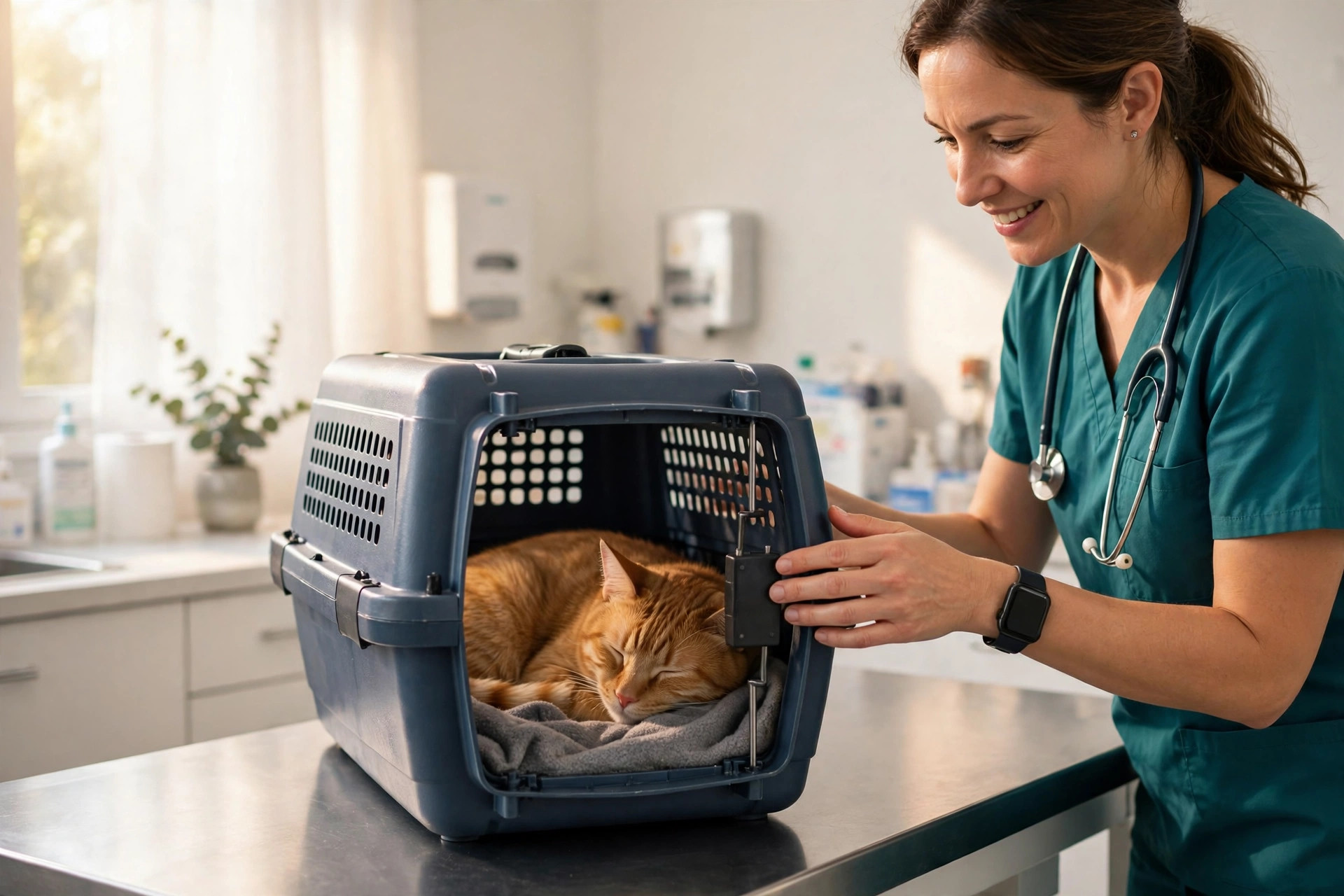
Sometimes there is no time to train — the appointment is today and your cat has never seen a carrier. Stay calm (your anxiety transfers straight to your cat) and follow this plan:
- Prepare the room. Bring your cat into a small room with few hiding places, like a bathroom. Close doors and block under-bed gaps.
- Set up the carrier. Place it on its end with the door facing up, or use a top-loading carrier, so you can lower your cat in gently instead of pushing. Put a familiar blanket inside and spray pheromone spray 15 minutes beforehand.
- Try a lure first. Place high-value treats inside and give your cat a minute to walk in on its own. Many cats will, especially if the carrier has been out for a day or two.
- Use a towel wrap if needed. If luring fails, wrap your cat loosely in a large towel — like a burrito, with the head out — and lower the wrapped cat into the carrier. A towel wrap protects you from claws and keeps your cat calmer than a bare-handed grab.
- Close, cover, and go. Latch the door, drape a towel over the carrier, and leave promptly. Do not chase your cat around the house first — a long chase only raises stress for both of you.
Never drag a hiding cat out from under furniture by force, and never tip a carrier upside down to shake a cat out at the vet. If your cat is extremely distressed, aggressive, or injured, call your vet for advice before forcing the situation — some clinics can prescribe a mild calming medication for future visits.
Common Carrier Training Mistakes to Avoid
- Only bringing the carrier out before vet visits. This is the number-one mistake. The carrier must live in the open, all the time.
- Rushing the steps. Closing the door before your cat is comfortable inside teaches panic, not patience. If your cat gets agitated, you moved too fast — go back one step.
- Training when your cat is stressed, sick, or in pain. Only train when your cat is healthy and relaxed. A cat in pain will associate the carrier with that pain.
- Chasing or cornering your cat. A chase destroys trust and makes the next attempt harder. Calm, slow movements always win.
- Long sessions. Five minutes of happy practice beats thirty minutes of growing anxiety. End every session while your cat is still calm.
- Punishing carrier fear. Scolding a frightened cat only adds fear. Reward the behavior you want; ignore the rest.
When to Ask Your Vet for Help
Carrier stress is common, but the severity matters. Use this guide to judge whether you need professional help:
| Stress Level | What It Looks Like | What to Do |
|---|---|---|
| Mild | Hesitation, slow movement, quiet hiding | Slow training, treats, and patience usually fix it |
| Moderate | Running away, repeated hiding, loud vocalizing, resisting entry | Small-room plan, towel handling, allow more time |
| Severe | Biting, scratching, frantic escape attempts, open-mouth breathing, extreme panic | Call your vet — calming medication or a behavior plan may be needed |
Senior cats deserve special attention here: arthritis or dental pain can make being lifted into a carrier genuinely painful, not just scary. If an older cat that used to travel fine suddenly fights the carrier, book a checkup — our senior cat checkups guide explains the 7 screenings cats over 7 should get, including the pain and mobility checks that matter most.
Frequently Asked Questions
How long does cat carrier training take?
It depends on the cat. A confident cat or kitten may be comfortable within a few days; a nervous adult cat may need several weeks. Short, daily sessions of a few minutes each are far more effective than occasional long ones.
Should I leave the cat carrier out all the time?
Yes. Leaving the carrier out in a main living area with the door open is the single most important step. It removes the association between the carrier and stressful events, and lets the carrier pick up the scent of your home.
What is the best type of carrier for cats?
A hard-sided carrier with a removable top or top-loading door is usually best. It is sturdy, easy to clean, large enough for your cat to turn around in, and lets your vet examine your cat without dragging it out.
How do I get my cat into a carrier without stress?
Lure with treats or a favorite toy, or lower your cat gently into a top-loading carrier. For urgent trips, use a small room, a towel wrap, and calm movements. Never chase, grab, or force your cat — it makes the next attempt much harder.
Can I use pheromone spray in a cat carrier?
Yes. A synthetic feline pheromone spray (such as Feliway) inside the carrier 10–15 minutes before your cat enters can reduce anxiety for many cats. Spray it on a towel draped over the carrier as well as inside.
What if my cat gets carsick in the carrier?
Talk to your vet. Motion sickness in cats is common and treatable, and your vet can suggest medication for travel days. Meanwhile, keep the car cool and quiet, drive smoothly, and avoid feeding a full meal right before travel.
Final Thoughts
So, how do you get a cat into a carrier without a fight? You do not win the battle on vet day — you prevent it weeks earlier. Leave the carrier out, fill it with treats and familiar smells, reward every brave step, and let your cat choose to walk in. Most cats learn surprisingly fast once the carrier stops meaning “something bad is about to happen.”
Start today, even if the next vet visit is weeks away. A few minutes of practice now means a calm cat, a calmer owner, and a vet visit that starts well instead of with a chase under the bed.
By Dr. Ayaz Ali