
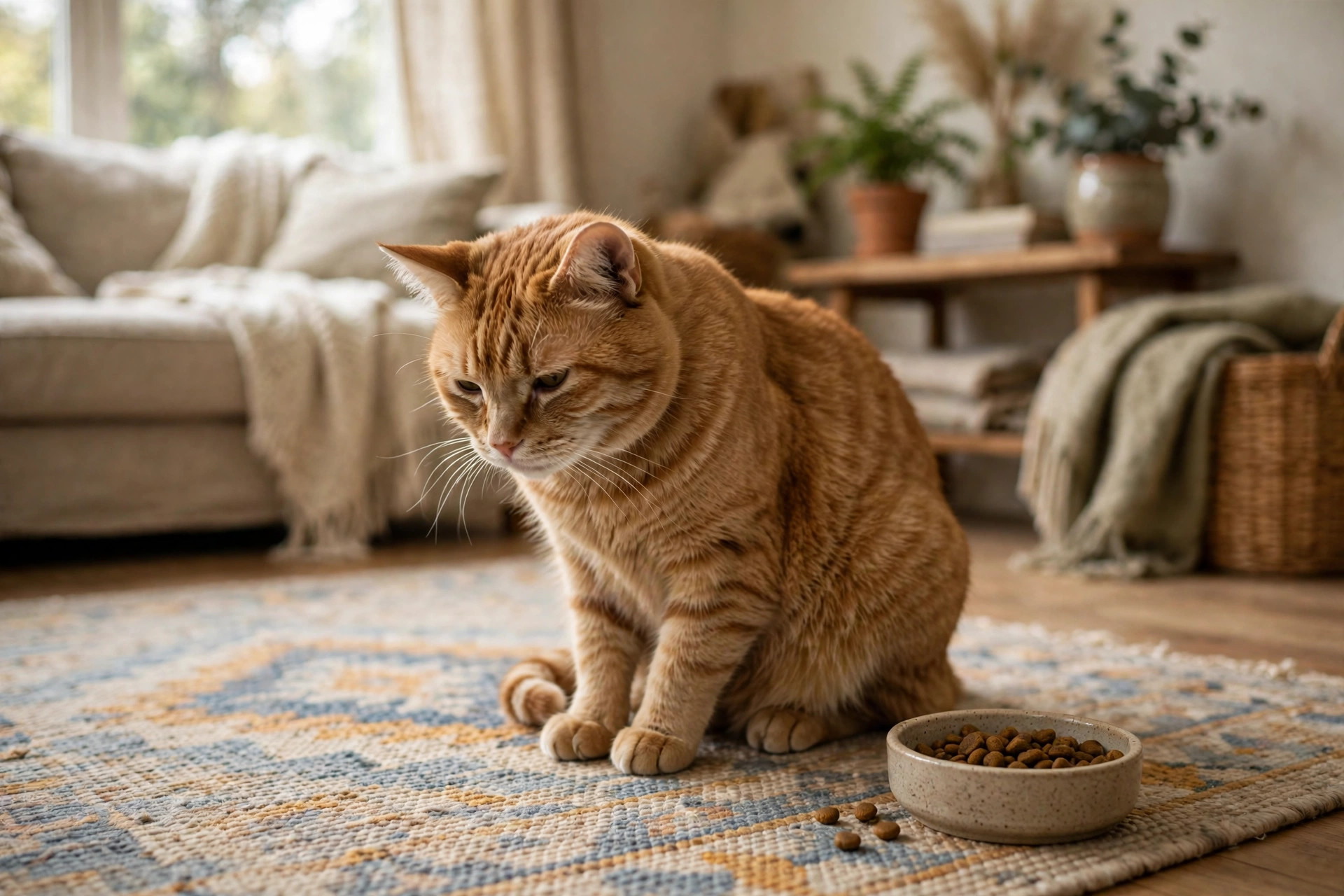
Finding a puddle of vomit on the rug is never a pleasant surprise, and if you are asking yourself why is my cat vomiting, you are not alone. Vomiting is one of the most common reasons cat owners call the vet, and it can mean anything from a routine hairball to a problem that needs attention right away.
The good news is that an occasional episode in an otherwise healthy cat is usually nothing to worry about. The tricky part is knowing when it is routine and when it is a red flag. In this complete 2026 guide, we will walk you through the most common causes of cat vomiting, how to tell vomiting from regurgitation, what the color of the vomit can tell you, safe home care steps, and the warning signs that mean your cat needs a vet now.
Table of Contents
- Is It Normal for Cats to Vomit?
- Vomiting vs Regurgitation: Know the Difference
- What the Color of Your Cat’s Vomit Means
- Common Causes of Cat Vomiting
- When to Worry: Red Flags That Need a Vet
- What to Do at Home When Your Cat Vomits
- What Happens at the Vet Visit
- Kittens and Senior Cats: Special Rules
- How to Prevent Cat Vomiting
- Frequently Asked Questions
Is It Normal for Cats to Vomit?
For many cats, throwing up once in a while is normal. A hairball every week or two, or an occasional episode after eating too fast, is part of life for a healthy cat, and the cat feels fine right after. Appetite, energy, weight, and litter box habits all stay the same.
What is not normal is vomiting that becomes a habit. Veterinary guidance, including PetMD, is clear on this point: if your cat vomits more than once a week, or the episodes are getting more frequent, that is not normal cat behavior. A cat that vomits every week has a reason for it, and finding that reason is the whole point of a vet visit. Chronic vomiting can quietly cause dehydration, electrolyte imbalance, and weight loss, even when the cat seems mostly fine between episodes.
So the question is never just “did my cat vomit” — it is how often, what came up, and how your cat acts in between. Keep a simple note of each episode: the date, what the vomit looked like, and whether your cat ate, drank, and played normally afterward. That record is genuinely useful at the vet.
Vomiting vs Regurgitation: Know the Difference
Not every cat that brings food back up is vomiting, and the difference matters because the causes — and the fixes — are different.
| Sign | Vomiting | Regurgitation |
|---|---|---|
| Warning before it happens | Yes — drooling, lip-licking, heaving belly | Little or none |
| Effort | Active, strong belly contractions | Passive, food simply comes up |
| What comes up | Partly digested food, foam, or yellow bile | Undigested food, often tube-shaped |
| Timing | Any time, even hours after a meal | Usually within minutes of eating |
| Common cause | Illness, hairballs, toxins, blockages | Eating too fast or too much |
Regurgitation right after a fast meal is usually not a concern, and a slow feeder bowl or a puzzle feeder often solves it. But regurgitation that happens often, or comes with coughing or weight loss, still needs a vet visit. If you are unsure which one you are seeing, take a short video on your phone — it can be very useful for your vet.
Also Read: Slow Feeder Cat Bowls: Do They Work? Vet Guide (2026)
What the Color of Your Cat’s Vomit Means
What comes up can give you — and your vet — useful clues about what is going on. It is not a diagnosis on its own, but it helps to know what each type usually points to.
| What You See | What It Often Means | What to Do |
|---|---|---|
| White foam | Empty stomach irritation or early nausea | Watch; see a vet if it repeats |
| Yellow or green liquid | Bile from an empty stomach | Feed smaller, more frequent meals; vet if it repeats |
| Undigested food | Eating too fast, or regurgitation | Use a slow feeder bowl |
| Hair in a tube shape | Hairball | Brush more often; vet if it happens often |
| Red blood or dark “coffee grounds” | Bleeding or irritation in the stomach | Call your vet right away |
Yellow or green vomit is especially common in the early morning, when the stomach has been empty overnight. Cats that vomit bile on an empty stomach often improve with a small late-evening snack or by splitting the daily food into smaller, more frequent meals — but if it keeps happening, get it checked.
Common Causes of Cat Vomiting
Cats can vomit for many reasons, from a simple hairball to a serious illness. The most common causes fall into two groups: stomach and gut problems, and problems elsewhere in the body that show up as vomiting.
1. Hairballs
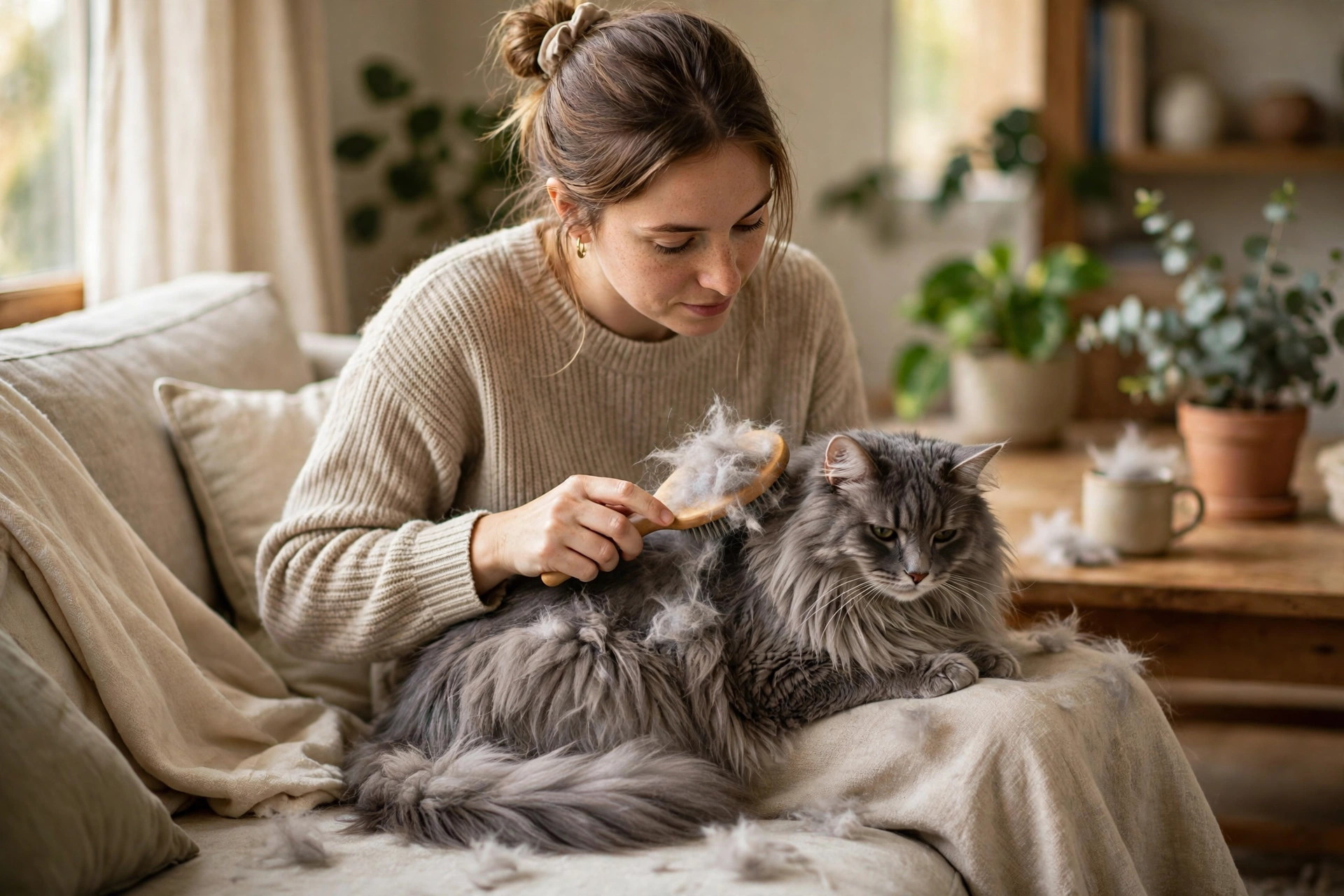
Hairballs are the classic cause. Cats swallow loose hair while grooming, and most of it passes through the gut — but some of it clumps in the stomach and comes back up as a sausage-shaped wad, usually after a bout of hacking. Long-haired breeds such as Persians and Maine Coons get them more often. An occasional hairball is normal, but if your cat brings up fur more than once or twice a month, it can point to overgrooming, itchy skin, fleas, or a gut motility problem. Regular brushing and a hairball-control diet help reduce them.
2. Eating Too Fast or Too Much
The famous “scarf and barf” pattern: a cat gulps down a full bowl in thirty seconds, the kibble swells in the stomach, and the food comes straight back up, undigested, minutes later. This is usually regurgitation rather than true vomiting, and the fix is mechanical — slow the eating down. A slow feeder bowl, a lick mat for wet food, or spreading kibble across a flat plate can stretch a 30-second meal into several minutes.
3. Sudden Diet Changes and Food Sensitivity
Switching food brands or flavors overnight is a common trigger. A cat’s gut needs time to adjust, so any diet change should be made gradually over 7–10 days, mixing the new food in a little at a time. Some cats also develop a genuine food intolerance or allergy — usually to a protein such as chicken or fish — which can show up as vomiting, diarrhea, or itchy skin.
4. Foreign Objects
Cats are famous for swallowing string, ribbon, thread, rubber bands, and small toys. A swallowed object can irritate the stomach or cause an intestinal blockage. Repeated retching that produces nothing, vomiting with belly pain, or a cat that strains to vomit but cannot should be treated as an emergency — especially if you know your cat has been playing with string.
5. Parasites
Intestinal parasites such as roundworms are a common cause of vomiting in kittens and outdoor cats. Other signs include a pot belly, weight loss despite a good appetite, and visible worms in the vomit or stool. Routine deworming and regular fecal checks at the vet keep this one under control.
6. Toxins and Poisonous Plants
Spoiled food, household chemicals, human medications, and poisonous plants can all make a cat vomit. Lilies are the most dangerous common plant — even a small nibble can cause kidney failure in cats — and other household hazards include antifreeze, onions, and chocolate. If you saw your cat eat something toxic, call your vet or an emergency clinic immediately rather than waiting to see what happens.
7. Illness: IBD, Kidney Disease, Hyperthyroidism, and More
When vomiting becomes chronic, the cause is often a longer-term condition. Inflammatory bowel disease (IBD) is increasingly recognized as a common cause of chronic intermittent vomiting in cats. Kidney disease, hyperthyroidism, diabetes, and pancreatitis can all cause vomiting too, as can infections and, less commonly, cancer. These conditions usually come with other signs — weight loss, drinking more water, changes in appetite, or lethargy — which is why the pattern matters more than any single episode.
When to Worry: Red Flags That Need a Vet
A single vomit in a cat that is otherwise bright, eating, and acting normally can be watched at home. Call your vet promptly — or go to an emergency clinic — if you see any of these:
| Red Flag | Why It Matters | Urgency |
|---|---|---|
| Vomiting more than once or twice in a day | Risk of dehydration and a serious cause | Same-day vet visit |
| Blood in the vomit, or dark coffee-ground material | Bleeding in the stomach or esophagus | Emergency |
| Cannot keep food or water down | Dehydration sets in fast in cats | Emergency |
| Vomiting with diarrhea | Fluid loss from both ends | Same-day vet visit |
| Not eating for 24 hours (12 for kittens) | Risk of fatty liver disease | Same-day vet visit |
| Lethargy, hiding, weakness, or belly pain | Suggests a serious underlying problem | Emergency |
Also Read: Why Is My Cat Not Eating? Warning Signs & When to Worry (2026) — appetite loss often goes hand in hand with vomiting, and cats should never go more than 24 hours without eating.
What to Do at Home When Your Cat Vomits
If your cat has vomited once or twice but is alert, interested in surroundings, not in pain, and has no other symptoms, it is usually reasonable to monitor them at home for a short time. Follow these steps:
- Check what came up. Look for hair, grass, foreign material, plant matter, worms, or blood. Note the color and whether it was food, liquid, or foam.
- Remove food for a short time. Withholding food briefly gives the stomach a rest — for a healthy adult cat, a few hours, not days. Do not fast kittens, elderly cats, or cats with diabetes or other medical conditions without vet advice.
- Keep fresh water available. Offer small amounts of water; if your cat drinks and then vomits large volumes, take the water away for a short while and try again later.
- Reintroduce food gently. Offer a small portion of their usual food, or a bland diet if your vet recommends one, in frequent small meals rather than one big bowl.
- Watch closely for 24 hours. Note how often vomiting happens, whether your cat eats and drinks, and whether the litter box is normal. If vomiting continues, or any red flag from the table above appears, call your vet.
Never give your cat human medicines, leftover antibiotics, or anti-nausea drugs without veterinary guidance — many human medications are toxic to cats, and masking symptoms can delay the real diagnosis. Do not force-feed a cat that is refusing food; it causes stress and can push food into the lungs.
What Happens at the Vet Visit
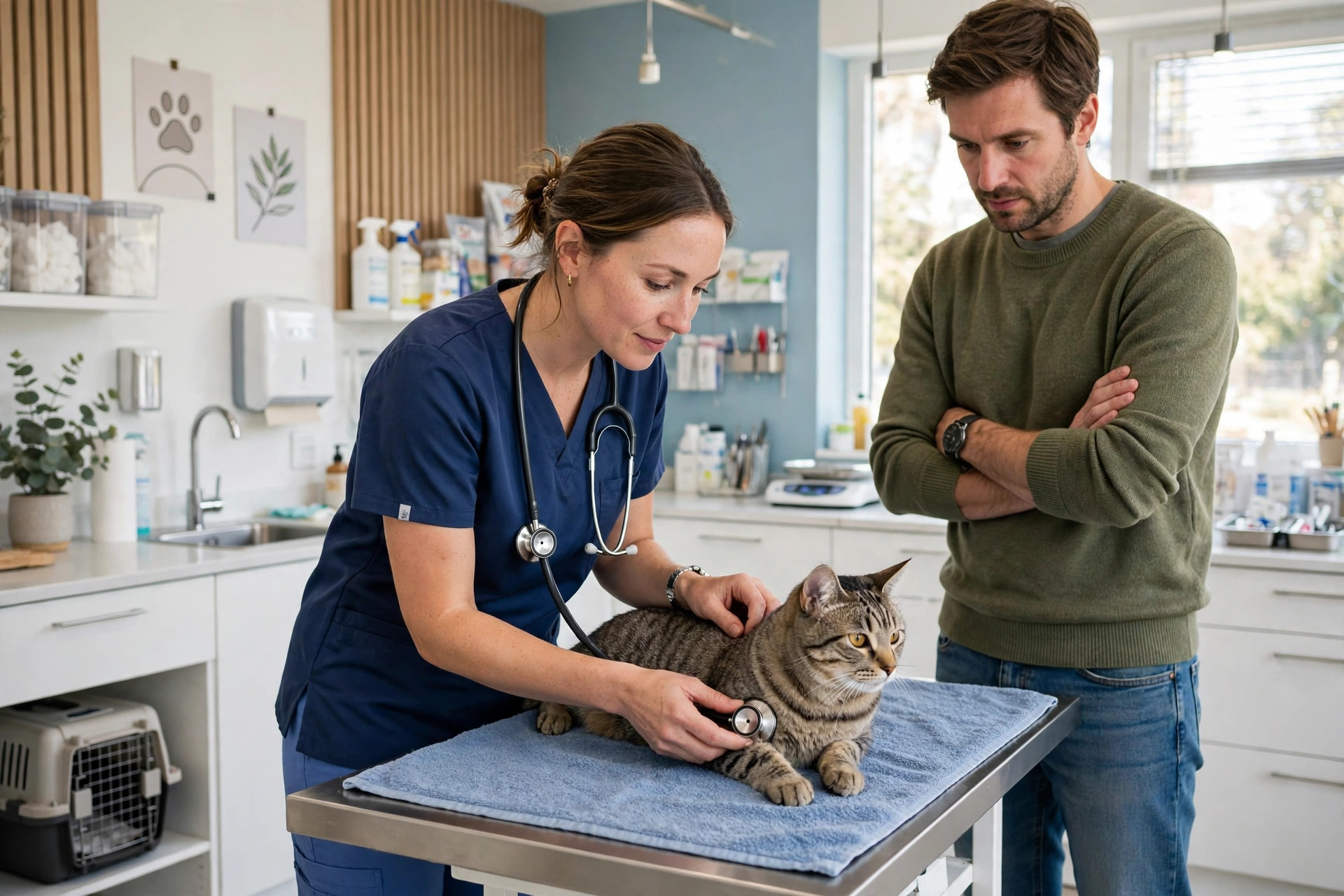
Knowing what to expect makes the appointment less stressful for both of you. For a vomiting cat, your vet will typically take a thorough history first: when the vomiting started, how often it happens, what the vomit looks like, any changes in diet, appetite, thirst, or litter box habits, and whether your cat had access to plants, string, or chemicals.
The exam and tests may include a full physical exam with a careful belly check, blood work to evaluate organ function (especially kidneys, liver, and thyroid in older cats), a urinalysis, and a fecal test for parasites. If a blockage, tumor, or organ change is suspected, X-rays or an ultrasound may follow. Depending on the diagnosis, treatment might include fluids for dehydration, anti-nausea medication, a diet change, deworming, or — in serious cases — surgery to remove a foreign object.
Also Read: Cat UTI Symptoms: Urinary Problems Every Owner Must Know (2026) — urinary problems can cause vomiting too, so watch for straining in the litter box alongside any vomiting.
Kittens and Senior Cats: Special Rules
Kittens play by stricter rules. A kitten under six months that vomits repeatedly can become weak and dehydrated very quickly, so do not wait a day to see if it passes — call your vet the same day, and sooner if the kitten also refuses food. Common kitten causes include intestinal parasites, a sudden food change, eating too fast, or a new-home stress upset.
Senior cats, meanwhile, are the group most likely to vomit because of a medical condition — kidney disease, hyperthyroidism, and IBD all become more common with age. If a cat over seven starts vomiting regularly, even if it seems otherwise well, book a senior checkup with blood work rather than assuming it is just hairballs. Catching kidney disease or thyroid problems early makes a real difference to how well they can be managed.
How to Prevent Cat Vomiting
You cannot prevent every episode, but most of the common causes respond to simple habits:
- Brush regularly — a few minutes of brushing a few times a week removes loose hair before your cat swallows it, and it is the single best hairball prevention.
- Slow fast eaters down — use a slow feeder bowl, a puzzle feeder, or smaller, more frequent meals.
- Change foods gradually — transition over 7–10 days, mixing the new food in a little at a time.
- Keep string, ribbon, and small objects away — put sewing supplies, hair ties, and tinsel out of reach, and supervise play with string toys.
- Keep plants and chemicals out of reach — check that houseplants are cat-safe (lilies are never safe in a cat home) and store cleaning products and medications in closed cabinets.
- Stay on top of routine vet care — regular checkups, deworming, and senior blood work catch the conditions that cause chronic vomiting before they become emergencies.
Frequently Asked Questions
Is it normal for cats to vomit once a week?
No. An occasional hairball or a one-off episode is normal, but vomiting every week is not. If your cat vomits more than once or twice a month, book a vet visit to find the cause.
Why is my cat vomiting undigested food right after eating?
This is usually regurgitation from eating too fast, not true vomiting. The food comes up undigested, often tube-shaped, within minutes of the meal. A slow feeder bowl and smaller, more frequent meals usually fix it.
Why is my cat vomiting yellow liquid?
Yellow or green vomit is usually bile, which appears when the stomach is empty — often first thing in the morning. A small late-evening snack or smaller, more frequent meals often help, but repeated bile vomiting needs a vet check.
Why is my cat vomiting white foam?
White foam is usually stomach fluid mixed with air, and it often means an empty, irritated stomach or early nausea. One episode is usually not a concern, but repeated foamy vomiting, especially with appetite loss, deserves a vet visit.
What should I feed my cat after vomiting?
After a short rest of a few hours, offer a small portion of their usual food or a bland diet if your vet recommends one, in frequent small meals. Keep fresh water available. Do not fast kittens, elderly cats, or diabetic cats without vet advice.
When should I take my cat to the emergency vet for vomiting?
Go immediately if your cat vomits blood, cannot keep water down, vomits repeatedly in a day, shows lethargy or belly pain, or may have eaten something toxic such as lilies. Vomiting with not eating for 24 hours also needs same-day care.
Final Thoughts
So, why is my cat vomiting? Most of the time, the answer is simple: a hairball, a meal eaten too fast, or a food that did not agree with them. Those one-off episodes in an otherwise healthy cat are nothing to lose sleep over.
But frequency is the key. A cat that vomits regularly, vomits blood, cannot keep water down, or shows other symptoms is telling you something is wrong — and the sooner you find out what, the easier it is to treat. Keep a note of episodes, use the home-care steps above for a one-off vomit, and never hesitate to call your vet when the pattern changes. Your cat cannot tell you what hurts, but the pattern of their vomiting can.
By Dr. Ayaz Ali