
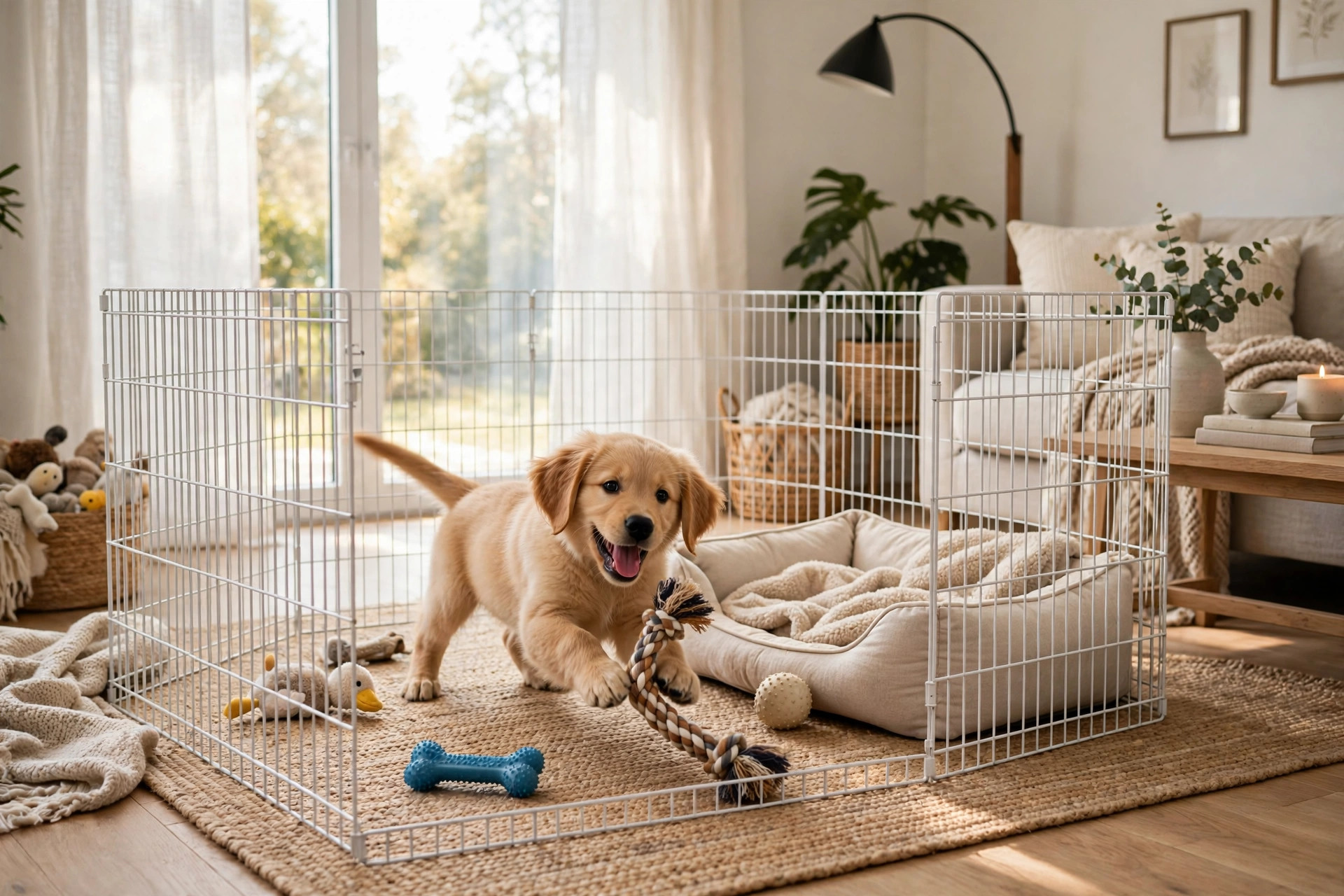
Bringing home a new puppy, caring for a senior dog, or just trying to cook dinner without a curious nose underfoot — a playpen solves more problems than almost any other piece of dog gear. But with dozens of options on the market, finding the best dog playpens for your dog’s size, age, and temperament takes more than picking the cheapest one. The wrong pen is either too flimsy to hold a determined puppy or too short for a dog that can simply jump out.
In this 2026 buying guide, we’ll walk you through everything that matters: the types of playpens, how to size one correctly, our top picks for puppies, small dogs, and seniors, how to set it up safely, and the mistakes that turn a helpful tool into a source of stress.
Table of Contents
- What Is a Dog Playpen?
- Why a Playpen Beats a Crate for Daytime
- Types of Dog Playpens Compared
- 5 Best Dog Playpens in 2026
- How to Size a Dog Playpen
- How to Set Up a Playpen Safely
- How Long Can a Dog Stay in a Playpen?
- 7 Playpen Mistakes to Avoid
- Frequently Asked Questions
What Is a Dog Playpen?
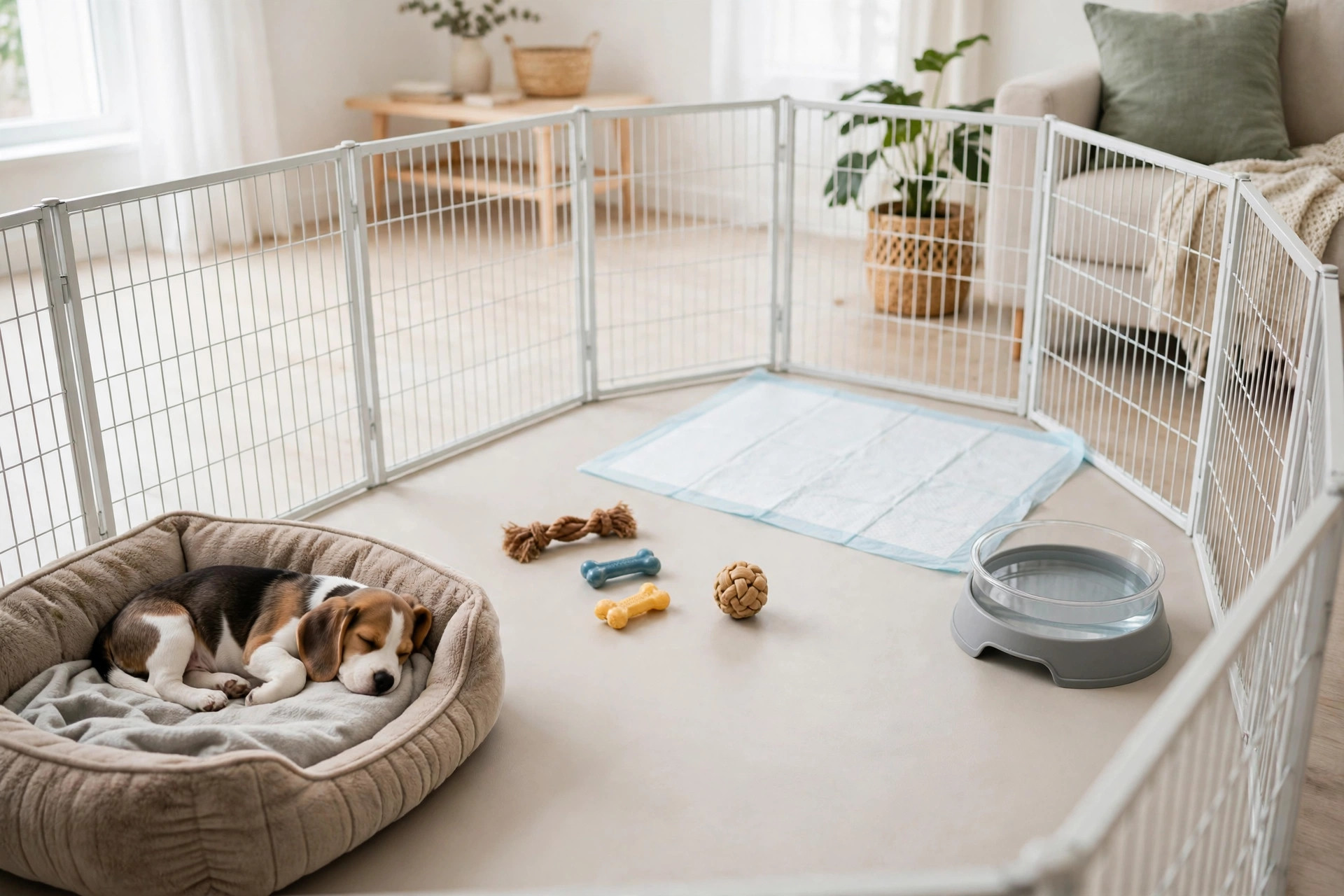
A dog playpen — also called an exercise pen or ex-pen — is a freestanding ring of connected panels that creates a safe, movable play area for your dog. Unlike a crate, which is a small enclosed den for sleeping, a playpen gives your dog room to move, play, rest, and stretch out, with space for a bed, water, toys, and (for young puppies) a potty spot.
Playpens are one of the fastest-growing pet purchases of 2026: search data shows “dog playpen” climbing to around 60,500 monthly searches, up 143% over two years, as more owners discover them for puppy-proofing, holiday guests, travel, and senior-dog care. Most designs use eight panels linked into a ring, though four, six, and twelve-panel versions are common, and many pens fold flat for storage or travel.
A playpen is a management tool, not a substitute for training, exercise, or companionship. Used well, it keeps a puppy safe from household hazards, protects your home from puppy behavior, and teaches your dog to settle calmly on its own.
Why a Playpen Beats a Crate for Daytime
Crates and playpens solve different problems, and most puppy owners end up using both. A crate is a den: small, cozy, and ideal for naps and overnight sleep. A playpen is a daytime base camp — bigger, more flexible, and better suited to the hours when your puppy is awake but you cannot watch every second.
The key difference is space. A puppy should not be crated for longer than its age in months plus one hour (for example, a 3-month-old puppy should not be crated for more than about 4 hours). A playpen large enough to hold a sleeping area, a potty spot, water, and room to move can support longer independent time without the risk of forcing the puppy to soil its sleeping area — which disrupts house training and causes distress.
Playpens also shine in situations where a crate cannot help: keeping a recovering dog calm after surgery, giving a senior dog a safe spot with its bed and water nearby, containing a small dog during a party, or creating a puppy zone in a home without a spare room. Many owners attach the pen directly to the crate, so the puppy can choose between its den and its play area.
Also Read: Crate Training Your Puppy: Step-by-Step Guide (2026)
Types of Dog Playpens Compared
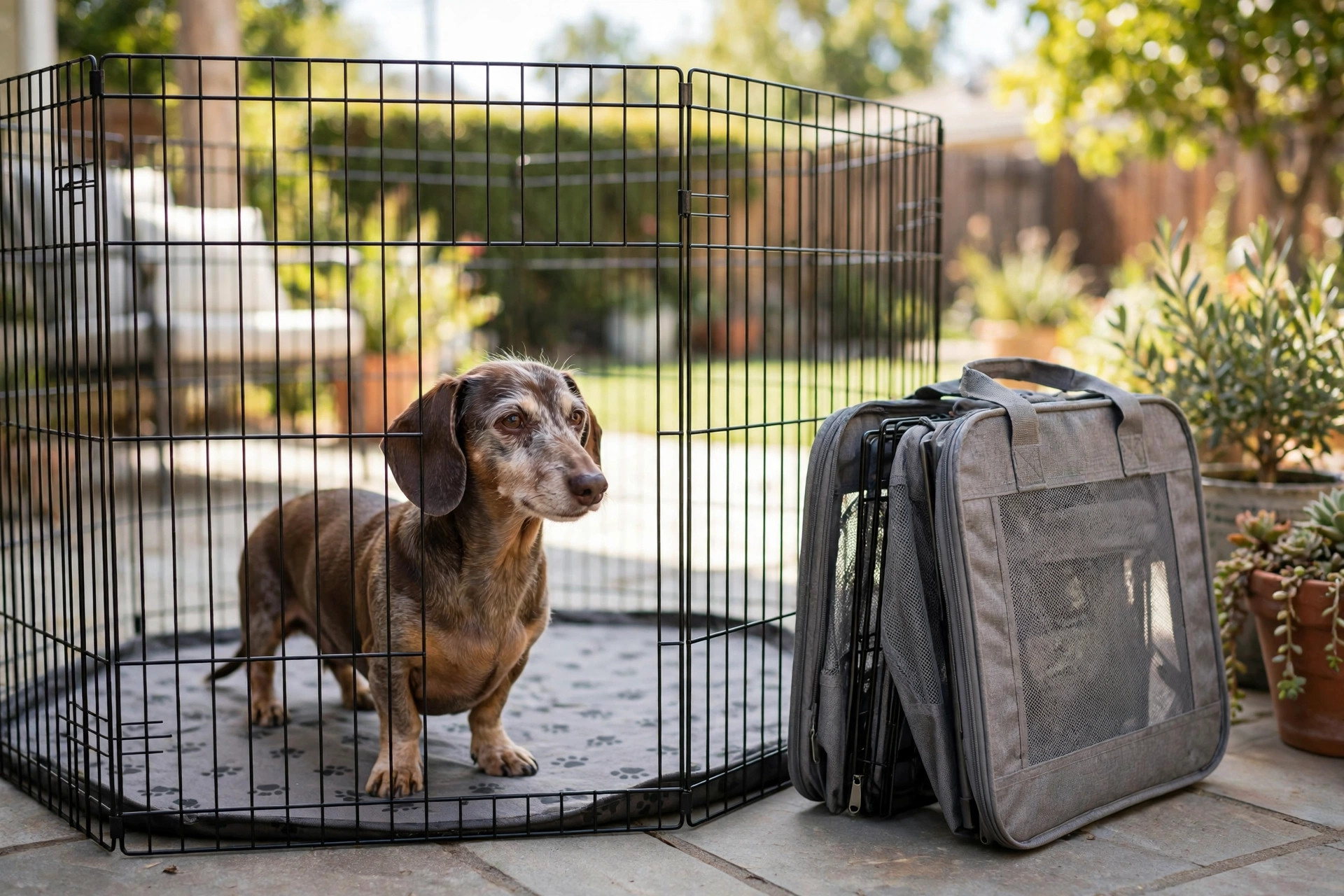
Playpens come in four main materials, and the right one depends on your dog’s strength, chewing habits, and where you plan to use it.
| Type | Best For | Strengths | Weaknesses |
|---|---|---|---|
| Metal wire panels | Puppies, medium and large dogs, indoor and outdoor | Strong, folds flat, adjustable shapes, step-through doors | Heavy to move, can rust outdoors, noisy |
| Plastic panels | Small dogs and puppies indoors | Light, wipe-clean, no sharp edges | Chewers can damage it, can slide or crack, may warp in sun |
| Soft-sided mesh/fabric | Small, calm dogs, travel, temporary use | Light, quiet, folds into a carry bag | Easy to chew or claw through, weak against pushers |
| Heavy-duty/wood | Strong dogs, permanent indoor or outdoor setups | Very sturdy, looks like furniture | Expensive, heavy, not portable |
Match the material to the main risk. A teething puppy calls for metal, a quiet senior can manage with fabric, and a patio setup should be rated for outdoor use. For determined climbers, look for vertical-only bars or a pen with a top cover — horizontal bars act like a ladder.
5 Best Dog Playpens in 2026
Here are five standouts that consistently top 2026 buying guides, covering different budgets, sizes, and use cases.
1. FXW Rollick 8-Panel Dog Playpen — Best Overall
The most recommended pen of 2026 across roundups: eight sturdy panels, secure slide-bolt latches, ground anchors, and rubber feet for stability. Available in 24-inch and taller heights, it works indoors and outdoors and folds down for storage. The best all-rounder for most families.
2. MidWest Wire Dog Exercise Pen — Best Folding Wire Pen
A classic folding wire pen with a step-through door, available in five heights from 24 to 48 inches so you can match it to your dog’s size. Folds flat in seconds, sets up without tools, and expands with extra panels. The go-to choice if you want one pen that grows with a puppy.
3. IRIS USA 4-Panel Plastic Exercise Pen — Best for Puppies
Lightweight plastic panels with a steel-latch door, easy to wipe clean after accidents, and configurable into different shapes. Best for small puppies indoors — the 24-inch height suits toy and small breeds, and the 8-panel version covers more floor space for growing pups.
4. EliteField 2-Door Soft-Sided Playpen — Best Portable
A mesh-sided pen with two zippered doors, a zippered top, and a carry bag. It folds small enough for car trips, vet visits, and holidays, and the mesh windows keep airflow good. Best for calm small and medium dogs — not for chewers or escape artists.
5. Amazon Basics Foldable Dog Playpen — Best Value
An 8-panel folding metal pen at a budget price, with a door and rust-resistant coating. It does the job for puppies and small-to-medium dogs indoors or in the yard, and it is the easiest way to try a playpen setup without a big spend.
Also Read: Best Puzzle Toys for Dogs 2026: Vet Buying Guide
How to Size a Dog Playpen
Size and height are the two most important factors. Getting them wrong leads to escapes, injuries, or a pen your puppy outgrows in weeks.
Height: buy for the adult dog, not today’s puppy
The pen should be at least 6 inches taller than your puppy can reach when standing on its hind legs. Dogs over roughly 40 lbs — and plenty of athletic smaller breeds — can clear a 24-inch panel in a single jump, which is why most brands sell taller 34–42 inch tiers for medium and large dogs.
| Dog Size | Adult Weight | Recommended Pen Height |
|---|---|---|
| Toy breeds | Under 10 lbs | 18–24 inches |
| Small breeds | 10–25 lbs | 24–30 inches |
| Medium breeds | 25–50 lbs | 30–36 inches |
| Large breeds | 50+ lbs | 36–48 inches |
Floor space: room for four zones
A useful rule of thumb is about 4 square feet of floor space per 10 lbs of dog. An 8-panel pen (roughly 5 feet across, just under 20 square feet) suits a 60–80 lb dog, while a 4-panel pen is plenty for a puppy or toy breed. Whatever the size, the pen must fit four zones without crowding: a sleeping area, a potty spot (for very young puppies), water, and open space to move. If your puppy will grow fast, buy for the adult size or choose a pen you can expand with extra panels.
Bar spacing matters for small puppies
Look for secure latches and narrow bar spacing to prevent head entrapment in small puppies. Very small puppies can slip their heads through wide-spaced bars, so check the gap width before you buy — and add a top cover if your puppy has already learned to climb.
How to Set Up a Playpen Safely
A good setup takes ten minutes and prevents most playpen problems before they start.
- Choose the spot. Pick an easy-to-clean floor in a family area, away from stairs, dangling blind cords, and anything you do not want chewed. Your puppy should feel part of the household, not banished.
- Anchor it. Attach the pen securely to the crate, or set it against a wall and other anchor points. Otherwise a determined dog can knock it over and escape. Outdoors, use the ground anchors.
- Bed at one end. Put the bed or open crate at one end of the pen, so your puppy has a clear rest zone.
- Potty spot at the other end. Keep it as far from the bed as possible. A tray with raised edges stops toys being pushed into it.
- Add water, chews, and a food toy. Provide fresh water in a stable, tip-proof bowl. Test toys while supervising first, and never tether toys with cords inside the pen.
- Get down to eye level. Before your puppy goes in, crouch down and look around from their height. Move cords, plants, and anything reachable through the panels.
Introduce the pen the same way you would a crate: feed meals inside with the gate open, add high-value chew items, close the gate for very brief periods while you stay in the room, then gradually extend the time — first while present, then while out of sight. The American Kennel Club’s crate training guide uses the same reward-based, go-slow approach, and it works just as well for pens. Never use the playpen as punishment after unwanted behavior — the goal is for the enclosure to signal safety and rest.
Also Read: Puppy Socialization Checklist: The First 16 Weeks (2026)
How Long Can a Dog Stay in a Playpen?
Confinement time must match your dog’s age, bladder capacity, and temperament. These are daytime maximums with adequate exercise before and after — not targets to aim for every day:
| Age | Max Pen Time (Daytime) | Notes |
|---|---|---|
| Under 12 weeks | 1–2 hours | Must have a potty area inside the pen |
| 12–16 weeks | 2–3 hours | Potty area still needed |
| 4–6 months | 3–4 hours | Bladder control improving |
| Over 6 months | Up to 4–6 hours | Only with exercise before and after |
A dog that settles voluntarily in the pen with a chew and rests without vocalizing has been introduced appropriately. If your puppy panics — pacing, shaking, scratching or biting at the door, long bouts of howling, or drooling — shorten the session immediately and go back a step. Panic is never something to push through, and if it keeps happening, talk to your veterinarian or a certified trainer.
7 Playpen Mistakes to Avoid
1. Buying too short
The most common regret. A 24-inch pen that worked at 10 weeks is a joke to a 6-month-old jumper. Buy for the adult dog or plan to upgrade.
2. Using the pen as punishment
Putting a dog in the pen after misbehavior teaches one lesson: the pen is where bad things happen. Use a puppy-proofed room for time-outs instead.
3. Leaving a puppy in an empty pen
An empty pen with only water produces boredom, frustration, and vocal protest. Always include a chew, a food toy, and a comfortable bed.
4. Skipping the anchor
Most pens are light enough that a strong dog can shove them. Anchor to the crate or a wall, and use ground anchors outdoors.
5. Choosing fabric for a chewer
Soft-sided pens are wonderful for calm dogs and travel — and shredded within minutes by a determined teething puppy. Match material to chewing habits.
6. Confining for too long
All-day pen time is not training. Arrange a midday break with a sitter or walker if your schedule exceeds your puppy’s limits.
7. Ignoring escape practice
If your puppy is learning to climb, add a top cover or move up a height before the first successful escape — once a dog learns it can get out, it will keep trying.
Frequently Asked Questions
Are dog playpens safe for puppies?
Yes, when set up correctly. Choose a pen with narrow bar spacing, secure latches, and a height your puppy cannot climb, anchor it so it cannot tip, and supervise the first sessions. Remove cords, small objects, and anything chewable within reach through the panels.
Is a playpen better than a crate?
Neither is better — they do different jobs. A crate is a den for sleep and short rests; a playpen is a daytime base with room to move, play, and use a potty spot. Most owners use both, often with the crate placed inside or attached to the pen.
What size playpen do I need for a puppy?
Buy for the adult size, not today’s puppy. An 8-panel pen suits most small-to-medium dogs, giving roughly 16–20 square feet. Panels should stand at least 6 inches taller than your dog can reach on its hind legs — 24 inches for toy breeds, 30–36 inches for medium breeds, and 36–48 inches for large breeds.
Can I leave my dog in a playpen while I work?
Yes, within the age limits above: up to 4–6 hours maximum for dogs over 6 months, with exercise before and after and a midday break if you are gone longer. Short, comfortable pen sessions also build confidence while you work nearby.
Do playpens work for senior dogs?
Yes. A pen with a low-entry door, an orthopedic bed, and water close by gives an arthritic or wobbly senior a safe, contained space — and keeps them near the family instead of isolated in another room.
Can I use a playpen outside?
Yes, if it is rated for outdoor use. Choose rust-resistant metal, anchor it with ground stakes, provide shade and water, and never leave a dog outside in extreme heat or cold. Soft-sided fabric pens are not suitable for outdoor use.
Final Thoughts
So, what are the best dog playpens? The one matched to YOUR dog: tall enough to contain them, big enough for bed, water, and a potty spot, made from a material that survives their chewing, and anchored so it stays put. For most families, a sturdy 8-panel metal wire pen with a step-through door is the sweet spot — affordable, foldable, and expandable as your puppy grows.
Introduce it slowly, keep sessions positive, and never use it as a punishment or a substitute for exercise and company. Do that, and a playpen becomes one of the best-value purchases in dog ownership: a safer puppy, a calmer house, and a dog that learns to settle happily on its own. And if confinement keeps causing panic or escape attempts despite a slow introduction, loop in your veterinarian or a certified trainer — some dogs need a different plan.
By Dr. Ayaz Ali