
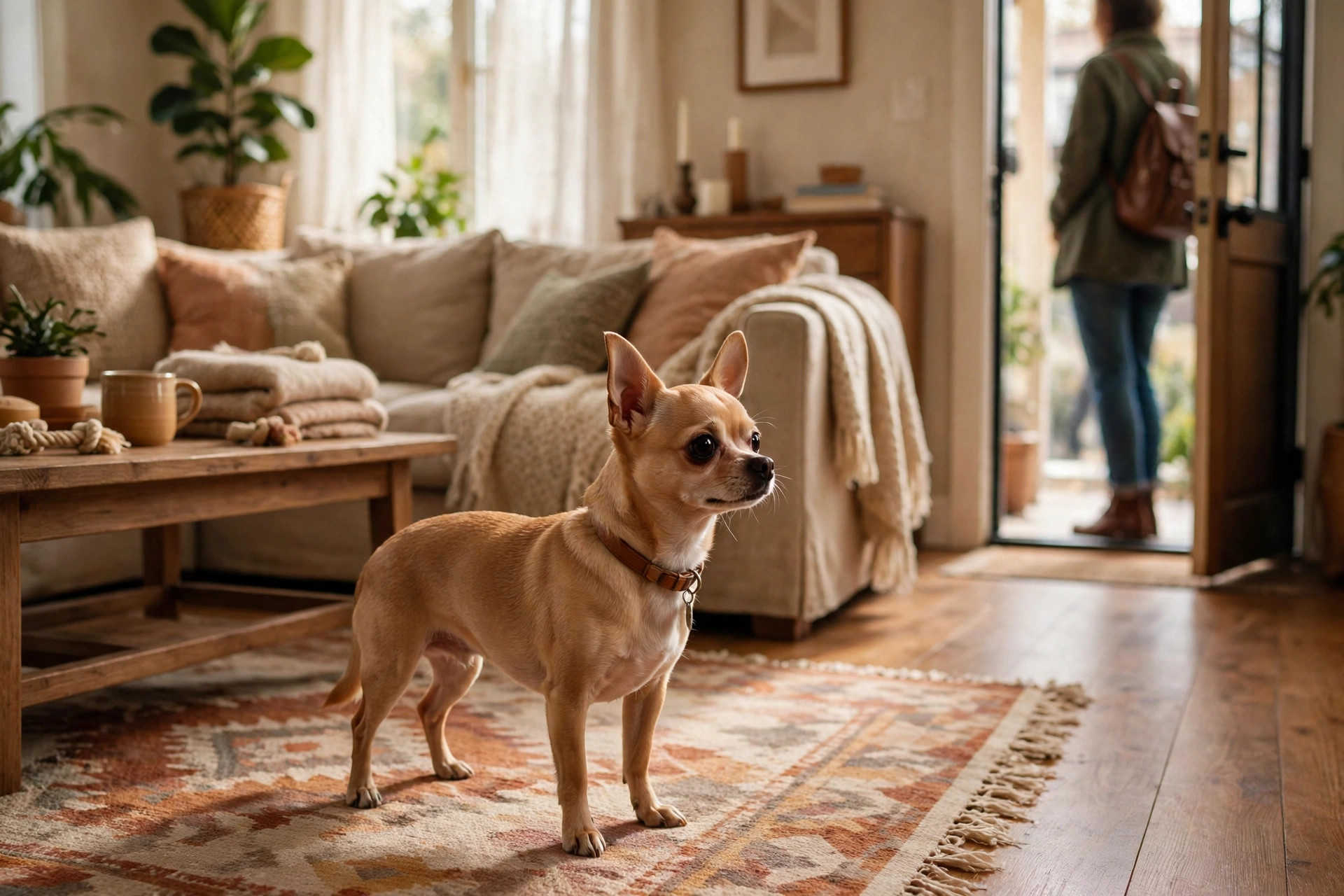
If you have ever watched a four-pound Chihuahua turn into a snarling, lunging ball of fury at the sight of a visitor, you have probably asked yourself: why are Chihuahuas so aggressive? The breed’s reputation as the “tiny terror” of the dog world is so widespread that it feels like a fact of nature — but the real story is more interesting, and much kinder to the dogs, than the stereotype suggests.
Most of what looks like Chihuahua aggression is not meanness at all. It is a very small dog, living in a world built for much larger animals, using the only tools it has — noise, teeth, and attitude — to ask for space. Fear, pain, poor socialization, and a lifetime of being laughed at instead of trained all stack up to create the reputation. The good news is that almost all of it can be changed with calm, reward-based training.
In this complete 2026 guide, we will walk you through what the research actually says, the seven real causes behind the snapping and growling, the warning signs to watch for before a bite, and a step-by-step plan to calm an aggressive Chihuahua — plus when it is time to call in a professional.
Table of Contents
- Are Chihuahuas Really More Aggressive Than Other Dogs?
- Why Are Chihuahuas So Aggressive? 7 Real Causes
- Warning Signs Your Chihuahua Is About to Snap
- Are Chihuahuas More Aggressive Than Pit Bulls?
- How to Calm an Aggressive Chihuahua: A Step-by-Step Plan
- When to Get Professional Help
- Frequently Asked Questions About Why Chihuahuas Are So Aggressive
Are Chihuahuas Really More Aggressive Than Other Dogs?
The short answer is that Chihuahuas do show more growling, snapping, and bite attempts than the average breed — but the numbers need context before you blame the breed.
The best-known evidence comes from a 2008 study published in Applied Animal Behaviour Science. Using the Canine Behavioral Assessment and Research Questionnaire (C-BARQ), researchers found that Chihuahuas scored above average for aggression toward owners, strangers, and other dogs, alongside Dachshunds and Jack Russell Terriers, for bites or bite attempts. It is a real finding, and it is the source of most “most aggressive breed” lists you will see online.
But there are three important caveats. First, the questionnaire counts growls, snarls, snaps, and bite attempts together, so a dog that warns loudly and never makes contact is recorded next to one that does real damage. Second, a 2015 Swedish study using the same questionnaire scored Chihuahuas noticeably lower on those same measures — so the two best-known datasets disagree with each other. And third, the questionnaire was validated against dogs referred for behavior problems rather than ordinary pets, which limits how far the results generalize to the average family Chihuahua.
A separate line of research points to size itself, not breed, as the bigger factor. A 2013 analysis in PLOS ONE covering 8,301 dogs across 49 breeds found that 33 of 36 behavioral traits tracked with height, body weight, or skull shape. Apart from trainability, every relationship with height ran one way: the shorter the breed, the more problematic the behavior. Owner-directed aggression, touch sensitivity, and fear of unfamiliar things all rose as height fell. A four-pound dog cannot walk away from trouble or make itself look bigger. Sound is the only tool it has — so it uses it loudly.
Veterinary sources make the same point in plainer language. PetMD notes that there is no such thing as an aggressive nature when it comes to dog breeds: behavior is a combination of genetics, early development, and life experience. Certain breeds are perceived as more aggressive because of their size and ability to inflict injury — an aggressive Chihuahua is unlikely to put anyone in the hospital, while the same behavior in a large dog would be treated as an emergency on day one.
So yes, the reputation has a basis in data. But the data also says the behavior is driven by fear and circumstance, not by a mean streak — and that distinction is what makes it fixable.
Why Are Chihuahuas So Aggressive? 7 Real Causes
Almost every case of Chihuahua aggression traces back to one of these seven causes. Most dogs have two or three working together, which is why the behavior can look so intense.
1. Fear — the number one cause
Fear does most of the shouting. Nearly everything labeled Chihuahua aggression is defensive: barking, lunging, and snapping to make a frightening thing move away. Run the world from four pounds and the logic becomes clear — every stranger is a moving building, every toddler is unpredictable, and every large dog is a genuine safety question. A frightened dog with no escape route learned long ago that a loud offense buys space. That is not character; it is strategy, and it is trainable. Fear-based aggression is also the type most owners misread: the dog is not being dominant or spiteful. It is frightened, it tried quieter signals first, and nobody listened — so it escalated.
2. Pain or illness
Sudden aggression in a previously easy-going Chihuahua is a veterinary question first. Small breeds are prone to painful conditions that owners often miss: dental disease and sore teeth, patellar luxation (a kneecap that slips out of place), arthritis, and ear infections. A dog in pain may snap when picked up, touched in a sore spot, or even approached — and because Chihuahuas are handled so often, they get grabbed exactly where it hurts. Any sudden change in temperament deserves a vet visit before any training begins.
3. Poor or missing socialization
Many people assume that because Chihuahuas are tiny, they do not need training or socialization. Since they are easy to scoop up and carry, owners skip the work they would never skip with a Labrador. The result is a dog that was never properly introduced to strangers, children, other dogs, and everyday noises during the critical early weeks — and now treats all of them as threats. Socialization is one of the best ways to reduce fear and lower the risk of aggressive behavior, and skipping it is a big reason so many Chihuahuas react aggressively in public.
Also Read: Puppy Socialization Checklist: First 16 Weeks (2026)
4. Territorial behavior and resource guarding
Chihuahuas are famously devoted to one person, and that devotion often turns into guarding — of their owner, their lap, their bed, their food bowl, or their favorite spot on the sofa. Dogs may growl or snap when someone approaches while they are eating, resting, or sitting with their person. This is the same resource-guarding behavior seen in every breed; in a Chihuahua it just happens at lap height, where hands and faces are close by. Guarding needs its own specific approach: invitation-based access, trading up with high-value treats, and never forcibly taking things away.
5. The small-dog double standard
A growling German Shepherd gets a trainer. A growling Chihuahua gets a chuckle and a phone video. Behaviors that would trigger intervention at seventy pounds get rehearsed daily at four pounds — and rehearsed behavior becomes the dog. Owners also tend to carry Chihuahuas everywhere, which removes their chances to learn on their own four feet that strangers are boring rather than scary. Add inconsistent rules — allowed on the sofa today, scolded for it tomorrow — and the dog has no reliable way to predict what is safe.
6. Past trauma or rough handling
Rescue Chihuahuas, or dogs that were teased, grabbed roughly, or punished for growling, often arrive with a short fuse. A dog that was kicked or dropped learns that feet and hands are dangerous. A dog that was punished for growling learns to skip the warning and go straight to the bite — which is why punishment is the single most counterproductive response to aggression.
7. Genetics and individual temperament
Temperament has a heritable component. Some Chihuahuas are born more sensitive to noise, movement, and novelty, and a nervous parent can pass that reactivity along. Individual personality matters too: there are calm, sweet Chihuahuas and reactive ones, just as in every breed. Genetics sets the starting point — it does not set the destination. A sensitive puppy raised with good socialization and consistent rules usually grows into a confident adult.
Warning Signs Your Chihuahua Is About to Snap
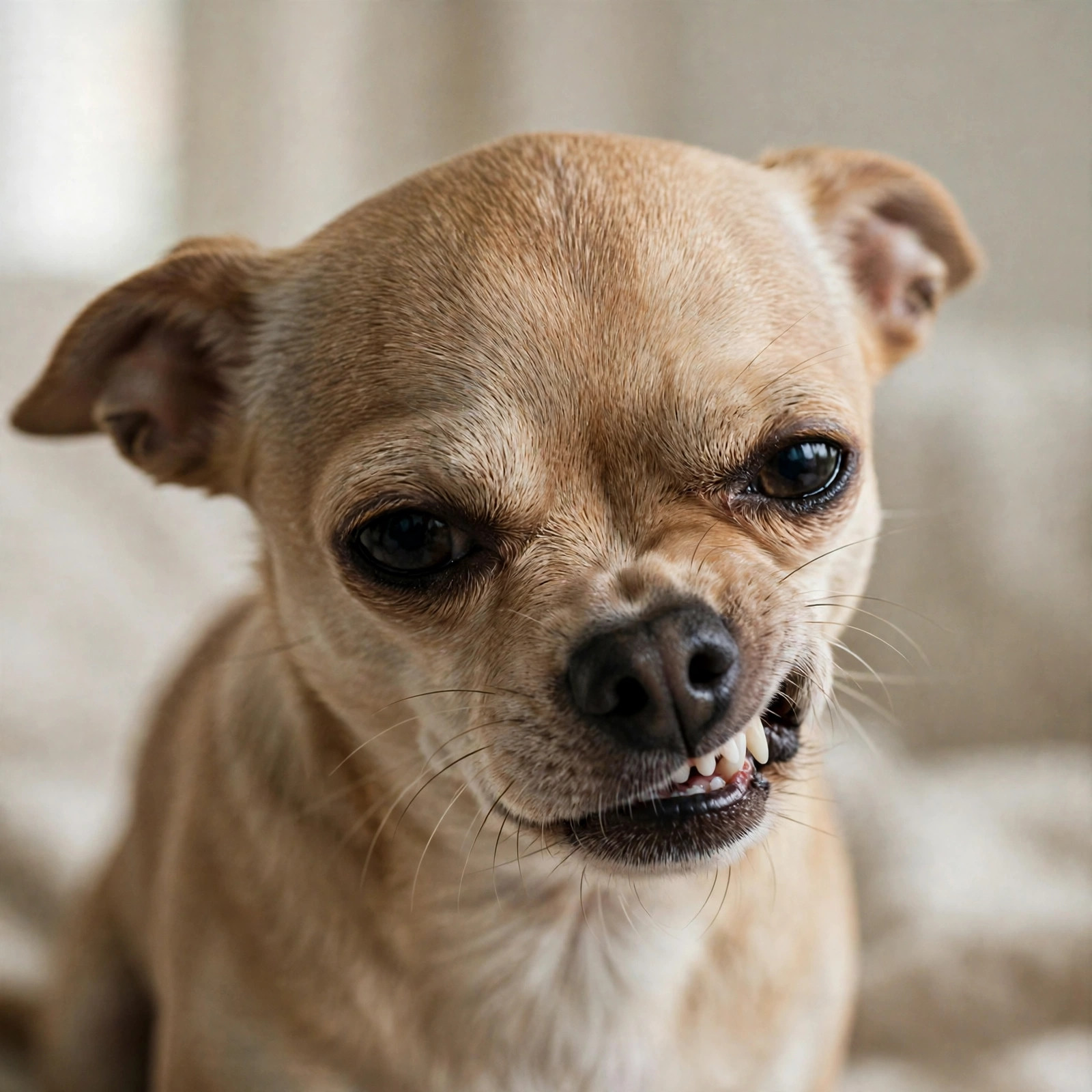
Chihuahuas almost always warn before they bite — the problem is that owners miss the early signals or, worse, punish them. Learning this escalation ladder is the single most useful skill for living safely with a reactive small dog:
| Stage | What You Will See | What It Means |
|---|---|---|
| 1. Uneasy | Lip licking, yawning, turning the head away, trying to move off | “I am uncomfortable — give me space” |
| 2. Worried | Ears back, tail tucked, body low, whale eye (whites of the eyes showing) | Fear is rising; the dog wants an exit |
| 3. Warning | Freezing, hard stare, stiff body, low growl | “Stop what you are doing right now” |
| 4. Threat | Showing teeth, snarling, lunging without contact, air snapping | Last warning before contact |
| 5. Bite | Nip or bite, often fast and then a retreat | The dog felt it had no other option |
The most important rule on this list: never punish growling. A growl is information, not defiance — punish it and you get a dog that bites without warning. When your Chihuahua growls, calmly create distance and figure out what scared it.
Also watch for the subtler signs owners miss: a tail that suddenly stops wagging and goes still, a body that goes rigid, or “muzzle punching” — the dog jabbing its nose at a hand or leg. These are all warnings, and they all mean the same thing: back off, right now.
Are Chihuahuas More Aggressive Than Pit Bulls?
This is the question that surprises people most — and the answer, according to the 2008 C-BARQ study, is yes, on the measures the study used. Chihuahuas showed higher levels of aggression toward their owners, strangers, and other dogs than Pit Bulls did, and the aggression more often resulted in bites or bite attempts.
That sounds shocking until you remember what the numbers actually measure. The study counts every growl, snap, and attempted bite, and it does not weigh the damage. A Chihuahua bite is usually a quick nip that breaks the skin at worst; a large-breed bite can cause serious injury. That is why Pit Bulls, Rottweilers, and German Shepherds dominate bite-injury statistics while Chihuahuas dominate aggression-frequency statistics. Frequency and severity are two different things, and confusing them is how the Chihuahua earned a reputation that outstrips the actual danger.
How to Calm an Aggressive Chihuahua: A Step-by-Step Plan
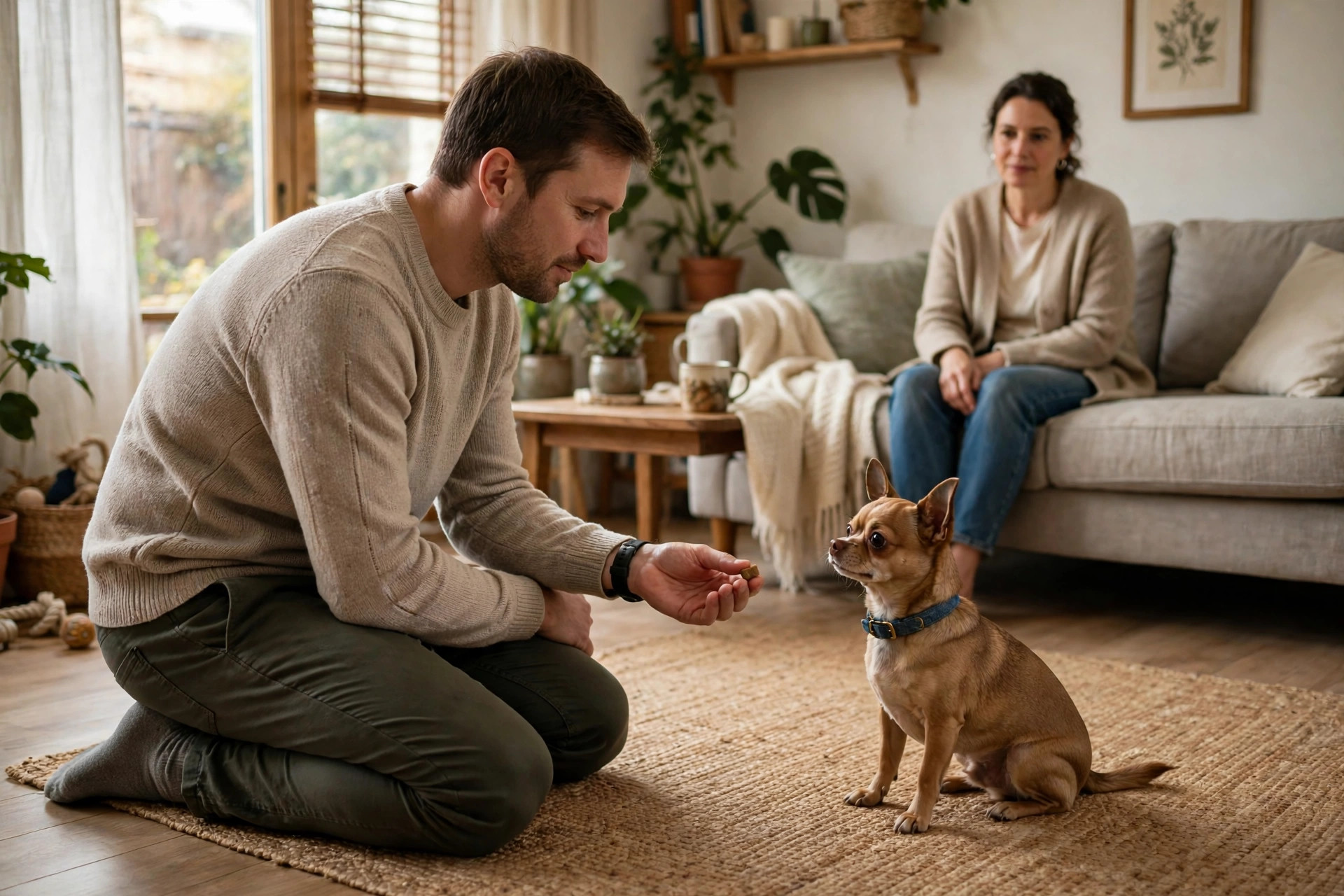
Calming a reactive Chihuahua is not about dominance or “showing them who is boss.” It is about changing how the dog feels about the things that scare it — and that takes patience, distance, and a lot of very good treats. Work through these steps in order.
Step 1: Rule out pain with a vet visit
Before any training, get a full veterinary check: teeth, ears, joints, and knees. If pain is driving the behavior, no amount of training will fix it until the pain is treated. Tell your vet exactly when the aggression happens — being picked up, touched in a certain spot, or approached while resting are all clues that point to pain.
Step 2: Map the triggers for one week
Keep a simple notebook: who or what set the dog off, at what distance, and what the dog did. Common triggers are strangers reaching down to pet, visitors at the door, other dogs on walks, being picked up, nail trims, and anyone approaching the owner’s lap. You cannot fix what you cannot predict — and most owners discover the pattern is much narrower than “my dog hates everyone.”
Step 3: Manage the environment so bites cannot happen
Management buys you safety while training works. Give your Chihuahua a quiet room or pen when guests arrive, use a baby gate instead of a closed door, and ask visitors to ignore the dog completely — no eye contact, no reaching, no baby talk. On walks, cross the street before your dog reacts, and keep the leash short but loose. A basket muzzle, introduced gradually with treats, is a sensible safety tool for vet visits and crowded situations, not a punishment.
Also Read: Stop Your Dog Pulling on the Leash: 7 Trainer Tips (2026)
Step 4: Desensitization and counterconditioning — the core technique
This is the gold-standard method for fear-based reactivity, and it is simpler than it sounds. Find the distance at which your Chihuahua notices the trigger but can still think and take treats — that is called working “under threshold.” The trigger appears at that safe distance, wonderful snacks rain down, the trigger leaves, and the snacks stop. Repeat over days and weeks, shrinking the distance a little at a time. The dog learns a new association: strangers predict chicken, not danger.
Three rules make it work: keep sessions short (five minutes beats thirty), end while your dog is still coping well, and never push through panic. If your dog freezes, lunges, or stops taking treats, you are too close — add distance and try again tomorrow.
Step 5: Socialize on purpose, at the dog’s pace
Socialization is not flooding a frightened dog with strangers. It is controlled, positive exposure: one calm visitor at a time, sitting quietly and tossing treats without approaching, while your Chihuahua chooses whether to come closer. Let the dog set the pace. For puppies, the 3-to-16-week window is when socialization works fastest — but adult Chihuahuas can still learn, just more slowly.
Also Read: Separation Anxiety in Dogs: Signs, Causes & How to Help (2026)
Step 6: Teach the household the same rules
Chihuahuas guard laps and sofas because those spots are valuable — so make access invitation-based. The dog gets onto the sofa or your lap when invited, and gets off calmly when asked, with a treat for cooperating. Everyone in the house must follow the same rules: no picking the dog up to “rescue” it from a scary situation (that rewards the fear), no teasing, no reaching over the dog’s head, and no punishment for growling. Inconsistency is one of the fastest ways to keep a reactive dog reactive.
What NOT to do
- Do not use punishment: yelling, leash pops, scruffing, alpha rolls, spray bottles, and shock collars all increase fear — and fear is the cause of the aggression. Veterinary behaviorists recommend reward-based methods only.
- Do not “flood” the dog: forcing a frightened Chihuahua into a crowd or a stranger’s arms to “get used to it” usually makes the fear worse, not better.
- Do not reward the outburst by accident: picking the dog up and soothing it the moment it growls teaches it that growling summons comfort and escape — the behavior gets stronger.
- Do not ignore a bite: even a small nip that breaks the skin needs cleaning and, if it is deep or the vaccination status is unclear, medical attention.
When to Get Professional Help
Most Chihuahua aggression improves steadily with the plan above, but some cases need a professional — and getting one early is smart, not a failure. Contact your vet or a certified professional if:
- Your dog has bitten someone, especially a child, or bitten hard enough to break the skin.
- Aggression appeared suddenly in an older dog — sudden behavior change is a classic pain or illness signal.
- The behavior is getting worse despite several weeks of consistent training.
- Your dog panics, shuts down, or cannot take treats anywhere near its triggers.
- There is aggression between dogs in the same home, or the dog guards food so intensely that mealtimes are unsafe.
Look for a certified professional dog trainer (CPDT-KA) or, for complex cases, a veterinary behaviorist (DACVB). A good professional will start with a vet check, build a management plan, and work through desensitization at your dog’s pace — never with force. Avoid anyone who recommends dominance-based methods, shock collars, or “correcting” the growl.
Frequently Asked Questions About Why Chihuahuas Are So Aggressive
Are Chihuahuas naturally aggressive?
No. Chihuahuas are not born mean. They are small, easily frightened, and frequently under-trained, which produces defensive behavior that looks like aggression. Genetics and temperament play a role, but fear, pain, and poor socialization explain most cases — and all three are fixable.
Why does my Chihuahua bite me when I pick them up?
The most common reasons are pain and fear. Being lifted removes a small dog’s control and can hurt sore knees, teeth, or joints. It can also be a guarding response if the dog was resting on a lap or bed. Have your vet check for pain first, then teach the dog that being picked up predicts treats, and always scoop from below with support rather than grabbing from above.
Why is my Chihuahua aggressive toward strangers?
Stranger aggression is almost always fear plus a learned strategy: the dog discovered that barking and lunging make scary people back away, so the behavior was rewarded. The fix is distance plus food — desensitization and counterconditioning at a distance where the dog stays calm, with visitors ignoring the dog entirely until it chooses to approach.
Do Chihuahuas calm down with age?
Some do, as they gain confidence and life experience — but aggression rarely disappears on its own. Without training, the behavior usually becomes a habit. The dogs that calm down most are the ones whose owners work through socialization and reward-based training, whatever the dog’s age.
Are male or female Chihuahuas more aggressive?
Studies show small differences, but individual temperament, socialization, and training matter far more than sex. Unneutered males and females in heat or nursing can be more reactive, but neutering on its own does not reliably reduce aggression. Discuss timing with your vet.
Can an aggressive Chihuahua be trained?
Yes. Fear-based aggression responds well to desensitization, counterconditioning, and consistent management, especially when pain has been ruled out. Progress is usually measured in weeks, not days, and severe cases may need medication alongside training. The key is starting before the behavior becomes deeply rehearsed — but it is rarely too late.
Final Thoughts
So, why are Chihuahuas so aggressive? Because they are tiny dogs in a giant world, frightened more often than we realize, handled more than they like, and excused from the training every bigger dog is expected to have. The snapping and growling are not a personality flaw — they are a small dog asking for space in the only language it has.
The hopeful part is that the fix is well understood: rule out pain, learn the triggers, manage the environment, and patiently teach the dog that the scary things predict good things. Most Chihuahuas turn into calmer, braver, happier dogs within a few weeks of consistent work — and the “tiny terror” turns out to have been a frightened little dog all along.
If your Chihuahua’s behavior worries you, start with a vet visit and a notebook. And when in doubt, your veterinarian or a certified trainer is the best guide for your individual dog.
By Dr. Ayaz Ali