
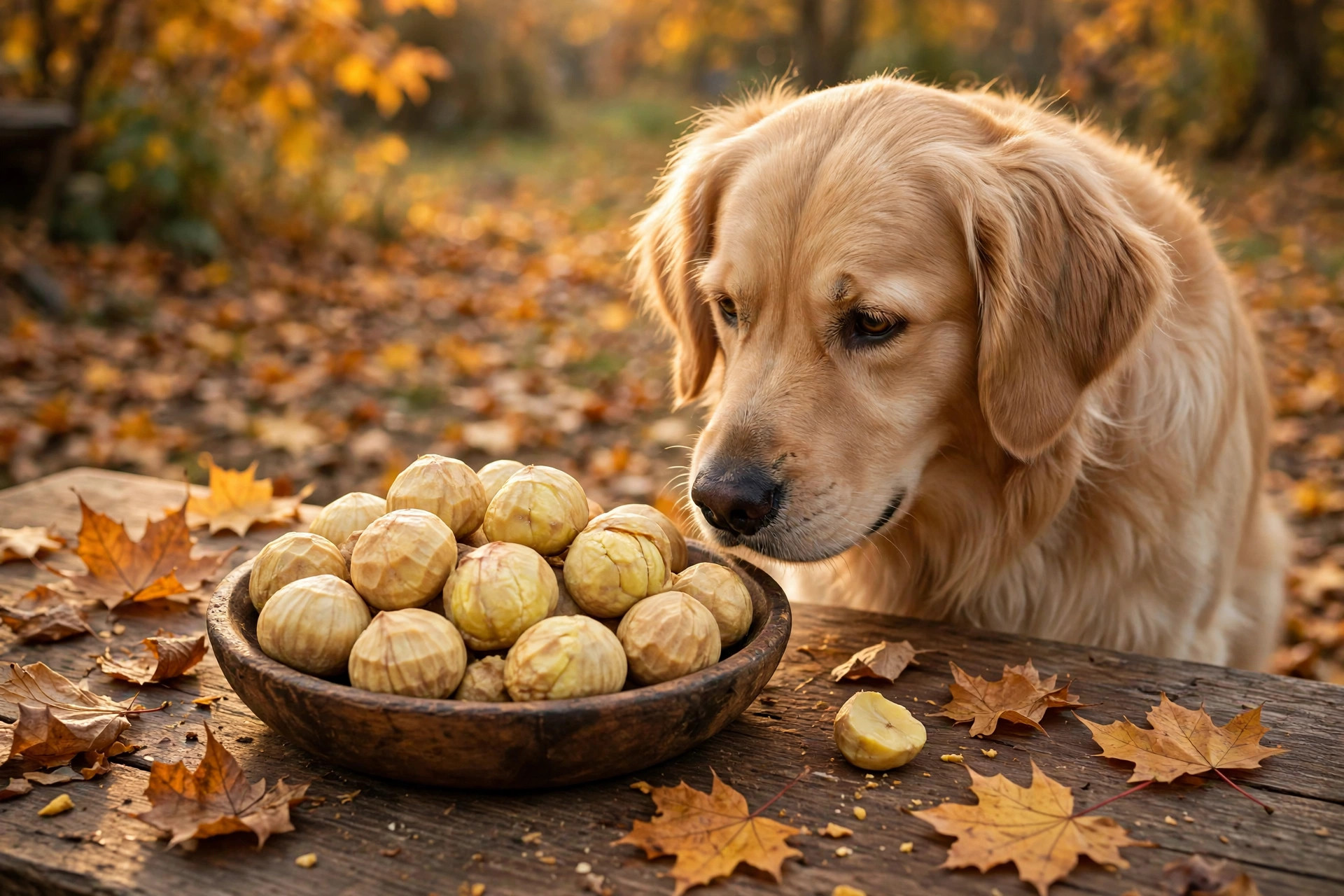
As a dog owner, you have probably been there: it is a cold autumn evening, someone is roasting chestnuts, and your dog is watching every move with hopeful eyes. It is only natural to wonder: can dogs eat chestnuts, or should this seasonal treat stay off your pup’s menu?
The good news is yes, dogs can eat chestnuts — but only the right kind, prepared the right way. Sweet chestnuts, cooked, peeled, and served plain in small pieces, make a fine occasional treat. The danger is their lookalike: horse chestnuts, the shiny conkers that fall from park trees every autumn, are toxic to dogs.
In this complete guide, we will walk you through everything you need to know about feeding chestnuts to dogs: how to tell sweet chestnuts from toxic horse chestnuts, the health benefits, the real risks, safe serving sizes by dog size, how to prepare them, and what to do if your dog eats the wrong kind.
Table of Contents
- Can Dogs Eat Chestnuts?
- Sweet Chestnuts vs Horse Chestnuts: How to Tell Them Apart
- Nutritional Benefits of Sweet Chestnuts for Dogs
- Risks of Feeding Chestnuts to Dogs
- How Many Chestnuts Can Dogs Eat?
- How to Prepare Chestnuts for Dogs
- What If My Dog Eats a Horse Chestnut?
- Can Puppies Eat Chestnuts?
- Healthy Alternatives to Chestnuts
- Frequently Asked Questions
Can Dogs Eat Chestnuts?
Yes, dogs can eat sweet chestnuts when they are cooked, peeled, plain, and cut into small pieces. Sweet chestnuts — the edible kind sold for roasting, from the Castanea family — are not toxic to dogs. Unlike macadamia nuts or black walnuts, which can cause serious problems, sweet chestnuts contain no compounds that are inherently poisonous to dogs.
That said, chestnuts are a starchy, calorie-dense treat, not a health food for dogs. They should follow the 10 percent rule: treats of any kind should make up no more than 10% of your dog’s daily calories, with the rest coming from a complete, balanced dog food. A chestnut or two as an occasional autumn treat is plenty.
Before offering chestnuts, make sure you serve only:
- Sweet chestnuts (the edible, store-bought kind) — never horse chestnuts
- Cooked — roasted or boiled, never raw
- Fully peeled, with the shell and inner skin removed
- Chopped into small, bite-sized pieces
- Plain — no salt, butter, sugar, syrup, garlic, or onion
Sweet Chestnuts vs Horse Chestnuts: How to Tell Them Apart
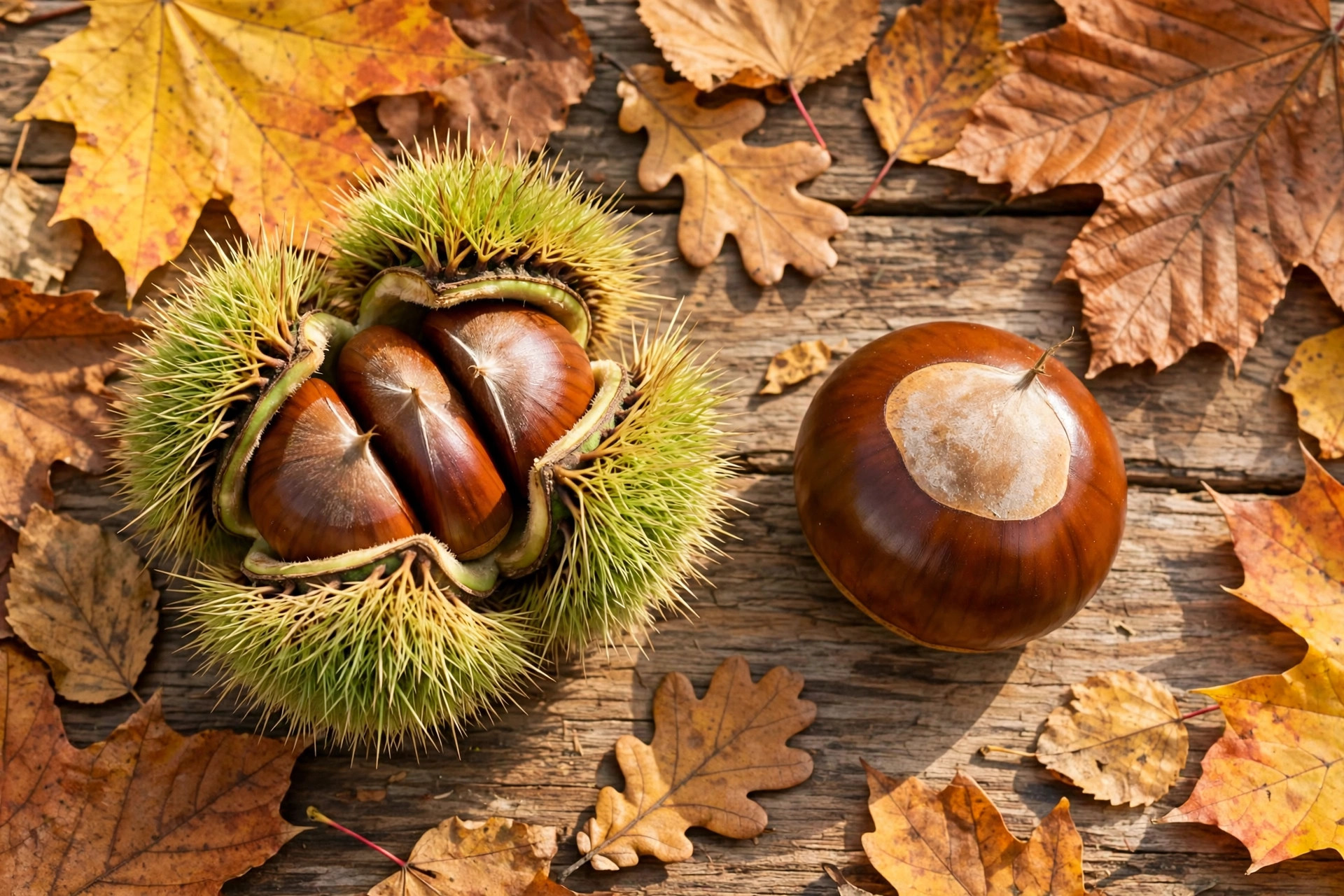
This is the most important section in this guide, because the two nuts look similar at a glance but could not be more different. Sweet chestnuts come from the sweet chestnut tree (Castanea sativa), while horse chestnuts — also called conkers or buckeyes — come from the unrelated horse chestnut tree (Aesculus hippocastanum). Only the first is safe.
| Feature | Sweet Chestnut (Safe) | Horse Chestnut (Toxic) |
|---|---|---|
| Husk | Covered in fine, needle-like spines — like a small green hedgehog | Fewer, stouter, blunter spikes — or almost smooth |
| Nuts inside | Two or three flattened nuts, each with a pointed tip | Usually one single nut |
| Nut shape | Flat on one side, pointed at the tip | Very round, smooth, and glossy, with a pale patch |
| Where you find it | Sold in shops and markets for roasting | Fallen under park and street trees in autumn |
| Safe for dogs? | Yes — cooked, peeled, plain, chopped | No — toxic, every part of the tree |
The simple rule: if you did not buy it as food, do not feed it. Horse chestnuts drop from trees in September and October, exactly when dogs are out on autumn walks picking things up. If you cannot tell which kind a nut is, treat it as a horse chestnut and keep it away from your dog.
One more type worth knowing: water chestnuts are safe for dogs in small amounts. Despite the name, they are not nuts at all — they are crunchy, aquatic tubers, mostly water and starch, with no toxin.
The ASPCA lists horse chestnut as toxic to dogs, with the toxin aesculin and other saponins causing severe vomiting and diarrhea, dilated pupils, weakness, tremors, and in serious cases seizures or coma.
Nutritional Benefits of Sweet Chestnuts for Dogs
Sweet chestnuts are an unusual nut: unlike almonds or pecans, they are low in fat and mostly complex starch, with a little fiber, potassium, and vitamin C. That makes them a gentler occasional treat than most nuts — but they are still a treat, not a staple.
1. Low in Fat Compared With Other Nuts
Most nuts are dangerously fatty for dogs, which is why macadamias and walnuts are off the menu. Sweet chestnuts are the exception: they are low in fat and high in slow-release starch, so a small piece is far less likely to upset a sensitive stomach or strain the pancreas than other nuts.
2. Fiber for Digestive Health
Sweet chestnuts provide dietary fiber, which supports healthy digestion and regular bowel movements in small amounts. Too much fiber at once, though, can have the opposite effect — another reason to keep portions tiny.
3. Potassium, Vitamin C, and B Vitamins
Chestnuts contain potassium, vitamin C, and small amounts of B vitamins and manganese. Dogs produce their own vitamin C, so these nutrients are a bonus rather than a necessity — but in a small, occasional treat they complement a balanced diet nicely.
4. A Satisfying, Chewy Seasonal Treat
Cooked chestnuts are soft, starchy, and easy to chop into training-sized pieces. For dogs that love novel textures, a piece of roasted chestnut is an interesting, low-fat change from the usual biscuit — especially in the holiday season when chestnuts are everywhere.
Also Read: Can Dogs Eat Cranberries? Safe Feeding Guide (2026)
Risks of Feeding Chestnuts to Dogs
The nut itself is safe — nearly all the danger sits in which chestnut it is, how it is prepared, and how much your dog eats.
1. Horse Chestnut Poisoning
Horse chestnuts contain aesculin and other saponins. Even one or two conkers can cause vomiting, diarrhea, drooling, and abdominal pain, usually within a few hours. Larger amounts can cause dilated pupils, weakness, wobbliness, muscle tremors, and seizures. Every part of the horse chestnut tree is toxic — the nut, the shell, the leaves, and the bark — so a dog that chews a fallen husk on a walk needs a vet call even if it seems fine at first.
2. Choking and Intestinal Blockage
A whole chestnut is dense, hard, and round — the perfect size to lodge in a dog’s throat, especially in small breeds or dogs that gulp their food. The shell and husk are worse: fibrous pieces can cause an intestinal blockage that may take a day or more to show up as repeated vomiting or a dog that stops eating. Always peel fully and chop small.
3. Raw Chestnuts and Tannins
Raw sweet chestnuts are not toxic, but they are hard and full of bitter tannins that irritate a dog’s stomach and are difficult to digest. They can cause nausea and stomach upset, and they are tough on teeth. Always cook chestnuts before offering them.
4. Seasonings, Sugar, and Sweetened Products
Roasted chestnuts from a street vendor are often salted or buttered, and shop-bought chestnut puree is usually sweetened — sometimes with xylitol, which is severely toxic to dogs even in tiny amounts. Candied chestnuts, chestnut stuffing, and chestnut desserts with sugar, syrup, garlic, or onion are all unsafe. Serve plain only.
5. Too Much Starch, Too Many Calories
Chestnuts are starchy and calorie-dense — roughly 200 calories per 100 grams. A handful can quietly blow a small dog’s daily calorie budget and contribute to weight gain. Dogs with diabetes or weight problems should skip them unless your veterinarian says otherwise.
6. Rare Allergic Reactions
Though uncommon, some dogs can be sensitive to chestnuts. After the first tiny taste, watch for itching, swelling, or vomiting. If any of these appear, stop feeding chestnuts and contact your veterinarian.
Also Read: Can Dogs Eat Turkey? Safe Feeding Guide (2026)
How Many Chestnuts Can Dogs Eat?
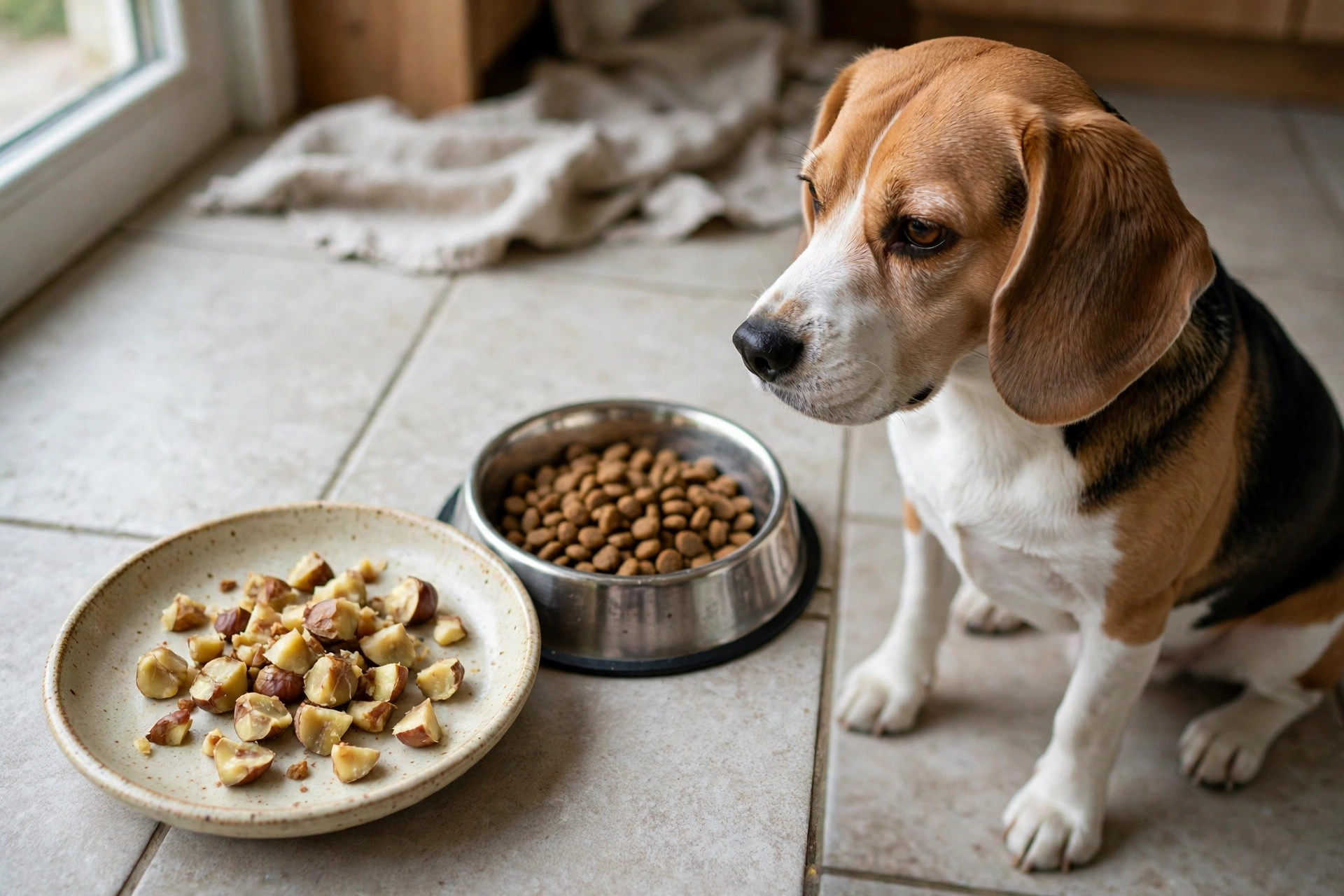
Chestnuts should only ever be an occasional treat — a few times a month at most, in the small portions below. Use this simple serving guide:
| Dog Size | Weight | Safe Serving |
|---|---|---|
| Small dogs | Under 20 lbs | 1 small piece, chopped |
| Medium dogs | 20–50 lbs | 2–3 small pieces |
| Large dogs | Over 50 lbs | 3–4 small pieces |
When in doubt, start with a single small piece and see how your dog reacts over the next 24 hours before offering more. And remember the 10 percent rule: all treats combined should stay under 10% of your dog’s daily calories.
How to Prepare Chestnuts for Dogs
Safe preparation takes just a few minutes:
- Buy sweet chestnuts from a shop or market — never collect unknown nuts from the ground.
- Score the shell with a knife, then roast or boil until the flesh is soft all the way through.
- Let them cool, then peel away the hard outer shell and the thin inner skin completely.
- Chop the soft flesh into small, bite-sized pieces appropriate for your dog’s size.
- Serve plain — never add salt, butter, sugar, syrup, garlic, or onion.
- Offer a small amount as an occasional treat, or mix a piece or two into their regular meal.
Skip the shortcut of buying pre-sweetened chestnut puree or candied chestnuts: check the label, and if it contains sugar or xylitol, it is not for dogs.
What If My Dog Eats a Horse Chestnut?
If your dog picks up a conker on a walk or eats a nut you cannot identify, act fast — do not wait for symptoms.
- Call your veterinarian, an emergency clinic, or a pet poison helpline right away, even if your dog seems fine. Signs usually start within a few hours.
- Do not make your dog vomit unless a veterinarian tells you to — inducing vomiting can cause more harm.
- Note what and how much was eaten, and bring the nut or husk with you if you can — it helps the vet identify the type.
- Watch for warning signs: vomiting, drooling, diarrhea, belly pain, dilated pupils, weakness, wobbliness, tremors, or seizures.
In the United States, the ASPCA Animal Poison Control Center is on (888) 426-4435. Any suspected horse chestnut ingestion should be treated as an urgent vet call, especially in small dogs.
Also Read: Pet Emergency First Aid: Vet Guide (2026)
Can Puppies Eat Chestnuts?
Yes, puppies can eat a tiny amount of cooked, peeled, chopped sweet chestnut once they are fully weaned and eating solid food. Because puppies have sensitive digestive systems and small throats, start with one very small piece and watch for any stomach upset over the next 24 hours before offering more. As with adults, keep it an occasional treat only — and be extra careful with choking, since puppy mouths are small.
Healthy Alternatives to Chestnuts
If your dog does not care for chestnuts — or you would like to rotate their treats — these foods are also safe in moderation:
- Blueberries (antioxidant-packed and low in sugar)
- Apples — seeds and core removed
- Carrots — raw or cooked, in small pieces
- Plain green beans (a great low-calorie holiday-safe veggie)
- Plain sweet potato — no marshmallows or brown sugar
Always introduce any new food gradually and in small portions.
Frequently Asked Questions
Can dogs eat chestnuts every day?
No. Chestnuts are starchy and calorie-dense, so they are an occasional treat only — a few small pieces a few times a month at most, in the portions listed above.
Can dogs eat raw chestnuts?
No. Raw sweet chestnuts are hard, bitter, and full of tannins that upset a dog’s stomach and are difficult to digest. Always roast or boil chestnuts first, then peel and chop them.
Can dogs eat roasted chestnuts?
Yes — roasted sweet chestnuts are the safest way to serve them, as long as they are peeled, plain, unsalted, and chopped into small pieces. Skip vendor-roasted chestnuts that are salted or buttered.
Can dogs eat horse chestnuts?
Never. Horse chestnuts (conkers) are toxic to dogs. They contain aesculin and saponins that cause vomiting, diarrhea, tremors, and in larger amounts seizures. If your dog eats one, call your vet immediately.
Can dogs eat water chestnuts?
Yes, in small amounts. Water chestnuts are not true nuts — they are crunchy aquatic tubers, mostly water and starch, with no toxin. Serve them plain and chopped.
Can dogs eat chestnut puree?
Only if it is 100% plain sweet chestnut with nothing added. Most commercial chestnut puree is sweetened with sugar and sometimes xylitol, which is severely toxic to dogs. Check the label — when in doubt, skip it.
What should I do if my dog eats a conker?
Call your veterinarian or a poison-control helpline immediately, even if your dog seems fine. Do not induce vomiting unless a vet tells you to. Watch for vomiting, drooling, diarrhea, belly pain, weakness, or tremors over the next few hours.
Final Thoughts
So, can dogs eat chestnuts? Yes — when they are sweet chestnuts, properly cooked, fully peeled, served plain, and chopped small. A few pieces make a low-fat, fiber-rich seasonal treat most dogs enjoy. Just remember the golden rules: buy the edible kind, never collect unknown nuts from the ground, never feed horse chestnuts, and keep portions tiny.
The one thing that matters most this autumn is the sweet-versus-horse test. If a nut is round, glossy, and came from a park tree, it is a conker — and conkers are poison, not a treat. When in doubt, your veterinarian is always the best source of advice for your individual pup’s diet.
By Dr. Ayaz Ali