
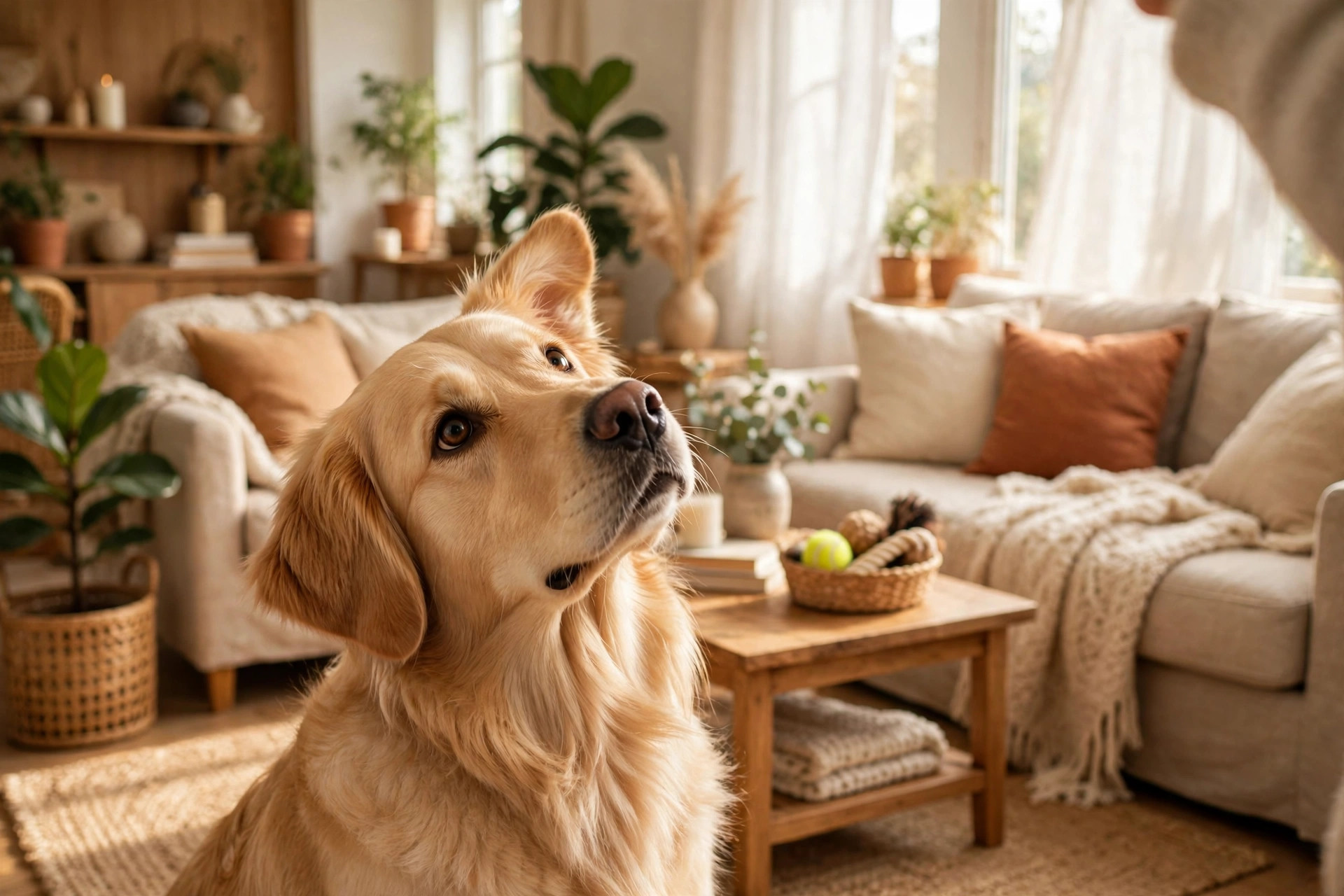
You say the word “walk” and your dog’s head cocks sharply to one side, ears up, eyes locked on your face. It is one of the most charming things dogs do — and if you have ever wondered why does my dog tilt his head, you are far from alone. It is one of the most searched dog behavior questions of 2026.
The short answer is that most head tilts are completely normal. Dogs tilt their heads to hear better, see your face more clearly, and work out what your words mean. Scientists have even studied the behavior and found that dogs who know the names of their toys tilt their heads far more often than other dogs. But there is one version of the head tilt that is not cute at all — a tilt that stays put even when nothing is happening. That one needs a vet.
In this complete 2026 guide, we will walk you through the five real reasons dogs tilt their heads, which dogs tilt the most, how to tell a normal tilt from a warning sign, and exactly when to call your veterinarian.
Table of Contents
- Is It Normal for Dogs to Tilt Their Heads?
- Why Does My Dog Tilt His Head? 5 Real Reasons
- Which Dogs Tilt Their Heads the Most?
- When a Head Tilt Means a Vet Visit
- What to Do If Your Dog’s Head Tilt Won’t Go Away
- Frequently Asked Questions
Is It Normal for Dogs to Tilt Their Heads?
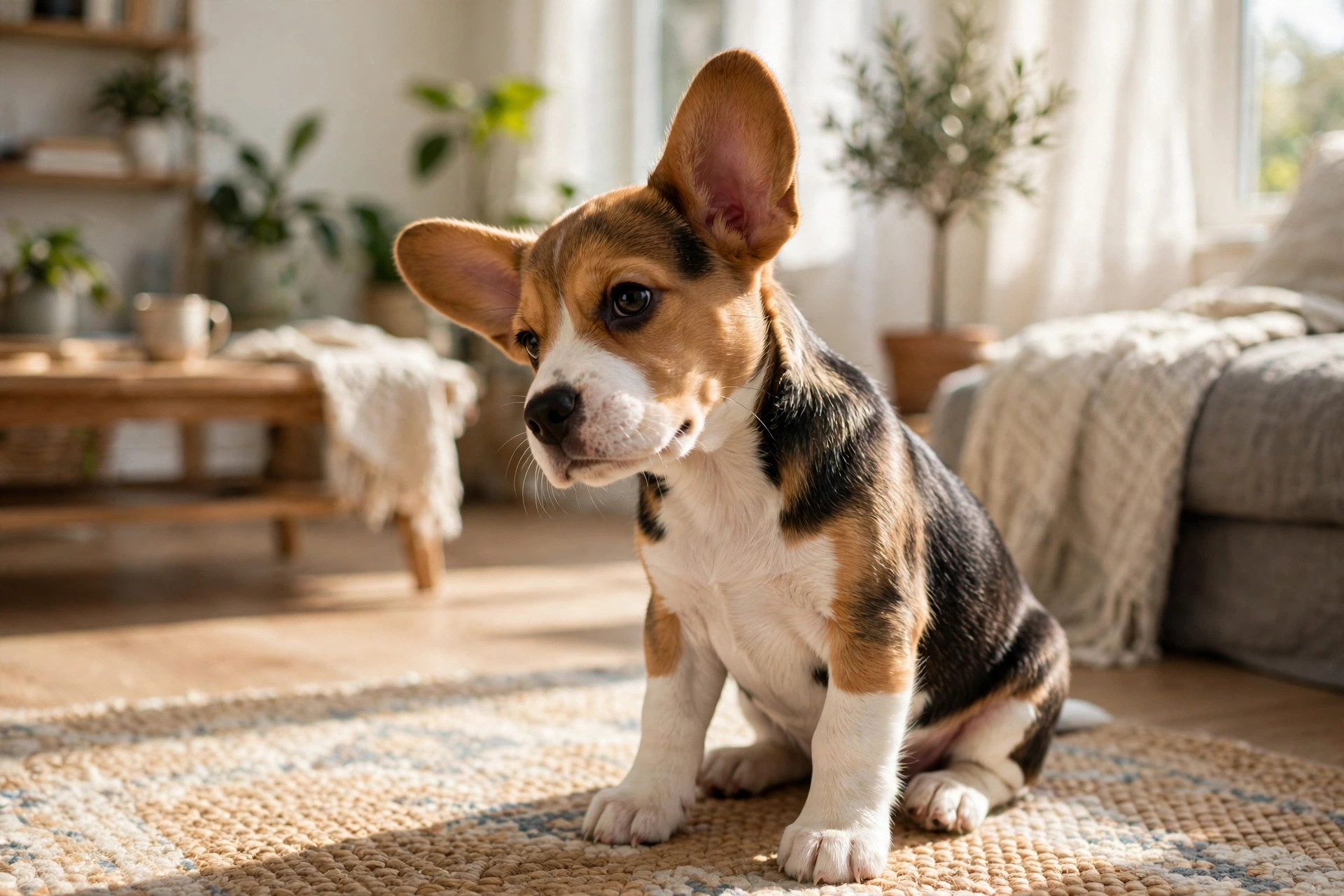
Yes — for most dogs, tilting the head while listening is completely normal behavior. Veterinary sources including PetMD describe head tilting as a normal behavior in many dogs, often associated with curiosity, attention, and learning.
The key detail is timing. A normal head tilt is brief and situational: your dog hears a word, a sound, or sees something interesting, tilts for a second or two, and then the head returns to level. It happens in response to something — your voice, a squeaky toy, a strange noise outside.
Most dogs also have a favorite side. If your dog almost always tilts to the left, that is normal too — individual dogs tend to tilt consistently in one direction, just as people tend to favor one hand. What matters is not the direction, but whether the tilt comes and goes with stimulation, or stays put when nothing is happening.
Also Read: Why Does My Dog Lean on Me? 5 Things Your Dog Is Trying to Tell You (2026)
Why Does My Dog Tilt His Head? 5 Real Reasons
Researchers are still studying the exact reason for the head tilt, and there is probably more than one. Here are the five explanations with the strongest evidence behind them.
1. To Hear You Better
Dogs hear far higher sounds than people do, and they locate sounds partly by the tiny differences in when a sound reaches each ear. The ear flaps — called pinnae — can get in the way of that. Tilting the head repositions the ears, helping your dog work out exactly where a sound is coming from and pick up small differences in pitch and tone.
This is why dogs often tilt toward the direction of a sound, and why the tilt shows up most when you speak in a higher voice, use an unfamiliar word, or make a strange noise. Your dog is literally tuning in.
2. To See Your Face Past the Muzzle
Psychologist Stanley Coren of the University of British Columbia proposed one of the best-known explanations: a dog’s muzzle can block part of its view, especially the lower half of a person’s face, where the mouth shows many of our expressions. Tilting the head moves the muzzle out of the way and gives the dog a clearer look at your face.
The evidence fits. Dogs with longer muzzles — greyhounds, for example — have been observed tilting their heads toward their owners more often than flat-faced breeds. Dogs read us through a combination of words, tone, facial expression, and body language, so seeing your face clearly matters for understanding, not just for looking at you.
3. To Work Out What Your Words Mean
The most fascinating research on the head tilt comes from the Family Dog Project at Eötvös Loránd University in Budapest, Hungary. In a study published in the journal Animal Cognition in 2021, researchers compared seven “gifted word learner” dogs — all Border Collies that knew the names of at least ten toys — with 33 typical dogs.
The results were striking. The gifted dogs tilted their heads in about 43 percent of trials. The typical dogs did it in only about 2 percent. The researchers concluded that the head tilt may be linked to processing meaningful information, such as matching a word to a mental picture of the toy. They were careful to say more research is needed, and that typical dogs may also tilt in situations the study did not test — but the link between tilting and thinking is now real science, not just a guess.
A separate 2016 brain-imaging study found that dogs process the meaning of words mainly on the left side of the brain and the tone of voice on the right side, much as people do. So when your dog tilts its head at the word “walk,” it may well be thinking hard about what that word means.
4. To Show Curiosity and Attention
Sometimes the simplest explanation is the right one. A head tilt is your dog’s way of saying “I’m listening” — the canine equivalent of a human nod or a raised eyebrow. It signals engagement, focus, and curiosity, and it often appears alongside other attentive body language: ears forward, eyes soft and fixed on you, mouth closed, body still.
Watch for the tilt when you introduce something new — a different walking route, a guest at the door, a sound your dog has never heard before. The tilt is your dog gathering information, and it is one of the clearest signs that your dog is paying close attention to you.
5. Because You Taught Them To
The least romantic explanation is probably a real contributor. When your dog tilts its head, people reliably smile, speak warmly, laugh, and often offer a treat or a pat. That is textbook positive reinforcement — and dogs are very fast learners.
Applied animal behaviorist Jill Goldman told the American Kennel Club that the head tilt most likely repeats because it is positively reinforced. Your dog may have learned that tilting its head makes good things happen. So some of the head tilting your dog does is a learned behavior, maintained by your response to it. In other words, your dog tilts because you love it — and your dog knows it.
Also Read: Why Does My Dog Lick His Paws So Much? Vet Explains (2026)
Which Dogs Tilt Their Heads the Most?
Not every dog tilts equally, and that is normal. A few patterns show up again and again:
- Long-muzzled breeds (Greyhounds, Collies, German Shepherds, Labradors) tend to tilt more, because their muzzle blocks more of their view — exactly what the vision theory predicts.
- Flat-faced breeds (Pugs, Bulldogs, French Bulldogs) tilt less often, though they still do it — their unobstructed view means they need the tilt less for seeing, but they still use it for hearing and attention.
- Dogs that know many words tilt far more often, according to the 2021 research — word-smart dogs appear to tilt while they process what they hear.
- Puppies and young dogs often tilt constantly as they learn the sounds and words of their new world; older dogs usually tilt at familiar trigger words only.
- Individual quirks rule. Some dogs are champion tilters and some almost never do it. Neither is a problem — a dog that never tilts is not less intelligent or less bonded to you.
If your dog has never tilted and suddenly starts doing it a lot, or if a dog that always tilted suddenly stops, note the change. A sudden change in any long-standing behavior is worth mentioning to your vet at the next visit.
When a Head Tilt Means a Vet Visit
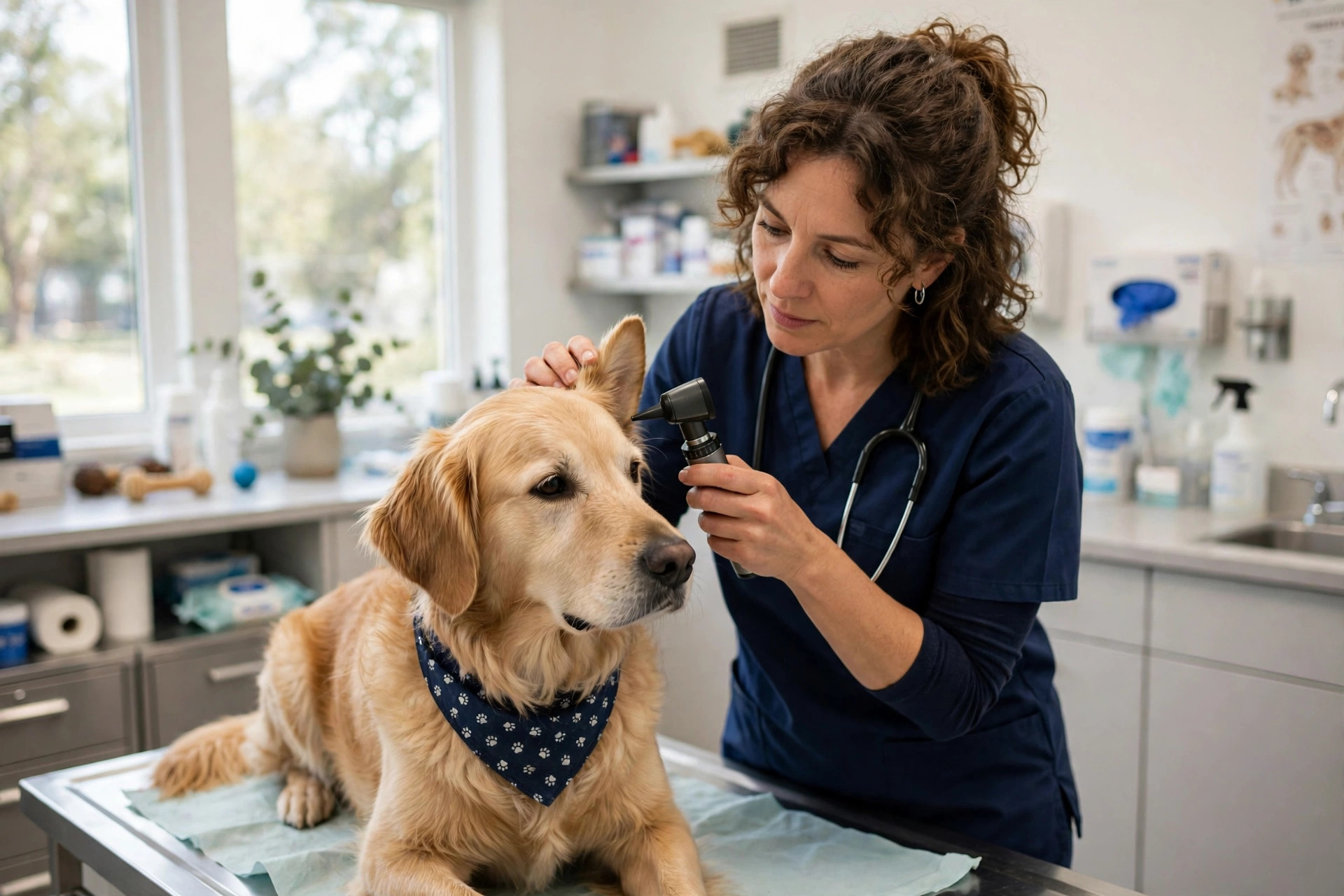
Here is the critical distinction: a communicative head tilt is momentary and situational. A persistent head tilt — a head held tilted at rest, when nothing is happening — is not the same behavior at all, and it is the version that needs a vet. A tilt that stays put usually points to a problem with the ear or the vestibular system, the apparatus that controls balance and spatial orientation.
| What You See | Likely Meaning | Action |
|---|---|---|
| Brief tilt when you speak, then head levels | Normal listening and attention | Enjoy it — no action needed |
| Tilt toward a sound, then back to normal | Normal hearing and curiosity | No action needed |
| Head stays tilted at rest, for hours | Possible ear or vestibular problem | Book a vet visit promptly |
| Tilt plus stumbling, circling, or falling | Vestibular disease or inner-ear problem | Vet visit the same day |
| Tilt plus rapid eye flicking, vomiting, or refusal to move | Serious balance-system problem | Urgent vet care |
| Tilt plus head shaking, scratching, or ear odor | Likely ear infection | Book a vet visit promptly |
Medical Causes of a Persistent Head Tilt
According to PetMD and the UK veterinary charity PDSA, a constant head tilt can be caused by:
- Ear infections — especially in the middle or inner ear. Outer ear infections are common and often come with scratching, head shaking, redness, discharge, or a strong smell. Middle and inner ear infections are more serious and are associated with a more persistent tilt.
- Vestibular disease — often sudden in onset and dramatic: head tilt with loss of balance, falling or circling to one side, and rapid involuntary eye movement (nystagmus). The idiopathic form in older dogs looks alarming but frequently improves substantially over days to weeks — it cannot be distinguished from more serious causes without examination.
- Something stuck in the ear — such as a grass seed or foxtail, which can also cause head shaking and pawing at the ear.
- Ear mites or injury — less common in adult dogs, but possible, especially after rough play or a blow to the head.
- Inner-ear tumors or polyps — rare, and more common in older dogs.
Also Read: Signs of Ear Infection in Dogs: Vet Guide (2026)
What to Do If Your Dog’s Head Tilt Won’t Go Away
If your dog’s head is still tilted when nothing is being said and nothing is happening, do not wait it out. Here is what to do:
- Check the ears gently. Lift the ear flap and look for redness, swelling, discharge, or a bad smell. Do not push anything into the ear canal — no cotton swabs, no home remedies.
- Note the other symptoms. Is your dog stumbling, circling in one direction, vomiting, or showing rapid eye movements? Those details help your vet enormously — write them down before the visit.
- Keep your dog safe and calm. A dog with a balance problem can fall down stairs or off furniture. Keep them on the ground floor, block the stairs, and stay close until the vet sees them.
- Call your vet the same day. A persistent tilt always deserves an examination. Your vet will check the ear with an otoscope, look for infection or foreign objects, and test balance and nerve function to find the cause.
- Do not try to treat it at home. Human ear drops, peroxide, and alcohol should never go into a dog’s ears — they can make things worse and even damage the eardrum. Only use products your vet prescribes.
Frequently Asked Questions
Why does my dog tilt his head when I talk to him?
Your dog is most likely trying to hear you better, see your face past his muzzle, and work out what your words mean. Research shows dogs that know the names of their toys tilt far more often when they hear a familiar word, so the tilt is partly your dog thinking. It is also reinforced — your smile and attention teach your dog to do it again.
Is it normal for a dog to tilt his head to one side only?
Yes. Most dogs tilt consistently to one side, just as people favor one hand. A one-sided tilt is only a concern when it stays tilted at rest, even when nothing is happening, or when it comes with other symptoms such as stumbling or head shaking.
Why does my dog tilt his head at the TV?
The same reasons as with your voice: unfamiliar sounds, high-pitched noises, and animals on screen all trigger the listening and attention response. Dogs can also react to the voices and sounds coming from the television as if they were real.
Do all dogs tilt their heads?
No. Some dogs are champion tilters and some almost never do it. Long-muzzled breeds and dogs that know many words tend to tilt more, while flat-faced breeds tilt less. A dog that never tilts is not less intelligent or less bonded to you.
When should I worry about my dog’s head tilt?
Worry when the tilt is persistent — the head stays tilted at rest with no trigger — or when it comes with stumbling, circling, falling, rapid eye flicking, vomiting, head shaking, or ear discharge. Seek prompt veterinary care in those cases.
Can a head tilt go away on its own?
A brief, situational tilt needs no treatment — it comes and goes in seconds. A persistent tilt caused by an ear infection or vestibular problem needs veterinary diagnosis and treatment, and waiting can let the problem spread to the middle or inner ear.
Final Thoughts
So, why does my dog tilt his head? Most of the time, it is your dog doing three things at once: listening harder, looking at your face more clearly, and thinking about what your words mean — with a little help from the fact that you reward the behavior every time you smile at it. It is one of the clearest signs of the bond between you and your dog, and it is backed by real research.
Just remember the one rule that matters: a tilt that comes and goes is charming, but a tilt that stays is a symptom. Learn the difference, enjoy the adorable version, and call your vet promptly for the other one. Your dog is telling you something either way — the trick is knowing which message you are hearing.
By Dr. Ayaz Ali