
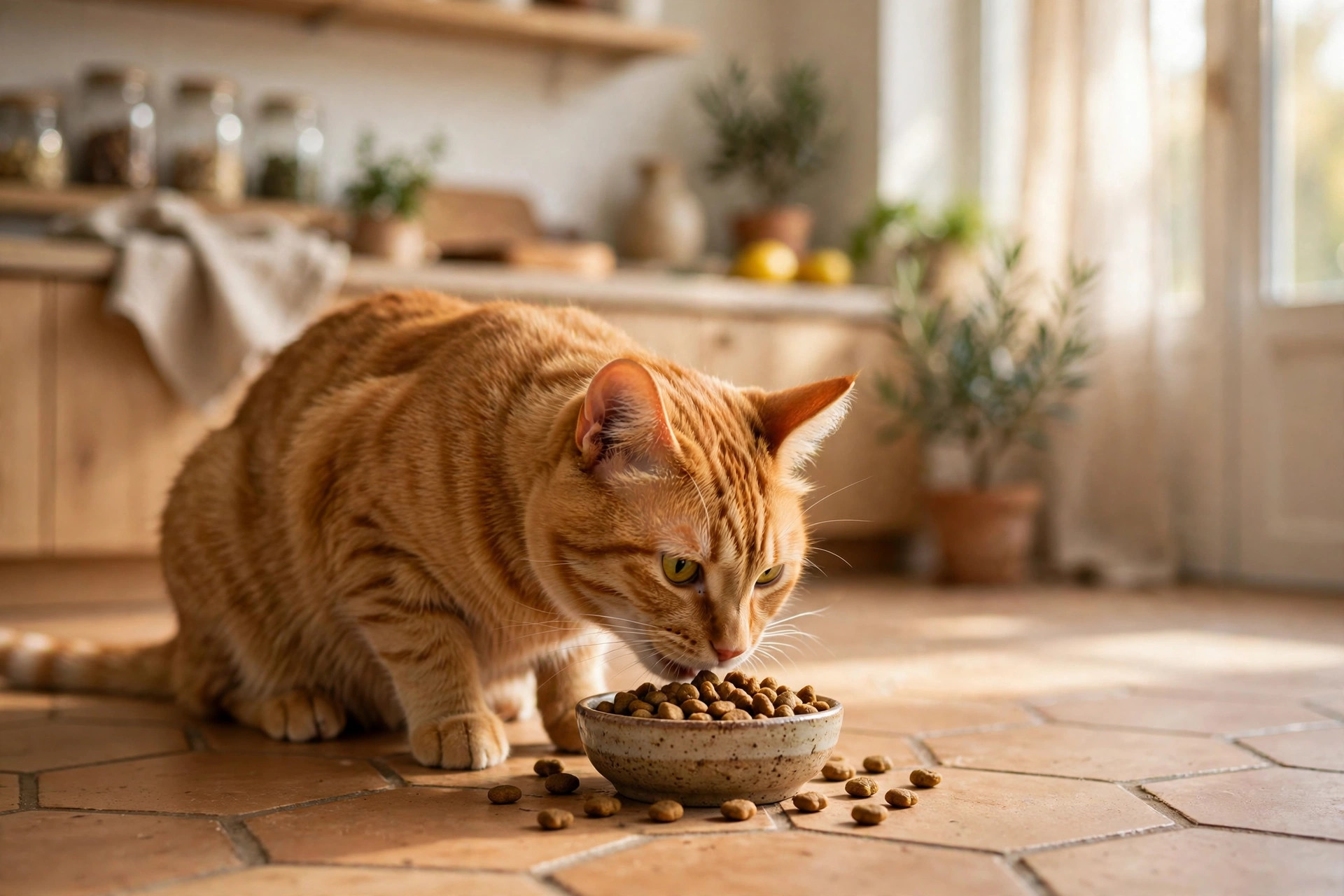
If you have ever stood in the kitchen at 5 a.m. while your cat weaves between your ankles and yowls at an empty bowl, you have probably asked: how often should I feed my cat? The answer is not the same for every cat — a growing kitten, a healthy adult, and a slowing senior all run on different clocks.
The short answer is that most healthy adult cats do best on two measured meals a day, roughly 8 to 12 hours apart. Kittens need to eat far more often, and many senior cats do better on smaller, more frequent meals. This 2026 guide covers the feeding schedule by age, how much food your cat actually needs, wet food versus dry food, and the signs your current routine is not working.
Table of Contents
- How Often Should I Feed My Cat by Age?
- How Much Food Does My Cat Need Each Day?
- Wet Food vs Dry Food: Does It Change the Schedule?
- Free Feeding vs Scheduled Meals
- Special Cases: When the Schedule Changes
- Signs Your Cat’s Feeding Schedule Isn’t Working
- Frequently Asked Questions
How Often Should I Feed My Cat by Age?
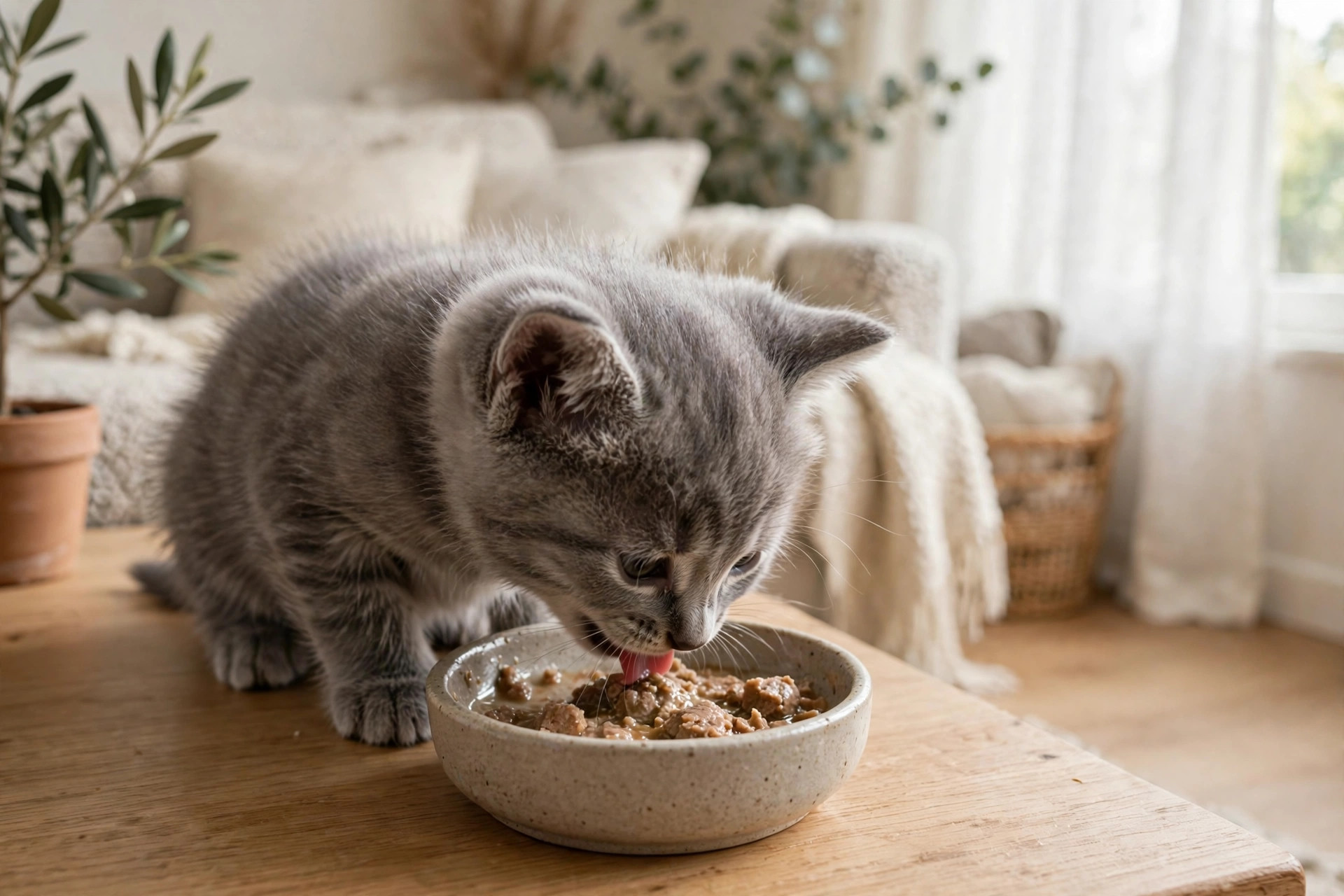
A cat’s ideal feeding frequency changes as it grows. Kittens are building bone, muscle, and brain tissue at a furious pace, and their tiny stomachs cannot hold much at once — so they need to eat little and often. Adult cats hold steady on two meals. Senior cats often eat less at a sitting, whether from dental discomfort or a sensitive stomach, so splitting their daily food into smaller portions can help:
| Life Stage | Age | Meals Per Day | Notes |
|---|---|---|---|
| Kitten | Up to 6 months | 3–4 small meals | High-calorie kitten food; tiny stomach, fast growth |
| Junior cat | 6–12 months | 2–3 meals | Growth slowing; transition toward adult portions |
| Adult cat | 1–7 years | 2 meals | Morning and evening, 8–12 hours apart |
| Senior cat | 7+ years | 2–3 smaller meals | Easier to digest; watch dental health and appetite |
Kittens: 3–4 meals a day
Very young kittens (under 4 months) may need four or even five small meals a day. From about 4 months, three meals a day is usually enough, and after 6 months most kittens settle into two meals. Feed a food formulated for growth — higher in calories, protein, and fat than adult food — until around 12 months. Never restrict a healthy kitten’s food; if a kitten is hungry between meals, offer a small extra portion.
Adult cats: 2 meals a day
Two meals a day is the sweet spot for most adult cats. It mirrors how cats naturally eat in the wild — several small prey-sized meals spread across the day — while giving you control over portions. Spacing meals 8 to 12 hours apart keeps blood sugar steadier than one large meal and prevents the long overnight fast that can lead to early-morning vomiting. Time meals for early morning and early evening if you can: cats are most active at dawn and dusk. Keep the times consistent — a predictable routine reduces stress behaviors like early-morning yowling.
Senior cats: 2–3 smaller meals a day
Older cats often benefit from the same total daily calories split into two or three smaller meals. Smaller portions are easier on an aging stomach, and cats with dental problems or a fading sense of smell may manage a little food more often than one big serving. Warming wet food slightly can make it more appealing. If your senior cat suddenly eats much less — or much more — that is worth a vet visit, not a schedule change.
Also Read: Is My Cat Overweight? Body Condition Guide (2026)
How Much Food Does My Cat Need Each Day?
Frequency is only half the question — the amount matters just as much. A typical healthy adult indoor cat weighing around 4 to 5 kg (9–11 lbs) needs roughly 200 to 250 calories per day, though the exact number depends on age, frame, activity level, and whether the cat is spayed or neutered (neutered cats burn about 20–30% fewer calories).
The feeding guide printed on the food bag or can is a reasonable starting point, but it is a generic average — not a prescription for your cat. Start with the label, then adjust based on body condition over the next few weeks. If you can easily feel the ribs under a thin layer of fat and see a waist from above, the amount is right. Measure every meal with a proper measuring cup or, better, a kitchen scale — “about a scoop” is how most owners accidentally overfeed by 20–40%. Treats, toppers, and table scraps combined should stay under 10% of daily calories. Veterinary sources including PetMD note that most adult cats need about 260 calories a day, and on an all-wet-food diet that works out to roughly 2–3 cans per 10 lbs of body weight.
Wet Food vs Dry Food: Does It Change the Schedule?
The schedule stays the same — two meals a day for most adults — but the type of food changes how you serve it. Wet food is about 70–80% water, which helps cats stay hydrated (cats are famously poor drinkers), and it usually comes in built-in portions that make measuring easy — but it should not sit out for more than a couple of hours, so it suits scheduled meals, not grazing. Dry food is convenient and keeps well in the bowl, but it is more calorie-dense, so it is easy to over-serve. Many owners use a mix: a wet meal morning and evening, with a small measured portion of dry food if the cat needs a third small meal.
Free Feeding vs Scheduled Meals
Free-feeding means leaving a full bowl of dry food out all day so your cat can graze whenever it likes. It sounds kind, and some cats do self-regulate well on it. But most do not. With food always available, you cannot tell how much your cat ate, whether it skipped a meal (an early warning sign of illness), or whether another pet is stealing its share — and free-fed cats are far more likely to gain weight. The most recent Association for Pet Obesity Prevention survey found that 61% of cats assessed at veterinary clinics carried excess weight.
Scheduled meals win on every practical measure: you control portions, you notice appetite changes immediately, and mealtimes become predictable. If your cat currently grazes, switch gradually — offer measured meals at set times and pick the bowl up after 20–30 minutes. Puzzle feeders and slow-feeder bowls can help a fast eater slow down and make a small meal feel like more.
Also Read: Can Cats Eat Rice? Benefits, Risks & Safe Feeding Guide (2026)
Special Cases: When the Schedule Changes
Some cats should not follow the standard schedule — their feeding plan belongs to their vet:
- Diabetic cats: meal timing is tied to insulin injections — most eat two consistent meals a day. Never change the timing without your vet’s say-so.
- Cats with kidney disease: smaller, more frequent meals are often easier to manage, and warming food can encourage a nauseous cat to eat.
- Cats with hyperthyroidism: they may seem ravenous yet lose weight — medication, not extra food, is the fix, and the vet sets the feeding plan.
- Overweight cats: never crash-diet a cat. Sudden calorie cuts can trigger hepatic lipidosis (fatty liver disease), which can be fatal. Aim for slow loss of about 0.5–2% of body weight per week under vet guidance.
- Multi-cat homes: cats with different ages or medical needs should ideally eat separately, so each gets the right food and portion. Microchip feeders can keep a prescription diet away from the wrong cat.
- Pregnant or nursing queens: energy needs climb sharply — a nursing queen may need two to four times her normal calories, split into several meals a day.
Signs Your Cat’s Feeding Schedule Isn’t Working
Watch for these clues that the routine needs adjusting: vomiting yellow bile in the morning (“hunger pukes” — the stomach has been empty too long; a small bedtime snack usually fixes it), scarfing food then vomiting (try smaller, more frequent meals or a slow-feeder bowl), constant begging (the portion may be too small — or the cat may be bored, so add play sessions first), weight gain (measure portions and cut treats to under 10% of daily calories), and weight loss or skipped meals (a cat that eats nothing for 24 hours needs a vet visit urgently).
Also Read: Why Is My Cat Not Eating? Warning Signs & When to Worry (2026)
Frequently Asked Questions
How many times a day should I feed my cat?
Most healthy adult cats should eat twice a day, about 8–12 hours apart. Kittens under 6 months need 3–4 small meals a day, juniors aged 6–12 months need 2–3 meals, and senior cats often do best on 2–3 smaller meals a day. One meal a day is not recommended — it can cause hunger-related vomiting and energy dips.
How much wet food should I feed my cat per day?
On an all-wet-food diet, a typical 10 lb adult cat needs roughly 2–3 cans (2.5–3 oz each) per day, totalling around 260 calories. Always check the label for your brand’s calorie content and adjust for your cat’s weight and activity level.
How often should I feed my kitten?
Feed kittens under 4 months 4–5 small meals a day, kittens aged 4–6 months 3 meals a day, and kittens aged 6–12 months 2–3 meals a day. Use a kitten-formulated food until about 12 months, and never restrict a healthy kitten’s food.
How often should I feed my senior cat?
Most senior cats (7+ years) do well on 2–3 smaller meals a day, using an easily digestible senior formula. If your senior cat’s appetite drops suddenly or it starts losing weight, book a vet visit.
Why does my cat vomit in the morning before breakfast?
Morning vomiting of yellow bile is often caused by an empty stomach overnight — vets call these “hunger pukes.” Feeding a small snack before bed, or moving breakfast earlier, usually solves it. If vomiting continues or comes with other symptoms, see your vet.
Final Thoughts
So, how often should I feed my cat? For most adult cats, twice a day is the answer — two measured meals, 8 to 12 hours apart, at consistent times. Kittens need to eat little and often, and senior cats usually do better with their daily food split into smaller, gentler portions. The schedule matters, but the amount matters more: measure every meal, keep treats under 10% of daily calories, and check your cat’s body condition every month.
A good feeding routine is one of the simplest gifts you can give your cat — it keeps weight steady, digestion calm, and mornings quiet. When in doubt about portions or timing for your individual cat, your veterinarian is the best source of advice.
By Dr. Ayaz Ali