
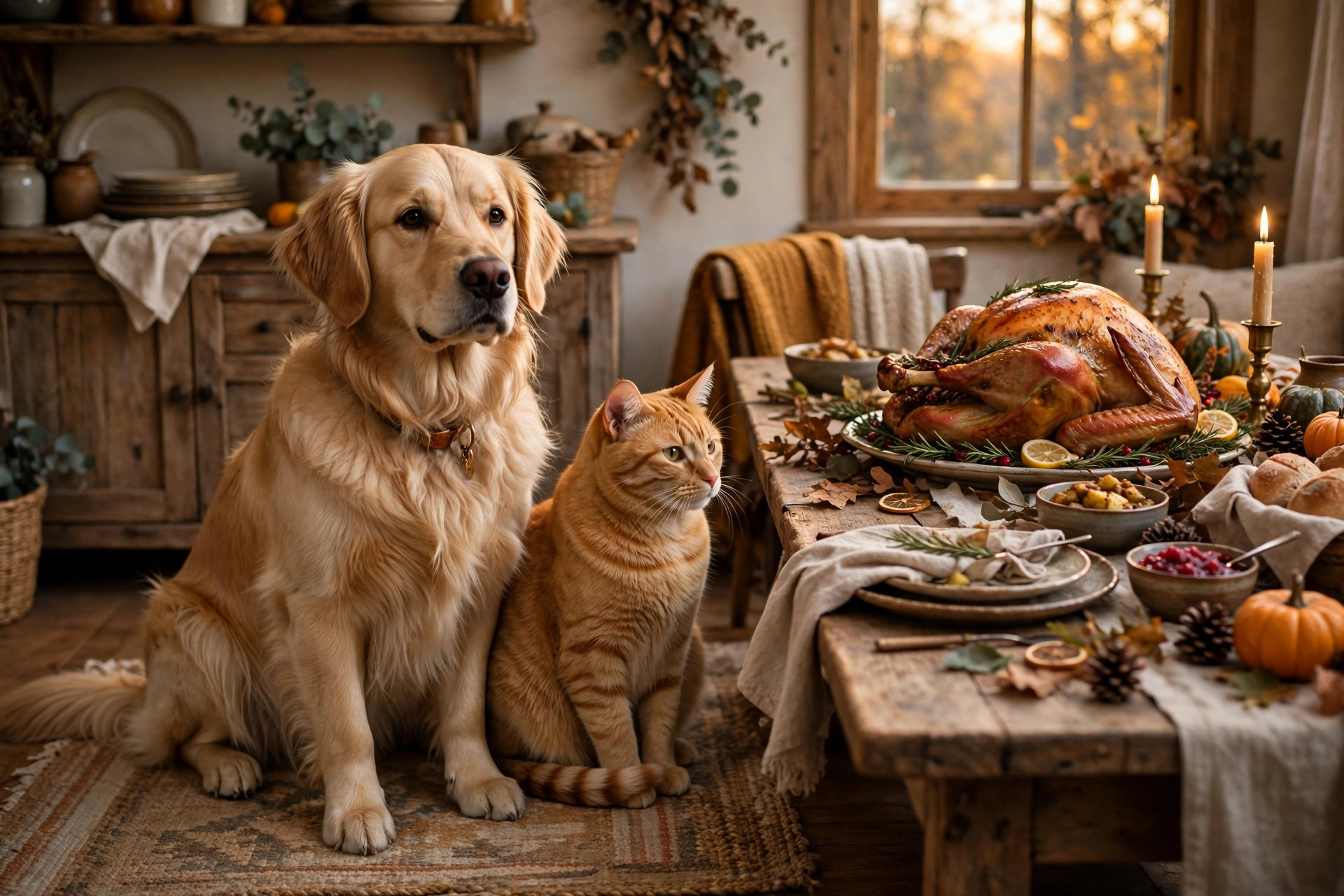
Thanksgiving is the biggest food holiday of the year, and for most families that means a house full of guests, a table loaded with rich dishes, and pets weaving between everyone’s feet. If you are wondering how to keep your animals safe while you celebrate, this Thanksgiving pet safety guide covers it all: which holiday foods are safe and which are dangerous, how to handle guests and doors, decorations to watch, travel tips, and exactly what to do if your pet eats something they should not have.
Thanksgiving is one of the busiest times of year for veterinary emergency clinics. Most of those emergencies are preventable — a well-meaning guest slipping the dog a plate of scraps, a cat stealing turkey bones from an unguarded trash can, or a dog grabbing chocolate from a dessert table. A little planning before the day keeps the holiday happy for everyone, pets included.
In this complete 2026 guide, we will walk you through the Thanksgiving table food by food, the guest and travel plans that prevent escapes and stress, the decorations and plants to keep out of reach, and the emergency steps every owner should know before the feast begins.
Table of Contents
- Why Thanksgiving Is Risky for Pets
- Thanksgiving Foods: Safe vs Dangerous for Pets
- The Hidden Dangers: Bones, Fat & Seasonings
- Guests, Doors & the Quiet Room
- Decorations, Candles & Holiday Plants
- Traveling With Your Pet for Thanksgiving
- What to Do If Your Pet Eats Something Dangerous
- Thanksgiving Pet Safety Checklist
- Frequently Asked Questions
Why Thanksgiving Is Risky for Pets
Thanksgiving combines almost every pet hazard at once: rich and fatty food, toxic ingredients hidden in familiar dishes, bones, chocolate desserts, alcohol, candles, house guests, open doors, and a kitchen running at full speed. Your pet does not understand the holiday — they just smell food everywhere and see people coming and going.
Emergency veterinarians report a sharp spike in calls over the Thanksgiving weekend, and the pattern is always the same. Dogs get pancreatitis from fatty turkey skin and gravy, often one to three days after the meal. Cats raid the trash for turkey carcasses. Dogs swallow cooked bones that splinter. And well-meaning guests hand out scraps all day without realizing the combined portions add up to a stomach disaster.
The good news is that none of this is inevitable. Thanksgiving pet safety is mostly about three habits: deciding in advance what your pet may eat, telling your guests the rules, and giving your pet a safe place to retreat when the house gets loud.
Thanksgiving Foods: Safe vs Dangerous for Pets
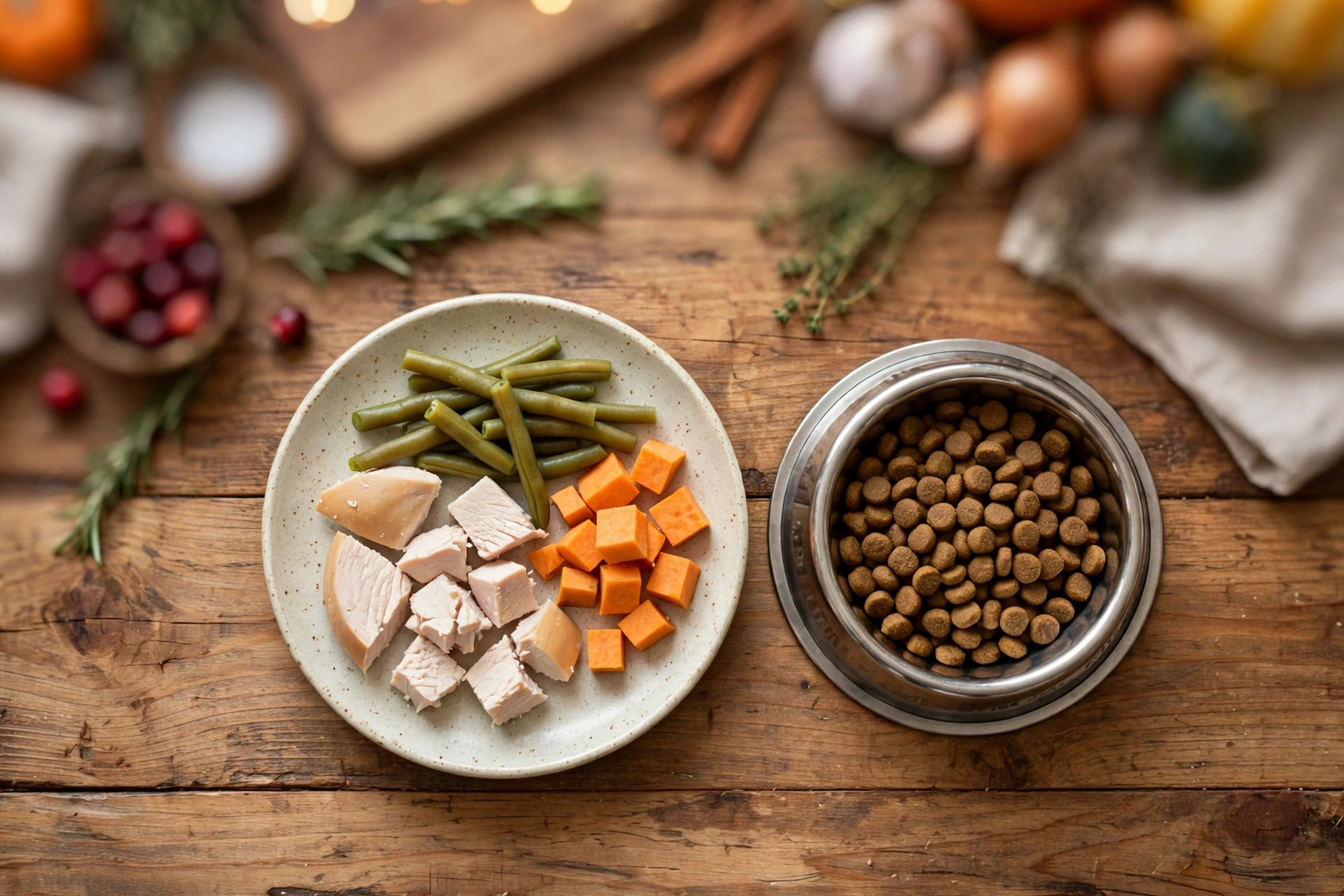
The Thanksgiving table is a minefield of foods that look harmless but are not. Use this quick-reference table — and make sure every guest knows it too.
| Food | Safe for Pets? | Notes |
|---|---|---|
| Plain turkey breast | Yes, small amounts | Boneless, skinless, unseasoned, fully cooked |
| Plain green beans | Yes | No butter, salt, or casserole topping |
| Plain sweet potato | Yes | No marshmallows, brown sugar, or butter |
| Plain pumpkin | Yes | 100% pure canned or cooked — never pie filling |
| Plain cranberries | Yes, a few | Fresh or frozen only — never sauce or juice |
| Turkey skin & fat | No | High fat — pancreatitis risk |
| Turkey bones | Never | Splinter — choking and puncture risk |
| Stuffing / dressing | No | Often contains onion, garlic, raisins |
| Gravy | No | High fat and salt, often onion or garlic |
| Onions / garlic / leeks | No — toxic | Damage red blood cells; cats are even more sensitive |
| Grapes / raisins | No — toxic | Can cause kidney failure in dogs and cats |
| Chocolate desserts | No — toxic | The darker the chocolate, the more dangerous |
| Xylitol sweets | No — deadly | Sugar-free gum and desserts; toxic even in tiny amounts |
| Raw bread dough | No | Yeast expands in the stomach |
| Alcohol | No — toxic | Keep all drinks out of reach |
If you want to include your pet in the feast, the safest move is to set aside a small plate of plain turkey breast, green beans, and sweet potato before you season anything, and serve it as their dinner. All treats combined should stay under 10% of your pet’s daily calories — for a small dog or a cat, that is only a few bites.
Also Read: Can Dogs Eat Turkey? Safe Feeding Guide (2026) — the full portion guide for the holiday centerpiece.
The Hidden Dangers: Bones, Fat & Seasonings
The foods on the table are only half the story. The three dangers that send the most pets to the emergency clinic are easy to miss because they hide inside dishes that seem safe.
1. Cooked Bones Splinter
Cooked turkey bones are one of the most dangerous things a pet can chew. They splinter into sharp fragments that can choke your dog, cut the mouth and throat, puncture the stomach or intestines, or cause a painful intestinal blockage. Never give your pet turkey bones — not the legs, not the carcass, and not the “leftover” bones from the trash. Cats are just as vulnerable, and they are the ones most likely to climb onto the counter and drag the carcass down.
2. Fat Overload Causes Pancreatitis
Turkey skin, drippings, gravy, ham, and buttery sides are loaded with fat. Rich, fatty food can trigger pancreatitis — a painful and sometimes serious inflammation of the pancreas. The warning signs often show up one to three days after the meal, long after the guests have gone home: repeated vomiting, a hunched posture, belly pain, lethargy, and loss of appetite. Pancreatitis is a veterinary emergency, not a stomach bug to wait out.
3. Hidden Onion, Garlic, and Xylitol
Onion and garlic are tucked into stuffing, casseroles, gravy, and seasoned vegetables, and both damage red blood cells in dogs and cats — cats are even more sensitive. Raisins hide in stuffing and desserts and can cause kidney failure. Xylitol, the sweetener in some sugar-free baked goods and gum, can cause a dangerous blood-sugar crash and liver injury in dogs even in small amounts. And raw yeast bread dough can expand in the stomach while the alcohol it produces is absorbed into the bloodstream.
The ASPCA’s Thanksgiving Safety Tips make the same point: stick to your pet’s normal diet where you can, and if you do share, keep it to a small bite of boneless, fully cooked meat.
Also Read: Can Dogs Eat Cranberries? Safe Feeding Guide (2026) — which cranberry products are safe and which holiday versions to avoid.
Guests, Doors & the Quiet Room
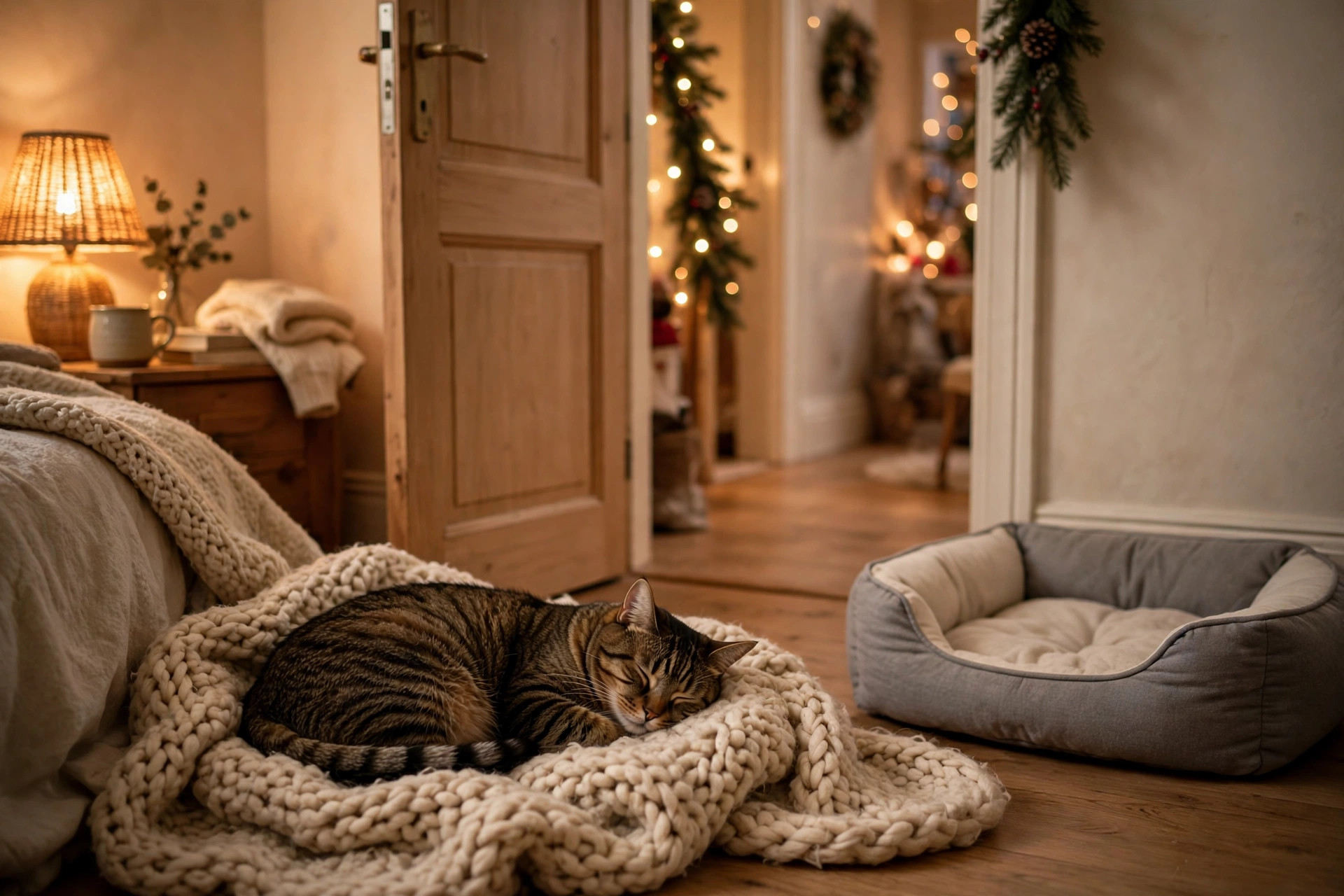
Food is not the only Thanksgiving risk. A house full of guests is stressful for many pets, and every arrival is another chance for a door to be left open.
- Set up a quiet room. Before guests arrive, prepare a bedroom or spare room with your pet’s bed, water, a litter box for cats, and a favorite toy. Leave the door open a crack or use a baby gate so your pet can retreat whenever the noise gets too much. This is the single best thing you can do for an anxious dog or cat.
- Tell guests the rules on arrival. A quick “please don’t feed the dog — he has a sensitive stomach” stops most well-meaning scraps. Put a small sign on the food table if you have a lot of visitors.
- Guard the doors. Guests coming and going all day is how pets slip out. Keep your dog leashed or in the quiet room during arrival and departure waves, and make sure your pet’s ID tag and microchip details are current before the holiday.
- Watch bags and coats. Guests’ purses and pockets often contain medications, sugar-free gum with xylitol, and chocolate — all dangerous if a curious pet gets into them. Ask guests to hang bags up high or keep them in a closed room.
- Feed your pet before dinner. A pet that has already eaten its normal meal is far less likely to beg, steal, or counter-surf. A stuffed Kong or puzzle feeder during the meal keeps a dog happily busy.
Also Read: How to Stop Your Dog Begging at the Table: Holiday Guest Guide (2026) — the place-cue and guest plan that keeps holiday dinners calm.
Decorations, Candles & Holiday Plants
Thanksgiving decorations are subtler than Christmas lights, but they still carry risks. Candles are the biggest one: a curious cat can swat at a flame, burn itself, or knock a candle over onto a tablecloth. Keep candles out of reach, never leave them burning in a room with an unsupervised pet, and consider flameless candles for the table.
Keep electrical cords, batteries, and small decorative items out of paws’ reach — a chewed wire can deliver a serious shock, and a punctured battery can burn the mouth and esophagus. Autumn centerpieces often include dried corn, gourds, and potpourri; potpourri liquid is toxic if swallowed, and some decorative plants are harmful too. Lilies are especially dangerous for cats and can cause kidney failure, so keep any floral arrangements well away from them.
Traveling With Your Pet for Thanksgiving
If you are driving to family for Thanksgiving, a little preparation makes the trip safer for everyone. Secure your dog with a crash-tested harness or a secured crate — never let a dog ride loose in the front seat or with its head out the window. Cats travel best in a carrier lined with a familiar blanket, kept in a quiet spot in the car.
Pack a travel kit: your pet’s regular food (enough for the whole trip plus a day extra), water, bowls, any medication, a leash, waste bags, and your veterinarian’s phone number. Never leave a pet alone in a parked car, even in November — temperatures inside a car can swing dangerously fast. And if you are flying, check your airline’s pet policy well in advance; most require a health certificate issued within 10 days of travel.
At your destination, set up a quiet corner for your pet as soon as you arrive, and keep their routine — feeding times, walks, bedtime — as close to normal as you can. A familiar routine is the best antidote to holiday stress.
What to Do If Your Pet Eats Something Dangerous
If your pet eats turkey bones, stuffing, chocolate, grapes, raisins, or anything sweetened with xylitol, act fast — do not wait for symptoms. Call your veterinarian or an emergency clinic immediately, or contact ASPCA Poison Control at (888) 426-4435 (available 24 hours a day; a consultation fee may apply). The Pet Poison Helpline is (855) 764-7661.
Do not try to make your pet vomit unless a veterinarian or poison-control expert tells you to — vomiting can drive caustic substances back up or cause aspiration into the lungs. Bring the packaging of whatever your pet ate, and note how much and when. If your pet ate plain turkey meat but too much of it, the most likely result is temporary digestive upset: withhold food for a few hours, offer water, and monitor. But repeated vomiting, a hunched posture, belly pain, bloody stool, or lethargy all warrant an urgent vet visit.
Also Read: Pet Emergency First Aid: Vet Guide (2026) — what to do in the critical first minutes of any pet emergency.
Thanksgiving Pet Safety Checklist
Run through this list the day before Thanksgiving:
- Set aside plain turkey breast, green beans, and sweet potato before seasoning anything.
- Prepare the quiet room with bed, water, toys, and (for cats) a litter box.
- Tell every guest: no table scraps, no bones, no desserts.
- Move purses, medications, gum, and chocolate out of reach.
- Secure the trash can with a lid or keep it in a closed room.
- Check your pet’s ID tag and microchip details are current.
- Save your vet’s number and ASPCA Poison Control (888) 426-4435 in your phone.
- Put candles out of reach or switch to flameless ones.
- Feed your pet their normal meal before the family sits down.
- Take the trash out promptly after dinner — bones and scraps included.
Frequently Asked Questions
Can dogs eat Thanksgiving turkey?
Yes, in small amounts — only plain, fully cooked, boneless, skinless white meat with no seasoning. Never feed turkey skin, fat, bones, or seasoned leftovers.
What Thanksgiving foods are toxic to cats?
Onions, garlic, grapes, raisins, chocolate, xylitol sweets, alcohol, and raw bread dough are all toxic to cats. Cooked turkey bones are also dangerous. Cats are even more sensitive to onion and garlic than dogs, so keep stuffing and gravy away from them entirely.
Can my dog have a little stuffing?
No. Stuffing usually contains onion and garlic, and often raisins or sausage. It is one of the most dangerous dishes on the table for dogs and cats.
What should I do if my dog eats turkey bones?
Do not try to pull a lodged bone from the throat yourself. Watch for choking, gagging, drooling, vomiting, abdominal pain, or bloody stool, and call your veterinarian or an emergency clinic immediately.
Is it safe to travel with my dog for Thanksgiving?
Yes, with preparation: use a crash-tested harness or secured crate, pack food, water, and medication, never leave your pet alone in a parked car, and keep their routine as normal as possible at your destination.
How do I keep my cat calm during Thanksgiving guests?
Set up a quiet room with their bed, water, and litter box, and leave the door open so they can retreat. Feed them before guests arrive and ask visitors not to chase or pick up a hiding cat.
Final Thoughts
So, how do you keep your pets safe this Thanksgiving? Feed them only plain, boneless, unseasoned food in small amounts, keep bones, stuffing, gravy, chocolate, grapes, and xylitol sweets completely out of reach, give anxious pets a quiet room, and take the trash out as soon as dinner is over. The holiday is about gratitude — and a little preparation is the best way to make sure everyone at the table, four-legged family included, enjoys it safely.
Save your vet’s number and ASPCA Poison Control (888) 426-4435 in your phone before the day begins. And when in doubt about anything your pet ate, your veterinarian is always the best source of advice for your individual pet.
By Dr. Ayaz Ali