
If you are chopping broccoli for dinner while your dog watches every floret with hopeful eyes, you have probably wondered: can dogs eat broccoli, or should this green vegetable stay on the human side of the table?
The good news is yes, dogs can eat broccoli — but only plain, unseasoned, and in small amounts. Broccoli is low in calories and packed with fiber and vitamins, yet its florets contain a compound that can irritate a dog’s stomach when portions get too big.
In this complete guide, we cover the health benefits, the risks, safe serving sizes by dog size, raw versus cooked, how to prepare it safely, and answers to the most common questions dog owners ask.
Table of Contents
- Is Broccoli Safe for Dogs?
- Nutritional Benefits of Broccoli for Dogs
- Risks of Feeding Broccoli to Dogs
- How Much Broccoli Can Dogs Eat?
- Can Dogs Eat Raw Broccoli?
- How to Prepare Broccoli for Dogs
- What If My Dog Eats Too Much Broccoli?
- Can Puppies Eat Broccoli?
- Healthy Alternatives to Broccoli
- Frequently Asked Questions
Is Broccoli Safe for Dogs?
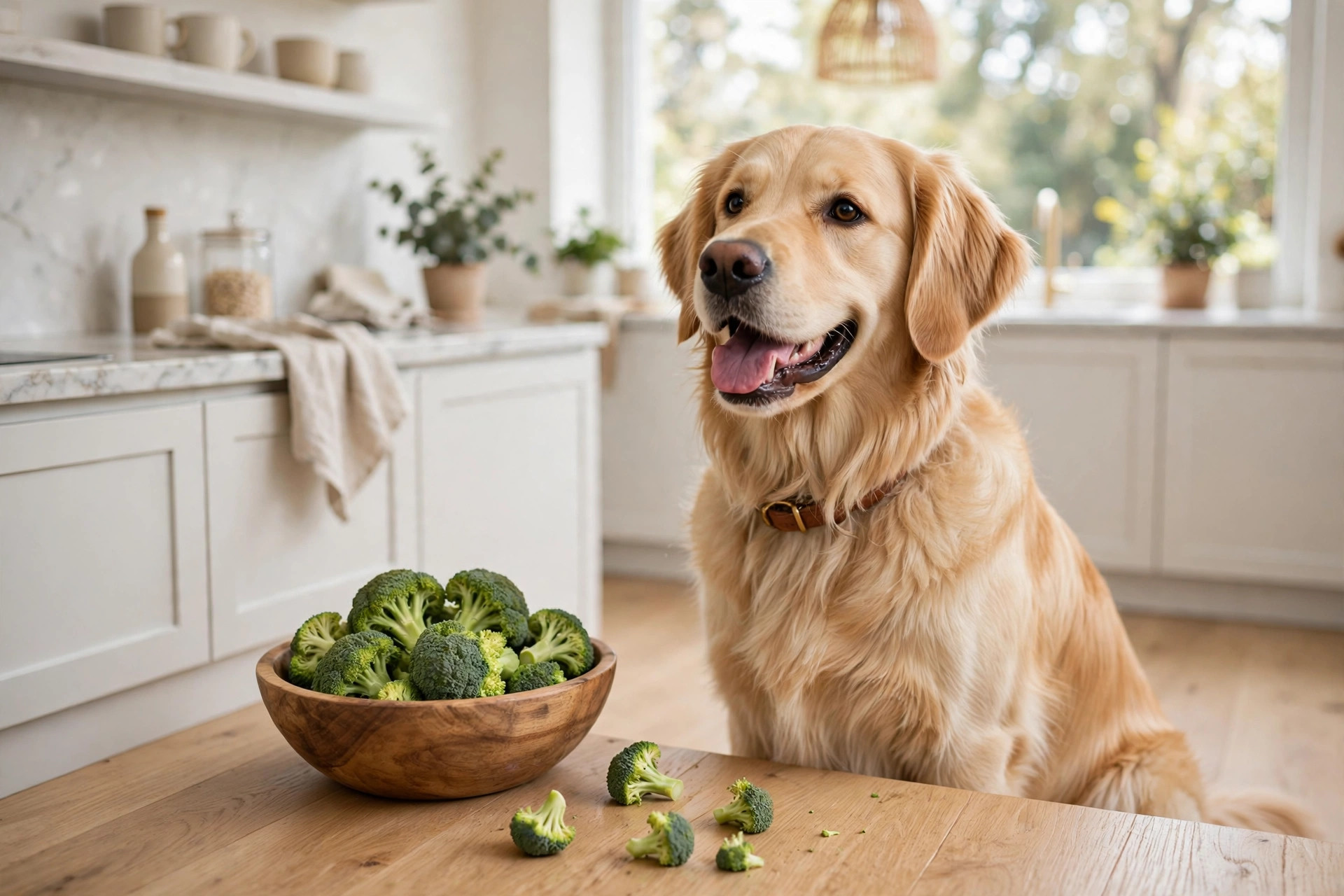
Yes, plain broccoli is generally safe for healthy adult dogs when served correctly. The American Kennel Club confirms that dogs can eat broccoli in small amounts, as long as it is plain and portioned carefully.
Broccoli belongs to the cruciferous vegetable family, alongside cauliflower, Brussels sprouts, and cabbage. Dogs can share in some of those benefits, but broccoli shares a family trait too: its florets contain isothiocyanates, natural compounds that can irritate a dog’s stomach in large amounts. The American Kennel Club notes that broccoli is generally safe when it stays under 10% of a dog’s daily intake, while amounts over 25% are considered toxic.
Before offering broccoli, make sure you serve only:
- Fresh, plain broccoli — raw or lightly cooked
- Cut into small, bite-sized pieces appropriate for your dog’s size
- With no salt, butter, oil, cheese sauce, or seasoning
- Never cooked with garlic or onion, which are toxic to dogs
Nutritional Benefits of Broccoli for Dogs
Broccoli packs a surprising nutritional punch for dogs when fed responsibly.
1. Low in Calories, Great for Weight Management
Broccoli contains only about 34 calories per 100 grams, yet it is bulky and satisfying. For dogs that need to lose weight, swapping a few high-calorie treats for broccoli pieces is a smart, vet-friendly move. The fiber helps your dog feel full while adding almost no fat to the day.
2. Fiber for Healthy Digestion
Broccoli is rich in dietary fiber, which supports regular bowel movements and feeds beneficial gut bacteria.
3. Vitamins C, K, and Folic Acid
Broccoli provides vitamin C for immune health, vitamin K for blood clotting and bone health, and folic acid for healthy cell function.
4. Antioxidants That Protect Cells
Broccoli contains antioxidants, including lutein, that help protect your dog’s cells from damage caused by free radicals. Lutein is linked to eye and heart health, making broccoli a genuinely useful little green addition to the treat rotation.
Also Read: Can Dogs Eat Cauliflower? Vet Safety Guide (2026)
Risks of Feeding Broccoli to Dogs
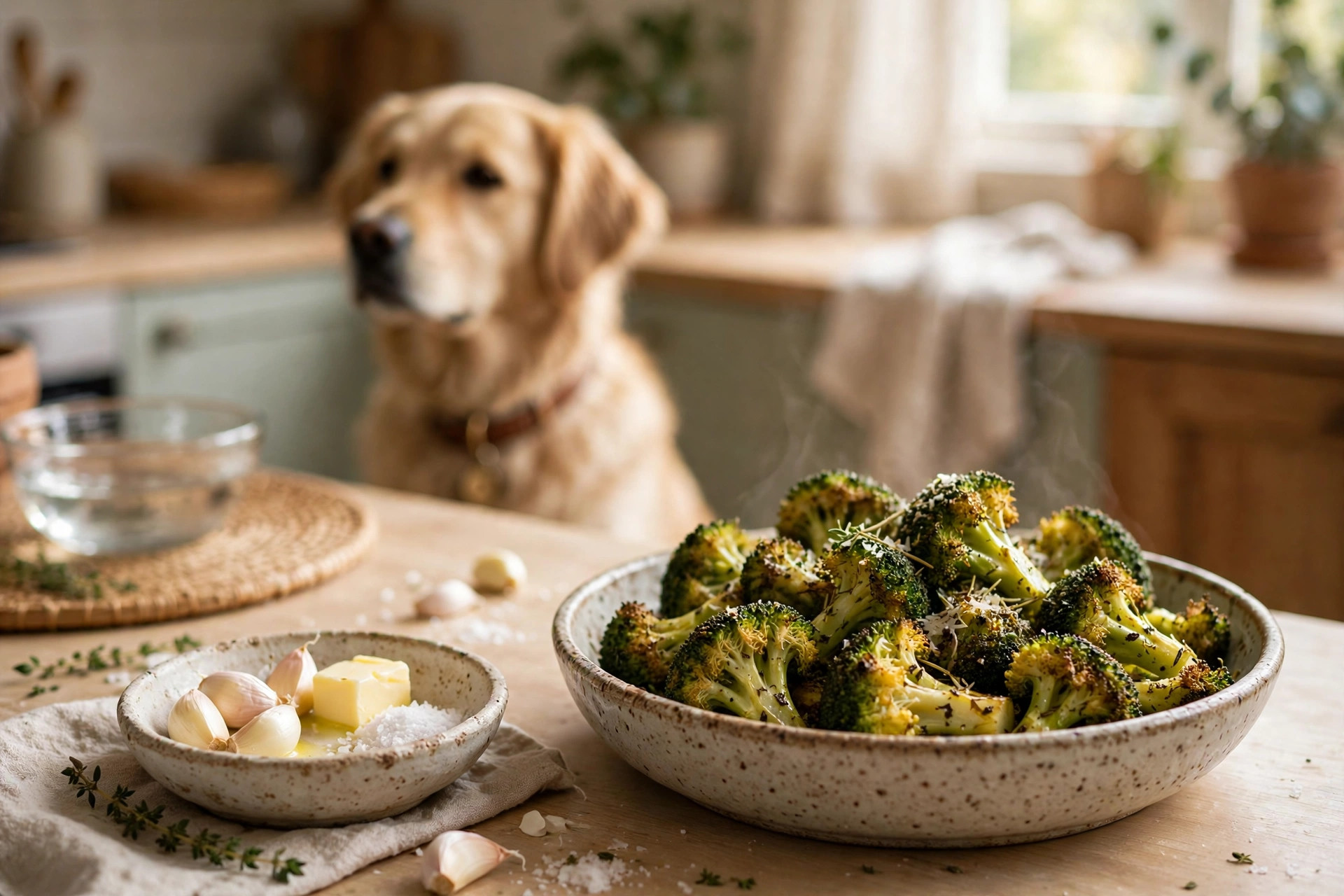
Although broccoli is safe for many dogs, feeding it the wrong way — or too much of it — can cause real problems.
1. Isothiocyanates and Stomach Irritation
This is broccoli’s headline risk. The florets contain isothiocyanates, the compounds behind broccoli’s slightly bitter taste. In large amounts, they cause gastric irritation, cramping, gas, and diarrhea. At over 25% of daily intake, broccoli is considered toxic to dogs, so portions must stay small.
2. Choking Hazard From Stalks
Thick broccoli stalks carry a different risk. They are lower in isothiocyanates than the florets, but unchopped stalks present a real choking hazard, especially in small dogs, and can cause an obstruction in the esophagus. Always chop broccoli into small, bite-sized pieces — and finely chop the thick stalk or leave it out entirely.
3. Gas, Bloating, and Stomach Upset
Like other cruciferous vegetables, broccoli is high in fiber and plant sugars that ferment during digestion. Too much at once can cause flatulence, bloating, and loose stools. Introduce it slowly, starting with a piece or two.
4. Seasonings and Human Recipes Are Dangerous
Plain broccoli is safe, but the way humans usually cook it is not. Common broccoli dish ingredients that are harmful or toxic to dogs include:
- Garlic and onion — toxic to dogs, even in small amounts
- Butter and oil — too rich and can trigger stomach upset or pancreatitis
- Excess salt — dangerous for dogs with heart or kidney conditions
- Spices and flavorings — many are unsafe or upsetting for dogs
Set aside a separate plain portion for your dog before you season the family’s batch.
5. Rare Allergic Reactions
Though uncommon, some dogs are sensitive to broccoli. After the first tiny taste, watch for itching, swelling, or vomiting — and stop feeding it if any appear.
How Much Broccoli Can Dogs Eat?
Broccoli should only ever be an occasional treat. Because of the isothiocyanate risk, portions are smaller than for many other vegetables. Use this serving guide, based on veterinary guidance:
| Dog Size | Weight | Safe Serving | Piece Size |
|---|---|---|---|
| Extra-small dogs | 2–20 lbs | 1–2 small pieces | 1/2-inch wide, 1/4-inch thick |
| Small dogs | 21–30 lbs | 3–4 pieces | 1-inch wide, 1/4-inch thick |
| Medium dogs | 31–50 lbs | 5–6 pieces | 1-inch wide, 1/4-inch thick |
| Large dogs | 51–90 lbs | A handful of pieces | 1-inch wide, 1/4-inch thick |
| Extra-large dogs | Over 90 lbs | A large handful of pieces | 1-inch wide, 1/4-inch thick |
When in doubt, start with a single small piece and see how your dog reacts over the next 24 hours before offering more.
Can Dogs Eat Raw Broccoli?
Yes, dogs can eat raw broccoli in tiny amounts, but cooked is the better choice. Raw broccoli is tougher and harder to digest, which makes gas and stomach discomfort more likely. Lightly steaming or boiling the florets until just tender breaks down the tough fibers, making it gentler on your dog’s stomach while keeping most of the nutrients. Never serve broccoli that has been roasted in oil or tossed with seasonings, even if it started out plain.
How to Prepare Broccoli for Dogs
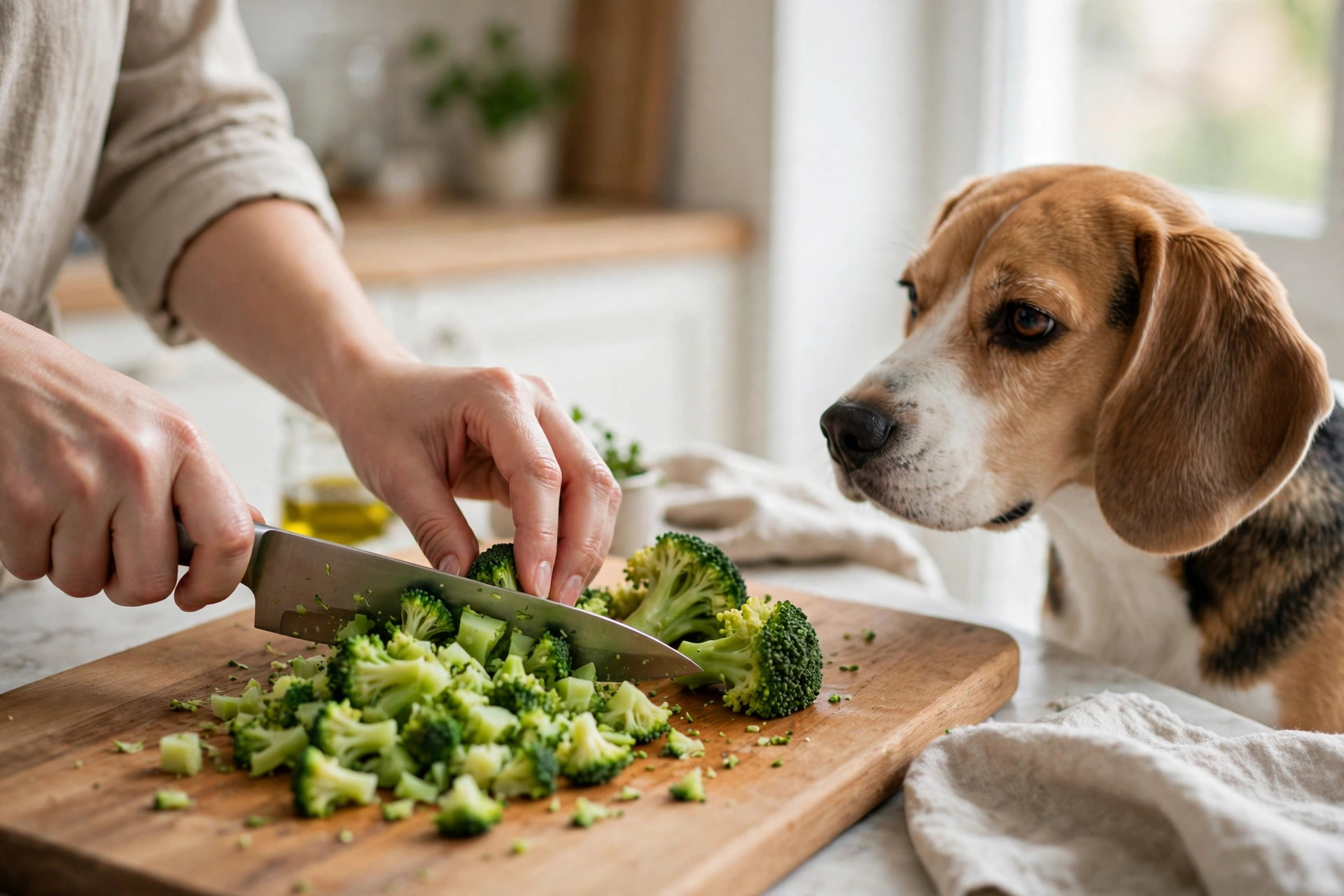
Safe preparation takes just a few minutes:
- Choose a fresh, firm head with tight green florets — cut away any yellowed or moldy spots.
- Wash it thoroughly and break it into small florets.
- Chop the florets into bite-sized pieces for your dog’s size; finely chop the thick stalk or discard it.
- Steam or boil the pieces plain until just tender (5–7 minutes), with no salt, oil, butter, or seasoning.
- Let them cool completely before serving.
- Offer a small amount as an occasional treat, or mix a few pieces into their meal.
Never serve broccoli cooked with onion or garlic, and never share seasoned dishes, cheese-topped bakes, or fried broccoli with your dog.
What If My Dog Eats Too Much Broccoli?
If your dog raids the kitchen and eats a large amount of plain broccoli, don’t panic — but monitor them closely. Too much most often causes temporary digestive upset: gas, bloating, loose stool, or vomiting.
Contact your veterinarian right away if you notice severe or ongoing vomiting or diarrhea, abdominal swelling or pain, lethargy, loss of appetite lasting more than 24 hours, or if your dog ate a seasoned dish with garlic or onion.
Can Puppies Eat Broccoli?
It is best to skip broccoli for puppies — their sensitive, still-developing digestive systems handle high fiber poorly. Once your dog is an adult, introduce a single tiny, soft, cooked piece and watch for stomach upset over the next 24 hours.
Healthy Alternatives to Broccoli
If your dog doesn’t care for broccoli — or you’d like to rotate their treats — these vegetables and fruits are also safe in moderation:
- Green beans
- Carrots
- Cauliflower — same family, same gas rules: tiny amounts only
- Cucumber
- Sweet potatoes
- Blueberries
Always introduce any new food gradually and in small portions.
Also Read: Can Dogs Eat Green Beans? Vet Safety Guide (2026) — and for a tart holiday favorite, Can Dogs Eat Cranberries? Safe Feeding Guide (2026)
Frequently Asked Questions
Can dogs eat broccoli every day?
No. Its isothiocyanate content makes it an occasional treat only — a few times a week at most, in the small portions above.
Can dogs eat broccoli stems or stalks?
The thick stalk is safe but tough — chop it finely or skip it, as large chunks are a choking hazard.
Can dogs eat raw broccoli?
Yes, in tiny amounts. Raw broccoli is tougher to digest, so lightly steamed florets are the gentler choice.
Can dogs eat cooked broccoli with seasoning?
No. Broccoli cooked with garlic, onion, butter, oil, or salt is not safe for dogs. Only serve broccoli cooked completely plain.
Can dogs eat frozen broccoli?
Yes, if it is plain with no added seasoning. Thaw it slightly or serve it lightly steamed, and chop pieces small for smaller dogs.
Can diabetic dogs eat broccoli?
Plain broccoli is low in sugar and calories, so it can be a reasonable occasional treat — but always confirm with your veterinarian first.
Final Thoughts
So, can dogs eat broccoli? Absolutely — when it’s plain, properly prepared, and served in small portions. A few tender florets make a low-calorie, fiber-rich, vitamin-packed treat. Just remember: plain only, cut small, never seasoned with garlic or onion, and keep portions tiny.
As with any new food, introduce broccoli slowly and watch how your dog responds. And when in doubt, your veterinarian is always the best source of advice for your individual pup’s diet.
By Dr. Ayaz Ali