
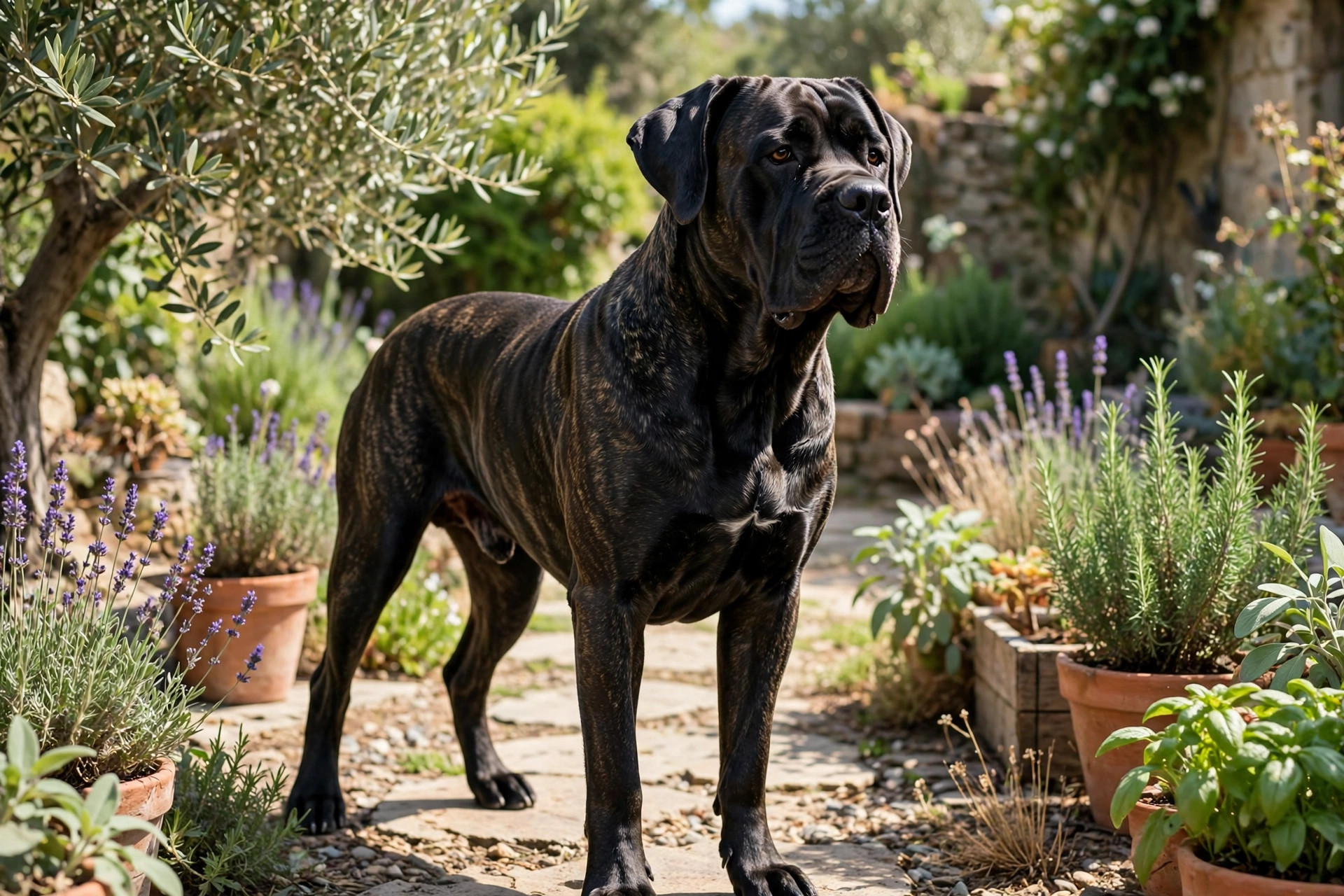
Few dogs make an entrance quite like the Cane Corso. One look at that broad, muscular frame and steady gaze, and you understand why this Italian guardian has surged in popularity — “cane corso puppy essentials” was one of the fastest-rising pet searches of October 2026. But behind the imposing looks is a loyal, intelligent dog that demands an experienced owner. This complete cane corso breed guide gives you the honest picture: temperament, size, exercise and training needs, health risks, and real costs — everything you need to decide before bringing one home.
The short version: the Cane Corso is a large, powerful guardian breed (males 25–27.5 inches, 99–110 pounds) that bonds fiercely to its family, needs early socialization and consistent training, and thrives with an active, confident owner. It is not a beginner dog, and it is not a dog for a sedentary household.
Table of Contents
- Cane Corso Breed Guide at a Glance
- Cane Corso Breed Guide: Temperament & Personality
- Size, Appearance & Coat
- Exercise & Training Needs
- Grooming & Feeding
- Cane Corso Health Issues to Know
- What Does a Cane Corso Cost?
- Is a Cane Corso Right for You?
- Cane Corso Puppy & Breeder Tips
- Frequently Asked Questions
Cane Corso Breed Guide at a Glance
| Trait | Details |
|---|---|
| Origin | Italy — descended from Roman Molossian war dogs; farm guardian and boar hunter |
| AKC group | Working (fully recognized by the AKC in 2010) |
| Size | Males 25–27.5 in, 99–110 lbs; females 23.5–26 in, 88–99 lbs |
| Lifespan | 9–12 years |
| Coat | Short, dense, slightly coarse; black, gray, fawn, red, and brindle varieties; moderate shedding |
| Energy level | Moderate to high — needs 60–90 minutes of activity daily |
| Temperament | Loyal, confident, protective, intelligent, reserved with strangers |
| Good with kids/pets | Devoted to children raised with them; needs supervision and socialization with other pets |
| Watchdog ability | Exceptional — guarding is the breed’s original job |
| Best for | Experienced, active owners with space, structure, and time for training |
The Cane Corso (pronounced “KAH-nay KOR-so”) is one of two native Italian mastiff-type dogs descended from the Roman canis pugnax. For centuries, Corsos worked Italian farms as property guardians, livestock drovers, and hunters of difficult game such as wild boar. The breed nearly vanished in the 20th century before Italian enthusiasts revived it in the 1970s and 80s; the first Corsos arrived in the United States in 1988, and the AKC granted full recognition in 2010.
Cane Corso Breed Guide: Temperament & Personality

The Cane Corso temperament is best summed up in three words: loyal, confident, and serious. The American Kennel Club describes the breed as smart, trainable, and of noble bearing — a peerless protector. Here is what that actually feels like day to day:
1. Fiercely Loyal and Deeply Bonded
Corsos attach hard to their people. They want to be near you, watch over you, and know where you are at all times. That devotion is the breed’s greatest gift — and its biggest risk, because a Corso left alone for long hours can develop separation anxiety and destructive behavior. They are not a breed for owners who are gone 10 hours a day.
2. Intelligent and Eager to Work
This is one of the smartest guardian breeds alive, capable of learning commands quickly and solving problems on its own. But intelligence is not the same as ease: a clever Corso learns good behavior fast with a consistent owner — and bad behavior equally fast with an inconsistent one. A bored Corso invents its own job: chewing, digging, fence-patrolling, and testing boundaries.
3. Naturally Protective and Reserved With Strangers
Corsos are alert and aloof with unfamiliar people — an outstanding trait for a guardian, but one that demands early, thorough socialization. Without it, protectiveness curdles into suspicion and reactivity. A well-socialized Corso is calm and discerning; a poorly socialized one is a liability, especially at over 100 pounds.
4. Calm and Dignified at Home
Unlike many high-energy breeds, a well-exercised Corso is a calm house dog. They are not hyperactive or toy-obsessed; many are not interested in retrieving at all. Expect a dignified companion that shadows you from room to room and settles quietly at your feet — after its exercise needs are met.
Size, Appearance & Coat
Cane Corsos are large, muscular, and athletic: a large, wide head (roughly one third of the height at the withers), a deep chest, and a rectangular, slightly longer-than-tall body. Males stand 25–27.5 inches and typically weigh 99–110 pounds; females stand 23.5–26 inches and weigh 88–99 pounds. Weight should always be proportionate to height — a Corso should look powerful, not overweight.
Accepted colors are black, lighter and darker shades of gray, lighter and darker shades of fawn, and red, with brindling allowed on all of these colors. The short coat sheds moderately year-round. One honest warning: Corsos drool — not as much as some mastiffs, but expect some slobber after drinking and in hot weather.
Exercise & Training Needs

This is the section to read twice, because under-exercise and under-training are the number one reasons Corsos end up rehomed. A healthy adult Cane Corso needs at least 60–90 minutes of real activity every day — brisk walks, hiking, swimming, or dog sports like obedience, rally, or protection work. A tired Corso is a calm, happy dog; an under-exercised one is destructive, anxious, and loud.
- Early socialization (8–16 weeks): Expose your puppy to dozens of people, friendly dogs, sights, sounds, and surfaces — positively and calmly. This is the single most important thing you will ever do for a Cane Corso.
- Basic obedience: Sit, down, stay, recall, and loose-leash walking. A 110-pound dog that pulls is a hazard — train polite walking early, before the strength arrives.
- Daily mental work: 10–15 minutes of training practice, puzzle feeders, or scent games tires this breed’s brain as much as a long walk.
- Positive reinforcement only: Corsos respond to praise, treats, and play — not harsh corrections. Aversive methods damage trust, and an anxious, powerful dog is dangerous precisely because of its strength.
Continue training through adolescence (roughly 6–18 months), when Corsos test every boundary. Consistency beats intensity: short daily sessions always win. For authoritative breed-standard details, see the AKC’s Cane Corso breed page.
Grooming & Feeding
The Corso’s short coat is one of its easiest features: weekly brushing with a rubber curry brush or bristle brush, occasional baths, and regular nail trims are all it takes. They shed moderately year-round. Check the ears weekly, wipe facial folds and jowls as needed, and brush teeth regularly — dental disease is painful and common in every breed.
Feeding-wise, Corsos do best on high-quality, protein-rich food formulated for large breeds, with measured portions divided into two meals a day — never free-feed. A typical adult eats roughly 3–4 cups of dry food daily, but follow your veterinarian’s guidance over any generic chart. Two feeding rules matter more than usual for this breed:
- Prevent bloat: Corsos are a deep-chested breed at risk for gastric dilatation-volvulus (bloat), a life-threatening emergency where the stomach twists. Feed two smaller meals instead of one large one, and avoid vigorous exercise right before and after meals.
- Keep them lean: Extra weight punishes joints already prone to dysplasia. You should be able to feel — but not see — the ribs. Treats and food scraps stay within the 10% treat rule: extras under 10% of daily calories.
Also Read: German Shepherd: Breed Guide, Training & Care (2026) — another powerful working breed with similar bloat and joint risks.
Cane Corso Health Issues to Know
Corsos are generally robust working dogs, but the breed carries several well-documented health risks. Knowing them helps you choose a breeder wisely and catch problems early.
1. Hip and Elbow Dysplasia
The breed’s most famous health problem. These developmental joint disorders cause pain, lameness, and arthritis, and they have a strong genetic component. Responsible breeders screen both parents’ hips and elbows — always ask for verifiable results. Keeping your dog lean and avoiding excessive high-impact exercise in puppies reduces risk.
2. Bloat (Gastric Dilatation-Volvulus)
As covered above, this deep-chested breed is at high risk. A swollen, hard abdomen with unproductive retching is a rush-to-the-emergency-vet sign — bloat can kill within hours. Ask your vet about preventive gastropexy (stomach tacking) for high-risk dogs.
3. Eye Problems
Cherry eye (a prolapsed third-eyelid gland), entropion (eyelids rolling inward), and ectropion occur in the breed. Some cases need surgical correction. Breeders should provide current eye clearances for both parents.
4. Skin Allergies and Demodex Mange
Corsos are prone to skin allergies and demodectic mange, especially as puppies: patchy hair loss, red skin, and itching. Persistent skin problems deserve a vet workup, not guesswork.
5. Heart Conditions
Dilated cardiomyopathy and other cardiac issues occur in the breed. Regular vet checkups with heart screening help catch problems early.
What Does a Cane Corso Cost?
| Expense | Typical Range |
|---|---|
| Puppy from a reputable breeder | $1,500–$4,000 |
| Adoption / rescue fee | $100–$450 |
| First year (vaccines, spay/neuter, gear, training) | ~$2,000–$3,500 |
| Ongoing annual costs (food, vet, insurance, toys) | $1,800–$3,500 |
The price reflects the breeder’s investment in health screening, socialization, and vet care — be deeply suspicious of “cheap, no papers” puppies, which often bring hidden health risks and big bills later. Food and medication costs also run higher than average simply because this is a very large dog.
Is a Cane Corso Right for You?
A Cane Corso is a great fit if: you are an experienced, active owner who can commit to 60–90 minutes of daily exercise plus training; you want a deeply loyal, protective, highly trainable guardian; you are home often enough to avoid long alone stretches; you have secure space and a fenced yard; and you accept the drool, the shedding, and the breed’s health realities.
Reconsider if: you are a first-time dog owner with no training experience; your household is sedentary or away 10+ hours a day; you live in a small apartment with no serious exercise plan; you want a low-energy, easygoing, or stranger-friendly dog; you live somewhere with breed-specific legislation or rental/insurance restrictions on mastiff-type dogs; or you are not prepared for the training commitment and potential vet costs.
Also Read: Labrador Retriever Breed Guide (2026) — a more beginner-friendly large breed for comparison.
Cane Corso Puppy & Breeder Tips
If you decide on a Corso, choose your source carefully. A responsible breeder will:
- Provide written health clearances for hips, elbows, eyes, and heart for both parents — never accept “the parents are healthy” at face value.
- Raise puppies in a home environment with early socialization, and offer a written health guarantee (typically 1–2 years for genetic conditions).
- Ask you questions about your home, schedule, and experience — good breeders screen buyers too, and never sell unvaccinated puppies “cheap, no papers.”
Also consider Cane Corso rescues — adult Corsos regularly need homes, and an adult’s temperament, size, and health are already known. Ask rescues about the dog’s history with kids, cats, and other dogs; reputable rescues will match you honestly, not just hand you a leash.
Frequently Asked Questions
Are Cane Corsos good family dogs?
Yes — in the right household. Cane Corsos are loyal, affectionate, and often wonderful with children they were raised with. But they need experienced owners, early socialization, and serious daily exercise. They are a poor fit for sedentary or first-time households.
Are Cane Corsos aggressive?
Not by nature — they are loyal and discerning guardians, not hostile dogs. But they are powerful and protective, and without early socialization and consistent training, protectiveness can turn into reactivity or over-guarding. Socialization is the difference-maker.
How much exercise does a Cane Corso need?
At least 60–90 minutes of daily exercise for a healthy adult — walks, hiking, swimming, or dog sports — plus training and mental enrichment like puzzle games and scent work.
Do Cane Corsos shed a lot?
Moderately, year-round. Weekly brushing handles it. They do drool somewhat, especially after drinking and in hot weather.
Are Cane Corsos good for first-time dog owners?
Honestly, no — most trainers recommend a more forgiving breed for beginners. Cane Corsos demand consistent training, heavy socialization, and high daily exercise. A committed beginner with professional trainer support can succeed, but this is not an easy first dog.
How long do Cane Corsos live?
About 9–12 years on average. Keeping your Corso lean, well-exercised, and on a vet-monitored health plan — with early screening for joint and heart problems — gives it the best shot at the long end of that range.
Are Cane Corsos good guard dogs?
Exceptional — guarding is the breed’s original job. A well-socialized Corso is calm and discerning with guests you welcome, and naturally protective of home and family.
Final Thoughts
So, is the Cane Corso the right dog for you? If you are an experienced, active owner ready to match the breed’s needs — daily exercise, serious training and socialization, regular grooming, measured feeding, and proactive vet care — few breeds reward you like a Cane Corso. The partnership of a well-raised Corso with its family is genuinely unmatched: loyal, dignified, and devoted to the end.
But go in with open eyes: this is a powerful guardian dog, not an easy pet. Accept the drool and the shedding, commit to the exercise, insist on health-tested parents, and socialize relentlessly. Do that, and you will understand why Corso owners keep saying the same thing: once you live with one, no other dog quite compares.
By Dr. Ayaz Ali