
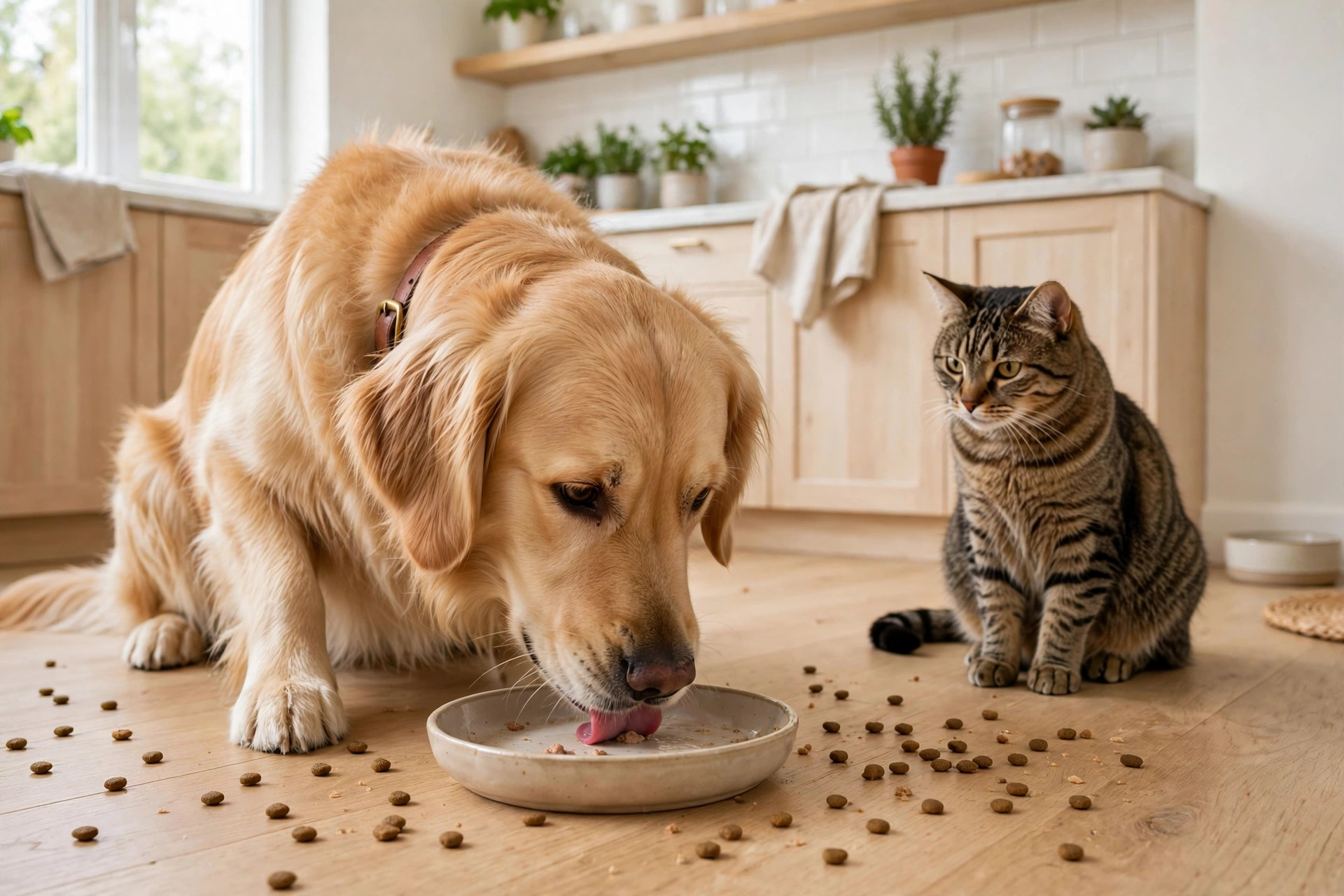
If you share your home with both a dog and a cat, you already know this scene: you turn your back for a moment, and your dog is standing over the cat’s bowl with a guilty look and a very clean dish. It’s only natural to ask: can dogs eat cat food, or is your pup’s favorite heist a health problem waiting to happen?
The short answer is that a single stolen mouthful won’t poison your dog — but cat food is formulated for cats, not dogs, and making it a habit can cause real problems, from digestive upset to a life-threatening case of pancreatitis.
In this complete 2026 guide, we’ll cover why dogs find cat food irresistible, the nutritional differences between the two foods, the real short- and long-term risks, what to do when your dog raids the cat bowl, and how to keep their nose out of the wrong dish for good.
Table of Contents
- Can Dogs Eat Cat Food? The Short Answer
- Why Dogs Love Cat Food So Much
- Cat Food vs. Dog Food: Key Differences
- Risks of Feeding Cat Food to Dogs
- What to Do If Your Dog Eats Cat Food
- Can Dogs Eat Cat Food Every Day? No — Here’s Why
- How to Stop Your Dog Stealing Cat Food
- Frequently Asked Questions
Can Dogs Eat Cat Food? The Short Answer
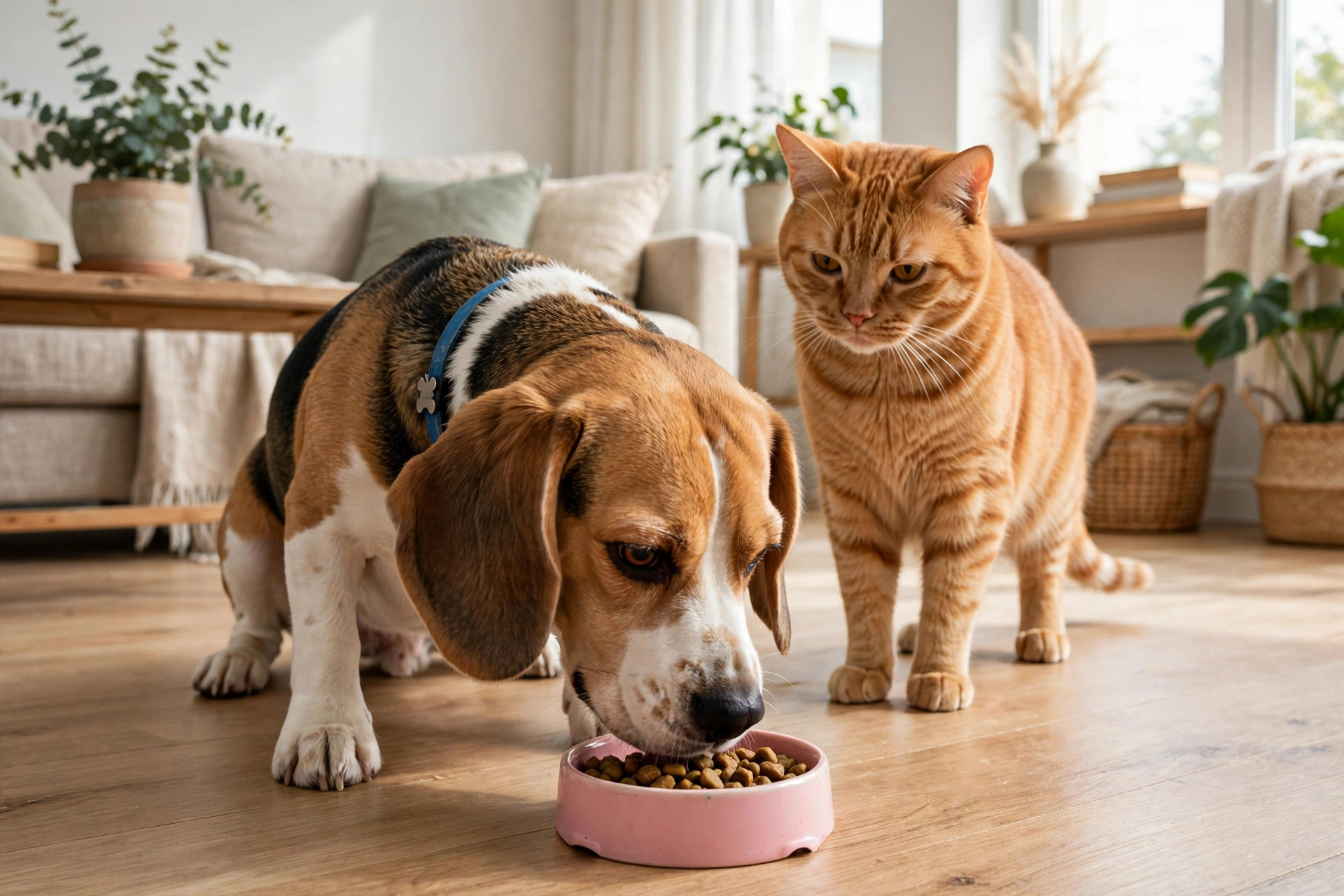
Yes and no — and the difference matters. Cat food is not toxic to dogs. Unlike chocolate or xylitol, there is nothing in cat food that will poison a healthy dog. A dog that cleans out the cat’s bowl once will most likely be perfectly fine, perhaps with nothing more than a guilty conscience and a full stomach.
But “not toxic” is not the same as “fine to feed.” Veterinary sources including the American Kennel Club warn that a high-fat diet is one of the most common triggers for pancreatitis — and cat food is significantly richer in fat and protein than dog food. The problem isn’t the occasional heist; it’s the habit.
Why Dogs Love Cat Food So Much
Dogs don’t raid the cat bowl by accident — they’re drawn to it by biology. Cats are obligate carnivores, so cat food is packed with meat-based protein and fat, which gives it a much stronger smell and richer taste than dog food. To your dog, it smells like the good stuff. Add in these factors and the heist becomes a habit:
- Cats graze. Food sits in the bowl for hours — a 24/7 opportunity.
- Food-motivated breeds. Labradors, Beagles, and Pugs are the most persistent raiders.
- Boredom or dieting. A bored dog or a hungry dog on reduced portions is the most creative thief.
- Convenience. The cat’s bowl is low, open, and unattended — easy pickings.
Cat Food vs. Dog Food: Key Differences
The reason can dogs eat cat food is such a common search is that the two foods look identical — small brown kibble. But they’re built for very different animals:
| Nutrient / Factor | Cat Food | Dog Food |
|---|---|---|
| Protein | Very high (cats use protein for energy) | Moderate |
| Fat | High — calorie-dense | Moderate, balanced for dogs |
| Calories | Higher per cup (wet cat food especially) | Matched to canine needs |
| Taurine | Added (cats can’t make it — dogs can) | Not required as an additive |
| Carbohydrates | Low | Moderate (dogs digest carbs well) |
| Vitamin A & niacin | Higher (cats can’t synthesize them) | Lower — dogs make their own |
Dogs are omnivores with more flexible nutritional needs, while cats are obligate carnivores that must get most of their energy from meat. A dog eating cat food gets far more fat, protein, and calories than its body is designed to handle — and misses out on the balanced fiber, carbohydrates, and micronutrient profile of a proper dog diet. (Wet cat food is the richest of all — more calorie-dense and fat-heavy than dry kibble — which is why a stolen pâté bowl causes more trouble than a few stray kibbles.)
Risks of Feeding Cat Food to Dogs
A one-time raid is usually harmless. Regular cat-food consumption, however, can cause escalating problems. Here are the main risks, from mildest to most serious:
1. Digestive Upset
The most common result: vomiting, diarrhea, gas, or stomach cramps. The rich fat content is simply more than many dogs’ digestive systems can handle in one sitting. Healthy dogs usually bounce back within a day, but dogs with sensitive stomachs may react more strongly.
2. Pancreatitis
This is the big one. Pancreatitis — inflammation of the pancreas — is painful and potentially life-threatening, and a sudden high-fat meal is a well-known trigger in susceptible dogs. According to the AKC, signs include repeated vomiting, abdominal pain or swelling, hunched back, loss of appetite, and lethargy.
Miniature Schnauzers, Yorkshire Terriers, and other small breeds are more vulnerable, as are dogs with a history of pancreatitis, obesity, or diabetes. If your dog shows abdominal pain after eating cat food, call your vet right away — early treatment makes a big difference.
3. Weight Gain and Obesity
Cat food is calorie-dense, and daily snacking adds up fast — straining joints, hearts, and overall health. If your dog is on a weight-loss plan, an uncounted cat-food habit can quietly sabotage it.
Also Read: Is My Dog Overweight? Body Condition Score & Weight Loss Plan (2026)
4. Nutritional Imbalance
Fed long-term, cat food skews a dog’s diet toward excess fat and protein while shortchanging fiber and the balanced micronutrients dogs need. It’s hardest on puppies and senior dogs, whose nutritional requirements are already narrow.
5. Disrupting Prescription Diets
Dogs on vet-prescribed diets — for kidney disease, liver problems, bladder issues, or food allergies — can lose the benefit of that carefully formulated food if they keep stealing the cat’s dinner.
What to Do If Your Dog Eats Cat Food
Found the crime scene? Here’s your plan:
- Don’t panic. Cat food is not toxic — the odd mouthful is unlikely to cause harm.
- Watch for digestive upset over the next 12–24 hours: vomiting, diarrhea, or gas. Mild symptoms usually resolve on their own.
- Withhold treats for the rest of the day so the rich meal doesn’t stack on top of more calories.
- Call your vet right away if you notice repeated vomiting, a painful or swollen belly, a hunched posture, or loss of appetite lasting more than 24 hours — these are pancreatitis warning signs.
- Note high-risk dogs. If your dog has pancreatitis, kidney disease, diabetes, or a prescription diet, call your vet even after a small raid.
Can Dogs Eat Cat Food Every Day? No — Here’s Why
Let’s answer this one directly, since it’s one of the most-searched questions on this topic: no, dogs should not eat cat food daily. Regular consumption can lead to chronic digestive problems, obesity, and a higher risk of pancreatitis. The excess protein is also hard on the kidneys and liver of older dogs or dogs with existing organ problems.
Think of cat food as an occasional accidental snack, never a meal replacement. If your dog loves cat food’s rich taste, offer these safer high-value treats instead:
- Small pieces of xylitol-free peanut butter smeared on a lick mat
- Plain cooked chicken breast, cut into tiny pieces
- Blueberries or small apple slices for low-calorie rewards
Also Read: Can Dogs Eat Peanut Butter? Safety Guide (2026) — the safe high-value treat most dogs love.
How to Stop Your Dog Stealing Cat Food
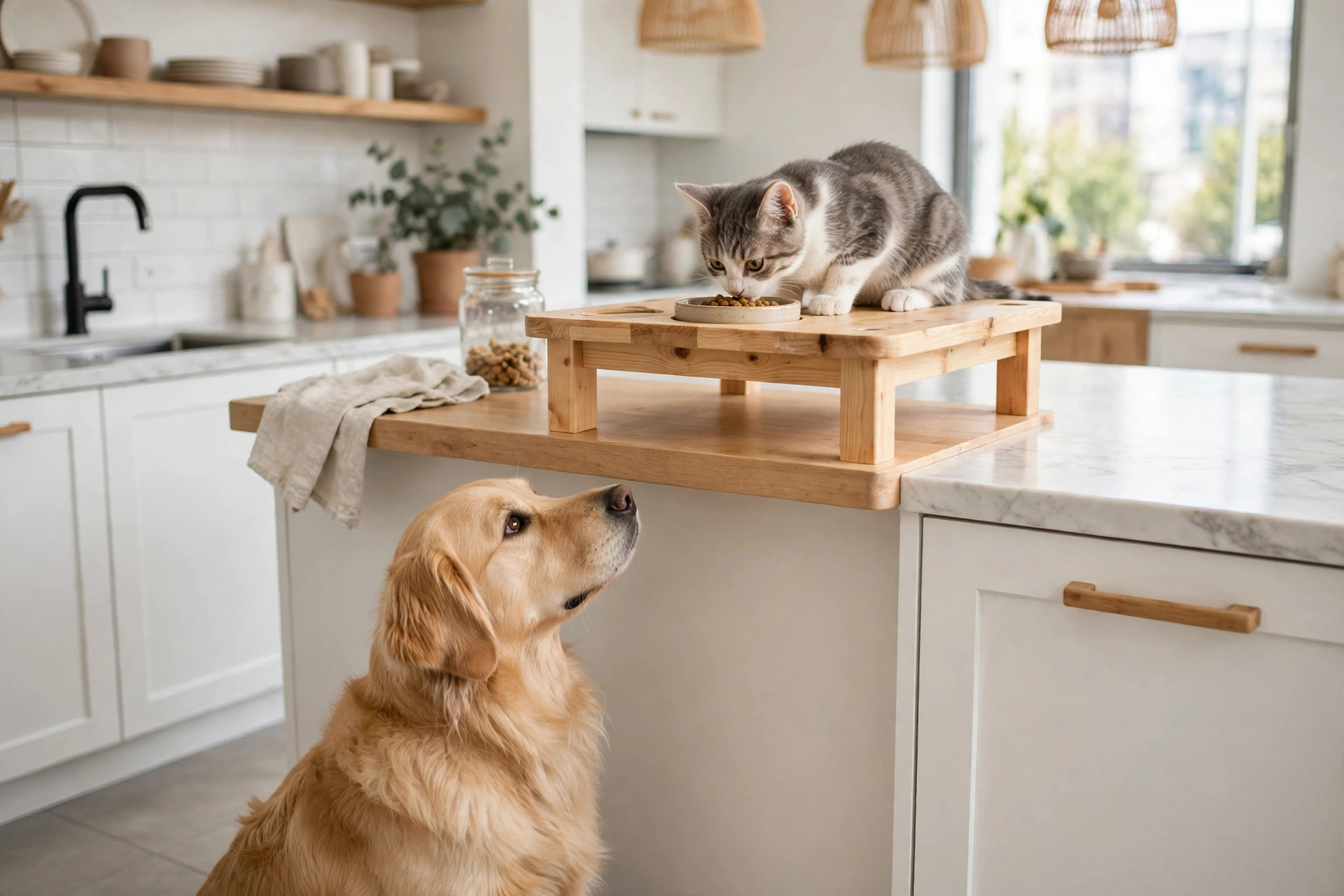
Prevention is the real solution. The most reliable fixes all come down to one idea: make the cat’s food physically unreachable for the dog.
- Feed the cat up high. Put the cat’s bowl on a counter, shelf, or sturdy table the dog can’t reach. Cats jump; most dogs don’t. Simplest, cheapest fix.
- Use a baby gate. A gate with a small cat door lets the cat through while blocking the dog.
- Stop free-feeding. Serve the cat’s meals on a schedule and remove the bowl after 20–30 minutes — no all-day buffet.
- Use a microchip cat feeder. The sealed lid opens only for the registered cat’s chip — it never opens for the dog. The most reliable option for persistent raiders.
- Train a “leave it” cue. Reward your dog generously for leaving the cat’s area alone on command.
Also Read: Microchip Cat Feeder Guide: Do They Work? (2026) — the most reliable way to keep cat food for the cat.
Frequently Asked Questions
Is cat food toxic to dogs?
No. Cat food contains nothing poisonous to dogs — unlike chocolate, xylitol, or grapes. The danger is nutritional: it’s far too rich in fat and protein for dogs, which can cause digestive upset and, in susceptible dogs, pancreatitis.
What happens if my dog eats a lot of cat food?
The most likely outcomes are vomiting, diarrhea, and gas. In some dogs — especially small breeds, overweight dogs, and those with a history of pancreatitis — a large fatty meal can trigger pancreatitis. Watch for a painful belly, hunched posture, and repeated vomiting.
Can puppies eat cat food?
Puppies are even more vulnerable to nutritional imbalances and have sensitive digestive systems. Keep puppies away from the cat bowl entirely and feed a proper puppy formula.
Why does my dog prefer cat food over his own food?
Cat food is higher in meat-based protein and fat, so it smells and tastes richer — like a gourmet upgrade over regular dog food. Boredom, an underwhelming dog diet, or simply opportunity can turn a nibble into a habit.
Is it okay to mix a little cat food into dog food?
An occasional spoonful as a flavor topper is generally fine for healthy dogs, but don’t make it a routine. If your dog is a picky eater, ask your vet about dog-safe food toppers instead.
Final Thoughts
So, can dogs eat cat food? An occasional stolen bite won’t harm a healthy dog, but cat food should never become part of a dog’s diet. It’s simply too rich — too much fat, too much protein, too many calories — and the risks of regular consumption (digestive upset, obesity, and potentially life-threatening pancreatitis) are real.
The fix is wonderfully simple: move the cat’s bowl somewhere your dog can’t reach, stop free-feeding, and give your dog high-value treats of their own. Your cat keeps her dinner, your dog keeps his health, and the great bowl heist becomes a story instead of a habit.
By Dr. Ayaz Ali