
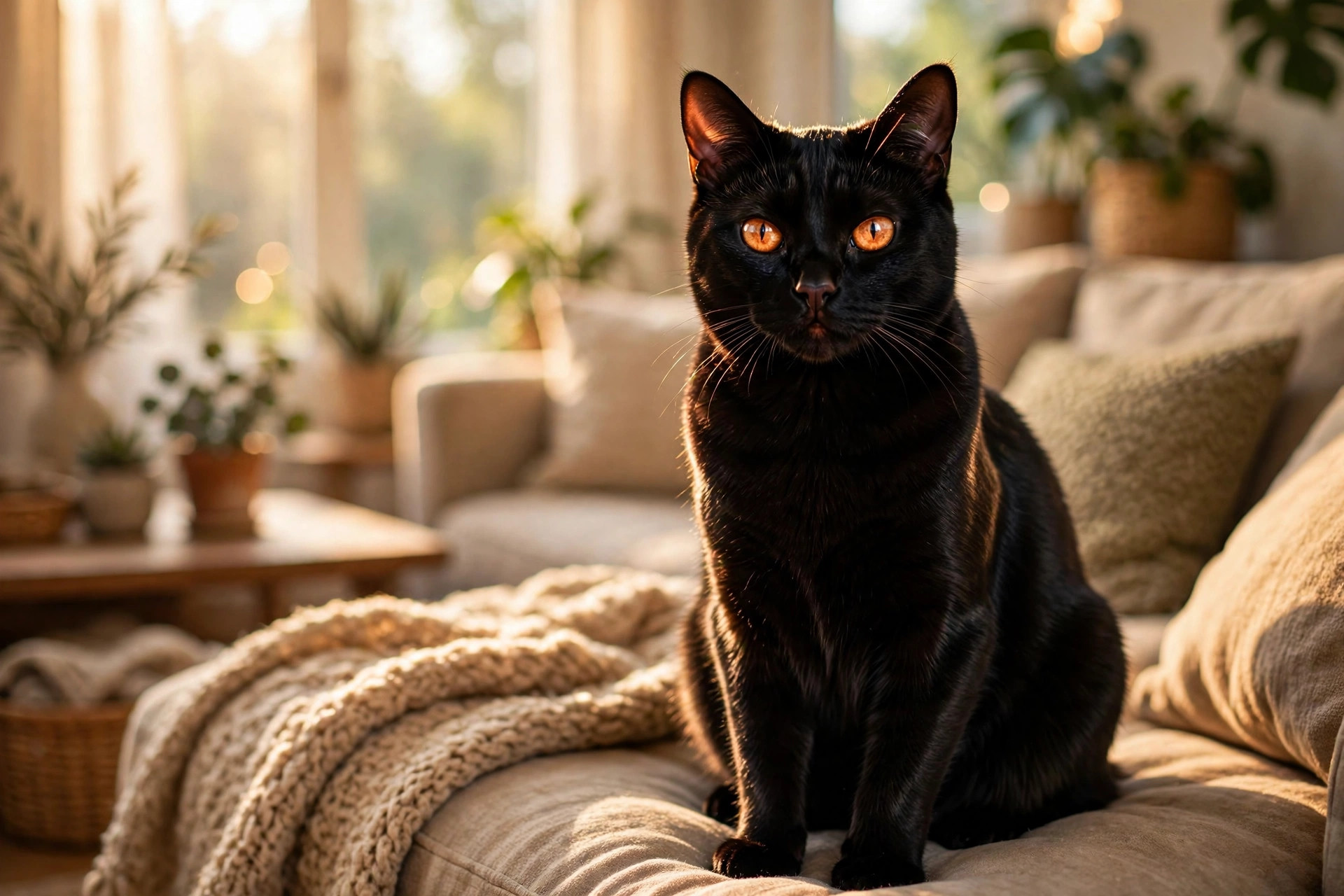
The Bombay cat looks like a miniature black panther — jet-black coat, glowing copper eyes, and a confident strut. So it is no surprise that one of the most-searched questions about this striking breed is: are Bombay cats hypoallergenic, or will they make your allergies flare? Getting an honest answer matters — the wrong assumption sends some cats back to shelters.
No cat breed is 100% hypoallergenic — Bombay included. But Bombays shed moderately, and many people with mild cat allergies live happily with them by following a few allergen-control habits. In this guide: the Fel d 1 science, how much Bombays really shed, why the “hypoallergenic” myth persists, and practical steps that make a Bombay workable for allergy-prone homes.
Table of Contents
- What Is a Bombay Cat?
- So, Are Bombay Cats Hypoallergenic? The Honest Answer
- Why Bombays Shed Less but Still Trigger Allergies
- Why the “Hypoallergenic Bombay” Myth Persists
- Living With Bombay Cats and Allergies: 7 Practical Tips
- When a Bombay Fits Your Home — and When to Reconsider
- Frequently Asked Questions
- Final Thoughts
What Is a Bombay Cat?
The Bombay is a modern American breed developed in the 1950s–60s by crossing sable Burmese cats with black American Shorthairs — a domestic cat built to look like a small black panther. Every hair is black to the root, and the breed standard calls for gold-to-copper eyes.
Bombays are medium-sized, muscular cats (6–12 lbs) with short, close-lying coats and famously social temperaments: they follow their people from room to room and love being held. That velcro-cat personality matters for allergy sufferers — a cat that sleeps on your chest deposits more allergen on you than an aloof one, whatever the breed.
So, Are Bombay Cats Hypoallergenic? The Honest Answer
No. Bombay cats are not hypoallergenic. Veterinary resources including Hepper’s vet-approved guide confirm that Bombays produce the same allergy-triggering proteins as every other cat. No breed — not even hairless ones — is truly hypoallergenic, because the allergen lives in skin secretions and saliva, not just in fur.
On that spectrum the Bombay sits in the middle: one allergy-focused publisher rates the breed just 3.5 out of 10 — “low-allergen at best” — since Bombays produce normal Fel d 1 and distribute it through steady moderate shedding.
Bottom line: do not get a Bombay expecting zero symptoms. Only adopt after spending real time with the breed — hold the cat, see how your sinuses respond over a few hours, and then decide.
Why Bombays Shed Less but Still Trigger Allergies
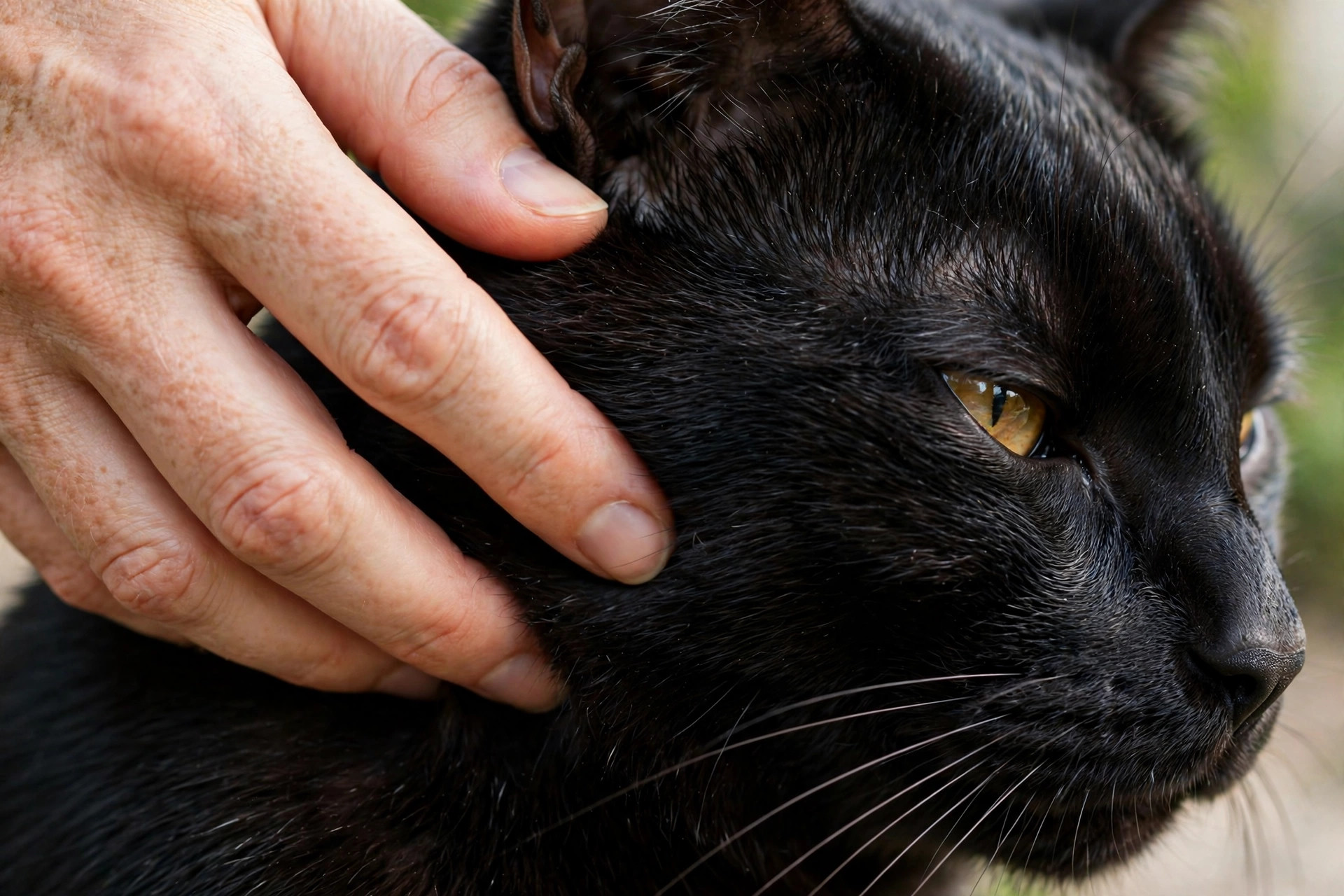
Most people equate shedding with allergens, and Bombays shed relatively little — so the breed gets labeled “good for allergies.” Here is what is actually happening.
The Fel d 1 Protein, Explained
Cat allergies are immune-system overreactions to proteins in feline saliva and the sebaceous glands of the skin. The chief culprit is a protein called Fel d 1. When a cat grooms, saliva loaded with Fel d 1 coats its fur; as fur sheds and dander (dead skin cells) flake off, the allergen becomes airborne and settles on furniture, bedding, and clothing. Urine carries Fel d 1 too.
Every cat — Bombay, Persian, Sphynx — produces Fel d 1. Individual cats of the same breed can even produce noticeably different amounts. That is why the coat-length shortcut fails: the protein is the problem, and it is invisible.
Bombay Shedding Compared to Other Breeds
| Breed | Coat | Shedding Level | Allergen Load |
|---|---|---|---|
| Bombay | Short, sleek, single | Moderate, year-round | Normal Fel d 1 |
| Russian Blue | Short, dense double | Light | Normal Fel d 1 |
| British Shorthair | Short, dense, plush | Moderate | Normal Fel d 1 |
| Maine Coon | Long, heavy | Moderate | Normal Fel d 1 |
| Sphynx (hairless) | None/peach fuzz | Minimal | Still produces Fel d 1 |
Notice the pattern: shedding varies wildly, but allergen production does not. A Bombay puts fewer allergen-carrying hairs into your sofa than a Maine Coon, yet deposits just as much Fel d 1 onto the hairs it does shed. One extra wrinkle: the Bombay’s unusually fine, lightweight fur can linger in the air longer than the heavier fur of fluffy breeds.
Also Read: Russian Blue Breed Guide: Care & Health (2026) — another short-coated breed that is often (wrongly) called hypoallergenic.
Why the “Hypoallergenic Bombay” Myth Persists
Three things keep this myth alive. First, short coat = fewer visible hairs, and most people judge allergen load by what they see on their black pants. Second, some owners with mild allergies genuinely do fine with a Bombay and post about it — but that says more about their mild sensitivity than about the breed. Third, low-quality breed directories list the Bombay as “hypoallergenic: yes” without explanation, and those pages get copied around. Do not buy a Bombay for its allergy reputation — buy it for its personality, and manage allergies with the real tools below.
Living With Bombay Cats and Allergies: 7 Practical Tips
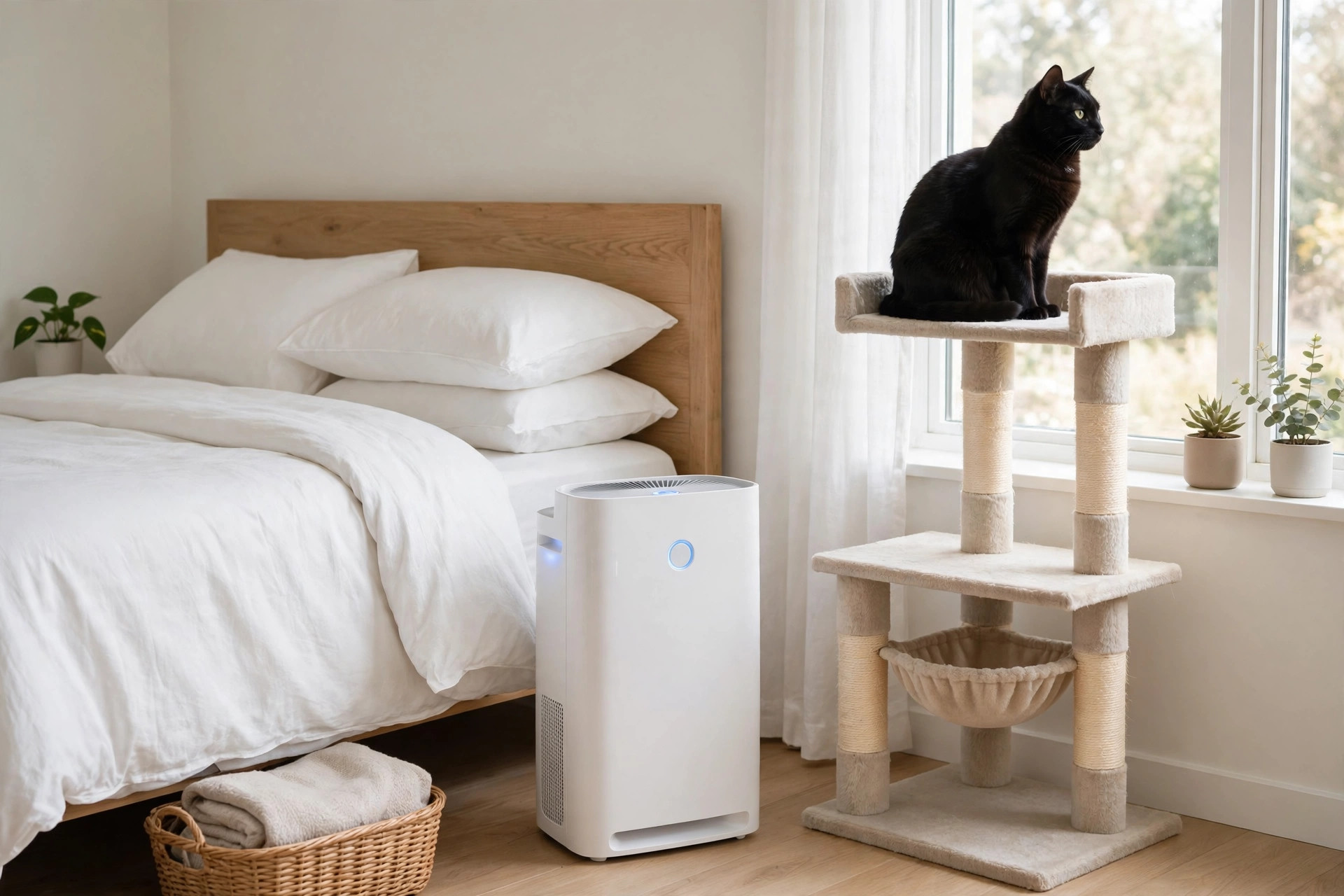
If your allergies are mild to moderate, these seven habits let many owners share their homes — and laps — with a Bombay without constant sneezing.
1. Run HEPA Air Purifiers 24/7
The highest-impact step: a true-HEPA purifier in the main living space continuously strips airborne dander. Keep filters on schedule — a clogged filter recirculates allergens.
2. Brush Your Bombay Weekly
Weekly brushing with a soft brush or grooming glove removes loose hairs before they drift around your home — wash your hands afterward.
3. Make the Bedroom a Cat-Free Zone
Keeping the bedroom door closed gives your immune system a nightly recovery window. Wash bedding in hot water weekly.
4. Wash Hands and Clothes After Cuddle Sessions
Bombays are lap cats — they will be on you. Wash your hands after handling your cat and avoid touching your face.
5. Vacuum and Dust With Allergen Traps
Vacuum carpets and upholstery twice weekly with a HEPA vacuum. Damp-mop hard floors — dry-sweeping launches dander back into the air.
6. Keep the Litter Box Pristine
Urine carries Fel d 1, and litter dust carries it further. Scoop daily and place the box in a ventilated spot.
7. Talk to Your Allergist
Antihistamines handle mild symptoms for many people, and allergy shots (immunotherapy) can reduce cat-allergy sensitivity over time. An allergist visit before adoption is money well spent.
Also Read: British Shorthair: Breed Guide, Care & Health (2026)
When a Bombay Fits Your Home — and When to Reconsider
| A Bombay Is Manageable If… | Reconsider If… |
|---|---|
| Your allergies are mild (sneezing, itchy eyes) and respond to antihistamines | You have asthma or severe reactions triggered by cats |
| You can run HEPA purifiers and keep a cat-free bedroom | You cannot keep the cat out of the bedroom or clean frequently |
| You spent time with a Bombay and reacted only mildly | You reacted strongly during a trial visit |
| Someone is home most of the day — Bombays hate being alone | The house is empty 10+ hours daily with no companion pet |
A final practical note: most solid-black cats in shelters are domestic shorthairs rather than true Bombays — you will get the same sleek look either way. And also read Black Cat Adoption Myths Busted: Halloween Guide (2026) to see why black cats wait longest for homes.
Frequently Asked Questions
Are Bombay cats hypoallergenic?
No. Bombays produce the Fel d 1 allergen like every other cat, so they are not hypoallergenic. They shed only moderately, which is why some people with mild allergies tolerate them better than heavy-shedding breeds.
Is a Bombay cat hypoallergenic for people with mild allergies?
People with mild cat allergies often manage a Bombay successfully with HEPA air purifiers, weekly brushing, and a cat-free bedroom. Spend a few hours with the breed before adopting to test your own reaction.
Do Bombay cats shed a lot?
No — Bombays are moderate shedders. Their short, sleek, close-lying coat sheds steadily year-round rather than in heavy seasonal dumps, but the fine, lightweight fur can linger in the air, so regular vacuuming still matters.
Do Bombay cats cause allergies?
They can. Bombays produce normal levels of Fel d 1, which spreads through grooming onto their fur and becomes airborne with shed hair and dander. Symptoms range from sneezing and itchy eyes to wheezing in sensitive people.
Are black cats hypoallergenic?
No — coat color has nothing to do with allergen production. Black cats, including Bombays, produce the same Fel d 1 protein as cats of any other color. The allergen comes from skin secretions and saliva, not pigment.
What is the most hypoallergenic cat breed?
None — no cat breed is truly hypoallergenic. The honest approach is testing your reaction to the individual cat and managing your home environment.
Final Thoughts
So, are Bombay cats hypoallergenic? No — and any source that says otherwise is selling you the myth, not the cat. But that verdict is not a dealbreaker. The Bombay’s moderate shedding, short easy-care coat, and affectionate personality make it a realistic choice for many mild-allergy households that commit to the right habits: HEPA filtration, weekly grooming, a cat-free bedroom, and a pre-adoption trial visit.
Set your home up for success before the cat arrives, and this little black panther will likely reward you with years of devoted companionship — sneezes kept to a minimum.
By Dr. Ayaz Ali