

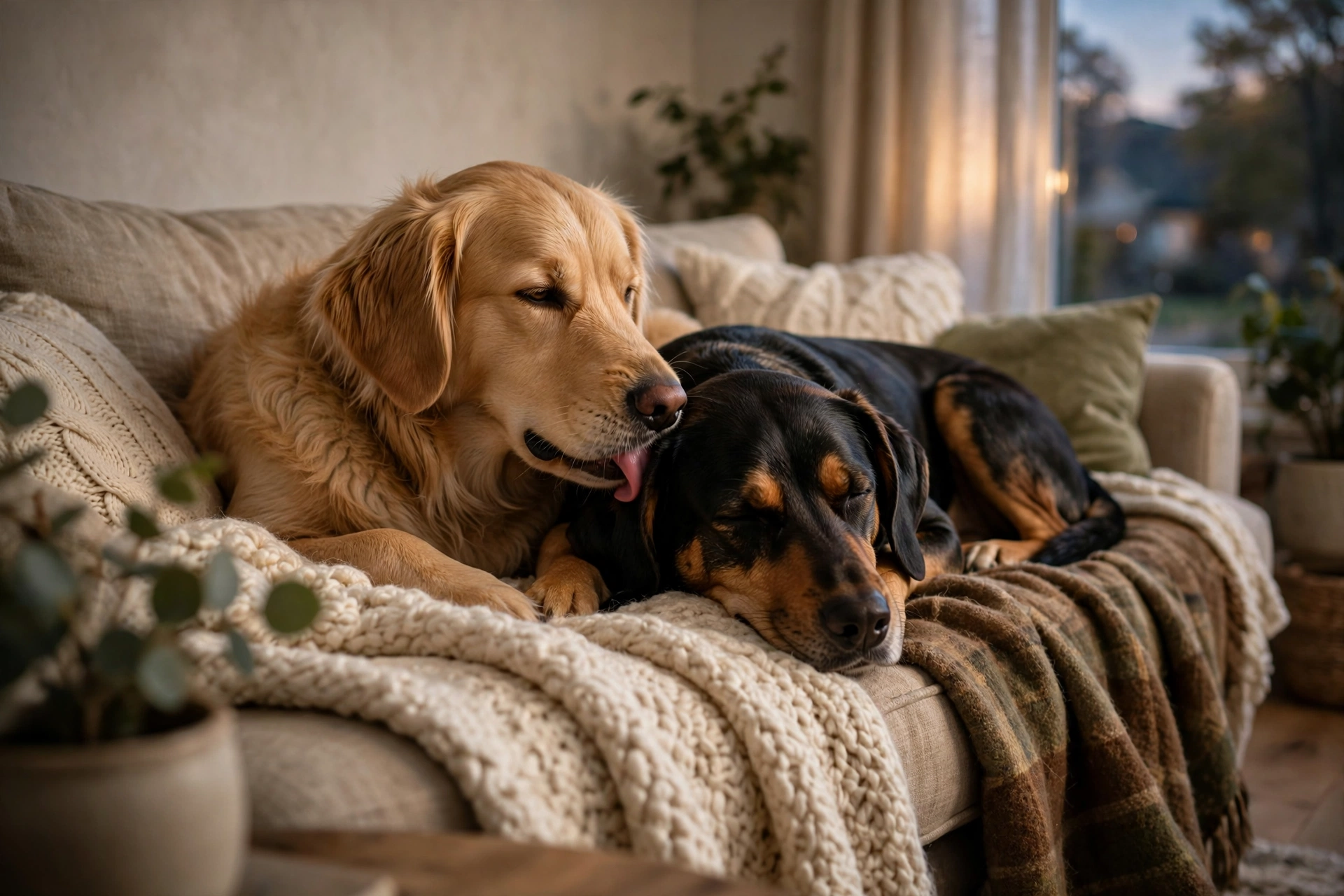
If you share your home with two dogs, you have almost certainly caught this scene: one dog settles in beside the other and starts carefully, almost lovingly, licking their ears — while the other dog sits there looking completely blissed out. It is sweet, a little gross, and it raises an obvious question: why do dogs lick each other’s ears so much?
The short answer is that ear licking is normal dog communication. It is how dogs groom each other, show affection, and gather information. But it is not always harmless. Sometimes a dog licking other dogs’ ears is the first clue that the dog on the receiving end has an ear problem brewing. This guide covers all seven real reasons behind the behavior, the warning signs that separate “cute bonding” from “book a vet visit,” and what to do if the licking becomes obsessive.
Quick Answer: Why Does My Dog Lick My Other Dog’s Ears?
In most cases, your dog licks your other dog’s ears for social reasons: affection, bonding, and mutual grooming — the same reasons a mother dog licks her puppies. Ears are warm, scent-rich, and hard for a dog to clean on their own, so they are a favourite grooming target. Licking also releases feel-good endorphins, which is why both dogs usually look so relaxed. The one exception to watch for: if one dog suddenly fixates on a single ear, especially with head-shaking, scratching, or a bad smell involved, the licking may be pointing at an ear infection.
7 Reasons Why Dogs Lick Each Other’s Ears
1. It Is a Sign of Affection and Bonding
Licking is one of the first languages a puppy ever learns. From birth, a mother dog licks her puppies to clean them, comfort them, and help them settle. Puppies grow up associating licking with safety and love, and they carry that habit into adulthood. When your dog licks another dog’s ears, they are often simply saying “you’re my family.” This is most common between dogs who live together or have known each other a long time — strangers rarely get their ears licked. It works much like the way some dogs lean against the people they trust most; if you have noticed that too, our guide on why your dog leans on you explains that affection signal as well.
2. Mutual Grooming — Ears Are Hard to Reach
Dogs are surprisingly hygiene-conscious animals, and grooming each other (called allogrooming) is a core pack behaviour. The problem is that a dog cannot lick their own ears, and ears collect wax, dust, and moisture. A housemate’s tongue is the perfect solution. You will notice ear licking often happens during calm, restful moments — after a walk, in the evening, or while both dogs are settling down — which is grooming time in the dog world.
3. Earwax Honestly Tastes Good to Dogs
This is the reason nobody loves to hear: earwax and the secretions inside a dog’s ear have a slightly salty, tangy taste that many dogs find genuinely appealing. A dog’s sense of taste and smell works very differently from ours — what seems disgusting to us is an interesting, information-rich flavour to them. The inside of the ear is also loaded with scent glands, so a good ear-licking session is like reading a detailed status update about the other dog’s health, mood, and where they have been.
4. It Is a Friendly Greeting and a Show of Respect
Watch two dogs reunite after time apart and you will often see ear and face licking in the first minute. Licking around the head is a polite, non-threatening greeting in dog body language. Younger or lower-ranking dogs also lick the ears and muzzle of older, more confident dogs as an appeasement gesture — a way of saying “I’m friendly, no trouble here.” Puppies do this instinctively to adult dogs, and many adults keep the habit for life with dogs they respect.
5. Licking Feels Good — for Both Dogs
Licking releases endorphins in the dog doing the licking, creating a calm, almost meditative state. That is why a dog who starts licking ears often falls into a slow, rhythmic pattern and looks half asleep. The receiving dog gets a gentle massage of a sensitive area full of nerve endings — most dogs lean into it rather than move away. When both dogs are relaxed, bodies loose and tails soft, the licking is purely recreational.
6. Boredom or a Learned Habit
Sometimes the reason is much simpler: your dog is bored, and your other dog’s ears are available. Dogs who are under-stimulated develop oral habits — licking ears, paws, furniture, or the floor — because licking is self-soothing. If the receiving dog tolerates it and you react to it (laughing, filming, giving attention), the habit gets reinforced and happens more often. An ear-licking habit that appears alongside restlessness, pacing, or paw licking usually points to a dog who needs more exercise, sniffing games, or chew time in their day.
7. They Can Smell an Ear Problem Before You Can See One
This is the important one. Dogs have an extraordinary sense of smell, and an ear that is becoming infected smells different — yeast and bacteria change the ear’s scent and taste long before the infection is obvious to us. If one dog suddenly becomes obsessed with one particular ear of another dog, treat it as an early-warning system. Dogs also focus licking on ears that are irritated by allergies, which flare up seasonally in many dogs; our guide to fall allergies in dogs covers the itch-and-ear connection in detail.
When to Worry: Ear Licking That Signals a Health Problem
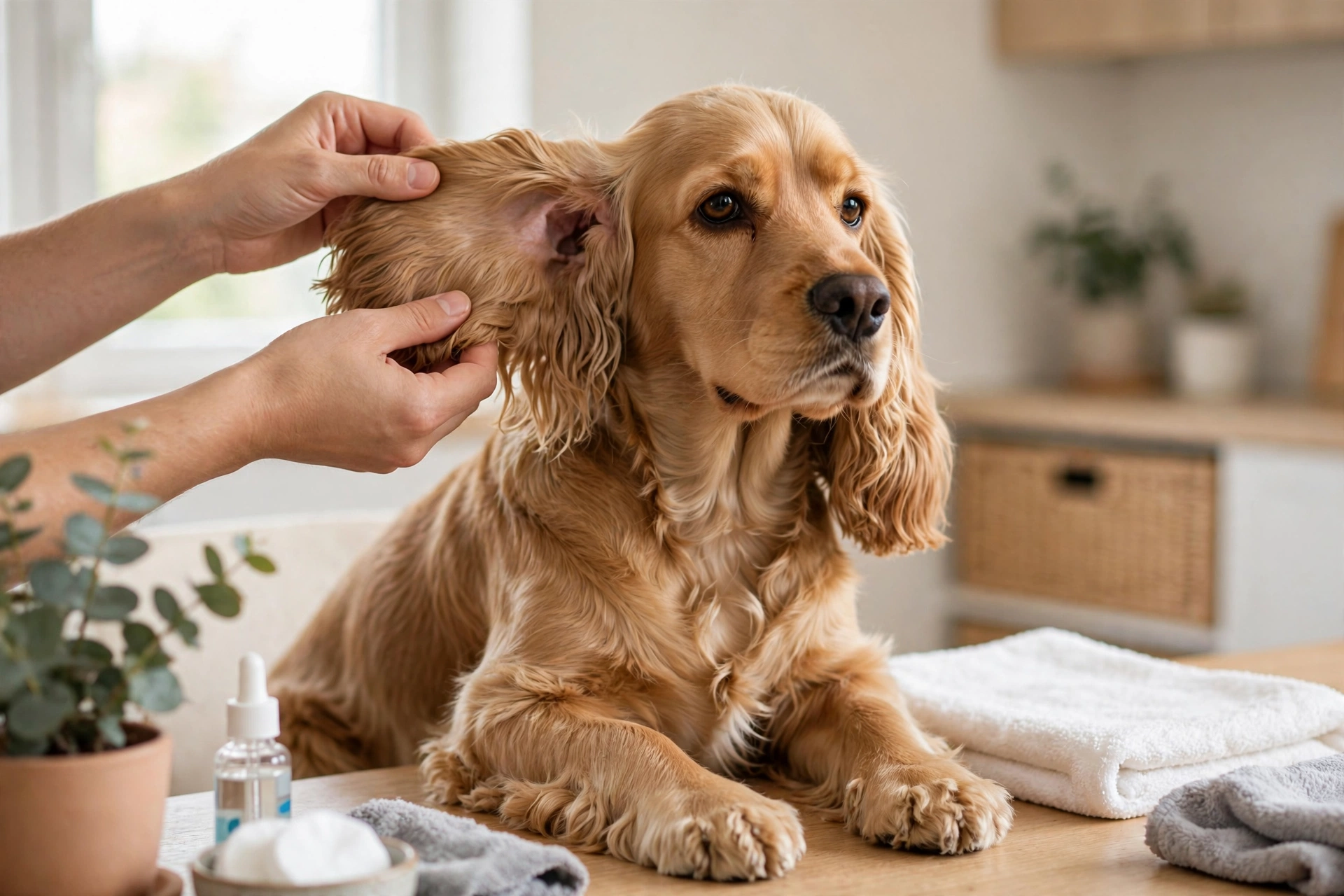
Affectionate grooming is gentle and goes both ways. Licking driven by a health problem looks different. Book a vet visit if you notice any of the following in the dog whose ears are being licked:
- Head shaking or ear scratching that keeps recurring
- A sour, yeasty, or sweet smell coming from the ear
- Dark brown, black, or yellow discharge inside the ear flap
- Redness, swelling, or warmth in the ear canal
- One-sided fixation — your dog licks one ear only, again and again
- Pain signals — yelping, pulling away, or snapping when the ear is touched
- Head tilting or walking like the room is spinning
These are classic early signs of infection, ear mites, or a trapped grass seed. Our full guide to the signs of ear infection in dogs walks through each symptom and what treatment usually involves, so you know exactly what to check before your appointment.
There is also a risk in the other direction: constant moisture from licking can itself irritate a healthy ear and create the warm, damp environment yeast loves. A dog whose ears are always wet from a housemate’s tongue can end up with the very infection the licking was only supposed to groom away — one more reason to step in when the habit becomes non-stop.
How to Stop a Dog From Licking Another Dog’s Ears
If both dogs are healthy and the licking is occasional, there is no need to stop it at all — it is healthy social behaviour. Step in when it becomes constant, one-sided, or annoying to the other dog:
- Interrupt and redirect, don’t punish. Calmly call the licking dog away and offer a chew, a lick mat with their own snack, or a quick training game. Reward them for choosing the alternative.
- Add a “settle” routine. Give both dogs their own chew or mat at the times licking usually starts (evenings are typical). Occupied mouths don’t go ear-hunting.
- Burn off the boredom. An extra sniffy walk, scatter-feeding in the grass, or a puzzle feeder earlier in the day removes most boredom-driven licking within a week or two.
- Separate briefly at peak times. If one dog won’t stop and the other won’t move away, a short, relaxed separation after a gentle interruption teaches the boundary without drama.
- Keep ears clean and dry. Weekly checks and a gentle wipe of the outer ear after baths or swims make ears less interesting (less wax build-up, less smell) and let you spot problems early. Never poke anything deep into the ear canal.
If the licking is truly compulsive — the dog cannot be distracted, licks until the ear is raw, or shows other repetitive behaviours — mention it at your next vet visit. Compulsive licking can be linked to anxiety, nausea, or pain somewhere else in the body, and it deserves a proper check rather than just management.
Frequently Asked Questions
Why does my dog lick my other dog’s ears constantly?
Constant ear licking is usually either a boredom habit that has become self-soothing, or a sign the other dog’s ear smells “interesting” because of wax build-up, allergies, or an early infection. Check the ear for redness, discharge, and smell first; if it looks and smells clean, work on redirection and extra mental stimulation.
Is it safe for dogs to lick each other’s ears?
Occasional, gentle ear licking between healthy dogs is safe and normal. It becomes a problem when it is constant (the moisture can trigger irritation or a yeast infection), when the receiving dog shows stress signals but can’t escape, or when one dog is licking because the other’s ear is already infected — in that case both dogs need the infected ear treated by a vet.
Can ear licking cause an ear infection?
Indirectly, yes. A healthy ear tolerates some licking, but a permanently damp ear canal is an ideal home for yeast and bacteria. If your dogs’ ear-licking sessions leave the ears wet every day, gently dry the outer ear afterwards and keep the habit to short sessions.
Why does my puppy lick my older dog’s ears?
Puppies lick adult dogs’ faces and ears as an instinctive appeasement and greeting behaviour — it is how they say “I’m small, I’m friendly, please look after me.” Most puppies do it less as they mature, though bonded adults often keep a gentler version of the habit for life.
Why do dogs lick other dogs’ ears after swimming or a bath?
Wet ears smell stronger and taste different, and water in the ear bothers dogs. Housemates often lick a freshly bathed or post-swim dog’s ears to help dry and “reset” them to the familiar pack scent. Dry the ears gently with a soft cloth after swims so moisture doesn’t sit in the canal.
Should I let my dogs lick each other’s ears?
Yes, within limits. If both dogs are relaxed, the licking is mutual or welcome, and the ears are clean and healthy, it is good bonding behaviour. Supervise like any interaction: step in when it becomes one-sided, obsessive, or the receiving dog starts avoiding the licker.
The Bottom Line
So, why do dogs lick each other’s ears? Because in dog language, it is grooming, affection, respect, and a health check rolled into one slobbery gesture. Most of the time it means your dogs like each other — and that is worth enjoying. Just learn to read the exceptions: sudden one-ear obsession, a new smell, or a housemate who suddenly can’t leave an ear alone is your cue to take a closer look and, if the warning signs above are there, let your vet take it from there. Trust the licking dog’s nose — it often knows something is wrong before anyone else does.
By Dr. Ayaz Ali — Pets Addicters