
It’s Thanksgiving evening, the plates are piled high, and your dog is parked beside the table with those irresistible puppy-dog eyes. As you scoop a spoonful of creamy mashed potatoes, it’s only natural to wonder: can dogs eat mashed potatoes, or should this holiday staple stay off your pup’s menu?
Here’s the short answer: plain mashed potatoes are safe for dogs in small amounts — but the way most families actually make them (butter, milk, salt, garlic, and onion) turns them into a dish your dog should never eat. With Thanksgiving approaching, this is one of the most-searched holiday food questions every year.
In this complete 2026 guide, we’ll walk you through everything you need to know: why preparation matters more than the potato itself, the real risks of holiday mash (butter, dairy, garlic, onion, salt), safe serving sizes by dog size, how to make a dog-safe batch, Thanksgiving dangers to avoid, and answers to the most common questions dog owners ask.
Table of Contents
- Are Mashed Potatoes Safe for Dogs?
- Benefits of Plain Potatoes for Dogs
- Risks: Why Holiday Mash Is Dangerous for Dogs
- How Many Mashed Potatoes Can Dogs Eat?
- How to Make Dog-Safe Mashed Potatoes
- Thanksgiving Table: Potato Dangers to Avoid
- What If My Dog Ate Holiday Mashed Potatoes?
- Can Puppies Eat Mashed Potatoes?
- Healthy Alternatives to Mashed Potatoes
- Frequently Asked Questions
Are Mashed Potatoes Safe for Dogs?
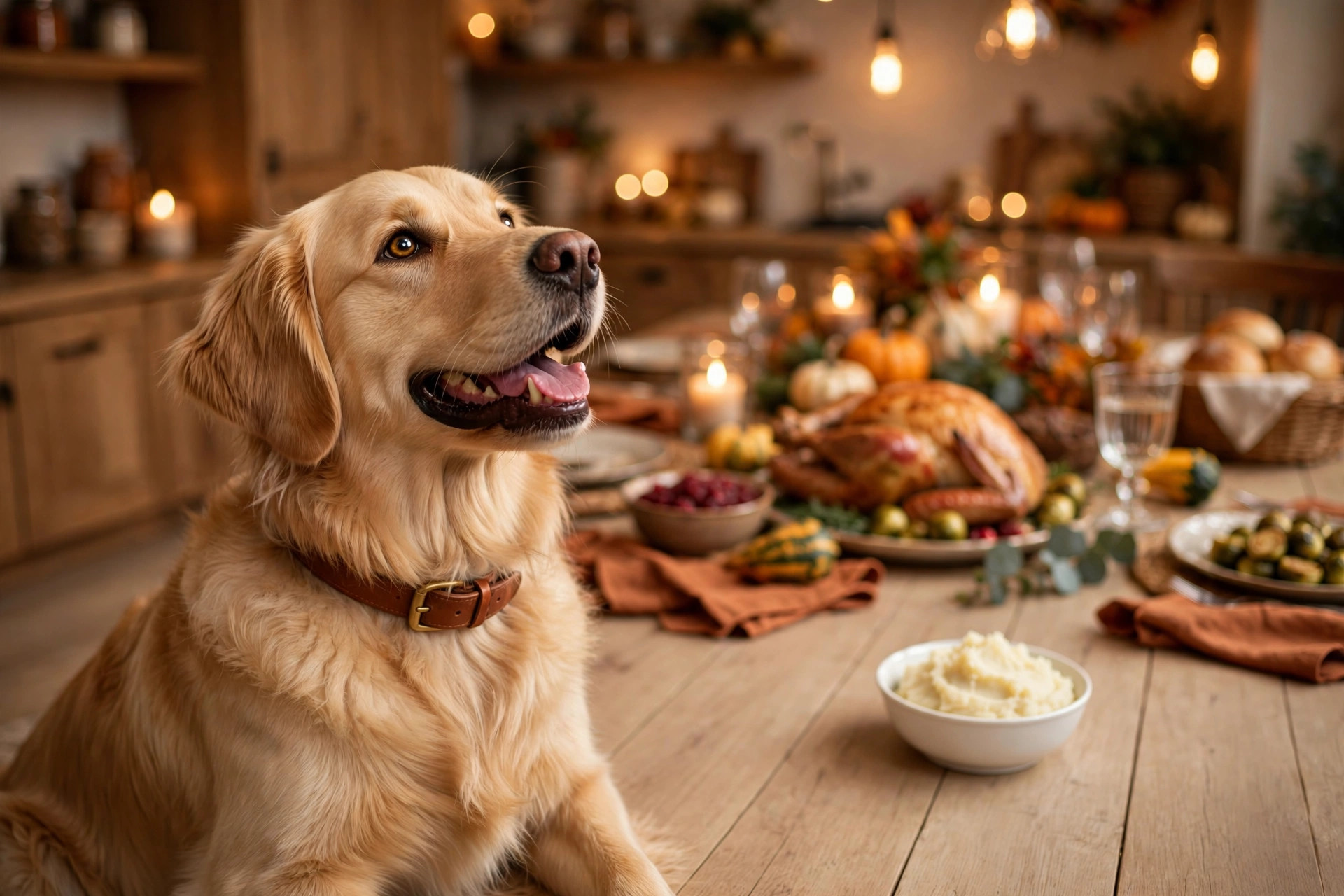
Yes, plain mashed potatoes are generally safe for healthy dogs when prepared correctly. A cooked potato is a digestible starch that dogs can metabolize — potatoes even appear as a carbohydrate ingredient in many commercial dog foods. The safety question with mashed potatoes depends almost entirely on preparation, not on the potato itself.
The problem is that most mashed potatoes served at home — and nearly all restaurant or holiday versions — are loaded with additions that are unsafe for dogs: butter, milk or cream, salt, garlic powder, onion powder, sour cream, or cheese. The American Kennel Club lists mashed potatoes among the Thanksgiving foods to keep away from dogs precisely because holiday mash is typically full of butter and seasonings.
As always, treats — including potatoes — should make up no more than 10% of your dog’s daily calories, with the rest coming from a complete, balanced dog food.
Before offering mashed potatoes, make sure you serve only:
- Potatoes that are fully cooked (boiled or baked), never raw
- Peeled — skins can concentrate solanine, a natural toxin
- Completely plain — no butter, milk, cream, cheese, salt, or seasonings
- Cooled to room temperature, not hot
- In small portions, as an occasional treat
Also Read: Can Dogs Eat Turkey? Safe Feeding Guide (2026)
Benefits of Plain Potatoes for Dogs
Let’s be honest: plain potatoes are not a nutritional powerhouse for dogs the way lean proteins or vegetables are. But they do offer a few modest benefits when fed responsibly.
1. Gentle, Digestible Energy
Cooked potato is a soft, easy-to-digest starch. In fact, veterinarians often suggest plain boiled potato (alongside plain poultry) as part of a short-term bland diet for dogs recovering from stomach upset — always on veterinary advice. A small serving of plain mash can be settling for a mildly queasy stomach.
2. Some Vitamins and Minerals
Potatoes contain vitamin C, vitamin B6, potassium, magnesium, and iron. In the small portions dogs should eat, these are a modest bonus rather than a reason to feed potatoes deliberately — but they do mean plain mash isn’t “empty” the way some treats are.
3. Fiber for Gut Health
Cooked potato provides a small amount of dietary fiber, which supports healthy digestion. For dogs that are slightly constipated, a tablespoon of plain mashed potato can sometimes help — but don’t rely on it as a remedy without asking your vet.
4. A Bland, Low-Smell Treat
Because plain mash is mild and soft, it’s an easy food for senior dogs or dogs with sore mouths who struggle with crunchy treats. It’s also virtually odor-free, unlike fish-based treats.
Risks: Why Holiday Mash Is Dangerous for Dogs
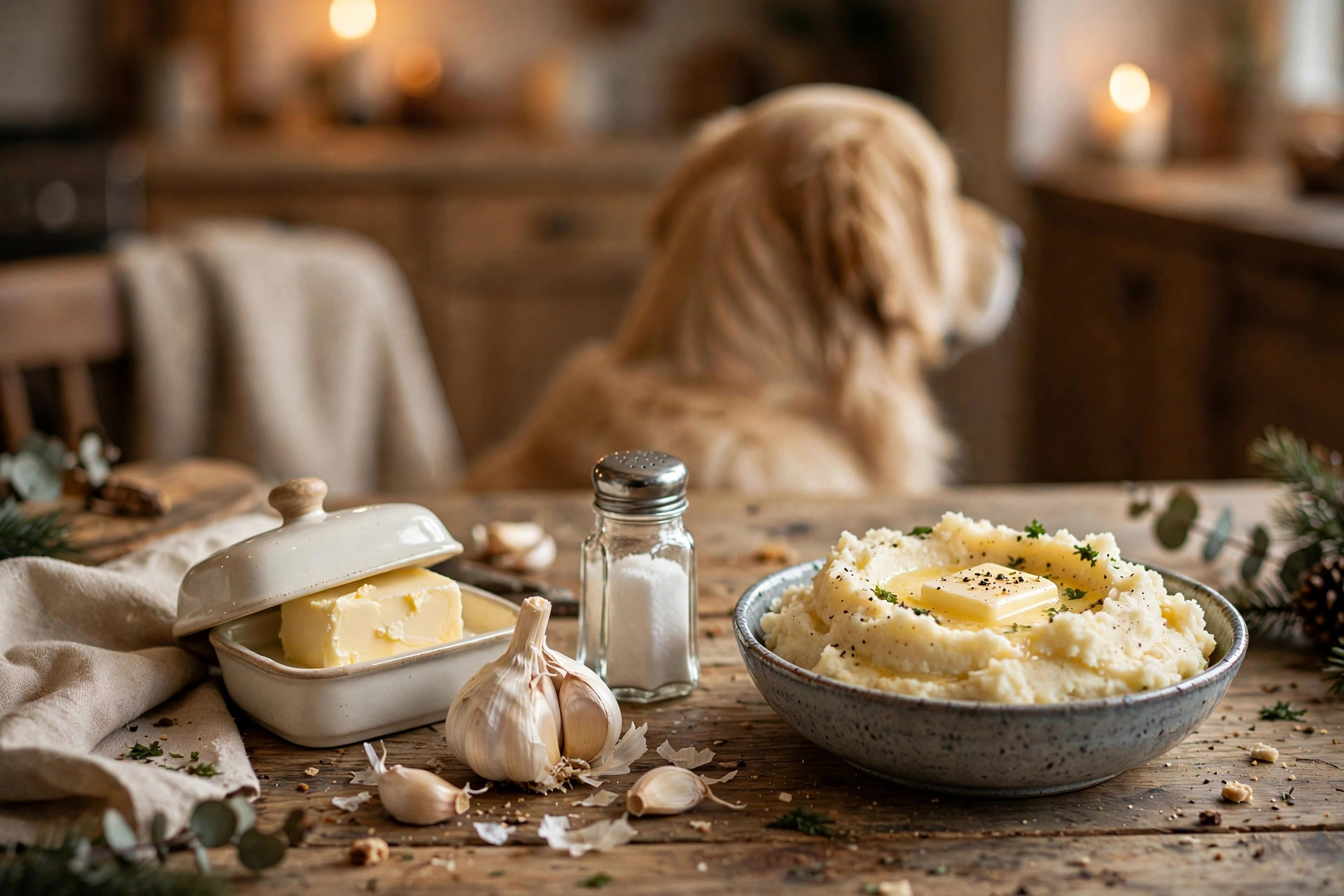
The potato itself is rarely the problem. Nearly every danger comes from what’s added to the mash — or from the potato being served the wrong way.
1. Butter and Dairy: Pancreatitis Risk
Butter, milk, cream, sour cream, and cheese are the classic ingredients in mashed potatoes — and the biggest danger. These add saturated fat that can trigger pancreatitis, a painful, potentially life-threatening inflammation of the pancreas. Veterinary clinics see a spike in pancreatitis cases after holidays, directly linked to butter- and milk-laden leftovers. Many adult dogs also digest lactose poorly, so dairy can cause gas, bloating, and diarrhea on its own.
2. Garlic, Onion, and Chives: Toxic
Garlic powder, onion powder, and fresh alliums (onion, garlic, chives, leeks) are common in seasoned and restaurant mashed potatoes — and they are toxic to dogs. Alliums damage red blood cells, causing hemolytic anemia, and symptoms can appear 24–72 hours after eating. Even small amounts in flavored mash, boxed preparations, or leftovers matter.
3. Salt and Gravy: Sodium Overload
Holiday mash is often heavily salted, and gravy poured on top concentrates fat and sodium further. Too much salt can cause dehydration, increased thirst, and — in large amounts — sodium poisoning. Keep salty human foods out of the dog bowl entirely.
4. Raw or Green Potatoes: Solanine
Raw potatoes — and any green-tinged skins, sprouts, or leaves — contain solanine, a natural glycoalkaloid that causes gastrointestinal upset and, in sufficient doses, neurological signs. Always cook potatoes thoroughly, peel them, and discard any green parts or sprouts. Cooked, peeled potato flesh is very low in solanine and is not a meaningful risk at normal serving amounts.
5. Blood-Sugar Spikes in Diabetic Dogs
Potatoes have a high glycemic index, meaning they can raise blood sugar quickly. Dogs with diabetes, obesity, or pancreatitis history should not be given mashed potatoes at all unless your veterinarian approves. For healthy dogs, this is simply another reason to keep portions tiny.
6. Instant Mashed Potato Mixes
Boxed instant mashed potatoes often hide sodium, preservatives, and flavorings — including garlic or onion powder — in amounts above what dogs should consume. If you must use them, choose unseasoned varieties and check every label, but whole boiled potatoes are always safer.
Also Read: Can Dogs Eat Cranberries? Safe Feeding Guide (2026) — another holiday-season treat dog owners ask about every year.
How Many Mashed Potatoes Can Dogs Eat?
Plain mashed potatoes should be an occasional treat, not a regular side dish. Use this guide based on veterinary recommendations:
| Dog Size | Weight | Safe Serving (plain mash) |
|---|---|---|
| Small dogs | Under 20 lbs | 1 tablespoon max |
| Medium dogs | 20–50 lbs | 1–2 tablespoons |
| Large dogs | Over 50 lbs | Up to ¼ cup |
Frequency matters as much as portion: a small serving once a week or so is safer than a big bowl once a month. And remember the 10% rule — all treats combined should stay under 10% of daily calories.
How to Make Dog-Safe Mashed Potatoes
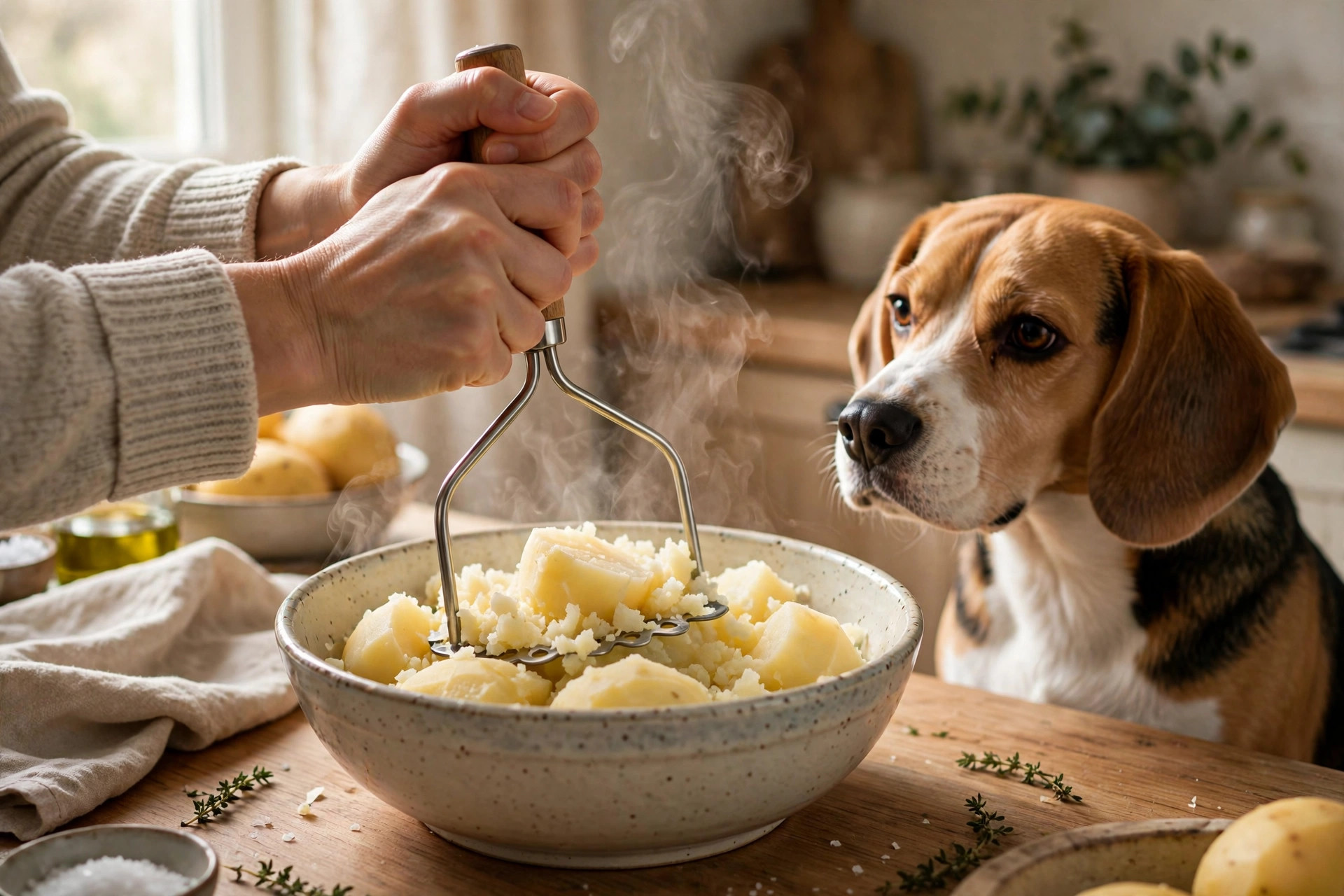
Making a dog-safe batch takes just a few minutes — and you should always prepare it separately from the family batch, never by scooping plain mash out of the buttery bowl:
- Peel potatoes and discard any green parts, sprouts, or skins.
- Boil until fork-tender. (Boiling softens potatoes without adding fat.)
- Cool completely to room temperature — never serve hot potatoes.
- Mash with water only if needed for texture — zero butter, milk, salt, or seasonings.
- Measure the correct portion for your dog’s size from the table above.
- Serve plain, as an occasional treat or mixed into their regular meal.
One important note: never serve warm or hot potatoes straight from the pot. Cool them for at least 20 minutes to avoid mouth burns.
Thanksgiving Table: Potato Dangers to Avoid
Thanksgiving coincides with a real uptick in emergency vet visits across the U.S., because of the extra human food dogs end up consuming. When it comes to the potato dishes on your table, here’s the scorecard:
- Holiday mashed potatoes (butter, cream, salt, garlic): No — pancreatitis and toxicity risk.
- Mashed potatoes with gravy: No — fat and sodium overload, often onion/garlic in the gravy.
- Sweet potato casserole (marshmallows, brown sugar): No — plain sweet potato is fine, but the casserole version is a sugar bomb.
- Cheesy scalloped or baked potatoes: No — high fat, salt, and dairy.
- Plain boiled or baked potato, peeled and unseasoned: Yes, in small amounts.
- Plain mashed sweet potato (no marshmallows or sugar): Yes, in small amounts.
Pro tip: Tell your guests in advance — and take the trash out promptly. More than half of holiday ER visits for dogs start with a well-meaning guest sharing scraps or a dog raiding the garbage.
Also Read: Pet Emergency First Aid: Vet Guide (2026) — what to do in the critical first minutes if your dog eats something toxic.
What If My Dog Ate Holiday Mashed Potatoes?
If your dog snatched a bite of the holiday mash, act based on what they actually ate:
- Ate plain mash (too much): Most often causes temporary digestive upset — loose stool, vomiting, or gas. Withhold food for a few hours, offer water, and monitor.
- Ate buttery/creamy mash: Monitor closely for 24–48 hours. Signs of pancreatitis — repeated vomiting, hunched posture, belly pain, lethargy, loss of appetite — warrant an urgent vet visit.
- Ate mash with garlic or onion: Contact your veterinarian right away, even if your dog seems fine — allium toxicity symptoms can take 24–72 hours to appear.
- Ate raw potato or green skins: Watch for vomiting, diarrhea, lethargy, or confusion, and call your vet for guidance.
When in doubt, call your veterinarian or a pet poison helpline. It’s always better to ask early than to wait for symptoms.
Can Puppies Eat Mashed Potatoes?
Yes, puppies can eat a tiny amount of plain mashed potato once they are fully weaned and eating solid food. Because puppies have sensitive digestive systems, start with one very small taste and watch for any stomach upset over the next 24 hours before offering more. As with adults, keep it an occasional treat only — and be extra careful that it contains no butter, salt, garlic, or onion.
Healthy Alternatives to Mashed Potatoes
If your dog doesn’t care for potatoes — or you’d like holiday-safe options with more nutritional value — these are all safe in moderation:
- Plain pumpkin puree (100% pumpkin, never pie filling)
- Plain green beans — no butter, salt, or casserole
- Carrots — raw or cooked, in small pieces
- Blueberries (antioxidant-packed and low in sugar)
- Apples — seeds and core removed
- Plain cooked sweet potato — peeled, unseasoned
Always introduce any new food gradually and in small portions.
Also Read: Can Dogs Eat Turkey? Safe Feeding Guide (2026)
Frequently Asked Questions
Can dogs eat mashed potatoes every day?
No. Even plain mashed potatoes should be an occasional treat, not a daily food. They’re mostly starch with modest nutrition, and regular feeding unbalances your dog’s diet.
Can dogs eat mashed potatoes with butter?
No. Butter adds saturated fat that can trigger pancreatitis and cause digestive upset. Only plain, butter-free mash is safe.
Can dogs eat instant mashed potatoes?
It’s best to avoid them. Boxed mixes often contain excess sodium, preservatives, and hidden garlic or onion powder. Whole boiled potatoes are always safer.
Are potato skins safe for dogs?
No. Skins can concentrate solanine, especially green or raw skins, and are hard to digest. Always peel potatoes before serving.
Can dogs eat raw potatoes?
Never. Raw potatoes contain solanine, which can cause vomiting, diarrhea, and neurological symptoms. Always cook potatoes thoroughly.
Can diabetic dogs eat mashed potatoes?
It’s best to avoid it. Potatoes have a high glycemic index and can spike blood sugar. Always check with your veterinarian before feeding starchy foods to a diabetic dog.
Final Thoughts
So, can dogs eat mashed potatoes? Yes — when they’re plain, properly cooked, peeled, and served in small amounts. A tablespoon of homemade plain mash can be a gentle, vet-approved-style treat. But the creamy, buttery, garlic-laden mashed potatoes on your Thanksgiving table are a firm no: butter and dairy risk pancreatitis, garlic and onion are toxic, and salt and gravy only pile on more danger.
The golden rule for the holidays: make your dog’s portion before you add anything to the family batch — plain, cooled, and tiny. As with any new food, introduce it slowly and watch how your dog responds. And when in doubt, your veterinarian is always the best source of advice for your individual pup’s diet.
By Dr. Ayaz Ali