
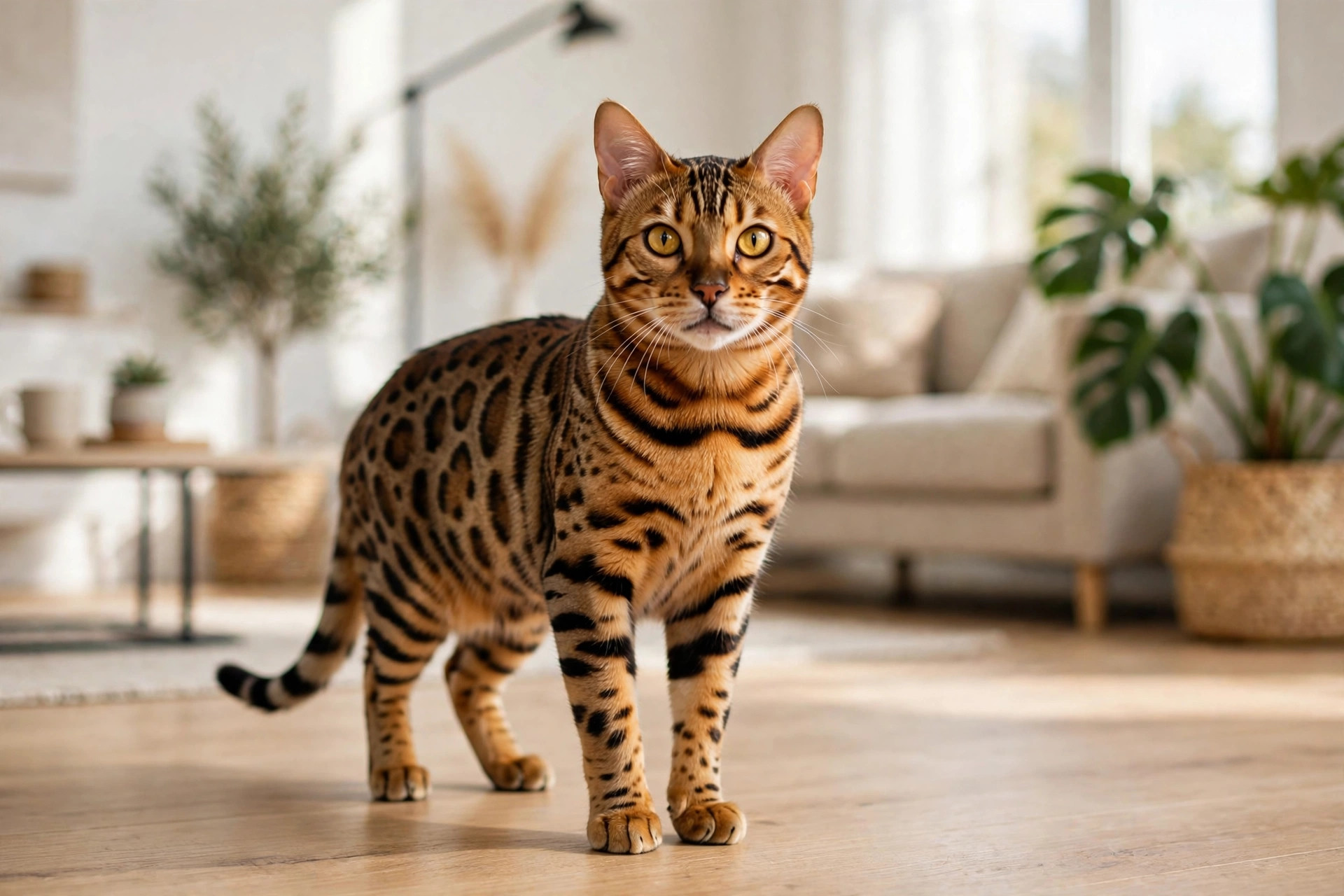
A spotted coat, an athlete’s body, and a personality that never switches off — the Bengal cat looks like a wild jungle cat but lives like a full-time entertainer. If you are wondering whether this bengal cat breed guide should end with you bringing one home, you are asking exactly the right question.
Bengals are one of the most admired — and most misunderstood — cat breeds alive. They are brilliant, vocal, and endlessly active, which makes them magical companions for the right household and exhausting ones for the wrong one. This complete bengal cat breed guide covers everything you need to decide: temperament, size and appearance, daily care, grooming, health risks, costs, and breeder tips.
Table of Contents
- What Is a Bengal Cat?
- Bengal Breed at a Glance
- Bengal Cat Breed Guide: Temperament & Personality
- Size, Appearance & Coat
- Bengal Cat Care: Daily Needs
- Bengal Cat Breed Guide: Health Issues to Know
- Is a Bengal Cat Right for You?
- Bengal Kitten & Breeder Tips
- Frequently Asked Questions
- Final Thoughts
What Is a Bengal Cat?
The Bengal is a hybrid breed born from crossing a domestic cat with the wild Asian leopard cat (Prionailurus bengalensis). Breeder Jean Mill pioneered the modern Bengal in the 1970s and 1980s, aiming to create a cat with wild, exotic looks and a safe, social temperament — so people could enjoy a “little leopard” without taking an actual wild animal home.
Today’s Bengals are fully domestic cats — reputable breeders only sell kittens at least four generations removed from any wild ancestor — and the breed earned championship recognition from The International Cat Association (TICA) in the early 1990s. The wild look survived; the wild temperament, fortunately, did not. What did survive is an unusually athletic, intelligent, and high-energy personality that owners often describe as “dog-like.”
Veterinary references including PetMD note that Bengals remain one of the most active breeds you can bring home, with a strong need for stimulation that sets them apart from calmer breeds like the British Shorthair or Ragdoll.
Also Read: Ragdoll Cat Breed Guide: Care & Temperament (2026)
Bengal Breed at a Glance
| Trait | Details |
|---|---|
| Origin | Hybrid of domestic cat × Asian leopard cat; developed 1970s–80s |
| Size | Medium-large — males 10–15 lbs, females 8–10 lbs |
| Coat | Short, dense, “glittered”; spotted (rosetted) or marbled patterns |
| Colors | Brown, silver, snow, and more |
| Lifespan | 12–16 years with good care |
| Energy level | Very high — the most athletic of common breeds |
| Best for | Active, experienced owners; homes with time for daily play |
Bengal Cat Breed Guide: Temperament & Personality
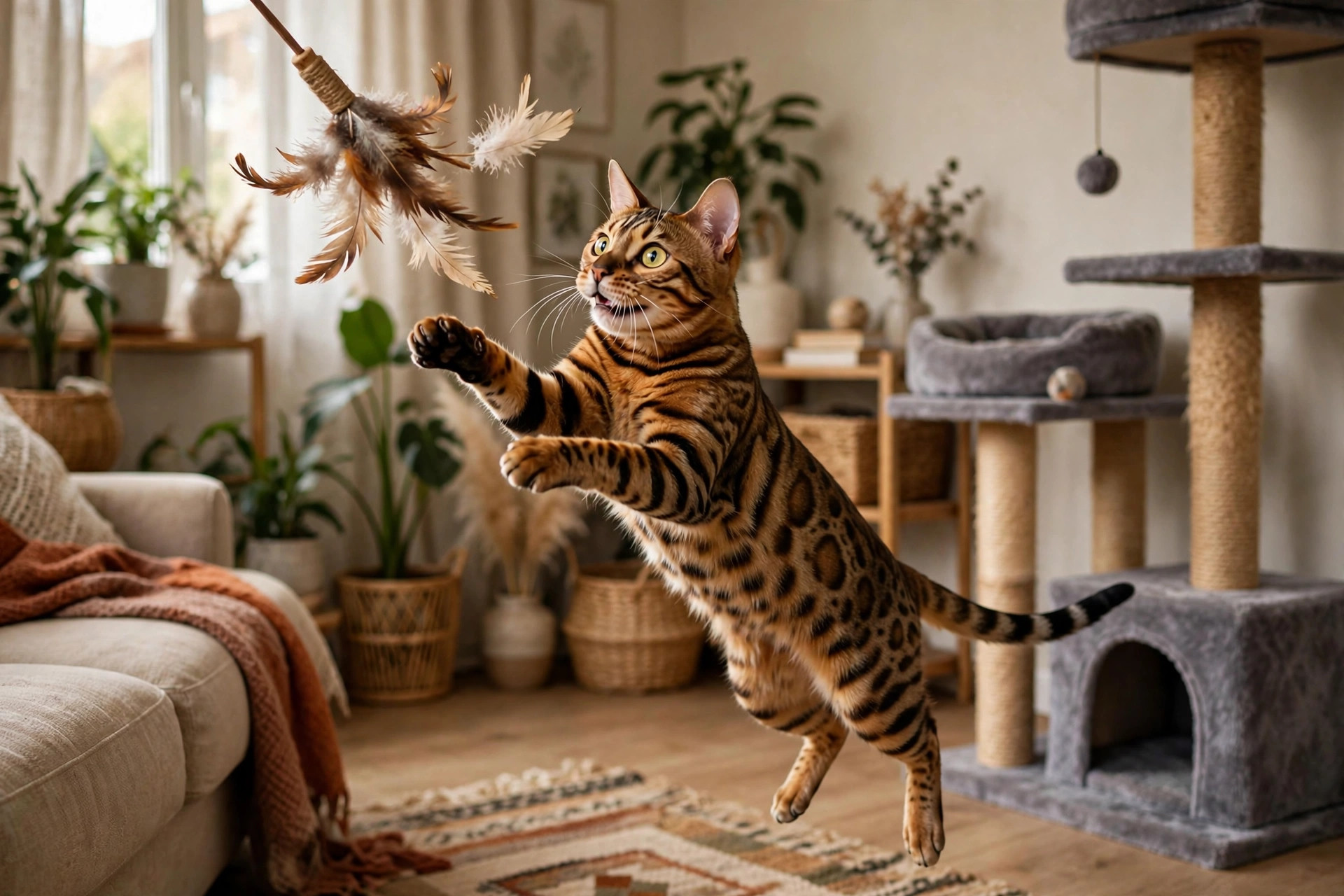
Temperament is the make-or-break factor with this breed. A Bengal’s personality is not a gentle background presence — it is a full-time, front-row feature of your household:
1. Extraordinarily Active and Athletic
Bengals are the sprinters of the cat world. They climb to the highest point in any room, leap distances that shock first-time owners, and need far more physical activity than the average cat. Two or three play sessions a day is the minimum — one short session before work will not be enough for most Bengals.
2. Brilliant, Curious, and Easily Bored
This is one of the most intelligent domestic cat breeds. Bengals learn to open doors and drawers, figure out puzzle feeders in minutes, and can be trained to walk on a harness, play fetch, and learn tricks with clicker training. The flip side: an under-stimulated Bengal invents its own entertainment, and you may not like its choices. Boredom shows up as yowling, knocking things off shelves, and destructive scratching.
3. Vocal and Communicative
Bengals talk — a lot. They chirp, trill, chatter, and yowl to narrate their day, demand playtime, and comment on your activities. If you love a quiet cat, this breed will be an adjustment; if you enjoy conversation, it is one of their most charming traits.
4. Affectionate on Their Own Terms
Most Bengals bond deeply with their families and follow their favorite person from room to room. But affection is usually near you, not on you — many Bengals dislike being picked up and held, though they will happily sprawl beside you or lean against your leg.
5. Loves Water and Heights
Unusually for cats, many Bengals are fascinated by water — dipping paws in bowls, joining you near the shower, even paddling in a shallow pool. They are also compulsive climbers: plan on a tall, sturdy cat tree and high shelving they are allowed to use.
6. Strong Prey Drive
The hunting instinct runs deep. Bengals can be excellent mousers, but that same drive makes them unsafe housemates for birds, hamsters, fish, or other small pets. Gradual, careful introductions to other cats and cat-friendly dogs usually succeed; small prey animals should simply never share space.
Size, Appearance & Coat
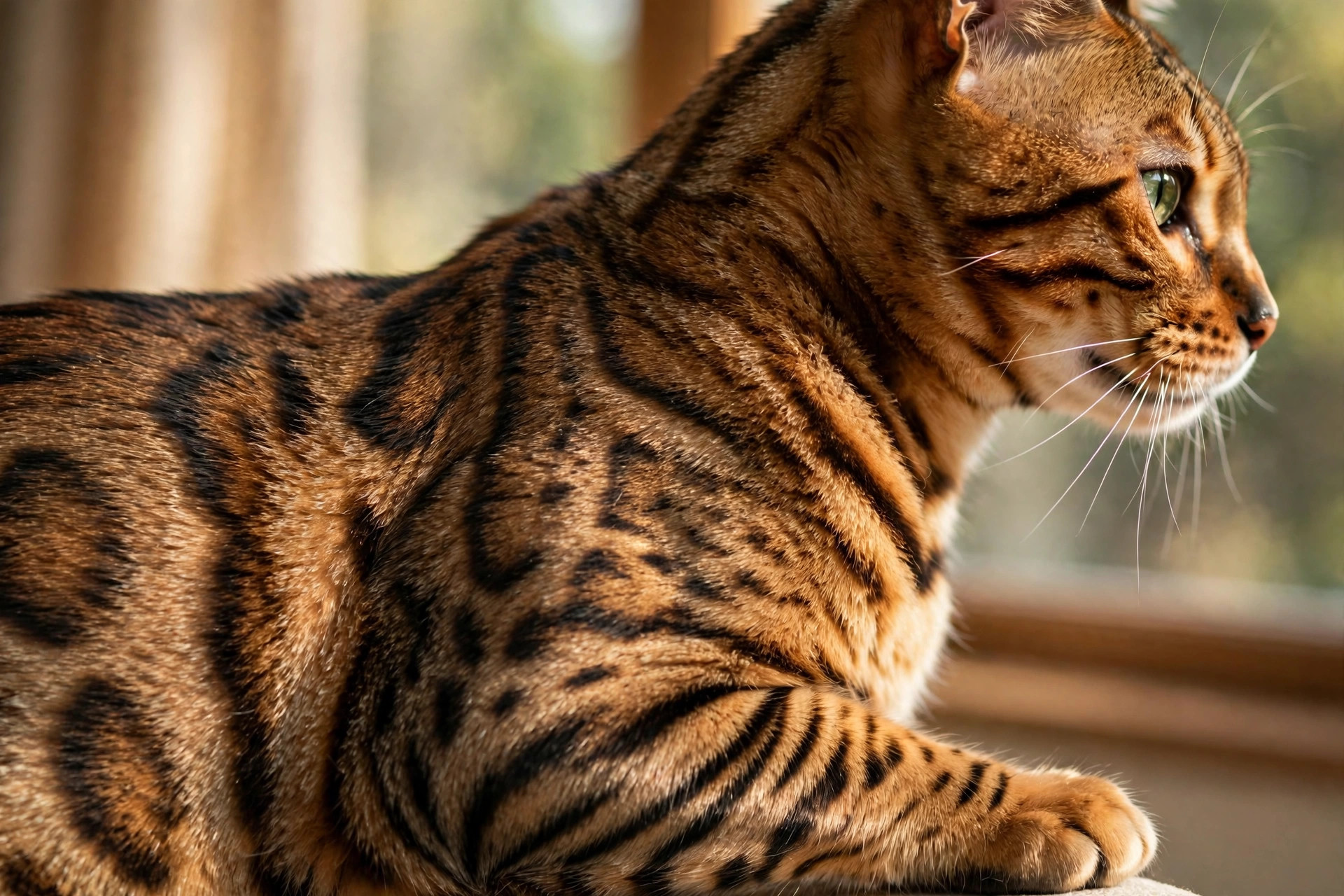
The Bengal’s appearance is its calling card: a muscular, athletic body wrapped in a coat that genuinely resembles a small leopard’s. Males typically weigh 10–15 pounds and females 8–10, with long bodies, strong hind legs built for jumping, and a thick, low-slung tail.
The coat comes in two signature patterns — spotted (rosetted), with two-tone rosette markings like a jaguar’s, and marbled, with swirling horizontal bands. Colors range from warm browns to silver to the pale “snow” shades. Many Bengals carry the breed’s famous glittered coat — translucent-tipped hairs that make the fur shimmer gold in sunlight.
Grooming is blessedly simple for such a glamorous animal. The short, dense coat needs only weekly brushing with a soft brush or grooming mitt to remove loose hair and distribute skin oils. Despite the thick look, shedding is moderate. Add routine care: nail trims every 2–3 weeks, gentle ear checks (especially if your Bengal plays in water), and regular dental care.
Bengal Cat Care: Daily Needs
Caring for a Bengal is less about pampering and more about engineering enrichment. Get the activity balance right and you get a joyful, well-behaved companion; get it wrong and you get chaos with whiskers.
Exercise and Enrichment: Plan Like It’s a Job
Budget 20–30 minutes of interactive play daily, split across sessions: wand toys that mimic birds, crinkle balls, laser play (always end with a catchable toy), and puzzle feeders that make meals a hunt. A tall, rock-solid cat tree near a window is essential — Bengals want height. Rotating toys weekly keeps novelty alive, and many Bengals take beautifully to harness walks, which drain energy no indoor toy can fully reach.
Diet and Feeding: Measured, High-Protein Meals
Feed a high-quality, protein-rich cat food in measured portions at set mealtimes — never free-feed. As obligate carnivores, cats need meat-based nutrition, and active Bengals burn a lot of fuel, but it is easy to overfeed a cat that has learned to ask loudly. Keep all treats (including protein treats) under 10% of daily calories. Wet food or a mixed diet supports urinary health, and fresh water should always be available — many Bengals drink more from a cat water fountain, which suits their water fascination.
Space and Home Setup
Bengals do best in homes with room to move: vertical shelving or cat-wall perches, scratching posts (tall and stable — they climb them), window perches, and a catio or secured balcony if possible. Kitten-proof like you would for a very determined toddler: secure cords, lidded bins, and screens on every window.
Also Read: First-Time Cat Owner Checklist: 12 Things to Buy & Do (2026)
Litter Box and Routine
Follow the n+1 rule (one box per cat plus one extra), scoop daily, and keep feeding and play times predictable. Bengals are routine-driven; a stable schedule keeps them calm, while sudden changes can trigger restless or vocal behavior.
Bengal Cat Breed Guide: Health Issues to Know
Bengals are generally healthy, athletic cats, but as a purebred they carry several well-documented risks. A responsible breeder screens for these and shows you written results:
1. Hypertrophic Cardiomyopathy (HCM)
HCM — abnormal thickening of the heart muscle — is the most serious inherited concern. Reputable breeders screen breeding cats annually with echocardiograms performed by a veterinary cardiologist. Ask for the results in writing before you commit to a kitten.
2. Progressive Retinal Atrophy (PRA-b)
A hereditary eye condition that can lead to vision loss and blindness. A DNA test exists for the Bengal-specific form, so ethical breeders test their lines and only breed from clear or carrier-to-clear pairings.
3. Patellar Luxation
The kneecap slips out of place — unsurprising in a breed that launches itself at such heights. Mild cases cause occasional skipping steps; severe cases may need corrective surgery. Ask the breeder whether their lines are screened.
4. Lymphoma
All cats can develop cancer, but Bengals are reported to be at higher risk of lymphoma (cancer of the lymphatic system) than many other breeds. Unexplained weight loss, lethargy, vomiting, or swollen lymph nodes warrant a prompt vet visit.
5. Gastrointestinal Sensitivity
Bengals are prone to digestive upset and irritable bowel tendencies. Sudden diet changes, stress, or scavenging can trigger vomiting or diarrhea — transition foods gradually over 7–10 days and see your vet if symptoms persist beyond a day or two.
Schedule annual veterinary checkups (twice a year once your cat passes 7), keep vaccinations and parasite prevention current, and discuss baseline heart screening with your vet in young adulthood.
Also Read: British Shorthair: Breed Guide, Care & Health (2026)
Is a Bengal Cat Right for You?
A Bengal is a great fit if: you want an athletic, interactive cat that plays fetch and learns tricks; someone is home much of the day or the household is active; you enjoy a vocal, communicative pet; you can commit to daily play sessions, vertical space, and enrichment; and you have no small pets like birds or hamsters.
Reconsider if: you are away from home for long hours every day (a bored Bengal is a destructive Bengal); you want a calm lap cat — this breed is the opposite of low-key; anyone needs a quiet, hypoallergenic pet (Bengals are vocal, and no breed is truly hypoallergenic); you have small children who expect a cat that tolerates being carried; or you hoped for a pet you can leave to entertain itself.
Bengal Kitten & Breeder Tips
If you decide on a Bengal, choose your source with unusual care — hybrid-line breeding demands responsible practices. A reputable breeder will:
- Provide written HCM echocardiogram and PRA-b DNA test results for both parents
- Register kittens with TICA and raise them in the home with early socialization
- Offer a written health guarantee (typically 1–3 years for genetic conditions)
- Ask you detailed questions about your home and routine — good breeders screen buyers too
- Never sell unvaccinated, unregistered kittens “cheap, no papers,” and never sell early-generation (F1–F3) hybrids without explaining the legal and behavioral implications
Expect to pay roughly $1,000–$4,000 for a pet-quality kitten from a reputable breeder, with show-quality or rare-colored kittens costing more. Check local laws first — some areas restrict ownership of early-generation Bengal hybrids because of their wild ancestry. Also consider breed-specific rescues: adult Bengals regularly need homes, and an adult’s energy level and temperament are already known quantities.
Frequently Asked Questions
Are Bengal cats hypoallergenic?
No. No cat breed is truly hypoallergenic. Bengals shed moderately and produce the Fel d 1 allergen protein like all cats, so spend time with the breed before committing if allergies are a concern.
Do Bengal cats like to cuddle?
Most are affectionate but not lap cats in the classic sense. They bond deeply and follow you everywhere, but many prefer sprawling beside you rather than being held — on their own terms.
Are Bengals good with kids and dogs?
Often yes, with the right match: their playful, sturdy nature suits respectful older children and cat-friendly dogs. Supervise young children with any pet, and never house Bengals with small prey animals.
Do Bengal cats shed a lot?
Moderately. The short, dense coat sheds year-round with seasonal peaks. Weekly brushing keeps loose hair manageable — far less maintenance than a longhaired breed.
Can Bengal cats be left alone during the day?
Adults cope with a standard workday if the home is well enriched — cat trees, puzzle feeders, window views, and ideally a second pet. But 10–12 hours of daily solitude is too much for most Bengals and breeds boredom behaviors.
How long do Bengal cats live?
A healthy Bengal typically lives 12–16 years with proper nutrition, regular vet care, enrichment, and a safe indoor environment.
How much does a Bengal cat cost?
From a reputable breeder, expect $1,000–$4,000 for a pet-quality kitten, with show-quality lines costing more. Budget also for quality food, enrichment gear, litter, and annual vet care.
Can Bengal cats go outside?
Not unsupervised. Their athleticism lets them roam far and their striking looks make them theft targets. Harnessed walks and a secure catio are the safe ways to give them outdoor time.
Final Thoughts
So, is the Bengal the right cat for you? If you want a wild-looking, whip-smart athlete that plays fetch, talks back, and turns your living room into its personal jungle gym, few breeds deliver like the Bengal. Just go in with open eyes: commit to daily interactive play, vertical territory, measured high-protein meals, and a breeder who can show you written HCM and PRA screening results.
Do that, and you’ll understand why Bengal owners so often say the same thing: this isn’t just a pet — it’s a lifestyle upgrade with rosettes.
About the Author
Dr. Ayaz Ali, Veterinarian — Dr. Ayaz Ali is a practicing veterinarian with years of experience in small-animal care. He writes evidence-based pet health guides for Pets Addicters.