
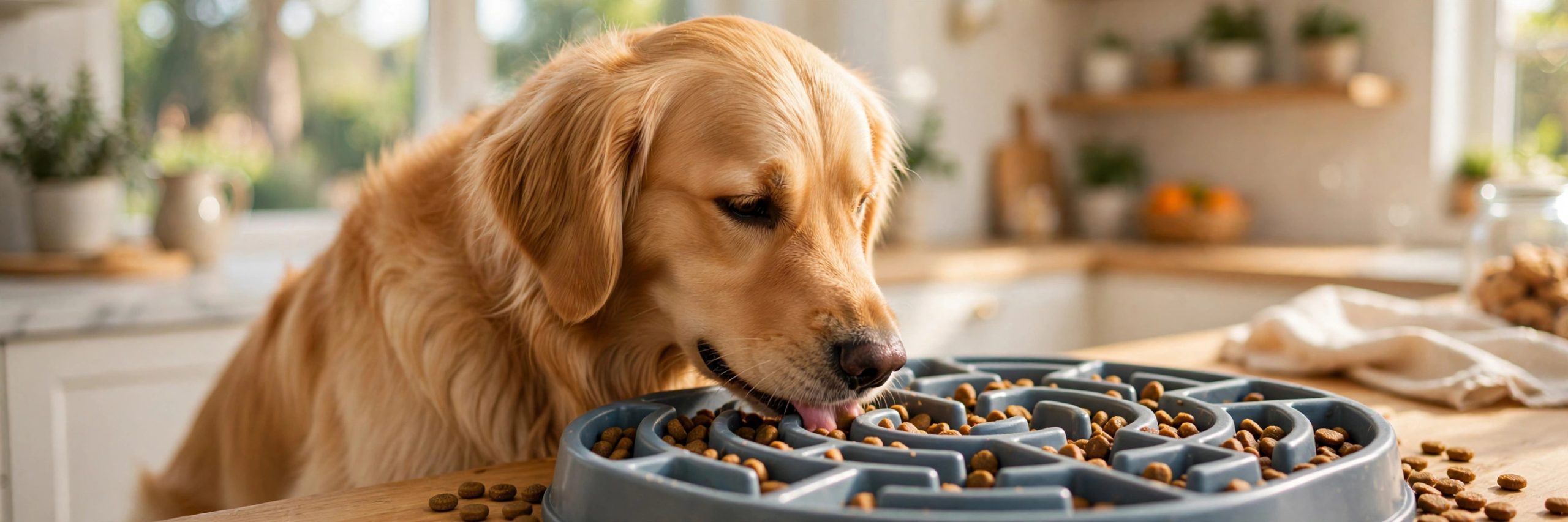
If your dog inhales dinner in 30 seconds flat and then spends the rest of the evening begging for more, you’re not alone — fast eating is one of the most common feeding problems vets see. That’s where slow feeder dog bowls come in: maze-like bowls designed to stretch mealtime from seconds into minutes.
But do slow feeder dog bowls actually work, or are they just another pet-store gimmick? The short answer is yes, they work — when you choose the right type for your dog and introduce it properly. In this 2026 guide, we’ll break down the real benefits for fast eaters, the risks they help prevent, how to pick a safe bowl, and the mistakes that frustrate dogs and owners alike.
Table of Contents
- Do Slow Feeder Dog Bowls Really Work?
- Benefits of Slow Feeder Dog Bowls
- How to Choose the Right Slow Feeder
- Slow Feeder Bowl Size Guide
- How to Introduce a Slow Feeder to Your Dog
- 5 Slow Feeder Mistakes to Avoid
- Puppies, Seniors & Special Cases
- Frequently Asked Questions
Do Slow Feeder Dog Bowls Really Work?
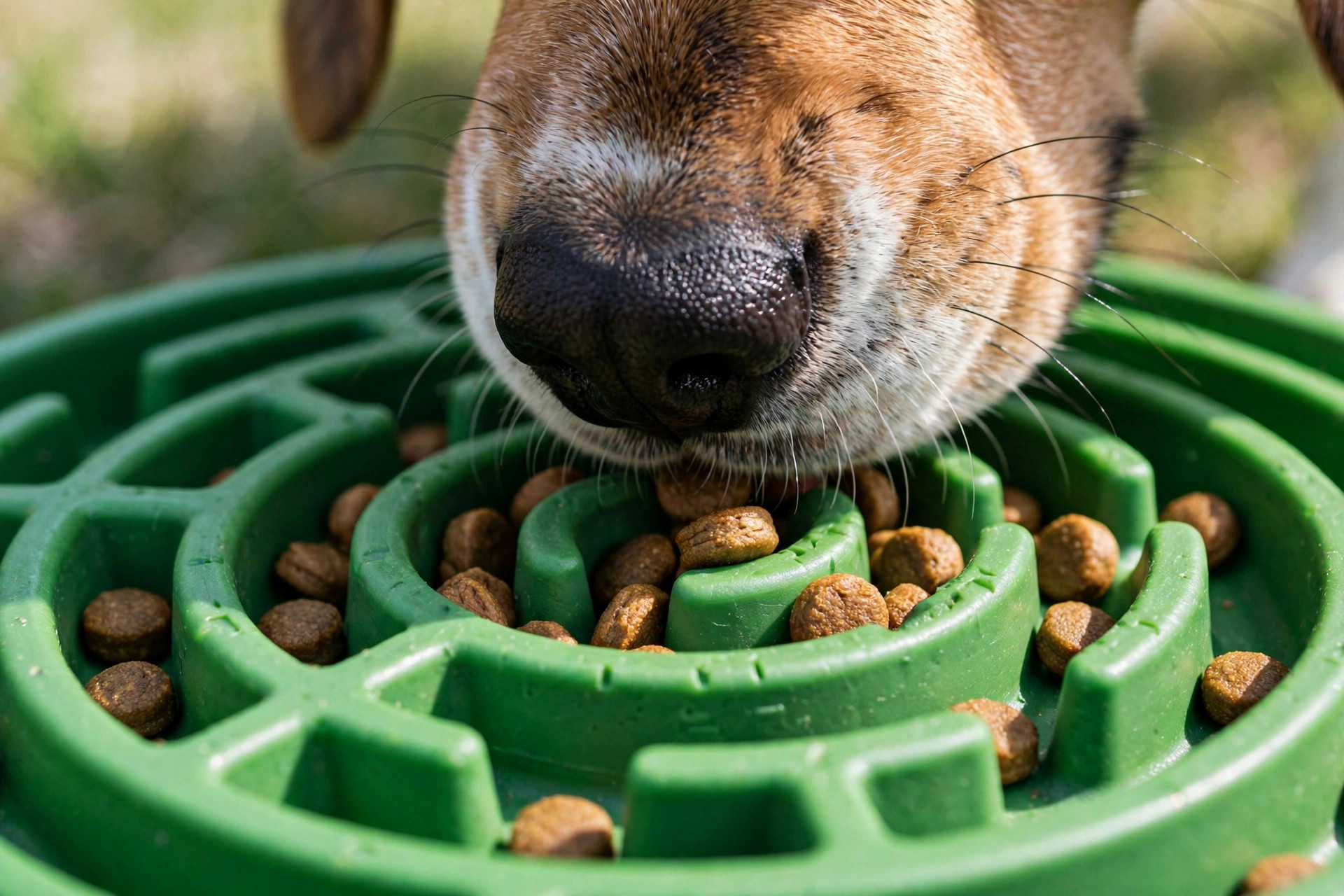
Yes. A slow feeder dog bowl physically blocks your dog from gulping big mouthfuls. The raised ridges, swirls, and compartments force your dog to eat around the obstacles, which naturally stretches mealtime — often from under a minute to 5–15 minutes, depending on the bowl’s difficulty and your dog’s persistence.
Veterinary nutritionists at Tufts University’s Cummings School of Veterinary Medicine note that eating quickly is a genuine problem: fast eaters can consume huge amounts of calories before the fullness signal travels from the stomach to the brain, raising the risk of overeating and weight gain. Their Petfoodology team found that a slow feeding bowl took one eager dog more than 3 minutes to finish the same kibble she had gulped down in seconds from a regular bowl — a clear, practical improvement.
They’re not magic, though. A slow feeder slows the speed of eating; it doesn’t replace portion control, a balanced diet, or veterinary care. Think of it as a seatbelt — it makes a risky habit much safer, but it works best as part of a sensible feeding routine.
Benefits of Slow Feeder Dog Bowls
Beyond the obvious mealtime slowdown, here’s what the maze bowl actually does for your dog:
1. Less Gulping, Choking, and Regurgitation
Dogs that eat too fast swallow large chunks of kibble along with lots of air. That’s the classic recipe for post-meal vomiting and gagging. Slowing the intake gives your dog time to chew and swallow properly, which means fewer upset stomachs right after dinner.
2. Better Digestion
Smaller, slower mouthfuls are easier on the stomach. Food arrives pre-chewed instead of in a compressed lump, which supports smoother digestion and reduces the gas, burping, and discomfort that fast eaters often suffer.
3. Helps Manage Weight
This is the underrated one. Because fast eaters finish before their satiety hormones kick in, they tend to demand seconds. Stretching the meal to 10+ minutes gives the brain time to register fullness — so your dog feels satisfied with the correct portion instead of begging. For dogs on a weight-management plan, pairing a slow feeder with low-calorie fillers is a smart combination.
Also Read: Can Dogs Eat Green Beans? Vet Safety Guide (2026) — vets often recommend green beans as a low-calorie filler for dogs that need to slim down.
4. Mental Enrichment and Calmer Evenings
Working food out of a maze is a brain game. Ten minutes of problem-solving tires a dog out the way a walk does — which is exactly why trainers recommend feeding-based enrichment for dogs that struggle with evening restlessness or being home alone. Many owners of anxious dogs feed the day’s biggest meal in a slow feeder or lick mat as part of the calming routine.
Also Read: Separation Anxiety in Dogs: Signs, Causes & How to Help (2026) — puzzle feeders and frozen treats are proven tools for dogs that panic when left alone.
5. A Note on Bloat (GDV)
Fast eating is considered a risk factor for gastric dilatation-volvulus (bloat), the life-threatening stomach twisting that affects large, deep-chested breeds like German Shepherds, Great Danes, and Standard Poodles. A slow feeder won’t guarantee prevention — bloat has multiple risk factors, and research is ongoing — but anything that reduces rapid gulping and air swallowing is a sensible precaution, especially for high-risk breeds. Ask your vet about the full bloat-prevention picture (meal size, exercise timing, raised bowls) at your next visit.
How to Choose the Right Slow Feeder
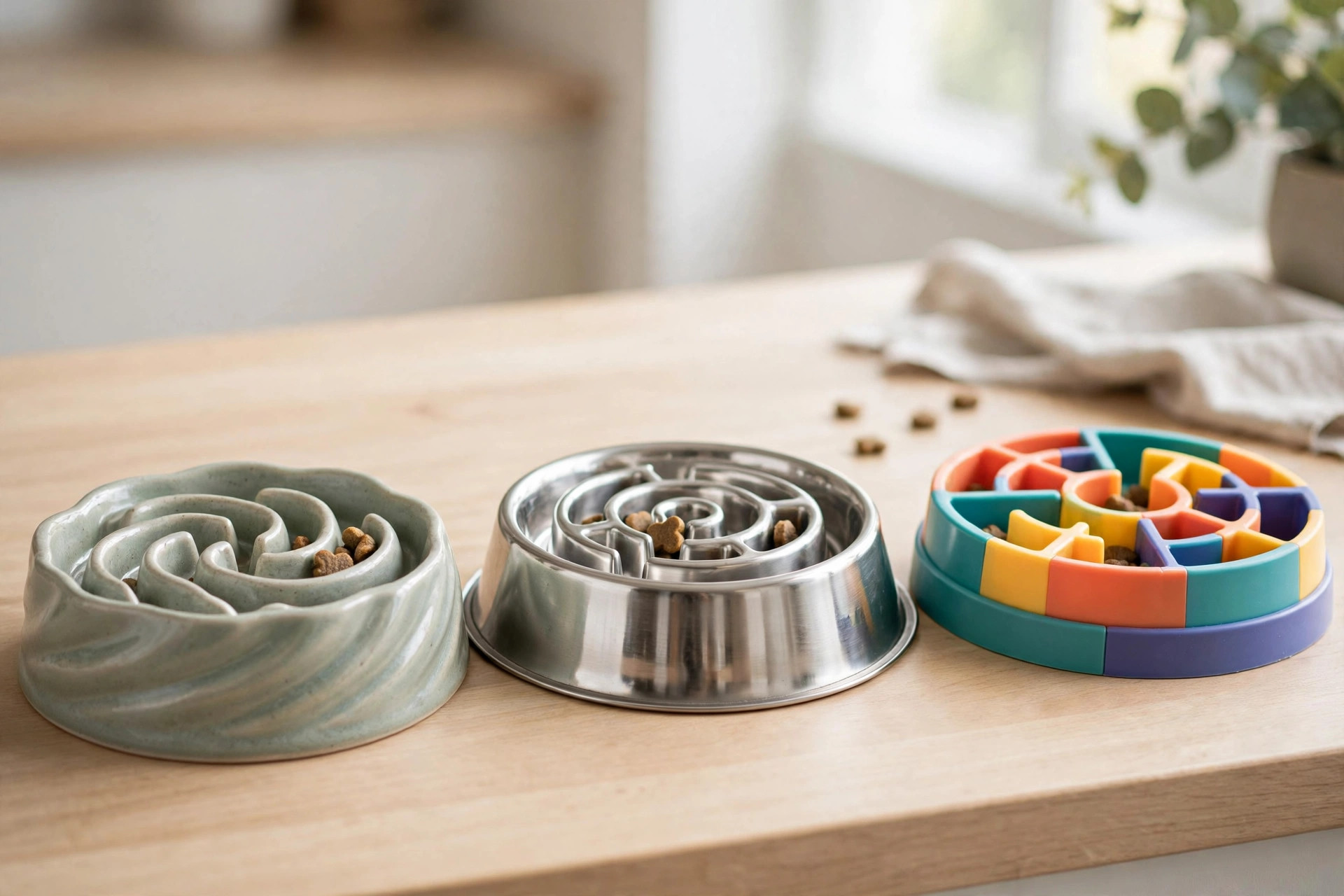
Not all maze bowls are equal. Use this checklist:
Pick the Right Difficulty
Maze bowls come in easy, medium, and hard difficulty levels. Start easy — a dog that’s frustrated will flip the bowl, bark at it, or give up on eating. You can graduate to trickier patterns once your dog has the hang of it. Flat-faced breeds (pugs, bulldogs, French bulldogs) need shallow, wide ridges they can reach with a shorter muzzle.
Choose a Safe Material
- Ceramic or stainless steel: the most durable and hygienic choices; heavy enough to stay put, dishwasher-safe, and no scratch worries.
- Food-grade plastic (BPA, PVC, and phthalate-free): lighter and cheaper; fine if your dog isn’t a chewer, but replace it when ridges get scratched, since grooves can harbor bacteria.
- Silicone inserts: handy (turn any bowl into a slow feeder), but only for supervised dogs — determined chewers can rip chunks off silicone, which is a choking and blockage risk.
Size It Like a Real Bowl
The maze ridges take up space, so a slow feeder holds less than a same-diameter flat bowl. Check the listed capacity (usually in cups) against your dog’s actual meal size — an undersized bowl means multiple refills, which defeats the purpose.
Look for Practical Details
A non-slip rubber base (or enough weight to stay put), wide smooth ridges with no sharp edges that could hurt noses, and simple construction you can fully disassemble for cleaning. Avoid overly complex puzzles with tiny crevices you can’t reach with a brush.
Slow Feeder Bowl Size Guide
Use your dog’s weight and typical meal volume as the starting point, then size up slightly to account for the maze ridges:
| Dog Size | Weight | Recommended Bowl Capacity |
|---|---|---|
| Small dogs | Under 20 lbs | 1–1.5 cups |
| Medium dogs | 20–50 lbs | 2 cups |
| Large dogs | Over 50 lbs | 4 cups |
Works with dry kibble, wet food, and raw diets — and many owners use them for lick-mat-style meals: spread wet food or plain peanut butter in the maze, freeze it for an hour, and you’ve built 20 minutes of enrichment from one meal.
Also Read: Can Dogs Eat Peanut Butter? Safety Guide (2026) — the classic slow-feeder stuffing, with the xylitol warning every owner must know first.
How to Introduce a Slow Feeder to Your Dog
Dropping a hard maze bowl in front of a hungry, frustrated dog is the fastest way to make them hate it. Do this instead:
- Start with the easiest pattern you can find and a slightly smaller-than-usual meal so the first experience is a win.
- Let your dog sniff and investigate the empty bowl first, and reward calm interaction with a few treats placed on top — not buried.
- Supervise the first few meals. Praise calm, persistent eating; if your dog gets frantic, simplify the task by putting some kibble on top of the ridges.
- Gradually increase difficulty over a week or two — move kibble deeper into the maze or switch to a harder bowl.
- Rotate it. Some dogs do best with a slow feeder for one meal and a puzzle toy or lick mat for the other, which keeps feeding enrichment fresh instead of routine.
Clean the bowl after every meal — a quick rinse or top-rack dishwasher run. Maze bowls hold food residue in their grooves, and a dirty slow feeder is a bacteria magnet. Disassemble multi-part bowls weekly for a deep clean.
5 Slow Feeder Mistakes to Avoid
1. Choosing a Bowl That’s Too Hard
The number-one reason slow feeders “don’t work” is an over-challenging bowl. If your dog flips it, barks at it, or walks away hungry, the bowl is too difficult — not your dog.
2. Using It With an Anxious or Resource-Guarding Dog Unsupervised
For dogs that guard food or panic around meals, a frustrating puzzle can raise stress instead of lowering it. Work on the guarding or anxiety with your vet or a trainer first, and always supervise.
3. Skipping the Cleaning
Trapped kibble dust and wet-food residue breed bacteria fast, especially in plastic grooves. If the bowl smells funky or has visible buildup, it’s overdue for a deep clean — or replacement.
4. Ignoring the Chewer Problem
If your dog chews bowls, skip plastic and silicone entirely. A stainless steel or heavy ceramic slow feeder is the only safe option for determined chewers — and meals should always be supervised.
5. Treating It as a Weight-Loss Plan by Itself
Slower eating helps, but it doesn’t burn calories. Pair the slow feeder with measured portions, fewer high-calorie treats, and your vet’s weight plan for real results.
Puppies, Seniors & Special Cases
Puppies: Yes, puppies can use slow feeders — they’re great for teaching calm mealtime habits early. Use a shallow, easy pattern and softer or smaller kibble; puppies have less jaw strength and shorter attention spans than adults.
Senior dogs: Slow feeders suit seniors well, but choose easy patterns and low ridges. Older dogs with dental issues or arthritis should never struggle with a hard maze — if bending or licking is painful, a lick mat or shallow snuffle mat may be kinder.
Flat-faced breeds: Bulldogs, pugs, and French bulldogs often eat fast (partly because of their breathing anatomy). Shallow, wide-ridged slow feeders work best for them; deep narrow mazes just cause frustration.
Multi-dog households: Feed dogs separately with their own slow feeders. Competition speeds dogs up, which cancels out the benefit — and prevents food-stealing conflicts.
Frequently Asked Questions
Do slow feeder dog bowls really slow dogs down?
Yes. Depending on the bowl’s difficulty, they typically stretch mealtime from under a minute to 5–15 minutes. Veterinary nutritionists confirm they meaningfully slow fast eaters, though results vary with the individual dog.
Are slow feeder bowls good for all dogs?
Most healthy dogs benefit, but skip them (or consult your vet first) for dogs with food aggression, severe anxiety around meals, dental problems that make licking painful, or dogs that chew and destroy bowls.
Can slow feeder bowls cause bloat?
No evidence suggests slow feeders cause bloat — if anything, reducing rapid gulping and air swallowing is considered a sensible precaution for bloat-prone breeds. They are not, however, a guaranteed bloat-prevention measure.
Can I use a slow feeder for wet food or raw food?
Yes. Slow feeders work with kibble, wet food, and raw diets. For wet food, pick a bowl that’s easy to wash thoroughly — ceramic and stainless steel are ideal.
How often should I clean a slow feeder bowl?
Rinse or wash after every meal, with a full disassembly and deep clean at least weekly. Bacteria build up quickly in maze grooves, especially with wet food.
Are plastic slow feeder bowls safe?
Food-grade, BPA-free plastic is safe for most dogs, but replace it once the ridges get scratched — scratches trap bacteria. Stainless steel and ceramic are more durable and hygienic long-term options.
Can puppies use slow feeder bowls?
Yes, with an easy, shallow pattern and kibble sized for puppies. Start simple and supervise the first meals so the puppy builds confidence rather than frustration.
Final Thoughts
So, do slow feeder dog bowls work? Absolutely — for the right dog, introduced the right way. A well-chosen maze bowl turns a 30-second gulp into a calm, mentally engaging meal: less choking and vomiting, smoother digestion, better portion awareness, and a tired, satisfied dog at the end of it.
The formula is simple: pick an easy-to-medium pattern in a safe material, size it generously, introduce it patiently, and clean it well. Do that, and the humble slow feeder earns its place as one of the best-value purchases in dog ownership. And if your dog’s fast eating comes with vomiting, weight gain, or signs of bloat, loop in your veterinarian — a bowl is a great tool, but some problems need professional eyes.