
That frantic head-shaking after a swim, the nonstop scratching at one ear, the unmistakable yeasty smell when your pup leans in close — if any of this sounds familiar, you may be looking at the classic signs of ear infection in dogs. Ear infections (veterinarians call them otitis externa) are one of the most common reasons dogs visit the vet, and catching them early makes treatment far simpler and less painful for your dog.
In this complete 2026 vet guide, we will walk you through how to recognize the signs of ear infection in dogs, what actually causes them, how your veterinarian will diagnose and treat the problem, and the daily habits that keep your dog’s ears healthy for good.
Table of Contents
- What Is an Ear Infection in Dogs?
- Signs of Ear Infection in Dogs: What to Watch For
- Common Causes of Ear Infections in Dogs
- How Your Vet Diagnoses an Ear Infection
- How Are Ear Infections in Dogs Treated?
- At-Home Care: What You Can Safely Do
- How to Prevent Ear Infections in Dogs
- When to See the Vet Right Away
- Frequently Asked Questions
What Is an Ear Infection in Dogs?
A dog ear infection happens when the normal balance of microorganisms in the ear canal is thrown off, letting bacteria, yeast, or both overgrow. Most infections affect the outer ear (otitis externa), which ends at the eardrum. Because a dog’s ear canal has an L-shape and can be quite long, debris and moisture get trapped easily — which is why floppy-eared breeds such as Cocker Spaniels, Basset Hounds, Beagles, and Labrador Retrievers are especially prone.
Untreated infections can spread to the middle and inner ear, where they may damage hearing, cause balance problems, or even affect facial nerves. That is why veterinary sources including PetMD stress seeing your vet promptly at the first warning signs rather than waiting to see if the problem clears up on its own.
Signs of Ear Infection in Dogs: What to Watch For

The classic signs of ear infection in dogs are easy to spot once you know them. Check your dog’s ears if you notice any of these:
1. Head Shaking, Tilting, or Rubbing
Repeated vigorous head shaking or rubbing an ear along furniture, carpets, or the floor is one of the earliest and most reliable signs. You may also notice a head tilt toward the affected side, or your dog flinching and pulling away when you touch near the ear.
2. Scratching or Pawing at the Ears
Persistent scratching or pawing at one or both ears — sometimes aggressive enough to cause hair loss, scabs, or raw patches on the ear flap — almost always signals irritation or infection deep in the canal.
3. Bad Odor From the Ear
A sour, yeasty, or downright foul smell coming from the ear is a hallmark of infection. A sweet, musty smell often points to a yeast infection, while a strong putrid odor more often suggests bacteria.
4. Redness, Swelling, and Heat
Lift the ear flap and look inside: a healthy ear is pale pink with minimal wax. Infected ears look angry — red, swollen, sometimes warm to the touch, with visible discharge or crusting around the opening.
5. Discharge
Yellow, brown, dark, or black discharge — or thick, pus-like fluid — is never normal. Note the color, since it helps your vet (dark coffee-ground debris can even suggest ear mites in puppies).
6. Pain and Sensitivity
Dogs with ear infections may yelp or snap when you touch the base of the ear, hold the ear at an odd angle, or seem head-shy. In chronic cases, the ear canal itself can thicken, narrow, and become almost rubbery.
Less commonly, advanced infections can cause hearing loss, a drooping face, circling, or loss of balance — all signs the infection may have reached the middle or inner ear, which is an emergency.
Common Causes of Ear Infections in Dogs
Bacteria and yeast cause the infection itself, but they almost always overgrow because of an underlying trigger. Understanding the trigger matters — without treating it, ear infections tend to come back again and again.
- Allergies (the #1 underlying cause): Environmental or food allergies are the most common reason dogs get recurring ear infections. Some dogs show allergies only through their ears — no other itchy skin at all.
- Moisture: Swimming, baths, or playing in rain traps water in the canal, creating a warm breeding ground for bacteria and yeast. Dry your dog’s ears after every water exposure.
- Ear mites: Tiny parasites, most common in puppies, that cause intense itching and dark, crumbly discharge.
- Foreign objects: Grass seeds and awns (especially foxtails), trapped hair, or dirt wedged in the canal.
- Anatomy: Floppy ears restrict airflow and trap humidity; narrow or hairy canals (Poodles, doodle crosses, Shar-Peis) do the same.
- Hormonal and immune conditions: Hypothyroidism, autoimmune disease, or skin disorders can make infections more likely.
- Tumors or polyps inside the canal, more common in older dogs.
Also Read: Can Dogs Eat Apples? Benefits, Risks & Safe Feeding Guide (2026)
How Your Vet Diagnoses an Ear Infection
Never assume you know what is wrong — different causes need different medications, and the wrong drops can make things worse. At the clinic, your vet will typically:
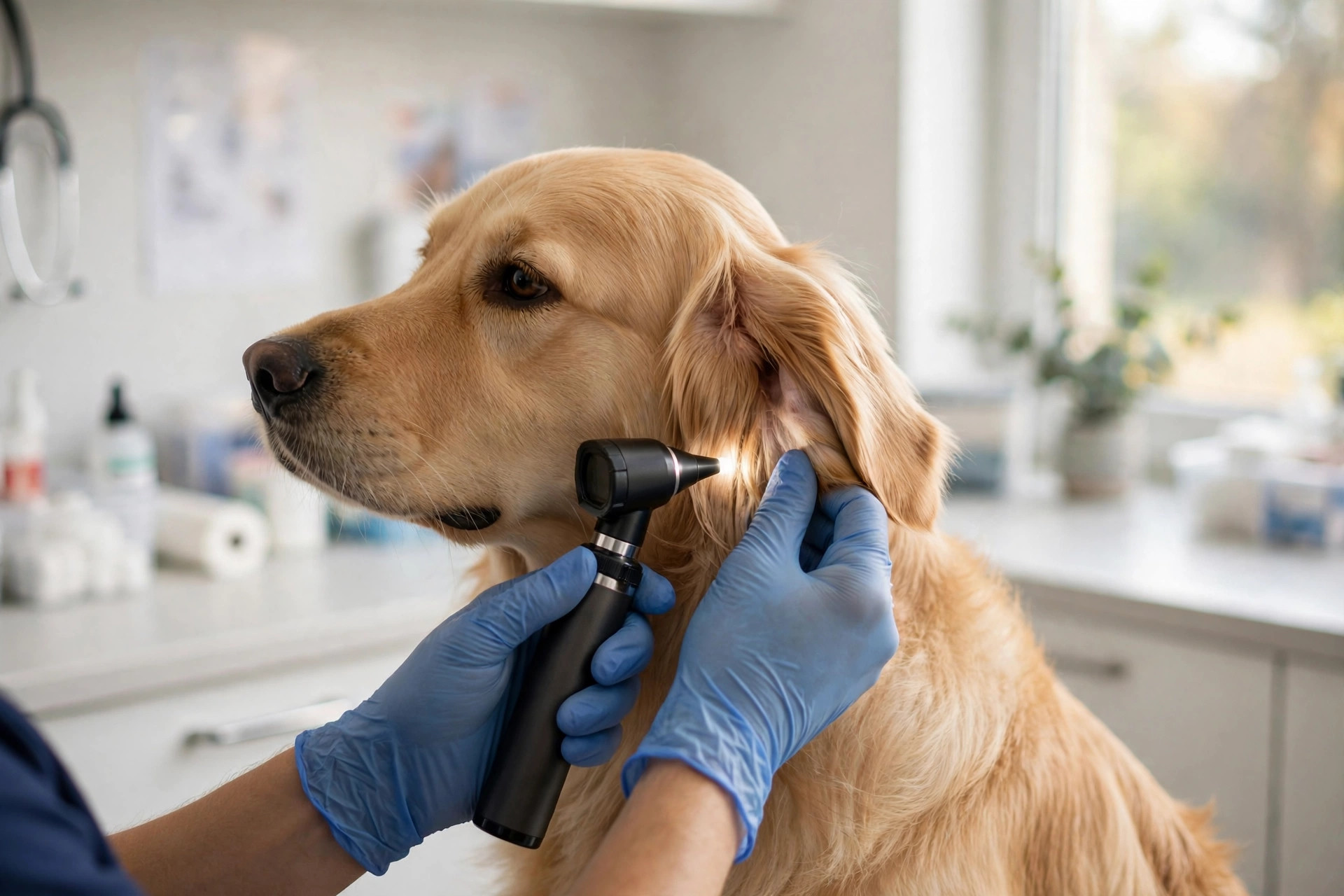
- Examine the whole ear and eardrum with an otoscope to check for damage, foreign objects, or tumors.
- Take a swab of the discharge and examine it under a microscope to identify bacteria, yeast, or ear mites.
- Prescribe treatment matched to what they actually find — antifungal, antibiotic, antiparasitic, or anti-inflammatory medication.
- For severe or long-standing cases, order X-rays or a CT scan to check whether the infection has reached the middle ear.
This is also why human ear drops, hydrogen peroxide, or alcohol should never go into your dog’s ears — they can irritate an already inflamed canal, push debris closer to the eardrum, and even cause a painful rupture.
How Are Ear Infections in Dogs Treated?
Treatment always starts with a proper diagnosis, and the plan depends on the cause:
- Vet-prescribed ear drops or ointments — antibiotics for bacterial infections, antifungals for yeast infections, sometimes with a steroid to calm inflammation.
- Professional ear cleaning — your vet may flush the canal to remove debris so the medication can actually reach the infection.
- Oral medications — antibiotics, antifungals, or anti-inflammatories for severe, deep, or recurring infections.
- Ear mite treatment — antiparasitic products, often just a single dose of a modern medication.
- Pain relief — because ear infections hurt; your vet may prescribe something to keep your dog comfortable.
- Addressing the underlying cause — allergy management, dietary changes, or thyroid treatment for dogs with chronic flare-ups.
Most uncomplicated infections clear within 1–2 weeks of proper treatment. Always finish the full course of medication, even if your dog looks better after a few days — stopping early is the fastest route to a stubborn relapse.
At-Home Care: What You Can Safely Do
You cannot treat an active infection without your vet, but you play a huge role in your dog’s recovery and in keeping the next infection away:
- Use only a vet-approved ear cleaning solution — never water, vinegar mixes, peroxide, or alcohol unless your vet specifically tells you to.
- Apply the cleaner into the ear canal as directed, then massage the base of the ear gently for 20–30 seconds to loosen debris.
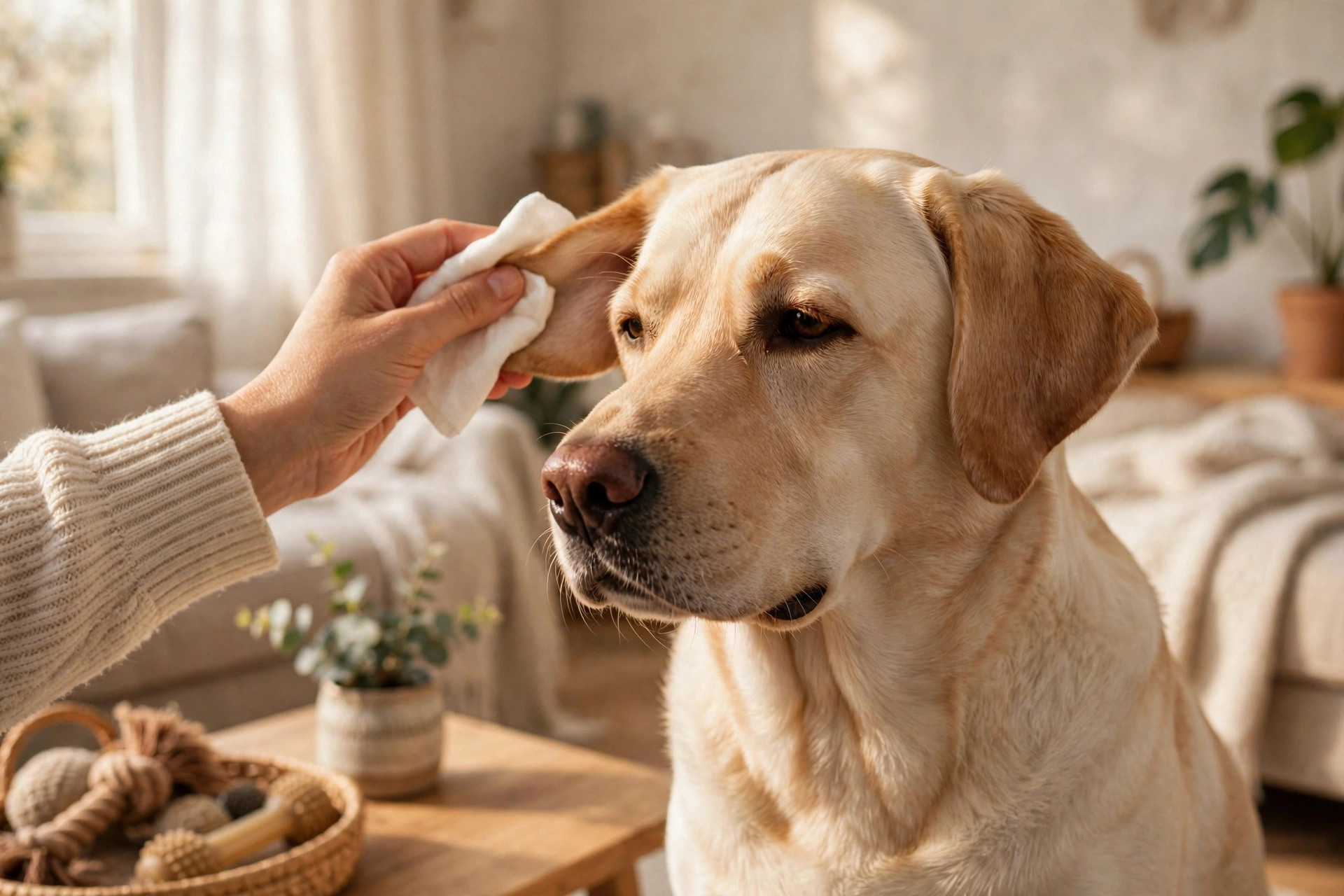
- Let your dog shake its head, then wipe the visible outer ear with a soft cotton ball or clean cloth.
- Never push cotton swabs or any instrument into the ear canal — you can pack debris deeper or injure the eardrum.
- Keep the ears clean and dry, especially after swimming or baths.
- Watch for returning signs of ear infection in dogs during and after treatment and report any worsening to your vet.
Also Read: Can Dogs Eat Sweet Potato? Vet Safety Guide (2026)
Also Read: Can Dogs Eat Cucumber? Benefits & Risks (2026)
How to Prevent Ear Infections in Dogs
Prevention is genuinely the best treatment, especially for allergy-prone or floppy-eared breeds:
- Check ears weekly — lift the flap, sniff, and look for redness, discharge, or odor. Early catches are cheap to fix.
- Dry ears after water — gently dry the outer ear with a soft towel or cotton ball after every swim or bath.
- Clean as advised — routine ear cleaning is not needed for every dog, but your vet may recommend regular cleaning for high-risk breeds.
- Manage allergies — if ear infections keep recurring, ask your vet about allergy testing or a food trial; treating the allergy often ends the ear problems.
- Keep canal hair trimmed — your groomer can trim heavy hair around the ear canal entrance to improve airflow.
- Stay current on parasite prevention — year-round prevention helps keep ear mites out of the picture.
- Feed a balanced, high-quality diet — good nutrition supports the skin and immune system that protect the ears.
When to See the Vet Right Away
Mild head-shaking warrants a call to your vet, but treat these as urgent:
- Sudden severe pain, constant crying, or a dog that will not let you near its head
- A head tilt, drooping face, circling, or loss of balance (possible middle/inner ear involvement)
- Bloody discharge or a swollen, blood-filled ear flap (aural hematoma — often needs surgical drainage)
- Lethargy, fever, or loss of appetite along with ear symptoms
- Symptoms that keep recurring despite treatment — the underlying cause has not been found yet
Puppies and senior dogs should be seen sooner rather than later, since they decline faster and infections can spread more quickly.
Frequently Asked Questions
What are the first signs of ear infection in dogs?
The earliest signs are usually head shaking, scratching at one ear, and a mild odor. Redness inside the ear and dark discharge typically follow. Catching it at the head-shaking stage means simpler, faster treatment.
Can a dog ear infection go away on its own?
Rarely — and waiting is risky. Untreated infections can spread to the middle and inner ear, causing chronic pain, hearing loss, and balance problems. Always have ear symptoms checked by your vet.
How long does a dog ear infection take to heal?
Most uncomplicated infections clear within 1–2 weeks of proper treatment. Chronic or deep infections can take several weeks and may need follow-up visits and medication changes.
Are some dog breeds more prone to ear infections?
Yes. Cocker Spaniels, Basset Hounds, Golden Retrievers, Labrador Retrievers, Poodles and doodle crosses, Beagles, and Shar-Peis are among the highest-risk breeds, thanks to floppy ears, hairy canals, or allergy predisposition.
Can I use human ear drops on my dog?
No. Human ear medications can be harmful to dogs. Always use products prescribed or specifically recommended by your veterinarian.
Why does my dog keep getting ear infections?
Recurring infections almost always mean the underlying cause — usually allergies — has not been addressed. Talk to your vet about allergy testing, a diet trial, or long-term preventive ear care.
Final Thoughts
The signs of ear infection in dogs — head shaking, scratching, odor, redness, and discharge — are your dog’s way of asking for help, since dogs cannot tell us their ears hurt. The good news is that ear infections are extremely treatable when caught early: a vet visit, the right medication, and a full course of treatment will have most dogs comfortable again within a week or two.
Make weekly ear checks part of your routine, dry those ears after every swim, and never wait out symptoms hoping they will fade. When it comes to your dog’s ears, the earlier you act, the simpler — and cheaper — the fix.