
It happens in seconds: you pop open a can of tuna for a sandwich, and your cat materializes out of thin air, parked beside you with that look — the one that says “a bite for me, please.” It is only natural to wonder: can cats eat tuna, or should this ocean favorite stay off your feline’s menu?
The good news is yes, cats can eat tuna — but only plain, properly chosen tuna served as an occasional treat, never as a meal. While tuna is packed with protein and irresistible aroma that cats love, the mercury it carries as a large predatory fish and its missing nutrients mean there are important rules to follow.
In this complete guide, we will walk you through everything you need to know about feeding tuna to cats: the real benefits, the risks of overfeeding, exactly how much tuna is safe by cat size, and how to prepare it the right way.
Table of Contents
- Can Cats Eat Tuna? Vet-Reviewed Safety Guide
- Nutritional Benefits of Tuna for Cats
- Risks of Feeding Tuna to Cats
- How Much Tuna Can Cats Eat?
- How to Prepare Tuna for Cats
- What If My Cat Eats Too Much Tuna?
- Can Kittens Eat Tuna?
- Healthy Alternatives to Tuna
- Frequently Asked Questions
Can Cats Eat Tuna? Vet-Reviewed Safety Guide

Yes, plain tuna is generally safe for healthy adult cats when served correctly and in small amounts. Veterinary sources including PetMD confirm that cats can eat tuna as an occasional snack, as long as it is plain, unseasoned, and portioned carefully.
But “safe” comes with a crucial distinction that cat owners must understand: human canned tuna is not a complete food for cats. It lacks taurine and other essential nutrients that cats must get from their diet, and it carries mercury that builds up over time. That is why tuna must remain a treat — under 10% of your cat’s daily calories — with the rest coming from a complete, balanced cat food.
Before offering tuna, follow these ground rules:
- Offer only plain canned tuna in water — never in oil or brine
- Choose chunk-light or skipjack tuna, not albacore (white tuna)
- Drain it well and serve it plain — no seasoning, garlic, onion, or salt
- Keep it an occasional treat, about once a week — never a daily food
Also Read: Can Cats Eat Eggs? Vet-Reviewed Safety Guide (2026)
Nutritional Benefits of Tuna for Cats
Tuna is not a feline superfood, but in tiny treat-sized amounts it does bring a few genuine upsides.
1. High-Quality Animal Protein
Tuna is rich in complete animal protein, which fits a cat’s carnivorous biology perfectly — which is exactly why cats find tuna so irresistible.
2. Omega-3 Fatty Acids
Tuna contains omega-3s, which support skin and coat health, brain function, and a normal inflammatory response. In small portions, these add a modest bonus — though your cat’s main food should be doing the heavy lifting.
3. Vitamins and Minerals
Tuna supplies B vitamins, selenium, phosphorus, and potassium — a reasonable bonus in a once-a-week treat portion.
4. Hydration Bonus
Plain canned tuna packed in water has high moisture content, which helps cats that drink too little on their own — and its tempting smell can encourage a finicky eater to finish the wet food you mix it with.
Risks of Feeding Tuna to Cats
Tuna is safe in tiny amounts, but feeding it the wrong way — or too much of it — can cause genuine, even serious, problems.
1. Mercury Accumulation
This is the biggest concern with tuna. As a large, long-lived predatory fish, tuna accumulates methylmercury from the smaller fish it eats. Because cats weigh so little, mercury builds up in their tissues faster than in people. Signs of mercury poisoning in cats include loss of coordination, difficulty walking, and tremors. Always choose chunk-light (skipjack) tuna — not albacore, which carries roughly three times the mercury — and keep tuna strictly occasional.
2. Missing Taurine and Other Nutrients
Human canned tuna is nutritionally incomplete for cats. Most importantly, it lacks taurine, an essential amino acid cats must get from their diet. A tuna-heavy diet can cause taurine deficiency, leading to dilated cardiomyopathy (a serious heart condition) and retinal degeneration that can cause blindness. Tuna should never replace a complete cat food.
3. Raw Tuna Destroys Vitamin B1
Never feed raw tuna. Raw fish contains thiaminase, an enzyme that breaks down thiamine (vitamin B1), causing serious neurological symptoms that can mimic mercury poisoning — plus bacterial and parasite risks. Cooking destroys thiaminase.
4. Tuna in Oil or Brine Is Unsafe
Tuna packed in oil is high in fat and can trigger digestive upset or pancreatitis in sensitive cats. Tuna packed in brine is loaded with sodium that stresses a cat’s kidneys. Choose tuna in water, with no added salt, and always drain it thoroughly.
5. Seasoned or Flavored Tuna Is Dangerous
Tuna salads and flavored packets often contain onion and garlic — even in powder form, these are toxic to cats and can damage red blood cells. Added salt, spices, and lemon can also upset your cat’s stomach. Only ever offer plain, unseasoned tuna.
6. “Tuna Addiction” and Picky Eating
Many cats love tuna so much they start refusing their regular balanced food, holding out for the tastier option. The result is a nutritional problem, because tuna alone is incomplete. If your cat starts demanding tuna at every meal, cut it back and talk to your vet.
7. Steatitis and Muscle Inflammation
Overfeeding tuna has been linked in cats to steatitis (inflammation of body fat, sometimes called yellow fat disease) and myopathy (inflammation of the muscles), along with mercury poisoning. These conditions are another reason tuna must stay a rare, small treat rather than a regular habit.
Also Read: Can Cats Eat Carrots? Vet Safety Guide (2026)
How Much Tuna Can Cats Eat?
Tuna is an occasional treat — not a meal replacement and not a weekly staple. Veterinary guidance (including PetMD) suggests no more than 1 tablespoon of plain, unseasoned, cooked tuna, once a week:
| Cat Size | Weight | Safe Serving (per sitting) |
|---|---|---|
| Small cats | Under 8 lbs (4 kg) | 1 teaspoon, once a week |
| Medium cats | 8–12 lbs (4–6 kg) | 1 tablespoon, once a week |
| Large cats | Over 12 lbs (6 kg) | 1 tablespoon, once a week |
Start with a small taste first, then wait 24 hours before offering more — and remember the 10% rule: all treats combined must stay under 10% of your cat’s daily calories.
How to Prepare Tuna for Cats
Safe preparation takes about a minute:
- Choose plain chunk-light tuna in water — check the label for “no salt added” and no other flavorings.
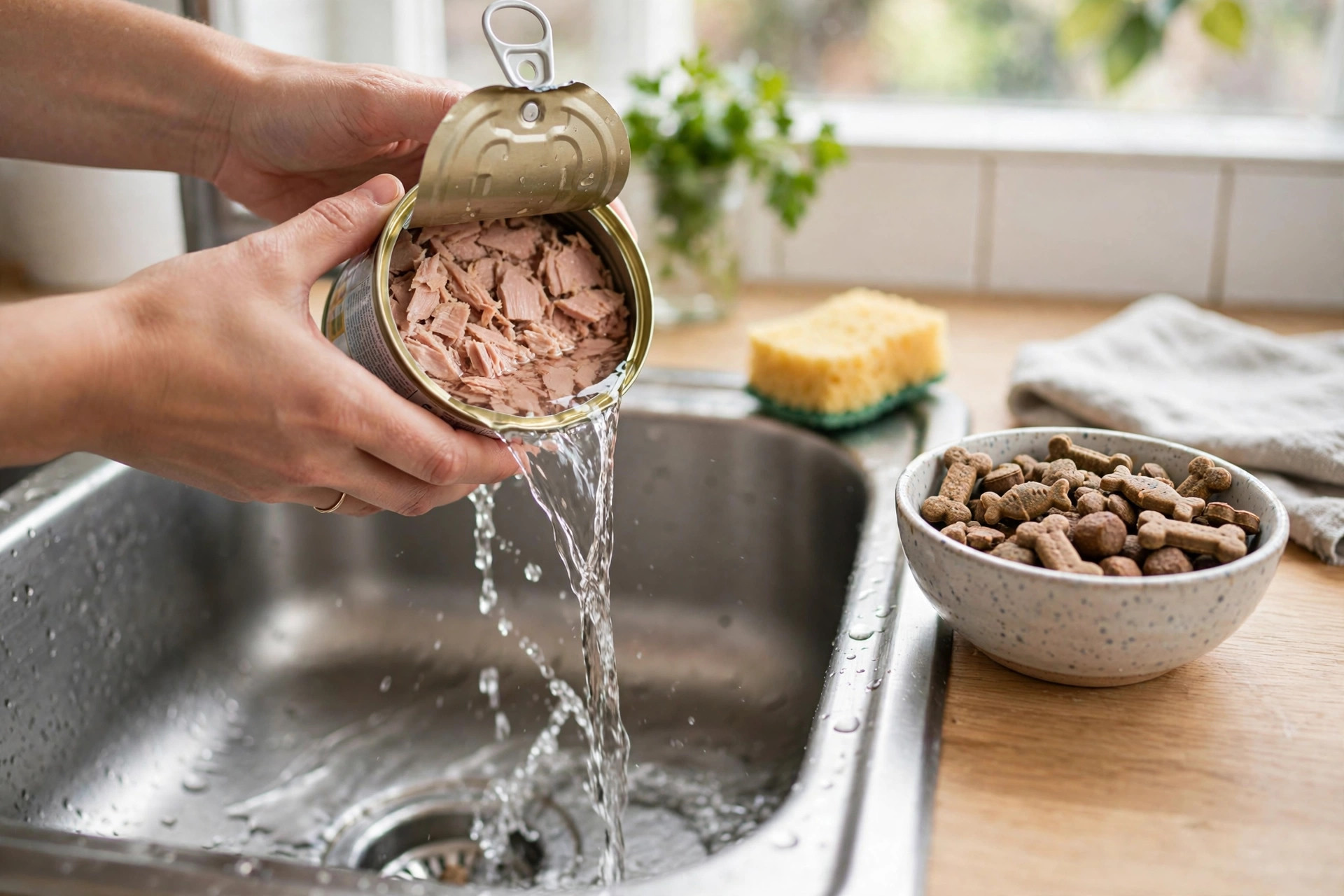
- Drain the can thoroughly to remove excess water and sodium.
- Scoop out no more than 1 tablespoon (less for small cats).
- Serve plain at room temperature — mix it into wet food or offer it in a clean dish. No seasoning, oil, butter, garlic, or onion.
- Refrigerate the rest of the can for your own meals — your cat does not get seconds.
Pro tip: a little of the drained tuna water drizzled over regular food can entice a picky eater without the mercury load of the fish itself.
What If My Cat Eats Too Much Tuna?
If your cat raids the pantry and eats a large amount of plain tuna, don’t panic — a single binge is unlikely to cause serious harm. Monitor them for vomiting, diarrhea, or lethargy; these symptoms are usually temporary and resolve on their own.
Contact your veterinarian right away if you notice loss of coordination, tremors, or wobbliness, severe or ongoing vomiting or diarrhea, or if the tuna was seasoned with garlic or onion (toxic to cats).
Can Kittens Eat Tuna?
It is best to wait until your cat is at least 1 year old. Kittens are more sensitive to dietary changes and to toxins like mercury, and they rely on a carefully balanced kitten diet to grow their bones and organs properly. Once your cat is an adult, offer only the tiny portions above — and never let tuna displace their complete food.
Healthy Alternatives to Tuna
If your cat is a tuna junkie — or you want treats with fewer risks — these suit an obligate carnivore well:
- Tuna-based wet cat food (formulated with added taurine and nutrients — the safest “tuna” option)
- Small pieces of plain, cooked salmon (lower mercury than tuna)
- Plain, cooked chicken or turkey with no seasoning
- Freeze-dried meat or fish treats made for cats
- Commercial cat treats formulated for complete nutrition
Always introduce any new food gradually and in small portions.
Also Read: Can Cats Eat Blueberries? Vet Guide & Tips (2026)
Can Cats Eat Tuna? Frequently Asked Questions
Can cats eat albacore tuna?
It is best to avoid it. Albacore (white) tuna comes from a larger species with mercury levels roughly three times higher than chunk-light (skipjack) tuna. If you share tuna at all, choose chunk-light.
Can cats eat raw tuna?
No. Raw tuna contains thiaminase, which destroys vitamin B1 (thiamine) and can cause dangerous neurological problems, plus it carries bacterial and parasite risks. Always cook tuna before offering it.
Can cats eat tuna every day?
No. Daily tuna risks mercury buildup, taurine deficiency, and steatitis — and tuna alone is nutritionally incomplete. Keep it an occasional treat, once a week at most in the small portions listed above.
Final Thoughts
So, can cats eat tuna? Absolutely — when it is plain, water-packed, drained, and served in tiny amounts. A tablespoon of tuna once a week is a safe, protein-rich treat most cats will adore. Just remember the golden rules: chunk-light over albacore, water never oil or brine, no seasoning of any kind, never raw, and never as a meal replacement.
Introduce tuna slowly and watch how your cat responds. And when in doubt, your veterinarian is always the best source of advice for your individual cat’s diet.