
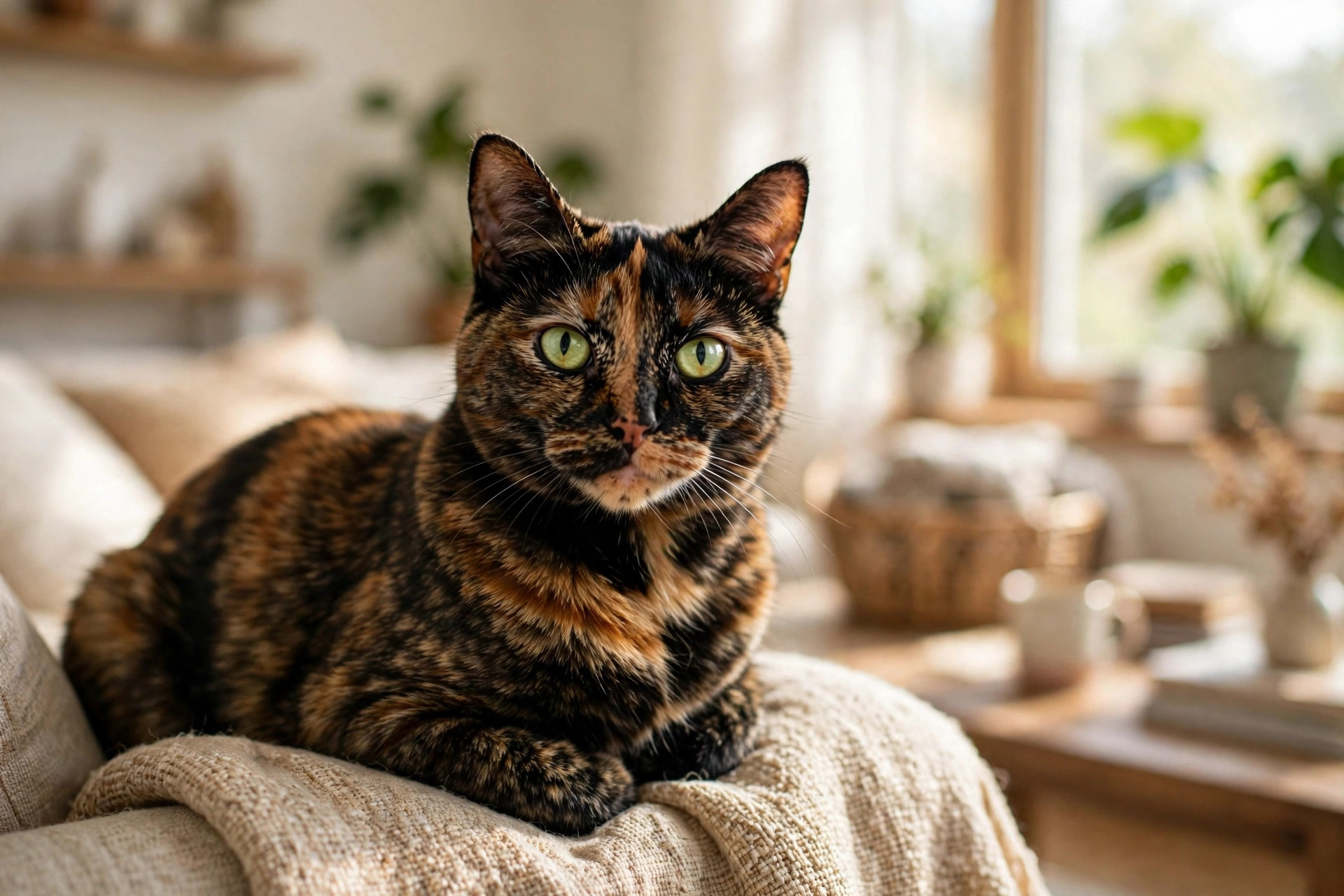
You have probably seen one: a cat whose coat looks like someone swirled black and orange paint together, with no two patches ever alike. If you are wondering whether that striking look comes with a special personality, you need a proper tortoiseshell cat guide — because the truth about torties is more interesting than the myths.
A tortoiseshell cat is not a breed at all. It is a coat pattern that can appear in mixed-breed cats and in many pedigreed breeds alike — and it comes with one of the most famous quirks in the cat world: almost every tortie is female. In this 2026 guide, we will walk you through what makes a tortoiseshell cat, why the pattern is almost always female, whether “tortitude” is real, and how to care for one day to day.
Table of Contents
- What Is a Tortoiseshell Cat?
- Tortoiseshell Cat at a Glance
- Why Are Almost All Tortoiseshell Cats Female?
- Tortoiseshell Cat Temperament: Is “Tortitude” Real?
- Tortoiseshell vs Calico: What Is the Difference?
- Tortoiseshell Cat Care: Daily Needs
- Tortoiseshell Cat Health & Lifespan
- Is a Tortoiseshell Cat Right for You?
- Frequently Asked Questions
What Is a Tortoiseshell Cat?
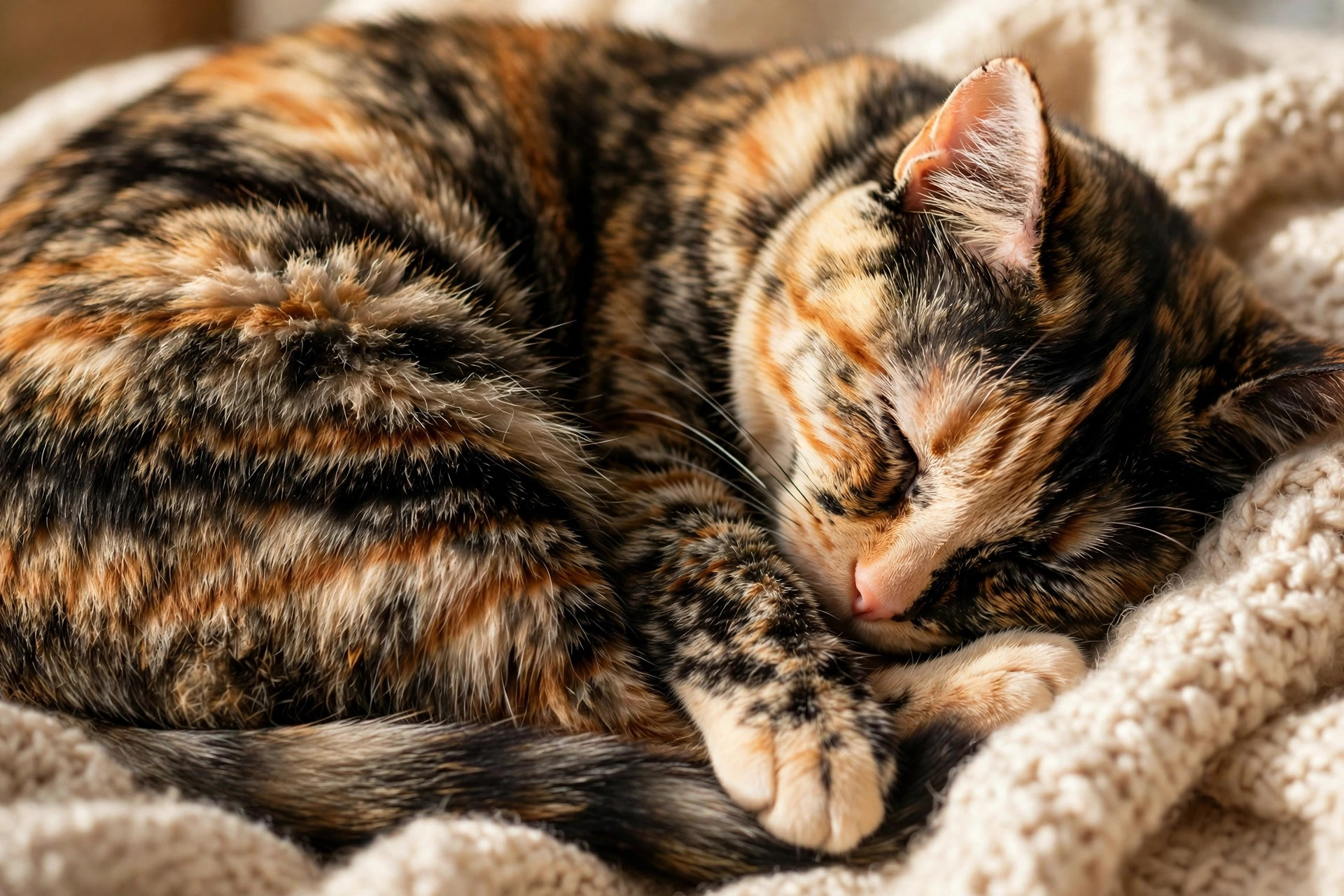
A tortoiseshell cat — a “tortie” — is a cat whose coat is a mottled mix of black and orange, sometimes with cream or gold woven in. The patches can be large and bold or finely speckled like tortoiseshell the material, which is where the name comes from. No two torties look alike: the pattern is random, so every tortie is genuinely one of a kind.
The important thing to understand is that tortoiseshell is a color pattern, not a breed. You will find tortie coloring in ordinary domestic shorthairs, and in pedigreed breeds too — most famously in Maine Coons and Persians, but also in British Shorthairs, Cornish Rexes, and many others. That is why there is no single “tortoiseshell breed standard” and no fixed size or temperament: the cat underneath the pattern is what matters.
Torties come in several pattern styles:
- Classic tortoiseshell: large, clearly separated patches of black and orange.
- Mosaic tortoiseshell: smaller, more evenly mixed patches across the whole coat.
- Torbie (tortoiseshell tabby): the tortie colors layered over tabby stripes.
- Dilute tortoiseshell: softer colors — grey-blue instead of black, cream instead of orange.
Also Read: Maine Coon Breed Guide: Temperament, Care & Health (2026) — one of the breeds where the tortoiseshell pattern shows up most often.
Tortoiseshell Cat at a Glance
| Trait | Details |
|---|---|
| What it is | A coat pattern (black + orange mottling), not a breed |
| Sex ratio | Roughly 99.9% female; males are about 1 in 3,000 |
| Coat length | Short or long, depending on the underlying breed |
| Lifespan | Typically 12–16 years, in line with the average cat |
| Temperament | Often described as independent, vocal, and strong-willed (“tortitude”) |
| Cost | Often free–$150 from a shelter; $800–$2,000+ for a pedigreed tortie-patterned breed |
| Best for | Owners who enjoy a cat with opinions and personality |
Why Are Almost All Tortoiseshell Cats Female?
This is the single most fascinating fact about torties, and it comes down to simple genetics. The genes for orange fur and black fur both sit on the X chromosome. Female cats have two X chromosomes (XX), so a female can carry the orange gene on one X and the black gene on the other — and show both colors at once. Male cats have only one X chromosome (XY), so a male can be orange or black, but not both.
Early in a female embryo’s development, one X chromosome in each cell randomly switches off — a process called X-inactivation. The cells that keep the orange gene active grow orange fur; the cells that keep the black gene active grow black fur. Because the switch is random in every cell, the result is a unique mottled patchwork that can never be repeated exactly.
What About Male Tortoiseshell Cats?
A male tortie is a genuine genetic rarity — roughly 1 in 3,000 tortoiseshell cats is male. A male tortie almost always has an extra X chromosome (XXY), a condition known as Klinefelter syndrome. The extra X is what lets him carry both color genes. Veterinary sources including PetMD note that most male tortoiseshells are sterile, and many live shorter lives than female torties, with a higher risk of certain health problems. A male tortie is a special cat — and one that deserves regular vet care.
Tortoiseshell Cat Temperament: Is “Tortitude” Real?
Ask any tortie owner and you will hear the same word: “tortitude.” It is the nickname for the feisty, strong-willed, opinionated personality tortoiseshell owners so often describe — a cat that is affectionate on her own terms, vocal about what she wants, and famously independent.
Is it real, or just a fun story? The honest answer is mixed. A 2016 study from UC Davis surveyed 1,274 cat owners and found that owners of tortoiseshells, calicos, and torbies reported more frequent aggression during everyday handling, grooming, and vet visits than owners of other coat colors. But other research looking at coat color and behavior has found no consistent link between color and tameness, and most experts say the reliable predictor of personality is the individual cat and its breed — not its coat.
What owners consistently report:
- Independent thinkers: Torties tend to be confident and self-directed. They often decide when interaction happens rather than constantly seeking it out.
- Vocal communicators: Many torties have a wide range of meows, chirps, and trills, and they use them freely to advertise their needs — or their displeasure.
- Strong bonds: Torties often attach deeply to one or two chosen people, following them around the house and greeting them at the door.
- Playful and curious: Despite the independent streak, most torties love puzzle toys, wand games, and exploring new spaces.
- Sassy one minute, cuddly the next: That switch from aloof to affectionate is part of the charm — and the reason tortie owners are so loyal to the pattern.
The fair way to put it: tortitude is a real pattern in owner reports, but it is not a guarantee. Every tortie is an individual, shaped by her breed, her upbringing, and how you interact with her — not by her fur alone. If you meet a tortie kitten, judge the cat in front of you.
Also Read: Are Bombay Cats Hypoallergenic? The Honest Answer (2026) — another famous black-coated cat whose reputation needs an honest check.
Tortoiseshell vs Calico: What Is the Difference?
Tortoiseshell and calico cats are cousins, and people mix them up constantly. The difference is simple: a calico is a tortoiseshell with white added.
- Tortoiseshell: black and orange (sometimes cream) mottled together, with little or no white.
- Calico: the same black and orange patches, plus large areas of white — the classic tri-color cat.
- Torbie: a tortoiseshell pattern layered over tabby striping.
Both patterns come from the same X-chromosome genetics, which is why calicos are also almost always female. If your cat has white paws, a white chest, or a white belly along with the black-and-orange patches, she is a calico; without the white, she is a tortie.
Tortoiseshell Cat Care: Daily Needs
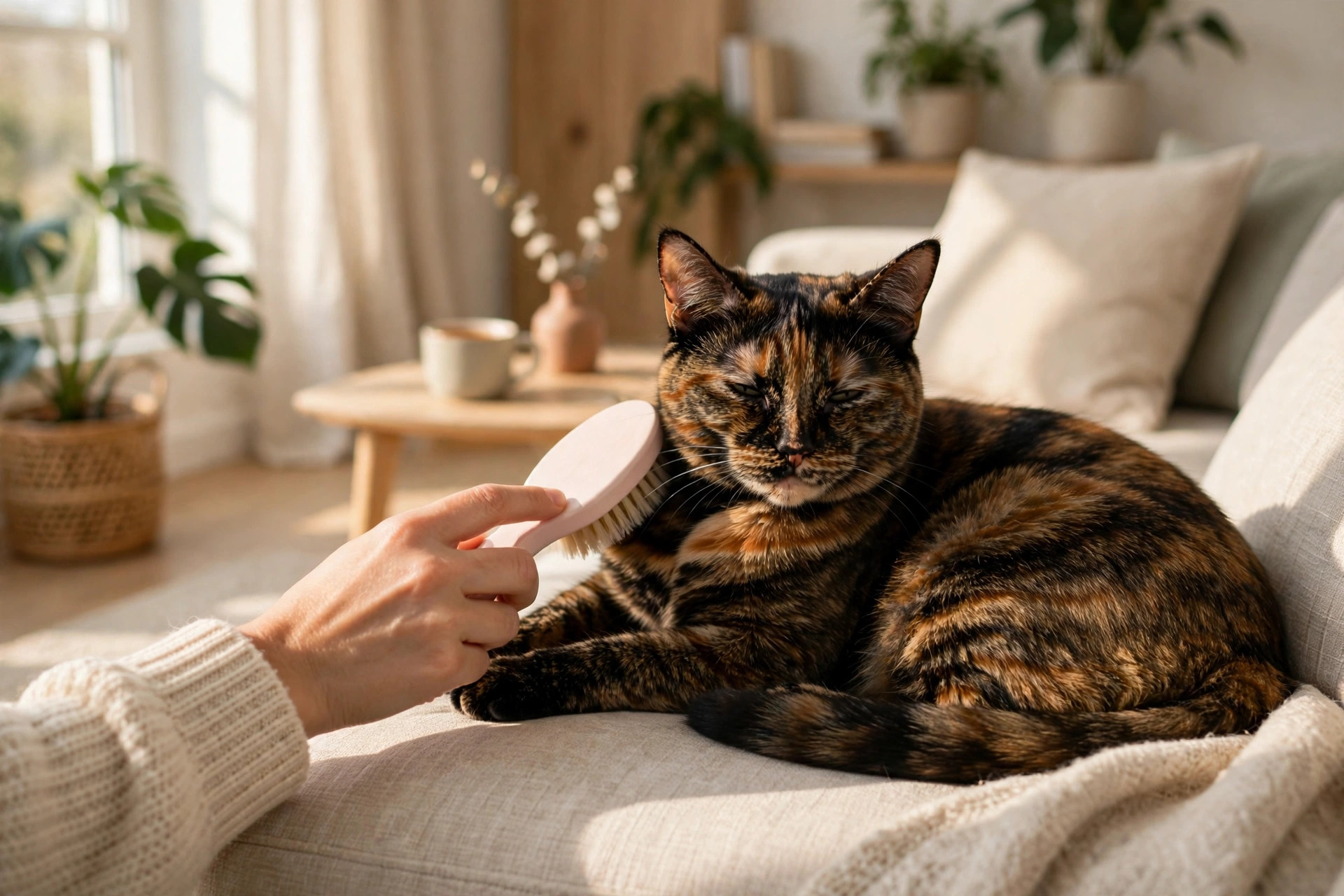
The good news is that a tortoiseshell coat pattern does not change what a cat needs. Torties need the same care as any other cat — but a few points matter more because of how often torties are female, and how their coats vary.
1. Grooming Depends on Coat Length, Not Color
A short-haired tortie needs only weekly brushing, while a long-haired tortie (Persian or Maine Coon type) needs brushing several times a week to prevent mats, especially around the shedding seasons. Regular brushing also spreads the skin’s natural oils through the coat and keeps that mottled fur looking its best. Also Read: Cat Dandruff: Causes, Symptoms & Care (2026) — flaky skin shows up fast on dark tortie fur, so it is worth knowing the signs.
2. Feed for Life Stage, Not for Coat
Feed a high-quality, age-appropriate food with measured portions — never free-feed. Torties are no more or less prone to weight gain than other cats, but an indoor tortie that snacks all day will gain weight like any cat. Keep treats under 10% of daily calories. Also Read: Is My Cat Overweight? Body Condition Guide (2026)
3. Play and Enrichment
Torties are usually active, curious cats. Give them 15–30 minutes of interactive play a day — feather wands, puzzle feeders, and crinkle balls suit their hunting instincts. A bored tortie will invent her own entertainment, usually at your expense.
4. Spaying Matters
Because almost all torties are female, spaying is a decision nearly every tortie owner faces. Spaying prevents unwanted litters, removes the risk of uterine infections, and greatly reduces mammary cancer risk. Talk to your vet about timing — most cats are spayed around 5–6 months of age.
5. Vet Checkups on Schedule
Annual checkups for adult cats, stepping up to twice a year after age 10. Also Read: Senior Cat Checkups: 7 Vet Screenings for Cats Over 7 (2026)
Tortoiseshell Cat Health & Lifespan
Most tortoiseshell cats live 12–16 years, in line with the average cat lifespan, and indoor cats with regular veterinary care often reach their late teens. The tortoiseshell pattern itself carries no known health risks — coat color is largely independent of disease risk, so a tortie’s longevity depends on the same factors as any other cat: breed, lifestyle, weight, and preventive care.
That said, the breeds that often display tortoiseshell coloring carry their own health considerations. Persians and related breeds may face polycystic kidney disease; Maine Coons can develop hypertrophic cardiomyopathy and hip dysplasia. Finding out what breed (or mix) your tortie actually is helps your vet watch for the right things.
The one real medical note tied to the color is the male tortie: Klinefelter syndrome (XXY) is usually linked to infertility and sometimes to a shorter lifespan, so a male tortoiseshell deserves a vet who knows his history.
Watch for the same everyday health issues as any cat: dental disease, obesity, parasites, and urinary problems. A tortie that suddenly hides, stops eating, or changes her behavior is telling you something — cats are masters at masking illness, so a change in normal is itself a symptom.
Is a Tortoiseshell Cat Right for You?
A tortoiseshell cat is a great fit if: you want a cat with real personality; you enjoy a vocal, interactive companion; you can respect a cat that sets her own terms for affection; and you are happy to play daily and keep up with grooming.
Reconsider if: you want a cat that is constantly cuddly and predictable — torties can be affectionate one minute and aloof the next; you have severe cat allergies (coat color has nothing to do with allergen levels); or you want a guaranteed temperament, because tortitude varies cat to cat.
One practical note: solid tortoiseshell-patterned cats are common in shelters, and black-and-orange cats wait longer for homes than lighter-colored cats. If you like the look, adopting a tortie from a shelter is one of the easiest ways to get a one-of-a-kind companion — and an adult tortie’s personality is already visible, so there are no surprises.
Frequently Asked Questions
Are tortoiseshell cats always female?
Almost always — about 99.9% of tortoiseshell cats are female. The pattern needs two X chromosomes, which only females normally have. Male torties are rare (about 1 in 3,000) and usually have an extra X chromosome (XXY).
Is a tortoiseshell cat a breed?
No. Tortoiseshell is a coat pattern, not a breed. It can appear in mixed-breed cats and in many pedigreed breeds, including Maine Coons, Persians, and British Shorthairs.
What is tortitude?
“Tortitude” is the nickname for the strong-willed, vocal, independent personality many tortoiseshell owners describe. Owner surveys show some support for it, but research has not proven that coat color predicts temperament — the individual cat matters more.
Do tortoiseshell cats have health problems?
The pattern itself carries no health risks. Health depends on the underlying breed and on general care. The exception is the rare male tortie, whose XXY (Klinefelter) condition is linked to infertility and sometimes a shorter lifespan.
What is the difference between a tortoiseshell and a calico cat?
A calico is a tortoiseshell with white added. Torties are black and orange with little or no white; calicos have the same black and orange patches plus large white areas.
How long do tortoiseshell cats live?
Typically 12–16 years, in line with the average cat. Indoor torties with regular vet care, a healthy weight, and a good diet often live into their late teens.
Are tortoiseshell cats good with kids?
It depends on the individual cat and the breed underneath the pattern. Many torties are playful and bond strongly with their families, but their independent streak means they may not tolerate rough handling. Supervise young children and let the cat set the pace.
Final Thoughts
So, what should you take away from this tortoiseshell cat guide? A tortie is not a breed — she is a one-of-a-kind coat pattern written by genetics, almost always female, and often (though not always) blessed with a famously strong-willed personality. Her care is refreshingly ordinary: good food in measured portions, regular brushing matched to her coat length, daily play, and vet checkups on schedule.
If you are thinking about bringing a tortie home, meet the cat first. Watch how she plays, how she greets you, and whether she leans into a cuddle or walks off to do her own thing. That is the real tortie — not the myth, and not the coat. And if you already live with one, you know the truth tortie owners repeat most: once you have lived with a tortoiseshell cat, no other cat quite compares.
By Dr. Ayaz Ali