
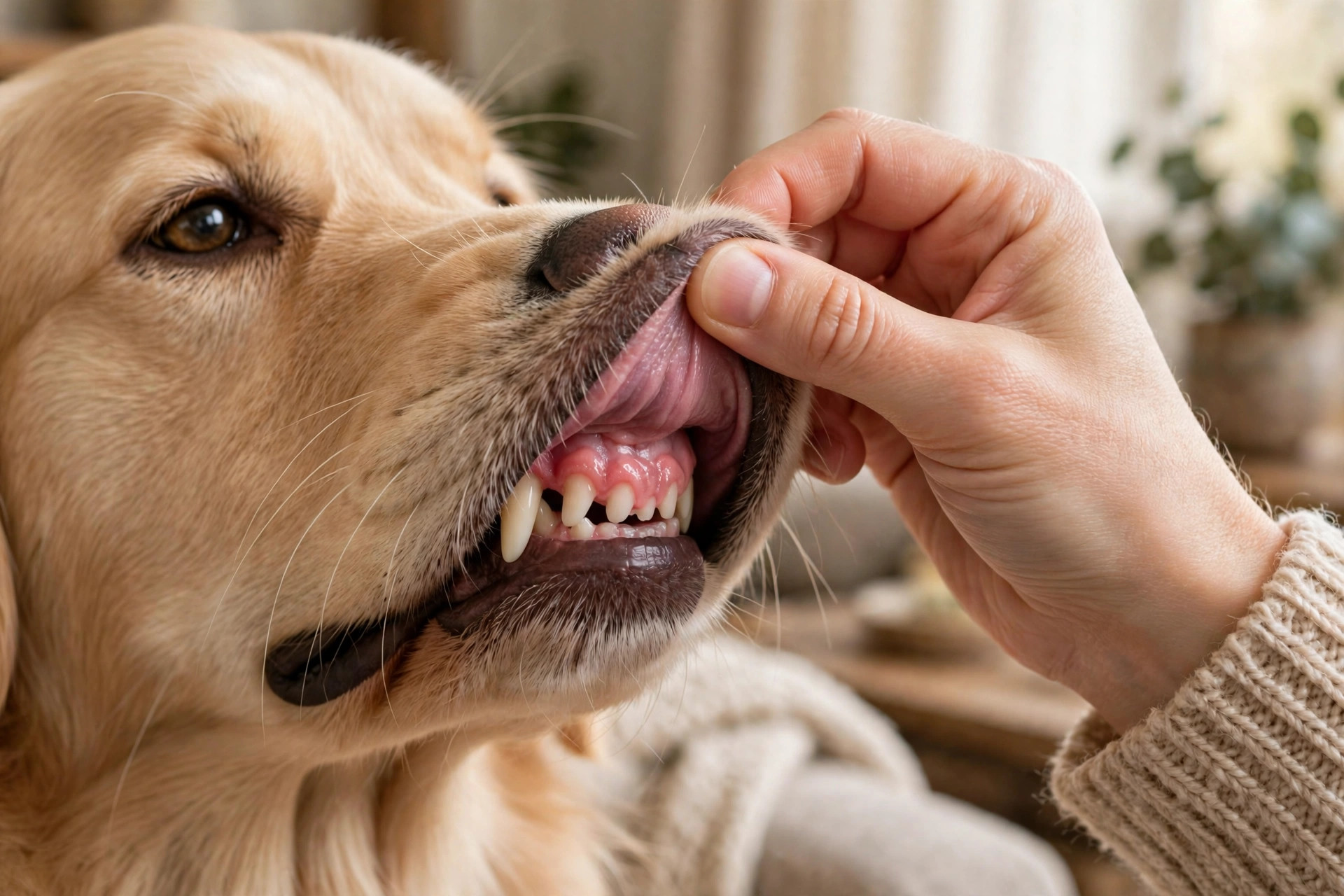
Your dog’s gums are one of the fastest health checks you can do at home — and most owners never look at them. A quick lift of the lip can tell you whether your dog’s circulation and oxygen levels are normal, or whether something serious is developing. This dog gum color chart explains what healthy gums look like, what each abnormal color can mean, and exactly when a color change is an emergency.
Healthy dog gums are typically bubblegum pink and moist to the touch. When the color shifts to pale, white, blue, yellow, or bright red, it is often the first visible sign of a problem inside the body — sometimes hours before other symptoms appear. Learning your dog’s normal gum color today means you will spot a dangerous change the moment it happens.
In this complete 2026 guide, you will learn how to check your dog’s gums in under a minute, how to run the capillary refill test, what every color on the chart means, and the red-flag combinations that mean go to the vet now.
Table of Contents
- What Color Should a Dog’s Gums Be?
- Dog Gum Color Chart: Every Color Explained
- How to Check Your Dog’s Gums at Home
- The Capillary Refill Test (CRT)
- Pale or White Gums in Dogs
- Blue or Purple Gums in Dogs
- Yellow Gums in Dogs
- Bright Red Gums in Dogs
- Black or Spotted Gums: Normal or Not?
- When to See the Vet Right Away
- How to Keep Your Dog’s Gums Healthy
- Frequently Asked Questions
What Color Should a Dog’s Gums Be?
For most dogs, healthy gums are a soft bubblegum pink or salmon pink — the same shade across the whole gumline. They should look smooth and feel moist and slightly slippery when you touch them, not dry, sticky, or swollen. Healthy gums do not bleed when you press them gently, and they should not smell foul.
There is one important exception: pigmentation. Some dogs naturally have black, brown, or mottled gums. Chow Chows, Shar Peis, and Samoyeds are famous for dark mouths, and many mixed-breed dogs have patchy pink-and-black gums. If your dog has always had dark gums since puppyhood, that is their normal — the thing to watch for is a change from their usual color, not the color itself.
The two qualities that matter most are color and moisture. Pink and moist means good blood flow and good oxygen delivery. Any sudden shift away from your dog’s normal — especially toward pale, white, blue, yellow, or bright red — deserves attention, and the chart below tells you how urgent each one is.
Dog Gum Color Chart: Every Color Explained
Use this chart as a quick reference. Find your dog’s gum color, read what it can mean, and follow the urgency column — but remember that a chart cannot diagnose your dog. Only a veterinarian can confirm the cause.
| Gum Color | What It Can Mean | Urgency |
|---|---|---|
| Bubblegum / salmon pink, moist | Healthy — good circulation and oxygen levels | None — this is the goal |
| Pale pink | Possible mild anemia, blood loss, or poor circulation | Same-day vet visit |
| White | Severe anemia, internal bleeding, or shock | Emergency — go now |
| Blue, purple, or gray | Not enough oxygen reaching the tissues (heart or breathing problem) | Emergency — go now |
| Yellow | Jaundice — liver disease or rapid red blood cell destruction | Prompt vet visit, same day |
| Bright / cherry red | Heatstroke, poisoning, high blood pressure, or severe gum inflammation | Emergency if sudden; urgent dental care if along the gumline |
| Red and swollen along the teeth | Gingivitis or periodontal (gum) disease | Vet visit within days; dental cleaning likely needed |
| Black or brown (always been that way) | Normal pigmentation in many breeds | None — watch for new spots or changes |
| Dry or sticky | Dehydration or illness | Offer water; vet visit if it persists |
Veterinary sources including PetMD’s dog gum color guide confirm the same pattern: pink and moist is normal, while pale, blue, yellow, or very red gums should be evaluated by a veterinarian promptly.
How to Check Your Dog’s Gums at Home

Checking your dog’s gums takes less than a minute, and it is worth doing once a month so you know what “normal” looks like for your dog. Pick a calm moment — after a walk, not during play — and use good light, since dim lighting can make pink gums look pale.
- Calm your dog first. Sit beside your dog and stroke their head until they relax. A tense dog clenches its jaw, which makes the check harder.
- Lift the upper lip. Gently pull back the lip on one side, above the large canine tooth. This is the easiest place to see the gums clearly.
- Look at the color. Compare what you see with the chart above. Note the shade and whether the color is even across the gumline.
- Touch the gum. Run a clean fingertip over the gum. Healthy gums feel smooth, moist, and slightly slippery — not dry, tacky, or rough.
- Check for swelling or bleeding. Look for redness or puffiness along the tooth line, bleeding when touched, sores, or lumps.
- Smell their breath. Mild dog breath is normal; a sudden foul, sweet, or ammonia-like smell alongside gum changes is worth mentioning to your vet.
If your dog has dark pigmented gums, find a patch with less pigmentation — often near the front teeth — and use that spot as your reference point each time.
Also Read: Fall Pet Wellness Checkup Guide (2026)
The Capillary Refill Test (CRT)
The capillary refill test is the quick check emergency vets use first, and you can do it at home. It measures how fast blood returns to the gums after you press it away — a direct window into your dog’s circulation.
- Press your fingertip firmly but gently against your dog’s gum for about two seconds. The spot under your finger will turn white.
- Lift your finger and count how long it takes for the pink color to flood back.
- Under 2 seconds is normal. The pink should return almost immediately.
- Over 2 seconds is slow. Delayed refill can mean poor circulation, dehydration, shock, or heart problems — call your vet the same day.
- No refill at all, or gums that stay white, is an emergency. Go to the vet immediately.
Do the test when your dog is calm and at rest. Exercise, excitement, or a hot day can temporarily darken pink gums, so a single odd reading after a run is not a reason to panic — recheck once your dog has settled, and act on a reading that stays abnormal.
Pale or White Gums in Dogs
Pale gums are the color change owners miss most often, because they can develop gradually as anemia worsens. Pale or white gums mean less red, oxygen-rich blood is reaching the tissues — either because there are too few red blood cells, or because blood flow itself is poor.
Common causes include anemia from internal bleeding (for example a ruptured spleen tumor), immune-mediated hemolytic anemia (IMHA, where the immune system destroys red blood cells), blood loss after trauma, clotting disorders, toxin exposure such as rat poison, bloat (gastric dilation-volvulus), heart disease, kidney disease, parasites, and tumors.
Pale gums are never normal, and they always need a vet visit the same day. White gums — or pale gums paired with weakness, collapse, fast or labored breathing, a swollen belly, black stool, vomiting blood, or visible bleeding — are a medical emergency. Do not wait to see if it improves; go to the vet or an emergency clinic now.
One nuance: a frightened or stressed dog can show temporarily paler gums from adrenaline. If the color returns to normal pink within minutes once your dog relaxes, that is usually stress, not illness. If it stays pale, treat it as a vet visit.
Blue or Purple Gums in Dogs
Blue, purple, or gray gums are called cyanosis, and they mean the body is not getting enough oxygen. This is always an emergency. Possible causes include heart disease, pneumonia or other respiratory illness, a blocked airway, hypothermia, or dangerously low blood pressure.
Check the tongue as well — a blue tongue alongside blue gums confirms an oxygen problem. Keep your dog calm and still, do not try to force air into their mouth, and get to the nearest vet or emergency clinic immediately. Every minute matters with cyanosis.
Note that this is different from naturally dark or black pigmented gums, which are brown-black and stable over your dog’s whole life. Cyanotic gums look dusky blue-gray, often with a bluish tongue, and the change is new.
Also Read: Pet Emergency First Aid: Vet Guide (2026)
Yellow Gums in Dogs
Yellow gums — and often yellow whites of the eyes — signal jaundice (icterus), which develops when bilirubin builds up in the blood. The usual causes are liver disease or the rapid destruction of red blood cells (hemolysis), and gallbladder problems can contribute too.
Yellow gums are not a wait-and-see symptom. Book a vet appointment the same day, and go sooner if your dog is also lethargic, vomiting, refusing food, or passing dark urine or pale stools. Your vet will typically run bloodwork and liver tests to find the cause, since treatment depends entirely on what is driving the jaundice.
Bright Red Gums in Dogs
Bright cherry-red gums mean one of two very different things, and context tells them apart. Gums that are red and swollen only along the tooth line usually point to gingivitis or periodontal disease — the most common dental problem in dogs — and need a vet dental check within days, not months. Untreated gum disease can damage the jawbone and has been linked to heart and kidney problems.
Gums that are bright red all over, especially if the change is sudden, are more alarming. Possible causes include heatstroke, carbon monoxide or other poisoning, severely high blood pressure, or serious infection. If your dog has been in a hot car, a hot room, or exercising hard in the heat and now has cherry-red gums with heavy panting, drooling, vomiting, or collapse, start cooling with cool (not ice-cold) water on the belly and get to the vet immediately.
Mildly darker pink gums after exercise, excitement, or a warm day are normal and fade within minutes. It is the sudden, deep cherry red — or red that does not fade — that needs urgent care.
Black or Spotted Gums: Normal or Not?
Black, brown, or mottled gums are completely normal for many dogs. Breeds such as Chow Chows, Shar Peis, and Samoyeds often have blue-black or heavily pigmented mouths, and plenty of mixed-breed dogs have patchy pink-and-black gums from birth. If the pigmentation has always been there and has never changed, it is simply your dog’s normal color.
What is not normal is a new black spot, a dark patch that grows or changes shape, or a raised black lump on the gum. New dark growths should be checked by a vet promptly, since oral tumors can appear as dark masses on the gums. Take a photo of anything new so you can track whether it changes between visits.
When to See the Vet Right Away
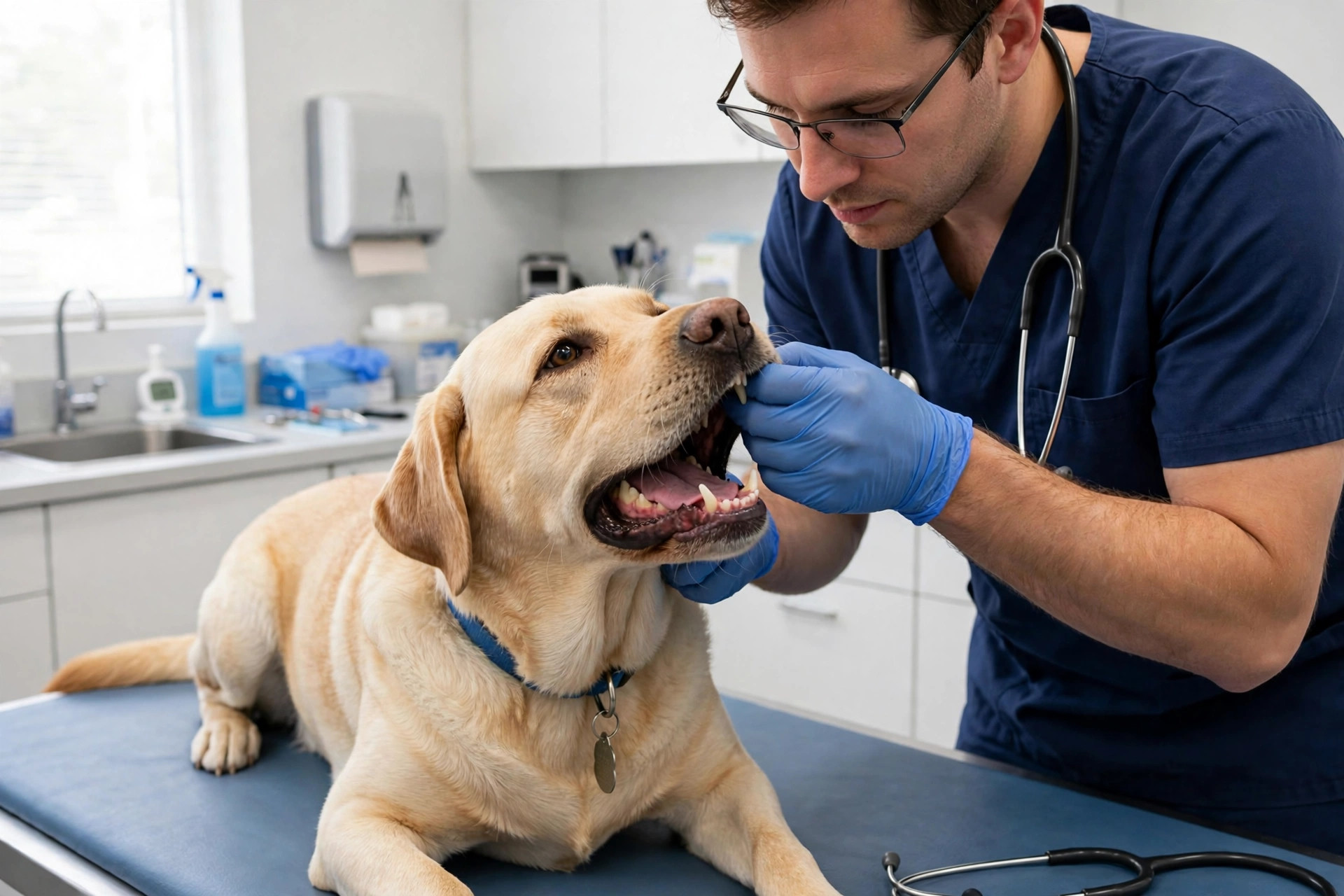
Gum color alone rarely tells the whole story — the symptoms that come with it decide the urgency. Seek emergency veterinary care immediately if your dog has any of these combinations:
- Pale or white gums with weakness, collapse, or fast breathing
- Blue, purple, or gray gums or tongue
- Yellow gums with vomiting, lethargy, or loss of appetite
- Bright-red gums with heavy panting, drooling, vomiting, or collapse after heat exposure
- Gums that stay white after the capillary refill test
- Bleeding from the mouth that will not stop, or a swollen face with breathing difficulty
- Sudden gum color change with a swollen belly, black stool, or vomiting blood
Book a same-day vet visit if the gums are pale pink, yellow, or unusually red but your dog otherwise seems well, if the color change has lasted more than a day, or if you notice new spots, sores, or lumps on the gums. When in doubt, call your vet and describe the color — most clinics will tell you over the phone whether to come in now or monitor at home.
Also Read: Why Does My Dog Sleep So Much? Vet Guide (2026)
How to Keep Your Dog’s Gums Healthy
Healthy gums are mostly a product of routine care, not luck. These habits keep the gumline pink and firm:
- Brush their teeth. Daily brushing with a dog toothpaste is the single best defense against gingivitis. Even a few times a week makes a real difference.
- Use dental chews and toys. Vet-approved dental chews and textured chew toys help scrub plaque from the tooth line between brushings.
- Feed a quality diet. Highly digestible food with the right balance of nutrients supports gum and immune health; avoid sugary treats and table scraps.
- Book annual dental checks. Your vet should examine the mouth at every wellness visit, and most dogs need a professional cleaning every one to two years.
- Know your dog’s baseline. Check the gums monthly and note their normal color, so a slow change toward pale never slips past you.
- Keep up parasite prevention and vaccines. Tick-borne illness and other infections can cause anemia — prevention protects the blood, not just the skin.
Frequently Asked Questions
What color should my dog’s gums be?
Healthy dog gums are bubblegum pink or salmon pink, moist, and smooth. Some dogs naturally have black, brown, or mottled gums — if that has always been their color, it is normal for them. What matters is a change from your dog’s usual color.
What does it mean if my dog’s gums are pale?
Pale gums usually mean anemia, blood loss, shock, or poor circulation. Common causes include internal bleeding, immune-mediated anemia, rat poison, bloat, heart disease, and kidney disease. Pale gums always need a same-day vet visit; white gums with weakness or collapse are an emergency.
How do I do the capillary refill test on my dog?
Press a fingertip firmly on your dog’s gum for about two seconds, then lift it and count how long the pink takes to return. Under 2 seconds is normal. Over 2 seconds is slow and needs a vet call; no refill at all is an emergency.
Are black gums on a dog normal?
Yes, if they have always been black. Many breeds, including Chow Chows, Shar Peis, and Samoyeds, have naturally dark or black gums, and many mixed-breed dogs have mottled gums. A new black spot, a growing dark patch, or a raised lump should be checked by a vet.
What do yellow gums mean in a dog?
Yellow gums signal jaundice, usually from liver disease or the rapid destruction of red blood cells. It is not a wait-and-see symptom — book a vet visit the same day, and go sooner if your dog is also vomiting, lethargic, or refusing food.
Can I check my dog’s gums at home?
Yes. Lift the upper lip above the canine tooth in good light, look at the color, touch the gum to check it feels moist and smooth, and run the capillary refill test. Do it monthly so you know your dog’s normal color and can spot changes early.
Final Thoughts: Using the Dog Gum Color Chart
So, what does the dog gum color chart tell you? That a thirty-second look inside your dog’s mouth is one of the most useful health checks you own. Pink, moist gums that refill in under two seconds mean circulation and oxygen are doing their job. Pale, white, blue, yellow, or bright-red gums are your dog’s early warning system — and acting on them quickly can be the difference between a routine vet visit and a crisis.
Make the gum check a monthly habit, alongside weighing your dog and checking their ears and paws. Learn your dog’s normal color today, and you will never have to guess whether a change is worth a phone call. When in doubt, call your vet — describing a gum color over the phone is one of the fastest ways a clinic can tell you whether to come in now.
By Dr. Ayaz Ali