
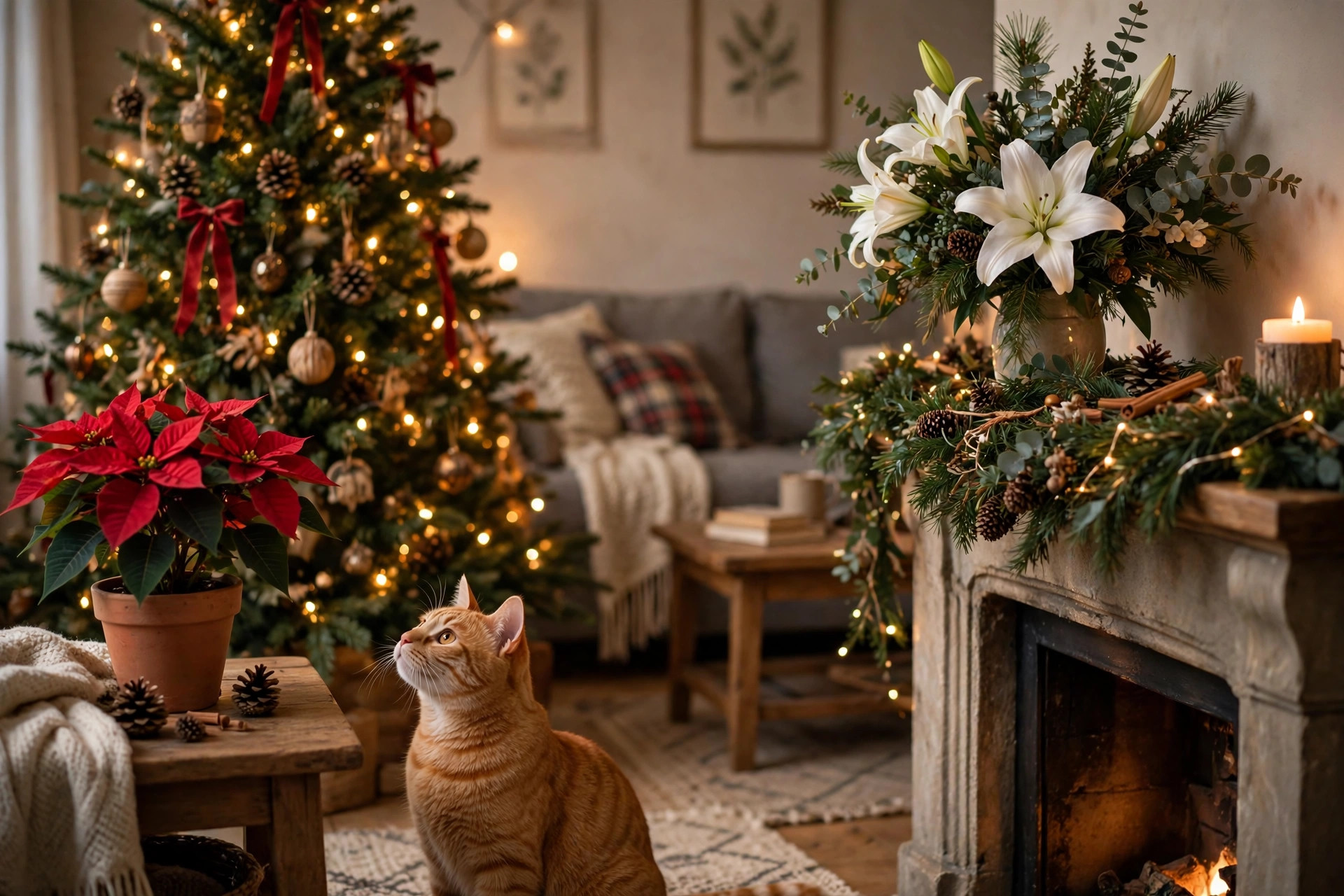
Every December, homes fill with poinsettias, mistletoe, holly wreaths, and gift bouquets — and most pet owners have no idea that some of the season’s prettiest decorations can make a dog or cat seriously ill. If you are wondering which holiday plants are toxic to pets, the honest answer is: several of them, and one of them is a genuine emergency for cats.
The good news is that not every festive plant is equally dangerous. Poinsettias, the plant most owners worry about, are only mildly toxic — while true lilies, which slip into holiday bouquets unnoticed, can cause kidney failure in cats. In this complete 2026 guide, we will walk you through every common holiday plant: which ones are toxic to dogs and cats, the warning signs to watch for, exactly what to do if your pet takes a bite, and the pet-safe swaps that keep your home festive without the risk.
Table of Contents
- Holiday Plants Toxic to Pets at a Glance
- Lilies: The Emergency Every Cat Owner Must Know
- Poinsettia: The Most Over-Blamed Plant
- Mistletoe: Pretty Berries, Real Risk
- Holly: Low Toxicity, Still Worth Keeping Away
- Amaryllis and Paperwhites: The Bulb Is the Danger
- What to Do If Your Pet Eats a Holiday Plant
- Pet-Safe Alternatives to Holiday Plants Toxic to Pets
- How to Pet-Proof Your Holiday Plants
- Frequently Asked Questions
Holiday Plants Toxic to Pets at a Glance
Use this table as your quick reference for the whole season. The risk level and the right response are very different from plant to plant, so do not treat them all the same.
| Plant | Risk Level | Typical Signs | What to Do |
|---|---|---|---|
| True lilies & daylilies | Extreme for cats | Vomiting, hiding, not eating, then kidney failure | Emergency — call the vet immediately |
| Poinsettia | Mild | Drooling, mouth irritation, vomiting | Wipe off sap, watch, call if signs persist |
| Mistletoe | Moderate to serious | Vomiting, diarrhea, slow heart rate | Call your vet or poison control now |
| Holly | Low to moderate | Vomiting, diarrhea, drooling, mouth cuts | Call your vet; check the mouth for cuts |
| Amaryllis & paperwhites | Moderate to serious | Vomiting, drooling, belly pain, lethargy, tremors | Call your vet or poison control now |
| Christmas cactus | Safe | None expected | No action needed |
Keep this list in mind when gifts arrive, too. A well-meaning guest can walk in with a bouquet or a forced bulb and place it on a low table without knowing it is a hazard. A quick check of every plant that enters the house is the single best habit of the season.
Lilies: The Emergency Every Cat Owner Must Know
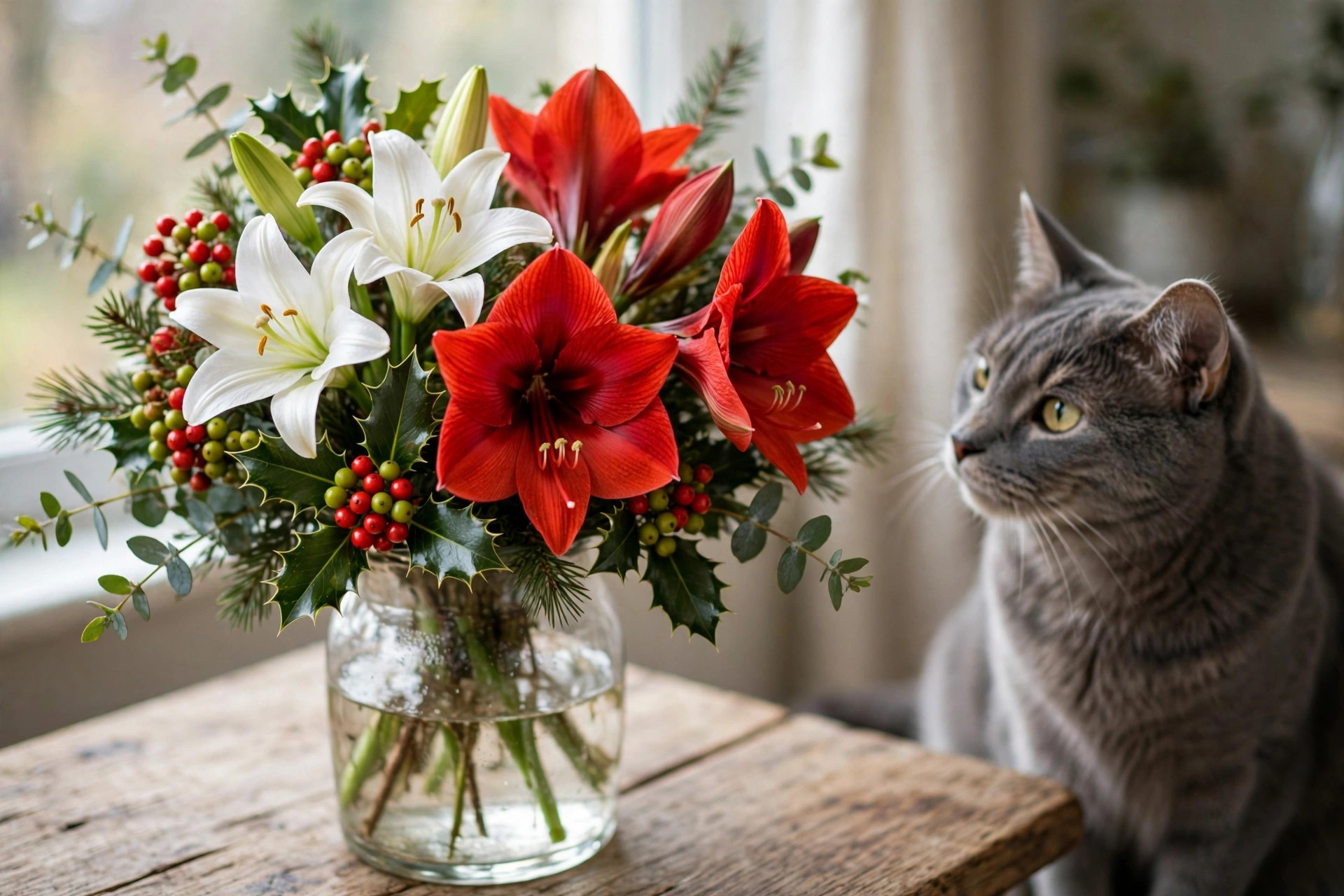
True lilies — Easter lilies, tiger lilies, Asiatic lilies, and stargazer lilies — and daylilies are the most dangerous holiday plants for cats. The ASPCA warns that all parts of true lilies are toxic to cats, and even a small amount can cause acute kidney failure. This is not a mild stomach upset. It is the one holiday plant exposure that counts as an emergency even before symptoms appear.
What makes lilies so treacherous is how little exposure it takes. A cat does not need to eat a whole flower. Brushing past a bloom can leave pollen on the fur, which the cat then grooms off and swallows, and drinking the water from the vase counts as exposure, too. Dogs are affected far less — lilies are not listed as poisonous to dogs — but in a home with a cat, lilies simply should not be there.
Signs of lily poisoning in cats
The early signs usually appear within a few hours: vomiting, loss of appetite, lethargy, and hiding. These can ease for a while, which tricks some owners into waiting — but the kidney damage is still progressing underneath. Within 24 to 72 hours, the cat may stop producing urine and develop signs of kidney failure.
What to do
If you suspect your cat has touched, chewed, or even brushed against any lily — including a bouquet that contains lilies among other flowers — call your veterinarian or an emergency clinic immediately. Do not wait for symptoms. Bring the plant or a photo of it so the clinic can identify the species, and tell them exactly when the exposure happened. Fast treatment, usually IV fluids started early, is what saves cats.
Also Read: Pet Emergency First Aid: Vet Guide (2026) — what to do in the critical first minutes of any pet emergency.
Poinsettia: The Most Over-Blamed Plant
Poinsettias have a fearsome reputation that the evidence does not support. The ASPCA describes poinsettia toxicity as generally over-rated, and Pet Poison Helpline calls it only mildly toxic to cats and dogs. The plant is not harmless — but it is nowhere near as dangerous as most people believe.
The risk comes from the milky white sap in the stems and leaves. That sap contains diterpenoid euphorbol esters and saponin-like detergents that irritate the mouth and stomach. A pet that chews a leaf will usually drool, lick its lips, and may vomit once or twice. Skin contact with the sap can cause redness, swelling, and itching. The signs are normally self-limiting and pass within a few hours.
The myth that one poinsettia leaf can kill a cat traces back to a single unconfirmed 1919 anecdote. A later review of nearly 23,000 poinsettia exposure calls to US poison control found no fatalities. Most pets stop eating after the first bitter bite anyway, because the sap tastes unpleasant.
Keep poinsettias out of chewing range — especially from puppies and kittens, who are smaller and more likely to eat a lot of it. Wipe any sap off your pet’s fur and mouth with a damp cloth, offer water, and call your vet if vomiting or drooling persists. If the plant was treated with pesticide, mention that to your vet, because the pesticide can be more dangerous than the plant itself.
Mistletoe: Pretty Berries, Real Risk
Mistletoe earns more concern than poinsettia. The white berries are the most dangerous part, followed by the leaves. American mistletoe contains toxins that can cause vomiting and diarrhea, and in larger amounts, low blood pressure, a slow heart rate, difficulty breathing, and an unsteady gait. Severe poisoning is uncommon and usually follows a large amount, but because a toxic dose can make the heart and circulation collapse within hours, it is worth calling before any signs appear.
Fresh mistletoe is hard to find in many shops and is often replaced by artificial sprigs, which is good news for pet owners. If you do hang the real thing, keep it high above doorways where no pet can reach fallen berries — berries dry out, drop, and roll across the floor, where a curious dog or cat will find them.
Holly: Low Toxicity, Still Worth Keeping Away
Holly is toxic to dogs and cats, but its toxicity is considered low. The berries contain saponins that upset the stomach, and the spiny leaves can cut the mouth. A pet that eats holly berries will usually vomit, have diarrhea, and seem droopy or tired. Problems are most likely only in very large doses, but the ASPCA still lists holly as a plant to keep away from pets.
The practical risk with holly is the same as with mistletoe: the berries dry out and drop from wreaths and garlands onto the floor. Check under every wreath regularly, and keep holly decorations above pet height.
Amaryllis and Paperwhites: The Bulb Is the Danger
Amaryllis is one of the most popular holiday gifts — a big, dramatic flower forced from a bulb on the windowsill — and it is toxic to both dogs and cats. Its toxic compound, lycorine, is present in every part of the plant but is concentrated in the bulb. Paperwhite narcissus carries the same risk: all parts are toxic, especially the bulb.
The usual signs are drooling, vomiting, diarrhea, abdominal pain, lethargy, and loss of appetite. In larger amounts, amaryllis can cause tremors, seizures, low blood pressure, and an abnormal heart rhythm. Wax-dipped bulbs, sold ready to bloom without soil, leave the most dangerous part sitting in plain view on a table.
Keep forced bulbs on a high shelf or in a room your pets cannot enter, and never leave a bulb on a low table. If your pet chews a bulb or eats more than a nibble of the leaves or flowers, call your vet or poison control immediately and tell them it was the bulb.
Also Read: Thanksgiving Pet Safety Guide 2026: Foods, Guests & Travel — the full holiday safety checklist, from the table to the decorations.
What to Do If Your Pet Eats a Holiday Plant
Speed matters more than anything else. Follow these steps in order:
- Stay calm and remove the plant. Take the plant away so your pet cannot eat more, and keep any chewed pieces or packaging.
- Identify the plant. A photo of the plant, the gift tag, or the bouquet card helps the vet or poison-control expert identify the species in seconds. If you cannot identify it, say so — that alone is a reason to call.
- Call immediately. Your veterinarian, an emergency clinic, the ASPCA Animal Poison Control Center at (888) 426-4435, or the Pet Poison Helpline at (855) 764-7661. Both hotlines are staffed around the clock and a consultation fee may apply. For lilies and cats, call even if your cat seems fine.
- Do not make your pet vomit unless a veterinarian or poison-control expert tells you to. Vomiting can drive irritating material back up the throat or cause aspiration into the lungs.
- Note the details. How much was eaten, which part, and when. Bring the plant or a photo with you to the clinic.
Save the two poison-control numbers in your phone before the holidays begin — the night you need them is not the night to search for them.
Pet-Safe Alternatives to Holiday Plants Toxic to Pets
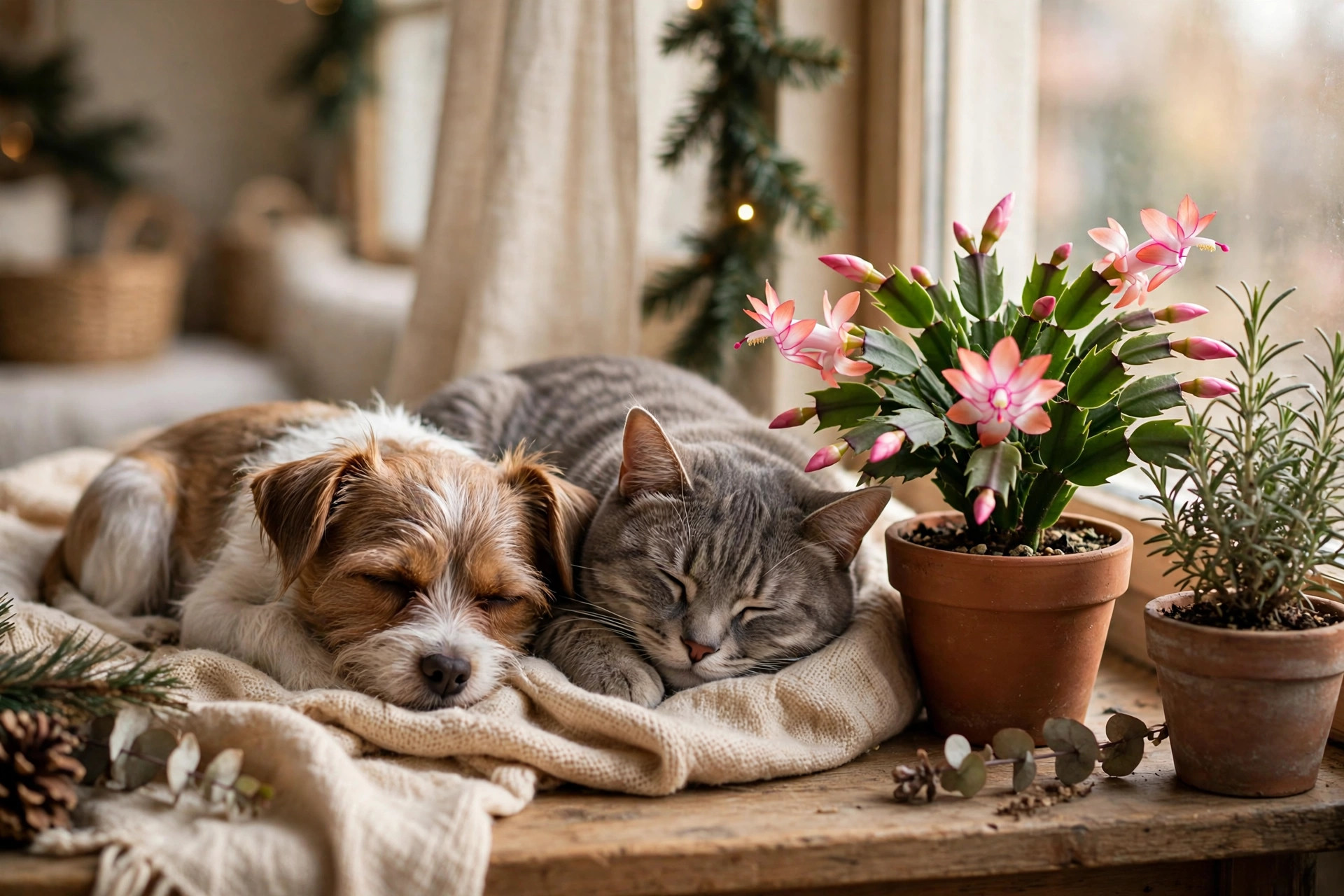
You do not have to give up a festive home to keep your pets safe. Several classic holiday plants are listed as non-toxic to dogs and cats by the ASPCA, and they look just as good on the mantel.
- Christmas cactus — the safest swap of all. Its pink or red blooms look festive, and the ASPCA lists it as non-toxic to cats and dogs.
- Rosemary — a small potted rosemary “tree” smells wonderful, doubles as a cooking herb, and is non-toxic to pets.
- Norfolk Island pine — sold as a miniature living Christmas tree, it is non-toxic and can be kept as a houseplant after the holidays.
- African violets and orchids — both are non-toxic and add color to a holiday table without any risk.
- Artificial mistletoe and holly — the look without the berries. Just make sure small parts cannot be chewed off and swallowed.
If you love the look of poinsettias, you can still enjoy them — just place them on a high shelf where no pet can reach, and sweep up fallen leaves promptly. And if someone sends you a bouquet, check every stem before it goes in the vase: if it contains lilies, give it away or keep it in a room your cat never enters.
Also Read: Can Dogs Eat Turkey? Safe Feeding Guide (2026) — the holiday centerpiece rules, from plain meat to the bones and skin to avoid.
How to Pet-Proof Your Holiday Plants
A few habits make the whole season safer:
- Screen every plant at the door. Check bouquets, gift plants, and centerpieces against the ASPCA toxic plant list before they go on display.
- Go high, not low. Keep all holiday plants on shelves, mantels, or hanging planters above pet height — never on the floor or a low coffee table.
- Sweep daily. Fallen berries, leaves, and petals are the most common way pets get exposed. A quick sweep under wreaths and garlands each morning takes a minute.
- Secure the vase. A heavy, stable vase on a high shelf cannot be knocked over by a climbing cat or a wagging tail.
- Tell your guests. Ask visitors not to leave bouquets or gift plants on low tables, and to keep purses — which may hold medications or xylitol gum — up high.
Frequently Asked Questions
Are poinsettias toxic to cats?
Yes, but only mildly. The ASPCA lists poinsettia as toxic to cats and dogs because its milky sap irritates the mouth and stomach, causing drooling and sometimes vomiting. Its toxicity is generally over-rated — a review of nearly 23,000 exposures found no fatalities. Keep poinsettias out of chewing range and wipe off any sap, but they are far less dangerous than lilies.
Are lilies toxic to dogs?
Lilies are far less dangerous to dogs than to cats. The ASPCA lists true lilies as non-toxic to dogs, though eating them can cause stomach discomfort. Cats are the ones at risk of kidney failure. Still, keep lilies away from dogs too, and call your vet if your dog eats some or seems unwell.
Is mistletoe toxic to dogs?
Yes. Mistletoe berries and leaves are toxic to dogs and cats, causing vomiting, diarrhea, and in larger amounts, low blood pressure, a slow heart rate, and difficulty breathing. Call your vet or poison control right away if your dog eats mistletoe, even before symptoms appear.
What holiday plants are safe for cats?
Christmas cactus, rosemary, Norfolk Island pine, African violets, and orchids are all listed as non-toxic to cats by the ASPCA. These make good festive swaps for poinsettias, lilies, mistletoe, holly, and amaryllis.
What should I do if my cat eats a lily?
Call your veterinarian or an emergency clinic immediately — do not wait for symptoms. Even pollen groomed from the fur or water drunk from the vase counts as exposure. Early treatment, usually IV fluids started within hours, can prevent kidney failure. Treatment delayed beyond about 18 hours is often fatal.
Are Christmas trees toxic to pets?
A real Christmas tree is only a mild hazard: chewed needles or a drink of the stand water can upset the stomach, and a large amount of needles could cause a blockage. The bigger risks are the decorations — tinsel, ribbon, glass ornaments, and light cords — and the plants placed around the tree. Keep the tree water covered so pets cannot drink it, and sweep up fallen needles daily.
Final Thoughts
So, which holiday plants are toxic to pets? Lilies are the one true emergency — keep them out of any home with a cat, and treat any exposure as an urgent vet call. Mistletoe, amaryllis, and paperwhite bulbs deserve a call, too. Holly and poinsettia are lower risk, but still belong out of chewing range. And the safest holiday of all is the one built on pet-safe swaps: Christmas cactus, rosemary, and Norfolk Island pine bring the same festive feeling with none of the worry.
Check every plant that comes through your door this season, keep the poison-control numbers in your phone, and enjoy the holidays knowing your pets are safe. When in doubt about any plant, your veterinarian is always the best source of advice for your individual pet.
By Dr. Ayaz Ali