
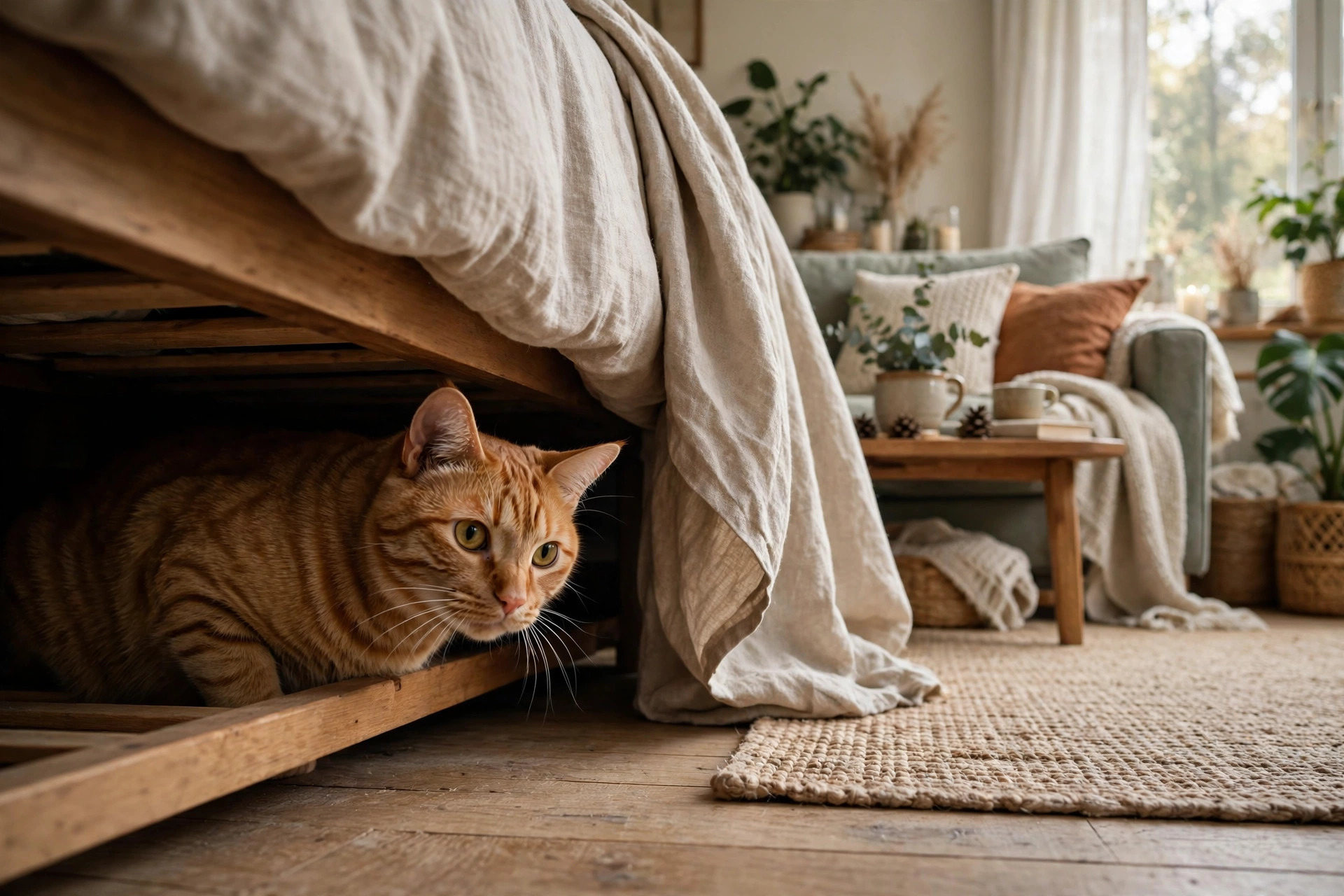
If your normally social cat has vanished under the bed or into a closet, you are probably asking yourself: why is my cat suddenly hiding? Hiding is a normal part of feline life — cats love cozy, enclosed spots — but a sudden change in hiding behavior is one of the most important warning signs a cat can give you.
Cats are masters at masking pain and illness, a survival instinct left over from their wild ancestors. When a cat feels sick, hurt, or stressed, its first move is often to retreat somewhere quiet and safe. That means new, persistent hiding is rarely “just a mood” — it is your cat’s way of telling you something has changed.
In this 2026 guide, we will walk you through why cats suddenly start hiding, how to tell stress hiding from illness hiding, the red-flag symptoms that mean call your vet right away, and the gentle steps that help a hiding cat feel safe enough to come out.
Table of Contents
- Why Do Cats Hide When They Feel Unwell?
- Normal Hiding vs. Warning Hiding
- Illness and Pain Causes of Sudden Hiding
- Stress and Environmental Causes
- Red Flags: When to Call the Vet Immediately
- What to Check at Home First
- How to Lure a Hiding Cat Out Safely
- What Happens at the Vet Visit
- Frequently Asked Questions
Why Do Cats Hide When They Feel Unwell?
In the wild, cats are both hunters and potential prey. A sick or injured cat is slower, less alert, and more vulnerable — so hiding weakness became a survival skill. That instinct survives fully in today’s house cats, even though they are safe at home.
As veterinarians at Texas A&M University’s College of Veterinary Medicine explain, cats tend to hide their symptoms because of this survival instinct, and most signs of illness or injury are subtle — sleeping more than normal, not getting up to greet you, or lying in the same position for long periods. Hiding is often the earliest visible clue, appearing before obvious symptoms like vomiting or appetite loss.
Hiding also conserves energy. Illness takes a huge toll on a cat’s body, and a quiet, undisturbed spot lets it rest without spending energy on social interaction, play, or staying alert. That is why a hiding cat often also sleeps more and plays less — the whole pattern points in the same direction.
Normal Hiding vs. Warning Hiding
Not every trip under the bed is a crisis. Most cats have favorite hiding spots they visit daily for naps, and a cat that retreats during a thunderstorm or a noisy visit is behaving normally. The question is not whether your cat hides, but whether the pattern has changed.
| Sign | Probably Normal | Possible Warning |
|---|---|---|
| Timing | After a clear trigger (visitors, loud noise, new pet) | Sudden, with no obvious trigger |
| Duration | A few hours, then back to normal | More than 24 hours, or getting worse |
| Eating and drinking | Still eats, drinks, and uses the litter box | Skipping meals, drinking less, or litter-box changes |
| Social behavior | Comes out for food, play, or attention | Won’t come out at all, flinches or hisses when touched |
| Other symptoms | None — grooming, movement, and appetite normal | Vomiting, lethargy, dull coat, limping, or breathing changes |
The golden rule: monitor food intake and litter-box activity, not hiding duration alone. A cat that hides for three days but eats and drinks normally is less concerning than a cat that hides for 12 hours and has touched neither food nor water.
Illness and Pain Causes of Sudden Hiding
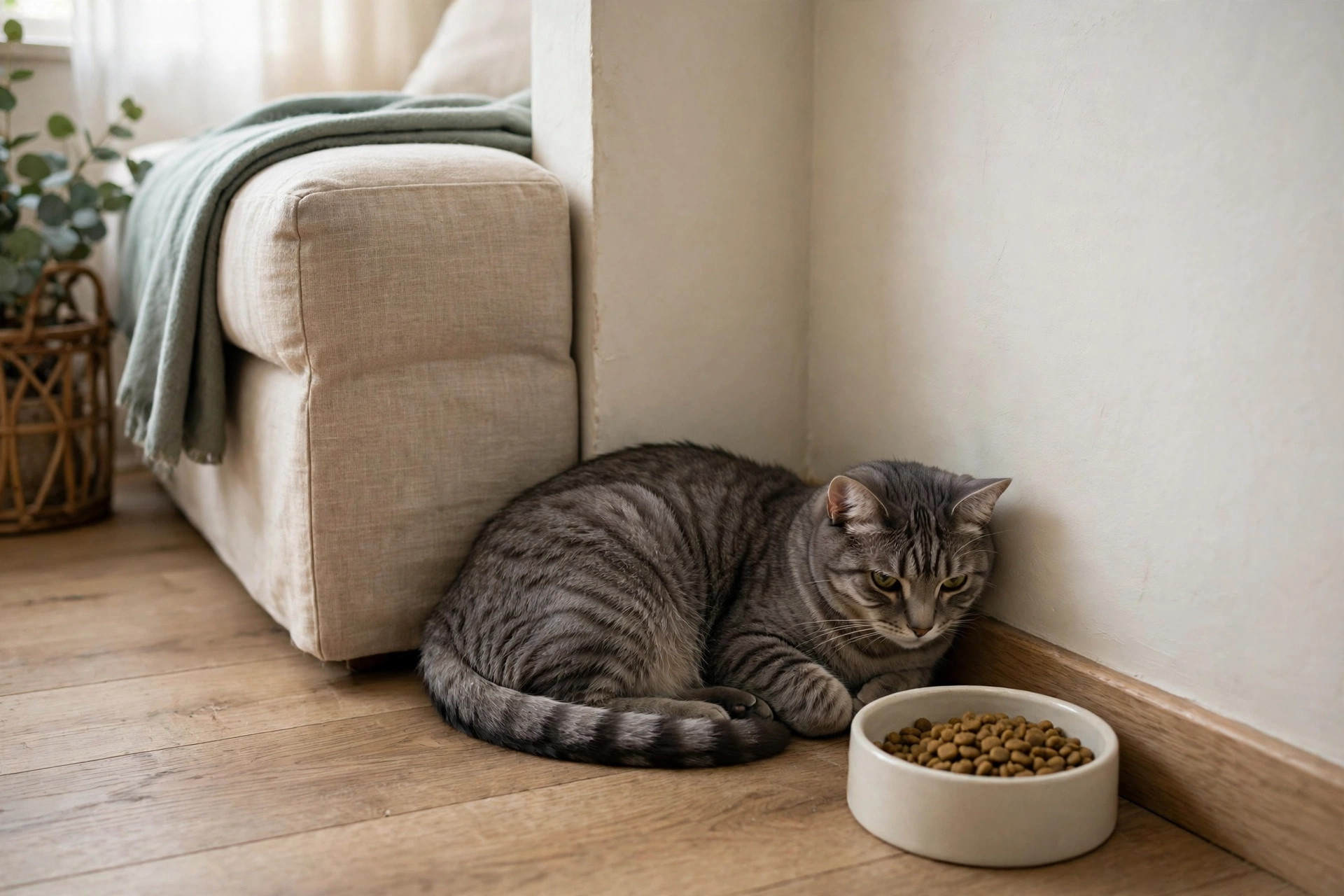
When hiding is driven by illness, it almost always comes with other subtle changes. Watch for these common medical causes:
1. Pain and Injury
Pain is one of the top reasons a cat withdraws. Arthritis in senior cats, a sprain or fall, a bite wound from another cat, or an injury you never saw happen can all send a cat into hiding. Signs that point to pain: limping or stiffness, hesitation before jumping, a hunched posture, flinching when touched, or a dull, unkempt coat from reduced grooming.
2. Dental Disease and Mouth Pain
Inflamed gums, a broken tooth, or an oral abscess makes every bite hurt — so the cat stops eating and retreats. Classic clues: approaching the bowl but walking away, dropping food, drooling, or pawing at the mouth. Dental pain is one of the most commonly missed causes of sudden behavior change in cats.
3. Urinary Problems
Cats with urinary tract infections, bladder inflammation, or crystals often hide and avoid the litter box, or visit it repeatedly with little result. In male cats, straining without producing urine is a life-threatening emergency — a urinary blockage can be fatal within 24–48 hours. Also Read: Cat UTI Symptoms: Urinary Problems Every Owner Must Know (2026)
4. Gastrointestinal Illness
Nausea, gastritis, intestinal parasites, constipation, pancreatitis, or a swallowed foreign object (string, ribbon, plastic) can all make a cat feel miserable enough to hide. Vomiting, diarrhea, or a swollen, painful belly alongside hiding always deserves a vet call.
5. Kidney Disease, Diabetes, and Thyroid Problems
Chronic conditions common in older cats — kidney disease, diabetes, hyperthyroidism — often announce themselves first as behavior change: more hiding, more sleeping, less interest in play, plus increased thirst or weight loss. Senior cats that suddenly hide should always get bloodwork.
6. Respiratory Infection
A cat with a stuffy nose, sneezing, and watery eyes may hide because it feels rotten and cannot smell its food. Upper respiratory infections (“cat flu”) are especially common in kittens and newly adopted cats.
Stress and Environmental Causes
Not all sudden hiding is medical. Cats are creatures of routine, and stress alone can drive a cat under the bed for days. Common triggers include moving house, a new pet or baby, visitors, construction noise, rearranged furniture, a change in your schedule, or tension with another cat in the home.
Stress hiding usually has a clear trigger and fades as the cat adjusts — a few hours to a couple of days. The tricky part is that stress and illness look very similar, and prolonged stress can itself lead to illness (stress-related bladder inflammation is a classic example). That is why a vet exam is the right move when hiding is new, intense, or lasts more than a day or two, even if you suspect stress.
Senior cats deserve special attention: cognitive decline can make older cats more anxious and withdrawn, and they may hide in new places or seem confused. A vet can distinguish cognitive changes from pain or illness, which often look identical at home.
Red Flags: When to Call the Vet Immediately
Call your veterinarian right away — do not wait until morning — if hiding comes with any of these:
- No food for 24 hours (12 hours for a kitten) — cats risk fatty liver disease after just 24–48 hours without eating
- No urination for 24 hours, or straining without producing urine — possible urinary blockage, an emergency especially in male cats
- Labored or open-mouth breathing
- Repeated vomiting or diarrhea
- Crying, growling, or hissing when touched — a strong pain signal
- Lethargy, weakness, or collapse
- Blood in urine or stool
- Sudden weight loss or a dull, matted coat
Even without a red flag, hiding that continues for more than a day, or a cat that stops greeting you, stops playing, and stops grooming, deserves a vet appointment within 24 hours. Trust your instincts: you know your cat’s normal better than anyone, and a change in that normal is itself a symptom. Also Read: Why Is My Cat Not Eating? Warning Signs & When to Worry (2026)
What to Check at Home First
Before the vet visit — and while you wait for it — a calm home check gives your vet valuable information:
- Food and water: Has your cat eaten or drunk anything in the last 24 hours? Note exactly when it last ate.
- Litter box: Any change in frequency, straining, accidents outside the box, or blood in urine or stool?
- Movement: Limping, stiffness after sleep, reluctance to jump, or a hunched posture?
- Coat and grooming: Dull or matted fur, over-grooming one spot, or not grooming at all?
- Mouth: Drooling, bad breath, red gums, or pawing at the face?
- Recent changes: New pet, move, visitors, loud work, or a changed routine in the last week?
Write down what you find with times — “last ate Friday 8pm, no urine since Saturday morning” is far more useful to a vet than “hasn’t been itself lately.” Keep your cat’s hiding spot accessible and quiet; do not block it off, since removing a sick cat’s refuge only adds stress.
How to Lure a Hiding Cat Out Safely

Never drag a cat out of hiding, and never reach into a dark hiding spot with your hands — a frightened or painful cat can bite or scratch badly. Instead, make coming out the cat’s own choice:
- Place food and water near the hiding spot — not inside it, so the cat must take a small step out to eat. Warming wet food briefly releases aroma, a cat’s strongest appetite trigger.
- Sit nearby and talk softly. Read or work quietly in the room so the cat relearns that your presence is safe.
- Offer a favorite treat or toy at the edge of the hiding spot, then wait. Patience beats persuasion every time.
- Keep the house calm. Limit visitors, loud noise, and other pets’ access to the room while your cat recovers its confidence.
- Do not force interaction. Let the cat set the pace — brief, gentle contact it initiates is worth more than a forced cuddle.
If the cat comes out to eat and drink but retreats again, that is progress, not failure. What matters most is that food, water, and litter-box use continue. A cat that will not come out at all, or will not eat even with food placed nearby, needs veterinary attention regardless of the cause. Also Read: Is My Cat Overweight? Body Condition Guide (2026)
What Happens at the Vet Visit
For a hiding cat, your veterinarian will typically perform a full physical exam, check vital signs (temperature, heart rate, respiratory rate), look for weight loss or gain, and examine the mouth, abdomen, and joints for pain. Depending on the findings, they may run blood work, a urinalysis, or X-rays — especially in senior cats, where lab tests catch problems before they become visible at home.
Tell your vet exactly when the hiding started, what else changed, and whether any red flags appeared. If stress is the diagnosis, your vet may suggest pheromone diffusers, environmental enrichment, and a predictable routine — and a follow-up plan if the hiding returns. As the Texas A&M veterinary team notes, regular check-ups help identify illness or pain before it becomes serious, and even a cat that seems fine benefits from at least one vet visit a year. Source: Texas A&M College of Veterinary Medicine — When is your cat hiding illness or injury?
Frequently Asked Questions
Why is my cat suddenly hiding under the bed?
Sudden hiding usually means pain, illness, or stress. Cats hide weakness as a survival instinct, so a new hiding habit is often the first visible sign something is wrong. Check food intake, litter-box habits, and other symptoms, and call your vet if it lasts more than 24 hours.
Is it normal for cats to hide all day?
Some cats nap in secluded spots for much of the day, and that is normal — as long as they still eat, drink, use the litter box, and come out for play or attention. Hiding all day combined with appetite loss, lethargy, or litter-box changes is not normal and needs a vet visit.
How long should I wait before calling the vet?
If hiding comes with any red flag — no food for 24 hours, no urine, breathing trouble, vomiting, or signs of pain — call immediately. Without red flags, give it a day while monitoring food, water, and litter-box use closely, then call your vet if the hiding continues.
Should I drag my cat out of hiding?
No. Forcing a cat out increases stress and risks a bite or scratch, especially if the cat is in pain. Place food and water nearby, sit quietly in the room, and let the cat come out on its own terms.
Can stress alone make a cat hide for days?
Yes — moves, new pets, visitors, and household changes can drive hiding for days. But stress and illness look alike, and prolonged stress can cause illness too, so a vet exam is wise if hiding lasts more than a day or two.
Why is my old cat suddenly hiding more?
Senior cats hide more because of arthritis pain, kidney or thyroid disease, vision or hearing loss, and cognitive decline. A sudden increase in hiding in a senior cat always deserves a vet check with bloodwork.
Final Thoughts
So, why is my cat suddenly hiding? Because cats hide what hurts them — and sudden hiding is your earliest warning that something has changed. Most of the time the cause is treatable, especially when caught early: a dental problem, a urinary issue, a painful joint, or a stressful week at home.
The rule to remember is simple: a hiding cat that still eats, drinks, and uses the litter box can usually be monitored for a day — but a hiding cat that stops eating, stops urinating, or shows any red flag needs a vet now, not tomorrow. You know your cat’s normal better than anyone. When that normal changes, trust it, check the basics, and make the call.
By Dr. Ayaz Ali