
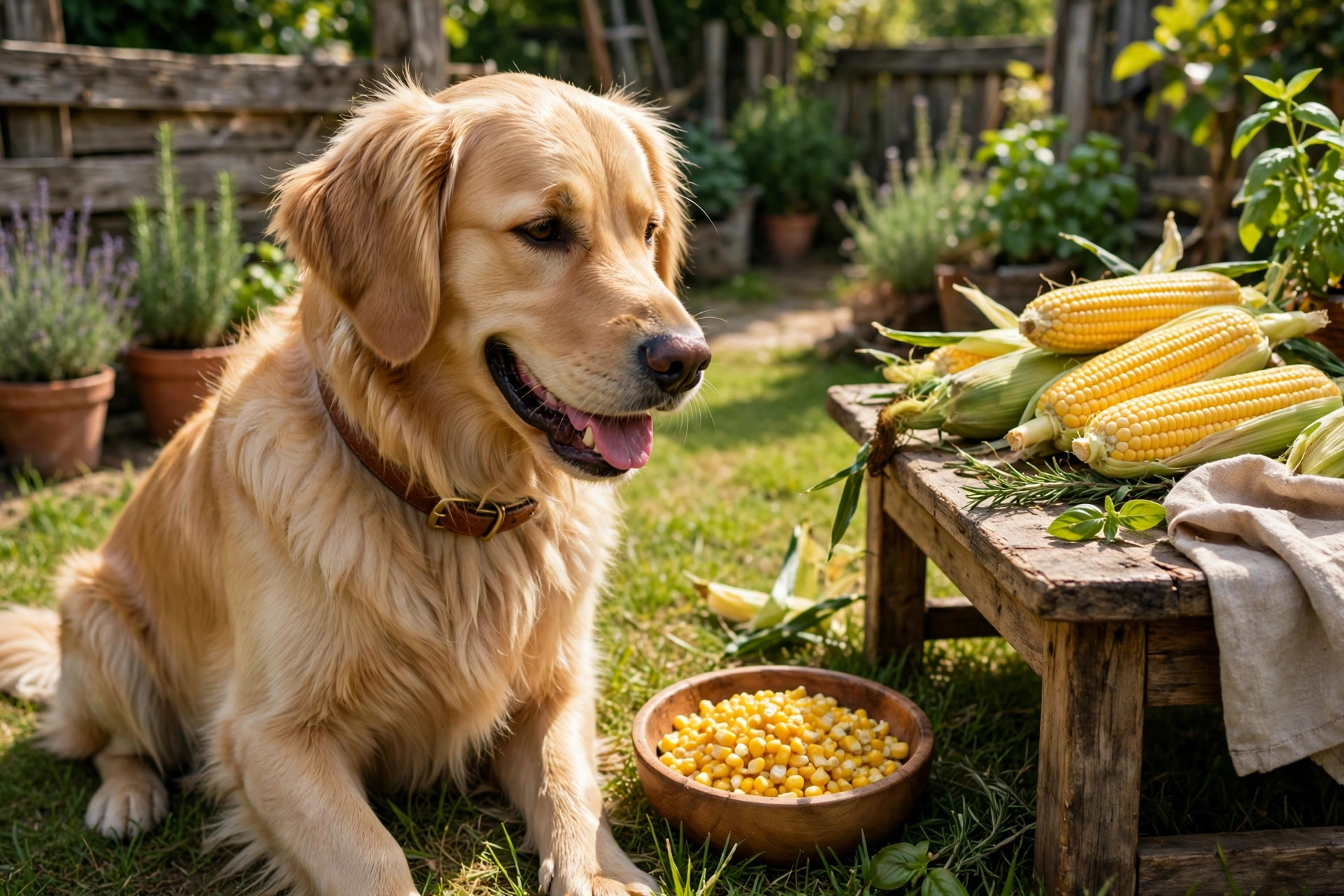
As a dog owner, you have probably been there: it is barbecue season or Thanksgiving, corn on the cob is on the table, and your dog is watching every bite with hopeful eyes. It is only natural to wonder: can dogs eat corn, or should this golden vegetable stay off your pup’s menu?
The good news is yes, dogs can eat corn — but only as plain kernels cut off the cob, served in small amounts. The kernels themselves are a nutritious, low-fat treat. The cob, on the other hand, is one of the most dangerous things a dog can swallow: it is nearly indigestible and can cause a life-threatening intestinal blockage.
In this complete guide, we will walk you through everything you need to know about feeding corn to dogs: the health benefits, the serious cob danger, safe serving sizes by dog size, how to prepare corn safely, what to do if your dog eats a cob, and answers to the most common questions dog owners ask.
Quick Answer: Yes, dogs can safely eat plain, cooked corn kernels in moderation. Always cut every kernel off the cob first, serve them plain with no butter, salt, or seasoning, and never let your dog chew on a corn cob, husk, or stalk.
Table of Contents
- Is Corn Safe for Dogs?
- Health Benefits of Corn for Dogs
- Why Corn on the Cob Is Dangerous for Dogs
- Signs of a Corn Cob Blockage
- How Much Corn Can Dogs Eat?
- How to Prepare Corn Safely for Dogs
- What If My Dog Eats a Corn Cob?
- Can Puppies Eat Corn?
- Healthy Alternatives to Corn
- Frequently Asked Questions
Is Corn Safe for Dogs?
Yes, plain corn kernels are generally safe for healthy dogs when served correctly. Veterinary sources including the American Kennel Club (AKC) confirm that corn kernels provide protein, carbohydrates, fiber, linoleic acid, and antioxidants — and that corn is a recognized ingredient in many commercial dog foods, not just a filler.
The critical distinction is kernels versus cob. Kernels are soft, digestible, and nutritious. The cob is hard, fibrous, and almost impossible for a dog’s digestive system to break down. That is why every rule in this guide comes back to one sentence: kernels yes, cob never.
Before offering corn, make sure you serve only:
- Plain kernels, cut completely off the cob
- Cooked or plain canned corn, thoroughly rinsed, with no added salt or sugar
- Completely plain — no butter, salt, seasoning, or sauces
- Occasionally — as a treat, never as a daily staple
As with any treat, corn should make up no more than 10% of your dog’s daily calories, with the rest coming from a complete, balanced dog food.
Health Benefits of Corn for Dogs
Corn may look simple, but the kernels pack a genuinely useful nutritional profile for dogs when fed responsibly.
1. Steady Energy From Complex Carbohydrates
Corn is rich in carbohydrates, which give active dogs readily available energy. That is one reason corn appears in so many working-dog and sporting-dog formulas.
2. Fiber for Digestive Health
The natural fiber in corn supports healthy digestion and regular bowel movements. A small spoonful mixed into a meal can add gentle bulk without many calories.
3. Linoleic Acid for Skin and Coat
Corn provides linoleic acid, an essential fatty acid that supports healthy skin and a shiny coat. Dogs cannot make this fatty acid themselves, so it must come from food.
4. Protein and Antioxidants
Corn contributes a modest amount of plant protein plus antioxidants that help protect your dog’s cells from everyday oxidative damage. It also supplies B vitamins and minerals such as magnesium and phosphorus.
Also Read: Can Dogs Eat Cranberries? Safe Feeding Guide (2026) — another holiday-season food dog owners ask about every year.
Why Corn on the Cob Is Dangerous for Dogs
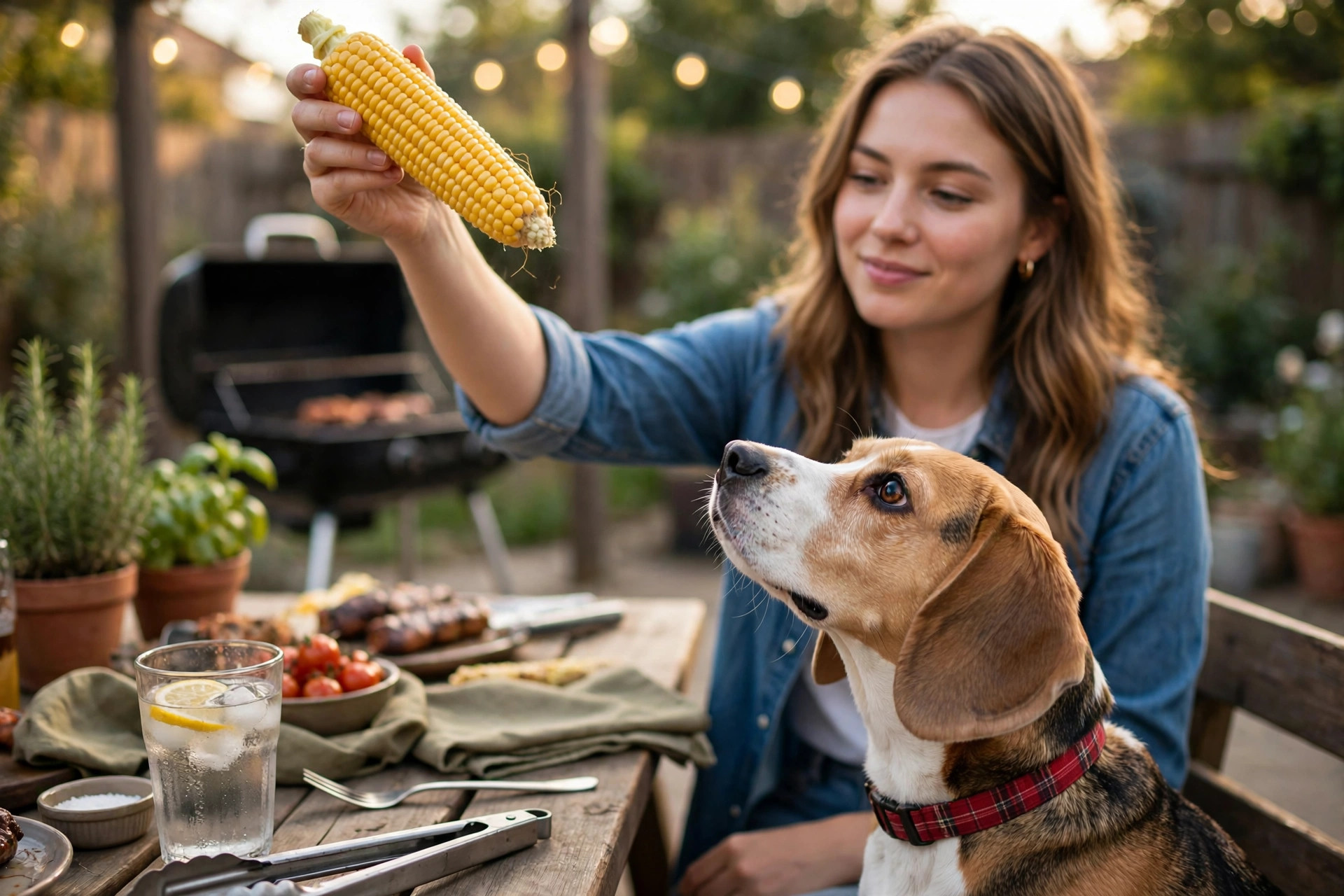
No matter how lovingly your dog looks at you while you are enjoying corn on the cob, do not share it with them. Corn cobs are one of the most common causes of intestinal blockage in dogs, especially after barbecues and holiday meals.
The danger works like this: a dog rarely chews a cob into small pieces. Medium and large dogs can swallow large sections — or the entire cob — whole. Because the cob is dense, fibrous, and indigestible, it cannot be broken down in the stomach. It moves into the small intestine, where it can get stuck and completely block the passage of food and fluids.
A blockage is a genuine emergency. Without treatment, the blocked section of intestine can be damaged, and the condition can become fatal. Many cob blockages require emergency surgery to remove.
The same warning applies to corn husks and stalks: they are tough, fibrous, and indigestible, and they can choke your dog or cause the same kind of blockage. And do not forget the trash — a surprising number of cob emergencies start with a dog raiding the bin after a barbecue. Put cobs in a closed, dog-proof bin immediately.
Signs of a Corn Cob Blockage
If your dog has swallowed a cob or a piece of one, watch closely for these warning signs, which can appear within hours or take a day or two to develop:
- Repeated vomiting or retching
- Loss of appetite or refusing food entirely
- Abdominal pain, tenderness, or a hunched posture
- Lethargy or reduced activity
- Diarrhea, or straining to defecate with little or no stool
- Dehydration or excessive drooling
Any of these signs after a known or suspected cob ingestion means call your veterinarian immediately. Do not wait to see if it passes on its own — cobs often do not, and the longer a blockage sits, the more dangerous it becomes. Note that cobs do not always show up clearly on X-rays, so tell your vet exactly what happened and when.
How Much Corn Can Dogs Eat?
Corn kernels should only ever be an occasional treat — think of them as a topping, not a side dish. Use this simple serving guide:
| Dog Size | Weight | Safe Serving (plain kernels) |
|---|---|---|
| Extra-small dogs | Under 10 lbs | 1 tablespoon |
| Small dogs | 10–25 lbs | 2 tablespoons |
| Medium dogs | 25–50 lbs | 3–4 tablespoons |
| Large dogs | Over 50 lbs | Up to 1/4 cup |
When in doubt, offer less. A small spoonful is plenty even for an average-sized dog, and remember that all treats combined should stay under 10% of daily calories.
How to Prepare Corn Safely for Dogs
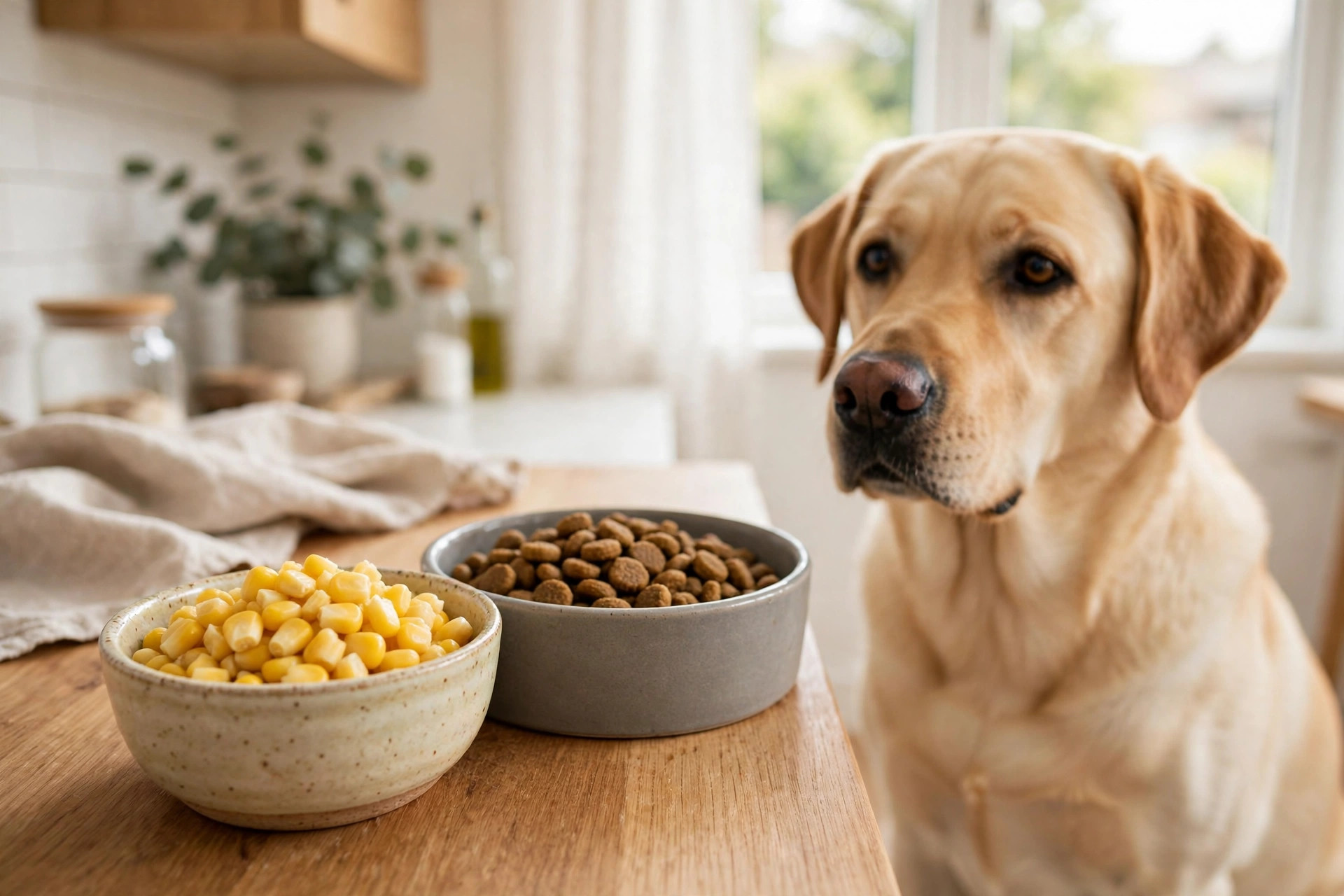
Safe preparation takes just a couple of minutes:
- Choose fresh corn on the cob, or plain canned corn with no added salt or sugar.
- Boil, steam, or grill the cob plain — never with butter, oil, or seasoning.
- Let it cool completely, then cut every kernel off the cob with a knife.
- Check twice that no cob fragments, husk, or silk remain in the kernels.
- Serve plain — never add salt, butter, cheese, chili, or sauces.
- Offer a small amount as an occasional treat, or mix a spoonful into their regular meal.
Skip these corn products entirely: buttered or salted popcorn toppings, corn chips, corn tortillas with seasoning, creamed corn, corn pudding, and cornbread made with sugar and butter. Plain air-popped popcorn is a separate treat — but it is not the same as corn kernels, and it still needs to be unseasoned and served in small amounts.
What If My Dog Eats a Corn Cob?
Stay calm, but act fast. This is not a wait-and-see situation:
- Remove any remaining cob so your dog cannot eat more, and keep them where you can watch them.
- Note what happened: how much of the cob was eaten, and when. If your dog vomits up pieces, save them — it helps your vet judge how much is still inside.
- Call your veterinarian or an emergency clinic immediately, even if your dog seems fine. Early treatment is far more effective than treatment after a blockage has set in.
- Do not try to make your dog vomit at home unless a veterinarian specifically tells you to. Home remedies can cause aspiration or other injuries, and vomiting does not reliably clear a cob.
- Follow your vet’s instructions exactly. They may ask you to come in straight away for examination, X-rays, or monitoring, or advise careful watching for a very small fragment. Treatment for a blockage can range from monitoring to endoscopic removal to emergency surgery.
Also Read: What to Do If Your Dog Eats Chocolate: Emergency Steps (2026) — the first-hour steps for another common holiday emergency.
Can Puppies Eat Corn?
Yes, puppies can eat a tiny amount of plain, cooked corn kernels once they are fully weaned and eating solid food. Because puppies have sensitive digestive systems — and small mouths — start with a single teaspoon of kernels and watch for any stomach upset over the next 24 hours before offering more. As with adults, keep it an occasional treat only, and be extra careful that no cob fragments ever reach a puppy.
Healthy Alternatives to Corn
If your dog does not care for corn — or you would like to rotate their treats — these foods are also safe in moderation:
- Green beans — plain, a great low-calorie veggie
- Carrots — raw or cooked, in small pieces
- Blueberries — antioxidant-packed and low in sugar
- Sweet potato — plain, cooked, no marshmallows or sugar
- Cucumber — hydrating and low in calories
Always introduce any new food gradually and in small portions.
Also Read: Can Dogs Eat Turkey? Safe Feeding Guide (2026) — the other holiday-table food every dog owner asks about.
Frequently Asked Questions
Can dogs eat corn every day?
No. Even plain kernels should be an occasional treat, not a daily food. They do not provide complete nutrition on their own, and regular feeding unbalances your dog’s diet.
Can dogs eat corn on the cob?
Never. The cob is indigestible and can choke your dog or cause a life-threatening intestinal blockage that often requires emergency surgery. Always cut every kernel off the cob first.
Can dogs eat canned corn?
Yes, as long as it is plain — no added salt, sugar, or seasonings — and rinsed thoroughly. Low-sodium or no-salt-added varieties are the safest choice.
Can dogs eat popcorn?
Plain, air-popped popcorn in small amounts is generally fine, but it is not the same as corn kernels. Never serve buttered, salted, or caramel popcorn, and watch for unpopped kernels, which can be a choking hazard.
Can dogs eat corn husks?
No. Husks are tough, fibrous, and indigestible, just like the cob. Remove the husk completely before offering any kernels.
Is corn in dog food bad for dogs?
No. Corn is a recognized ingredient in commercially formulated dog food, where it contributes carbohydrates for energy, essential fatty acids, and some protein. Look for an AAFCO nutritional adequacy statement on the bag to confirm the food meets established standards.
What should I do if my dog ate a corn cob but seems fine?
Call your vet anyway. Blockage symptoms can take a day or two to appear, and early assessment gives your dog the best chance. Keep watching for vomiting, appetite loss, lethargy, or straining to defecate for at least 48 hours.
Final Thoughts
So, can dogs eat corn? Absolutely — when it is plain kernels, cut off the cob, and served in moderation. A spoonful of sweet kernels makes a low-fat, fiber-rich treat most dogs enjoy. Just remember the golden rule: kernels yes, cob never — and take the trash out promptly after every barbecue.
As with any new food, introduce corn slowly and watch how your dog responds. And when in doubt, your veterinarian is always the best source of advice for your individual pup’s diet.
By Dr. Ayaz Ali