
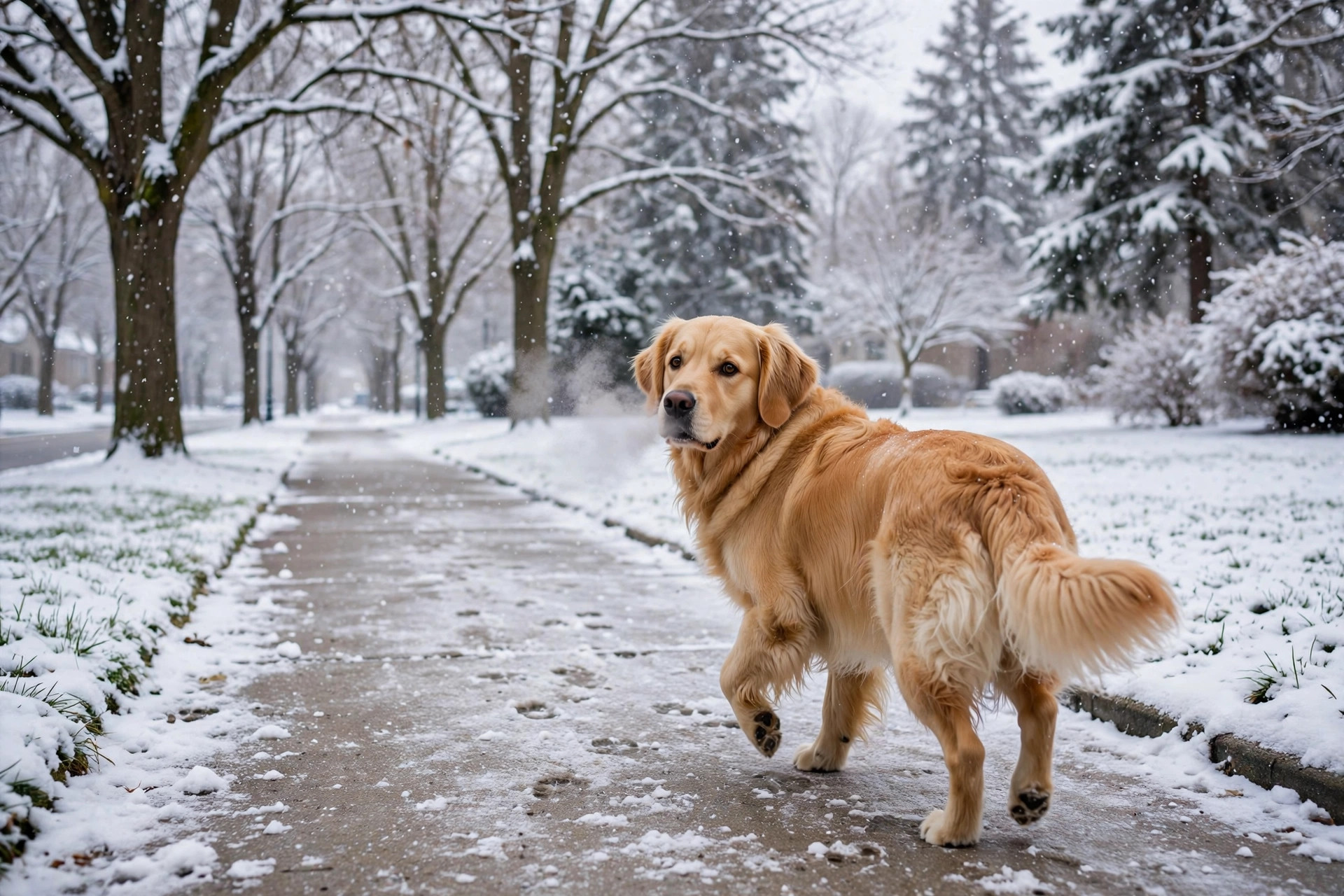
You know the scene: it is a crisp January morning, your dog is bouncing by the door, leash in mouth — and you hesitate. The thermometer says -5°C, the wind is biting, and you wonder: how cold is too cold for dogs? At what point does a healthy winter walk turn into a risky one?
The short answer is that there is no single magic number. A husky and a chihuahua standing side by side in the same weather have completely different experiences. But veterinarians do agree on clear temperature zones that tell you when to walk normally, when to bundle up and cut the walk short, and when to skip the walk entirely.
In this complete 2026 guide, you will learn exactly how cold is too cold for dogs: the temperature chart vets use, why breed, size, age, and coat matter so much, the 7 signs your dog is too cold on a walk, how long winter walks should last, and the gear that keeps paws and bodies safe.
Table of Contents
- How Cold Is Too Cold for Dogs? The Temperature Chart
- Why Some Dogs Handle Cold Better Than Others
- 7 Signs Your Dog Is Too Cold on a Walk
- How Long Should Winter Walks Last?
- How to Protect Your Dog in Cold Weather
- Frostbite and Hypothermia: Warning Signs
- Frequently Asked Questions
How Cold Is Too Cold for Dogs? The Temperature Chart
Veterinary sources including PetMD break cold risk into zones. These are guidelines for healthy adult dogs — always adjust for your individual dog and factor in wind chill, which can make the air feel far colder than the thermometer reads.
| Temperature | Small / Thin-Coated Dogs | Medium Dogs | Large / Thick-Coated Dogs |
|---|---|---|---|
| Above 45°F (7°C) | Safe — normal walks | Safe — normal walks | Safe — normal walks |
| 32–45°F (0–7°C) | Caution — consider a coat and shorter walks | Safe — watch for shivering | Safe — comfortable |
| 20–32°F (-7–0°C) | Limit to 15–20 minutes, coat + booties recommended | Shorter walks, watch closely | Caution — monitor for discomfort |
| 10–20°F (-12–-7°C) | Bathroom breaks only | Very short outings only | Short outings — protect paws, ears, tail |
| Below 10°F (-12°C) | Avoid — indoor exercise only | Quick bathroom breaks only | Keep outings very brief |
The single most important line from PetMD: once temperatures drop under 20°F (-7°C), all pet parents need to be aware that their dogs could develop cold-associated health problems like hypothermia or frostbite when outside for extended periods. Below 10°F (-12°C), almost no dog should be out longer than a quick bathroom break.
Why Some Dogs Handle Cold Better Than Others
Two dogs in the same weather can have totally different cold tolerance. These are the biggest factors:
1. Coat type
Double-coated breeds — huskies, malamutes, Newfoundlands, Samoyeds, Saint Bernards — trap a layer of warm air between two fur layers and shrug off cold that sends other dogs shivering. Short-haired, single-coated, or hairless breeds (chihuahuas, greyhounds, pit bulls) lose heat fast and almost always need a coat.
2. Size and body fat
Small dogs cool down quickly because they have more surface area relative to their body mass. Lean, athletic dogs also lose warmth fast. Larger dogs with healthy body condition hold heat longer.
3. Age and health
Puppies cannot regulate body temperature as well as adults, and senior dogs lose the ability to stay warm efficiently — arthritis, heart disease, and hormonal imbalances all reduce cold tolerance. Very young, old, or sick dogs need extra protection below freezing.
4. Wind, wetness, and acclimation
Wind chill and wet fur dramatically lower the “too cold” threshold. A damp, blustery day can chill a dog faster than a dry, still morning at a lower temperature. Dogs living in cold climates acclimate better than dogs visiting from warm ones.
7 Signs Your Dog Is Too Cold on a Walk
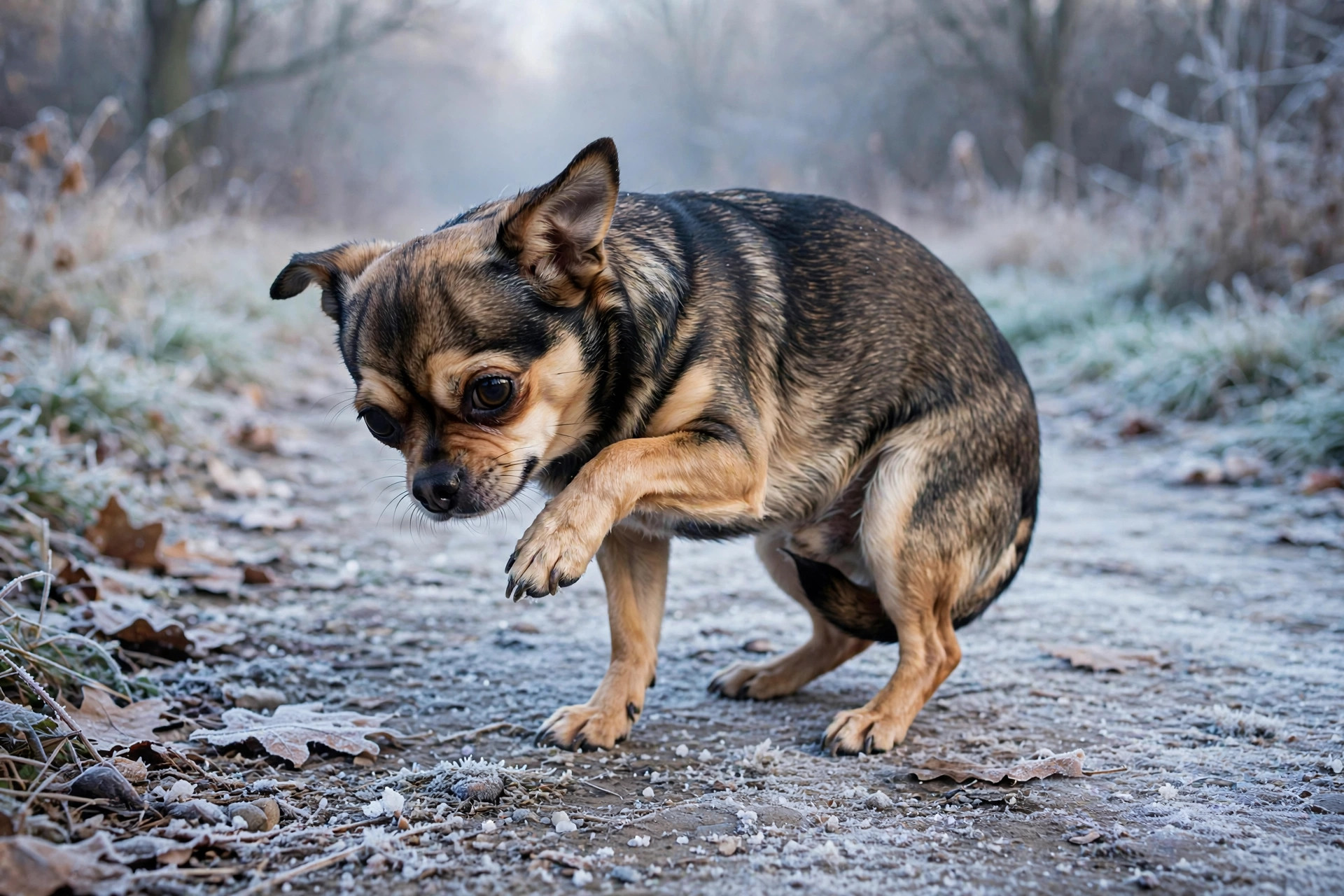
Your dog cannot tell you it is cold, but its body language will. Cut the walk short and head inside if you notice:
- Shivering or trembling — like humans, dogs shiver to generate body heat. Shivering on a walk means the cold is winning.
- Lifting paws off the ground — the classic signal that the ground is too cold (or salted) for the paws.
- Whining or vocalizing — your dog is telling you it is uncomfortable.
- Slowing down or refusing to walk — a dog that wants to turn for home is usually cold, not lazy.
- Hunched posture with a tucked tail — minimizing exposed surface area to conserve heat.
- Anxiety or restlessness — pacing, looking around, unable to settle.
- Seeking shelter — trying to get behind a wall, under a bush, or back toward the house.
If you spot these signs, warm your dog up gradually indoors — never with very hot water or a direct heat source on cold skin.
Also Read: Winter Paw Care for Dogs: Salt, Ice & Cracked Pads (2026) — booties, balms, and the post-walk rinse routine that protect feet through the whole season.
How Long Should Winter Walks Last?
As a rough guide for healthy adult dogs:
- Above 45°F (7°C): walk normally — most dogs are completely comfortable.
- 32–45°F (0–7°C): normal walks for most; shorten outings for small, thin-coated, senior, or very young dogs.
- 20–32°F (-7–0°C): keep walks to about 15–20 minutes for vulnerable dogs; keep moving and skip the long sniff-stops.
- Below 20°F (-7°C): short, brisk outings — get business done and head back in.
- Below 10°F (-12°C): bathroom breaks of a few minutes only, then back inside for play and enrichment instead.
On days too cold for a real walk, swap the outing for indoor exercise: puzzle feeders, training games, and gentle wrestling burn energy without the frost risk.
How to Protect Your Dog in Cold Weather
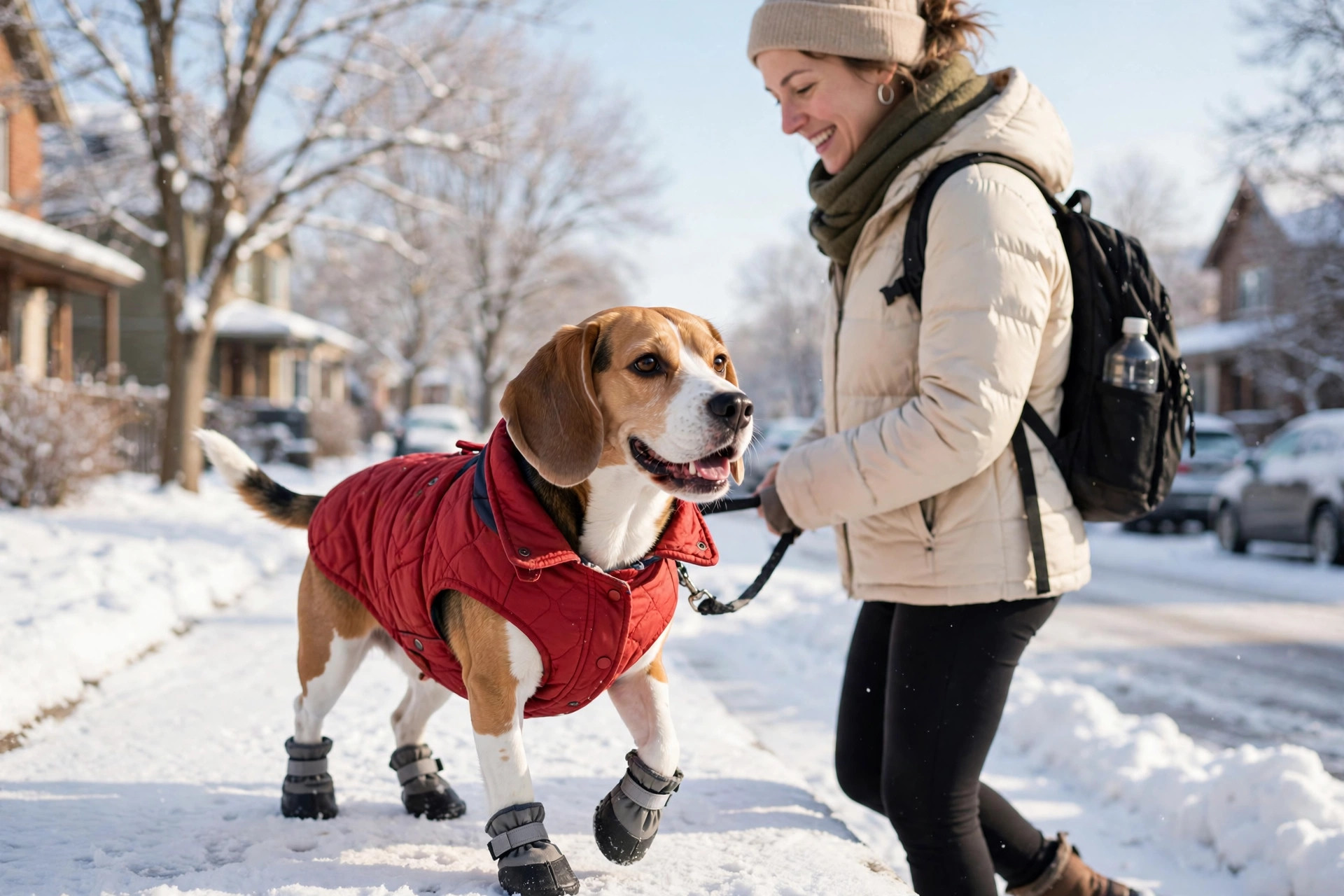
Cold walks are perfectly doable with the right preparation:
1. A well-fitted coat
Short-haired, small, senior, and lean dogs benefit hugely from a coat — it should cover the chest and belly (where heat escapes fastest) without restricting movement. Introduce it indoors first with treats so your dog associates it with good things.
2. Booties or paw balm
Booties are the gold standard: they block salt, chemicals, ice, and snow from the paws. For dogs that will not tolerate booties, a paw wax creates a protective barrier before the walk. Always rinse or wipe paws the moment you get home to remove road salt.
3. Trim inter-toe hair
Long tufts between the toes trap snow, which compacts into painful ice balls. A quick trim makes a big difference on snowy walks.
4. Time walks wisely
Walk during the warmest part of the day, keep a steady pace so muscles generate heat, and never leave your dog tied up outside or waiting in the cold while you stop somewhere.
5. Feed a little more
Dogs that spend real time outdoors in winter burn more calories staying warm. If your dog is active outside through winter, ask your vet whether a small increase in food is appropriate — indoor dogs that exercise less may need the opposite.
Also Read: Fall Pet Wellness Checkup Guide (2026) — the pre-winter vet visit that sets up vaccines, weight, and parasite prevention before the cold season.
Frostbite and Hypothermia: Warning Signs
These are the two serious cold-weather dangers every owner must recognize:
Frostbite
Dogs can get frostbite at 32°F (0°C) and below — and in subzero temperatures, tissue damage can begin in as little as five minutes. It strikes the extremities first: ears, paw pads, and tail tips. Watch for skin that looks pale, blue, gray, or red and feels cool to the touch. Because damage can take days to fully appear, any suspected frostbite needs a vet visit.
Hypothermia
Call your veterinarian if you notice sluggishness, confusion, severe shivering (which may stop as hypothermia worsens — a dangerous sign), stumbling, or parts of the body that appear pale and feel cool. Warm the dog gradually with blankets and a warm room, and never warm with hot water or heating pads on high.
Also Read: Pet Emergency First Aid: Vet Guide (2026) — what to do in the critical minutes before you reach the clinic.
Frequently Asked Questions
How cold is too cold for dogs to walk?
Most healthy dogs walk comfortably above 45°F (7°C). Below 32°F (0°C), small, thin-coated, young, senior, or sick dogs are at risk and need shorter, geared-up walks. Below 20°F (-7°C), keep all walks short — and below 10°F (-12°C), limit outings to quick bathroom breaks.
Can dogs get frostbite on their paws?
Yes. Dogs can develop frostbite at 32°F (0°C) and below, with paws, ears, and tail tips most vulnerable. In subzero cold, frostbite can begin in as little as five minutes of exposure. Watch for pale, blue, or gray skin that feels cool to the touch.
Do dogs need coats in winter?
Many do. Small, short-haired, lean, senior, and very young dogs benefit from a coat below about 45°F (7°C). Thick double-coated breeds like huskies and malamutes rarely need one. The coat should cover the chest and belly and fit without restricting movement.
Is it okay to walk my dog in the snow?
Yes, with precautions: protect paws with booties or balm, trim inter-toe hair to prevent ice balls, keep walks shorter in deep or wet snow, and rinse paws afterward to remove salt and de-icers. Skip the walk if it is extremely cold, windy, or your dog shows any signs of discomfort.
How do I know if my dog has hypothermia?
Warning signs include sluggishness, confusion, stumbling, pale gums or skin, and shivering that weakens or stops. Hypothermia is an emergency — warm your dog gradually and get to a veterinarian immediately.
What temperature can dogs sleep outside in?
Dogs should not sleep outside in cold weather. Even cold-tolerant breeds are safest indoors when temperatures drop toward freezing. No dog should be left unsupervised outdoors in extreme cold — the best way to monitor your dog is to stay with it and watch its behavior.
Final Thoughts
So, how cold is too cold for dogs? Remember the three key lines: below 45°F, watch cold-averse dogs; below 32°F, protect small, thin-coated, young, senior, and sick dogs; below 20°F, keep every dog’s time outside short. And below 10°F, it is bathroom breaks only.
Winter walks are one of the great joys of dog ownership — you just need to read the thermometer, read your dog, and gear up accordingly. A coat, booties, and the willingness to cut a walk short when your dog tells you it is cold will get you both through winter safely.
By Dr. Ayaz Ali