
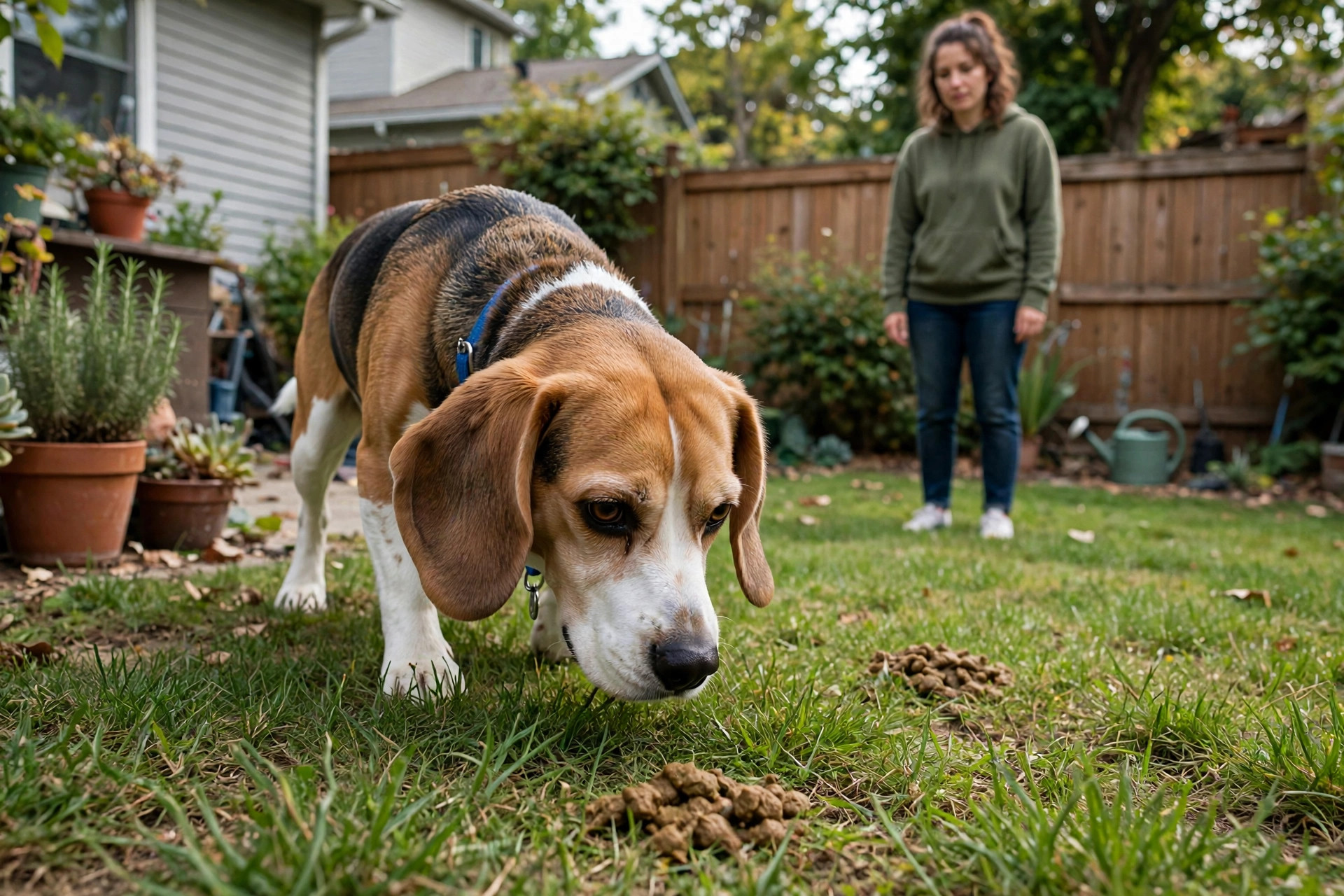
You let your dog into the backyard, turn away for ten seconds, and when you look back, he’s doing something unspeakable — snatching up his own poop like it’s a gourmet treat. If you’ve ever wondered why does my dog eat poop, and whether this disgusting habit is dangerous, you’re far from alone: it’s one of the most common complaints veterinarians hear from dog owners.
The technical term for poop eating is coprophagia, and studies suggest around 16% of dogs are regular stool eaters. The reassuring news: for many dogs it’s a behavioral habit, not a disease. But the habit does carry real health risks, and sudden poop-eating in an adult dog can signal a medical problem. In this 2026 guide, we’ll cover the seven real reasons dogs eat poop, when it’s normal and when it’s a warning sign, the parasite and disease risks, and the vet-approved steps that actually stop it.
Table of Contents
- Is It Normal for Dogs to Eat Poop?
- Why Do Dogs Eat Poop? 7 Vet-Explained Causes
- Is Eating Poop Dangerous for Dogs?
- How to Stop Your Dog Eating Poop
- When to See Your Vet
- Why Do Puppies Eat Poop?
- Frequently Asked Questions
Is It Normal for Dogs to Eat Poop?
Surprisingly, yes — to a point. PetMD‘s veterinary review notes that coprophagia is considered a normal behavior in some contexts: it’s normal for dogs to eat the droppings of other animal species, while it’s less normal for adult dogs to eat their own poop or another dog’s.
The instinct may run deep. A 2018 survey published in Veterinary Medicine and Science proposed that poop eating is inherited from wolves, which eat fresh droppings to keep the den free of intestinal parasites. Mother dogs also routinely eat their puppies’ stool — a hardwired den-cleaning behavior that keeps newborns safe from disease.
So “normal” doesn’t mean “desirable.” Even when the behavior starts innocently, it can become a fixed habit — and the health risks (below) mean it’s always worth addressing. Think of it this way: normal for a dog is not the same as healthy or acceptable in your home.
Why Do Dogs Eat Poop? 7 Vet-Explained Causes
There’s no single answer — different dogs snack for different reasons. Veterinary behaviorists group the causes into three buckets: instinctive, behavioral, and medical. Here are the seven explanations they take most seriously.
1. Nursing and Maternal Instinct
A mother dog eats her puppies’ waste to keep the den clean and protect the litter from parasites and predators. Puppies watch and copy their mothers, so some learn the habit before they’re even weaned. This early modeling is one reason puppies are the most common poop eaters.
2. Inherited Wolf Instinct
That 2018 wolf study suggests some dogs eat poop simply because their ancestors did. Eating fresh stool removed parasite-laden waste from the den area — a survival strategy. Your beagle isn’t being gross on purpose; he may be running an ancient cleanup program.
3. Taste and Smell
Let’s be honest: dogs experience the world through their noses, and some feces genuinely appeal to them. Cat poop is the classic example — the litter box is a “prize” dogs find rewarding, which is why they keep going back. Stool from animals eating rich diets (cat food, horse feed) can contain undigested nutrients that smell like food to a dog.
4. Boredom and Lack of Stimulation
An under-exercised dog invents its own entertainment. Dogs left alone in the yard with nothing to do may develop coprophagia as a pastime — the habit is especially common in dogs kept in barren environments with little enrichment. More walks, play, and puzzle toys often cut the habit fast.
Also Read: Why Do Dogs Eat Grass? Vet Explains (2026) — another strange-but-common habit with the same boredom link.
5. Anxiety and Stress
Some dogs turn to familiar puppyhood comforts during stressful periods — a move, a new pet, long absences. Like people reaching for comfort food, an anxious dog may fall back on coprophagia. If the habit appeared alongside other stress signs (pacing, whining, destructive chewing), anxiety is a prime suspect.
Also Read: Separation Anxiety in Dogs: Signs & Help Guide (2026) — stress-driven habits often travel together.
6. Attention-Seeking — or Hiding an Accident
Dogs learn fast: if every poop-snatch earns a gasp, a chase, or a shouting match, the dog has learned a trick — eat poop, get attention. Even negative attention is attention. A related trigger: dogs that were punished for house-training accidents may eat their own stool to “hide the evidence” and avoid scolding. This is a strong argument for never punishing potty accidents.
7. Diet Problems and Medical Conditions
Sometimes the cause is in the bowl, not the brain. Poorly digested food leaves stool that smells and tastes like the original meal — a real temptation. Malnutrition (especially in dogs fed unbalanced homemade diets), vitamin deficiencies, intestinal parasites, malabsorption disorders, diabetes, Cushing’s disease, and pancreatic enzyme deficiency can all drive coprophagia. The red flag: an adult dog that suddenly starts eating poop after years of ignoring it.
Is Eating Poop Dangerous for Dogs?
Eating his own fresh poop is usually low-risk for an otherwise healthy, dewormed dog — but “usually” is doing a lot of work there. The real dangers come from whose poop he eats:
- Intestinal parasites: Roundworms, hookworms, and giardia spread through infected feces — the number-one risk, especially at dog parks.
- Parvovirus: This deadly virus survives in the environment and spreads through infected stool.
- Salmonella and bacteria: Feces can carry salmonella and other harmful bacteria that make dogs — and the humans they lick — sick.
- Medication residues: Horse, sheep, and fox droppings can contain deworming drugs and other medications that are toxic to dogs.
- Reinfection loops: A dog with worms that eats its own stool keeps reinfecting itself, making treatment fail.
The bottom line: a one-off incident in a healthy, parasite-free dog rarely causes harm, but a regular habit meaningfully raises the odds of parasites and infection. Keep deworming current and don’t let the habit continue.
How to Stop Your Dog Eating Poop
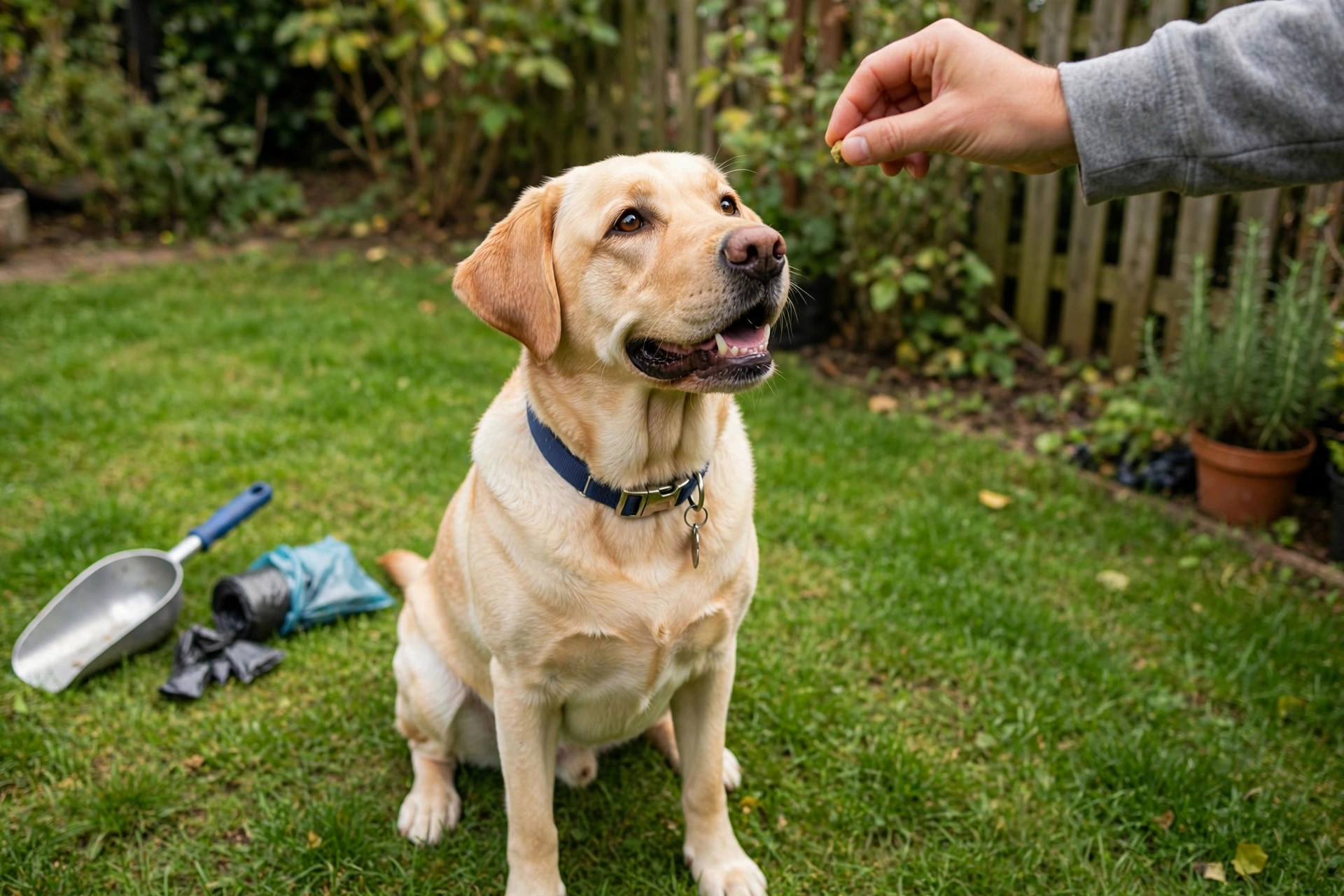
The most effective fix combines management (remove the opportunity) with training (teach a better habit). Veterinary behaviorists recommend this sequence:
- Clean up immediately. The single most effective step: pick up stool right after your dog goes. No poop on the ground means no opportunity. This alone breaks the habit for many dogs.
- Supervise yard and walk time. Don’t leave a known poop eater unsupervised outdoors. On walks, use a leash or long line in high-risk areas.
- Teach a rock-solid “leave it.” Practice indoors first, then graduate to the yard. The moment your dog turns away from the stool, reward with a high-value treat — something better than what he’s leaving behind.
- Reward disengagement. Don’t just punish interest; pay for indifference. Toss a treat party every time he walks past poop without engaging, and the habit starts working against itself.
- Beat boredom. More exercise, training games, and foraging enrichment (snuffle mats, stuffed Kongs) give an under-stimulated dog better things to do than yard-snacking.
- Review the diet. If stool smells strongly of undigested food, ask your vet whether the diet suits your dog — switching to a complete, balanced food ends some cases. Only use taste-deterrent additives (like enzyme supplements) under veterinary guidance.
What NOT to do: Never punish a dog for eating poop. Punishment increases stress and confusion — and many dogs simply learn to eat poop faster or do it out of sight, which makes the problem worse, not better. Positive prevention beats punishment every time.
When to See Your Vet
Book a veterinary visit if:
- An adult dog suddenly starts eating poop after never doing it before
- The habit comes with weight loss, vomiting, diarrhea, or ravenous hunger
- Your dog has a dull coat, low energy, or pale gums alongside the habit
- He eats the stool of other animals regularly (higher parasite and toxin risk)
- The habit persists for weeks despite consistent cleanup and training
Your vet will rule out parasites, malabsorption, and other medical causes with a fecal test and possibly bloodwork, then help you build a behavior plan — or refer you to a certified animal behaviorist for stubborn cases.
Also Read: Fall Pet Wellness Checkup: What to Get Done Before Winter (2026) — regular checkups catch the medical causes of behavior changes early.
Why Do Puppies Eat Poop?
Puppies are the most enthusiastic poop eaters of all — and it’s usually developmental, not pathological. They explore the world with their mouths, they copy their mother’s den-cleaning behavior, and their food isn’t always fully digested, so their stool can smell like dinner. Most puppies outgrow the phase with management: clean up instantly, supervise closely in the 1–2 hours after meals, and reward them for moving away from stool. Correct it early and calmly — the goal is preventing a puppy experiment from becoming an adult habit.
Frequently Asked Questions
Is it bad if my dog eats his own poop?
For a healthy, dewormed dog, eating his own fresh poop is usually more disgusting than dangerous. The main risks are parasite reinfection and bacterial exposure — so keep deworming current and break the habit with immediate cleanup.
What is a dog lacking when he eats poop?
Not necessarily anything — most coprophagia is behavioral. But persistent cases can point to poor digestion, vitamin deficiencies, parasites, or conditions like diabetes and malabsorption. A sudden habit in an adult dog always deserves a vet check.
How do I stop my dog from eating poop?
Clean up immediately after every bowel movement, supervise outdoor time, teach a strong “leave it” cue, reward your dog for ignoring stool, and add more exercise and enrichment. Never punish — it usually makes the habit worse.
Why does my dog eat cat poop?
Cat poop is especially attractive to dogs because cat food is richer in protein and fat, so the stool smells like food. Keep litter boxes behind baby gates or in dog-inaccessible spots, and scoop them daily.
Can coprophagia be a sign of illness?
Yes. Sudden-onset poop eating in an adult dog — especially with weight loss, vomiting, diarrhea, or constant hunger — can signal parasites, malabsorption, diabetes, or pancreatic problems. See your vet.
Do taste-deterrent products work?
Sometimes, as part of a wider plan. Additives that make stool taste unpleasant (enzyme or taste-deterrent supplements) can help, but they rarely work alone — and should only be used under veterinary guidance alongside cleanup and training.
Final Thoughts
So, why does my dog eat poop? Because he’s a dog — following ancient instinct, beating boredom, soothing anxiety, chasing a tasty smell, or occasionally signaling a health problem. Studies suggest up to a quarter of dogs do it, so your pup’s gross habit puts him in very unglamorous company.
The fix is refreshingly simple: clean up fast, supervise closely, train “leave it,” enrich his life, and rule out medical causes if the habit is new or persistent. Stay patient and positive — most dogs drop the habit once the opportunity and the payoff disappear.
As always, when in doubt about your individual dog’s health, your veterinarian is the best source of advice.
By Dr. Ayaz Ali