
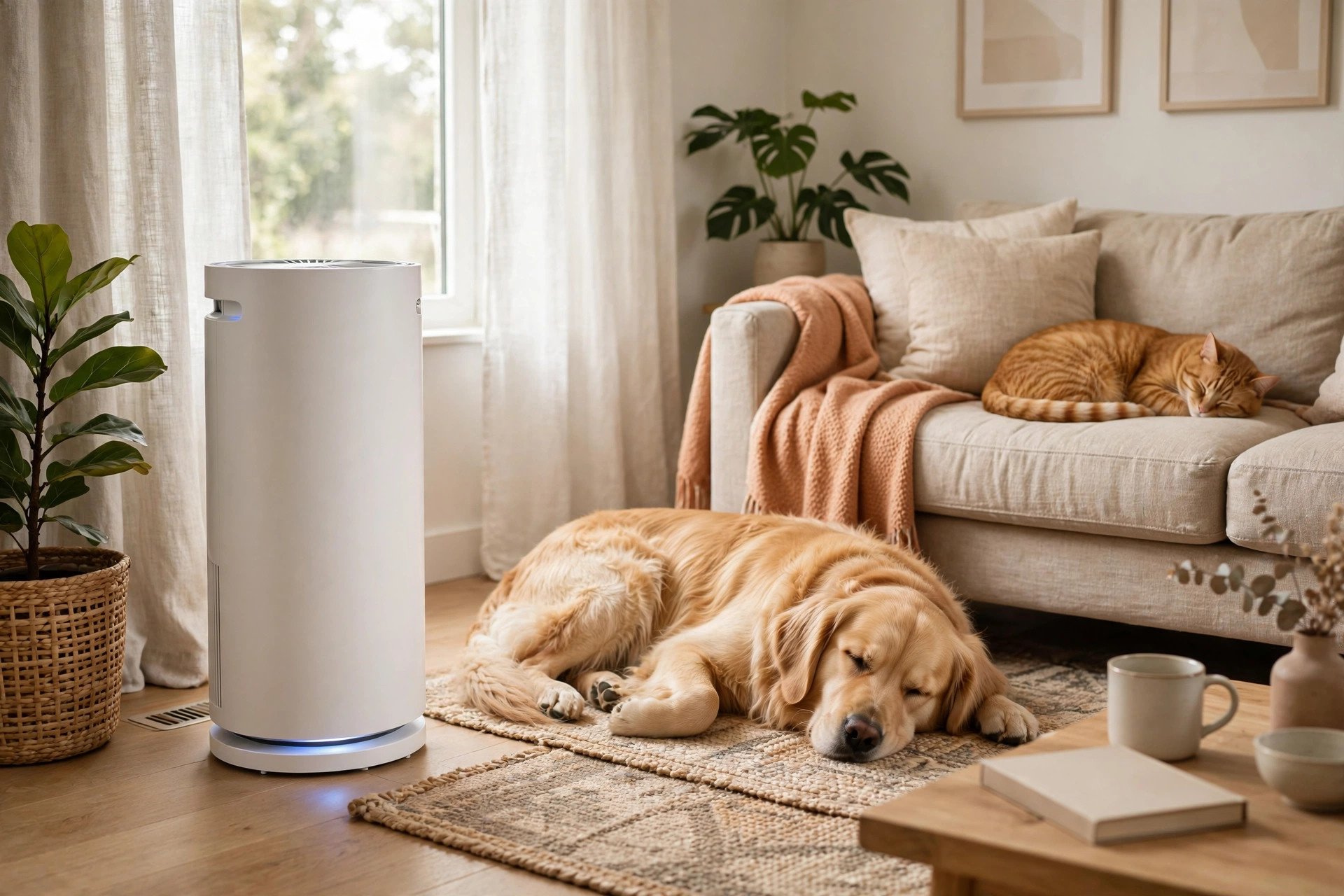
If you share your home with a cat or dog, you know the drill: pet hair on the sofa, a faint litter-box or “wet dog” smell, and maybe a runny nose or itchy eyes every time you sit down. So it’s natural to ask: do pet air purifiers work — or are they just an expensive fan with a filter?
The short answer is yes, pet air purifiers work — when you buy the right one and use it correctly. Air purifiers with HEPA filters can capture over 90% of airborne pet allergens, including dander, pollen, and dust mites, which means fewer sneezes, less dust, and fresher-smelling air. But they aren’t magic, and the wrong model can be a waste of money — or even unsafe for pets.
In this 2026 guide, we’ll explain how pet air purifiers work, what they can and can’t do, the features that actually matter, and how to choose one that’s safe for your dog or cat.
Table of Contents
- Do Air Purifiers Really Work for Pet Allergies?
- Benefits of an Air Purifier for Pet Owners
- What an Air Purifier Can’t Do
- 6 Features to Look for in a Pet Air Purifier
- Best Types of Air Purifiers for Pet Homes (2026)
- Are Air Purifiers Safe for Pets?
- Where to Place It and How Long to Run It
- The Cleaning Combo That Actually Works
- Frequently Asked Questions
Do Air Purifiers Really Work for Pet Allergies?
Yes. Pet dander — the tiny dead skin flakes, dried saliva, and debris shed by animals with fur or feathers — is one of the most common airborne allergens in homes. Air purifiers with True HEPA (High Efficiency Particulate Air) filters trap 99.97% of particles as small as 0.3 microns, which includes pet dander, pollen, mold spores, and dust mites.
Asthma and Allergy Foundation of America guidance notes that portable HEPA air cleaners have been shown to improve allergy and asthma symptoms in multiple studies. Board-certified allergists confirm that purifiers relieve pet-allergy symptoms — but emphasize they work best as part of a cleaning routine, not as a standalone fix.
The key insight many owners miss: it’s the dander, not the hair, that causes allergies. Visible pet hair is easy to vacuum, but the microscopic allergen proteins ride on particles so small they float in the air for hours. That’s exactly what a HEPA filter is designed to catch.
Also Read: Fall Allergies in Dogs: Signs & Relief (2026)
Benefits of an Air Purifier for Pet Owners
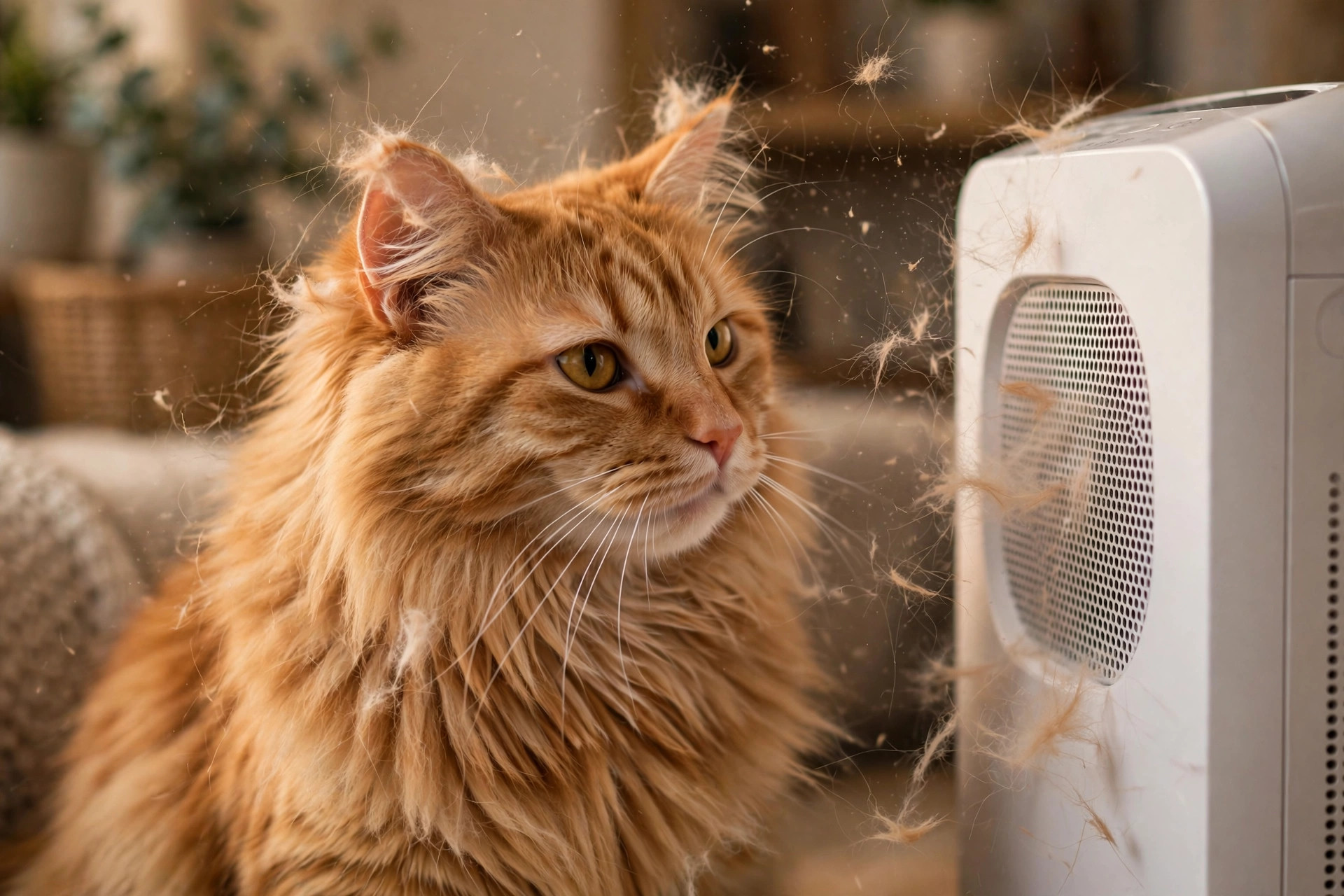
Even in a home without allergy sufferers, a good purifier earns its keep:
1. Fewer airborne allergens
Studies show purifiers can remove over 90% of indoor pet allergens from the air, and users commonly report noticeable improvement within one to two weeks of consistent use.
2. Less dust and floating hair
A purifier won’t replace vacuuming, but it slows dust buildup and catches fine, floating hair.
3. Odor control
HEPA filters catch particles — but smells are gases. That’s why purifiers built for pets add an activated carbon filter, which absorbs odors from litter boxes, wet fur, and dog beds. Pet-specific models with enhanced carbon layers noticeably freshen stale air.
4. Better sleep for sensitive noses
Running a purifier in the bedroom reduces allergen exposure overnight, which is when many people notice the worst congestion and coughing. Quiet sleep modes (around 24 dB) won’t disturb you or a noise-sensitive pet.
What an Air Purifier Can’t Do
Honest expectations prevent disappointment. A purifier can only clean what’s in the air — it cannot remove what has already settled:
- Settled allergens: A large share of dander ends up trapped in carpets, upholstery, curtains, and bedding. Normal walking around the house re-releases it into the air. You still need to vacuum and wash fabrics regularly.
- The source: Your pet keeps producing dander. Regular grooming and brushing (done by a non-allergic person, ideally outside) cut the load at the source.
- Whole-home coverage: Most portable units are designed for a single room. One purifier in the bedroom won’t clean the living room across the house. Size the unit (see CADR below) to the room where your pet spends the most time.
6 Features to Look for in a Pet Air Purifier
Not all purifiers handle pet homes well. Here’s what actually matters:
| Feature | Why It Matters for Pets |
|---|---|
| True HEPA filter (H13) | The non-negotiable. Traps 99.97% of particles down to 0.3 microns — dander, pollen, mold, dust mites. |
| Activated carbon layer | Absorbs litter-box, wet-dog, and food odors that HEPA alone can’t touch. |
| Pre-filter (washable) | Catches large pet hair before it clogs the expensive HEPA filter — clean every 2–4 weeks. |
| Right CADR for the room | Clean Air Delivery Rate should cover your room size; undersized units leave corners untouched. |
| Quiet operation (≤30 dB sleep mode) | Loud units get switched off — defeating the purpose. Quiet models stay running, and calm pets stay calm. |
| No ozone / ionizer optional | Avoid ozone generators around pets entirely; ionizer features should be switchable off. |
Also Read: Why Does My Cat Keep Sneezing? Vet Guide (2026)
Best Types of Air Purifiers for Pet Homes (2026)
Rather than chase brand hype, match the purifier type to your home:
Pet-specific models
Brands like Levoit and Winix make pet-focused lines with washable pre-filters for hair, enhanced carbon for odors, and auto sensors — consistently top-ranked for pet owners in 2026 review roundups.
Large-room units
Multi-pet households and open-plan areas need high CADR. Look for units rated for 350+ square feet with strong airflow.
Bedroom units
For allergy sufferers, a smaller quiet unit running overnight in the bedroom often helps more than a big unit downstairs, since you spend 7–8 hours breathing deeply there.
Budget-friendly basics
A simple True HEPA unit with a washable pre-filter outperforms a fancy “ionizing” purifier with no HEPA at all. Prioritize filtration over smart features.
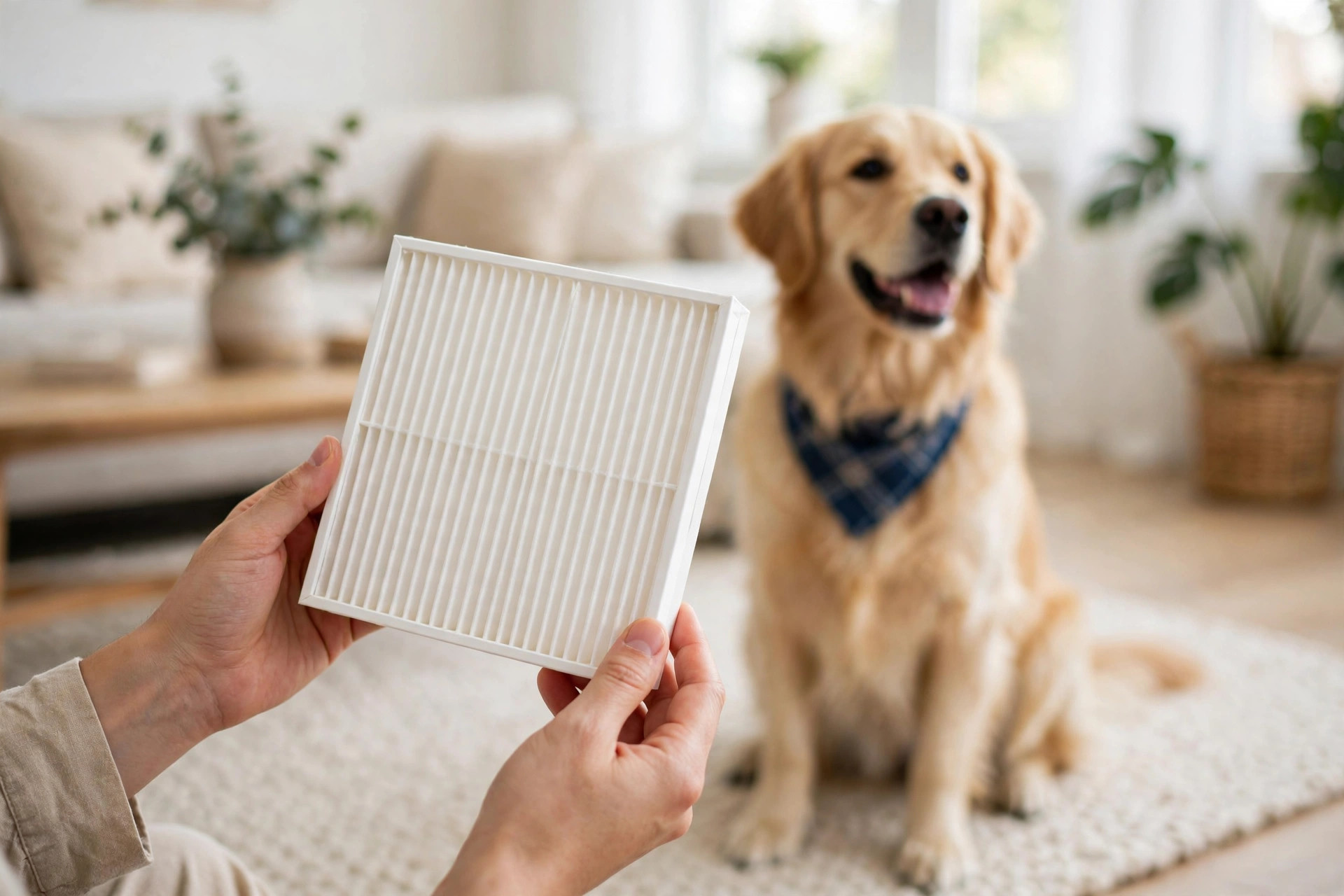
Veterinary and allergist sources agree on one point: the AKC’s guidance on air purifiers for shedding and dander recommends a HEPA purifier in the most-used room, run continuously — especially during heavy shedding seasons.
Are Air Purifiers Safe for Pets?
Yes — with one important exception. Standard HEPA air purifiers are completely safe for dogs and cats. They just pull air through filters; nothing harmful is emitted.
The danger comes from ozone generators and ionizers. These devices intentionally produce ozone (a lung irritant) or charge particles so they stick to surfaces. Ozone is harmful to pets — especially birds, which are extremely sensitive to airborne irritants — and to people with asthma. If a purifier advertises “ionizer” or “ionic” purification, check that the feature is optional and switched off around your pets.
Keep the unit itself pet-safe: secure loose cords from chewers, place it where a large dog can’t knock it over, and avoid units with exposed heating elements.
Where to Place It and How Long to Run It
- Place it where your pet spends the most time — usually the living room or bedroom. Keep at least 12–15 inches of clearance from walls and furniture so air flows freely.
- Run it consistently. The Asthma and Allergy Foundation of America recommends at least four hours a day; for pet homes, running it continuously on auto or low is the most effective.
- Height matters a little. Dander circulates at all levels, but placing the unit at or near floor level where pet hair drifts helps the pre-filter catch the most.
- One unit per main room. A purifier can’t clean through walls — the bedroom unit won’t help the living room.
- Maintain it. Wash the pre-filter every 2–4 weeks and replace the HEPA filter every 6–12 months (pet homes run toward the shorter end). A clogged filter just becomes an expensive fan.
The Cleaning Combo That Actually Works
An air purifier works best alongside basics that remove settled allergens. Vacuum weekly with a HEPA-filter vacuum, wash pet bedding weekly in hot water, groom regularly to cut dander at the source, and dust with a damp cloth so particles are captured, not scattered. Used together, most pet owners report noticeably fresher air within a couple of weeks.
Frequently Asked Questions
Do air purifiers get rid of pet smell?
Yes, if they have an activated carbon filter. HEPA alone traps particles, not gases — so for litter-box or wet-dog odors, the carbon layer is what does the work. Pet-specific models with enhanced carbon perform best.
Are air purifiers good for cats with asthma or sneezing?
Cleaner air reduces the irritant load, which can ease sneezing and respiratory irritation — but a purifier is supportive care, not treatment. Persistent sneezing, wheezing, or labored breathing needs a vet diagnosis.
Is it safe to leave an air purifier on all day with pets?
Yes — True HEPA purifiers are safe to run continuously around dogs and cats. Just avoid ozone-generating models and secure any loose cords.
How long does it take to notice a difference?
Most users report less dust and fewer allergy symptoms within 1–2 weeks of consistent use, assuming the unit is correctly sized for the room and runs daily.
Do air purifiers work for pet hair?
Partially. The pre-filter catches airborne hair, but most pet hair settles quickly onto floors and furniture. Regular vacuuming handles hair; the purifier handles the microscopic dander riding on it.
What size air purifier do I need for one dog or cat?
Match the CADR to your room size (a bedroom needs a smaller unit than an open living area). As a rule, the purifier should exchange the room’s air at least 4–5 times per hour for allergy relief.
Final Thoughts
So, do pet air purifiers work? Absolutely — when you choose a True HEPA model with an activated carbon layer, size it to your room, run it consistently, and pair it with regular vacuuming and grooming. They cut airborne dander and odors dramatically, ease allergy symptoms, and make multi-pet homes smell noticeably fresher.
Just skip the ozone gimmicks, keep up with filter changes, and remember the purifier is one part of a clean-air routine — not a substitute for it. Get those pieces right, and both you and your pets will breathe easier.
By Dr. Ayaz Ali