
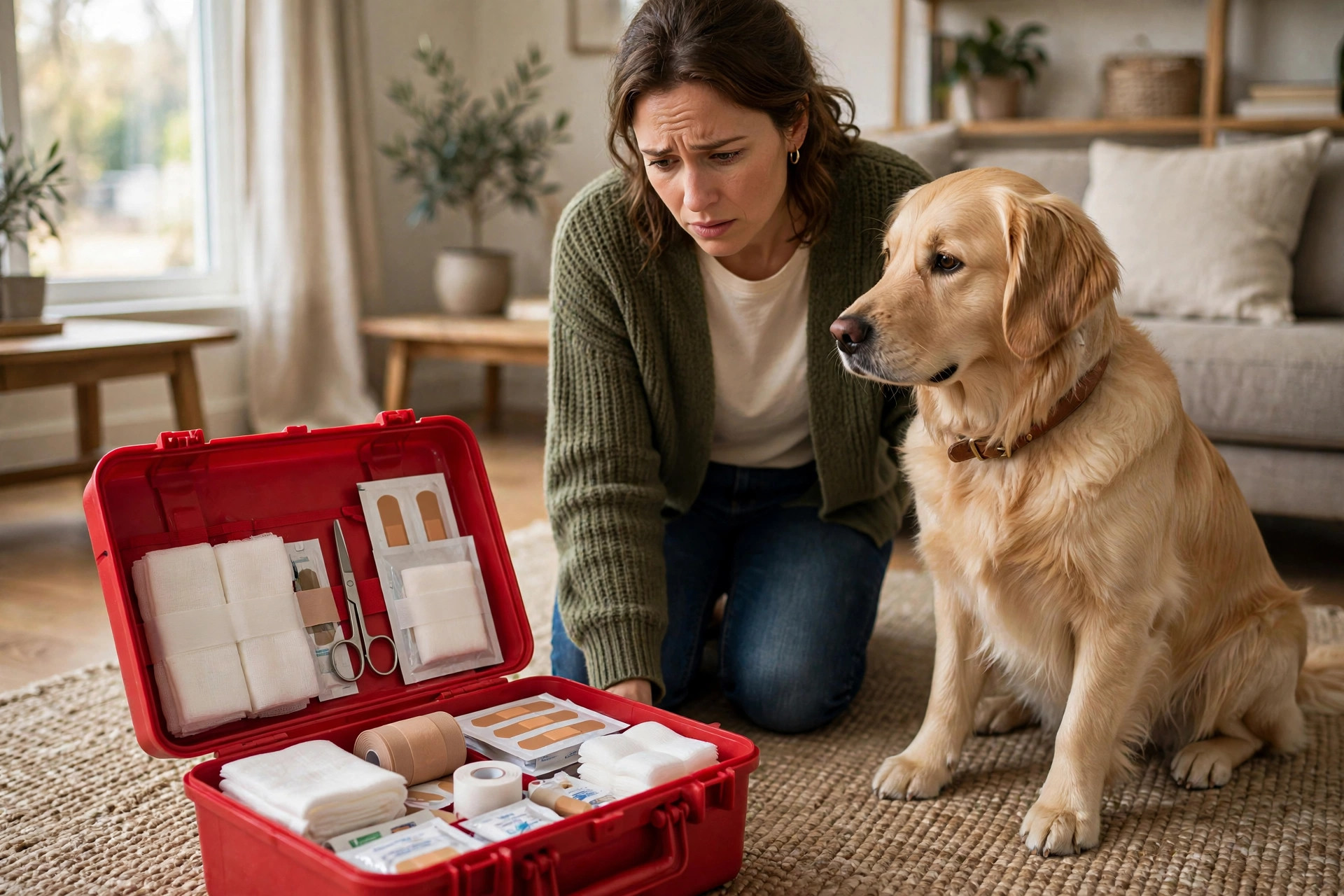
Pets face life-threatening emergencies at home every year — choking on a toy, collapsing in summer heat, bleeding from a sudden injury. In those first terrifying minutes, proper pet first aid can be the difference between life and death. And now, veterinary science has given pet owners their clearest-ever roadmap for what to do before reaching the clinic.
In October 2026, the RECOVER Initiative published the first evidence-based pet first aid guidelines for dogs and cats — 38 recommendations covering the emergencies owners are most likely to face. This 2026 vet guide translates them into plain steps: choking, heatstroke, severe bleeding, toxin ingestion, low blood sugar, and burns — plus the first-aid kit every home should have and the mistakes you must never make.
Table of Contents
- What Are the New 2026 RECOVER Guidelines?
- The Golden Rule of Pet First Aid
- Choking: Airway Obstruction
- Heatstroke
- Severe Bleeding
- Toxin Ingestion and Poisoning
- Hypoglycemia (Low Blood Sugar)
- Burns
- Allergic Reactions
- Pet First-Aid Kit Checklist
- First-Aid Mistakes to Avoid
- Frequently Asked Questions
What Are the New 2026 RECOVER Guidelines?
The RECOVER Initiative (Reassessment Campaign on Veterinary Resuscitation) published the first evidence- and consensus-based pet first aid guidelines for dogs and cats in the August 2026 Journal of Veterinary Emergency and Critical Care, announced October 6, 2026. They deliver 38 recommendations built from systematic literature reviews and an international veterinary commenting period.
The guidelines target the prehospital period — the window between the moment an emergency is recognized and the moment professional care begins. They cover choking, heatstroke, severe bleeding, toxin ingestion, hypoglycemia, burns, bystander CPR, naloxone for opioid exposure, and a companion paper on allergy and anaphylaxis. They do not replace veterinary diagnosis — but they are the closest thing owners have ever had to an official emergency playbook.
The Golden Rule of Pet First Aid
- Your safety comes first. An injured, frightened pet can bite. Muzzle your dog if needed, and never put your fingers near a seizuring animal’s mouth.
- First aid buys time; it does not replace the vet. Start first aid, then transport immediately.
- Do not delay transport. Getting to the clinic fast matters more than anything you can do on the spot.
- Call ahead. Phone your vet or emergency clinic while you act.
Choking: Airway Obstruction
Signs of choking include difficulty breathing, frantic pawing at the mouth, drooling, gagging, and blue-tinged gums. The 2026 RECOVER guidelines give clear pet first aid instructions depending on whether your pet is conscious:
If Your Pet Is Conscious and Choking
- Give up to five firm back blows over the back of the chest to jar the object loose.
- If back blows fail, try abdominal or chest thrusts (the pet Heimlich maneuver) to force air upward through the airway.
- Go to the vet immediately after the obstruction clears — swelling or injury can follow.
If Your Pet Is Unconscious and Choking
- Do not do a blind finger sweep — it can push the object deeper or get you bitten.
- Begin chest compressions instead, then transport to the emergency clinic.
Heatstroke

Heatstroke is one of the fastest killers in veterinary emergency medicine. Signs include heavy panting, drooling, bright-red or blue gums, vomiting, and collapse. RECOVER recommends active cooling before you reach the clinic:
- Apply cool running water to the trunk — focus on the belly and areas with thinner hair, where heat escapes fastest.
- Do not use ice or ice-cold water. Extreme cold constricts blood vessels and traps heat inside.
- Stop cooling at about 39.7–40°C rectal temperature rather than cooling to normal. Overcooling is a real danger.
- Get to the vet immediately — heatstroke causes internal organ damage invisible from the outside.
Severe Bleeding
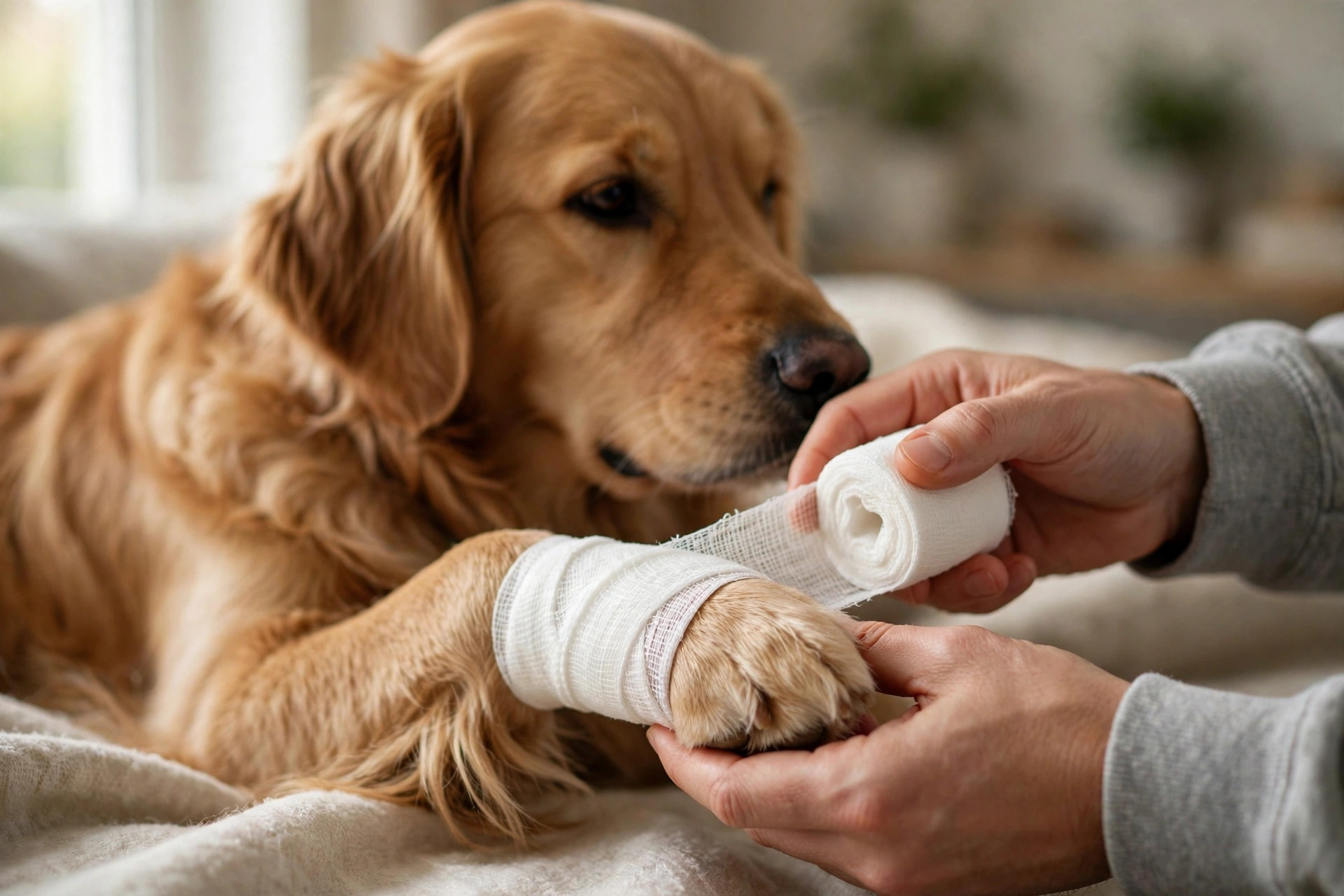
For most wounds: apply firm, direct pressure with a clean cloth or gauze pad, and hold it without lifting to check. Elevating a bleeding limb helps slow the flow. Keep the pet warm and still — shock is a real risk.
For severe external limb bleeding that will not stop with pressure, the 2026 RECOVER guidelines endorse a tourniquet as a temporary, last-resort measure while you rush to the clinic. Tell the vet exactly when you applied it.
Bite wounds need extra caution: they can look small while hiding deep tissue damage. Any wound that bleeds through the bandage, spurts, or will not slow within minutes is an immediate vet trip.
Also Read: Hot Spots on Dogs: Causes, Treatment & Home Care (2026) — cleaning and managing infected skin wounds while you arrange a vet visit.
Toxin Ingestion and Poisoning
Chocolate, xylitol gum, rat poison, antifreeze, medications, cleaning chemicals — here the 2026 RECOVER guidelines deliver an important course correction:
- Do NOT routinely make your pet vomit. There is a strong recommendation against it. Vomiting can drive caustic substances back up the esophagus or cause aspiration into the lungs.
- Inducing vomiting is only considered where immediate vet care is unavailable — and only after advice from your veterinarian or a poison-control service.
- Do not give food, water, or home antidotes unless the vet tells you to.
- Bring the packaging. Knowing the exact product and amount lets the vet choose treatment in seconds.
Also Read: Can Dogs Eat Peanut Butter? Safety Guide (2026) — the full xylitol poisoning warning every dog owner must know.
Hypoglycemia (Low Blood Sugar)
Most dangerous for small-breed puppies, diabetic pets on insulin, and dogs after intense exertion. Signs include weakness, wobbliness, trembling, disorientation, or collapse.
For suspected hypoglycemia when the animal is NOT actively seizuring, RECOVER recommends applying a viscous simple carbohydrate, such as glucose syrup, to the gums or inside of the cheek — then going straight to the vet.
Critical rule: never put anything in the mouth of an actively seizuring animal. Keep the pet away from hard objects, time the seizure, and call your vet.
Burns
Hot pavement, spilled cooking liquids, heating pads, electrical cords — burns happen more often than owners expect:
- Remove your pet from the heat source and switch off electrical sources before touching the animal.
- Flush with cool (not cold) running water for several minutes.
- Do not apply ice, ointments, or home remedies. Ice worsens tissue damage; ointments trap heat.
- Seek veterinary care promptly. Minor-looking burns can deepen over hours, and electrical burns around the mouth can signal hidden lung injury.
Allergic Reactions
A companion RECOVER paper covers acute allergy and anaphylaxis:
- Uncomplicated reactions (hives, facial swelling, itchiness without breathing trouble): an oral antihistamine may be used prehospital — but only with your vet’s dosing guidance.
- Anaphylaxis (collapse, trouble breathing, severe swelling): prehospital IM epinephrine is suggested provided it does not delay transport. Discuss this with your vet in advance if your pet has a known severe allergy.
- Steroids are not recommended as routine first aid — they act too slowly for the emergency window.
Also Read: Fall Allergies in Dogs: Signs & Relief (2026) — telling ordinary seasonal itch from a reaction that needs urgent care.
Pet First-Aid Kit Checklist
The best pet first aid starts before the emergency. Build this kit today and keep it where you can grab it in seconds:
| Item | Why You Need It |
|---|---|
| Gauze rolls and pads | Direct pressure on bleeding wounds |
| Self-adhesive bandage wrap | Holds gauze without sticking to fur |
| Sterile saline wound wash | Gentle wound cleaning |
| Digital rectal thermometer | Normal dog: 38–39.2°C |
| Glucose syrup or honey packets | Hypoglycemia rescue (gums only) |
| Disposable gloves, blunt scissors, tweezers | Protection, bandage cutting, tick removal |
| Muzzle or soft cloth strip | Preventing bites (never on a vomiting pet) |
| Blanket, spare leash | Warmth, shock prevention, transport |
| Emergency numbers card | Your vet, ER clinic, poison-control hotline |
Organizations like the ASPCA also recommend keeping emergency numbers on your fridge and in your phone — and leaving them with anyone who sits your dog.
First-Aid Mistakes to Avoid
- Blind finger sweeps — push obstructions deeper; use back blows and chest thrusts instead.
- Ice for heatstroke — traps heat inside; use cool running water and stop at 39.7–40°C.
- Routinely inducing vomiting — no longer recommended; only on vet or poison-control advice.
- Human medications — many are toxic to pets. Never dose on your own.
- Delaying transport — no first-aid technique is worth an extra 20 minutes at home.
- Hands in a seizuring pet’s mouth — you will be bitten, and it does not help the pet.
Frequently Asked Questions
What is the first thing I should do in a pet emergency?
Make sure you are safe, give the appropriate immediate support (back blows for choking, cooling for heatstroke, pressure for bleeding), call your vet or emergency clinic, and transport without delay. First aid buys time — the vet provides the cure.
Should I make my dog vomit if he ate something toxic?
Not on your own. The 2026 RECOVER guidelines strongly recommend against routinely inducing vomiting — it can cause more damage or aspiration. Only consider it when immediate vet care is unavailable, and only after vet or poison-control advice.
Can I do CPR on my dog or cat?
Yes — bystander CPR is covered in the 2026 RECOVER first aid guidelines. Chest compressions on an unconscious, non-breathing pet are the recommended prehospital step. A certified pet CPR/first-aid course is the best way to learn the technique.
How do I treat my dog’s heatstroke at home?
Start active cooling immediately with cool running water on the trunk (especially the belly), do not use ice, and stop cooling at about 39.7–40°C rectal temperature. Then get to the vet right away — internal damage is often invisible at home.
What should be in a pet first-aid kit?
Gauze and self-adhesive wrap, saline wash, a digital thermometer, glucose syrup for hypoglycemia, gloves, blunt scissors, tweezers, a muzzle, a blanket, a spare leash, and your vet’s emergency number.
Final Thoughts
Good pet first aid is not about being a hero — it is about being ready. The 2026 RECOVER guidelines give pet owners evidence-based answers for the scariest minutes of pet ownership. Learn the back-blow sequence for choking, the cool-water protocol for heatstroke, pressure basics for bleeding, the hands-off rule for toxins, and the glucose trick for low blood sugar — then build your first-aid kit today, not the night you need it.
Emergencies are stressful, but preparation turns panic into action. And when in doubt, your veterinarian is always the best source of advice for your individual pet.
By Dr. Ayaz Ali, Veterinarian
Dr. Ayaz Ali is a practicing veterinarian with years of experience in small-animal care. He writes evidence-based pet health guides for Pets Addicters.