
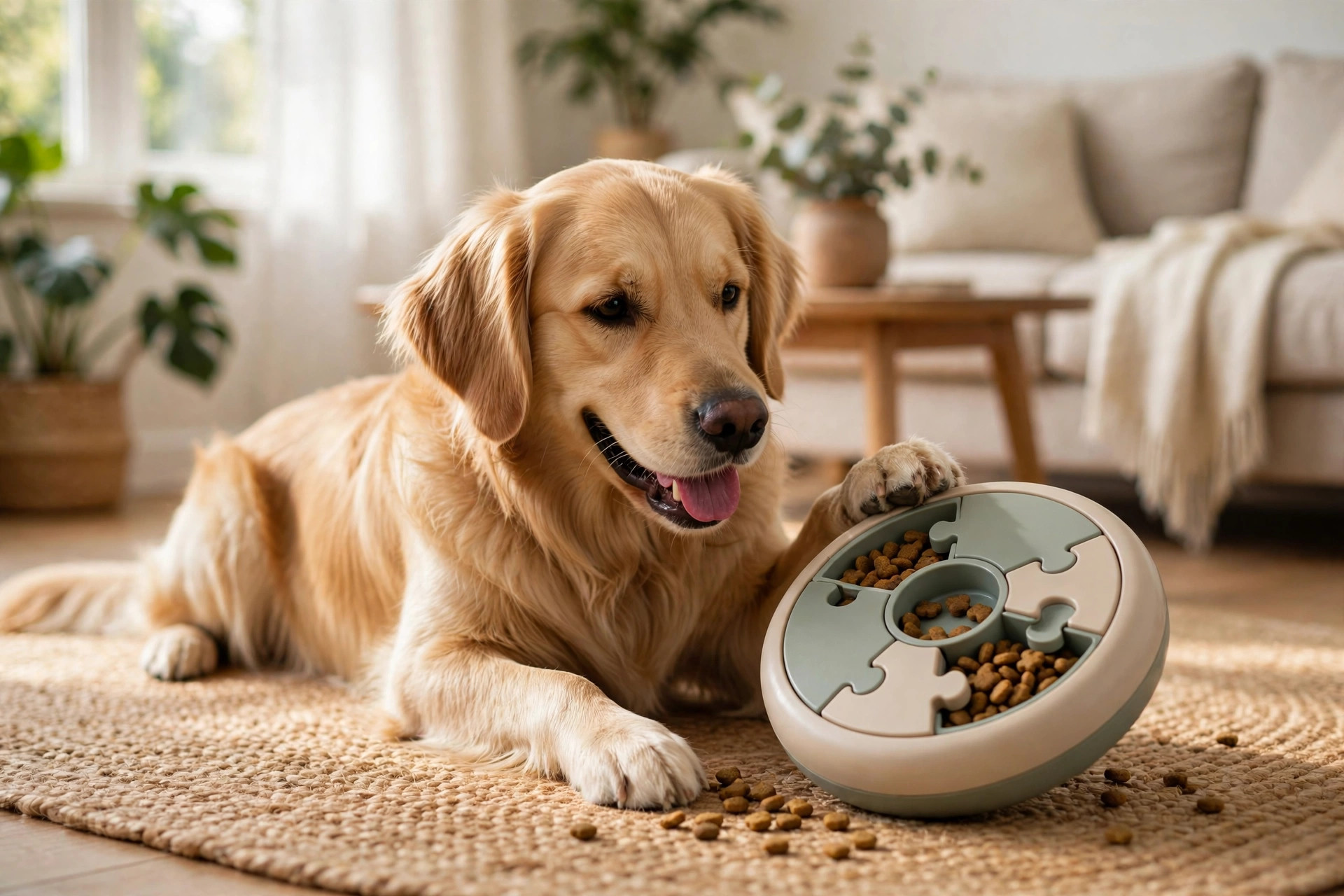
If your dog has ever shredded a couch cushion, raided the trash, or barked at the window for an hour straight, the real culprit probably wasn’t bad behavior — it was boredom. That’s where the best puzzle toys for dogs earn their reputation: they give your dog a job for their brain, not just their teeth.
Puzzle toys turn mealtime into brain games — your dog has to slide, lift, nudge, or roll something to earn each piece of food. Trainers estimate about 10 minutes of focused mental work tires a dog out roughly the way 30 minutes of physical exercise does — a lifesaver on rainy days, for apartment dogs, and for seniors who can’t take long walks.
In this 2026 buying guide: why puzzle toys work, their benefits, five top-rated picks for every skill level, how to match difficulty to your dog, and the safety rules that matter.
Table of Contents
- Why Bored Dogs Need Puzzle Toys
- Benefits of Puzzle Toys for Dogs
- 5 Best Puzzle Toys for Dogs in 2026
- Beginner vs Advanced: Match the Difficulty
- How to Choose the Right Puzzle Toy
- Puzzle Toy Safety Rules
- Frequently Asked Questions
Why Bored Dogs Need Puzzle Toys
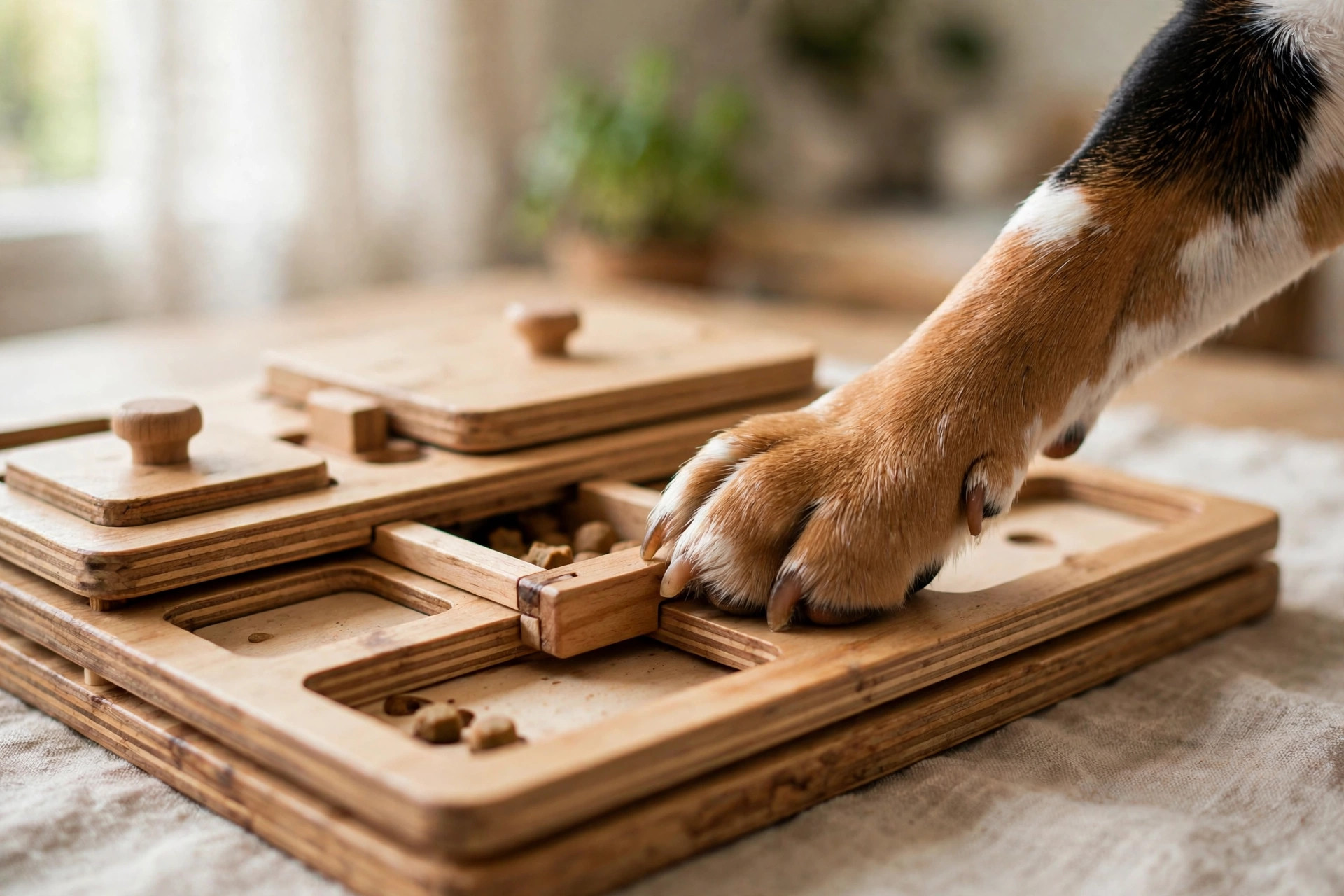
Dogs were built to work for their food. Their ancestors spent hours hunting, foraging, and problem-solving every day. Modern pet life hands them dinner in a bowl that takes 30 seconds to empty — leaving an intelligent brain with hours of nothing to do.
An under-stimulated dog invents its own entertainment: chewing furniture, digging carpets, barking at passersby, trash-raiding. Behavioral veterinarians point to boredom as one of the most common root causes of these “problem” behaviors — and puzzle toys close the gap. Instead of a free meal, your dog earns it by sliding discs, flipping lids, or nudging a wobbling dispenser. PetMD notes that interactive puzzle toys give dogs the mental stimulation they need to thrive, help keep them calm, and come in difficulty levels from beginner to advanced — so there’s a fit for every dog.
Benefits of Puzzle Toys for Dogs
A puzzle toy isn’t just a novelty — used regularly, it delivers real wins for your dog.
1. Mental Stimulation That Tires Dogs Out
A 10–15 minute puzzle session satisfies the “need a job” drive behind restlessness and evening zoomies — ideal for bad-weather days, apartments, and seniors.
2. Fights Destructive Behavior
Chewing, digging, and excessive barking usually trace back to boredom. A puzzle toy gives restless energy a legal outlet: the dog “hunts” for food instead of destroying the living room.
3. Slows Down Fast Eaters
Treat-dispensing puzzles stretch a 30-second gulp into a 10–20 minute activity — less choking, less post-meal vomiting, and less swallowed air.
4. Eases Anxiety and Stress
Focused problem-solving gives an anxious dog something constructive to think about — helpful for storms, fireworks season, and the minutes after you leave.
Also Read: What Is a Snuffle Mat? The Complete Foraging Enrichment Guide (2026)
5. Builds Confidence, Sharpens Senior Brains
Every solved puzzle is a confidence boost — valuable for shy or newly adopted dogs. For seniors, gentle problem-solving keeps aging minds active.
5 Best Puzzle Toys for Dogs in 2026
Here are five standouts that consistently top 2026 buying guides, covering different skill levels and budgets.
1. Nina Ottosson by Outward Hound Dog Tornado — Best All-Rounder
Your dog spins three layered discs to reveal hidden treats. Works for beginners with treats partially visible, and scales up as your dog learns. Dishwasher-safe.
2. KONG Classic — Best for Power Chewers
Fill with peanut butter or kibble and freeze overnight for a 20–40 minute challenge. Ultra-tough rubber stands up to determined chewers — the safest pick for toy destroyers.
3. Outward Hound Hide N Slide — Best Intermediate Puzzle
A level-two slider combining sliding pieces and flip lids. Introduces multi-step thinking without jumping to expert difficulty — the perfect second puzzle.
4. StarMark Bob-A-Lot — Best Treat-Dispensing Wobbler
A weighted wobble toy that dispenses kibble as your dog nudges it around. Adjustable openings dial the difficulty, adding movement to the mental game.
5. Potaroma Dog Puzzle Toy — Best Budget-Friendly Board
A 2026 roundup favorite balancing complexity, durability, and price. Sliding pieces and flip lids keep beginner-to-intermediate dogs busy without the premium price tag.
Also Read: What Is a Pupsicle? The Freezable Dog Toy Guide (2026)
Beginner vs Advanced: Match the Difficulty
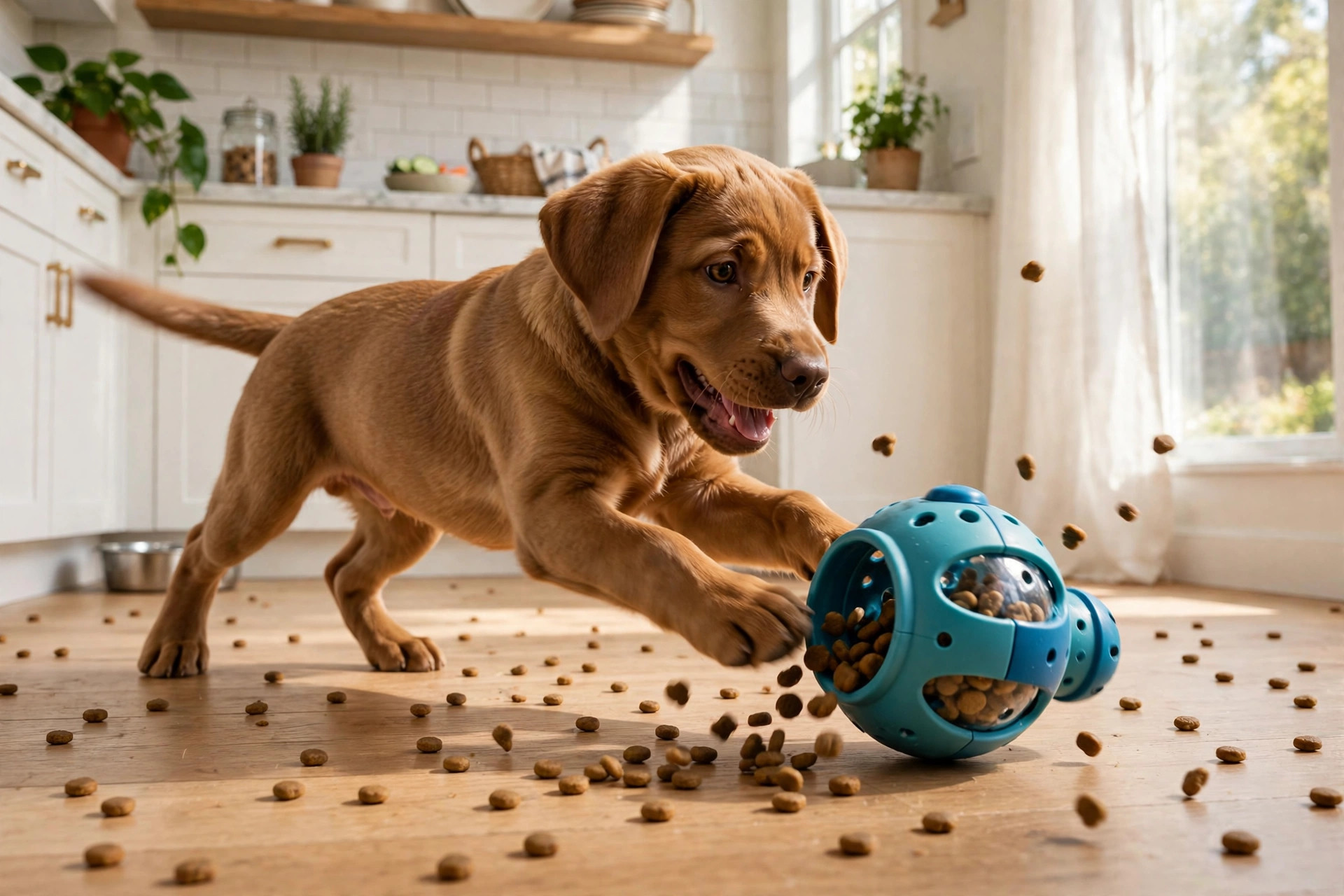
Puzzle toys are usually rated on a difficulty scale (Levels 1–4 in the popular Nina Ottosson system). The right level is the difference between a dog that loves puzzle time and one that gets frustrated and gives up.
Level 1 (beginners): simple treat balls, snuffle mats, one-step sliders — your dog should succeed in the first minute or two. Level 2 (intermediate): two-action puzzles like sliding a disc to reveal a flip lid; move up once Level 1 takes under five minutes. Levels 3–4 (advanced): multi-step sequences for experienced problem-solvers like Border Collies. Starting here with a novice dog backfires — frustration kills motivation.
And rotate your puzzles: even the best one gets stale once memorized. Two or three toys at different levels, swapped weekly, keeps the challenge fresh.
How to Choose the Right Puzzle Toy
Size it for your dog. Too small is a choking hazard for a big dog; too big frustrates a small one. Check the weight range — and when in doubt, size up.
Choose safe, durable materials. Look for BPA- and phthalate-free plastics, food-grade silicone, or natural rubber, with no loose small parts. For power chewers, skip plastic puzzle boards and stick to tough rubber dispensing toys.
Start easy. A frustrated dog will bark at the toy, flip it over, or walk away hungry. You can always make a puzzle harder later; you can’t make an impossibly hard one easier in the moment.
Make sure it cleans easily. Treat residue in crevices breeds bacteria. Dishwasher-safe parts or designs that fully come apart for hand-washing are non-negotiable.
Also Read: Slow Feeder Dog Bowls: Vet Guide for Fast Eaters (2026)
Puzzle Toy Safety Rules
- Always supervise. Swallowed plastic or rubber can cause choking or intestinal blockage — no puzzle toy is meant for unsupervised use.
- Inspect before every use. Retire any toy with cracks, tears, broken sliders, or missing chunks.
- Use the right size. A toy too small for your dog’s jaw is a choking hazard — compare openings against your dog’s muzzle.
- Watch the calorie budget. Every puzzle treat counts toward the daily 10% treat allowance — use part of the measured daily kibble when you can.
- Skip it for resource guarders. For dogs that guard food aggressively, puzzles can raise stress instead of lowering it — work with your vet or trainer first.
Can Puppies Use Puzzle Toys?
Absolutely — and they’re great for teaching calm, focused behavior early. Use beginner-level puzzles with larger openings and simpler mechanics. Start with treats partially visible so your puppy succeeds quickly, keep sessions to 5–10 minutes, and always supervise.
Frequently Asked Questions
How long do puzzle toys keep a dog busy?
A frozen stuffed rubber toy can occupy a dog for 20–40 minutes; slider puzzles typically last 10–20 minutes once learned. Rotating different puzzles keeps sessions longer.
Are puzzle toys good for anxious dogs?
Yes, as part of a calming routine. Focused problem-solving gives anxious dogs something constructive to think about — helpful for crate training, storm anxiety, and fireworks season. Severe anxiety still needs veterinary care.
Can I leave my dog alone with a puzzle toy?
No. Always supervise puzzle play — chewers can break pieces off any toy, and swallowed fragments can cause choking or blockage. Unsupervised use is never recommended.
Do puzzle toys really tire dogs out?
Yes. Trainers estimate roughly 10 minutes of focused puzzle-solving tires a dog like 30 minutes of physical exercise — which is why they’re a go-to for rainy days, apartment living, and seniors.
What treats should I put in puzzle toys?
Your dog’s regular kibble is the healthiest default — it counts as part of their meal, not extra treats. For high-value rewards, use small training treats or freeze-dried meat. Always stay within the daily 10% treat allowance, and avoid anything toxic to dogs (chocolate, xylitol, grapes, onion, garlic).
When should I move my dog to a harder puzzle?
When they consistently solve their current puzzle in under five minutes. Graduate one level at a time — jumping from a simple treat ball straight to a Level 4 multi-step puzzle usually causes frustration, not faster learning.
Final Thoughts
So, what are the best puzzle toys for dogs? The one matched to YOUR dog — beginner-friendly for puppies and novices, intermediate sliders for dogs that have earned their stripes, and tough rubber dispensers for the power chewers. Start easy, rotate puzzles, supervise every session, and count the treats.
Do that, and a puzzle toy becomes one of the best-value purchases in dog ownership: a calmer dog, a quieter house, and a brain that stays sharp for years. And if boredom comes with anxiety or destructive behavior that doesn’t improve, loop in your veterinarian or a trainer — a toy is a great tool, but some problems need professional eyes.
By Dr. Ayaz Ali, Veterinarian
Dr. Ayaz Ali is a practicing veterinarian with years of experience in small-animal care. He writes evidence-based pet health guides for Pets Addicters.