
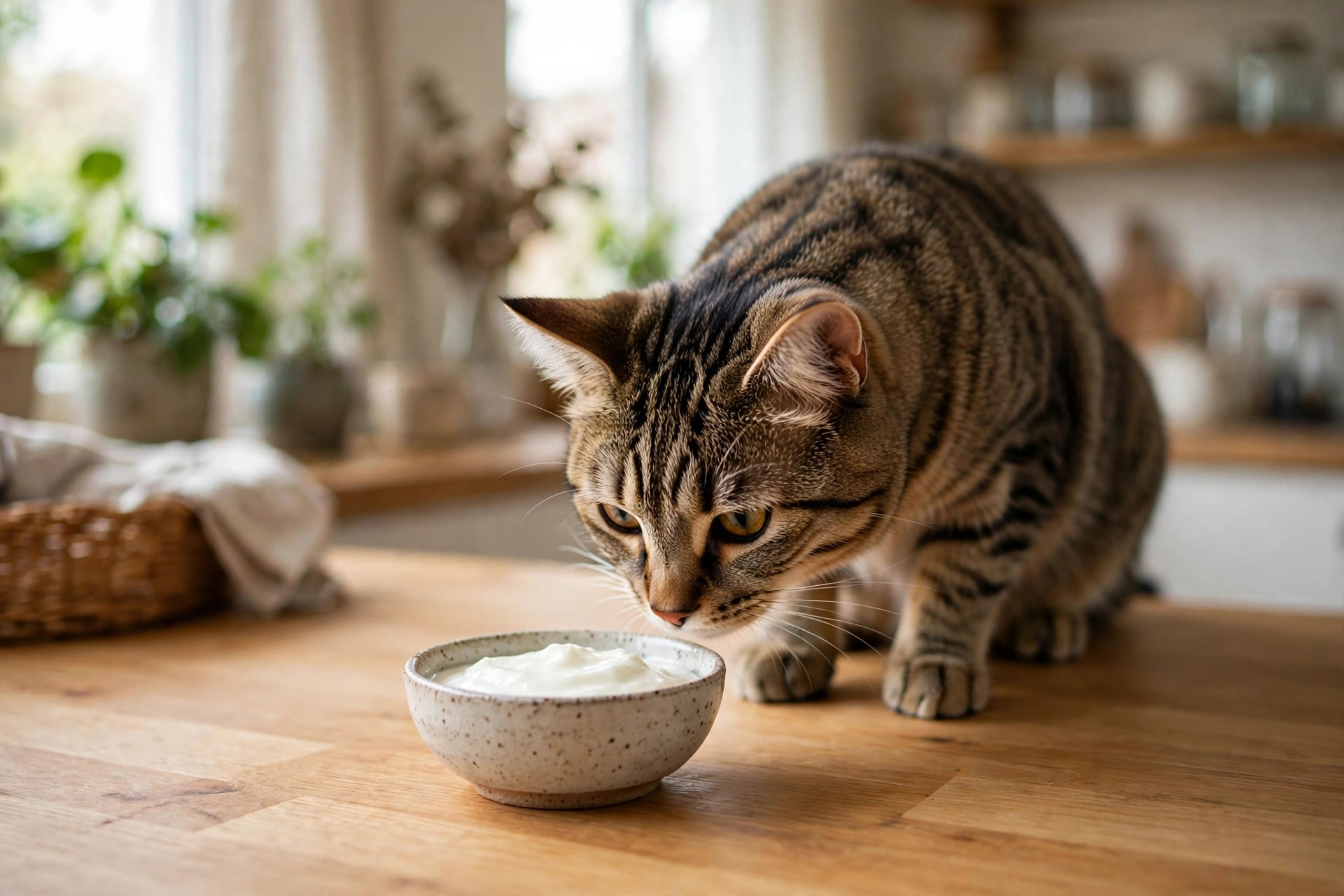
It usually happens at breakfast: you’re spooning plain yogurt from the tub, and your cat is parked beside you, eyes locked on the spoon. It’s only natural to wonder: can cats eat yogurt, or should dairy stay off your feline’s menu?
The good news is yes, cats can eat yogurt — but only plain, unsweetened yogurt, and only in tiny amounts. The live cultures used to make yogurt break down part of its lactose, so many cats digest yogurt more easily than milk. But flavored cups, added sweeteners like xylitol, and generous portions can turn a harmless lick into a genuine stomach problem.
In this complete 2026 guide, we’ll walk you through everything you need to know about feeding yogurt to cats: the real nutritional benefits, the risks (including the xylitol danger hiding in “light” yogurts), exact serving sizes, how to choose a safe yogurt, and answers to the questions cat owners ask most.
Table of Contents
- Is Yogurt Safe for Cats?
- Nutritional Benefits of Yogurt for Cats
- Risks of Feeding Yogurt to Cats
- How Much Yogurt Can Cats Eat?
- Plain vs Greek Yogurt: Which Is Best?
- Yogurts Cats Should Never Eat
- How to Serve Yogurt to Cats
- What If My Cat Eats Too Much Yogurt?
- Can Kittens Eat Yogurt?
- Healthy Alternatives to Yogurt
- Frequently Asked Questions
Is Yogurt Safe for Cats?
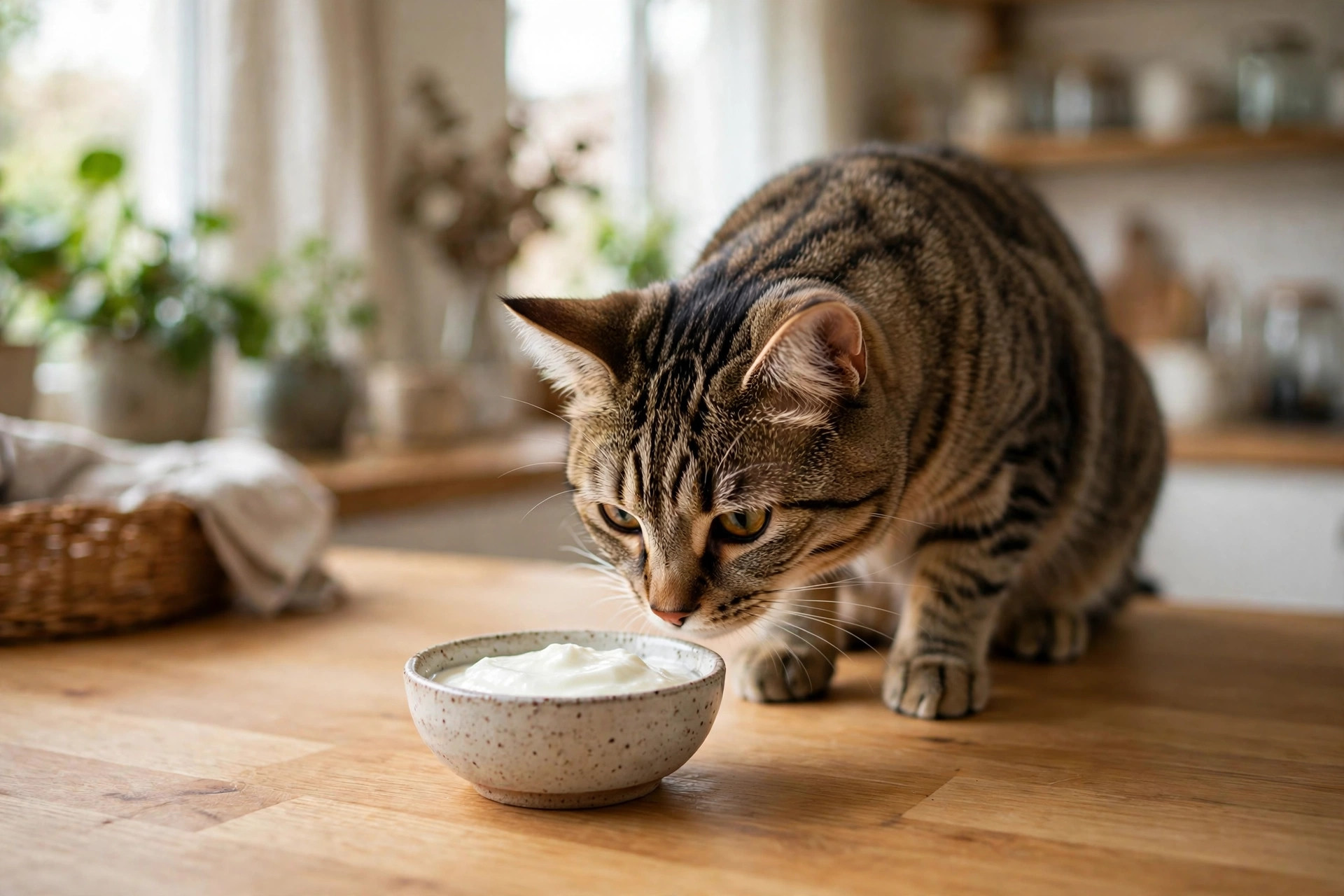
Yes, plain, unsweetened yogurt is generally safe for healthy adult cats in very small amounts. Veterinary sources including PetMD place dairy products like milk and yogurt in the “feed with significant caution” category — tolerable for some cats, trouble for others — because most adult cats are lactose intolerant to some degree.
What makes yogurt different from milk is fermentation. The live bacterial cultures used to make yogurt consume much of the milk sugar (lactose) while it sets, so a cat that can’t handle a saucer of milk may tolerate a small lick of plain yogurt just fine. But every cat is different, and some react to even a dab — which is why the first taste should always be tiny.
Before offering yogurt, follow these ground rules:
- Plain, unsweetened yogurt only — no flavors, no sweeteners, no fruit
- A teaspoon at most, once a week or less
- Read the ingredient label for xylitol (sometimes listed as birch sugar)
- Watch your cat for 24 hours after the first taste for any digestive upset
Also Read: Can Cats Eat Cheese? Vet Safety Guide (2026)
Nutritional Benefits of Yogurt for Cats
Yogurt will never be a health food for an obligate carnivore, but a treat-sized amount of plain yogurt does carry a few genuine upsides.
1. Live Cultures and Easier Digestion
The fermentation that makes yogurt also breaks down lactose, which is why many cats tolerate yogurt better than milk or cream. The live, active cultures are the key — choose yogurt that lists them on the label.
2. High-Quality Animal Protein
Yogurt is a concentrated source of complete animal protein, and Greek-style yogurt is especially protein-rich. Since a cat’s body is built to run on animal protein, a spoonful delivers the amino acids cats need — in a form most cats find appealing.
3. Calcium and B Vitamins
Yogurt supplies calcium for bones and teeth, plus B vitamins (including B12) that support energy metabolism. A tiny serving adds a modest bonus — though your cat’s main diet should be doing the nutritional heavy lifting.
4. Extra Hydration
Plain yogurt is mostly water, so a small serving adds a little moisture to your cat’s day — a plus for cats that don’t drink enough on their own.
One important reality check: yogurt is not a reliable probiotic for cats. A teaspoon is far too little to deliver a meaningful probiotic dose, and giving more risks stomach upset. If your cat has diarrhea or is on antibiotics, ask your vet about a probiotic formulated specifically for cats instead of reaching for the yogurt tub.
Risks of Feeding Yogurt to Cats
Plain yogurt in tiny amounts is fine for most cats — but yogurt goes wrong quickly when it’s flavored, sweetened, or over-served.
1. Lactose Intolerance and Digestive Upset
Most adult cats are lactose intolerant to some degree. Even with yogurt’s reduced lactose, sensitive cats can develop vomiting, diarrhea, abdominal pain, gas, or bloating. Test with a dab the size of your fingernail first — and if any upset appears, skip dairy treats entirely.
2. Xylitol and Artificial Sweeteners
This is the most dangerous yogurt trap. “Sugar-free,” “light,” and low-calorie yogurts often contain xylitol (also labeled as birch sugar), a sweetener proven dangerous to dogs and strongly advised against for cats by veterinary sources. Always read the ingredient list — if you see xylitol or any artificial sweetener, that yogurt stays out of your cat’s reach.
3. Added Sugar
Cats can’t taste sweet, but their bodies still process sugar. Flavored yogurts — vanilla, honey, strawberry, fruit-on-the-bottom — pack added sugars that add empty calories, promote weight gain, and are a poor choice for diabetic or overweight cats.
4. Toxic Mix-Ins
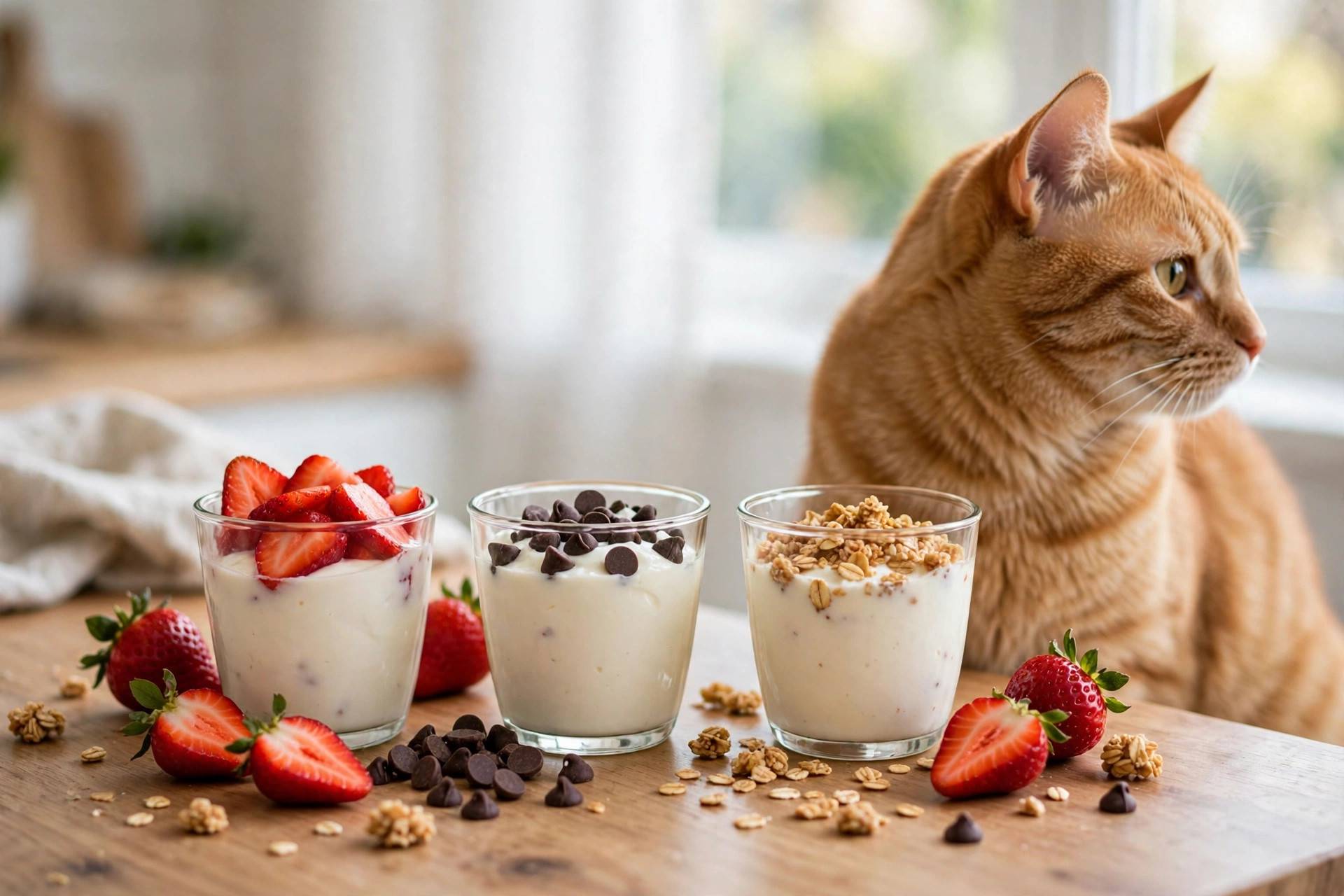
Many yogurts and yogurt toppings are dangerous for cats: chocolate and coffee flavors are toxic, and yogurts mixed with raisins, grapes, macadamia nuts, or granola bring kidney damage, fat overload, and digestive trouble along with them.
5. It Won’t Fix Diarrhea
Yogurt is sometimes suggested as a home remedy for digestive issues, but veterinary guidance warns against it for cats — yogurt doesn’t contain the bacteria cats need for gut support, and the dairy and sugar can actually make an upset stomach worse.
6. Rare Allergic Reactions
True dairy allergies in cats are uncommon but real. After the first taste, watch for itching, swelling, excessive scratching, or vomiting. If any appear, stop feeding yogurt and contact your veterinarian.
How Much Yogurt Can Cats Eat?
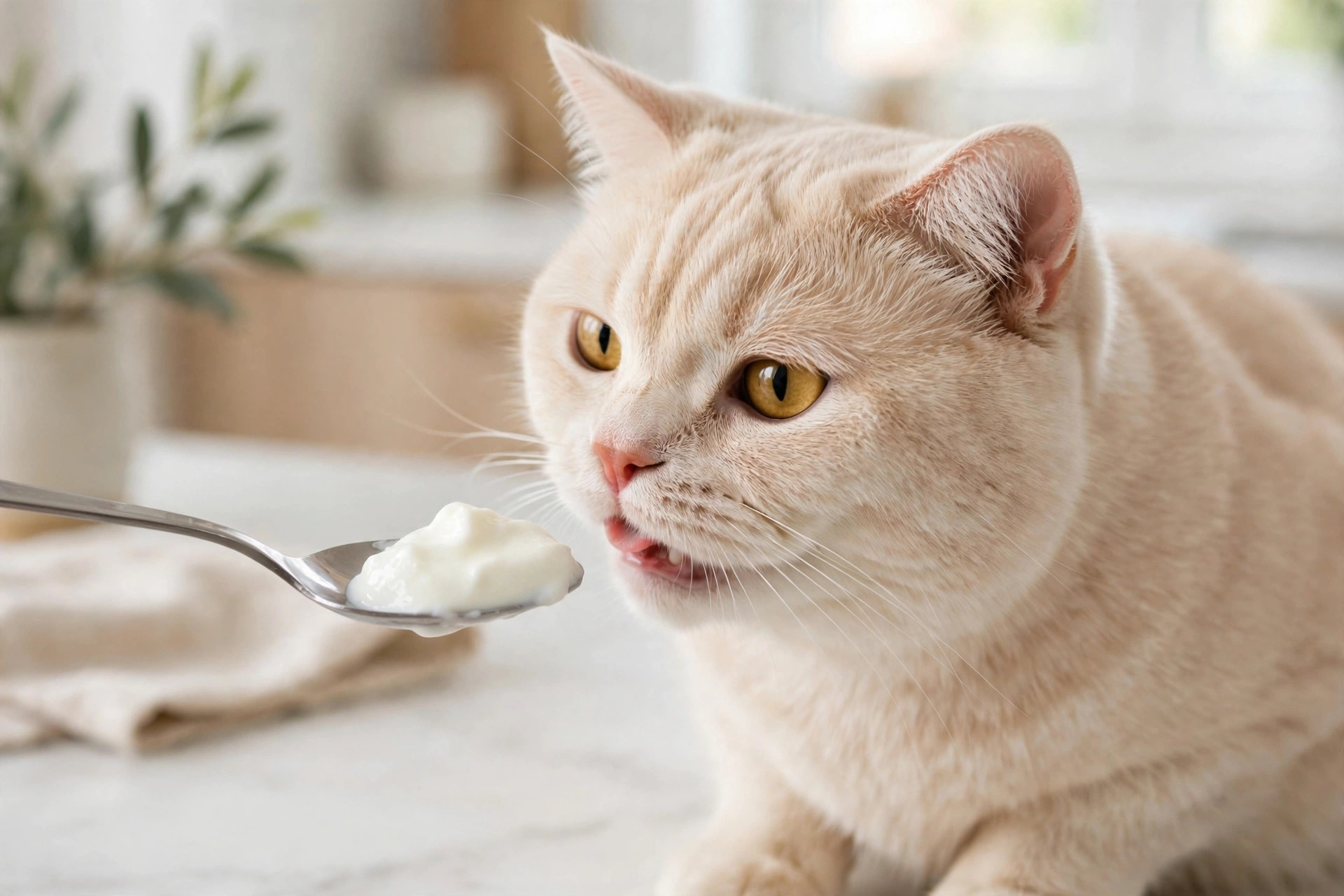
Yogurt is strictly an occasional treat — never a staple and never a daily snack. Veterinary guidance generally agrees on about a teaspoon at most, around once a week or less:
| Cat Size | Weight | Safe Serving |
|---|---|---|
| Small cats | Under 8 lbs | Half a teaspoon, once a week |
| Medium cats | 8–12 lbs | 1 teaspoon, once a week |
| Large cats | Over 12 lbs | 1 teaspoon, once a week at most |
For the very first taste, offer just a dab — about the size of your little fingernail — and wait a full day before offering more. And remember the 10% treat rule: all treats combined should stay under 10% of your cat’s daily calories, with the rest coming from a complete, balanced cat food.
Plain vs Greek Yogurt: Which Is Best?
If you’re going to share yogurt with your cat, the type matters:
- Plain Greek yogurt is one of the best choices — it’s thicker, higher in protein, and typically lower in lactose and sugar than regular yogurt. Choose unflavored, unsweetened varieties.
- Plain regular yogurt with live, active cultures is also fine — it just has slightly more lactose and less protein than Greek.
- Full-fat or low-fat plain yogurt is preferable to “fat-free” or “light” versions, which often contain fillers, added sugars, or artificial sweeteners like xylitol.
- Organic or natural plain yogurt with a short ingredient list (milk and live cultures) is ideal — but always verify the label yourself.
The golden rule stays the same whichever type you pick: plain, unsweetened, no flavors, no sweeteners, no mix-ins.
Yogurts Cats Should Never Eat
- Chocolate or coffee yogurt — both are toxic to cats
- “Sugar-free” or “light” yogurt — often contains xylitol or other artificial sweeteners
- Flavored yogurts (vanilla, honey, strawberry, fruit-on-the-bottom) — added sugars and sweeteners
- Yogurt with grapes or raisins — can damage the kidneys
- Yogurt with nuts, granola, or chocolate chips — fatty, hard to digest, or toxic
- Spoiled or homemade unpasteurized yogurt — risk of harmful bacterial contamination
How to Serve Yogurt to Cats
Safe serving takes less than a minute:
- Choose plain, unsweetened yogurt with live, active cultures — Greek style is a good pick.
- Read the ingredient label to confirm there is no xylitol, artificial sweetener, flavoring, or fruit.
- Spoon a teaspoon (less for the first taste) into a clean dish — never let your cat lick straight from your flavored tub.
- Serve fresh from the fridge and discard leftovers; never serve yogurt that smells off.
- Don’t add honey, fruit, or granola — plain means plain.
- Watch your cat for 24 hours after the first taste before making it an occasional treat.
What If My Cat Eats Too Much Yogurt?
If your cat licks up a large serving of plain yogurt, don’t panic — but do monitor them. Too much yogurt most often causes temporary digestive upset: vomiting, diarrhea, or gas from the lactose and fat load, usually resolving within a day.
Contact your veterinarian right away if you notice severe or ongoing vomiting or diarrhea, lethargy, loss of appetite lasting more than 24 hours, or if the yogurt contained xylitol, chocolate, coffee, grapes, or raisins — those carry toxicity risks beyond simple stomach upset, and xylitol poisoning is an emergency.
Can Kittens Eat Yogurt?
It’s best to skip yogurt for kittens. Their digestive systems are extra sensitive, and yogurt adds nothing a growing kitten needs — their complete kitten diet already covers their nutrition. Rich treats can also encourage picky eating later. Wait until your cat is an adult, then offer only the tiny portions above.
Also Read: Can Cats Eat Eggs? Vet-Reviewed Safety Guide (2026)
Healthy Alternatives to Yogurt
If your cat doesn’t tolerate dairy — or you’d like to rotate their treats — these suit an obligate carnivore far better:
- Plain cooked chicken or turkey (no skin, no seasoning)
- Small pieces of plain cooked salmon
- Freeze-dried meat or fish treats made for cats
- A teaspoon of plain canned tuna in water, as an occasional treat
- Commercial cat treats formulated for complete nutrition
Always introduce any new food gradually and in small portions.
Frequently Asked Questions
Can cats eat Greek yogurt?
Yes — plain, unsweetened Greek yogurt is one of the safest yogurt choices for cats, since it’s higher in protein and typically lower in lactose. Keep it to about a teaspoon once a week or less, and avoid all flavored or sweetened versions.
Can cats eat vanilla or strawberry yogurt?
It’s best to avoid them. Flavored yogurts contain added sugars and sometimes artificial sweeteners that are unhealthy — or dangerous, in the case of xylitol — for cats. Stick to plain yogurt only.
Is yogurt a good probiotic for cats?
No, not a reliable one. A teaspoon of yogurt is far too little to deliver meaningful probiotic support, and giving more risks digestive upset. For genuine gut support, ask your vet about a probiotic formulated specifically for cats.
Can lactose-intolerant cats eat yogurt?
Some can tolerate a tiny dab, since yogurt’s live cultures break down part of the lactose — but many cannot. Test with a fingernail-sized taste, watch for 24 hours, and stop offering yogurt if you see any vomiting, diarrhea, or gassiness.
Can cats eat yogurt every day?
No. Yogurt should be an occasional treat only — about once a week at most in the small portions listed above. Daily yogurt adds unnecessary calories and lactose load without replacing balanced nutrition.
Can diabetic cats eat yogurt?
Only with your veterinarian’s approval. Plain yogurt in tiny amounts may be acceptable, but sweetened or flavored yogurts are a definite no for diabetic cats. When in doubt, choose a meat-based treat instead.
Final Thoughts
So, can cats eat yogurt? Yes — when it’s plain, unsweetened, and served in teaspoon-sized amounts once a week or less. The live cultures make it gentler than milk, and most cats enjoy the taste. Just remember the golden rules: plain only, read the label for xylitol, never flavored or sweetened, and watch how your cat responds.
As with any new food, introduce yogurt slowly and start with the tiniest taste. And when in doubt, your veterinarian is always the best source of advice for your individual cat’s diet.