
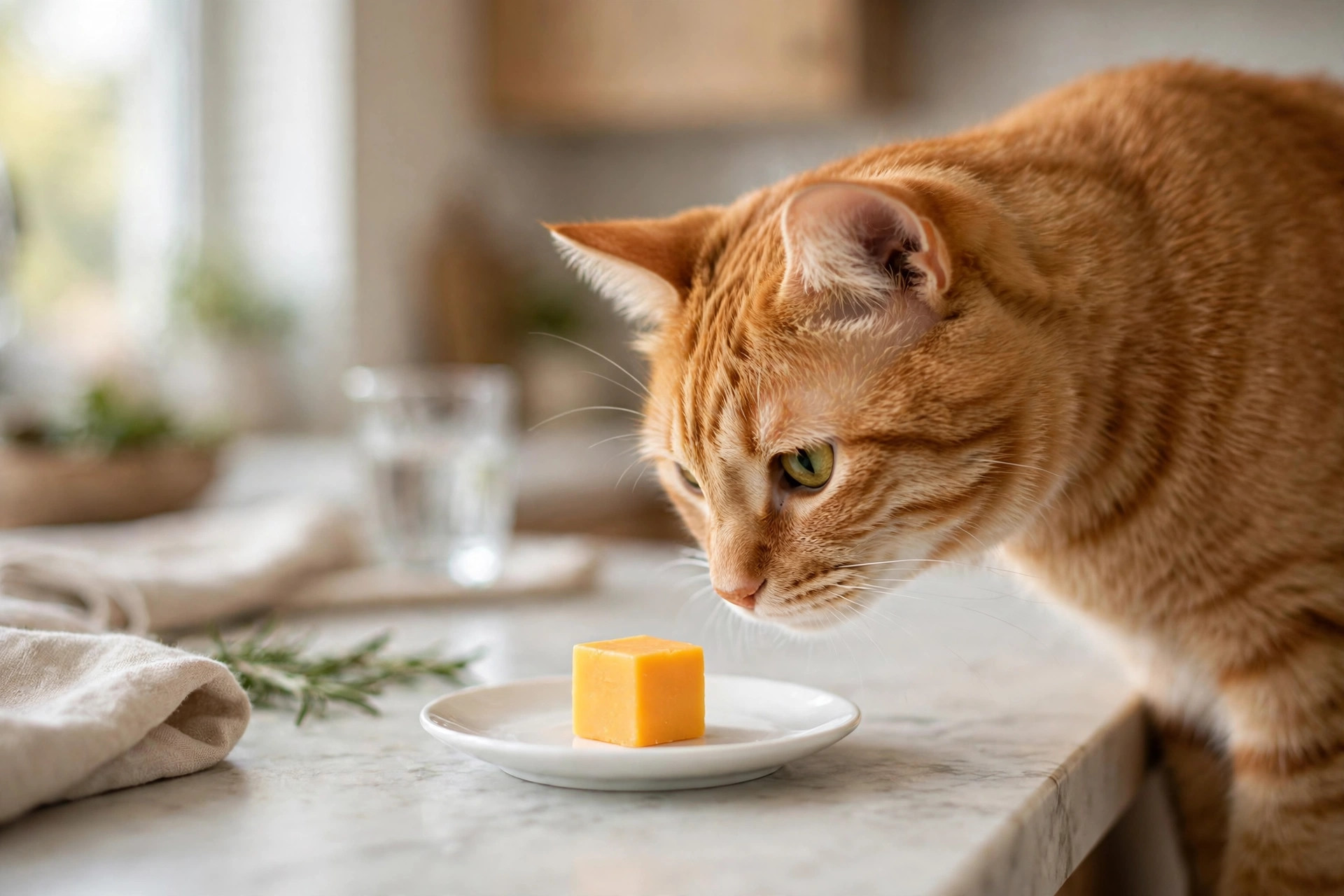
It happens in seconds: you’re grating cheese over dinner, and your cat materializes out of nowhere, locked onto that block of cheddar like it’s the most fascinating thing in the house. It’s only natural to wonder: can cats eat cheese, or should dairy stay off your feline’s menu?
The good news is cheese is not toxic to cats — but that doesn’t mean it’s a free-for-all. Most adult cats are lactose intolerant, and cheese is dense in calories, fat, and sodium. A stolen crumb is fine, but generous servings can lead to vomiting, diarrhea, and weight gain.
In this complete 2026 guide, we’ll cover which cheeses are safest, the real risks, exact serving sizes, cheeses cats must never touch, and answers to common questions.
Table of Contents
- Is Cheese Safe for Cats?
- Nutritional Benefits of Cheese for Cats
- Risks of Feeding Cheese to Cats
- How Much Cheese Can Cats Eat?
- Which Cheeses Are Safest for Cats?
- Cheeses Cats Should Never Eat
- How to Serve Cheese to Cats
- What If My Cat Eats Too Much Cheese?
- Can Kittens Eat Cheese?
- Healthy Alternatives to Cheese
- Frequently Asked Questions
Is Cheese Safe for Cats?
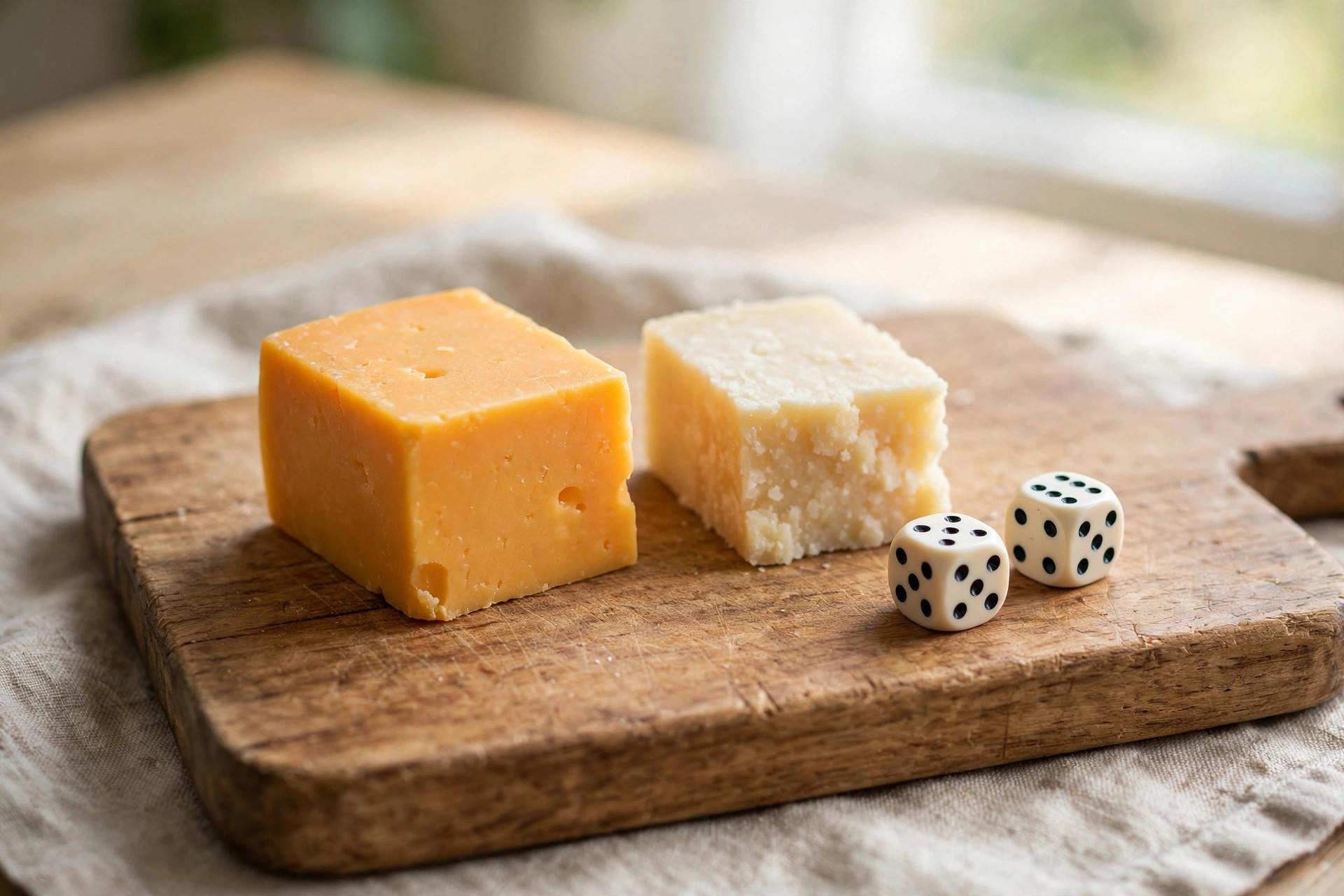
Yes, cheese is generally safe for healthy adult cats in tiny amounts. Veterinary sources including PetMD confirm that cheese is not toxic to cats — but lactose, calories, and the type of cheese you offer all matter.
The main issue is lactose. Kittens produce the enzyme lactase to digest their mother’s milk, but most cats lose much of that ability as adults — so even a small piece of cheese can trigger stomach trouble.
The second issue is calories. A single 1-ounce square of cheddar is roughly like a human eating two and a half cheeseburgers — a meaningful share of a cat’s 200–250 calorie daily budget.
Before offering cheese, follow these ground rules:
- Choose hard, aged cheeses (cheddar, swiss, parmesan) — they contain less lactose
- Offer only a dice-sized cube, once or twice a week at most
- Serve it plain — no garlic, onion, or added flavorings
- Watch your cat for 24 hours after the first taste for any digestive upset
Also Read: Can Cats Eat Tuna? Vet Safety Guide (2026)
Nutritional Benefits of Cheese for Cats
Cheese will never be a health food for an obligate carnivore, but in treat-sized amounts it carries a few genuine upsides.
1. High-Quality Animal Protein
https://petsaddicters.com/can-cats-eat-eggs/Cheese delivers complete animal protein with the amino acids cats need — and its fat-and-protein scent is deeply appealing to a carnivore’s nose, which is why cats find dairy so tempting.
2. Calcium and Phosphorus
Hard cheeses are rich in calcium and phosphorus, which support bones and teeth. A tiny cube won’t replace balanced nutrition, but it’s a modest bonus in an occasional treat.
3. Vitamins A and B12
Cheese contains vitamin A (which cats must get from animal sources) plus B vitamins that support energy metabolism and healthy skin.
4. A Useful Pill Pocket
A tiny ball of cheese wrapped around a bitter pill is one of the most practical, cat-approved ways to medicate a fussy patient. Just keep the cheese wrapper as small as possible.
Risks of Feeding Cheese to Cats
Cheese is fine in crumb-sized amounts, but regular or generous feeding can cause real problems.
1. Lactose Intolerance and Digestive Upset
Most adult cats are lactose intolerant to some degree, so dairy can cause vomiting, diarrhea, abdominal pain, and gas. Some cats tolerate a tiny bit of hard cheese; others react to the smallest taste. Test with a pea-sized piece first — every cat is different.
2. Excessive Calories and Obesity
Cheese packs around 110+ calories per ounce. All treats combined should stay under 10% of your cat’s daily calories — for a 10-pound cat needing roughly 250 calories a day, that’s only about 25 treat calories. One large cube of cheddar can eat through most of that budget in a single bite.
3. High Fat and Sodium Content
Many cheeses are high in saturated fat and sodium, which can upset digestion and strain the kidneys — older cats and cats with kidney disease should avoid cheese unless the vet approves.
4. Garlic, Onion, and Flavored Cheeses
Never feed cheese containing garlic, onion, chives, or leek — these are toxic to cats and can damage red blood cells, causing life-threatening anemia. Flavored spreads and cheese dips often contain them, so check every label.
5. Blue Cheese and Mold-Ripened Varieties
Blue cheeses contain a mold byproduct called roquefortine C, which can cause vomiting, tremors, and in severe cases seizures in pets. Keep all blue and mold-ripened cheeses away from your cat.
How Much Cheese Can Cats Eat?
Cheese is strictly an occasional treat — never a staple and never a daily snack. Use this guide:
| Cat Size | Weight | Safe Serving |
|---|---|---|
| Small cats | Under 8 lbs (4 kg) | One pea-sized piece, once or twice a week |
| Medium cats | 8–12 lbs (4–6 kg) | One dice-sized cube, once or twice a week |
| Large cats | Over 12 lbs (6 kg) | One dice-sized cube, once or twice a week |
When in doubt, start with a pea-sized crumb and watch your cat for 24 hours before offering it again. If you see vomiting, diarrhea, or gassiness, skip dairy treats entirely.
Which Cheeses Are Safest for Cats?
Hard, aged cheeses lose much of their lactose during fermentation, making them the gentlest choices:
- Cheddar — low in lactose and widely available; the classic safe choice in tiny amounts
- Parmesan — very low lactose from long aging; a tiny crumb satisfies
- Swiss — lower lactose than most cheeses; offer plain only
- Gouda — a fine rare crumb if your cat tolerates dairy
Choose plain blocks or wedges over shredded, sliced, or processed varieties, which often carry extra sodium and flavorings.
Cheeses Cats Should Never Eat
- Blue cheese (Roquefort, Gorgonzola, Stilton) — mold compounds can cause vomiting and tremors
- Cheese with garlic, onion, or chives — toxic to cats’ red blood cells
- Processed slices, spreads, and cheese dips — high sodium, artificial additives, and flavorings
- Fresh, high-lactose cheeses (cream cheese, ricotta, cottage cheese) — far more likely to trigger digestive upset
- Cheese-flavored snacks (cheese puffs, crackers) — salt bombs with zero nutritional value for cats
How to Serve Cheese to Cats
- Choose a plain hard, aged cheese — cheddar, parmesan, or swiss.
- Cut a tiny piece no bigger than a dice (smaller for small cats).
- Serve it plain at room temperature — no seasoning, sauces, or crackers.
- Offer it by hand or in a clean dish.
- Store the rest sealed in the fridge — your cat does not get seconds.
Also Read: Can Cats Eat Eggs? Vet-Reviewed Safety Guide (2026)
What If My Cat Eats Too Much Cheese?

If your cat raids the cheese board, don’t panic — but monitor them closely. Too much cheese most often causes temporary digestive upset: vomiting, diarrhea, or gas that resolves within a day.
Contact your veterinarian right away if you notice severe or ongoing vomiting or diarrhea, lethargy, loss of appetite lasting more than 24 hours, or if the cheese contained garlic, onion, or blue-cheese mold — those carry toxicity risks beyond simple stomach upset.
Can Kittens Eat Cheese?
It’s best to skip cheese for kittens. They’re growing on a carefully balanced kitten diet, and cheese offers them nothing they need — rich treats can also encourage picky eating later. Wait until your cat is an adult, then offer only the tiny portions above.
Healthy Alternatives to Cheese
If your cat loves dairy — or you’d rather skip the lactose question — these suit an obligate carnivore far better:
- Plain cooked chicken or turkey (no skin, no seasoning)
- Small pieces of plain cooked salmon
- Freeze-dried meat or fish treats made for cats
- Commercial cat treats formulated for complete nutrition
Frequently Asked Questions
Can cats eat cheese every day?
No. Even for cats that tolerate dairy, cheese is too calorie-dense and fatty for daily feeding. Keep it to a dice-sized cube once or twice a week at most.
Is cheddar cheese safe for cats?
Yes — plain cheddar is one of the safest cheeses for cats because aging reduces its lactose. Still limit it to a tiny cube, since many cats are lactose intolerant.
Can cats eat blue cheese?
No. Blue cheeses contain roquefortine C, a mold byproduct that can cause vomiting and tremors in cats. Keep blue cheese completely out of reach.
Can cats eat cream cheese?
It’s not toxic, but cream cheese is high in lactose and fat, making it one of the cheeses most likely to cause vomiting or diarrhea. Skip it.
What should I do if my cat ate a lot of cheese?
Monitor for vomiting, diarrhea, or lethargy over the next 24 hours — most cases resolve on their own. Contact your vet if symptoms are severe or persist, or if the cheese contained garlic, onion, or mold.
Final Thoughts
So, can cats eat cheese? Yes — when it’s plain, hard, aged cheese served in a dice-sized portion once or twice a week. Just remember the golden rules: hard aged cheese only, tiny portions, never blue or flavored cheese, and watch for any sign of lactose intolerance.
Introduce cheese slowly and watch how your cat responds. And when in doubt, your veterinarian is always the best source of advice.