

Your dog’s nose is a superpower — roughly 220 million scent receptors, compared with about 5 million in yours, letting dogs detect odours at concentrations 10,000 to 100,000 times weaker than humans can notice. That superpower has a downside: everyday smells that barely register with you can be overwhelming, irritating, or even dangerous for your dog. So what smells do dogs hate, and can you use those scents to keep your dog out of trouble?
Most dogs dislike sharp, acidic, or chemical smells — citrus, vinegar, chilli, alcohol, and strong cleaners top the list. Some make safe, natural deterrents. Others, like mothballs and concentrated essential oils, are genuinely toxic and should never be used as repellents. This guide covers the 12 smells dogs hate most, which ones are safe to use, which to avoid completely, and what to do if your dog is exposed to a toxic scent.
Table of Contents
- Why Do Dogs Hate Certain Smells?
- 12 Smells Dogs Hate Most
- How to Use Smells as Safe Deterrents
- Smells That Are Toxic, Not Just Unpleasant
- Smells Dogs Actually Like
- When to Call the Vet
- Frequently Asked Questions
Why Do Dogs Hate Certain Smells?
Dogs experience the world nose-first. With around 220 million olfactory receptor neurons and a large part of their brain devoted to processing scent, a smell that seems faint to you can hit your dog like a shout. Sharp, acidic, or chemical odours irritate the delicate lining of a dog’s nose, eyes, and airways — which is why dogs instinctively turn away from them.
That avoidance is not random. Many of the smells dogs dislike are linked to substances that are genuinely irritating or harmful: acidic citrus oils, capsaicin in chillies, and the volatile chemicals in cleaners and mothballs. Your dog’s disgust is often a built-in warning system. The catch is that dislike is not the same as safety — a dog may hate a smell and still lick or eat the substance out of curiosity, especially puppies.
Every dog is also an individual. Breed, age, and past experience all shape how strongly a dog reacts. Watch your own dog’s body language — turning away, sneezing, pawing at the nose, or leaving the area — rather than assuming a list applies equally to every dog.
12 Smells Dogs Hate Most
Here are the scents dogs most commonly avoid, from the mildest everyday irritants to the ones that are also poisonous. The first group can be useful deterrents; the second group should never be used that way.
1. Citrus fruits — lemons, limes, oranges, and grapefruit
Citrus is the classic dog-repellent smell. The sharp, acidic scent irritates a dog’s sensitive nose, and the oils in citrus peel (limonene and linalool) can irritate the respiratory tract in high concentrations. Most dogs will sniff a lemon once, sneeze, and walk away. Citrus peels placed near a flowerbed or a chewed chair leg are one of the safest deterrents you can use — just keep fresh fruit out of reach, since citrus flesh and seeds can upset a dog’s stomach.
2. Vinegar, especially white vinegar
White vinegar’s sour, pungent smell is overpowering even to humans, and far more so to a dog. It is also one of the most useful deterrents: a diluted vinegar spray on a spot where your dog keeps peeing not only discourages a repeat, it neutralises the urine smell that draws them back. Vinegar is non-toxic and cheap — just avoid spraying it on plants, as it can damage them.
3. Chilli peppers and black pepper
Capsaicin, the compound that makes chillies hot, irritates a dog’s nose, mouth, and eyes on contact. Black pepper and cayenne have the same effect: a sniff can trigger sneezing or wheezing. A light sprinkle of chilli flakes around a digging spot can discourage the habit, but never apply pepper directly to your dog or their bedding — it is an irritant, not a training tool.
4. Fresh herbs — rosemary, basil, and mint
Many dogs dislike the strong, pungent aroma of fresh garden herbs. Mint in particular puts most dogs off, which is why it appears in some commercial deterrent sprays. A few sprigs of rosemary or mint near a garden bed your dog keeps trampling can help — but check any plant against a toxicity list before placing it where a chewing dog can reach it.
5. Rubbing alcohol
The strong, chemical smell of rubbing alcohol is one of the most repellent odours to dogs. It can clean a spot where your dog had an accident, doubling as a deterrent. Keep your dog out of the room until it has fully evaporated, and never let them ingest it — alcohol is toxic to dogs.
6. Strong perfumes and scented sprays
Perfume, cologne, air fresheners, and heavily scented grooming sprays overwhelm a dog’s nose and can irritate their eyes and airways. Dogs often sneeze or leave the room when someone sprays perfume nearby. Apply scented products away from your dog, and never spray anything directly on or near them.
7. Nail polish remover (acetone)
The sharp, solvent smell of acetone is intensely unpleasant to dogs. Keep nail polish remover — and the cotton pads soaked in it — out of reach, and never use it in a closed room with your dog.
8. Household cleaning products — ammonia, bleach, and chlorine
Dogs particularly hate the smell of ammonia, bleach, and chlorine-based cleaners. Ammonia is especially unhelpful because it smells similar to urine, which can encourage marking in some dogs — another reason to clean accident spots with vinegar instead. Always keep your dog out of the room while you clean, and store all products behind a latched door.
9. Mothballs — toxic, never use as a repellent
Mothballs contain naphthalene or paradichlorobenzene, chemicals that release a strong, pungent odour. They are highly toxic to dogs: ingesting even one mothball can cause vomiting, lethargy, liver damage, seizures, and in severe cases death, and the fumes alone can irritate eyes, nose, and lungs. Never use mothballs to keep dogs out of a garden or room. Use cedar chips instead.
10. Concentrated essential oils — toxic, never use as a repellent
Many essential oils smell wonderful to us and terrible to dogs — and several are genuinely poisonous. Tea tree, pennyroyal, wintergreen, pine, cinnamon, peppermint, citrus oils, and ylang ylang are all flagged as toxic to dogs by veterinary toxicologists. In one study of concentrated tea tree oil exposure, 92% of dogs and cats showed clinical signs. Never apply essential oils to your dog’s fur, bedding, or paws, and never use them as a deterrent. PetMD’s guide to essential oils for dogs lists the oils to avoid and the warning signs of poisoning.
11. Garlic and onion — toxic, never use as a repellent
Dogs dislike the strong smell of garlic and onion, and with good reason: both are toxic to dogs, damaging red blood cells and causing anaemia. Never use garlic or onion — fresh, powdered, or cooked — as a scent deterrent anywhere your dog can reach or lick it.
12. Mustard powder and horseradish
Like chilli, mustard powder and horseradish carry a sharp, spicy heat that irritates a dog’s nose and eyes. A small amount sprinkled in a garden bed can discourage digging, but treat it like pepper: a light, occasional deterrent, never something applied to the dog.
Also Read: Why Won’t My Dog Come When Called? Guide (2026)
How to Use Smells as Safe Deterrents
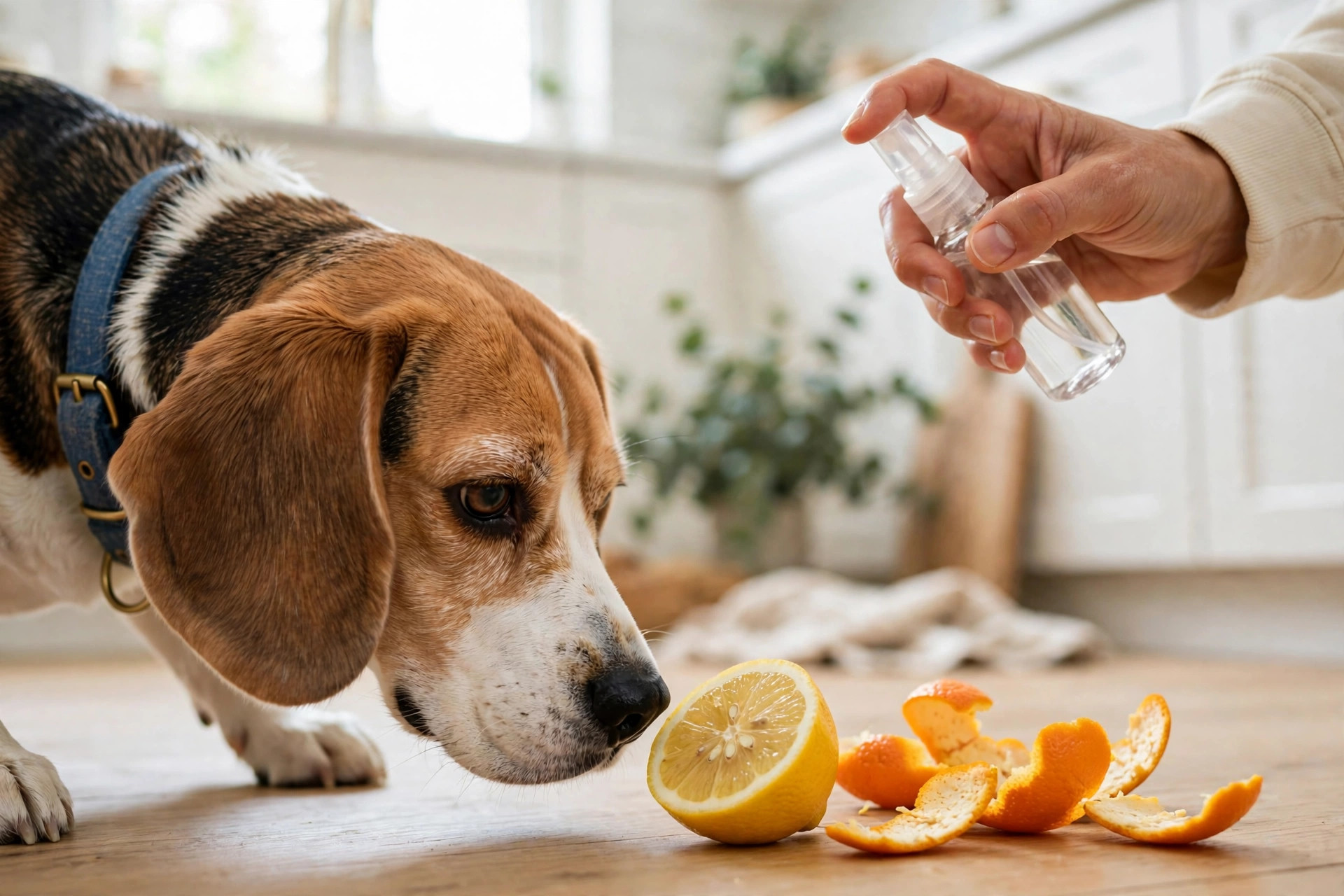
Used correctly, scent deterrents can help with three common problems: peeing in the same spot indoors, chewing furniture, and digging in the garden.
To stop peeing in one spot: Clean the area with diluted white vinegar (one part vinegar to one part water) to remove the urine smell, then spray the same mix lightly on the spot once it is dry. Reapply every day for a week — scent barriers fade fast, and consistency is what breaks the habit.
To stop chewing furniture: Rub a lemon or orange peel along the chair leg or table edge your dog targets, or mist the area with diluted vinegar. Reapply after cleaning. Pair the deterrent with something better to chew — a stuffed food toy or a long-lasting chew — so your dog has an acceptable outlet.
To stop digging in the garden: Place citrus peels or a few sprigs of mint around the digging spot, or sprinkle a little black pepper at the edge of the bed. Fill the old hole and give your dog a digging-legal zone, like a sand pit with buried treats, so the energy has somewhere to go.
Three safety rules apply to every scent deterrent: never spray anything directly on your dog, their bedding, or their food and water bowls; never use a toxic scent (mothballs, essential oils, cleaning chemicals, garlic, or onion) as a deterrent; and remember that scent alone rarely fixes a behaviour. Deterrents work best alongside training — the smell keeps your dog away today, while training teaches them what to do instead.
Also Read: Stop Your Dog Begging at the Table (2026)
Smells That Are Toxic, Not Just Unpleasant
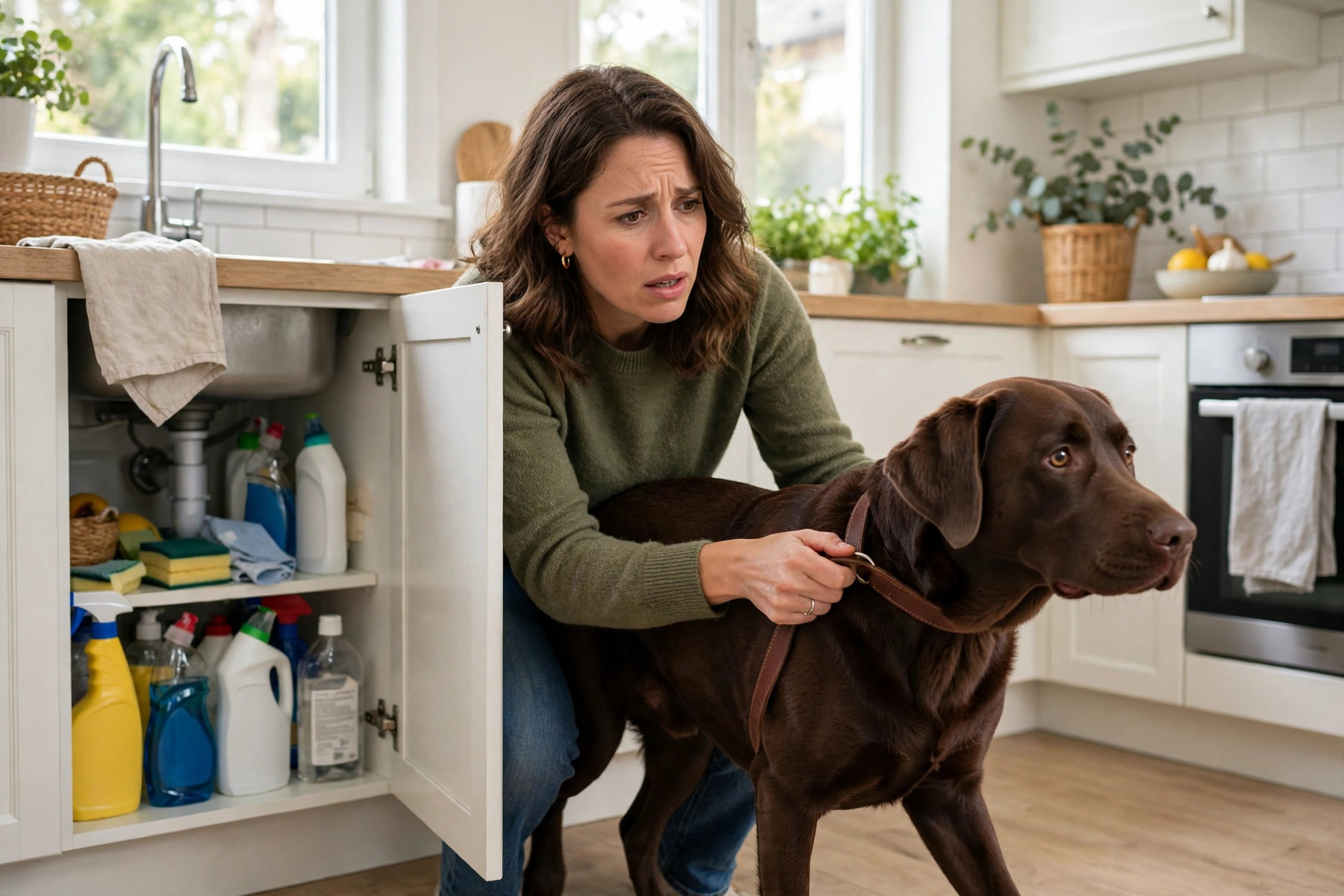
The most important lesson of this guide is that “natural” does not mean safe, and “dogs hate it” does not mean “safe to use.” Several smells on this list can poison your dog if they are inhaled in a closed room, licked off a surface, or eaten.
| Smell | Why It Is Dangerous | Warning Signs |
|---|---|---|
| Mothballs | Naphthalene or paradichlorobenzene; toxic if eaten or inhaled | Vomiting, lethargy, seizures, liver damage |
| Essential oils (tea tree, pennyroyal, wintergreen, pine) | Absorbed through skin, lungs, and gut; liver and nerve damage | Drooling, vomiting, weakness, tremors, wobbliness |
| Garlic and onion | Damage red blood cells, causing anaemia | Pale gums, weakness, dark urine, collapse |
| Cleaning chemicals (bleach, ammonia) | Corrosive fumes and liquids; lung and gut injury | Coughing, drooling, vomiting, breathing difficulty |
| Rubbing alcohol | Toxic if swallowed; depresses the nervous system | Wobbliness, vomiting, slowed breathing |
If your dog has been exposed to any of these, move them to fresh air, do not induce vomiting unless a vet tells you to, and call your veterinarian or the ASPCA Animal Poison Control Center on (888) 426-4435 right away. Bring the product packaging with you if you go to the clinic.
Also Read: Pet Emergency First Aid: Vet Guide (2026)
Smells Dogs Actually Like
Not every strong smell repels dogs — some calm them. Lavender has been studied in kennels and during travel, where it reduced anxiety-related behaviour in dogs, and vanilla has a similarly soothing effect. Many dogs also find the smell of their owner deeply comforting, which is why an old T-shirt in the crate can settle an anxious puppy.
Food smells are the obvious favourite: meat, cheese, and peanut butter will pull most dogs across a room. That is exactly why scent is such a powerful training tool — the same nose that hates citrus loves a treat, and trainers use that to reward the behaviours they want.
When to Call the Vet
Most encounters with a disliked smell end with a sneeze and a hasty exit. Call your vet promptly if your dog shows any of these signs after exposure to a strong smell or a chemical product:
- Drooling, pawing at the mouth, or vomiting
- Coughing, wheezing, or difficulty breathing
- Wobbliness, weakness, tremors, or collapse
- Pale or blue-tinged gums
- Lethargy or loss of appetite lasting more than a few hours
- You know or suspect your dog ate mothballs, essential oil, garlic, onion, or a cleaning product
Puppies, small breeds, senior dogs, and dogs with liver disease or breathing problems are at higher risk from toxic smells, so act faster with them. When in doubt, call — poison control would rather hear from you early than late.
Frequently Asked Questions
What smell do dogs hate the most?
Citrus is the smell most dogs hate most consistently — the sharp scent of lemons, limes, and oranges makes most dogs sneeze and walk away. Vinegar and chilli are close behind. Individual dogs vary, so test one scent at a time and watch your dog’s reaction.
What smells keep dogs from peeing in the house?
Diluted white vinegar is the most effective safe option: clean the spot with a vinegar-and-water mix to remove the urine odour, then spray it lightly each day. Citrus peels placed near the spot also help. Avoid ammonia-based cleaners — ammonia smells like urine to dogs and can encourage repeat marking.
Do dogs hate the smell of vinegar?
Yes, most dogs dislike the sharp, sour smell of white vinegar, which is exactly why it works as a deterrent and a cleaning agent. It is non-toxic, so it is safe to use on floors and furniture — just keep it away from plants.
Are essential oils safe to use as dog deterrents?
No. Concentrated essential oils such as tea tree, pennyroyal, wintergreen, pine, cinnamon, and peppermint are toxic to dogs through skin contact, inhalation, or ingestion, and should never be applied to your dog or used as a repellent. PetMD lists the oils to avoid and the signs of poisoning.
Can I use mothballs to keep dogs away?
No — never use mothballs around dogs. They contain naphthalene or paradichlorobenzene, and eating even one can cause vomiting, liver damage, seizures, or death. Use cedar chips or citrus peels instead.
What smells calm dogs down?
Lavender and vanilla are the best-studied calming scents for dogs; lavender reduced anxiety behaviours in kennel and travel studies. Your own scent is also calming. Never use concentrated essential oils to deliver these scents — use a well-ventilated room and a vet-approved product instead.
Final Thoughts
So, what smells do dogs hate? Citrus, vinegar, chilli, alcohol, and strong chemical smells top the list — and the mild ones make genuinely useful deterrents for peeing, chewing, and digging. But the same powerful nose that makes scent deterrents work also makes toxic smells dangerous: mothballs, essential oils, garlic, and cleaning chemicals belong nowhere near your dog.
Use the safe scents sparingly, refresh them often, and pair them with training that teaches your dog what to do instead. And if your dog ever gets into something toxic, skip the home remedies and call your vet or poison control straight away. Your dog’s nose is their superpower — a little respect for it goes a long way.
By Dr. Ayaz Ali