
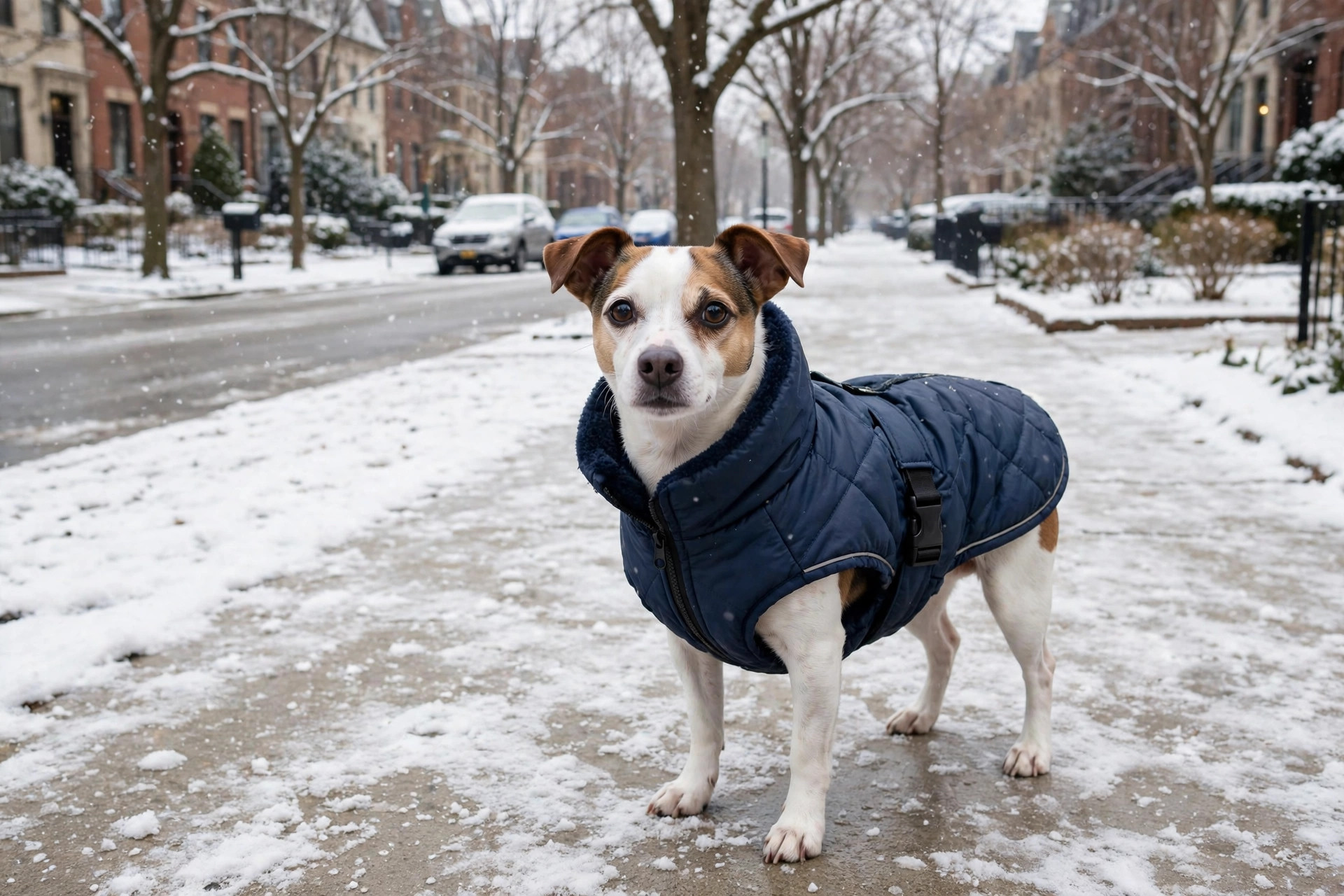
As the temperature drops and the evening walk starts to feel bitter, many dog owners ask the same question: does my dog actually need a coat, or are best dog winter coats just a fashion statement? The honest answer is that for many dogs, a good winter coat is genuinely useful gear — and for some dogs, it is essential protection against the cold.
Not every dog needs one. A thick-coated husky is built for snow, while a short-haired chihuahua can start shivering in weather that barely bothers you. In this 2026 buying guide, we cover which dogs need a winter coat, coat vs sweater, how to measure for the perfect fit, and how to choose a coat that keeps your dog warm, dry, and comfortable all winter.
Table of Contents
- Does My Dog Need a Winter Coat?
- Which Dogs Need a Coat Most?
- Winter Coat vs Sweater: What Is the Difference?
- Types of Dog Winter Coats
- How to Measure Your Dog for a Coat
- How to Choose the Right Coat
- When NOT to Put a Coat on Your Dog
- Winter Coat Care: Washing and Fit Checks
- Frequently Asked Questions
Does My Dog Need a Winter Coat?
There is no single temperature at which every dog needs a coat, because cold tolerance varies so much by breed, size, age, and health. As a rough guide, most dogs are comfortable above 45°F (7°C). Below that, cold-sensitive dogs start to feel it, and below freezing, even hardy dogs benefit from shorter, well-planned outings. The American Kennel Club notes that small, delicate, and short-haired dogs need a proper winter wardrobe, and veterinary guidance agrees that shivering, lifting paws, or seeking warmth are signs your dog is telling you it is cold — see the AKC guide to dog winter coats for the full breakdown.
The simplest test is watching your dog. A dog that shivers, slows down, tucks its tail, or tries to turn for home is cold, whatever the thermometer says. When in doubt, especially for a puppy, a senior, or a dog with a health condition, ask your veterinarian.
Also Read: How Cold Is Too Cold for Dogs? Guide (2026)
Which Dogs Need a Coat Most?
1. Small and toy breeds
Small dogs lose body heat fast because they have more surface area relative to their body mass. Chihuahuas, miniature pinschers, pugs, and French bulldogs chill quickly and often start shivering in weather larger dogs barely notice.
2. Short-haired and lean-bodied breeds
Greyhounds, whippets, pit bulls, and Weimaraners have little natural insulation and almost no body fat to burn for warmth. A coat makes a real difference for them on every cold walk.
3. Hairless breeds and clipped coats
American Hairless Terriers, Xoloitzcuintlis, and Chinese Cresteds have no fur to trap warm air at all and need a coat outdoors in cold weather. Similarly, breeds that are regularly clipped, such as poodles, lose the insulation their coat would normally provide — a freshly groomed dog in winter is a colder dog.
4. Puppies, seniors, and sick dogs
Puppies cannot regulate body temperature as well as adults, and senior dogs lose that ability as they age. Dogs in either group benefit from a coat even if their breed normally copes well.
5. Low-to-the-ground breeds
Corgis, dachshunds, and basset hounds may have decent coats, but their bellies brush snow, slush, and ice on every walk. A coat with good belly coverage keeps their underside warm and dry.
Dogs that usually do NOT need a coat
Large, thick double-coated breeds — malamutes, huskies, Newfoundlands, Bernese mountain dogs, and Saint Bernards — were bred with fur designed to insulate against snow and cold, and a heavy coat can cause them to overheat. They may still need paw protection in extreme cold, but a coat is rarely required.
Winter Coat vs Sweater: What Is the Difference?
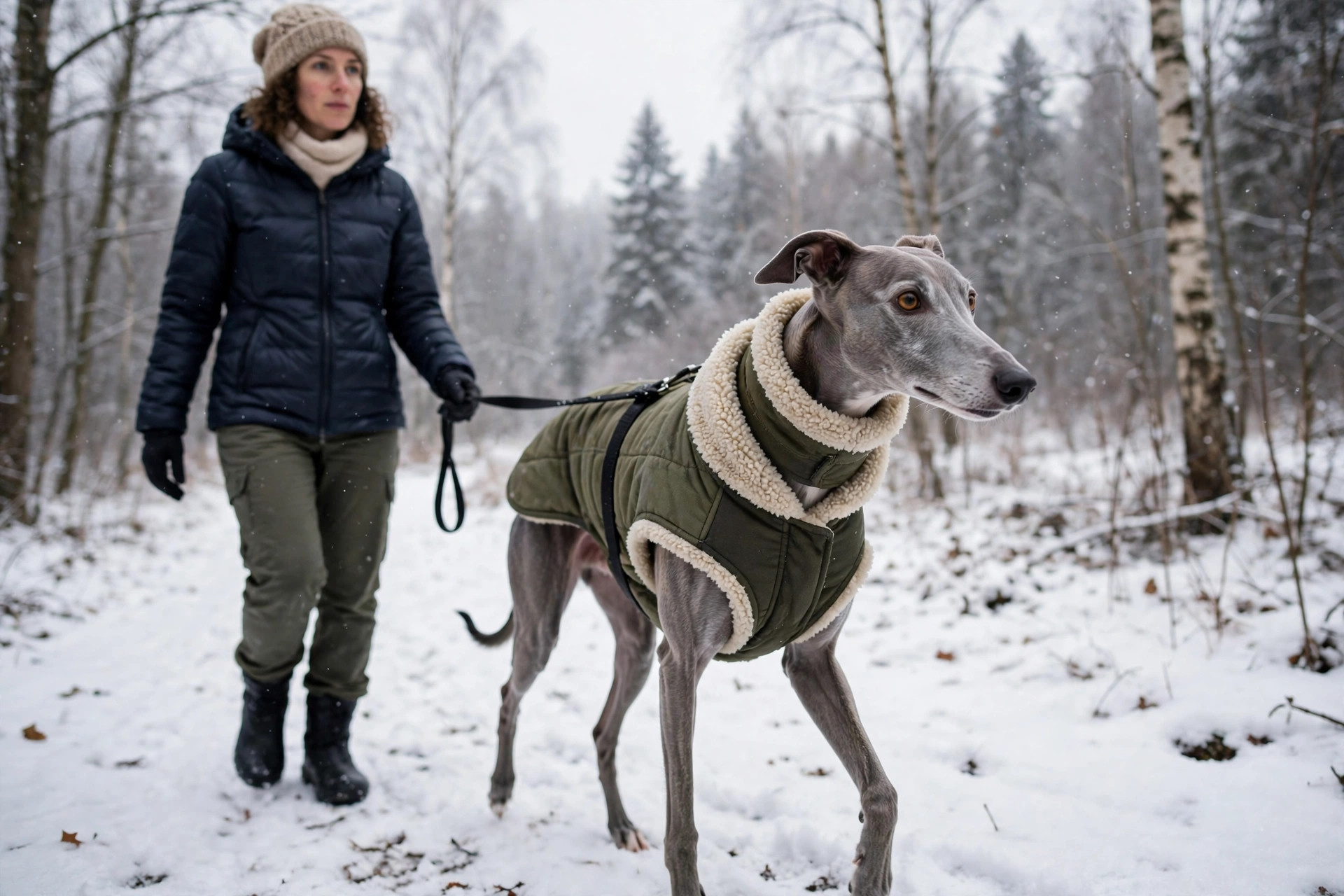
The terms get used interchangeably, but they are not the same thing. A winter coat has a weatherproof or water-resistant outer shell and usually some insulation or fleece lining. It blocks wind, rain, and snow. A sweater is typically knitted or fleece, adds warmth, but soaks through in wet weather — fine for a dry, cold day or for wearing indoors, useless in sleet.
As a rule: if it is wet, windy, or snowy, choose a coat. If it is dry and just chilly, a sweater is enough, especially for short outings. Many owners end up with both — a sweater for mild days and a proper coat for real winter weather.
Types of Dog Winter Coats
| Coat type | Best for | Watch out for |
|---|---|---|
| Padded waterproof coat | Snow, rain, and wind; the best all-rounder | Cheap shells that are not truly waterproof |
| Fleece sweater or jacket | Dry cold days and indoor warmth | Soaks through in rain or wet snow |
| Lightweight rain shell | Wet autumn and mild-winter days | Little insulation on its own in deep cold |
| Full-coverage snowsuit | Deep snow, long hikes, very cold climates | Some dogs hate leg coverage — introduce gradually |
| Hi-vis winter jacket | Dark evening walks — warmth plus visibility | Check the reflective trim is real, not just bright fabric |
For most owners, a padded waterproof coat is the single best purchase. If your winters are mostly dry and mild, a good fleece jacket may be all you need — but if you ever walk in rain or snow, waterproofing matters more than extra padding, because a soaked coat chills a dog faster than no coat at all.
How to Measure Your Dog for a Coat
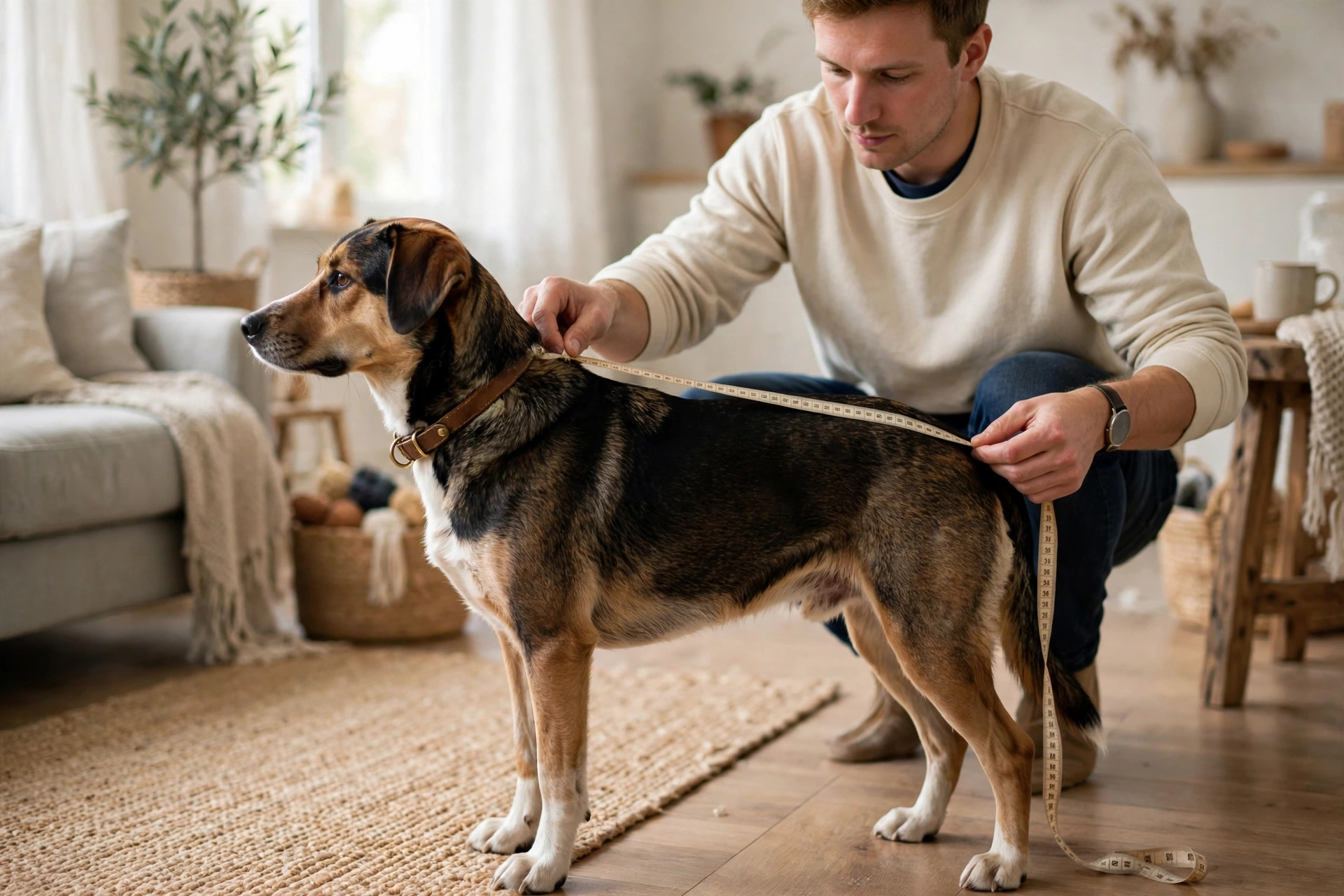
Sizes vary wildly between brands — a “medium” from one maker can be another’s “large” — so never order by breed or weight alone. Take three measurements with a soft tape measure while your dog is standing naturally:
- Back length: from the base of the neck, where the collar sits, along the spine to the base of the tail. This is the most important measurement, because coat length cannot be adjusted with straps.
- Chest girth: around the widest part of the chest, just behind the front legs. Keep the tape snug but not tight — you should be able to slip a finger underneath.
- Neck circumference: around the neck where the collar normally rests, again with room for two fingers.
Write all three numbers down and compare them against the specific brand’s size chart. If your dog falls between sizes, most guides recommend sizing up for comfort, especially for broad-chested breeds. Then do a fit test indoors: the coat should cover from neck to tail base without interfering with bathroom breaks, sit flat along the back, and allow free leg movement. Slide a flat hand under the neck and straps — if you cannot, size up.
For puppies, choose a coat with adjustable straps rather than buying far too big — an oversized coat twists, drags, and can trip a young dog. Recheck the fit every few weeks while they grow.
How to Choose the Right Coat
- Belly coverage: look for a coat that protects the chest and belly, where heat escapes fastest.
- Waterproofing: water-resistant handles drizzle; true waterproofing is worth paying for if you walk in rain or snow.
- Harness compatibility: choose a coat with a harness opening, or wear the harness over the coat — never trapped underneath where it can twist.
- Easy on and off: zips and clip fastenings beat pull-over designs, especially for dogs that dislike dressing up.
- Reflective trim: winter means dark walks, and reflective strips make your dog visible to drivers.
- Washability: winter coats get muddy — machine-washable fabric saves a lot of hand-washing.
- Weight: for small dogs, keep the coat light; heavy hardware on a tiny dog causes more discomfort than the cold.
Introduce any new coat indoors first, with treats and short wear sessions. Most dogs accept a coat quickly if it fits well; a dog that freezes or constantly tries to remove it is usually telling you the fit is wrong.
Also Read: Winter Paw Care for Dogs: Salt & Ice Guide (2026)
When NOT to Put a Coat on Your Dog
A coat is outdoor gear, not all-day clothing. Take it off indoors, where central heating plus a coat quickly leads to overheating. Never leave a coat on an unsupervised dog — straps can snag, and a determined chewer can swallow fastenings. Skip the coat for thick double-coated breeds in ordinary winter weather, and watch for overheating signs on any dog: heavy panting or trying to remove the coat on a mild day means it is too warm for layers. If your dog is wet underneath the coat, dry them off — a damp lining steals heat instead of keeping it in.
Winter Coat Care: Washing and Fit Checks
Wash the coat regularly through winter — salt, mud, and wet fur build up fast. Most coats do fine on a gentle machine cycle with mild detergent; air-dry to protect waterproof coatings. Check straps, zips, and reflective trim each month, and re-measure your dog mid-season, since weight changes over winter are common.
Frequently Asked Questions
Does my dog need a winter coat?
Many dogs do, especially small, short-haired, lean, senior, very young, or sick dogs. Thick double-coated breeds usually do not. Shivering or seeking warmth is your dog’s way of asking for a coat.
At what temperature should a dog wear a coat?
There is no single number, but most cold-sensitive dogs benefit below about 45°F (7°C), and almost all vulnerable dogs need one below freezing. Wind chill and wet weather lower the threshold further.
Is a sweater enough, or does my dog need a proper coat?
For dry, mildly cold days, a sweater is fine. For rain, snow, or wind, you need a waterproof coat — a soaked sweater chills a dog rather than warming it.
How do I measure my dog for a winter coat?
Measure back length, chest girth, and neck circumference while your dog stands, and compare all three to the brand’s size chart — not to a generic S/M/L label.
Can my dog wear a coat indoors?
Only briefly. Coats are for outdoor walks — indoors, central heating plus a coat causes overheating. Remove the coat when you get home.
Do thick-coated dogs ever need a coat?
Rarely. Double-coated northern breeds are built for cold and can overheat in a coat. They may still need paw protection in extreme cold, but a coat is usually unnecessary.
Final Thoughts
So, do dogs need winter coats? For many of them, yes — a well-fitted, weatherproof coat turns a miserable, shivering walk into a comfortable one, and for small, short-haired, senior, or sick dogs it is genuinely protective gear. The keys are simple: buy for your dog’s actual needs, measure properly instead of guessing a size, choose waterproof over merely warm if your weather is wet, and take the coat off indoors.
As always, if you are unsure whether your dog needs a coat — or if it shows signs of struggling in the cold despite one — your veterinarian is the best person to ask about your individual dog.
By Dr. Ayaz Ali