
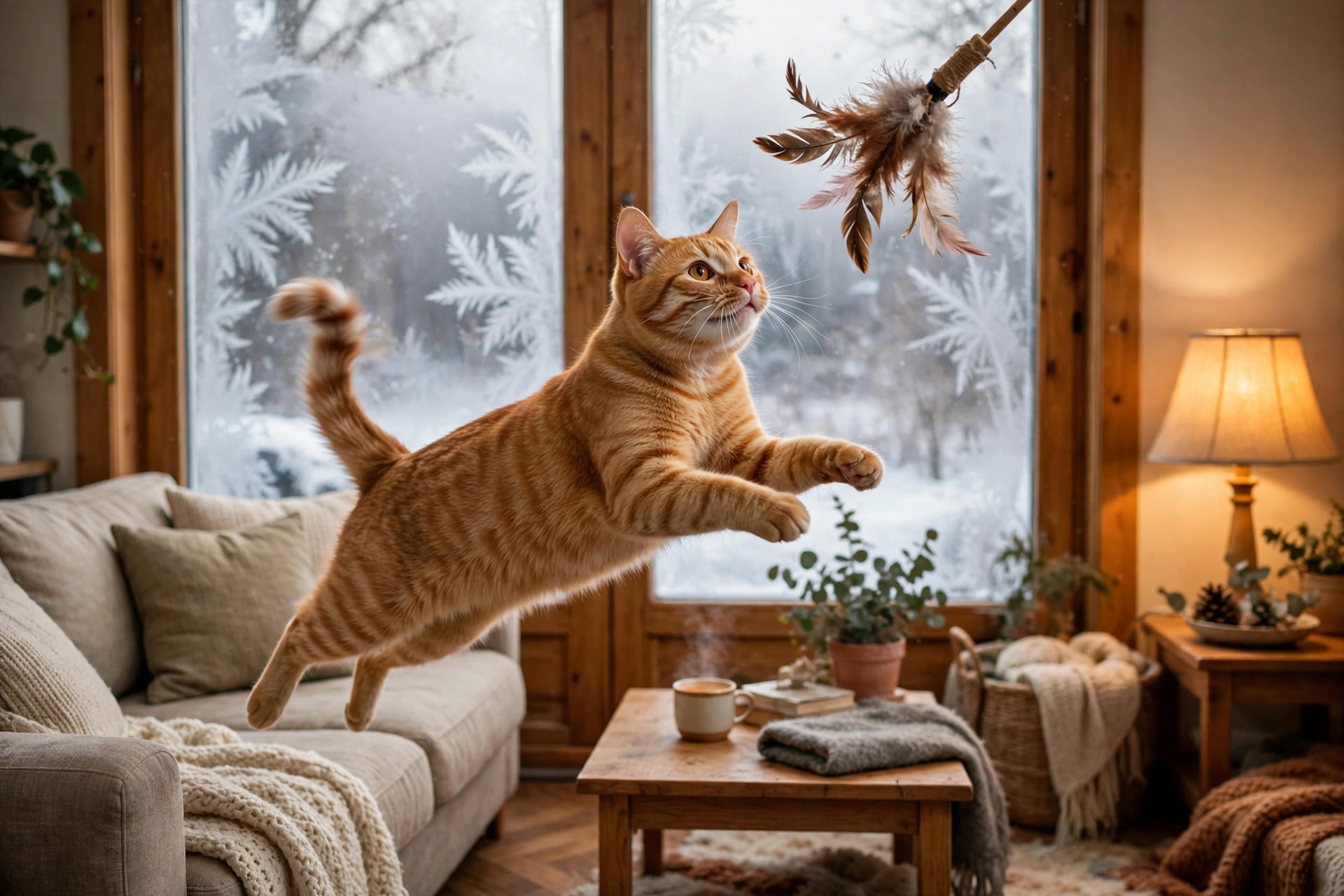
When the days shorten and the cold sets in, your indoor cat’s world shrinks. The windows stay shut, the sunny patches disappear by mid-afternoon, and the garden is off-limits. That is exactly why indoor cat enrichment for winter matters so much: without fresh stimulation, a bored indoor cat can slide into overeating, night-time restlessness, furniture scratching, and even stress-related health problems.
The good news is that winter boredom is easy to fix. Cats do not need expensive gadgets or a bigger house — they need short bursts of hunting play, food that takes effort to earn, new things to watch and smell, and warm places to rest. In this guide, you will find 10 practical indoor cat enrichment ideas for the cold, dark months, plus a simple weekly rotation plan that keeps them all feeling fresh.
Table of Contents
- Why Winter Is Hard on Indoor Cats
- 1. Daily Play Sessions That Mimic the Hunt
- 2. Puzzle Feeders and DIY Foraging Games
- 3. Window Perches and Winter Bird-Watching
- 4. Vertical Space, Boxes, and Tunnels
- 5. Scratching Posts That Actually Get Used
- 6. Scent, Sound, and Screen Enrichment
- 7. Cozy, Warm Hideaways Off Cold Floors
- 8. The Weekly Toy Rotation Plan
- 9. Watch the Winter Weight Creep
- 10. Boredom or Something More? When to Call the Vet
- Frequently Asked Questions
Why Winter Is Hard on Indoor Cats
Cats are creatures of routine and territory, and winter disrupts both. Shorter days mean less natural light and fewer hours of the sunbeam naps cats love. Closed windows cut off the smells, sounds, and breezes that normally entertain an indoor cat for hours. And when the humans in the house are also staying in, the cat’s territory feels busier and less predictable.
The result is a cat with energy to burn and nowhere to burn it. Common winter boredom signs include night-time zoomies, attention-seeking meowing, scratching furniture more than usual, overgrooming, and eating out of boredom rather than hunger. Veterinary behavior resources, including PetMD, stress that indoor cats need daily enrichment — opportunities to play, climb, scratch, and explore — to stay mentally stimulated and physically healthy. Winter simply raises the stakes, because the outdoors can no longer do any of that work for you.
1. Daily Play Sessions That Mimic the Hunt
Interactive play is the single most effective winter enrichment, and it costs nothing. Aim for two to three short sessions of 10–15 minutes a day, ideally at roughly the same times — cats love routine, and a predictable play schedule reduces night-time restlessness.
Move the toy like prey, not like a toy: drag a feather wand along the ground in short bursts, pause, then dart it behind furniture so your cat can stalk and pounce. Vary the speed and direction, and always let your cat “catch” the toy at the end. Finishing with a small meal or treat completes the natural hunt-catch-eat sequence and leaves your cat satisfied rather than frustrated. If you use a laser pointer, always end the game by tossing a real toy your cat can grab — chasing a dot that can never be caught is a known frustration trigger.
2. Puzzle Feeders and DIY Foraging Games
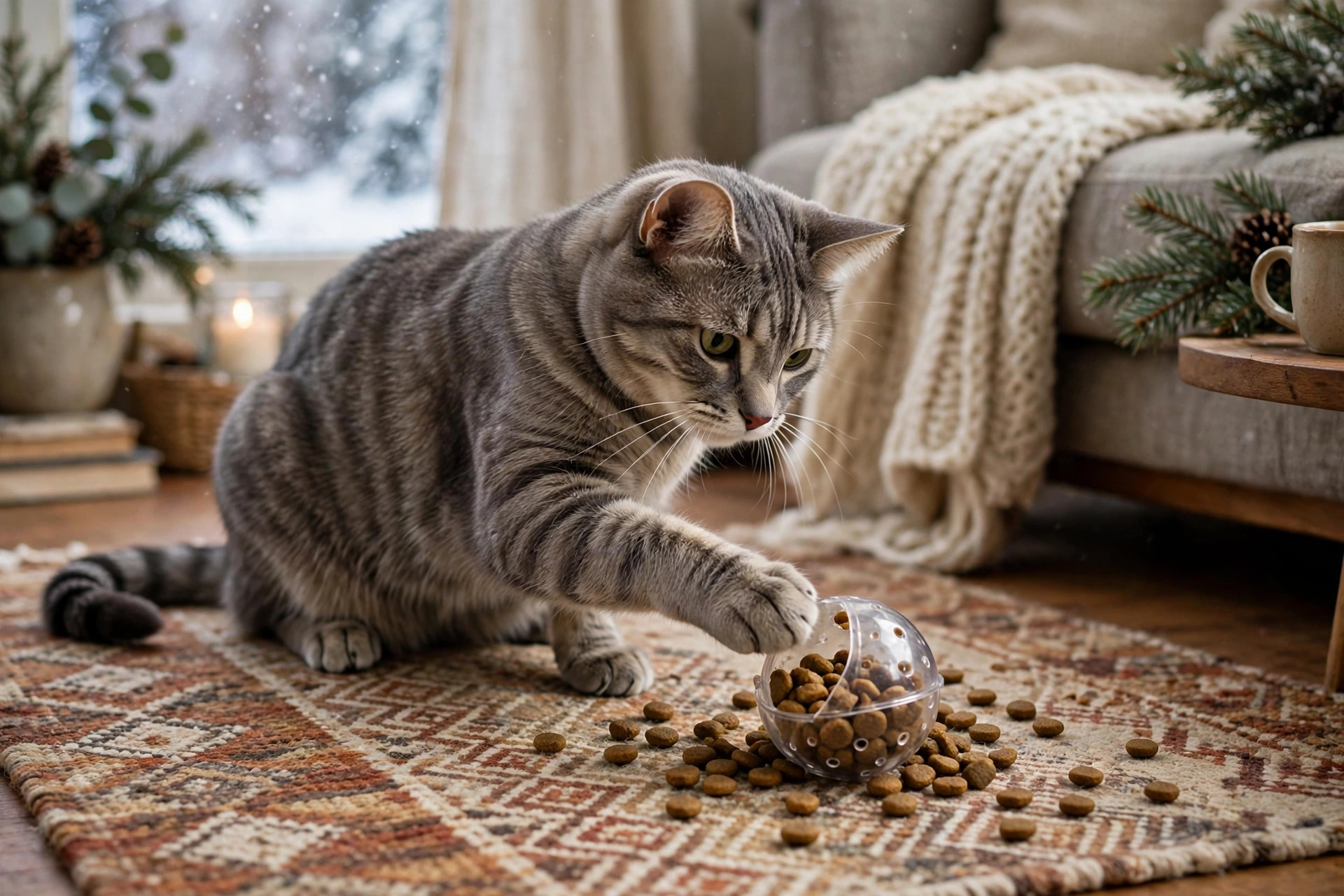
In the wild, a cat works for every meal. A bowl of kibble served in the same spot twice a day removes that entire job — and the mental stimulation that comes with it. Puzzle feeders restore it: your cat must bat, roll, or nose the feeder to release food, which slows down fast eaters and engages the problem-solving brain.
Start easy (a feeder ball with large openings) and increase the difficulty as your cat learns. You can also make DIY foraging games for free:
- Scatter a portion of kibble in a clean egg carton or muffin tin, covering a few cups with toys or paper.
- Cut paw-sized holes in a cardboard box, drop treats inside, and let your cat fish them out.
- Hide small piles of kibble around the house before you leave for work — a treasure hunt that lasts all morning.
Use part of your cat’s normal daily food allowance for these games, not extra treats, so enrichment never becomes overfeeding.
3. Window Perches and Winter Bird-Watching
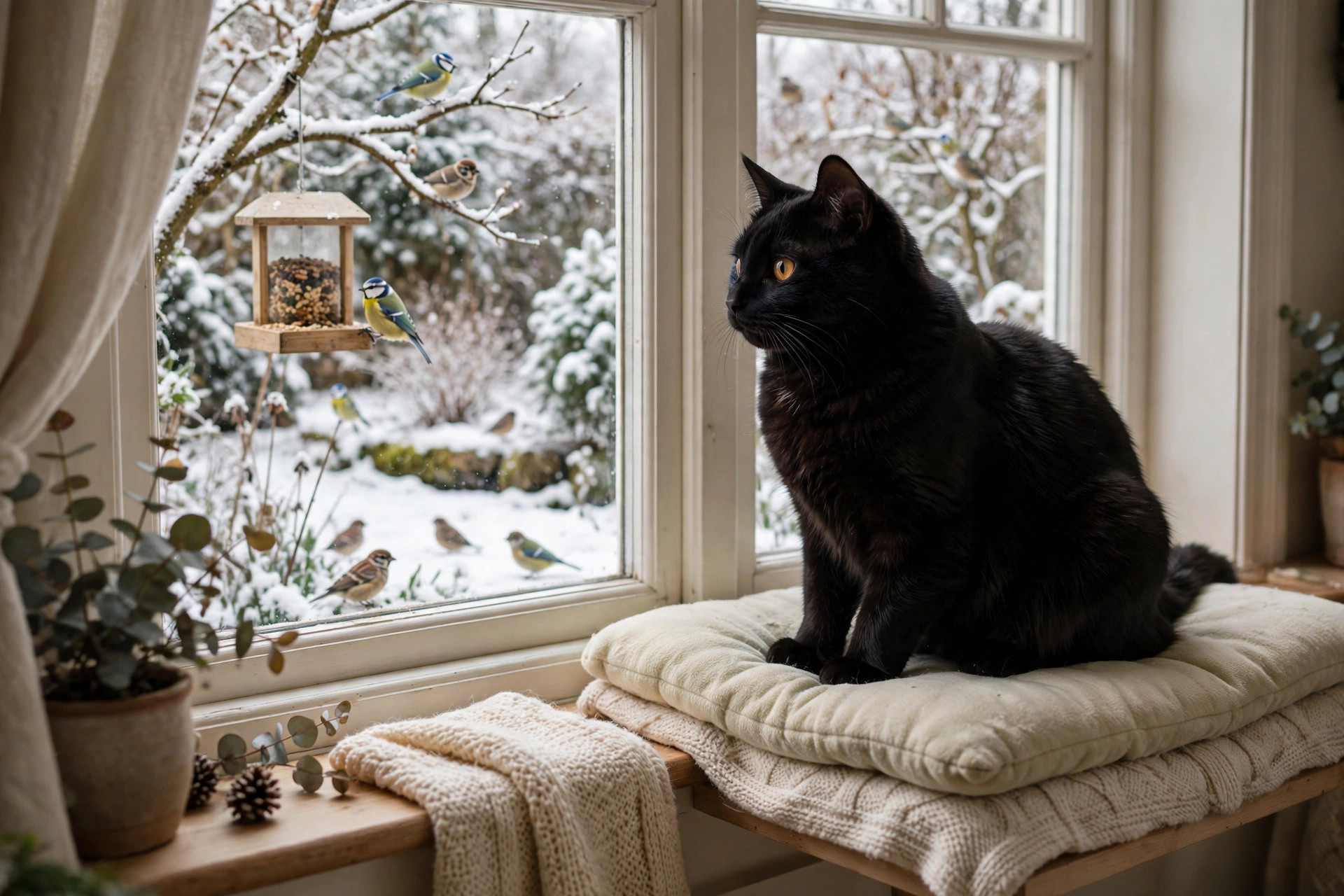
Window watching is a cat’s favorite free entertainment, and winter is peak season for it: birds visit feeders more often when food is scarce, and falling snow holds a cat’s attention for hours. Set up a sturdy, cushioned perch at a window with the best view — ideally one that catches some winter sun — and hang a bird feeder outside it if you can.
A few safety notes: make sure the perch is stable and rated for your cat’s weight, keep the window securely closed or latched, and never place a perch where a cat could push through a loose screen. For cats that get overexcited by birds, add a second perch nearby so they can move off and settle when the show gets too much.
Also Read: How to Stop Your Cat Scratching the Furniture: Vet-Approved Tips (2026)
4. Vertical Space, Boxes, and Tunnels
Cats feel safest up high, and vertical space is the cheapest way to make a small home feel bigger. A tall cat tree near a window, a couple of wall-mounted shelves, or even a cleared top of a wardrobe gives your cat new territory to claim and survey. In multi-cat homes, vertical routes also let a shy cat move around without crossing a confident cat’s path.
Do not underestimate the humble cardboard box. A box with a couple of entrance holes cut in it, a paper bag (handles removed), or a crinkle tunnel gives your cat a hiding spot, an ambush point, and a nap den all in one. Swap boxes around every week or two — novelty is the whole point.
5. Scratching Posts That Actually Get Used
Scratching is not misbehavior: it maintains claws, stretches the shoulders and back, and marks territory. A bored winter cat with nowhere good to scratch will choose your sofa. The fix is a tall, rock-solid post (at least 28–32 inches so an adult cat can stretch fully) placed where your cat already scratches — not hidden in a spare room.
Offer more than one surface type if you can: sisal rope for vertical scratchers, corrugated cardboard for horizontal ones. Refresh the post with a sprinkle of catnip and reward every use with a treat, and your cat will choose the post over the furniture within a couple of weeks.
6. Scent, Sound, and Screen Enrichment
A cat’s nose is far more powerful than ours, and winter’s closed windows starve it of new smells. Rotate safe scents: a pinch of dried catnip or silvervine on a scratcher, a pot of cat grass to nibble (grow it on a windowsill — it is cheap and cats love it), or a new herb sprig to investigate. Note that not every cat responds to catnip — if yours ignores it, try silvervine or olive wood instead.
For sound and vision, try “cat TV”: a video of birds, fish, or small animals playing on a tablet, or simply a bird feeder outside the window. Keep sessions short and supervised, and put the screen away if your cat starts batting at it obsessively. Gentle background sound, like soft music or a nature track, can also settle cats that get restless on long, dark evenings.
7. Cozy, Warm Hideaways Off Cold Floors
Rest is part of enrichment too. In winter, cats seek warm, enclosed spots — and a cat that cannot find one will sleep in stressful places or on cold floors. Give every cat at least one warm resting option: a raised bed or perch off the floor, a blanket-draped box near a radiator (never on it), or a self-warming donut bed in a quiet corner.
Keep beds in low-traffic spots and do not move them around — predictability is what makes a resting place feel safe. In multi-cat homes, provide one resting spot per cat in different rooms so nobody has to compete.
Also Read: Do Calming Cat Beds Work? Vet-Approved Guide (2026)
8. The Weekly Toy Rotation Plan
Cats lose interest in toys that never change, even ones they once loved. Rotation brings back the novelty without buying anything new. Split your cat’s toys into three or four small groups, keep one group out, and swap it weekly. A simple plan looks like this:
| Week | Toys Out | Extra Activity |
|---|---|---|
| Week 1 | Feather wand + crinkle balls | Daily wand play before dinner |
| Week 2 | Puzzle feeder + treat ball | Morning kibble treasure hunt |
| Week 3 | Catnip mice + cardboard box fort | New box layout + catnip refresh |
| Week 4 | Tunnel + laser pointer (ending with a real toy) | Window bird-watching station |
Wash or air out toys between rotations, and retire anything frayed, torn, or small enough to swallow.
9. Watch the Winter Weight Creep
Winter is the season cats gain weight: less movement, more treats, and boredom eating all stack up. Keep treats and puzzle-feeder extras inside the 10% rule — treats combined should stay under 10% of daily calories — and measure meals rather than free-feeding. If your cat’s waist is disappearing or you can no longer feel the ribs easily under a thin layer of fat, it is time to adjust portions and increase play before the gain becomes a health problem.
Also Read: Is My Cat Overweight? Body Condition Guide (2026)
10. Boredom or Something More? When to Call the Vet
Most winter behavior changes are boredom, but some are medical. Book a vet visit promptly if you notice sudden hiding or aggression, a cat that stops eating for more than 24 hours (a same-day emergency in overweight cats), vomiting or diarrhea that lasts more than a day, difficulty jumping, or overgrooming that creates bald patches. Pain, urinary problems, dental disease, and thyroid issues can all look like “just boredom” at first — enrichment helps a healthy cat, but it never replaces a vet check for a sick one.
Frequently Asked Questions
How much playtime does an indoor cat need in winter?
Most cats do well with two to three 10–15 minute interactive play sessions per day. Short, regular sessions beat one long session, and playing before meals taps into the natural hunt-eat-sleep rhythm.
Do indoor cats get bored in winter?
Yes. Shorter days, closed windows, and less household activity remove much of a cat’s normal stimulation. Boredom often shows up as night-time zoomies, extra meowing, furniture scratching, or eating out of boredom.
Are puzzle feeders good for cats?
Yes. Puzzle feeders make cats work for food, which slows fast eaters, provides mental stimulation, and mimics natural foraging. Start with an easy feeder and increase difficulty gradually.
How do I keep my indoor cat entertained when I am at work?
Set up a window perch with a bird feeder view, leave a puzzle feeder or morning kibble treasure hunt, rotate toys weekly, and leave a cardboard box or tunnel out. A timed feeder that releases a small midday meal also breaks up a long alone stretch.
Is it normal for cats to sleep more in winter?
Some extra sleep is normal — cats sleep 12–16 hours a day anyway, and darker days encourage longer naps. But a cat that suddenly sleeps far more, stops playing entirely, or loses interest in food should be checked by a vet.
Do cats need a window perch in winter?
It is one of the highest-value winter enrichments: birds, snow, and passing wildlife give hours of visual stimulation for free. Place the perch somewhere that catches daylight and is stable enough for your cat’s weight.
Final Thoughts
Winter does not have to mean a bored cat. A few short play sessions a day, food that takes effort to earn, a good window view, fresh scents, and a warm place to rest will carry most indoor cats happily through the coldest, darkest months — and the weekly rotation plan keeps all of it feeling new. Start with one or two ideas this week, watch what your cat actually loves, and build from there.
By Dr. Ayaz Ali