
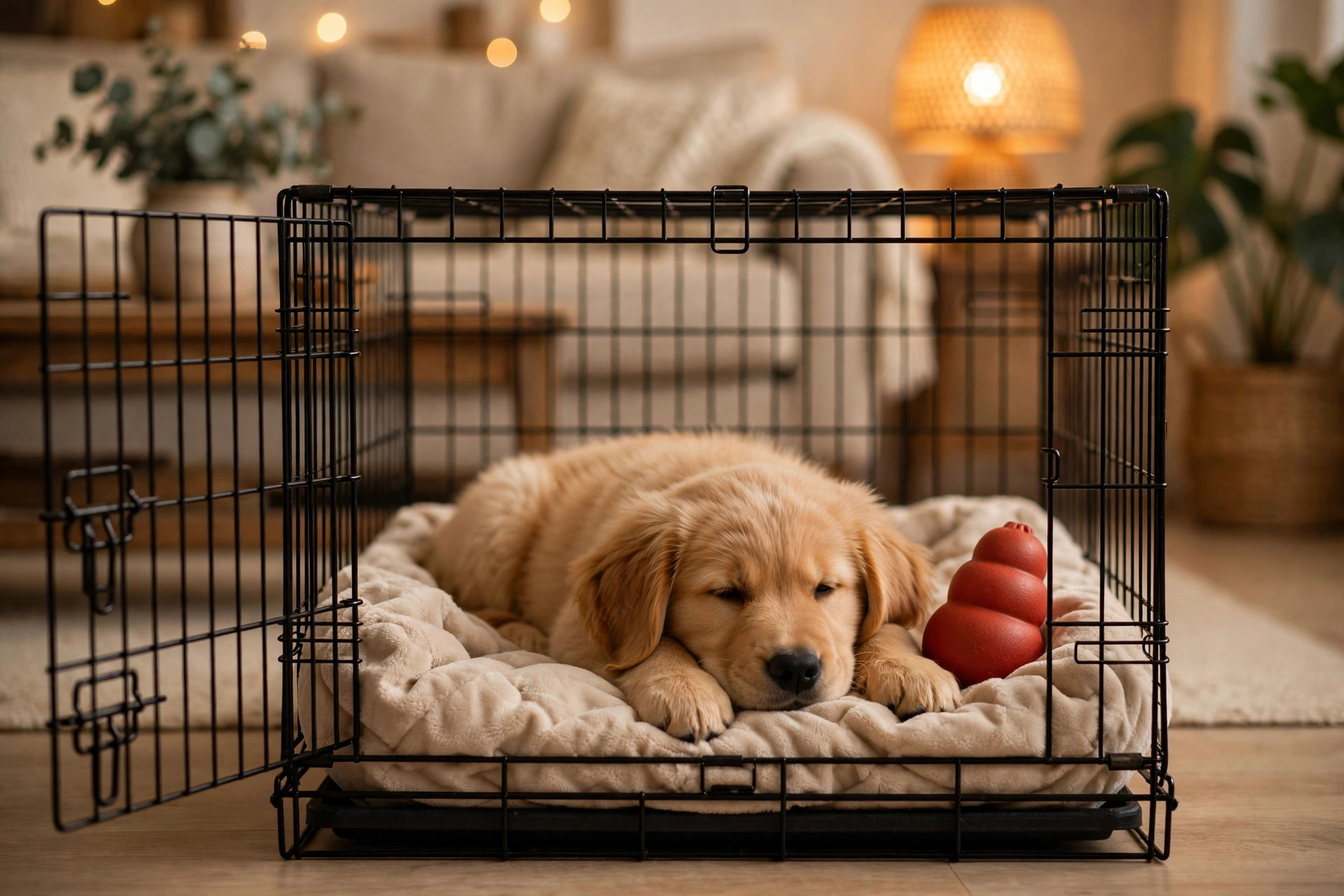
Your puppy’s first week home is equal parts magical and exhausting — unforgettable cuddles, 2 a.m. whimpers, and the puddle by the door. No wonder crate training a puppy tops every new owner’s search list. Done right, a crate becomes your puppy’s cozy private den: safe naps, protection when you can’t supervise, and faster house training. Done wrong, it becomes a source of fear. The difference is patience — and this 2026 guide gives you the full step-by-step plan.
Table of Contents
- Why Crate Training Works for Puppies
- Choosing the Right Crate for Your Puppy
- Days 1–2: Introduce the Crate (Door Open)
- Days 3–7: Build Crate Time Step by Step
- Crate Training Your Puppy at Night
- How Long Can Your Puppy Stay in the Crate?
- 7 Crate Training Mistakes to Avoid
- When Crate Training Isn’t Working
- Frequently Asked Questions
Why Crate Training Works for Puppies
Dogs are den animals — most pick a small, enclosed sleeping spot over an open floor. A properly introduced crate taps into that instinct.
- Faster house training. Puppies avoid soiling where they sleep; a correctly sized crate uses that instinct to build bladder control.
- Safety. Puppies explore with their mouths — cords, plants, and socks are off-limits inside a crate.
- Better rest. A quiet, darkened crate helps an overstimulated puppy actually switch off.
- Independence. Short, positive alone time teaches your puppy that being apart from you is normal and boring.
The rule that matters most: the crate must always predict good things. The moment it becomes a jail cell, you’ve lost.
Choosing the Right Crate for Your Puppy
Size is the most common setup mistake: too big and the puppy potties in a corner; too small and it’s uncomfortable. The American Kennel Club’s crate training guide recommends a crate your puppy can stand up, turn around, and lie down in — no bigger, no smaller. Use a divider panel in one wire crate and expand the space as your puppy grows.
- Wire crates — best for most puppies: airflow, fold flat, usually include a divider.
- Plastic crates — more enclosed; good for anxious puppies and standard for airline travel.
- Soft-sided crates — only for crate-savvy dogs; teething puppies chew through fabric.
Inside: a washable bed, a safe chew toy, and a worn T-shirt that smells like you. Location: a family area — and in or near your bedroom for the first couple of weeks of nights.
Also Read: Adopt a Shelter Dog Month 2026: What to Know Before Adopting — October is peak adoption month, and new rescue puppies need the same calm introduction.
Days 1–2: Introduce the Crate (Door Open)
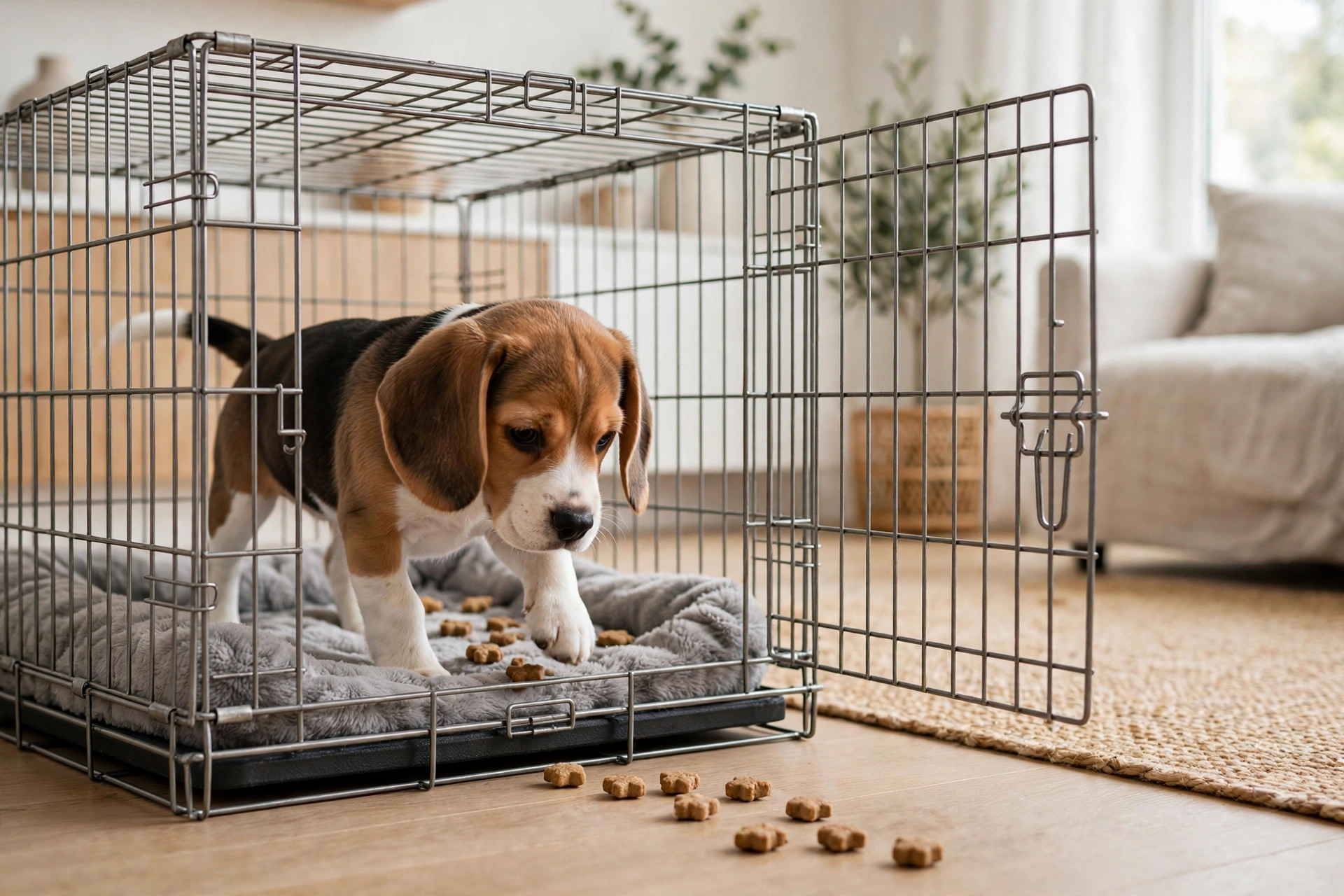
The first 48 hours set the tone: your puppy should walk in voluntarily, several times, and leave happy. Do not close the door on day one.
- Set the stage: crate in the family area, door fixed open, bedding and treats inside.
- Treat trails. Toss treats just inside the entrance, then deeper over several reps. When a paw goes in, say “yes” and hand-deliver another.
- Meals in the crate. Feed the next meal just inside the doorway, then further back each time — food given only in the crate builds a powerful association.
- Add a cue word. Once your puppy trots in eagerly, say “crate” as they enter, then reward. After a few dozen reps, the word alone sends them in.
- Keep it short. Three to five minutes, several times a day. End while your puppy is still happy.
Never pick your puppy up and place them inside — being shoved in creates the fear you’re trying to prevent. Confident puppies may advance in a day; shy ones may need three.
Days 3–7: Build Crate Time Step by Step
Once your puppy dives in eagerly with the door open, add the door in increments they barely notice.
- Feed with the door closed briefly: close it while they eat, open the moment they finish. Stretch to 30 seconds, then a minute, over days.
- Reward calm. Drop a treat through the bars when your puppy lies down quietly — you’re paying for the settling.
- Use a settle routine: potty break, short play, then into the crate with a long-lasting chew.
- Practice micro absences: close the door, take two steps away, return and treat. Step out of sight for five seconds. Keep coming and going boring.
- Build daytime naps. After exercise, crate your puppy for a 30–60 minute nap. Open only when they’re calm and quiet.
The golden rule: never open the door while your puppy is whining. Wait for two seconds of quiet, then open calmly — opening on a bark teaches your puppy that barking opens doors.
Also Read: What Is a Pupsicle? The Freezable Dog Toy Guide (2026) — a frozen enrichment toy keeps crate time calm and busy.
Crate Training Your Puppy at Night
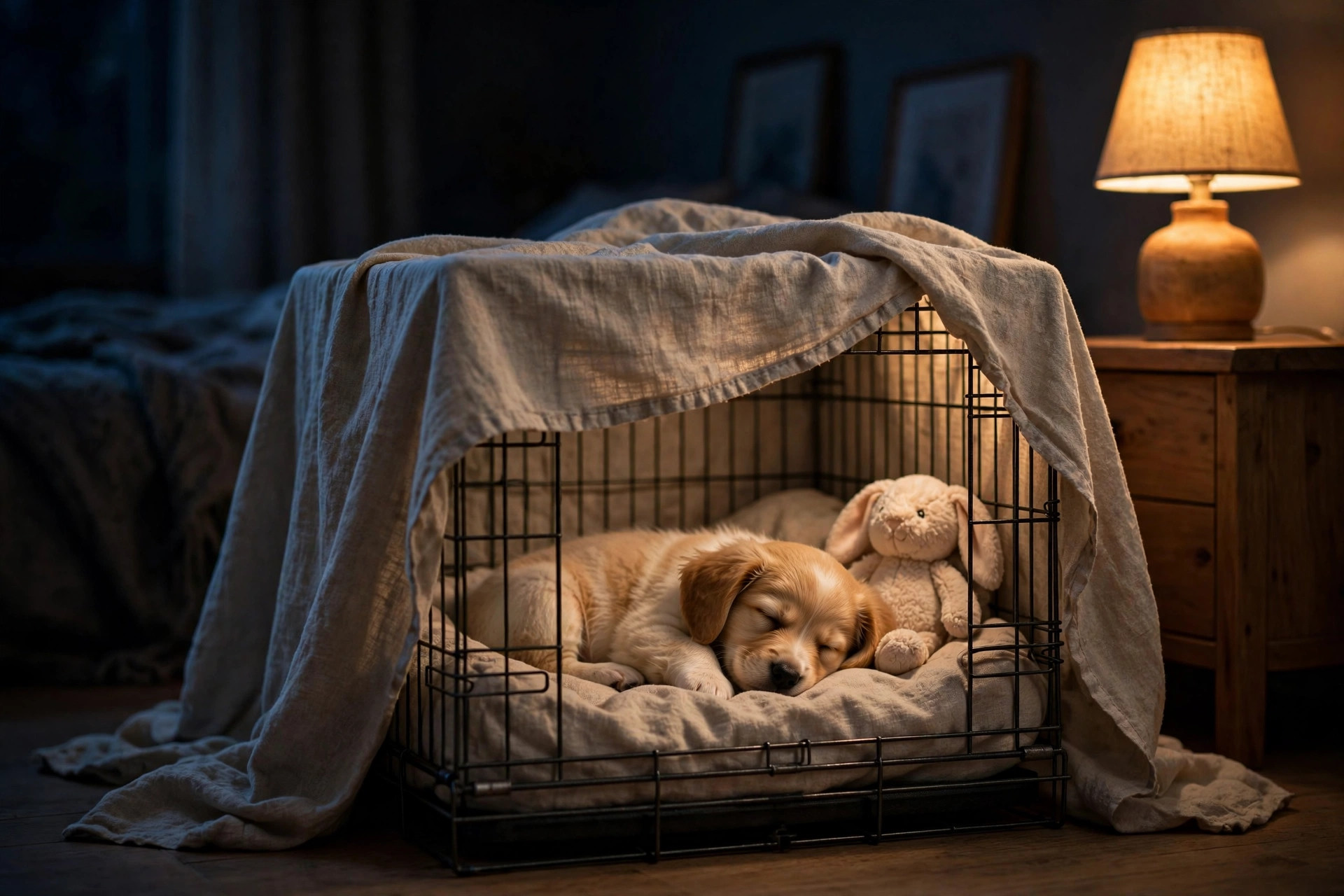
Nights are the hardest part. Use the same routine every night: last meal 3–4 hours before bed, calm play (no wild games in the final hour), a final outdoor potty break, then into the crate with a safe chew near your bedroom.
Expect nighttime potty breaks. An 8-week-old needs one every 2–3 hours, a 3-month-old every 3–4 hours; most sleep through by about 4 months. Keep night trips strictly business — lights low, no talking, no playing, straight back to the crate.
If your puppy whines: check whether enough time has passed for a potty break first. If they just went, wait for a pause before responding. White noise or a heartbeat-style snuggle toy often helps lonely puppies settle.
How Long Can Your Puppy Stay in the Crate?
The classic guideline is roughly one hour per month of age (up to 6–8 hours max for adults) — a ceiling, not a target. Puppies still need play, training, and cuddles between sessions:
| Puppy Age | Max Daytime Crate Time | Night Notes |
|---|---|---|
| 8–10 weeks | 30–60 minutes | Break every 2–3 hours |
| 3–4 months | 2–3 hours | 1–2 breaks per night |
| 5–6 months | 3–4 hours | Most sleep through |
| 6+ months | 4–6 hours | Full night, no breaks |
Consistent crate soiling means sessions are too long or the crate too big — not stubbornness.
7 Crate Training Mistakes to Avoid
1. Using the crate as punishment
“Go to your crate!” after misbehavior teaches one lesson: the crate is where bad things happen. Use a puppy-proofed room for time-outs instead.
2. Crating for too long
All-day crating isn’t training — it’s neglect. Arrange a midday break with a sitter or walker if your schedule exceeds your puppy’s limits.
3. Opening the door on whining
Letting a screaming puppy out rewards the screaming. Wait for a moment of quiet — even two seconds — then open calmly.
4. Skipping the tired-and-empty routine
Exercise, potty, then crate — every time. A wired puppy with a full bladder cannot settle.
5. Buying a giant crate with no divider
Too much space invites a bathroom corner. Use a divider and expand as your puppy grows.
6. Isolating the crate on day one
A crate in a far-off room maximizes loneliness. Keep it near you for the first couple of weeks, then move it gradually.
7. Rushing the steps
Jumping from “door open” to “alone for two hours” skips the trust-building your puppy needs. A bad day means repeating the last successful step.
When Crate Training Isn’t Working
Most puppies accept the crate within a few days to a week. Learn the difference between protest (whining that fades within 10–15 minutes) and panic (drooling, hour-long howling, bent wires, bloody paws). Panic is never something to push through.
If your puppy injures itself trying to escape, stop crating immediately and use a puppy-proofed room — crate panic can signal separation anxiety, which needs a slower plan and sometimes veterinary help.
Also Read: Separation Anxiety in Dogs: Signs, Causes & How to Help (2026) — how to tell normal protest from genuine distress. And if house training suddenly regresses, see your vet: urinary infections cause accidents that mimic training failure.
Frequently Asked Questions
Is crate training cruel?
No — done as described here. A properly introduced crate becomes a bedroom your puppy chooses voluntarily; it only turns cruel with excessive hours or punishment associations.
What age should I start crate training my puppy?
The day your puppy comes home, usually around 8 weeks. The first two days are door-open exploration only — no confinement.
Should I put water in my puppy’s crate?
Not for young puppies — they’ll spill it and it encourages accidents. Offer water before and after sessions instead.
Can I crate train an adult or rescue dog?
Yes — the steps are identical, though dogs with a bad crate history may need weeks rather than days.
My puppy cries in the crate — what should I do?
Rule out needs first: potty, hunger, or too long a session. Then wait for a pause before opening — never open mid-wail.
Should the crate be in my bedroom?
For the first 1–2 weeks, yes. You’ll catch potty needs before accidents, and your presence helps them settle.
Final Thoughts
How do you crate train a puppy? Slowly, positively, and on your puppy’s schedule: right-sized crate, two happy days with the door open, closed-door time in tiny increments, a solid bedtime routine, and respect for age limits. Most puppies go from crate-skeptic to crate-lover within a week or two when every step predicts treats, meals, and cozy naps.
The two rules that matter most: the crate is never a punishment, and progress is never perfectly linear. Trust the process — on the other side is a puppy who trots into their crate voluntarily and settles with a contented sigh.
By Dr. Ayaz Ali